TL;DR:
- Most AC repairs cost $250 to $700 and are more affordable than full system replacements, which range from $3,800 to $7,500.
- Deciding whether to repair or replace depends on repair costs, system age, and repair frequency, with specific thresholds guiding the choice.
When your air conditioner stops cooling on a hot Los Angeles afternoon, the instinct is to call for a replacement quote. That instinct is understandable, but it often costs you thousands of dollars you did not need to spend. Understanding why AC repair beats replacement in most situations comes down to honest numbers, a realistic look at your system’s age, and knowing which repairs actually extend a unit’s life versus which ones are throwing money at a lost cause. This article gives you a clear framework to make that call with confidence.
Table of Contents
- Key takeaways
- Why AC repair beats replacement on cost
- How system age and repair history affect the decision
- Energy efficiency and when replacement gains actually pay off
- Repairs that almost always beat replacement
- My honest take after 20 years of LA service
- Get honest AC repair advice from Lahvaclc
- FAQ
Key takeaways
| Point | Details |
|---|---|
| Repair is usually cheaper | Most AC repairs cost $250 to $700, a fraction of the $3,800 to $7,500 replacement price. |
| Age and cost together matter | Multiply repair cost by system age. If the result exceeds $5,000, replacement deserves serious consideration. |
| Efficiency gains have limits | Upgrading SEER2 ratings saves energy, but payback periods can stretch 7 to 12 years without rebates. |
| Timing reduces repair bills | Scheduling repairs in spring instead of peak summer can cut labor costs by 25 to 50 percent. |
| Maintenance prevents the choice | Annual service costing $75 to $200 catches most issues before they become major repair or replacement decisions. |
Why AC repair beats replacement on cost
The sticker shock of a new system is real. Central AC replacement typically runs between $3,800 and $7,500 for a standard residential installation. That price shifts based on system size, SEER2 rating, brand, ductwork condition, labor, permits, and the time of year you schedule the job. Seven variables, and every single one of them can push the number higher.
Repairs look very different by comparison. Typical AC repair costs fall between $250 and $700 for most common issues, with the national average sitting around $375. Even major repairs, like a compressor or evaporator coil replacement, land between $1,000 and $3,000. That is still well below the floor of a full replacement in most cases.
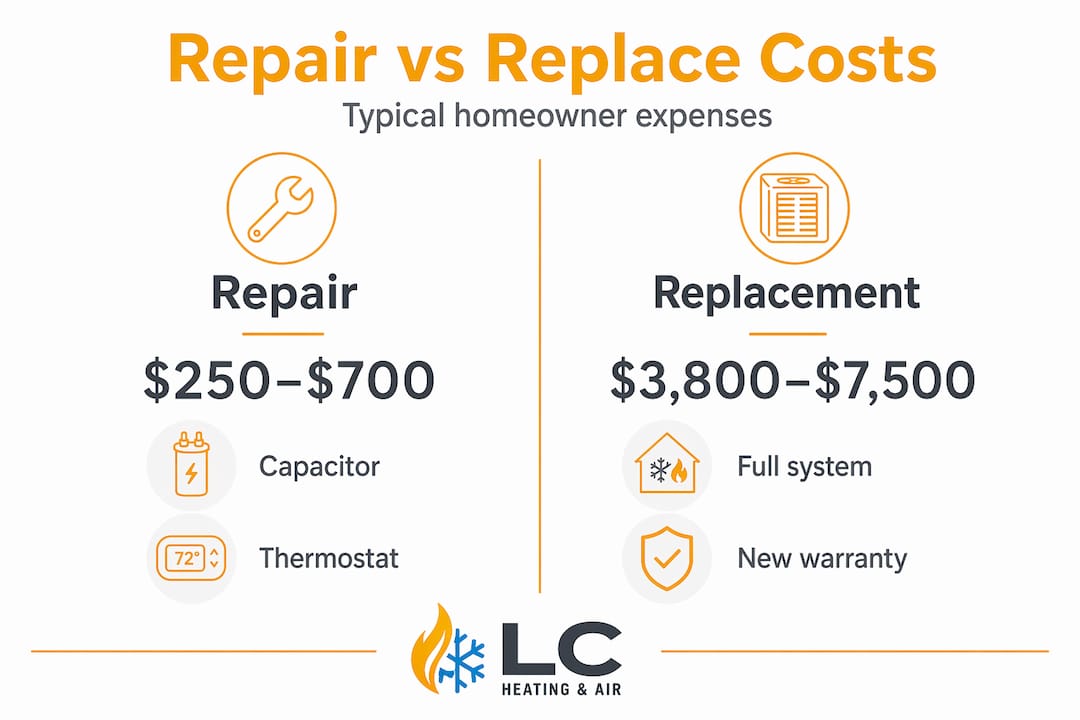
Here is a side-by-side look at where the money goes:
| Repair or replacement item | Typical cost range |
|---|---|
| Capacitor replacement | $150 to $300 |
| Thermostat replacement | $150 to $350 |
| Condensate drain cleaning | $75 to $250 |
| Evaporator coil replacement | $800 to $2,400 |
| Compressor replacement | $1,200 to $2,800 |
| Full system replacement (standard) | $3,800 to $7,500 |
The “50% rule” is a practical guideline worth knowing. If a repair costs more than 50% of what a new system would cost, replacement becomes the smarter financial move. A $400 capacitor repair on a system that would cost $5,500 to replace? That is an easy yes to repair. A $2,800 compressor job on a system priced at $4,500 new? That math points toward replacement.
One cost most homeowners overlook is the emergency premium. Emergency AC repair during peak summer can add 25 to 50 percent to your labor and diagnostic fees. A $400 repair in April becomes a $550 to $600 repair in August when every HVAC technician in Los Angeles is fully booked. Scheduling service proactively is one of the simplest ways to keep the cost of AC repair manageable.
Pro Tip: Book your AC tune-up in March or April before the heat arrives. You will get faster scheduling, lower rates, and a technician who is not rushing between six other emergency calls.
How system age and repair history affect the decision
Cost alone does not tell the whole story. A system’s age and how often it has needed repairs are equally important factors in the AC repair vs replacement decision.
The “$5,000 rule” gives you a simple test. Multiply your repair cost by your system’s age. If that number exceeds $5,000, replacement is generally the better financial decision. A 10-year-old unit needing a $600 repair produces a score of $6,000, which signals it is time to start shopping for a replacement. A 5-year-old unit with the same repair scores $3,000, which means repair makes clear sense.
Most central AC systems have a realistic lifespan of 15 to 20 years with proper maintenance. As a system ages past the 12 to 15-year mark, component reliability declines. Parts wear together, meaning one failure often signals others are close behind. That is the diminishing returns problem with older systems.
Ask yourself these questions before deciding:
- How old is the system? Units under 10 years old are almost always worth repairing unless the damage is catastrophic.
- How many times has it been repaired in the last three years? More than two significant repairs in three years is a pattern, not a coincidence.
- Is the system still under manufacturer warranty? Many warranties cover parts for 5 to 10 years, which dramatically changes the cost of AC repair.
- Has the system been maintained annually? A well-serviced unit at age 14 may have more life left than a neglected unit at age 10.
- Are replacement parts still readily available? Older systems using discontinued components can make future repairs expensive or impossible.
- What is the refrigerant type? Systems using R-22 refrigerant face a specific problem covered in more detail below.
Pro Tip: Pull out any service records you have before calling a technician. A repair history showing consistent annual maintenance is a green flag for continued repairs. A history of repeated compressor or coil issues is a red flag, regardless of the system’s age.
The honest reality is that many homeowners replace systems that had three to five good years left in them simply because one expensive-sounding repair scared them. A trusted technician who reviews your system’s full history, not just the current failure, gives you a much clearer picture.
Energy efficiency and when replacement gains actually pay off
The efficiency argument for replacement is real, but it is frequently overstated. Yes, replacing a 15-year-old AC with a modern high-efficiency model can reduce cooling costs by 20 to 40 percent. That sounds compelling until you do the math on how long it takes to recover a $5,000 to $7,000 installation cost through monthly savings.
SEER2 is the current efficiency rating standard for residential AC systems. Here is what you need to know about the upgrade math:
- A jump from 14 SEER to 16 SEER typically pays back within 3 to 5 years in hot climates like Los Angeles, especially when you factor in federal tax credits and utility rebates.
- Most homeowners get the best return from 16 to 18 SEER2 units rather than premium 20-plus SEER2 models. Higher-rated units can take 7 to 12 years to break even without rebates, which may exceed the system’s useful life.
- Federal tax credits of up to $300 are available for qualifying high-efficiency systems in 2026. Utility rebates from providers like LADWP can add another $100 to $500 on top of that.
The key insight here is that energy savings from high-SEER2 units depend heavily on your climate, utility rates, and how many years you plan to stay in the home. If you are selling in two years, the payback math rarely works in your favor for a premium system.
Repair, by contrast, restores your current system to its designed efficiency. A clean evaporator coil, properly charged refrigerant, and a functioning capacitor can recover 10 to 15 percent of efficiency that has been lost to wear and neglect. That is not as dramatic as a new system, but it costs a fraction of the price.
One factor that genuinely changes the efficiency equation is ductwork. Poor duct condition degrades any new system’s performance and savings. If your ducts are leaking or poorly sealed, replacing the AC unit without addressing the ducts means you are paying full price for a new system that will never perform at its rated efficiency.
Repairs that almost always beat replacement
Knowing which specific repairs are worth doing makes the AC repair advantages much more concrete. Most repairs that fall under $700 are straightforward wins.
- Capacitor replacement ($150 to $300): The capacitor is a small but mighty component that starts and runs your compressor and fan motors. Replacing a failed capacitor is one of the most common AC repairs and one of the most cost-effective. A healthy capacitor means a happy, reliably starting system.
- Thermostat replacement ($150 to $350): A faulty thermostat can mimic serious system failures. Many homeowners have been quoted for major work when the actual fix was a $200 thermostat swap.
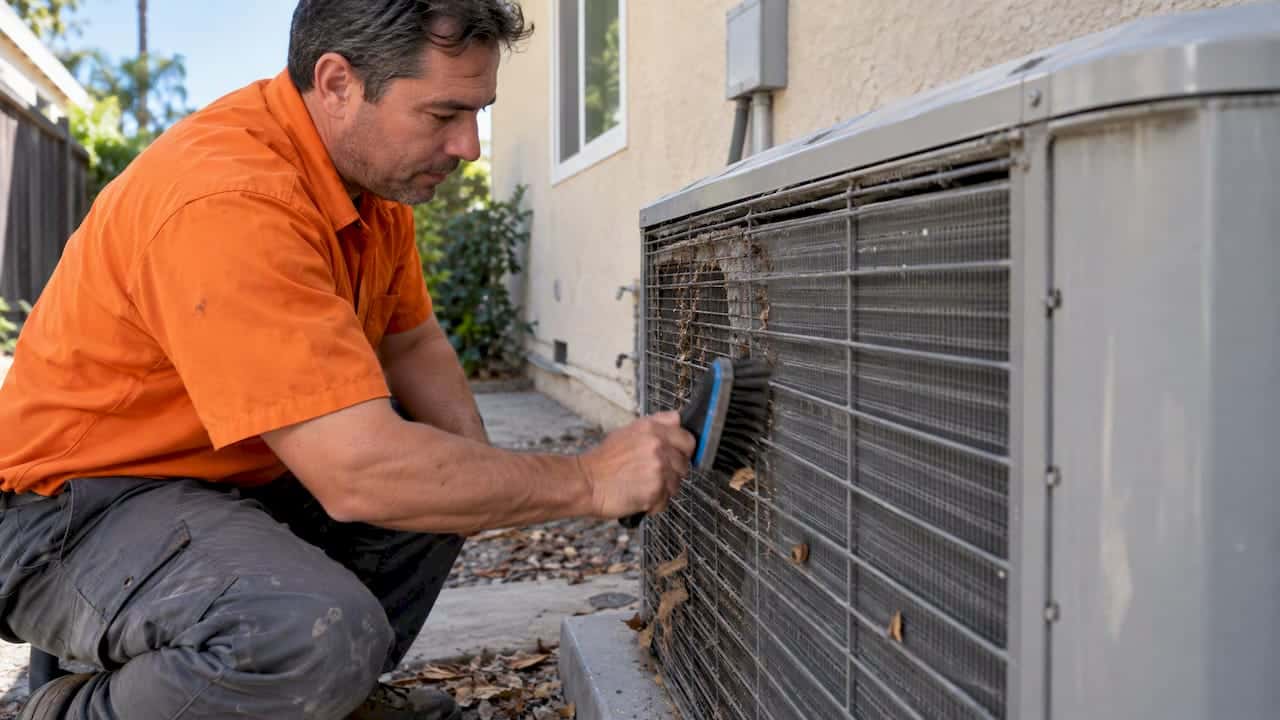
- Condensate drain cleaning ($75 to $250): A clogged drain line causes water damage and triggers safety shutoffs. It is a quick, inexpensive fix that protects both your system and your home.
- Refrigerant recharge ($150 to $400 for R-410A systems): If your system uses R-410A refrigerant and has a small leak, a recharge combined with leak repair is usually cost-effective on units under 10 years old.
Major repairs require more careful evaluation. Compressor replacement on a unit 10 years or older is a tougher call, since compressor repair costs can reach 30 to 50 percent of full replacement cost on older systems. At that point, the $5,000 rule and the 50% rule both apply.
The R-22 refrigerant situation deserves special mention. R-22 production ceased in 2020, and remaining supplies have driven the cost of recharging an R-22 system above $50 per pound. A system needing a significant refrigerant recharge can face a bill of $600 to $1,500 just for the refrigerant. If your system runs on R-22 and has a refrigerant leak, that single factor often tips the scale toward replacement.
Pro Tip: Ask your technician specifically which refrigerant your system uses before approving any repair. If the answer is R-22 and the system needs a recharge, get a replacement quote at the same time so you can compare both options side by side.
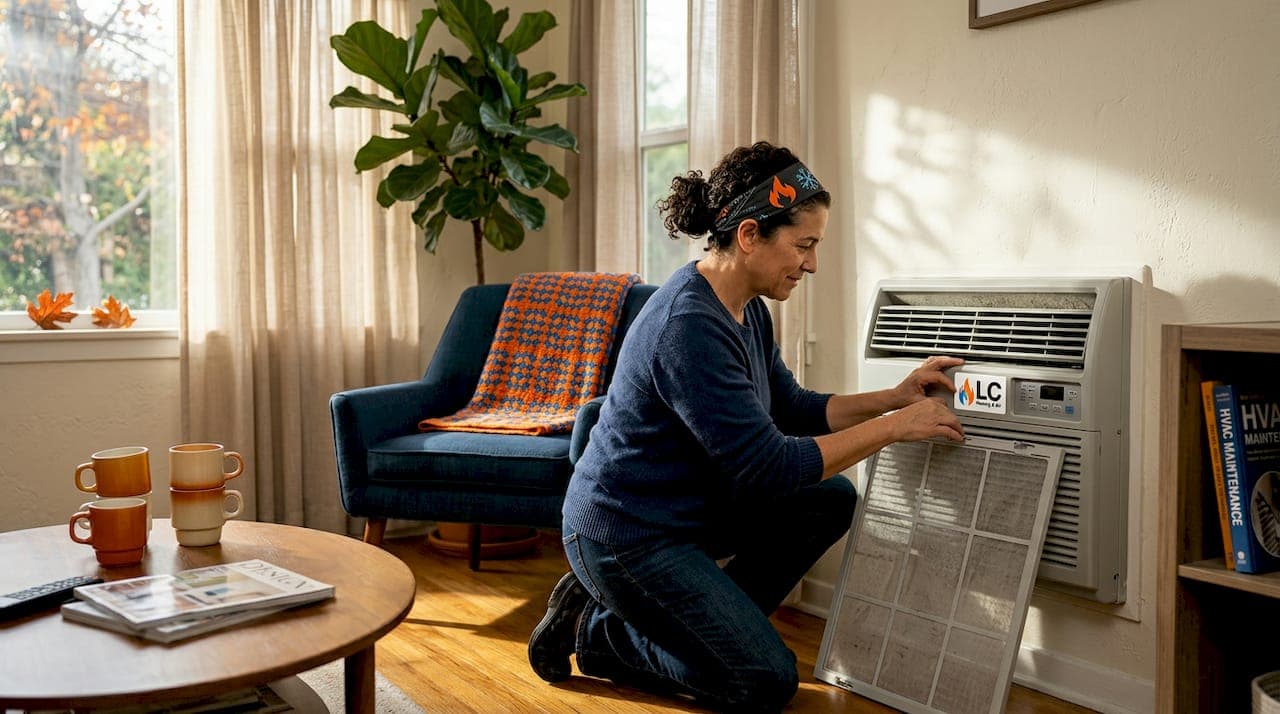
Annual maintenance costing $75 to $200 catches about 95 percent of issues early, before they become the kind of failures that force an emergency decision. Most manufacturer warranties also require proof of annual maintenance to remain valid. Skipping annual service is one of the fastest ways to turn a $300 repair into a $3,000 one.
For those moments when a system does fail unexpectedly, understanding the benefits of emergency AC service in Los Angeles can help you respond quickly without overpaying.
My honest take after 20 years of LA service
I have been inside thousands of homes across Los Angeles, and I can tell you the pattern I see most often: a homeowner gets scared by a repair quote, calls around for a second opinion, and ends up replacing a system that had years of reliable life left. It happens constantly, and it costs people real money.
What I have learned is that the decision to repair or replace is almost never as obvious as a salesperson makes it sound. I have seen 14-year-old systems in Pasadena that were better maintained than 6-year-old systems in the Valley. Age is a data point, not a verdict.
The homeowners who make the best decisions are the ones who ask for a full diagnostic, not just a repair quote. They want to know the condition of the coils, the refrigerant charge, the capacitor health, and the duct integrity. That information, combined with the system’s service history, tells you whether you are looking at a one-time fix or the beginning of a repair cycle.
I also think most people underestimate what good maintenance does for a system’s longevity. A unit that gets cleaned, checked, and serviced every spring will outperform and outlast a neglected unit of the same age by years. That is not a sales pitch for maintenance contracts. It is just what I have seen with my own eyes across two decades of work.
My honest advice: if a technician recommends replacement without reviewing your system’s history and running through the age and cost calculations with you, get a second opinion. A repair that buys you three to five more years at $400 is almost always a better financial decision than a $6,000 replacement you were pressured into on a 95-degree day.
— lc
Get honest AC repair advice from Lahvaclc
When your AC is struggling, the last thing you need is a technician pushing a $6,000 replacement when a $350 repair would solve the problem. Lahvaclc has been serving Los Angeles homeowners for over 20 years with flat-rate pricing, no surprise fees, and no pressure to replace when repair makes more sense.
Our NATE-certified technicians carry full diagnostics on every visit, review your system’s history, and give you a clear repair vs replacement recommendation you can trust. We hold California CSLB License #1073586 and back every job with full liability insurance. Whether you need a quick capacitor swap or a full system evaluation, we offer same-day AC repair across Los Angeles with 24/7 emergency availability. If replacement does turn out to be the right call, our HVAC replacement service includes a Manual J load calculation on every job so your new system is sized correctly from day one. Call Lahvaclc today or schedule your service online.
FAQ
How much does AC repair cost on average?
Most AC repairs cost between $250 and $700, with the national average around $375. Major repairs like compressor or evaporator coil replacement can reach $1,000 to $3,000.
When does replacing an AC make more sense than repairing it?
Replacement makes financial sense when your repair cost multiplied by the system’s age exceeds $5,000, or when the repair cost exceeds 50 percent of a new system’s price. Systems running on R-22 refrigerant with significant leaks are also strong candidates for replacement.
Is AC repair worth it on an older system?
Yes, in many cases. A well-maintained system under 12 years old is usually worth repairing unless the damage involves the compressor or a major component that pushes costs past the 50% threshold. Always get a full diagnostic before deciding.
Can repairing my AC improve its energy efficiency?
A properly executed repair, including refrigerant recharging, coil cleaning, and capacitor replacement, can recover 10 to 15 percent of efficiency lost to wear. It will not match a brand-new high-SEER2 unit, but it restores the system to its designed performance at a fraction of the replacement cost.
How can I avoid expensive emergency AC repairs?
Annual AC maintenance costing $75 to $200 catches 95 percent of issues before they become emergencies. Scheduling that service in spring rather than summer also avoids the 25 to 50 percent premium that peak-season emergency calls typically carry.
Recommended
- AC Replacement Los Angeles | LC Heating & Air | (323) 970-3113 | LC Heating & Air
- AC Emergency Service Benefits Every LA Homeowner Should Know | LC Heating & Air
- AC Repair Los Angeles | LC Heating & Air | (323) 970-3113 | LC Heating & Air
- Top-Rated HVAC Repair in Los Angeles | Same-Day AC & Heating Service
Leo, Owner & Lead Technician at LC Heating & Air
Leo leads LC Heating & Air as an owner-operator and holds California CSLB C-20 HVAC license #1073586. His guides focus on practical diagnostics, safe repair decisions, and clear advice for Los Angeles homeowners.