- What Is an HVAC Diagnostic Fee? Homeowner’s Guide
- Key Takeaways
- What the HVAC diagnostic fee actually covers
- Typical costs and what drives the price
- How diagnostic fees connect to your repair bill
- Common mistakes that lead to surprise charges
- Repair or replace after the diagnostic
- My honest take on diagnostic fees and contractors
- Transparent HVAC diagnostics from LC Heating and Air Conditioning
- FAQ
- Recommended
What Is an HVAC Diagnostic Fee? Homeowner’s Guide
TL;DR:
- HVAC diagnostic fees typically range from $75 to $200 and are credited toward repairs if approved during the same visit. These fees cover technician time, inspection, and expertise, and vary based on the urgency, time, and location of service. Asking upfront about billing structure and ensuring the fee is credited prevents surprises and helps make informed decisions.
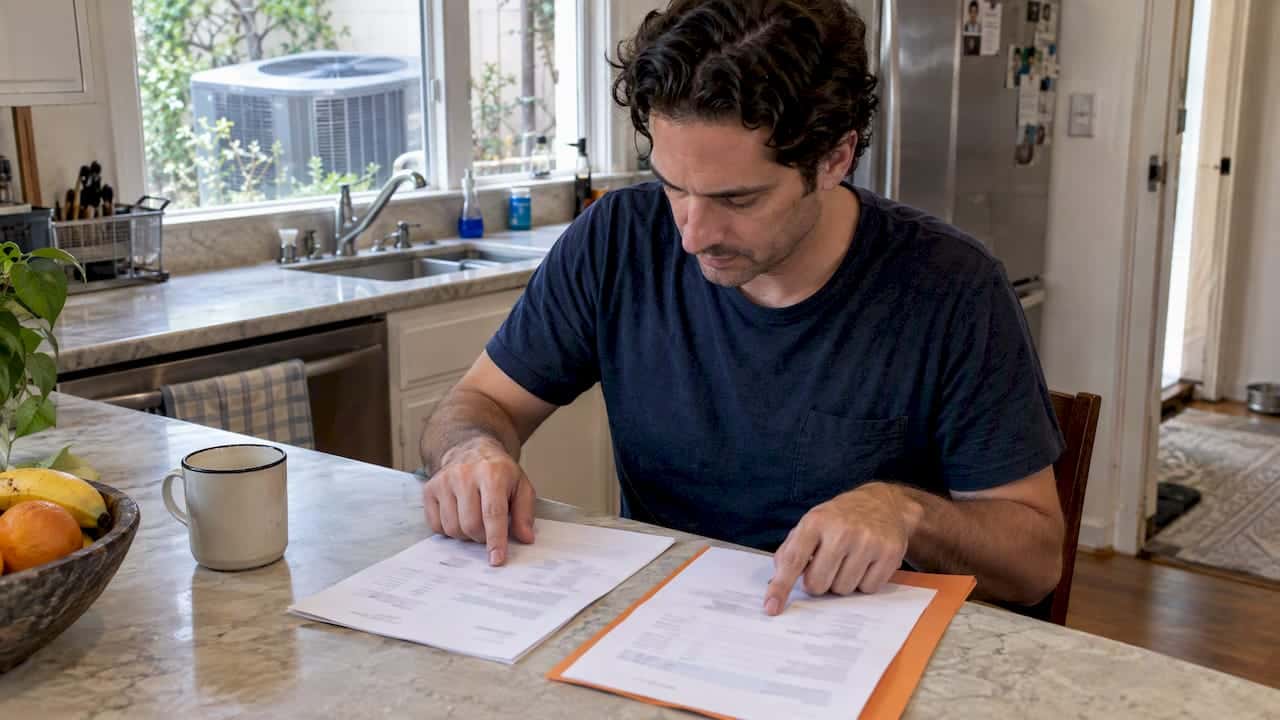
When your air conditioner stops working and a technician shows up, you might notice a charge on the invoice before any repair work even begins. That charge is the HVAC diagnostic fee, and it surprises more homeowners than you’d expect. Many people assume the technician just “takes a look for free” and then charges for the fix. That’s not how it works. Understanding what this fee covers, how much it typically costs, and how it connects to your final repair bill will save you from frustration and help you ask better questions before the service truck pulls into your driveway.
Key Takeaways
| Point | Details |
|---|---|
| Diagnostic fee is standard | Expect to pay $75 to $200 for a professional HVAC diagnosis before any repair starts. |
| Fee often credits toward repair | Most reputable companies apply the diagnostic charge toward your repair cost if you approve the work. |
| After-hours costs more | Emergency or late-night diagnostic visits can run $150 to $300 due to premium labor rates. |
| Low fees can signal risk | An unusually low diagnostic fee (like $29) is sometimes a hook for high-pressure upselling. |
| Ask upfront about billing | Always confirm before the visit whether the diagnostic fee will be credited toward your repair bill. |
What the HVAC diagnostic fee actually covers
The industry standard term for what many homeowners call a “diagnostic fee” is a service diagnostic charge. In practice, you’ll also hear it called a service call fee or troubleshooting charge. These terms are sometimes used interchangeably, but there is an important distinction worth knowing.
HVAC diagnostic fees differ from basic trip charges. A trip charge, sometimes called a travel fee, covers the cost of getting a technician to your home. A diagnostic fee is specifically for the time and skill required to identify the root cause of your system’s problem. Some companies charge both. Others roll them into one flat fee. Knowing which you’re being charged for matters.
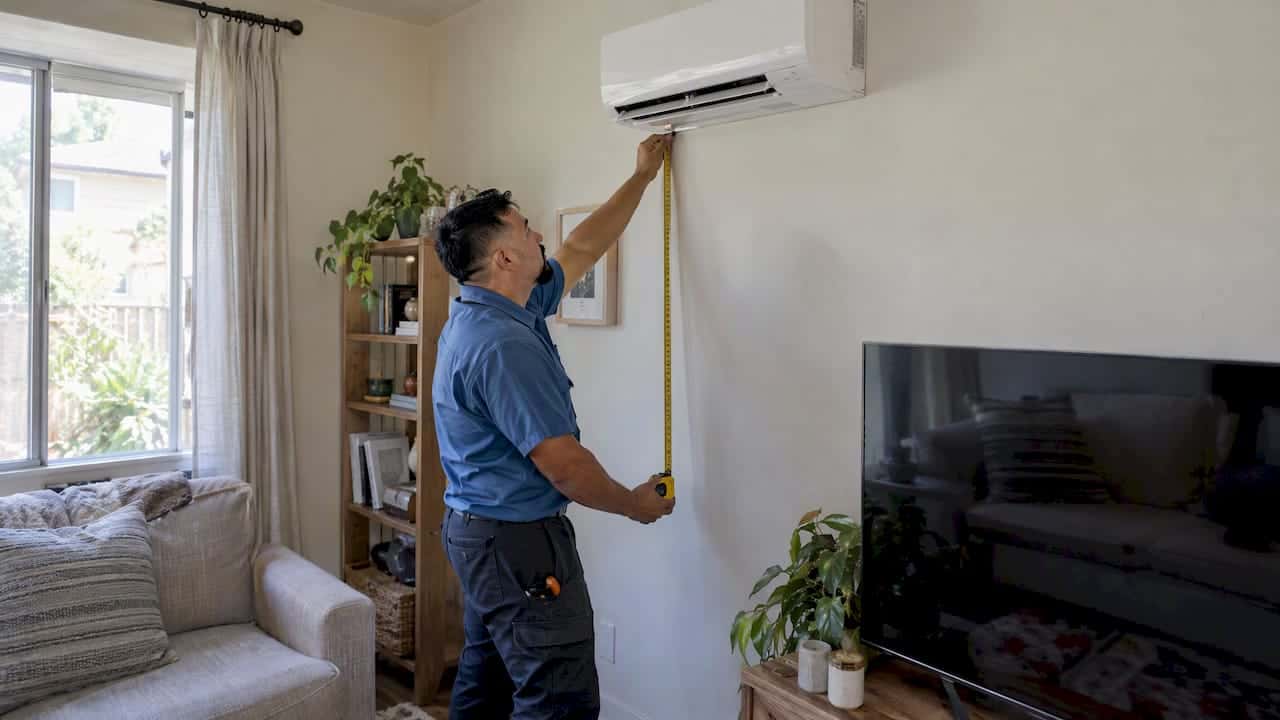
So what does a technician actually do during a diagnostic visit? More than most homeowners realize. A trained HVAC technician will:
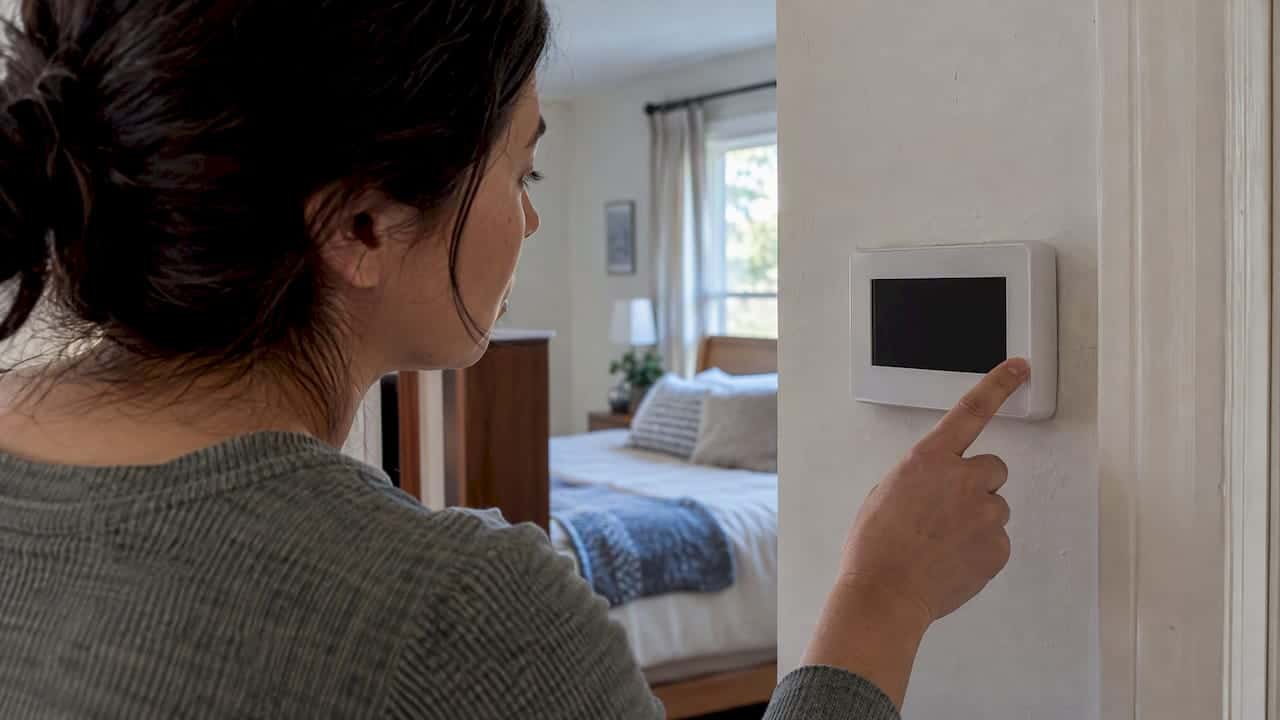
- Inspect the thermostat settings and confirm the system is receiving a proper signal
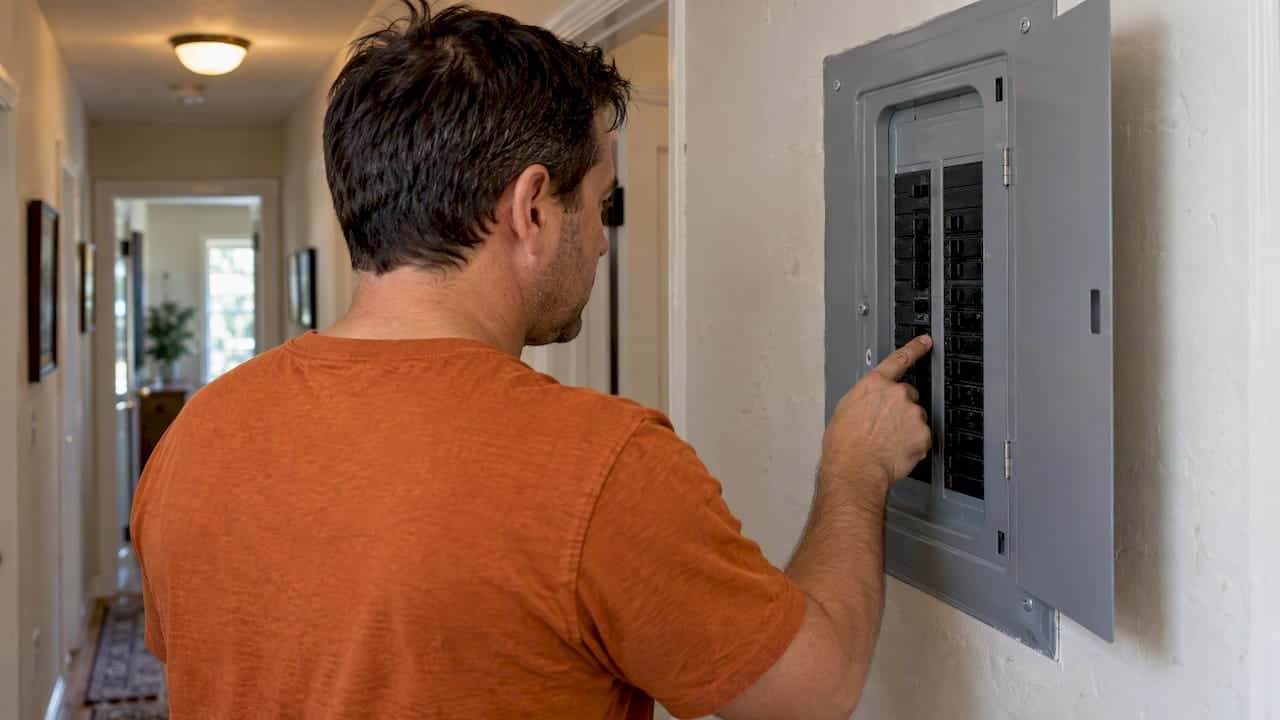
- Check electrical components including breakers, fuses, capacitors, and contactors
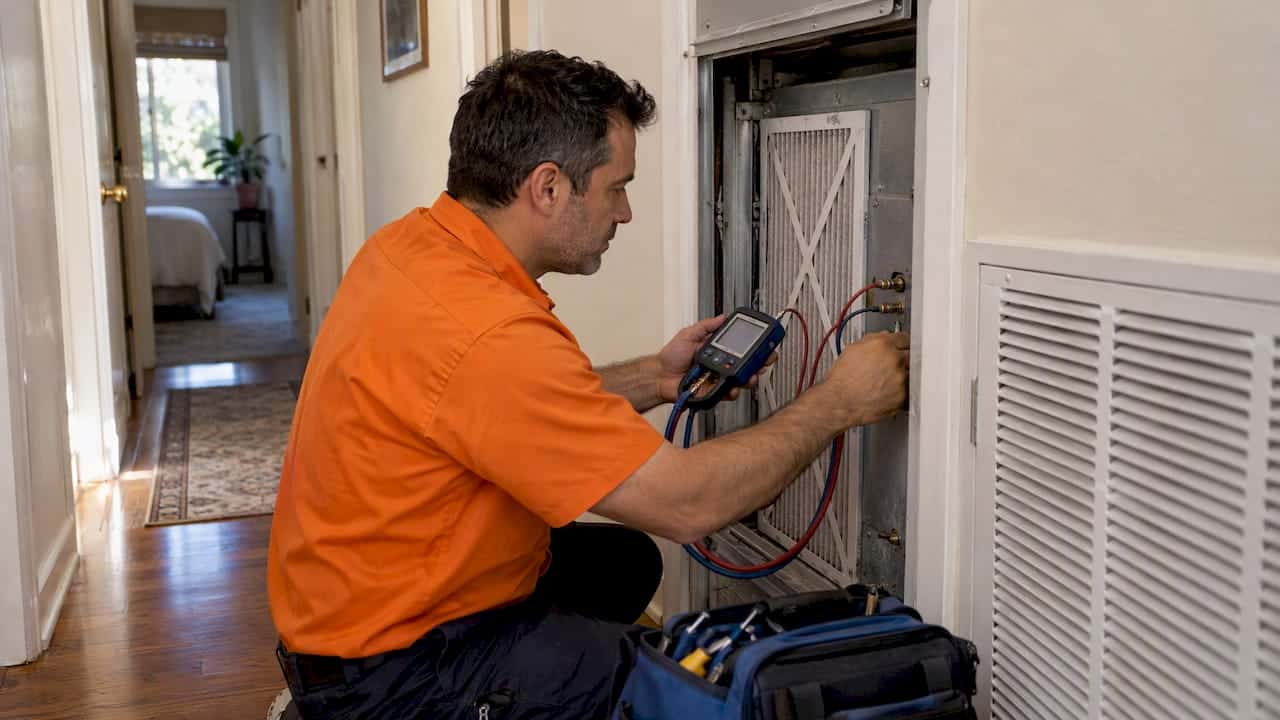
- Measure refrigerant pressure and look for signs of leaks
- Examine the air handler, blower motor, and evaporator coil
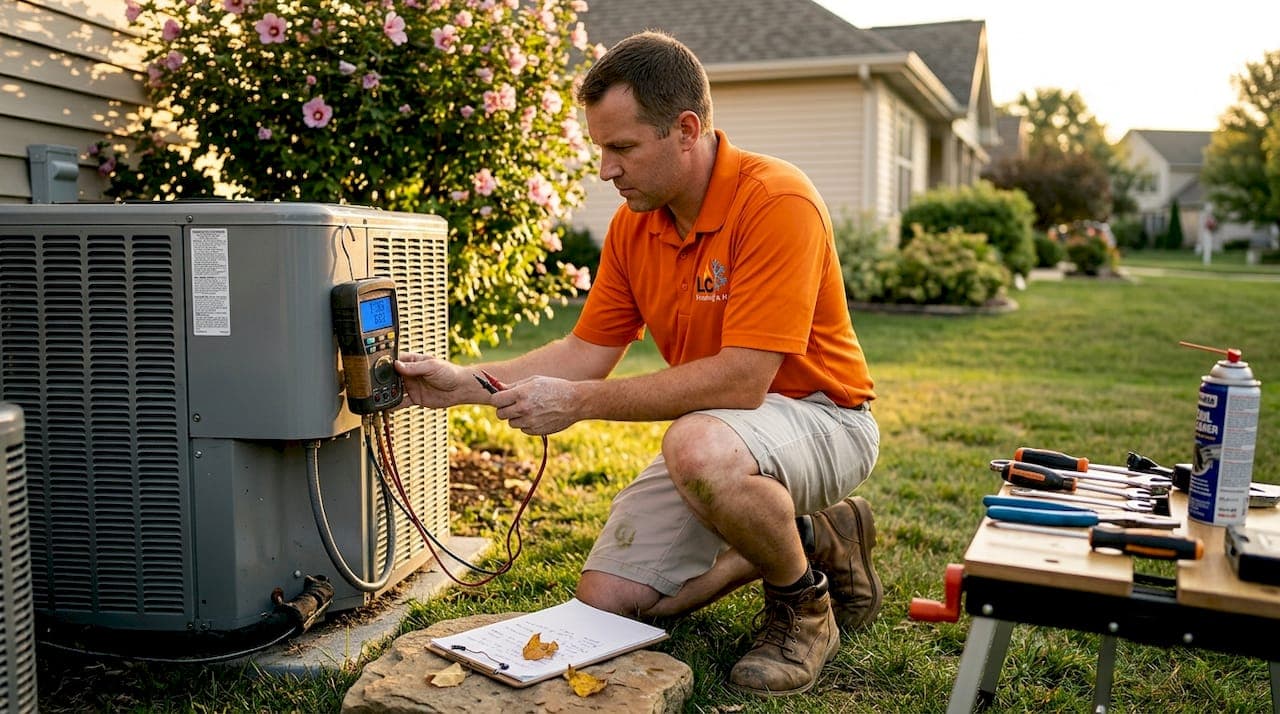
- Assess the condenser unit, compressor function, and airflow
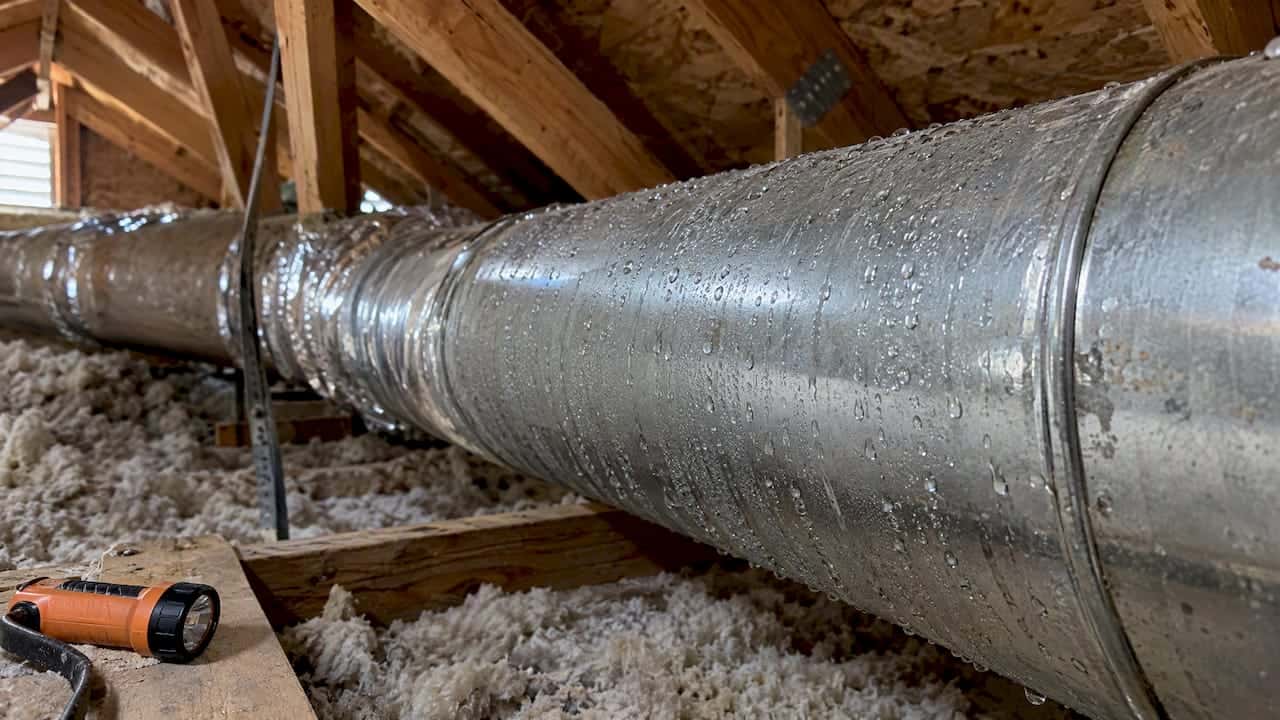
- Review filter condition and ductwork for obvious blockages
- Run the system through a cycle to observe its actual behavior under load
That process takes anywhere from 30 minutes to over an hour depending on the system’s complexity. The fee compensates for technician time, travel, specialized tools, dispatch costs, and the expertise required to interpret what the data means.
“Technicians often lose money on diagnostic-only calls. The diagnostic fee rarely covers the full loaded cost of running a service truck, paying staff, and managing overhead. Most companies rely on converting that visit into a repair to stay profitable.”
That context matters for homeowners. The fee is not padding. It’s a floor, not a ceiling.
Pro Tip: Before you book a service call, ask the company one direct question: “Is your diagnostic fee separate from the trip charge, or does it include travel?” The answer tells you exactly how their billing is structured and prevents confusion on the final invoice.
HVAC repair costs overall depend on several variables, and understanding the diagnostic charge is step one in understanding the full picture.
Typical costs and what drives the price
The national average diagnostic fee for residential HVAC service in 2026 falls between $75 and $200, with the most common range landing at $99 to $159. That’s your baseline expectation for a standard weekday call during normal business hours.

Several factors can push that number higher or lower.
| Scenario | Typical Fee Range | Notes |
|---|---|---|
| Standard weekday service | $75 to $150 | Most common for residential calls |
| Evening or weekend service | $100 to $175 | Reflects higher technician availability costs |
| Emergency or after-hours call | $150 to $300 | Often billed at 1.5x to 2x standard rate |
| Commercial or large system | $150 to $250+ | More complex systems take longer to assess |
| Rural or remote location | $100 to $200+ | Extended travel adds to the fee |
After-hours diagnostic visits carry a premium because companies have to pay technicians emergency labor rates, often 1.5 to 2 times the standard rate. If your air conditioner fails at 9 p.m. on a Friday in July, that’s exactly when you want same-day service. Just budget for the higher fee.
Geographic location also plays a real role. Diagnostic pricing in Los Angeles or New York runs higher than in rural Midwest markets, reflecting local labor costs, fuel prices, and cost of doing business. A $99 fee in Kansas might be $139 in Southern California for the same service.
The pricing model also varies. Some companies charge a flat diagnostic fee regardless of how long the visit takes. Others bill in 15 or 30-minute increments. Flat-rate pricing is easier for homeowners to plan around. Incremental billing can be less expensive for simple problems but unpredictable for complex ones.
Pro Tip: If a company quotes you a flat-rate diagnostic fee upfront, that’s a good sign. It means they’re confident in their process and not incentivized to drag out the visit. Ask if the fee is flat or time-based before scheduling.
To evaluate whether a quoted fee is reasonable, compare it to at least two other local companies. If one company quotes $79 and two others quote $129, the low quote isn’t automatically the winner. It could mean less thorough diagnostics or a setup for upselling. Price is context, not just a number.
How diagnostic fees connect to your repair bill
This is where most homeowner confusion lives. You approve a repair, the technician fixes the problem, and you get a bill. You see a line item for diagnostics and a line item for the repair. Are you being charged twice?
Not necessarily. But you need to know the difference before the service begins.
Most reputable HVAC companies credit the diagnostic fee toward the total repair cost when the homeowner approves work during the same visit. In that scenario, a $150 diagnostic fee becomes a $150 credit applied to your repair invoice. You pay for the repair, not the repair plus the diagnostic charge on top.
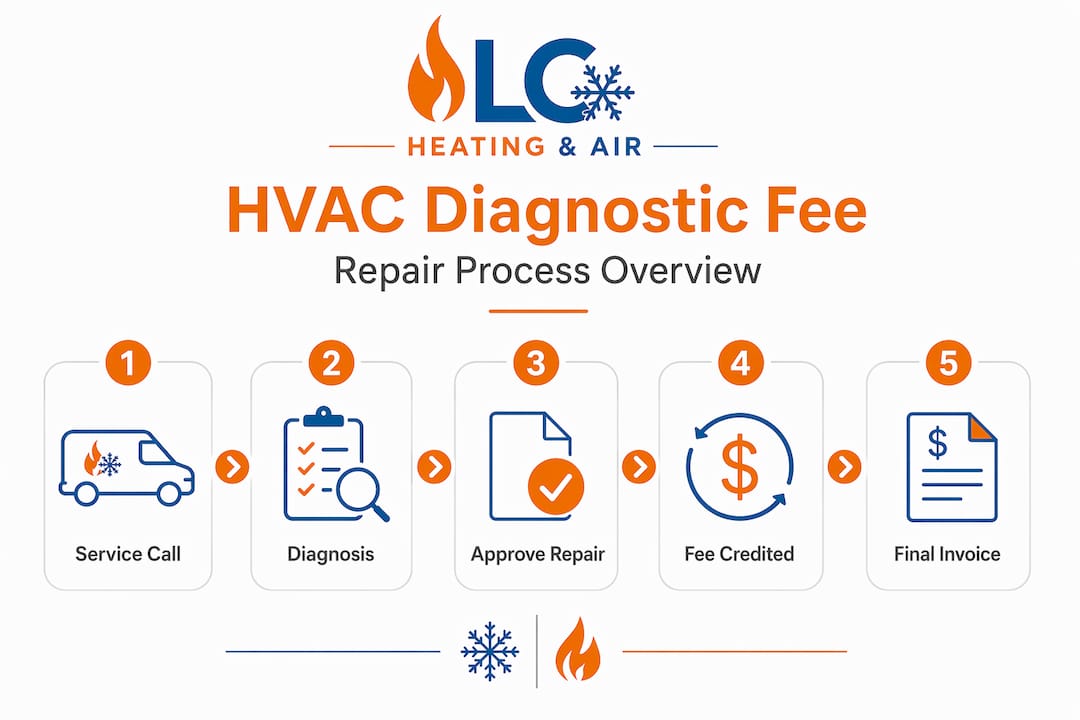
Here’s a practical example. Say your condenser fan motor fails. The repair costs $350 including parts and labor. If the diagnostic fee is $125 and gets credited, you pay $350 total, not $475. The diagnostic credit reduces your out-of-pocket cost by removing double billing.
However, if you decline the repair or the technician finds nothing wrong, the diagnostic fee stands as a standalone charge. That’s fair. The technician invested time and expertise. You owe compensation for that regardless of the outcome.
Here are the situations where you’ll pay the diagnostic fee without a repair credit:
- You decline the recommended repair after hearing the cost
- The system issue resolves itself or cannot be replicated during the visit
- You choose to get a second opinion and don’t proceed with that company
- The diagnostic visit reveals the system needs replacement, and you don’t replace it with that company
Before the technician arrives, ask these specific questions to avoid billing surprises:
- Is there a diagnostic or service call fee, and how much is it?
- Will that fee be credited toward the repair if I approve the work today?
- Do you charge separately for the trip and the diagnostic, or is it one combined fee?
- Will I receive a written estimate before any repair work begins?
- Is the diagnostic fee the same for after-hours or weekend calls?
Reputable HVAC companies itemize their fees on the invoice rather than bundling everything into a single mysterious total. Itemized billing isn’t just good practice. It’s the mark of a company that trusts its own pricing and respects your intelligence as a customer.
Common mistakes that lead to surprise charges
Even well-prepared homeowners can get caught off guard. Knowing what to watch for puts you in a much stronger position.
The most common mistake is assuming the diagnostic is free when a company advertises a “$0 service call.” Read the fine print. Many companies use “free service call” to mean free travel, but still charge a diagnostic fee once the technician starts the assessment. These are two different things.
The second big mistake is choosing a company based on the lowest advertised diagnostic fee. Low diagnostic fees like $29 are sometimes used as entry points for high-pressure sales tactics. The technician arrives, conducts a rushed assessment, and then presents a list of urgent repairs at inflated prices. The $29 you saved becomes $800 you didn’t need to spend.
Other common errors homeowners make include:
- Not asking whether the fee is flat-rate or time-based before the visit
- Assuming all fees are negotiable and pushing back on legitimate charges
- Failing to ask for a written estimate before approving any repair
- Scheduling a standard call when the problem qualifies as an emergency, then balking at the higher rate
- Not mentioning all symptoms when booking, which can extend diagnostic time
Pro Tip: Before the technician starts work, do a quick walk-through of your system’s symptoms. Unusual noises, the last time filters were changed, when the problem started, whether it’s consistent or intermittent. This information cuts diagnostic time and demonstrates you’re an informed homeowner. Prepared customers get better service.
You can also review HVAC troubleshooting basics before the visit to speak more confidently with the technician. You don’t need to diagnose your own system. You just need enough context to have a real conversation.
Repair or replace after the diagnostic
Once your technician delivers a diagnosis, you’ll face a decision: repair the problem or replace the system. This is where the diagnostic fee pays off. A thorough diagnosis gives you real data, not guesswork, to make that call.
Two practical frameworks help homeowners think through this clearly:
-
The 50% Rule. If the cost of the repair exceeds 50% of the price of a new system of comparable size and efficiency, replacement is usually the smarter long-term investment. Spending $2,000 to repair a system that costs $4,500 new rarely makes sense, especially if the unit is older.
-
The $5,000 Rule. Multiply your system’s age by the repair cost. If that number exceeds $5,000, lean toward replacement. A 12-year-old system needing a $450 repair scores 5,400, which crosses the threshold. A 5-year-old system needing the same repair scores 2,250, well within the range worth fixing.
-
Refrigerant type matters. If your system uses R-22 refrigerant, also called Freon, note that this refrigerant has been phased out and is now expensive and increasingly hard to source. A repair involving R-22 recharge may cost far more than the same repair on a modern R-410A system.
-
Efficiency and age combined. A 15-year-old system running at 10 SEER efficiency costs significantly more to operate each month than a modern 16 to 20 SEER replacement. Sometimes the repair math looks manageable, but the monthly energy cost math tells a different story.
Ask your technician to walk you through both scenarios before committing. A good HVAC professional gives you honest numbers, not pressure. You can also browse HVAC equipment options to understand what a replacement system might realistically cost in your area.
My honest take on diagnostic fees and contractors
I’ve been in this industry for over twenty years, and the diagnostic fee is one of the most misunderstood parts of HVAC service. I understand why. Nobody likes paying for something before they see results.
But here’s what I’ve learned from thousands of service calls. The homeowners who push back hardest on diagnostic fees are often the ones who end up paying more in the long run. They get drawn in by a $29 fee from a company that makes up the difference on inflated parts markups. Or they decline a proper diagnosis and approve a repair that doesn’t fix the underlying problem.
A fair, clearly explained diagnostic fee is actually a signal of a trustworthy company. It means they’re confident enough in their value to charge for their expertise rather than burying it in mysterious repair totals.
What I’ve found actually works: ask every question upfront. How is the fee structured? Is it credited toward repairs? What’s included? A company that gets defensive about those questions is telling you something important before the truck even leaves the lot.
The uncomfortable truth is that a thorough diagnosis protects you more than it benefits the technician. When the root cause is correctly identified, repairs stick. When it’s guessed at, you end up with a return call and another charge.
Respect the expertise. Ask the questions. And choose a company that welcomes both.
— Leo
Transparent HVAC diagnostics from LC Heating and Air Conditioning
If you’ve been burned by surprise HVAC fees before, you already know how much the billing conversation matters. At LC Heating and Air Conditioning, we believe you should know exactly what you’re paying for before any work begins.

Our flat-rate diagnostic pricing means no surprises on your invoice. We walk you through what we find, explain your options clearly, and apply your diagnostic fee toward the repair cost when you move forward the same day. With over 20 years serving Los Angeles homeowners and same-day availability, we show up prepared and ready to solve the problem. Whether your system is acting up during a heat wave or you just want answers before they become emergencies, our team is ready. Schedule your HVAC service today and get a straight answer from a technician who knows Los Angeles HVAC inside and out. Or visit lahvaclc.com to learn more about our services and pricing.
FAQ
What is an HVAC diagnostic fee?
An HVAC diagnostic fee is a charge for the technician’s time and expertise in identifying the cause of your system’s problem. It covers travel, tools, labor, and the inspection process, separate from any repair costs.
How much does an HVAC diagnostic typically cost?
Most residential HVAC diagnostic fees range from $75 to $200, with the standard rate landing between $99 and $159 for a weekday service call during normal hours.
Is the diagnostic fee separate from the repair cost?
Usually, yes. But most reputable companies credit the diagnostic fee toward your repair bill if you approve the work during the same visit, so you are not paying both charges in full.
Why is my after-hours diagnostic fee so much higher?
Emergency and after-hours calls are billed at a premium because technicians earn higher pay rates outside standard hours, often 1.5 to 2 times the normal labor rate, which raises the overall diagnostic cost.
Should I worry about a very low diagnostic fee?
Yes. An unusually low fee, such as $29, can be a tactic to get a technician in your home before presenting high-pressure recommendations for expensive repairs. Compare quotes and ask how billing works before you book.
Recommended
- HVAC Equipment & Pricing | Goodman, Daikin, ADP, Aspen | LC Heating & Air | LC Heating & Air
- What Is HVAC Balancing? A Homeowner’s Gu… | LC Heating & Air
- HVAC Troubleshooting & How-To Guides | LC Heating & Air | LC Heating & Air
- What is HVAC commissioning: your guide to efficiency | LC Heating & Air
Leo, Owner & Lead Technician at LC Heating & Air
Leo leads LC Heating & Air as an owner-operator and holds California CSLB C-20 HVAC license #1073586. His guides focus on practical diagnostics, safe repair decisions, and clear advice for Los Angeles homeowners.