- Furnace Smells Like Gas? Here’s What to Do Right Now
- Key Takeaways
- Immediate Safety Steps When You Smell Gas Near Your Furnace
- Common Causes Behind a Furnace Gas Smell
- What a Licensed Technician Checks During a Gas Odor Call
- When to Evacuate vs. When to Schedule Service
- Preventing Gas Odor Problems Before They Start
- Who’s Behind This Advice
- How to Safely Check for a Gas Smell Without Risking Ignition
- Why Professional Gas Detectors Matter More Than Your Nose
- Making Your Home Safe While You Wait for a Technician
- The Real Health Risks of Ignoring a Gas Smell
- What This Guide Gets Right That Most Advice Misses
- Get a Same-Day Gas Furnace Inspection From LC Heating and Air Conditioning
- FAQ
- Recommended
Furnace Smells Like Gas? Here’s What to Do Right Now
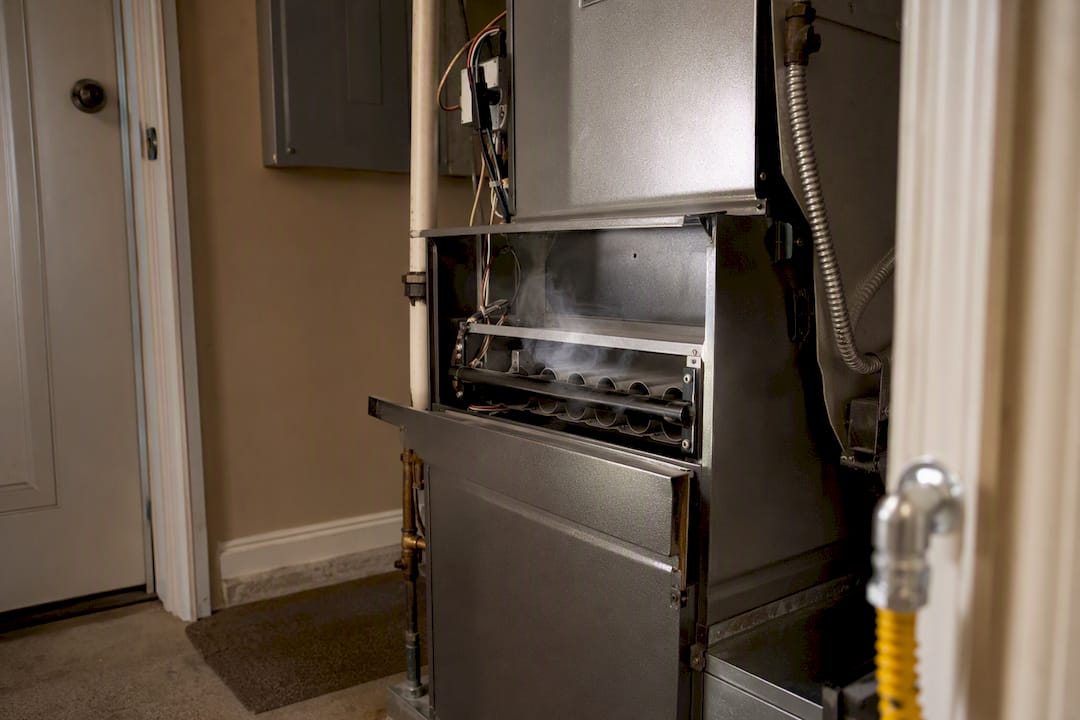
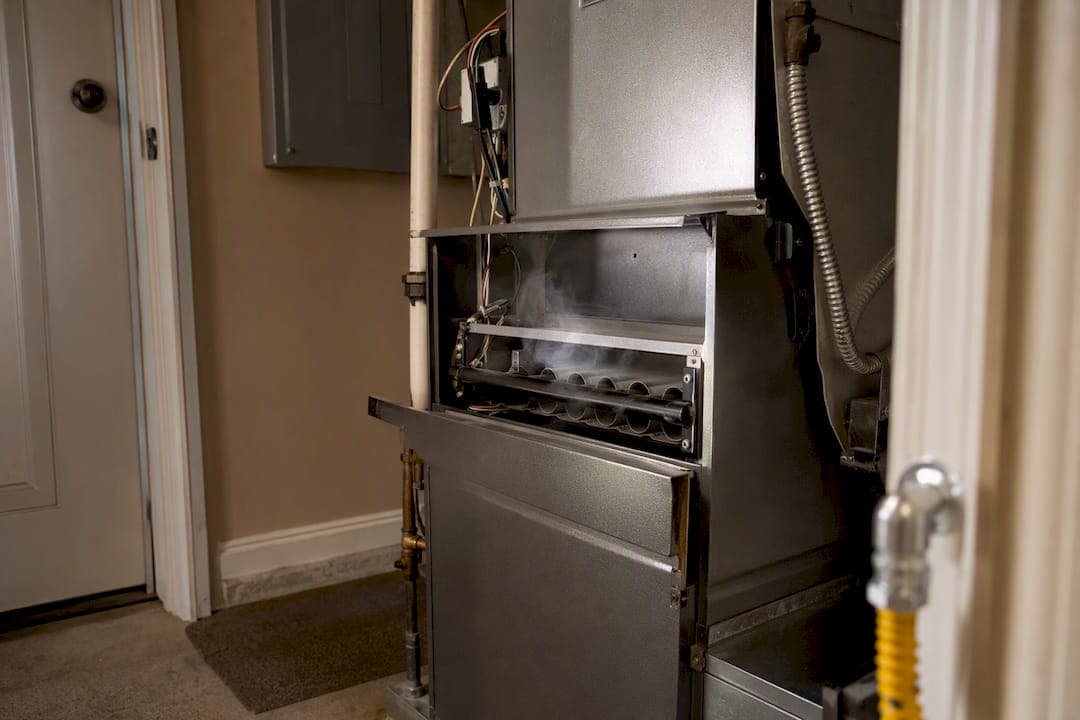
If your furnace smells like gas, treat it as an emergency until you know otherwise. A strong or lingering rotten-egg odor, hissing near your furnace, or dizziness in anyone at home means you leave the house immediately and call from outside. A faint whiff that disappears within a few seconds during startup can be normal, but any odor that returns or lasts longer deserves a professional look.
What to do immediately:
- Get everyone, including pets, out of the house right away
- Do not flip light switches, use your phone, or open a garage door opener inside
- Call 911 or your gas utility’s emergency line once you’re a safe distance away
The gas added to natural fuel smells like sulfur specifically so you notice a leak fast. That smell is your early warning system. Don’t ignore it, and don’t try to troubleshoot it on your own.
Key Takeaways
A furnace gas smell that lingers, recurs, or comes with hissing or dizziness means evacuate and call for help immediately, while a brief startup puff that clears in seconds usually does not.
| Point | Details |
|---|---|
| Evacuate for strong or lasting odors | Leave the house, avoid switches and phones, call 911 and your gas utility from outside. |
| Startup puffs are usually normal | A whiff that clears within seconds during ignition rarely signals danger, unless it recurs. |
| Persistent odor means professional diagnosis | Licensed technicians use gas meters, pressure tests, and combustion analysis to find the source. |
| CO alarms are separate from gas smell | Carbon monoxide has no odor, so alarms are essential regardless of whether you smell gas. |
| Annual maintenance prevents most leaks | LC Heating and Air Conditioning recommends a yearly inspection to catch valve and connector issues early. |
Immediate Safety Steps When You Smell Gas Near Your Furnace
Your first move matters more than your next ten. Here’s the exact order to follow.
- Leave the house now. Grab family members and pets and head outside, no detours to grab your wallet or shut windows.
- Skip anything electrical. Light switches, phones, doorbells, and garage door openers can all create a spark. Leave them alone until you’re outside.
- Shut off the gas only if you can do it safely and know where the main valve is. If you’re unsure, leave that job to the professionals responding to your call.
- Move to a safe distance, then call. Dial 911 first, then your gas utility’s emergency number. A neighbor’s phone or your own mobile works fine once you’re clear of the house.
- Wait for the all-clear. Don’t go back inside until fire responders or utility technicians tell you it’s safe.
Pro Tip: Keep your gas utility’s emergency number saved in your phone contacts right now, before you ever need it. In a stressful moment, scrolling through old texts to find a bill isn’t where you want to be spending time.
Most gas utilities send someone out fast, often within the hour, and the inspection to make your home safe again typically costs nothing.
Common Causes Behind a Furnace Gas Smell
Not every gas odor points to the same problem, and figuring out which one you’re dealing with changes everything about your next step. Here’s how the most frequent causes actually present themselves.
A brief puff during startup is often the most harmless explanation. Modern furnaces with electronic ignition sometimes release a small amount of unburned gas in the split second before the igniter catches. This clears within seconds and shouldn’t return once the burner is running steadily. If it’s gone before you’ve finished wondering what it was, that’s typically nothing to worry about.
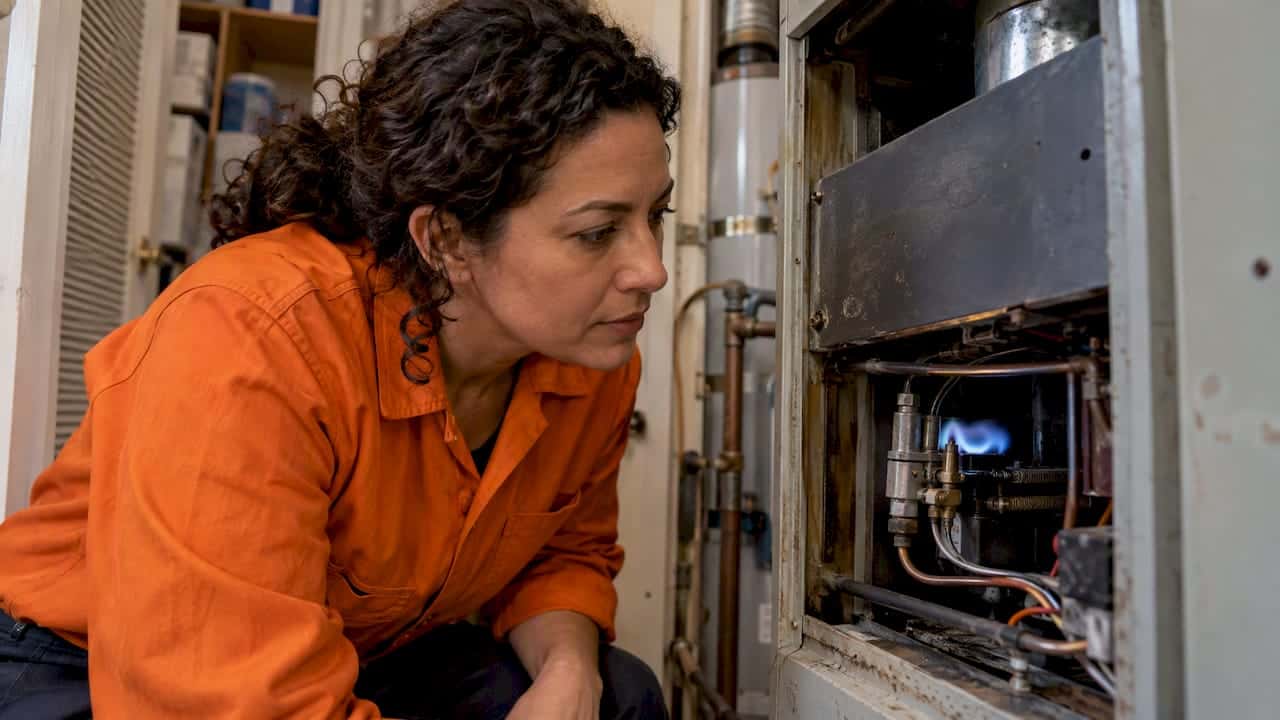
Delayed ignition is a different story. If your furnace’s igniter is weak or there’s a gap between when gas releases and when it actually lights, you might hear a “whoomph” sound, notice a yellow flame instead of blue, or see soot around the burner compartment. This odor lingers longer than a startup puff and tends to repeat every cycle, which is your signal to call a technician rather than write it off.
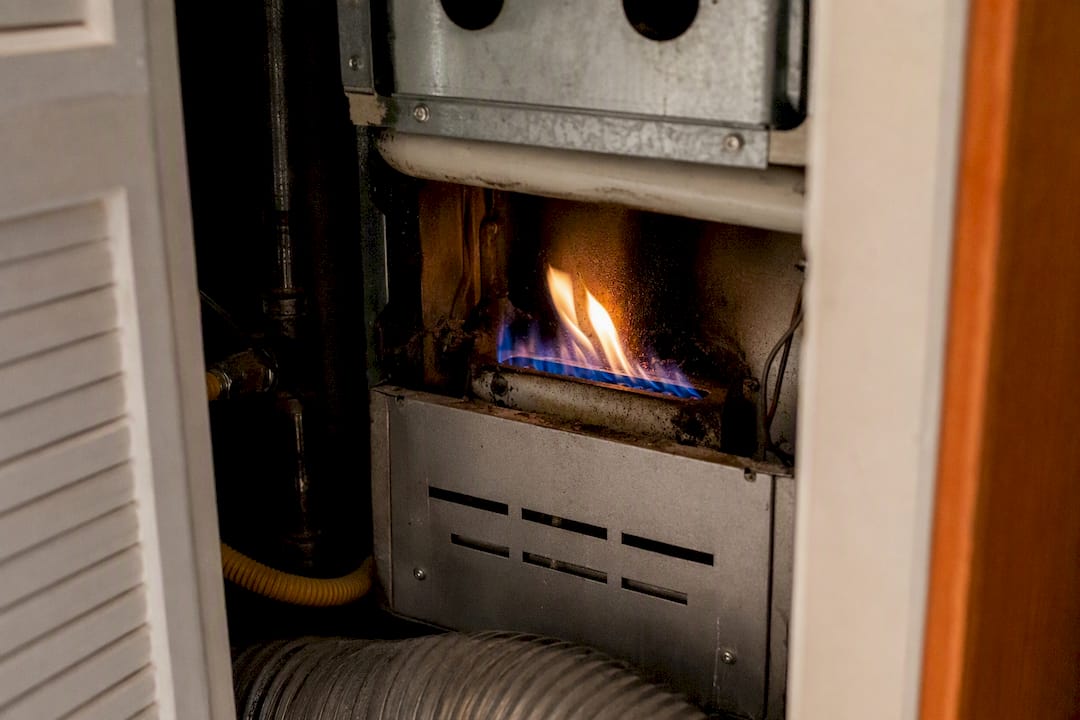
Leaking connectors or a faulty gas valve produce a persistent smell that shows up even when the furnace is completely off. If you catch a hissing sound near the gas line or valve, that’s a strong indicator of an active leak rather than a combustion byproduct.
A cracked heat exchanger is the cause that should worry you most. The odor typically appears once the blower kicks on, and it often comes paired with soot, a yellow flame, or a sense of stuffiness in the room. A crack lets combustion gases, including carbon monoxide, escape into your ductwork instead of venting outside, which makes this a same-day repair, not a wait-and-see issue.
Blocked venting or backdraft can push exhaust gases back into your living space instead of outside, often carrying a faint gas or burning odor along with them.
Residual odor after recent repairs or line purging can also linger for a short while. Utilities purge lines during service work, and some odorant residue can remain temporarily. If it doesn’t fade within a reasonable window, treat it the same as any other persistent smell.
| Cause | Typical smell pattern | Other signs |
|---|---|---|
| Startup puff | Seconds, then gone | None |
| Delayed ignition | Repeats each cycle | Whoomph sound, yellow flame, soot |
| Leaking valve/connector | Constant, even when off | Hissing near fittings |
| Cracked heat exchanger | Appears when blower runs | Soot, yellow flame, stuffy air |
| Residual from recent service | Fades over hours | None, if truly residual |
If your furnace won’t ignite properly at all, that’s often the same underlying issue driving both the odor and the ignition delay.
What a Licensed Technician Checks During a Gas Odor Call
A professional visit isn’t guesswork. Technicians follow a specific sequence to find the source of a gas smell and confirm your furnace is safe to run again.
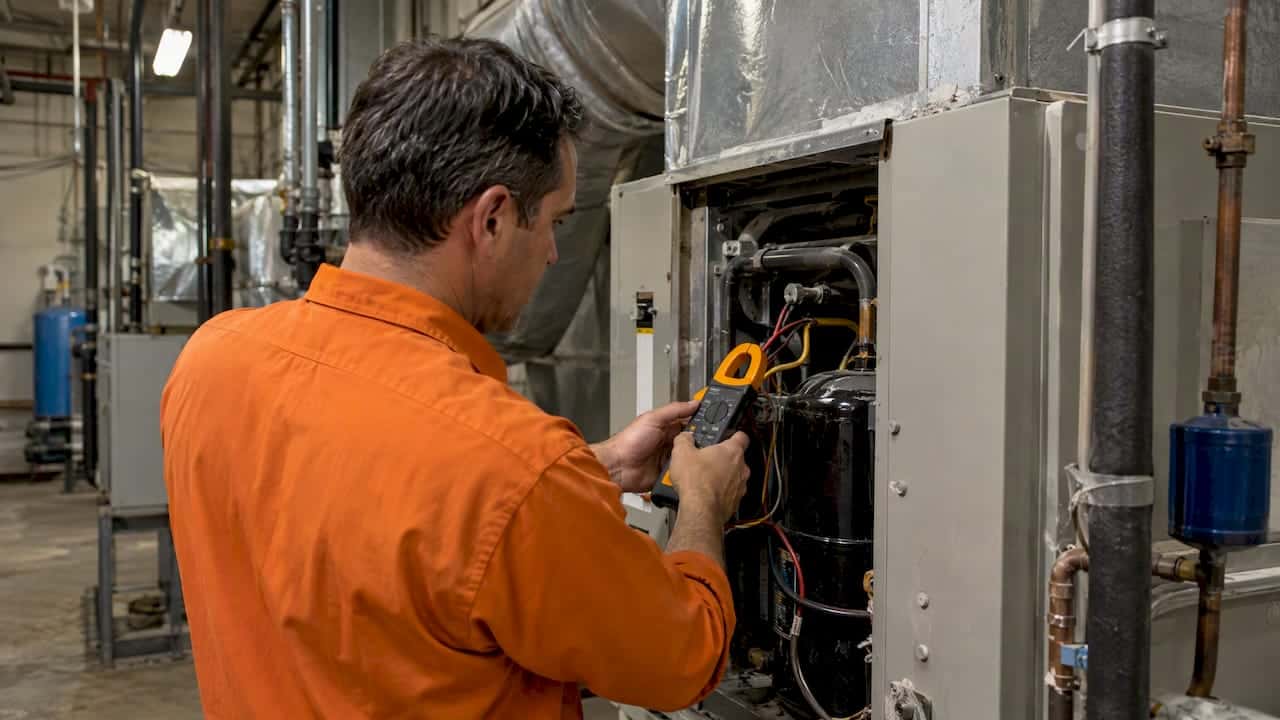
- Combustible-gas meter scan to pinpoint exactly where gas is escaping, often paired with a soapy-water check on exterior fittings where bubbles reveal a leak instantly
- Pressure testing on the supply line to catch drops that indicate a leak somewhere in the system
- Combustion analysis and CO testing to measure how efficiently the furnace is burning fuel and whether carbon monoxide levels are within safe range
- Visual or camera inspection of the heat exchanger to check for cracks that wouldn’t be visible otherwise
Technicians typically prioritize locating the leak with a combustible-gas meter first, then confirm with pressure testing before deciding on a repair.
Common fixes include tightening or replacing flexible connectors, swapping out a faulty gas valve, cleaning or replacing burners, repairing blocked venting, or replacing a cracked heat exchanger. Connector and valve repairs are usually quick, same-day jobs. A heat exchanger replacement is a bigger undertaking and, depending on your furnace’s age, sometimes opens the conversation about whether replacement makes more financial sense than repair. A licensed technician handling your gas furnace repair should walk you through exactly which category your situation falls into before any work begins.
When to Evacuate vs. When to Schedule Service
Not every gas smell requires the same urgency, and knowing the difference saves you from either panicking unnecessarily or waiting too long.
This is an emergency:
- The odor is strong, persistent, or accompanied by hissing
- Multiple people in the house feel dizzy, nauseous, or have headaches
- You smell gas even when the furnace is completely off
This calls for same-day service, not 911:
- A faint odor shows up only at startup but keeps recurring cycle after cycle
- You notice soot, a yellow flame, or lingering smell after the furnace shuts down
If you’re able to safely shut off the gas at the main valve, do it. If you’re not sure how, or not comfortable doing it, leave that step to the responders and don’t go back inside until they clear the house.
Preventing Gas Odor Problems Before They Start
Most gas smell emergencies trace back to something that could have been caught months earlier. Here’s what actually reduces your risk.
- Replace filters on schedule and keep the area around your furnace free of stored boxes, lint, and anything flammable.
- Have visible gas piping and flexible connectors inspected during your annual visit, along with the seals and shutoff valve.
- Install carbon monoxide alarms on every level of your home. CO is odorless and undetectable by smell alone, so a gas leak and a CO problem require two different types of protection.
- Keep a written record of every inspection and repair. If your utility ever needs to follow up, or your insurance asks questions, that paper trail speaks for itself.
Pro Tip: A healthy furnace is a quiet, unremarkable one. If you find yourself thinking about your furnace at all outside of the thermostat, that’s usually your first sign something needs a look.
For homes with boilers or older systems, the same seasonal maintenance principles apply to keeping combustion equipment running safely.
Who’s Behind This Advice
This guide is written by Leo, who has spent over twenty years working on HVAC systems across Los Angeles through LC Heating and Air Conditioning. That includes everything from century-old bungalows in Hollywood to modern heat pump and multi-zone installations across Bel Air and Brentwood.
When our technicians respond to a gas odor call, the process is the same every time: scan for leaks with a combustible-gas meter, pressure test the line, inspect the burners and venting, measure carbon monoxide output, and document what we find before the furnace goes back into service. No guessing, no upsell pressure, just a clear answer about what’s safe and what needs fixing.
LC Heating and Air Conditioning offers same-day diagnostics and flat-rate pricing specifically so homeowners aren’t left wondering what a gas-odor visit is going to cost before the technician even walks in the door.
How to Safely Check for a Gas Smell Without Risking Ignition
If you’re not sure whether what you’re smelling is actually gas, there’s a safe way to confirm it, but the ground rules matter. Walk through the house with your nose only. Never use a lighter, a candle, or any open flame to “test” for gas, and don’t flip switches on and off to see if anything changes.
Move slowly and pay attention to where the smell is strongest. If it’s concentrated right around the furnace itself rather than spread evenly through the house, that points toward the appliance rather than an underground line issue. Check whether the smell is present when the furnace is completely off. An odor that only shows up when the burner ignites is different from one that’s there constantly.
Listen as much as you smell. A hissing sound near any gas fitting, valve, or connector is a strong sign of an active leak, and it should end your smell test immediately. At that point, stop investigating and leave the house.
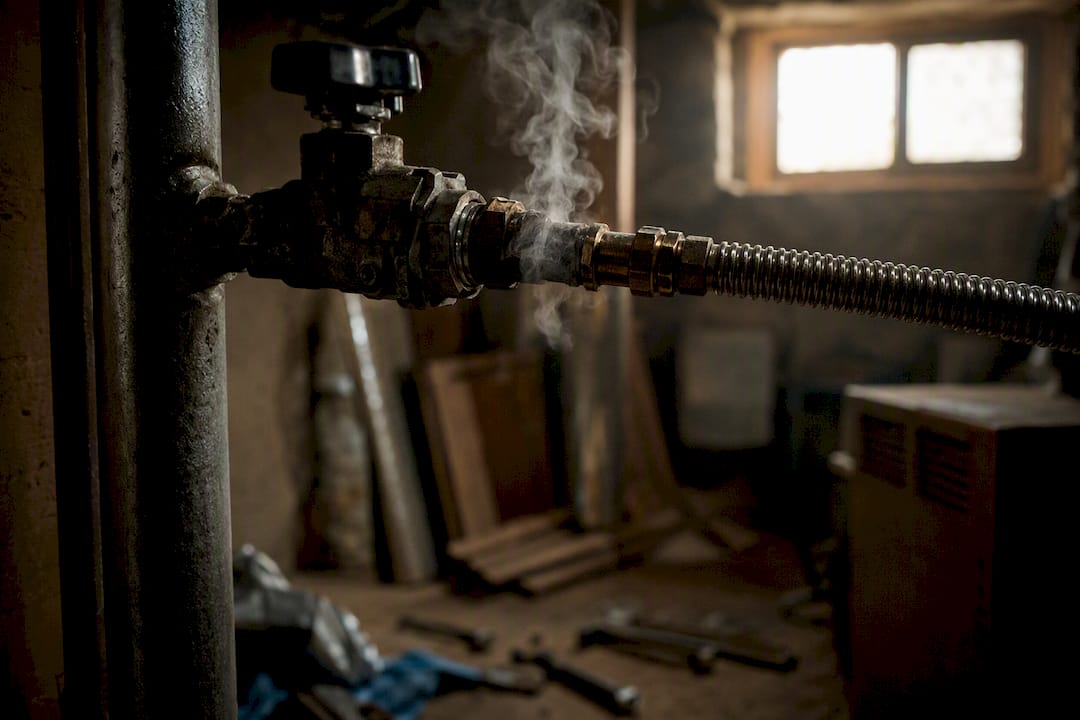
Keep this test brief. You’re not trying to diagnose the exact cause yourself. Your goal is simply to gather enough information to decide whether this is an evacuate-now situation or a same-day-service situation. Anything beyond confirming the presence and rough location of the smell belongs to a licensed technician with the right equipment, not a homeowner standing in a hallway.
Why Professional Gas Detectors Matter More Than Your Nose
Your nose is a decent early warning system, but it has real limits. Mercaptan, the sulfur compound added to natural gas, is easy to detect at low concentrations, but a stuffy nose, a strong cooking smell, or simple fatigue can dull your sense of smell right when you need it most.
Professional combustible-gas detectors don’t have that problem. Technicians use electronic meters sensitive enough to find a leak at a fitting or seam that would never produce a noticeable smell on its own, especially in a basement or utility closet with limited airflow. That’s part of why a professional inspection finds problems a homeowner walking the same space would miss entirely.
Beyond the one-time inspection, plug-in combustible gas detectors are worth considering for your furnace room or basement, working alongside your carbon monoxide alarms rather than replacing them. Gas detectors sense combustible fuel; CO alarms sense carbon monoxide. They’re solving two separate problems, and neither one substitutes for the other. A furnace room that’s home to both is meaningfully safer than one relying on smell alone.
Making Your Home Safe While You Wait for a Technician
Once you’ve confirmed an odor that isn’t just a startup puff and you’ve made your emergency calls if the smell was strong, there’s a short list of things you can do to make the house safer while you wait, assuming the situation didn’t require full evacuation.
Open windows and doors to ventilate the area, especially near the furnace itself, if it’s safe to be inside. Ventilation dilutes any lingering gas and reduces concentration in the air. Turn off the furnace at the thermostat if you haven’t already, and avoid running the blower unnecessarily until a technician has looked at it.
Keep the area around the furnace clear so the technician has room to work, and avoid using other gas appliances nearby until the source is confirmed. If you have pets, keep them out of the furnace room during this window too.
Don’t try to “wait it out” hoping the smell resolves on its own. A temporary improvement doesn’t mean the underlying cause is fixed. It might just mean ventilation is doing its job while the actual leak, connector, or valve issue remains exactly where it was.
The Real Health Risks of Ignoring a Gas Smell
A gas leak isn’t only a fire and explosion risk. Prolonged exposure to natural gas, even at levels below what most people would call dangerous, has physical effects worth taking seriously.
Headaches, dizziness, and nausea are common early symptoms, and they tend to worsen the longer someone stays in an affected space. Fatigue, difficulty concentrating, and irritated eyes, nose, or throat can follow. Children, elderly household members, and anyone with respiratory conditions typically feel these effects faster and more severely than a healthy adult would.
Carbon monoxide adds a separate, more dangerous layer to this picture. Since CO has no smell of its own, a gas odor and a CO problem can exist together or entirely separately, and a house can have dangerous CO levels with zero detectable odor at all. That’s precisely why CO alarms are non-negotiable safety equipment rather than an optional upgrade, regardless of whether you’ve ever smelled gas from your furnace.
If anyone in your home reports these symptoms alongside a gas smell, treat it exactly like the strong-odor scenario: evacuate and call for help. Don’t wait to see if symptoms pass.
What This Guide Gets Right That Most Advice Misses
Most articles on this topic either scare you into thinking every furnace odor means impending disaster, or they undersell the risk with vague reassurances. Neither serves you well. The truth sits in the middle, and it depends entirely on duration and pattern, not just the presence of a smell.
The conventional advice to “call a professional if you smell gas” is technically correct but practically useless. It skips the part homeowners actually need: how to tell a three-second startup puff from a leak that’s been building for a week. That distinction is what determines whether you’re calling 911 or scheduling a Tuesday appointment.
If I had to pick the one thing readers should prioritize, it’s this: stop treating annual maintenance as optional. Nearly every cause covered here, from failing connectors to weak igniters, gets caught earlier and cheaper during a routine inspection than during an emergency call. The homeowners who never smell gas from their furnace usually aren’t lucky. They’re the ones who had someone look at it every fall.
— Leo
Get a Same-Day Gas Furnace Inspection From LC Heating and Air Conditioning
If you’ve just walked back into your house after a gas scare, or you’ve noticed a startup smell that keeps coming back, you don’t need another guessing game about pricing or whether the technician is going to try to upsell you into a new system. LC Heating and Air Conditioning runs flat-rate pricing on furnace repairs, so you know the cost before any work starts, and same-day service means you’re not living with an unresolved gas smell for a week while you wait for an appointment.
Beyond furnace repairs, LC Heating and Air Conditioning specializes in heat pumps, mini split systems, and commercial VRF systems across Los Angeles, from historic homes in West Hollywood to modern multi-zone installations in Beverly Hills and Brentwood. Whether the issue turns out to be a simple connector or points toward a larger system decision, the full HVAC service lineup covers the diagnosis and the fix under one roof. Request a same-day inspection through LC Heating and Air Conditioning and get a clear, documented answer about what’s happening with your furnace.
FAQ
Is it okay to smell a little gas from a furnace?
A brief whiff during startup that clears within seconds can be normal, but any smell that lingers, recurs, or returns when the furnace is off should be checked by a licensed technician right away.
Is it normal to smell a small amount of gas?
A small amount tied specifically to furnace ignition is common with electronic-ignition systems, but the smell should disappear almost immediately. If it doesn’t, treat it as a warning sign, not a quirk.
Is it safe to run a furnace if it smells like gas?
No. If the odor is persistent or strong, shut the furnace off, evacuate, and call your gas utility or 911 before running it again, since continuing to operate it risks both fire and carbon monoxide exposure.
How can you tell if your furnace is leaking gas?
Look for a persistent rotten-egg smell even when the furnace is off, listen for hissing near fittings or the gas valve, and watch for a yellow flame or soot, all of which point toward a leak rather than a harmless startup puff.
What should I do if my furnace smells like rotten eggs?
Rotten-egg odor is the added scent in natural gas meant to alert you to a leak, so evacuate immediately if it’s strong or persistent and call 911 or your gas utility from a safe distance outside.
Recommended
Leo, Propietario y Técnico Principal en LC Heating & Air
Leo dirige LC Heating & Air como propietario-operador y tiene la licencia C-20 HVAC #1073586 de California. Sus guías se enfocan en diagnósticos prácticos, decisiones de reparación seguras y consejos claros para propietarios de Los Ángeles.