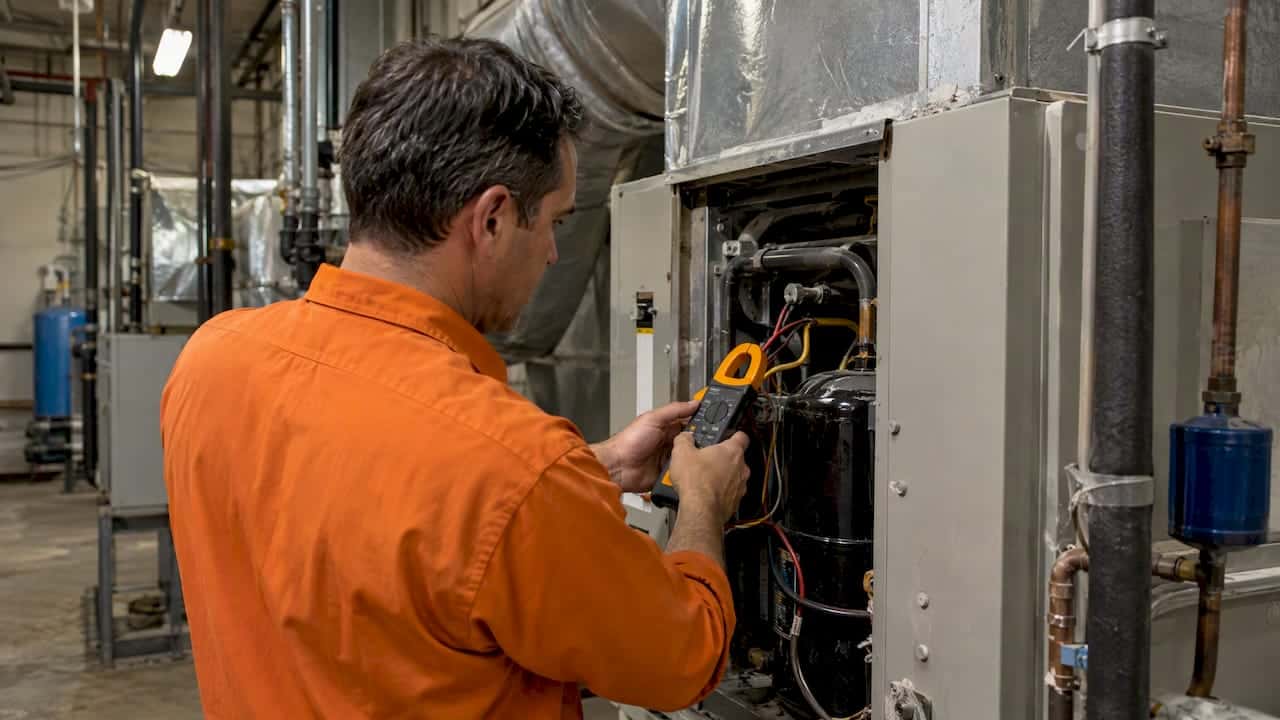
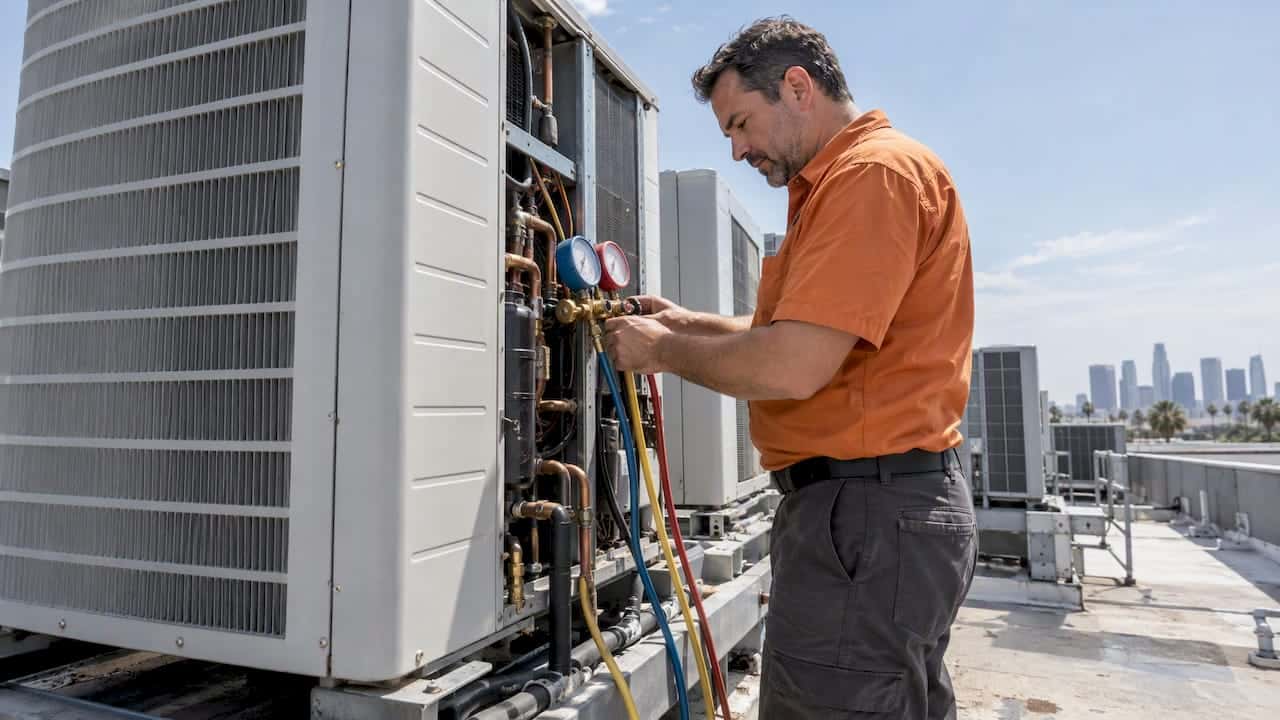
- How to Locate the Source of the AC Noise
- Common AC Noises, Their Causes, and How Urgent Each One Is
- Safe DIY Checks You Can Try Before Calling for Repair
- When Should You Call an HVAC Professional?
- What LC Heating & Air Conditioning Sees in the Field
- A Technician’s Honest Take on Noisy AC Units
- Get a Same-Day Diagnosis From LC Heating and Air Conditioning
- Where This Guide’s Safety and Diagnostic Guidance Comes From
- Sources
- FAQ
- Recommended
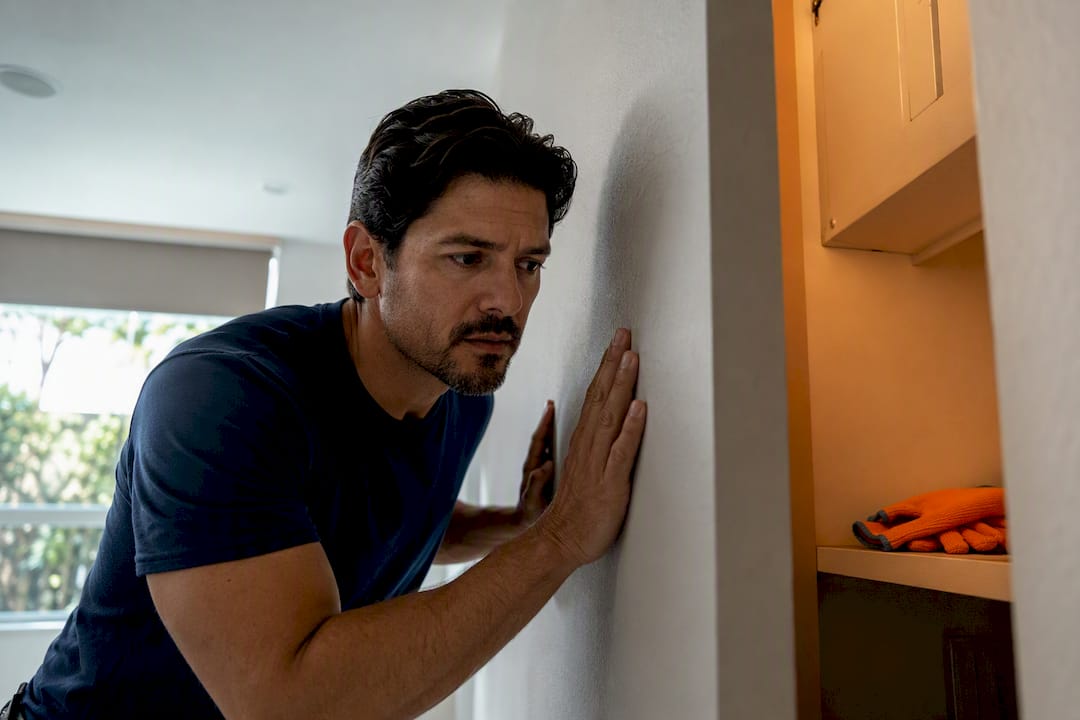
Grinding, loud banging, hissing with a chemical smell, or any sign of electrical sparking means one thing: shut the unit off now and call a licensed technician. For lighter sounds like rattling or whistling, you can usually run a few safe checks yourself, like a filter inspection or a quick look for loose panels, before you decide it needs a professional. When you’re not sure which category your noise falls into, treat it like the dangerous kind. Power down and call for help.
TL;DR:
- Most urgent AC noises like grinding, banging, or hissing near refrigerant lines require shutting off the system immediately and calling a professional.
- Noise localization, including listening at the outdoor condenser, indoor vents, and noting when sounds occur, helps identify the true source and urgency.
- Common causes of specific sounds include broken parts for banging, worn bearings for grinding, electrical issues for buzzing, and airflow restrictions for whistling and hissing.
- Simple DIY checks like tightening panels, replacing filters, and clearing debris can resolve many homeowner complaints without professional help.
- Call a technician right away if you hear loud grinding, refrigerant leaks, electrical arcing, or if the system repeatedly trips breakers, especially on units over 12 years old.
How to Locate the Source of the AC Noise
Before you can fix anything, you need to know where the sound is actually coming from. That sounds simple, but AC noise troubleshooting trips up a lot of homeowners because sound travels through ductwork, walls, and framing in ways that make it seem like it’s coming from somewhere it isn’t.
Technicians call this “noise localization,” and it’s the first real step in any diagnosis. A rattle you hear at a bedroom vent might actually originate at the outdoor condenser, transmitted through the duct system like a tin-can telephone. Homeowners commonly mislocalize HVAC sounds for exactly this reason, and the fix is straightforward: listen in more than one place.
Run through this quick sequence:
- Note when it happens. Does the noise occur at startup, during steady running, or at shutdown? Each timing points to different components.
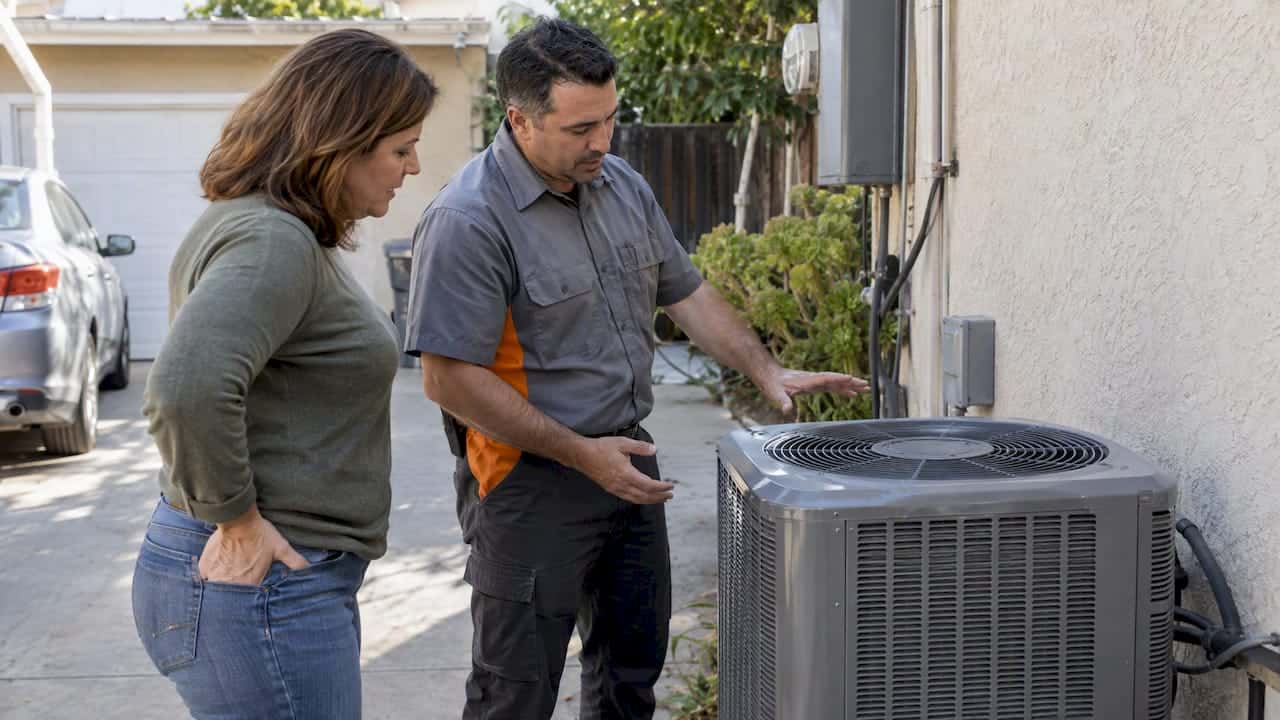
- Stand next to the outdoor condenser while the system runs and listen for grinding, buzzing, or rattling at the source.
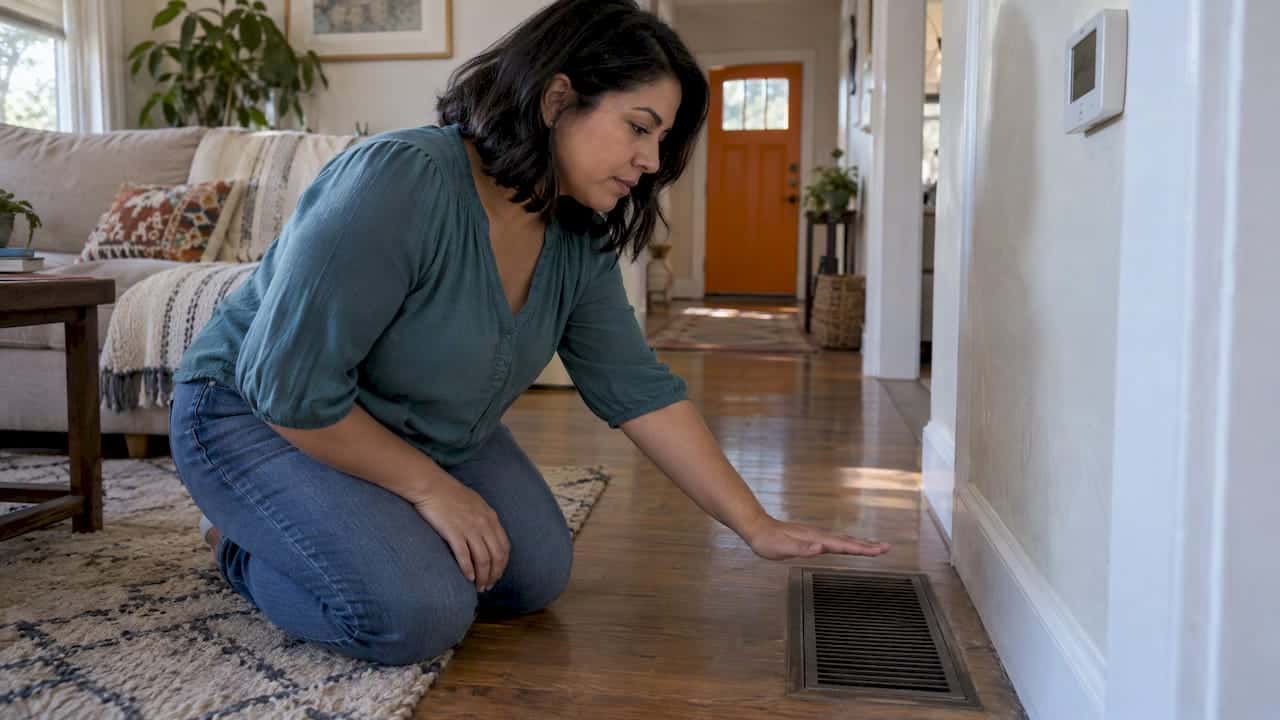
- Walk indoors and listen at the air handler or furnace closet, then at individual vents, to see if the sound is louder or quieter than it was outside.
- Compare loudness at one vent versus the whole house. A noise isolated to one room often points to that specific duct run, not the main unit.
- Write down the sound quality in plain words: bang, squeal, hiss, buzz, click, or gurgle.
That last step matters more than most people realize. A technician arriving for a service call can often narrow down the likely cause in minutes if you can describe the noise accurately, tell them when it started, and mention whether a breaker has tripped. System age matters too. A 14-year-old condenser making new noise tells a different story than a 2-year-old unit doing the same thing.
Pro Tip: Record a short video on your phone the next time the noise happens. Audio alone loses a lot of detail, but a technician who can hear the actual pitch and rhythm over the phone can often tell you whether it’s safe to wait for a scheduled appointment or worth an emergency call.
Common AC Noises, Their Causes, and How Urgent Each One Is
Not every strange sound means trouble, but some absolutely do. The table below maps the most frequent complaints homeowners report to their likely mechanical cause and how fast you need to act.
| Sound | Likely Cause | Common Location | Urgency |
|---|---|---|---|
| Banging or clanking | Loose or broken part inside compressor, bent fan blade hitting housing | Outdoor condenser | High, shut off and call |
| Grinding | Worn motor bearings, failing blower motor | Outdoor unit or indoor air handler | High, shut off and call |
| Screeching or squealing | Belt slippage (older systems), motor bearing wear | Indoor blower or outdoor fan motor | Medium to high |
| Buzzing or humming | Loose electrical component, debris against the outdoor unit, contactor issues | Outdoor condenser | Medium, monitor closely |
| Clicking | Normal at startup/shutdown; repeated clicking can mean a failing relay or capacitor | Outdoor unit or air handler | Low if occasional, medium if repeated |
| Whistling or hissing | Restricted airflow (dirty filter, closed vents) or, if hissing continues, a refrigerant leak | Ductwork, vents, or refrigerant lines | Low for whistling, high for hissing |
| Gurgling | Condensate line blockage, sometimes trapped refrigerant in the lines | Indoor unit or drain line | Medium |
Each of these sounds has a mechanical reason behind it. Banging usually means a physical part inside the compressor housing has broken loose. Once that piece starts hitting the fan blade or housing wall on every rotation, it’s mechanical failure in progress, not something that fixes itself.
Grinding is almost always a bearing problem, whether in the outdoor fan motor or the indoor blower motor. Bearings wear down over years of continuous rotation, and once they start grinding metal on metal, the motor is usually close to seizing entirely.
Squealing and screeching often point to belt or bearing issues, though modern residential systems with direct-drive blowers see this less often than older units. Buzzing tends to come from something electrical: a loose wire terminal, a failing contactor, or in less dramatic cases, just debris rattling against the condenser cabinet in the wind.
Clicking on its own is often nothing. Every AC clicks briefly when the compressor engages or the relay switches. The problem starts when clicking repeats without the system actually starting, which usually signals a failing capacitor or relay.
Whistling and hissing sit at opposite ends of the urgency scale despite sounding similar. A high-pitched whistle at a vent almost always means restricted airflow, and a clogged air filter is the single most common cause of that whistling and reduced airflow. A continuous hiss near the indoor coil or refrigerant lines is a different story entirely.
If you hear hissing near the refrigerant lines, along with a chemical or slightly sweet smell, shut the system off immediately. Grinding, loud banging, electrical arcing, and hissing that suggests a refrigerant leak all require immediate professional attention, because these failures can escalate into compressor damage or create a safety hazard in the home. You can read more about what a refrigerant leak looks like and how it’s repaired if you want the fuller picture.
Gurgling almost always traces back to the condensate drain line. A partial clog lets water pool and air get trapped in the line, and that trapped air moving past the blockage is what makes the gurgling sound. It’s rarely dangerous, but ignoring it for too long risks water damage or drain pan overflow. If gurgling shows up alongside standing water, our guide on fixing a leaking air conditioner walks through the next steps.
Safe DIY Checks You Can Try Before Calling for Repair
A good number of noise complaints get resolved without a technician ever showing up, and this is where AC noise troubleshooting actually pays off for your wallet. Small steps like tightening loose panels, swapping filters, and clearing debris resolve some of the most common homeowner complaints on their own.
Work through these in order, and stop the moment you hit something outside your comfort zone.
- Kill the power at both the thermostat and the breaker. Flip the thermostat to “off,” then find the AC’s dedicated breaker in your panel and switch it off too. Confirm the outdoor unit isn’t running before you touch anything.
- Pull and inspect the air filter. A filter clogged with dust and pet hair restricts airflow and is a leading cause of whistling and strained blower noise. Replace it if you can’t see light through it.
- Walk around the outdoor condenser with the power confirmed off. Clear leaves, grass clippings, and any branches that have fallen against the cabinet. Look for anything obviously bent or loose, but don’t remove the fan grille or reach inside.
- Check for loose screws and panel rattles. Outdoor unit cabinets vibrate loose over years of use. Tighten visible screws on the access panel with a screwdriver, and check that the unit sits level on its pad. A tilted pad causes vibration that sounds far worse than the actual problem.
- Inspect indoor vents and visible duct connections. Loose vent covers or a duct boot that’s slipped off its collar can rattle or whistle. Push the register firmly back into place if it’s loose.
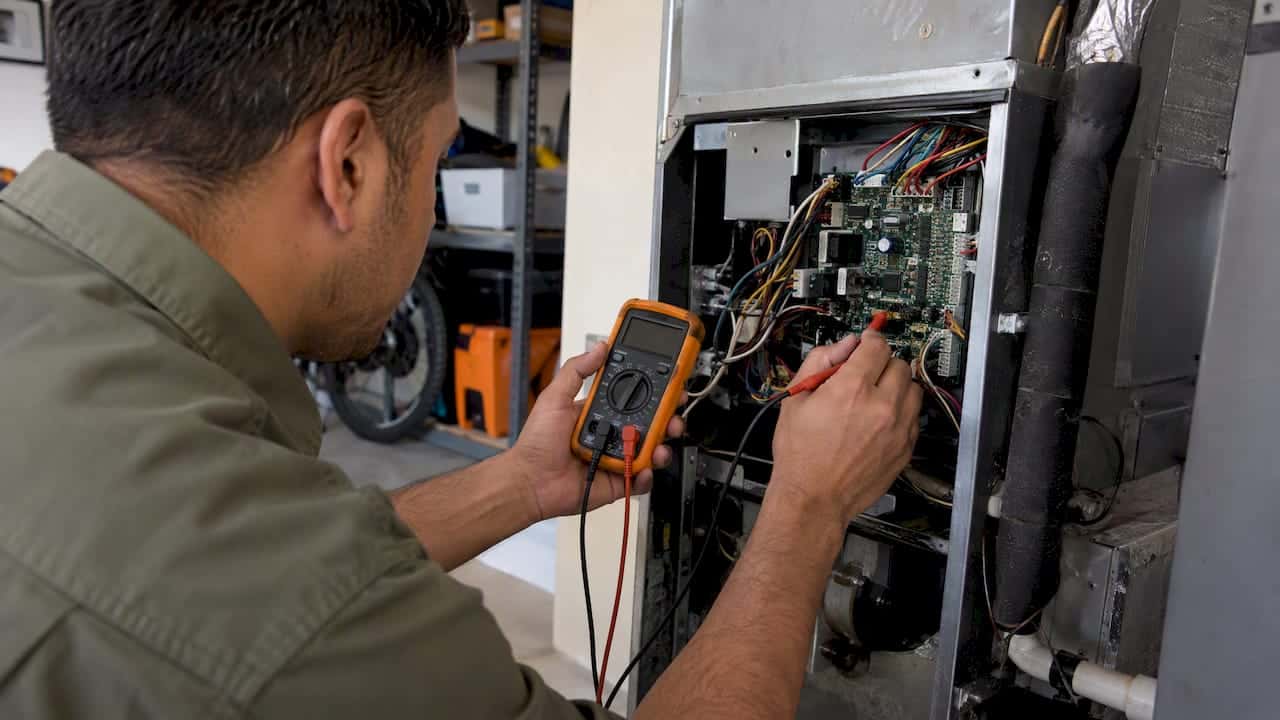
Certain discoveries mean you stop immediately and call a professional instead of continuing: ice buildup on the indoor coil, any hissing near refrigerant lines, exposed or scorched wiring, or a capacitor that looks swollen or bulging. None of those are homeowner repairs, and touching a capacitor without discharging it properly can deliver a serious shock even with the system powered off.
Pro Tip: Take a photo of any wiring you see before you touch anything nearby. If you end up calling a technician, that photo can help them diagnose the problem faster over the phone, and it gives you a “before” reference if anything gets bumped during your inspection.
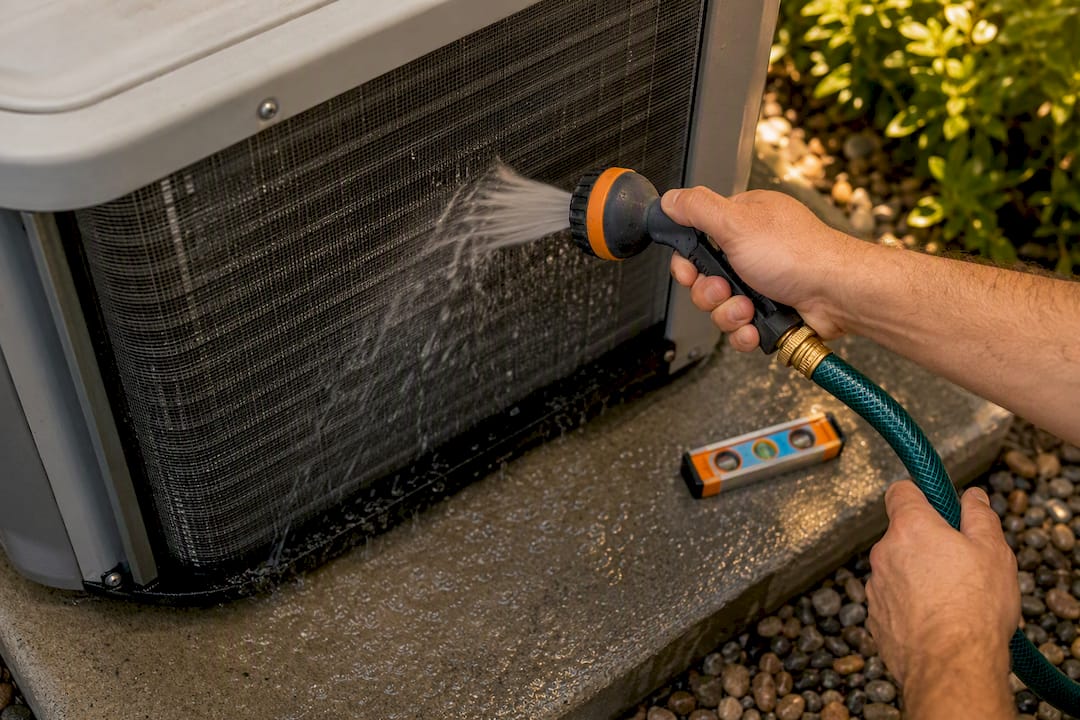
Keep your tools simple: a Phillips screwdriver, a flashlight, a garden hose for gently rinsing condenser fins (with power off), and a level for checking the pad. If clicking or a no-start problem is what sent you troubleshooting in the first place, our guide on fixing a non-starting AC unit covers that specific symptom in more depth.
When Should You Call an HVAC Professional?
Some noises are a same-day emergency. Others can wait for a scheduled appointment. Knowing the difference saves you money and keeps you out of a bigger repair down the road.
Call immediately and shut the system off first if you notice any of the following:
- Grinding metal-on-metal sounds from either the indoor or outdoor unit
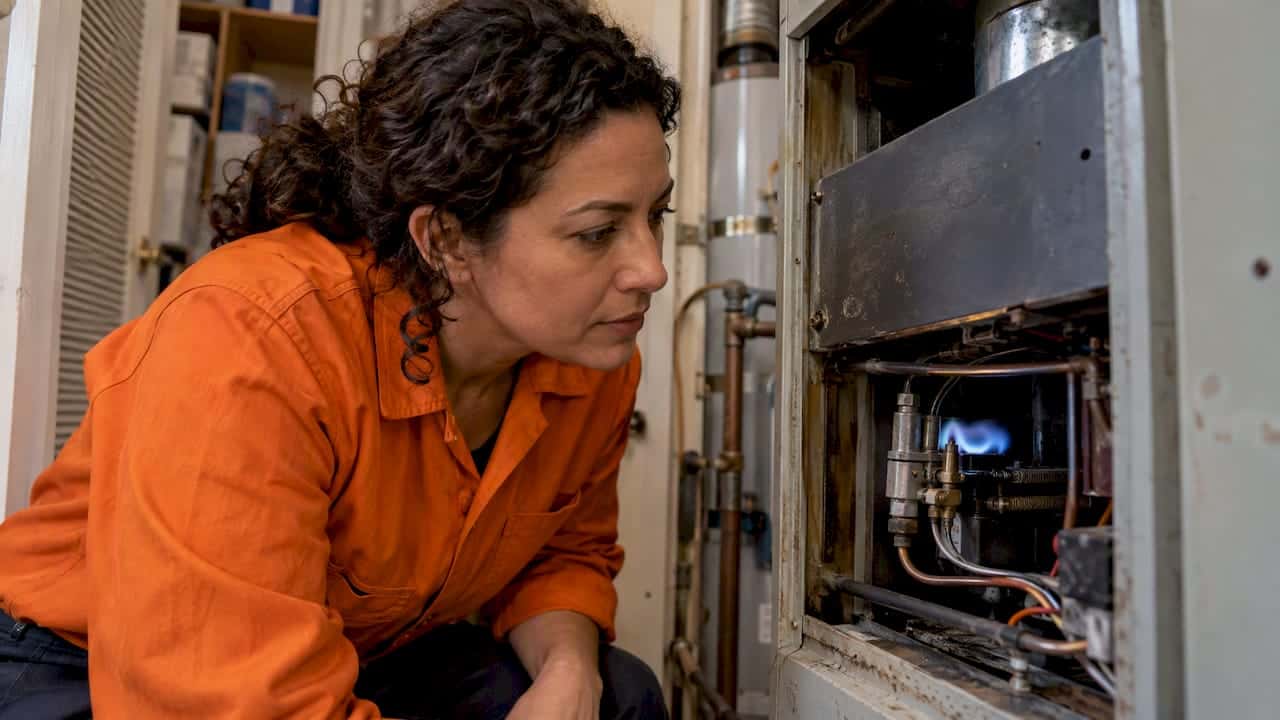
- Hissing near refrigerant lines, especially with a chemical smell
- Any sign of electrical arcing, sparking, or a burning smell
- The breaker trips repeatedly when you try to restart the system
- The outdoor unit hums but the compressor never actually starts running
When you call, have this information ready: the exact sound in your own words, where it’s loudest, how long the system has been making it, the age of your system if you know it, and anything you’ve already tried. That last detail alone can save a technician a diagnostic step.
On cost, a useful rule of thumb in the industry is the “50 percent rule”: if a repair estimate comes in above roughly half the cost of a full replacement, and the system is already past the 12 year mark, replacement usually makes more financial sense than another repair. That threshold isn’t a hard law, but it’s a reasonable gut check before you approve a major repair on an aging system.
What LC Heating & Air Conditioning Sees in the Field
Over 20-plus years of service calls across Los Angeles, one pattern holds up again and again: most “scary” AC noises turn out to be something small. A screw worked loose on an outdoor cabinet, a stray palm frond jammed against the fan blade, debris that just needed clearing. Those are the calls where a customer expects the worst and we’re glad to tell them it’s a quick fix.
Then there are the calls where the noise really does mean something serious, like a failed capacitor causing a hard start and a faint buzz, or worn compressor bearings starting to grind before full failure. Those repairs need a trained technician, and we walk customers through exactly what we find before any work begins.
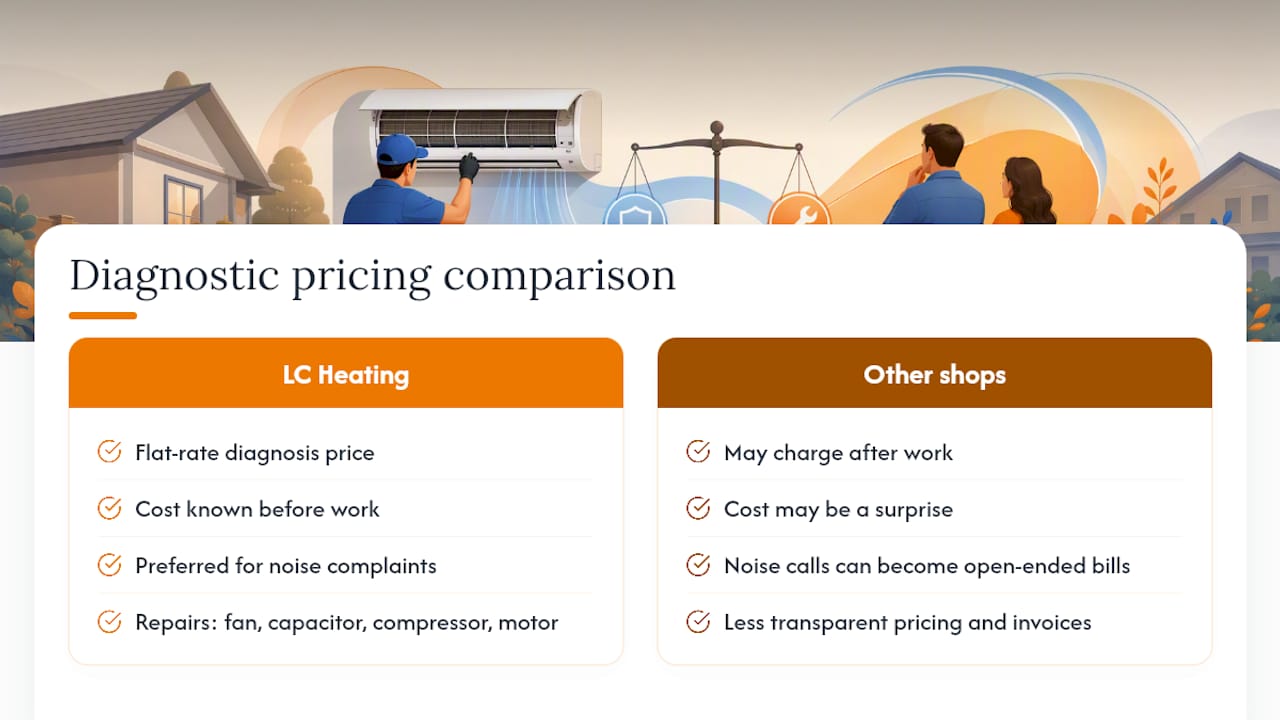
Every diagnostic visit includes a full explanation of the noise’s cause and flat-rate pricing before repairs start, so you’re never surprised by an invoice. Before we arrive, jot down when the noise happens and what it sounds like. That detail speeds up the visit considerably.
A Technician’s Honest Take on Noisy AC Units
Most of the noisy AC calls I’ve talked through with our technicians end up being simpler than the homeowner feared, but the ones that aren’t simple are exactly why we never rush a diagnosis to sell a repair. Flat-rate, honest diagnostics exist because guessing at a noise over the phone helps nobody, and neither does quoting a repair before actually confirming the cause.
— Leo
Get a Same-Day Diagnosis From LC Heating and Air Conditioning
If your AC has moved past a simple filter swap and into territory you’re not comfortable handling yourself, LC Heating and Air Conditioning offers something a lot of Los Angeles homeowners have been burned by elsewhere: flat-rate pricing on the diagnosis itself, so you know the cost before any work begins, not after a surprise invoice shows up. That matters most on noise complaints specifically, since a vague “it’s making a weird sound” call can turn into an open-ended bill with less transparent shops.

Our technicians handle a wide range of repairs, including fan blade or capacitor issues, compressor and motor replacement, condensate leak repair, and sound mitigation for noisy units. If you’ve already run through the filter check, the debris clearing, and the panel tightening in this guide and the noise is still there, that’s the point where a service call is the right next move, not a wasted one. Beyond straightforward AC repair, our team also specializes in heat pump installation and repair, mini split systems, and commercial VRF systems for properties that need more than a single-zone fix.
Book a diagnostic visit through our main service page or head straight to our air conditioning repair page to see current service options and get same-day service scheduled.
Where This Guide’s Safety and Diagnostic Guidance Comes From
The urgency rules and repair steps in this guide draw on established HVAC troubleshooting resources: MEP Academy’s noise diagnostic guidance for source localization, HVACBase’s troubleshooting framework for urgency classification, AppliancePartsPros’s repair walkthroughs for safe DIY limits, and acoustical guidance from an ASHRAE-adjacent practical guide on noise and vibration control. If home acoustics beyond the HVAC system are part of your noise concern, noise-reducing interior door options are worth a look too.
Sources
- HVAC Noise Problems? Here’s How to Identify and Fix Them Fast - MEP Academy
- AC troubleshooting guide — HVACBase
- How to troubleshoot and fix a central AC system that’s loud — AppliancePartsPros
- Practical guide to noise and vibration control for HVAC systems — ASHRAE-adjacent document
FAQ
Why Is My Air Conditioner Suddenly Making a Loud Noise?
A sudden loud noise usually means something has shifted or failed mechanically, like a loose part inside the compressor, a worn bearing, or debris caught in the outdoor fan. If the sound started abruptly and includes grinding or banging, treat it as urgent and shut the system off.
How Can I Fix My AC Noise Problem?
Start with the safe basics: replace a dirty filter, clear debris from around the outdoor unit, and tighten any loose panel screws with the power off. If the noise persists or involves grinding, hissing, or electrical smells, it needs a professional diagnosis rather than further DIY attempts.
Should I Turn Off My AC If It’s Making Noise?
Turn it off immediately for grinding, loud banging, hissing near refrigerant lines, or any electrical arcing or burning smell. For lighter sounds like a mild rattle or whistle, you can typically run the system briefly while you check the filter and outdoor unit for obvious causes.
Which Is the Most Common Source of Abnormal Noises in an Air Conditioner?
A dirty or clogged air filter is the most frequent cause of abnormal AC sounds, particularly whistling and strained blower noise from restricted airflow. Loose outdoor cabinet panels and debris against the condenser are the next most common culprits.
Recommended
Leo, Propietario y Técnico Principal en LC Heating & Air
Leo dirige LC Heating & Air como propietario-operador y tiene la licencia C-20 HVAC #1073586 de California. Sus guías se enfocan en diagnósticos prácticos, decisiones de reparación seguras y consejos claros para propietarios de Los Ángeles.