- Fast AC Emergency Steps to Try Right Now
- What Counts as a True AC Emergency?
- How Do You Safely Troubleshoot the Most Common AC Problems?
- Temporary Cooling and Safety Measures While You Wait
- When Should You Stop Troubleshooting and Call a Technician?
- Why Homeowners Deserve Straight Answers, Not Guesswork, During an AC Emergency
- Get Same-Day Emergency AC Help in Los Angeles
- Sources
- FAQ
- Recommended
If you smell gas, hear an alarm, or see smoke, evacuate now and call 911 before doing anything else. If none of that applies, check your thermostat settings, reset the breaker once, and inspect the air filter. Those two moves solve most cooling failures before you need to call anyone.
TL;DR:
- Most cooling failures can be fixed by checking the thermostat, resetting the breaker, and inspecting the air filter within five minutes, avoiding unnecessary service calls.
- Emergency signs include gas smells, smoke, sparks, indoor temperatures above 85°F with vulnerable occupants, or repeated breaker trips, requiring immediate professional assistance.
- Do not attempt to handle refrigerant or open sealed electrical panels yourself, as these tasks require EPA certification and pose safety risks.
- Clearing debris from outdoor units, replacing clogged filters, and ensuring proper airflow are key troubleshooting steps homeowners can safely perform.
- Always verify licensed HVAC technicians, request written estimates before work, and prepare a small emergency kit to minimize delays during urgent repairs.
Fast AC Emergency Steps to Try Right Now
Once you’ve ruled out gas, smoke, or electrical danger, work through this checklist in order. Each step takes under two minutes, and most no-cool calls get resolved somewhere in the first five.
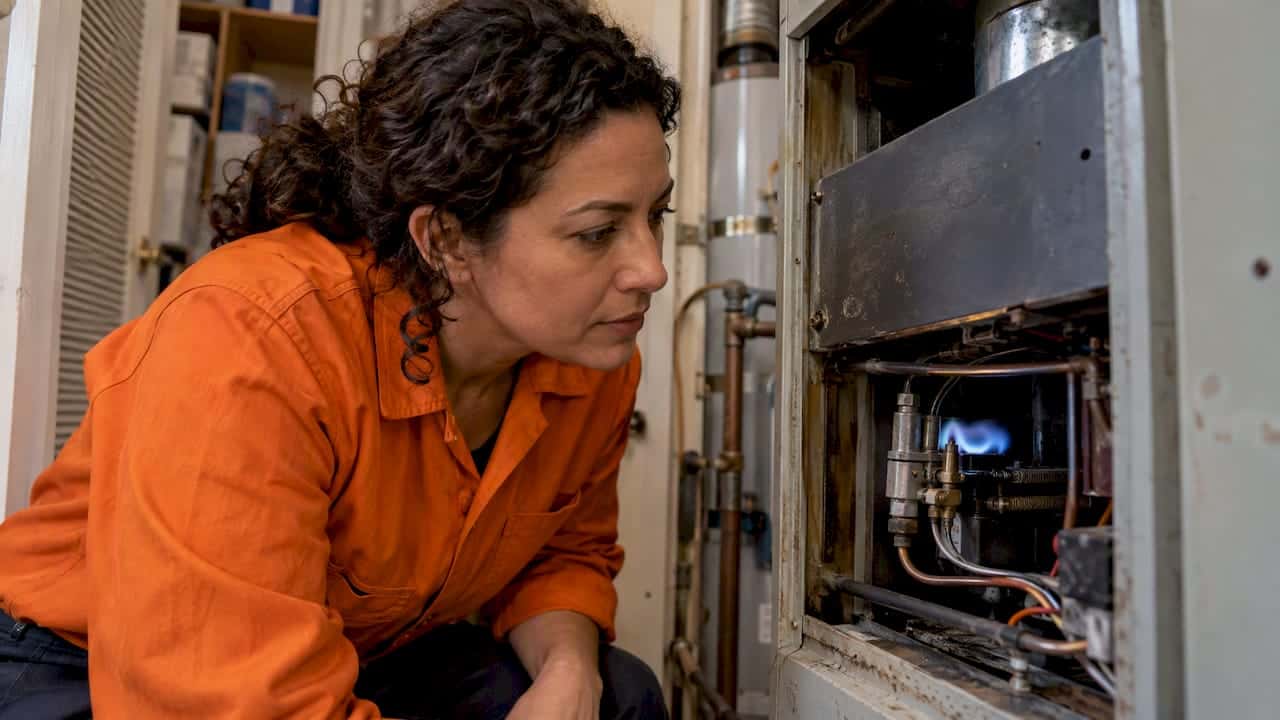
- Do a safety sweep first. No gas smell, no CO alarm, no sparking or burning odor? Good, move on.
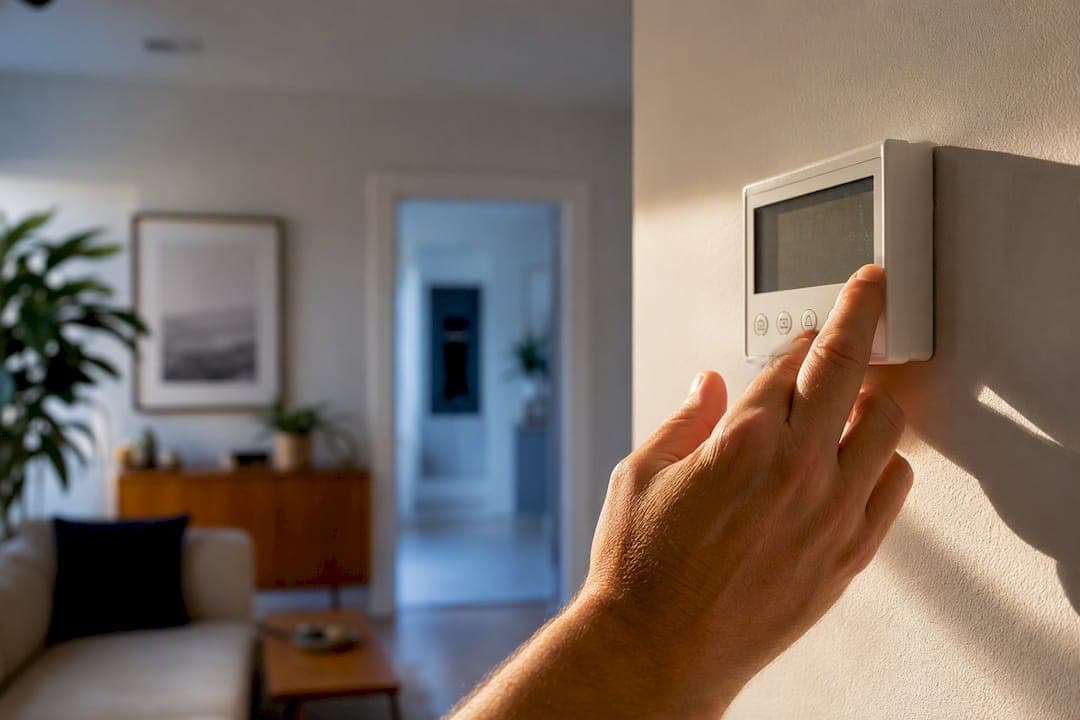
- Check the thermostat. Confirm it’s set to “Cool,” the setpoint is below room temperature, and the display isn’t blank or dim. A blank screen usually means it lost power or the batteries died.
- Find your electrical panel and reset the AC breaker once. Flip it fully off, wait ten seconds, then back on. If it trips immediately again, stop. That’s an electrical fault, not something to keep resetting.
- Locate the outdoor disconnect box near the condenser and make sure it’s fully seated and not pulled loose.
- Pull the air filter and look at it in the light. If you can’t see light through it, replace it. A dirty or clogged air filter restricts airflow, which can cause the evaporator coil to freeze, leading to system shutdowns.
- Check indoor vents for anything blocking airflow, like furniture or closed registers.
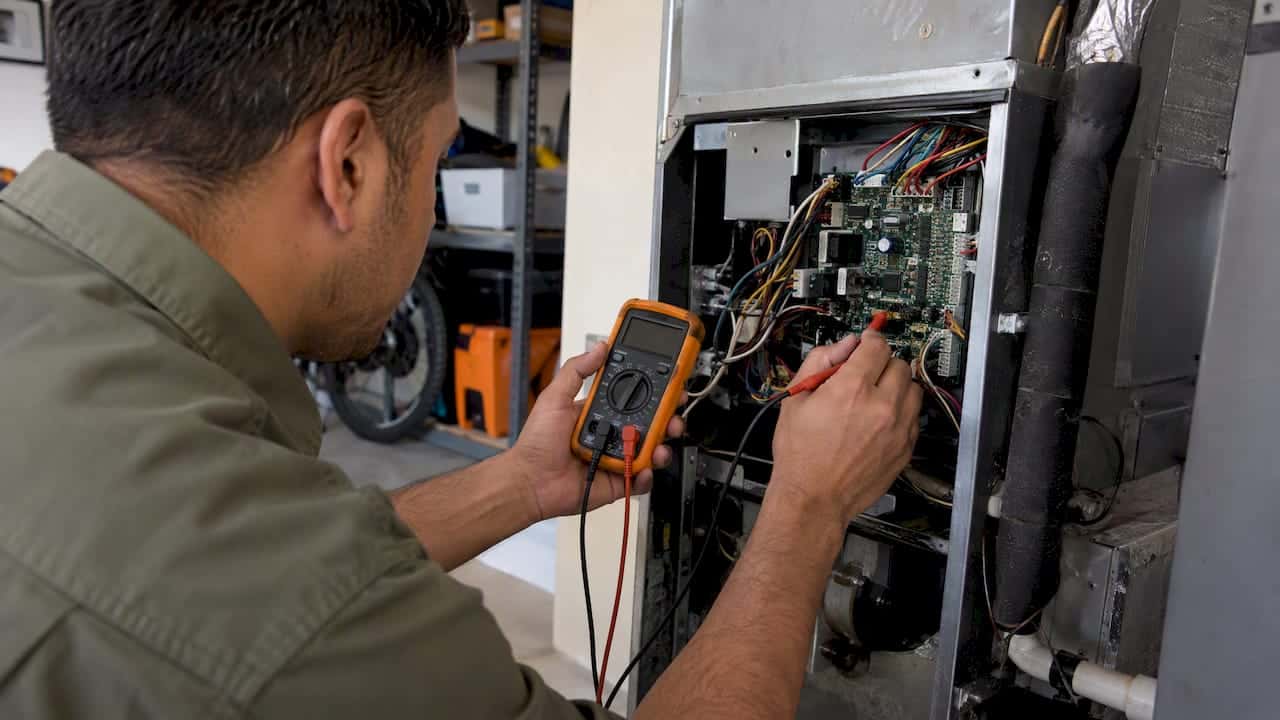
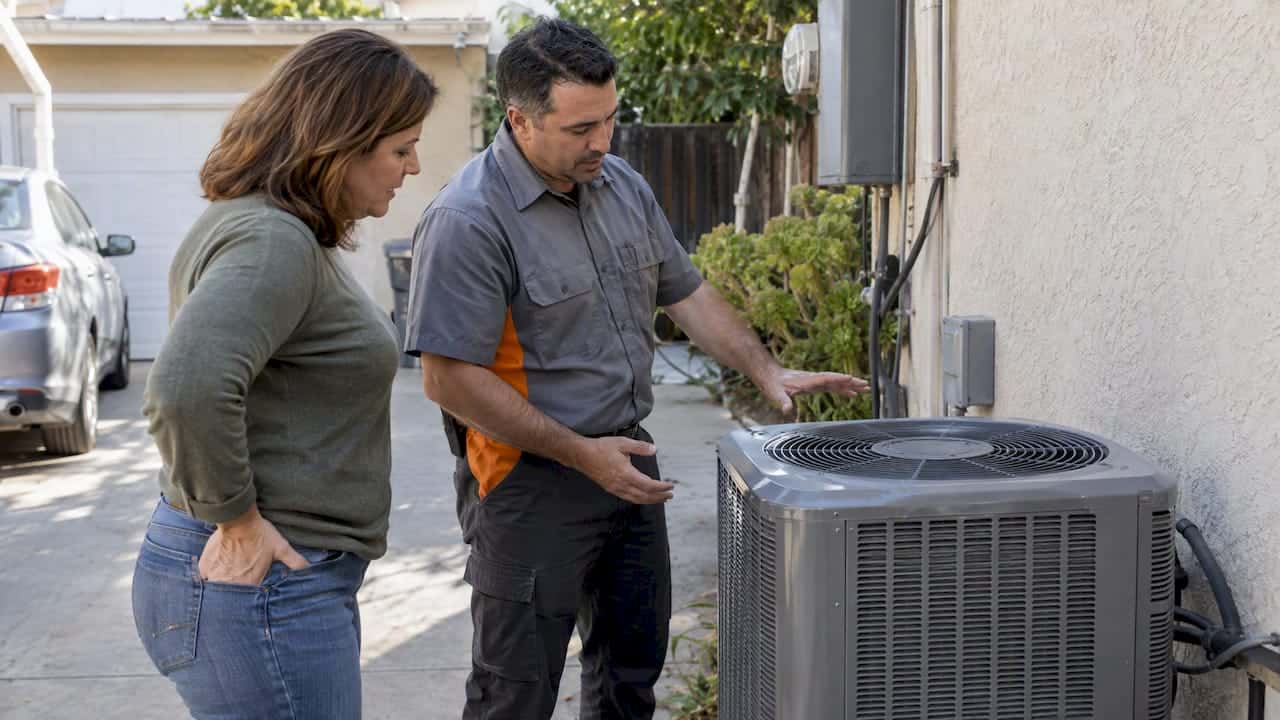
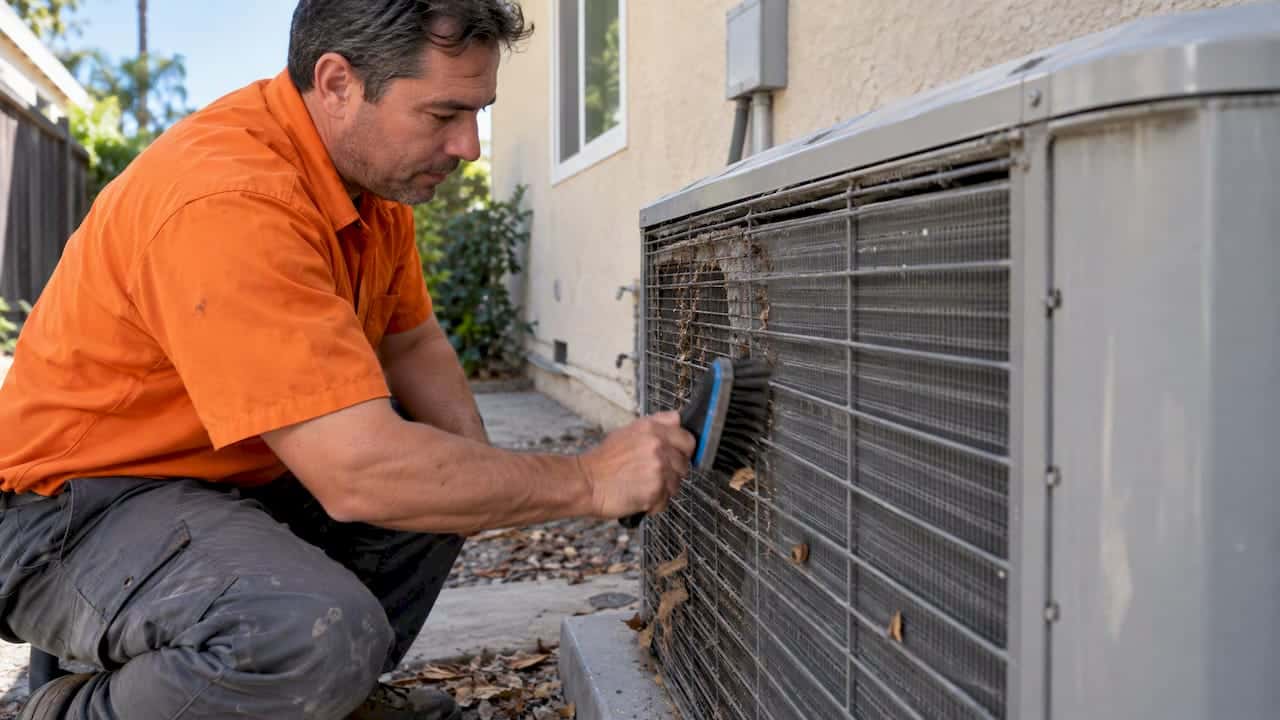
- Walk outside and look at the condenser unit. Clear leaves, grass clippings, or debris away from the sides. If the fan isn’t spinning but you hear a humming sound, turn the system off. That hum often means a failed capacitor or stuck motor, and running it longer risks burning out the compressor.
- Check the drain pan and float switch near the indoor unit. A tripped float switch shuts the whole system down on purpose to stop overflow.
If you’ve done all this and the system still won’t turn on, a full power cycle can help. Turn the thermostat to “Off,” flip the breaker off for a full 30 minutes, then restore power and try again.
Pro Tip: Write down which steps you already tried before you call anyone. Technicians can often skip a diagnostic step (and shave time off the visit) when you tell them upfront that the breaker held and the filter was clean.
What Counts as a True AC Emergency?
Not every warm afternoon is a crisis, but certain signs mean you stop troubleshooting immediately and get help.
- Gas smell, CO alarm, smoke, or sparks: evacuate, call 911, then call your utility. Do not touch switches on your way out.
- Indoor temperature climbing past 85°F with kids, older adults, or anyone with a health condition in the home: this is when dehydration and heat illness become real risks, not just discomfort.
- A breaker that trips again the instant you reset it: that’s a wiring or component fault, not a fluke.
- Loud grinding, screeching, or a burning smell from the outdoor unit: shut the system off at the breaker and call for emergency service.
Most emergency HVAC companies charge an after-hours surcharge on top of the standard diagnostic fee. Ask what that surcharge is before you approve the visit. Do not wait until the technician is already at your door.
How Do You Safely Troubleshoot the Most Common AC Problems?
Working through the likely causes yourself, in order, saves time and often saves a service call altogether.
Thermostat first. Set it a few degrees below room temperature and listen for a click. A blank display almost always means the unit lost power somewhere upstream, so head to the breaker panel next rather than replacing batteries repeatedly.
Breaker and disconnect. Your HVAC system usually runs on its own dedicated breaker, separate from lights and outlets. Reset it exactly once. If it holds, you’re likely back in business. If it trips again right away, that indicates a short or overload, and repeated resets can damage components or start an electrical fire.
Filter and airflow. A filter clogged with dust chokes the system and is one of the most common reasons cooling fails without warning. Swap it monthly during peak summer use in most Los Angeles homes.
Outdoor unit. Clear brush and debris by hand. If the fan is silent but the unit is humming, that’s a stuck motor or bad capacitor. Turn the breaker off and stop there.
Condensate drain. A clogged line fills the drain pan and trips the float switch, cutting the system off as a built-in safety measure. You can try clearing an accessible line with a wet/dry vacuum at the outdoor termination point, but a drain that clogs repeatedly needs a technician’s eye.
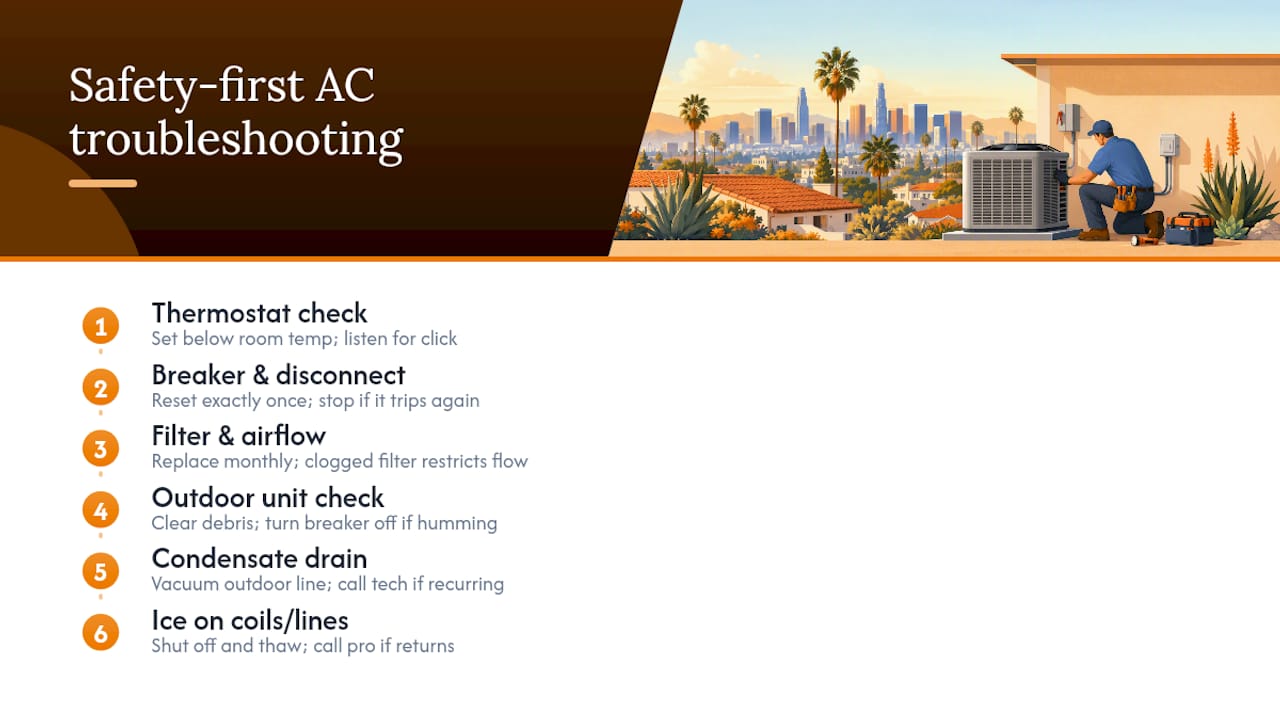
Ice on the coil or lines. This usually means restricted airflow or a refrigerant issue. Shut the system off and let it thaw fully, which can prevent compressor damage. If ice comes back after you restart it, stop troubleshooting and call a pro.
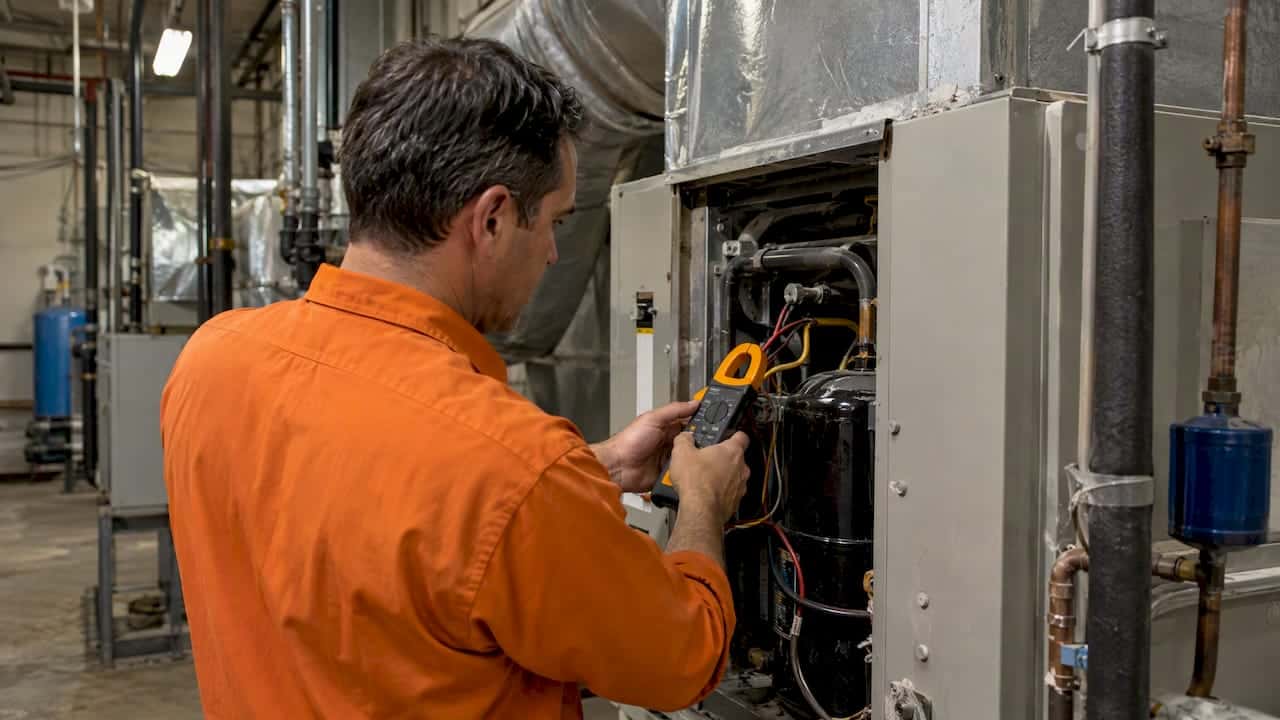
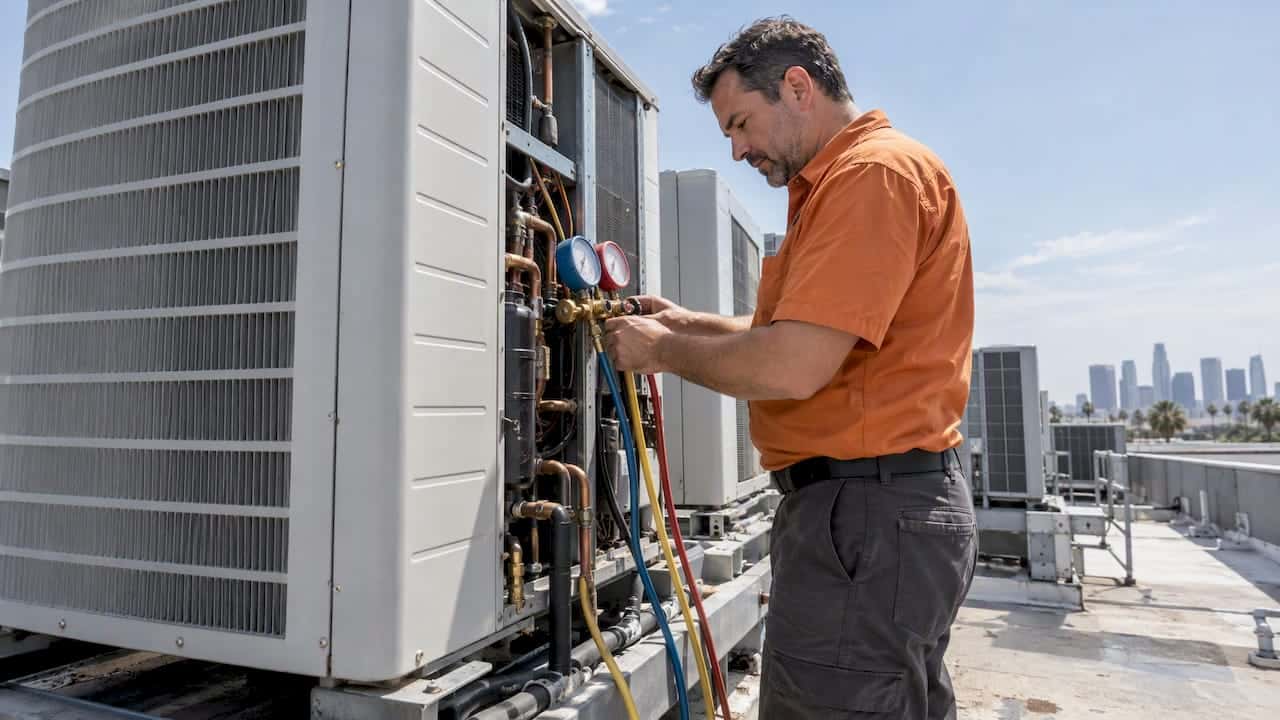
Some tasks are off-limits no matter how confident you feel with a screwdriver. Never open a sealed electrical panel, touch or replace a capacitor, or attempt to add refrigerant. EPA Section 608 certification is legally required to handle refrigerant, and mishandling live electrical components is a genuine injury risk.
Temporary Cooling and Safety Measures While You Wait
You can protect your family and your home well before a technician arrives.
- Run box fans or ceiling fans and close blinds on sun facing windows to knock a few degrees off room temperature.
- Move to the lowest floor of the house, since heat rises and basements or ground floors run cooler.
- Drink water steadily, even if you don’t feel thirsty yet, and know your nearest cooling center if the heat stretches past a day.
- If water is leaking near an electrical panel or the indoor unit, shut off the HVAC breaker first, then place buckets and move valuables clear of the area.
- During a power outage, prioritize medically necessary devices on any battery backup you have, and know your neighborhood’s designated shelter locations.
Pro Tip: Keep a small “AC emergency kit” in a hall closet: extra fan, bottled water, a phone charger, and the number for your HVAC company. It sounds simple, but fumbling for a contact list at 95°F is the last thing you want to do.
When Should You Stop Troubleshooting and Call a Technician?
Certain signs mean it’s time to put the screwdriver down and pick up the phone.
- Stop immediately if: you smell gas or burning, hear grinding or screeching, see sparks, notice water pooling near outlets or panels, or a breaker keeps tripping after one reset.
- When you call, tell the dispatcher exactly what runs and what doesn’t (indoor blower, outdoor fan, thermostat display), any smells or sounds, the indoor temperature, and what you’ve already checked.
- Mention any vulnerable occupants (infants, older adults, anyone with a chronic illness) so the company can prioritize the call appropriately.
- Before you approve the visit, ask about the diagnostic fee, any emergency surcharge, and whether the estimate is in writing. Confirm the technician is licensed and insured.
- Clear a path to both the indoor unit and the outdoor condenser ahead of time. Moving boxes or trimming back a bush shaves real minutes off the visit.
Why Homeowners Deserve Straight Answers, Not Guesswork, During an AC Emergency
Leo, owner of LC Heating and Air Conditioning, has spent over 20 years watching Los Angeles homeowners get burned twice during a breakdown: once by the heat, and again by unclear pricing when the technician finally shows up. That second problem is entirely avoidable. A flat-rate diagnostic fee, quoted before anyone touches a screwdriver, removes the guessing game that makes emergency calls feel like a gamble.
The equipment side matters too. Historic Hollywood bungalows and modern multi-zone heat pump systems fail differently, and a technician who only knows one era of equipment will miss things. Always verify a company’s license, and always ask for a written estimate before work begins.
— Leo
Get Same-Day Emergency AC Help in Los Angeles
Running through this checklist and still stuck with a dead system? The company offers same-day and emergency HVAC service across a large metropolitan area, with flat-rate diagnostics so you know the cost before a technician starts work, not after.

When you call, have a few things ready: what symptoms you’re seeing, which steps from this checklist you’ve already tried, and the rough age of your unit. That alone can cut diagnostic time significantly. LC Heating and Air Conditioning also handles heat pump installations, mini-split systems, and commercial VRF equipment, so whether your emergency is a dead 20-year-old condenser or a newer multi-zone system acting up, the same team can handle both the emergency fix and the long-term replacement conversation. Book emergency service now or browse HVAC troubleshooting guides to keep small issues from becoming the next emergency.
Sources
- Emergency HVAC Signs: When to Call Now | HVACDatabase
- Know about EPA 608 Certifications | Summit College
- Dehydration: Symptoms and causes | Mayo Clinic
FAQ
Can I Evacuate and Recharge My Own AC System?
No. Refrigerant work requires EPA Section 608 certification, and handling it without training risks injury, environmental fines, and damage to your compressor.
What Is Considered an AC Emergency?
Gas smells, CO alarms, smoke, sparks, or repeated breaker trips are true emergencies requiring immediate action. Extreme indoor heat above roughly 85°F with vulnerable occupants also justifies an emergency call rather than waiting for a standard appointment.
What Is the 3 Minute Rule for Air Conditioners?
This refers to waiting at least a few minutes between powering a compressor off and back on, to let internal pressure equalize before restart. It’s a general equipment-protection guideline rather than a strict industry standard, so when in doubt, use the full 30 minute breaker reset instead.
What Is the $5,000 Rule for AC?
This is an informal rule of thumb some homeowners use to decide between repairing and replacing: multiply the unit’s age by the repair cost, and if the result is high, replacement may make more financial sense. It’s a rough guideline, not a fixed industry standard, so get a written estimate before deciding either way.
Recommended
Leo, Owner & Lead Technician at LC Heating & Air
Leo leads LC Heating & Air as an owner-operator and holds California CSLB C-20 HVAC license #1073586. His guides focus on practical diagnostics, safe repair decisions, and clear advice for Los Angeles homeowners.