- What Does AC Short Cycling Actually Look Like?
- Common Causes of AC Short Cycling, From Easiest to Hardest Fix
- Why Short Cycling Costs You More Than It Seems
- Your Step-by-Step Troubleshooting Checklist
- When to Call a Licensed HVAC Technician
- Preventing Short Cycling Before It Starts
- The Effects of Getting System Size Wrong in Either Direction
- How the Season Changes Your Short-Cycling Risk
- What Actually Matters When You’re Diagnosing This Yourself
- Get a Same-Day Diagnosis Instead of Guessing
- Sources
- FAQ
- Recommended
AC short cycling happens when your air conditioner turns on and off rapidly, often running for less than 10 minutes or starting more than three times an hour instead of completing a full cooling cycle. Left alone, it accelerates compressor wear, spikes your energy bill, and leaves your home feeling humid despite the constant noise. Start by checking your air filter and thermostat settings today; if those don’t solve it, the cause is likely mechanical or electrical.
TL;DR:
- Most short cycling is caused by clogged filters, thermostat faults, or airflow restrictions, which homeowners can often fix themselves quickly.
- An oversized or undersized system resulting from incorrect installation or lack of proper load calculation leads to persistent short cycling that requires professional intervention.
- Short cycling increases energy bills due to frequent compressor restarts and causes faster wear on system components, risking costly repairs or early failure.
- DIY diagnosis should prioritize timing cycles and checking filters or thermostats, while mechanical causes like refrigerant leaks or faulty capacitors need licensed technician attention.
- Regular maintenance, including filter changes and proper thermostat placement, can prevent most causes of short cycling and improve system longevity.
What Does AC Short Cycling Actually Look Like?
A healthy central air system typically runs for a period long enough to complete a full cooling cycle on a hot afternoon, then rests before starting again. Short cycling means cycles drop under roughly 10 minutes, or the outdoor unit fires up more than three times in a single hour.
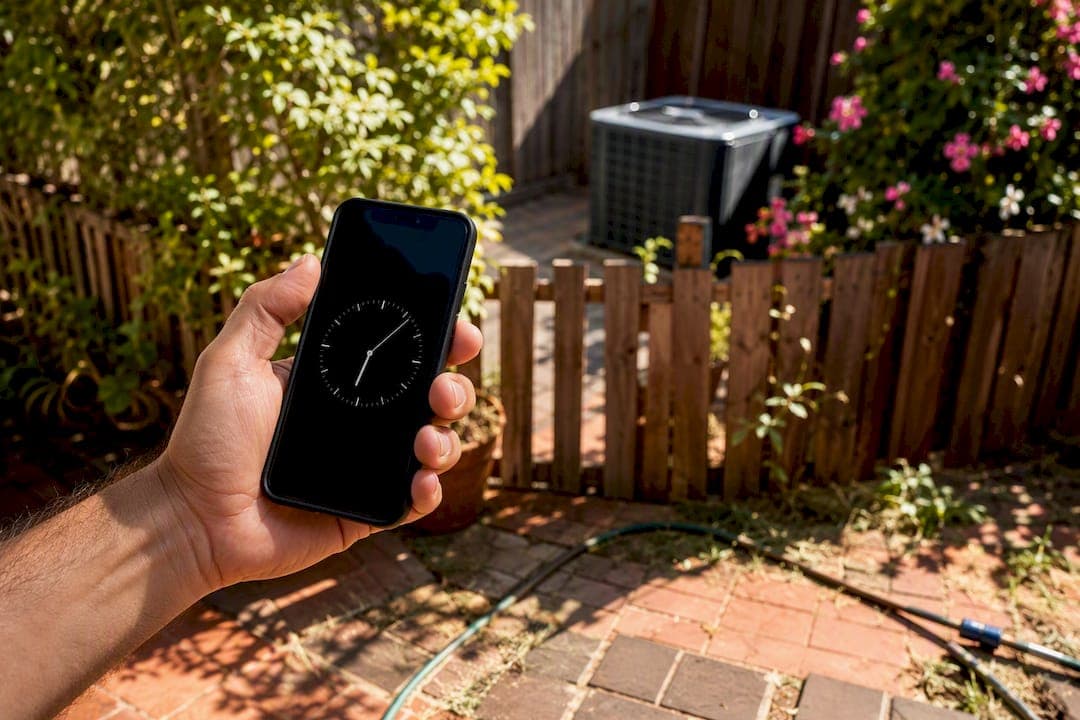
You can time this yourself. Stand near your outdoor condenser unit, or listen from inside near a vent, and note when the compressor kicks on and off using your phone’s clock. Log three or four cycles. If you’re seeing 5 minute runs followed by long pauses and repeated restarts, something is cutting the cycle short before the thermostat is satisfied.
There’s a difference worth understanding here. A safety switch tripping mid-cycle, say from a frozen coil or full condensate pan, produces an irregular, unpredictable pattern. An oversized system, by contrast, short cycles consistently and has probably done so since the day it was installed, because it cools the space to setpoint too fast every single time.
Common Causes of AC Short Cycling, From Easiest to Hardest Fix
Most short cycling traces back to common culprits, and the fix ranges from a simple filter swap to a full system replacement. Work through these roughly in order of likelihood:
- Clogged air filter or blocked vents. A dirty filter is the single most common homeowner-fixable cause, restricting airflow until the system overheats and shuts down early. Closed registers and blocked return grilles cause the same problem.
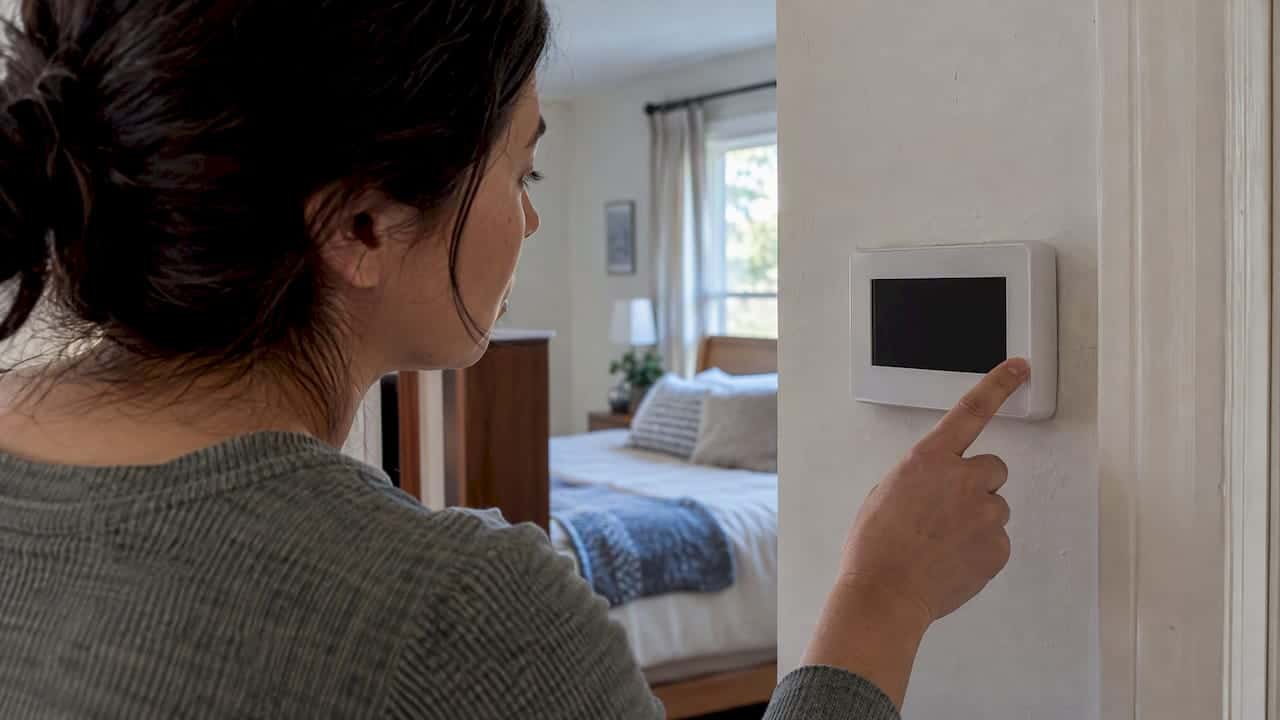
- Thermostat faults. A thermostat mounted near a sunny window, a heat-producing lamp, or a supply vent reads the room wrong and cycles the system erratically. Dead or weak batteries can cause similar false readings.
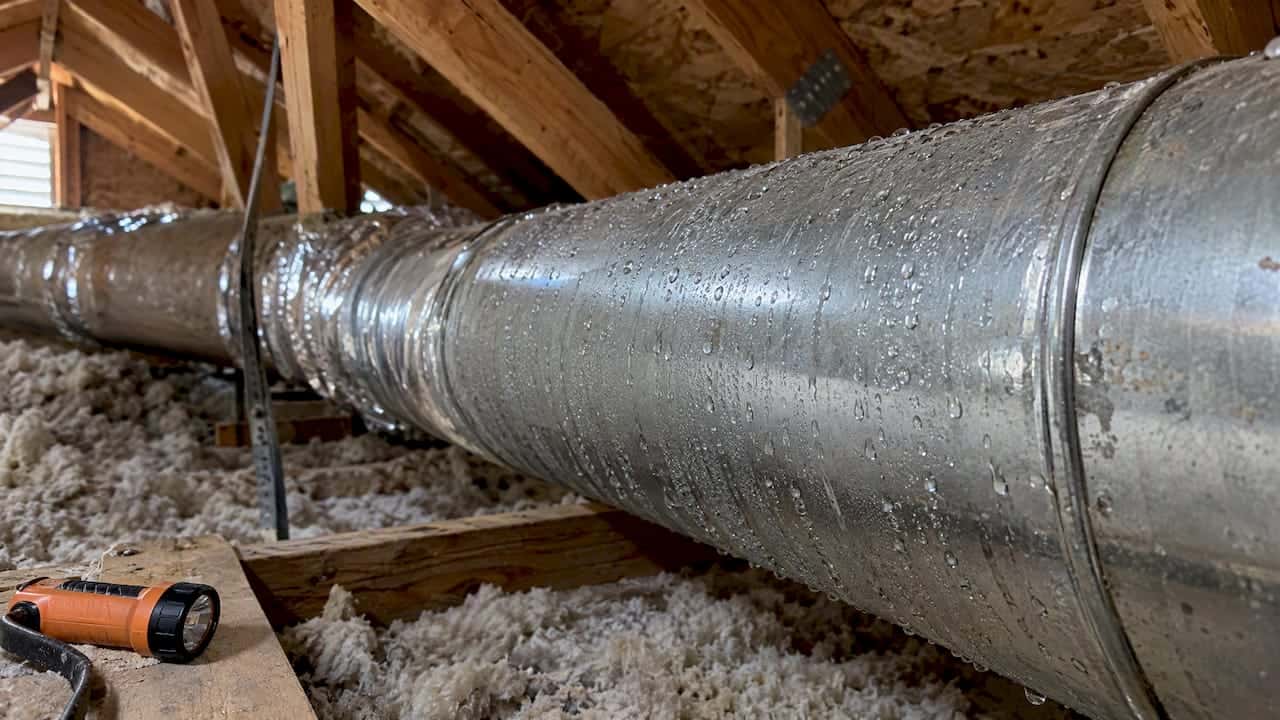
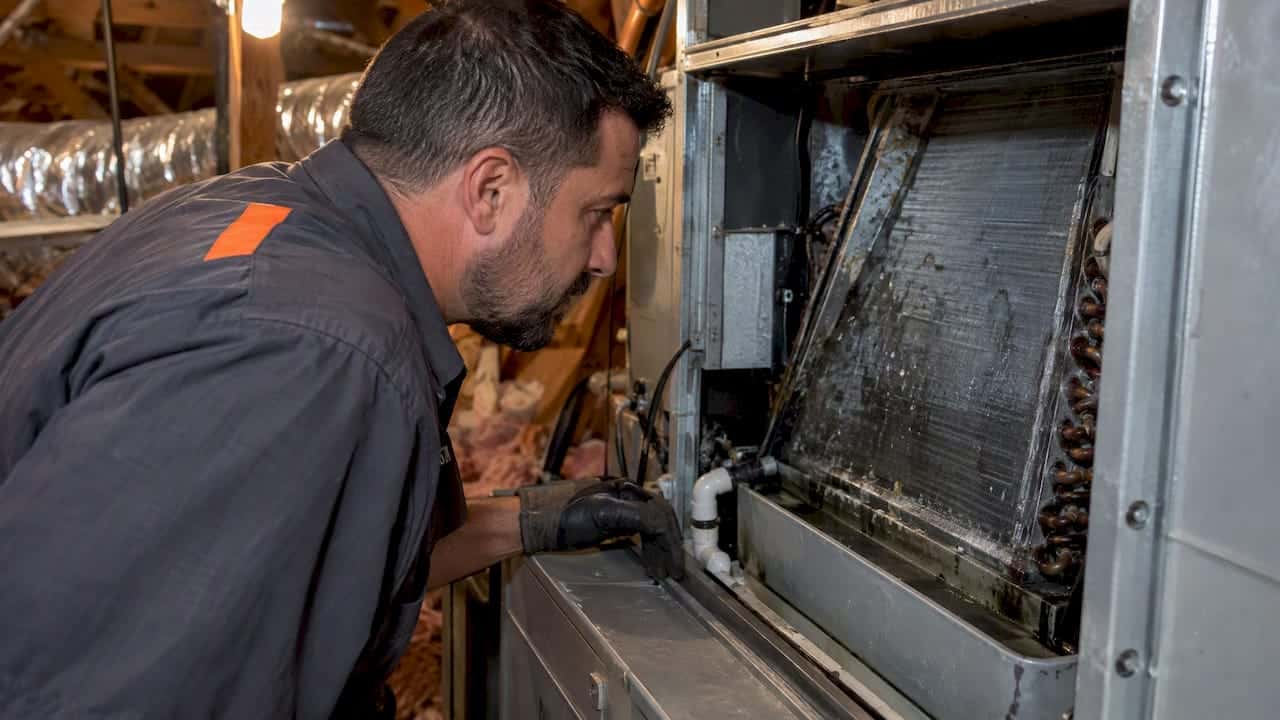
- Frozen evaporator coil. Ice on the indoor coil almost always traces back to restricted airflow or low refrigerant upstream. The coil freezing is a symptom, not the root cause.
- Low refrigerant or a leak. Low refrigerant charge trips a low-pressure safety switch, shutting the compressor down repeatedly to protect it.
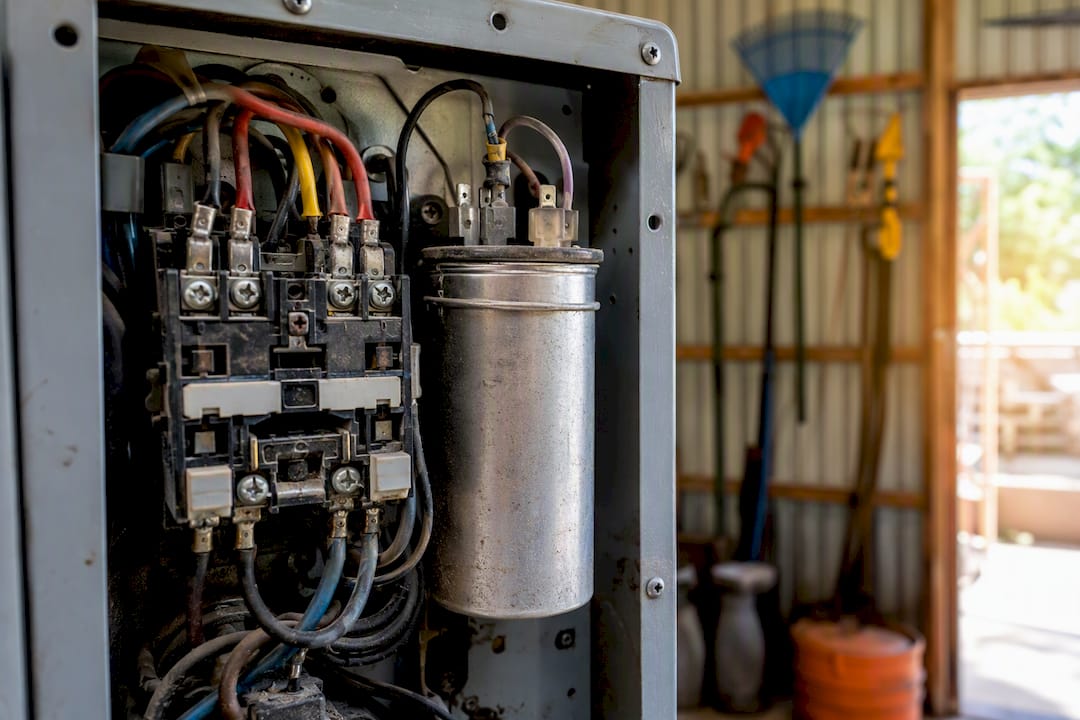
- Failing capacitor or contactor. A weak start capacitor often produces a telltale pattern: the fan starts, the compressor hums, then the whole unit shuts off.
- Dirty condenser coil. A grime-caked outdoor unit or one crowded by plants and debris can’t shed heat properly, forcing shutdowns.
- An oversized system. If short cycling has happened since installation day, the unit is likely too large for the space and was never sized with a proper Manual J load calculation.
Why Short Cycling Costs You More Than It Seems
Every restart draws a surge of electricity, and a compressor cycling on and off constantly burns more power than one running steady, longer cycles. Your energy bill climbs even though the house doesn’t feel any cooler, because short bursts of cold air never run long enough to pull humidity out of the air.
That’s the comfort problem: dehumidification takes sustained airflow across a cold coil, and a 5 minute cycle barely gets started before shutting off. You end up with a room that reads 72 degrees on the thermostat but still feels sticky.
The mechanical cost is steeper. Repeated starts put outsized stress on the compressor, the most expensive component in the system, along with the capacitor and contactor that manage each startup surge. A unit that short cycles for months without intervention often needs major repair or early replacement years ahead of schedule.
Your Step-by-Step Troubleshooting Checklist
Work through these steps in order. Most homeowners solve short cycling somewhere in the first four steps without ever picking up the phone.
- Time three or four full cycles. Note start and stop times so you have a baseline before and after each fix.
- Check the air filter. If it’s gray, clogged, or hasn’t been changed recently, replace it. If you see ice on the indoor coil or lines, turn the system off and let it thaw fully, which can take several hours, before restarting.
- Walk the house and check every supply and return register. Open any that are closed and move furniture or curtains blocking airflow.
- Inspect the outdoor unit. Clear leaves, grass clippings, and mulch from within two feet of the condenser.
- Check your thermostat. Swap the batteries, confirm it’s not mounted near a heat source or draft, and look in the installer settings for a minimum “off time” or cycle-rate setting; bumping it to 5 minutes can smooth out rapid restarts on compatible systems.
- Check the condensate pan and drain line. A clogged drain can trip a float safety switch that cuts power to mimic a mechanical fault. If you’re comfortable, clear the line with a wet/dry vacuum at the outdoor termination point.
Pro Tip: Write down every cycle time and every fix you try, with the date. If you end up calling a technician, that log cuts diagnostic time significantly, because you’ve already ruled out half the usual suspects.
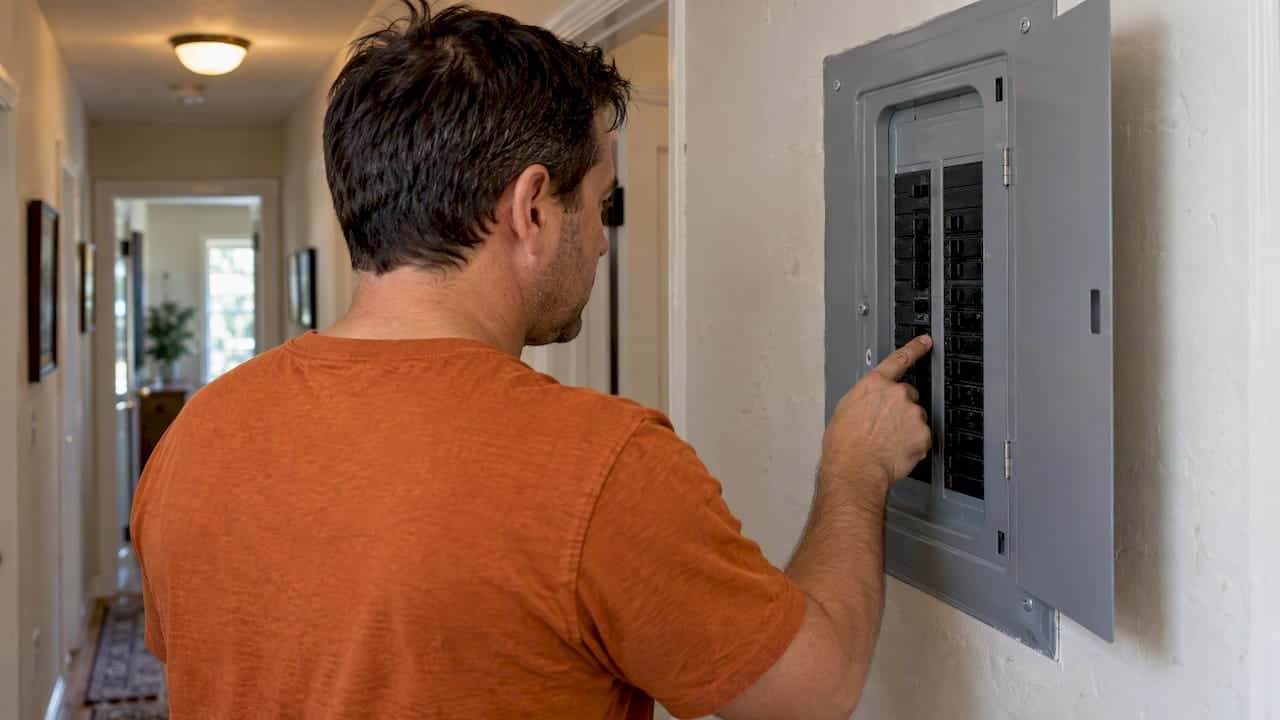
Stop immediately and call a professional if you see ice building back up within an hour of restarting, hear hissing near the refrigerant lines, notice the unit humming without the fan or compressor actually starting, or if a breaker keeps tripping. Those are signs of refrigerant, electrical, or compressor problems that go beyond safe DIY territory.
When to Call a Licensed HVAC Technician
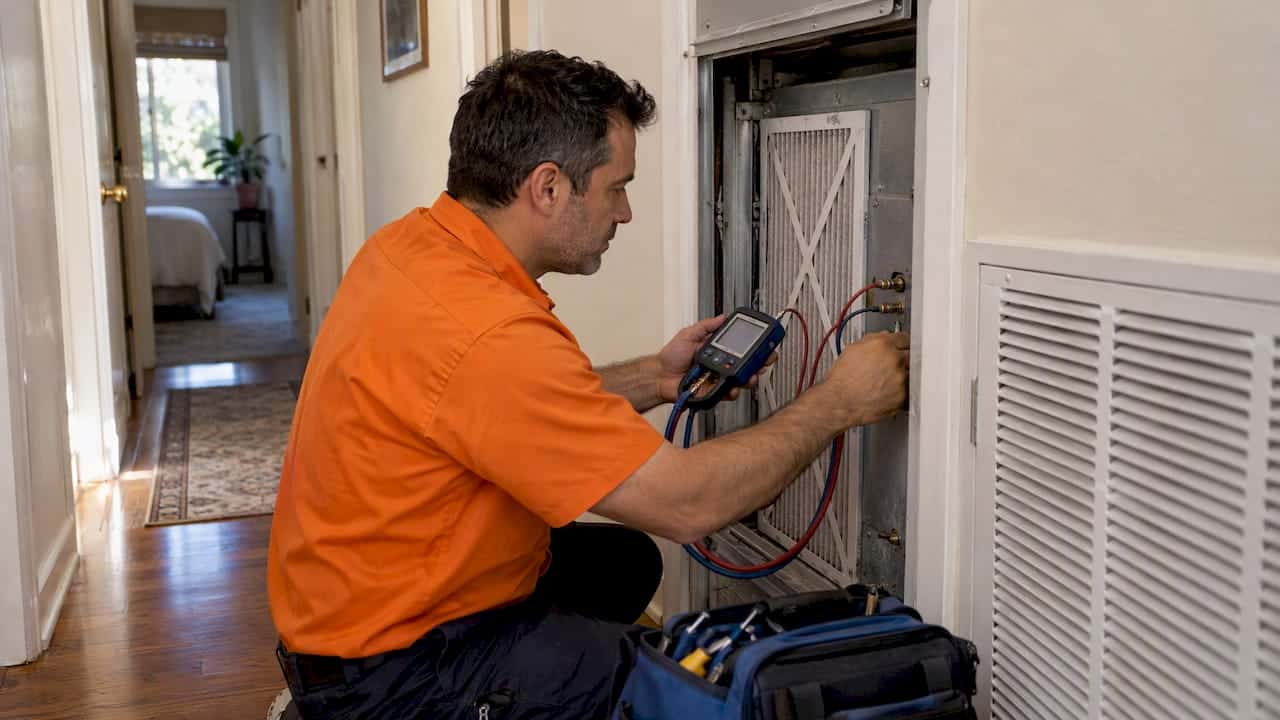
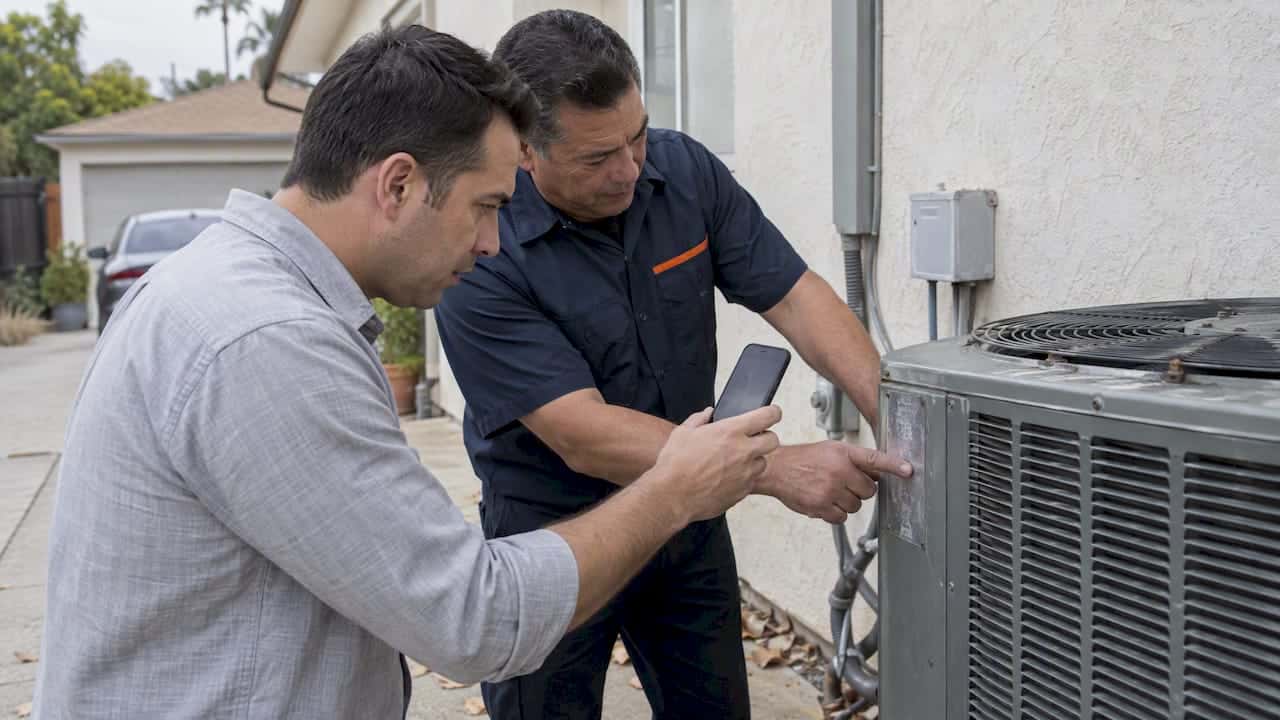
Refrigerant work, capacitor and contactor replacement, control board diagnosis, and any compressor issue require a licensed technician, both for safety and because refrigerant handling is federally regulated. A tech’s diagnostic toolkit includes refrigerant pressure readings, electrical load testing on capacitors and contactors, and leak detection equipment that isn’t practical for a homeowner to own or use safely. If your case involves chronic short cycling since installation, a tech should also run a Manual J load calculation to confirm whether the system was ever sized correctly.
Costs vary by market and by what’s actually broken, but conservative ranges typically run:
- Filter replacement: $5 to $15 for the part itself, essentially free if you do it yourself.
- Capacitor replacement: commonly a few hundred dollars installed.
- Refrigerant leak repair and recharge: often several hundred dollars depending on leak location and refrigerant type.
- Condenser coil cleaning: typically a moderate service fee as part of a tune-up.
- Compressor replacement: $1,500 or more, often approaching the cost of a partial system replacement on older units.
Before agreeing to work, ask whether the technician is EPA Section 608 certified for refrigerant handling, whether the company offers flat-rate diagnostics instead of hourly billing, and whether you’ll get a written estimate before repairs begin.
Preventing Short Cycling Before It Starts
Regularly changing your filter prevents the single most common cause outright. Pair that with a seasonal tune-up each spring, when a technician cleans the condenser coil and checks refrigerant charge, and you eliminate most of the mechanical triggers before summer heat exposes them.
Thermostat placement matters more than most homeowners realize. A unit mounted away from direct sun, supply vents, and doorways reads the room accurately; a smart thermostat with a remote sensor in the room you actually spend time in often resolves what looks like short cycling but is really just a bad temperature reading. Our thermostat repair and installation team sees this fix perceived cycling problems more often than any other single change.
If your system has been short cycling since day one, don’t keep patching around an oversizing problem. A variable-speed system, correctly matched to your home through a Manual J calculation, runs longer and gentler cycles by design. Keep every diagnostic report and invoice, and favor contractors who offer flat-rate pricing and written warranties over vague hourly quotes.
The Effects of Getting System Size Wrong in Either Direction
Oversizing gets most of the attention because it’s the classic short-cycling culprit, but an undersized system creates its own version of the same headache — understanding these issues can be easier with a homeowner’s guide to what causes home energy loss. A unit that’s too small for the square footage it’s cooling runs almost constantly, trying and failing to reach setpoint, which isn’t technically short cycling but produces the identical result: high energy bills, poor humidity control, and a compressor under continuous strain instead of getting the rest cycle it’s designed for.
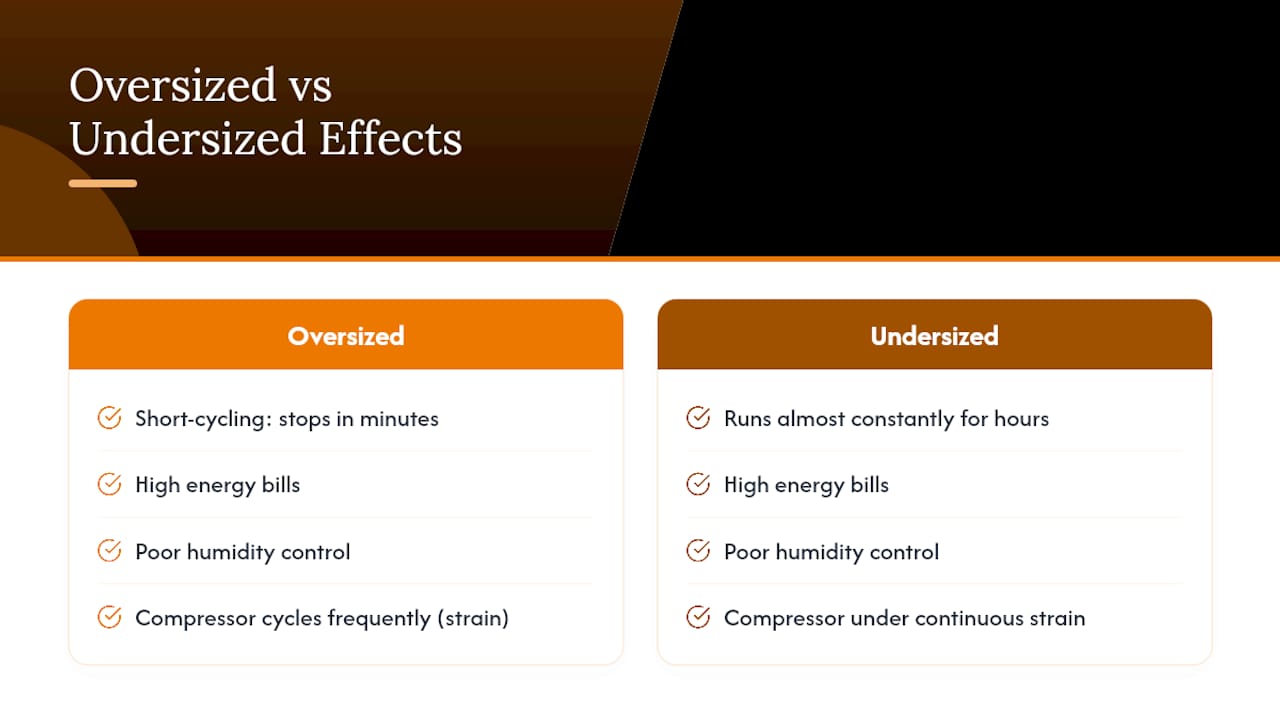
The tell is different, though. An undersized system runs long, not short, often for hours at a stretch on the hottest days, and the house still never quite hits the temperature on the thermostat. An oversized system does the opposite: it slams the house to setpoint in minutes, shuts off, and restarts again shortly after because the humidity and temperature in the walls and furniture haven’t caught up yet.
Both problems point to the same root cause: nobody ran a proper load calculation before installing the equipment. A Manual J calculation accounts for square footage, insulation, window count and orientation, ceiling height, and local climate data, not just a rule-of-thumb tonnage estimate based on square footage alone. Skipping it is the single most common reason homeowners end up with a system fighting itself for its entire service life. If you’re facing a replacement anyway, insist on this calculation rather than a quick “same size as before” swap, since the load on your home may have changed with new windows, added insulation, or a room addition since the last unit went in.
How the Season Changes Your Short-Cycling Risk
Short cycling shows up differently depending on the time of year, and that timing itself is a diagnostic clue. In peak summer heat, an oversized system short cycles more noticeably because it satisfies the thermostat faster in extreme heat, then restarts almost immediately as heat pours back in through walls and windows. This is also when refrigerant issues surface most, since low charge struggles hardest under high outdoor temperatures.
Spring and fall bring milder loads, and that’s often when a marginal problem, like a slightly dirty condenser coil or a thermostat placement issue, first becomes noticeable, because the system has less margin to compensate. Early season is also prime time for debris buildup around the outdoor unit after a winter of leaves and windblown mulch settling around the condenser fins.
Humidity plays its own role separate from temperature. On mild but humid days, a correctly sized system already runs shorter cycles than on hot, dry days, since it reaches temperature setpoint before it’s fully dehumidified the air. That’s normal, and different from short cycling caused by a fault. The distinction matters when you’re timing cycles yourself: compare cycle length on similar-humidity days, not just similar-temperature ones, before concluding something is actually broken.
What Actually Matters When You’re Diagnosing This Yourself
Most guides treat every short-cycling cause as equally likely, and that wastes your time. In practice, the filter and the thermostat solve the majority of homeowner calls, and everything past that, refrigerant, capacitors, oversizing, requires tools or licensing you don’t have in the garage. The conventional advice to “check everything” isn’t wrong, but it isn’t prioritized, and homeowners burn hours chasing refrigerant leaks that were never the problem.
Where I think the advice genuinely falls short is on oversizing. Most articles mention it in passing as one cause among seven. It deserves more weight than that, because it’s the one cause that no amount of DIY effort fixes. If your system has short cycled since installation day and the filter, thermostat, and drain line all check out clean, you’re not looking at a repair. You’re looking at a sizing mistake that needs a Manual J calculation and, likely, new equipment.
Prioritize in this order: time your cycles first, rule out the filter and thermostat second, and only then start worrying about capacitors or refrigerant. That sequence saves most homeowners a service call entirely, and for the ones who do need one, it makes that visit faster and cheaper.
— Leo
Get a Same-Day Diagnosis Instead of Guessing
LC Heating and Air Conditioning built its flat-rate pricing model specifically for calls like this one, where a homeowner needs an honest answer about whether they’re facing a $15 filter or a $1,500 compressor, before any work begins. We diagnose short cycling with pressure testing, electrical load checks on capacitors and contactors, and, when the pattern points to oversizing, a full Manual J calculation, all quoted upfront with no surprise fees added mid-repair.

Our technicians carry over 20 years of combined Los Angeles HVAC experience, from century-old Hollywood bungalows with original ductwork to modern multi-zone heat pump installs in Brentwood and Bel Air. Same-day repair is standard for common failures like capacitor swaps and filter-related airflow issues, and if your system genuinely needs replacement, we’ll walk you through correctly sized heat pump options rather than a generic upsell. If your AC has been cycling strangely for more than a day, schedule a diagnostic and get a technician out before the next heat wave hits.
Sources
- AC Short Cycling: Why It Happens and How to Fix It
- AC Short Cycling
- What is an HVAC condensate safety switch and why do you need them?
- AC Short Cycling: Why It Happens and Costs
FAQ
How do I stop my AC from short cycling?
Start with the filter and thermostat: replace a dirty filter, check thermostat batteries and placement, and clear any visible outdoor debris. If cycling continues after those checks, the cause is likely mechanical (capacitor, refrigerant) or a sizing issue that needs a licensed technician.
Should I turn my AC off if it’s short cycling?
Yes, turn the system off if you see ice on the coil, hear hissing, or notice the breaker tripping repeatedly, since continued running under those conditions risks compressor damage. If it’s simply cycling faster than normal without those warning signs, you can leave it off while you work through the filter and thermostat checks.
How much does it cost to fix a short cycling AC?
Costs range from $5 to $15 for a filter to a few hundred dollars for a capacitor or refrigerant recharge, up to $1,500 or more for compressor replacement. The right fix depends entirely on which of the seven common causes is actually responsible.
What would cause an AC compressor to short cycle?
A failing start or run capacitor, low refrigerant tripping a safety switch, or an oversized compressor reaching setpoint too fast are the three most common compressor-related causes. A humming sound followed by the unit shutting off, without the compressor ever fully starting, usually points to a weak capacitor.
Recommended
Leo, Owner & Lead Technician at LC Heating & Air
Leo leads LC Heating & Air as an owner-operator and holds California CSLB C-20 HVAC license #1073586. His guides focus on practical diagnostics, safe repair decisions, and clear advice for Los Angeles homeowners.