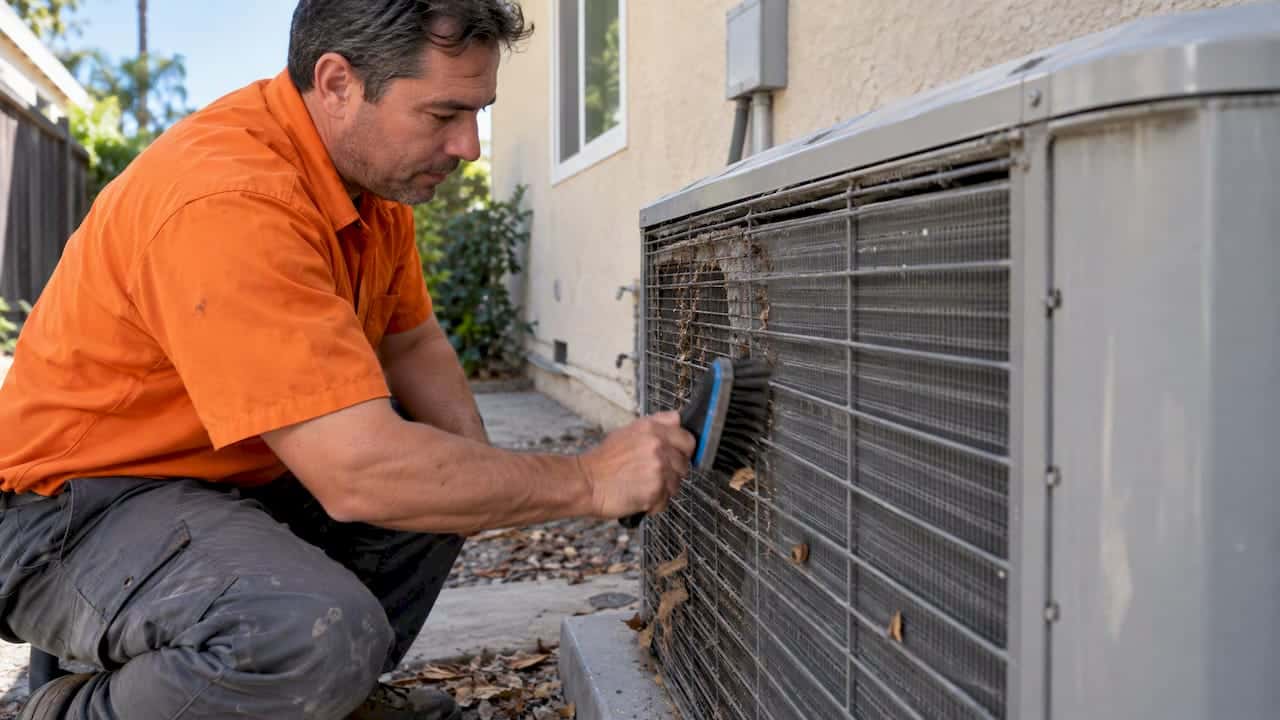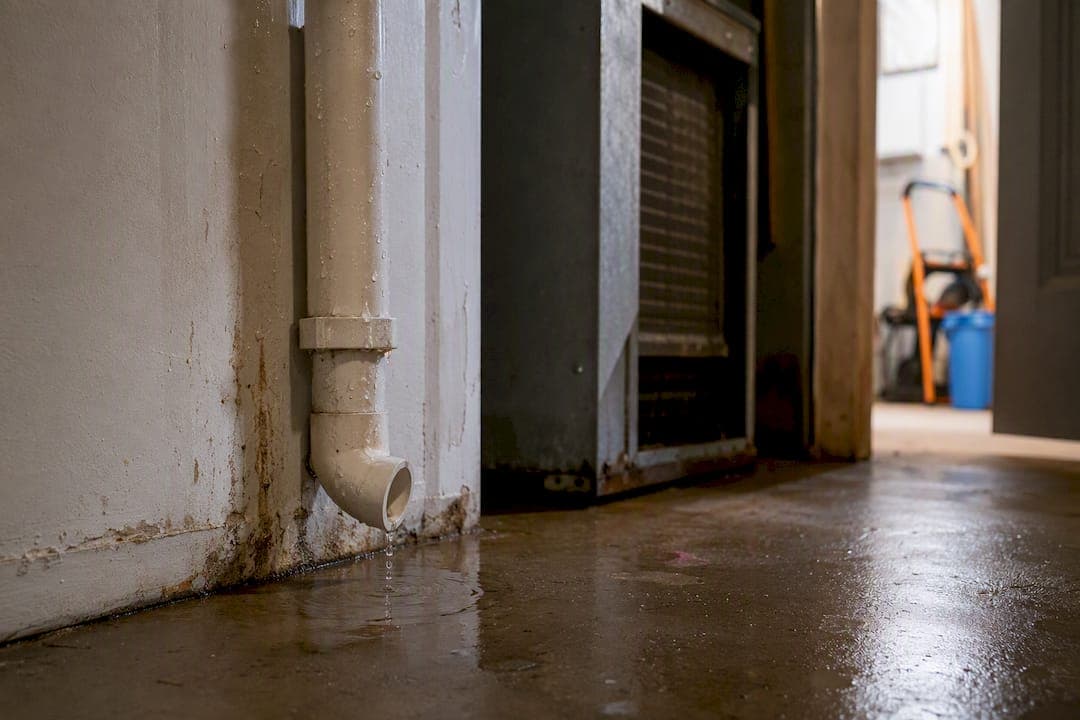
- Key Takeaways
- What Causes Ac Leaking Water: How Your Condensate System Works
- Immediate Steps When Your Ac Is Leaking Water
- How to Clear an Ac Drain Line and Fix Common Leaks Yourself
- When Ac Water Leaks Need a Professional Technician
- Preventing Future Ac Leaks With Routine Maintenance
- LC Heating & Air Conditioning: Field Experience You Can Trust
- A Homeowner’s Honest Take on Ac Leaks
- Same-Day Help for Ac Leaks in Los Angeles
- Sources
- FAQ
- Recommended
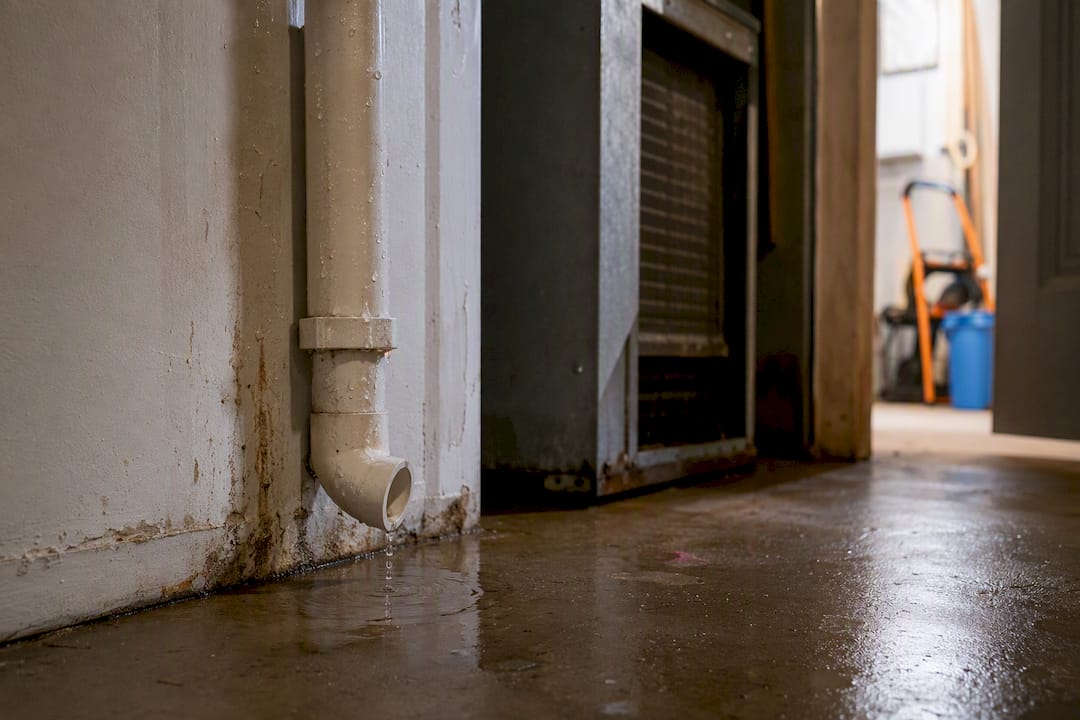
Most of the time, an AC leaking water inside your house comes down to one of three things: a clogged condensate drain line, a frozen evaporator coil, or a cracked drain pan. The good news is you can stop the damage right now, before you even know which one you’re dealing with.
Kill the cooling. Go to your thermostat and switch the system off, then flip the breaker for extra safety since water and electrical components are a bad combination. Grab towels and a bucket to contain what’s already on the floor.
Once the leak is contained, do a quick visual check:
- Look at your air filter. Gray, matted, or gray-brown means restricted airflow, a common trigger for frozen coils.
- Check the drain pan under the indoor air handler for standing water or visible cracks.
- Note whether the water is clear (likely condensate) or has an oily sheen (a signal for a technician, not a mop).
Pro Tip: Snap a photo of the drain pan and any ice on the coil before you clean up. If you end up calling a professional, that photo saves diagnostic time and sometimes money.
A clogged condensate drain line is the single most common reason an AC leaks water indoors, according to HVAC manufacturer guidance, so start your troubleshooting there.
Key Takeaways
Most AC water leaks trace back to a clogged condensate drain line, a frozen evaporator coil from restricted airflow, or a cracked drain pan, and shutting the system off immediately limits the damage while you sort out which one you have.
| Point | Details |
|---|---|
| Act fast on discovery | Switch off the thermostat and breaker, then contain water with towels or a wet/dry vacuum. |
| Check the filter first | A dirty filter restricts airflow and is a leading cause of frozen coils that later leak. |
| Try the vacuum-and-vinegar fix | Clear the exterior drain line with a wet/dry vacuum, then flush with vinegar through the cleanout tee. |
| Know the red flags | Oily residue, hissing sounds, or a rusted drain pan mean it’s time to call a licensed technician. |
| Call LC Heating and Air Conditioning | Same-day flat-rate diagnostics across Greater Los Angeles cover everything from drain clogs to full pan replacement. |
What Causes Ac Leaking Water: How Your Condensate System Works
Your air conditioner pulls humidity out of the air every time it runs. As warm, moist air passes over the cold evaporator coil, water condenses on the metal, exactly like a cold glass of lemonade sweating on a summer porch. That water drips into a drain pan below the coil, then travels out through a PVC condensate line, usually to the outside of your house or into a floor drain. When every part of that chain works, you never notice it. When one part fails, you get a puddle in the closet or a stain spreading across the ceiling.
Clogged condensate drain line. The inside of that PVC pipe stays dark and damp for months at a time, which is exactly the environment algae and biofilm need to thrive. As the sludge builds up, it narrows the pipe until water backs up faster than it can drain, overflows the pan, and finds the nearest exit, usually your drywall. A clogged drain line remains the top cause of AC leaks across manufacturer and provider guidance, and slow drips or gurgling near the drain line are the earliest tells.
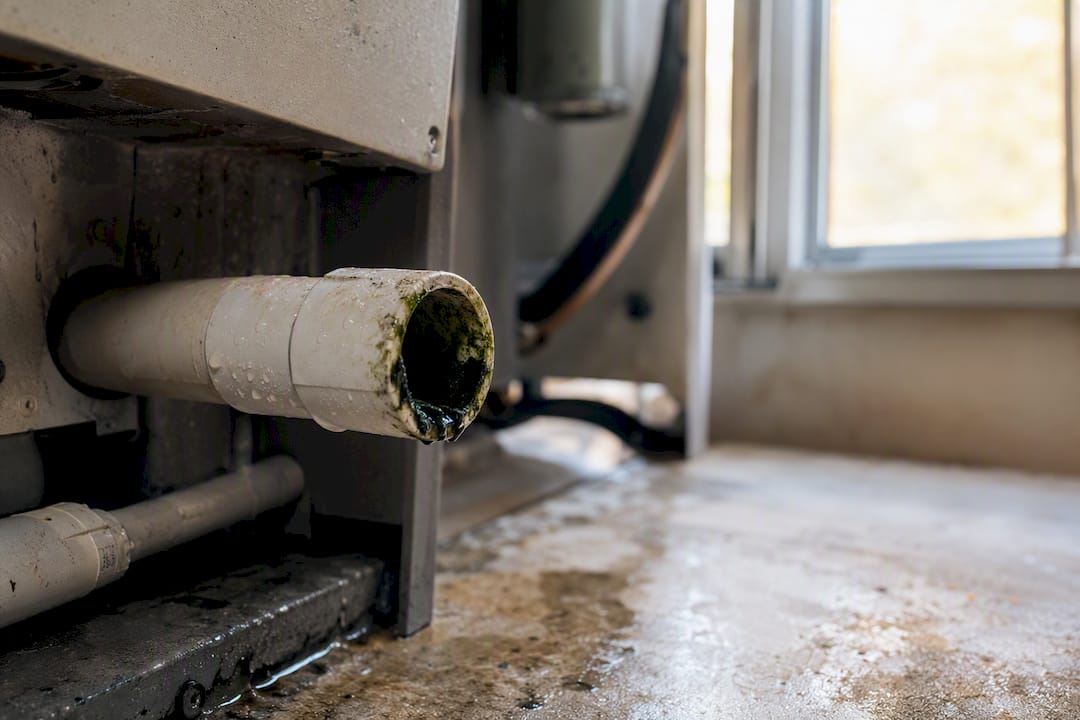
Frozen evaporator coil. Ice forming on the coil is a symptom, not the disease. It usually points to restricted airflow from a dirty filter or blocked return vents, or to low refrigerant. Once you shut the system off, that ice melts, and melting ice produces far more water than your drain pan was built to handle in one go. Frozen coils typically trace back to an airflow or refrigerant problem, which is why thawing the ice without fixing the underlying cause almost guarantees a repeat leak.
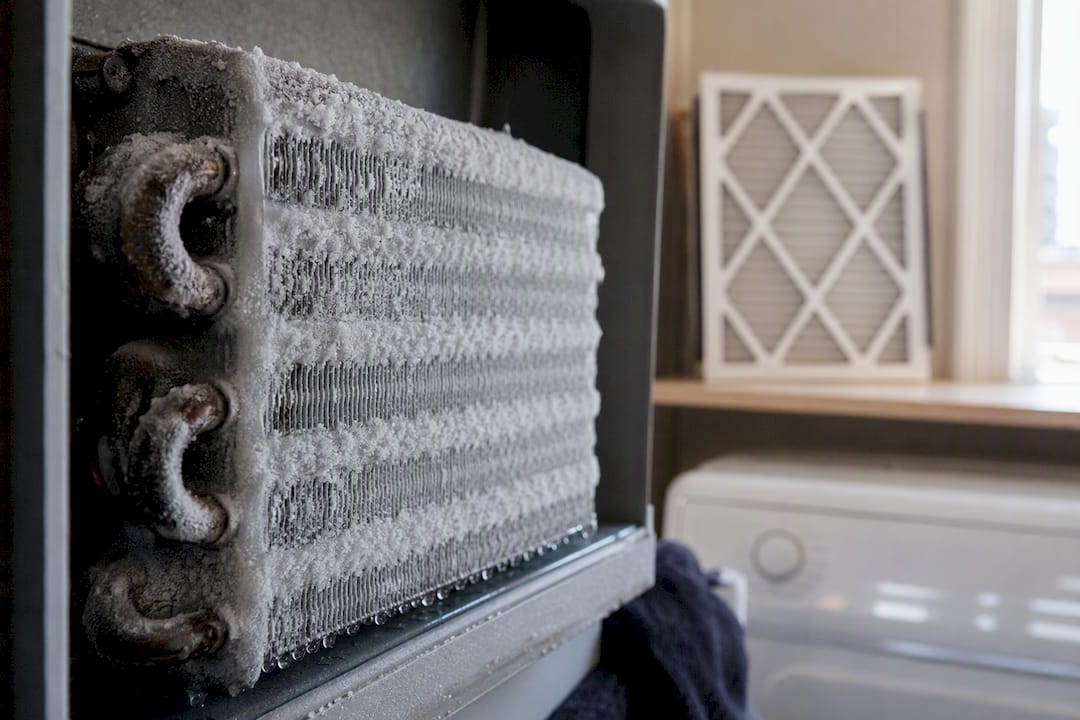
Damaged or poorly installed drain pan. Metal pans rust over time; plastic pans crack. Either way, the pan stops holding water and starts leaking through the flaw itself. Installation errors add to this: a pan or drain line installed without the correct pitch lets water pool and stagnate rather than flow toward the exit, accelerating clogs and corrosion.
Failed condensate pump or disconnected line. Systems without a gravity drain path rely on a small pump to push water out. When that pump’s float switch sticks or the motor burns out, water has nowhere to go but back into your house. A line that’s slipped off its fitting, often after a filter change or attic work, causes the same problem even with a perfectly healthy pump.
- Window units and mini-splits leak for many of the same reasons: an incorrect installation tilt, a clogged pan, or a blocked drain line are the usual suspects, and they’re often easier to inspect than a central system’s air handler.
Immediate Steps When Your Ac Is Leaking Water
The first few minutes matter more than the diagnosis. Industry guidance is consistent: power the system down first, then deal with the water, then start looking for causes.
- Shut off the thermostat, then the breaker. The thermostat stops the compressor and blower; the breaker cuts power to the whole unit, which protects you if water has reached any electrical connections in the air handler.
- Contain and remove standing water. Towels and a bucket handle a small puddle. For anything more, a wet/dry vacuum clears standing water fast and keeps it from soaking into subfloor or drywall.
- Move anything valuable out of the drip zone. Boxes, electronics, and flooring near the air handler or attic access should come first.
- Find the drain pan and look closely. Note cracks, rust spots, or a pan that’s simply full to the brim. Clear, plain water suggests condensate; anything oily or discolored deserves a professional look.
- Pull the air filter and inspect it. A filter caked in gray dust restricts airflow enough to freeze a coil. If it’s dirty, swap it, even before you call anyone.
- Check the outdoor drain line termination. Walk outside and look at the PVC pipe exit near your condenser. Standing water, dripping, or a visible blockage at the opening tells you the clog is likely in the line itself.
Pro Tip: Keep a spare filter and a cheap wet/dry vacuum near your air handler. Most weekend AC leaks turn into a two-minute fix instead of a soaked ceiling when you’ve already got the tools on hand.
How to Clear an Ac Drain Line and Fix Common Leaks Yourself
Plenty of AC leaks are fixable without a service call, provided you’re comfortable with basic tools and a little patience.
Clearing a clogged condensate drain line:
- Confirm the system is off at the thermostat and breaker.
- Find the drain line’s exterior termination point, usually a PVC pipe near your outdoor condenser.
- Fit a wet/dry vacuum hose snugly over the pipe opening, using a rag or tape to seal any gap so you get real suction.
- Run the vacuum for one to two minutes to pull out algae, sludge, and debris.
- Locate the drain line’s cleanout access, often a T-shaped fitting near the indoor air handler, and pour in a quarter cup of white vinegar to break down remaining residue.
- Wait about 30 minutes, then restart the system and watch the drain pan for normal, steady drainage.
Manufacturers recommend this same vacuum-then-vinegar sequence as standard preventive maintenance, not just an emergency fix. Some systems hide a trapped section, similar to a sink’s P-trap, downstream of that cleanout tee, which can mask a clog even after a vacuum pass; if water still won’t drain freely, that trap is the next place to check.
Thawing a frozen evaporator coil:
Turn the system off completely and leave it off for several hours, sometimes overnight for a heavily iced coil. Switching the fan to “on” (not “auto”) can speed melting by circulating room-temperature air across the coil. Never chip at the ice, use a hair dryer, or pour hot water on it. All three risk puncturing the thin aluminum fins or cracking the coil itself.
Checking your air filter:
Standard fiberglass filters need replacing monthly during cooling season. Pleated filters rated MERV 8 to 11 last closer to 60 to 90 days. If you can’t see light through a filter held up to a window, it’s overdue.
Testing a condensate pump:
Lift the pump’s float gently. If the motor doesn’t kick on, or you hear it running without moving water, the pump has likely failed. Check that the discharge line is still connected and hasn’t been kinked or knocked loose.
- Wear gloves and eye protection when handling drain lines or vacuuming debris.
- Never open refrigerant lines yourself; that requires EPA-certified equipment and training.
- Never touch electrical components, including the pump, with wet hands or standing water nearby.
When Ac Water Leaks Need a Professional Technician
Some symptoms mean it’s time to stop troubleshooting and start dialing. A hissing sound near the indoor unit, an oily residue around fittings, or a coil that re-freezes within a day or two of thawing all point to a refrigerant problem that requires licensed equipment to diagnose safely.
Watch for these red flags specifically:
- Refrigerant odor, hissing, or oily spots near the coil or lines
- Any water pooling near outlets, switches, or the air handler’s electrical panel
- A rusted-through or visibly cracked drain pan
- Water stains spreading across a ceiling below an attic-mounted unit
- Ice that returns quickly after you’ve already thawed the coil once
A technician’s diagnostic typically includes refrigerant pressure checks, a physical inspection of the coil, and often a camera inspection or high-pressure flush of the drain line to clear clogs a shop vacuum can’t reach. Drain pan replacement and condensate pump repairs usually fall outside DIY territory and typically run higher than a simple line-clearing visit, since pan swaps often involve partial disassembly of the air handler.
Expect professional drain-line clearing to sit at the lower end of common HVAC service calls, with condensate pump replacement and drain pan replacement costing more due to parts and labor time. Regional labor rates and system accessibility shift these ranges, so treat any number as a starting point for conversation, not a quote.
When you call, ask for a flat-rate quote before work begins, confirm what warranty covers parts and labor, and ask whether a float switch, a safety device that shuts the system down if water backs up, should be part of the repair.
Preventing Future Ac Leaks With Routine Maintenance
Most condensate leaks are preventable with a maintenance routine you can actually stick to.
Check your filter monthly during cooling season and swap it before it looks visibly clogged. DOE and Energy Star guidance recommends inspecting the condensate drain during annual tune-ups alongside routine filter checks, since a dirty filter is one of the most common paths to a frozen coil and its overflow.
Flush the condensate line with a cup of water followed by a splash of white vinegar every three to six months, even if you haven’t noticed any slowdown yet. Algae builds up long before you see the first drip.
- Ask your technician about installing a clean-out tee on the drain line during your next service visit. It gives you (or a future technician) a dedicated access point instead of cutting into glued PVC.
- Add a float switch to shut the system down automatically before water overflows the pan.
- For attic-mounted units, install a secondary drain pan with its own drain line as backup insurance against ceiling damage.
Pro Tip: A float switch costs far less than a single drywall repair. If your air handler sits above a finished ceiling, it’s one of the cheapest upgrades in HVAC.
If your drain pan has already rusted through once, if you’re losing refrigerant repeatedly, or if the coil keeps freezing despite a clean filter, you’re looking at a pattern, not a one-off. At that point, repeated repairs on an aging system often cost more over a year or two than moving to a newer, more efficient setup.
LC Heating & Air Conditioning: Field Experience You Can Trust
Diagnosing an AC leak over the phone only goes so far. LC Heating and Air Conditioning has spent more than 20 years running diagnostics on Los Angeles homes, from century-old Craftsman bungalows in Hollywood to modern multi-zone heat pump installs in Beverly Hills, and that range matters because a 1920s drain line and a new mini-split fail in different ways.
Homeowners consistently tell us the same two things frustrate them most about HVAC calls: getting hit with a surprise diagnostic fee, and feeling pressured into a full system replacement when a repair would have done the job. We built our pricing and our diagnostic process specifically to remove both of those problems.
Here’s what that looks like in practice:
- Flat-rate pricing on repairs, quoted before work begins, so there’s no surprise invoice
- Same-day service for active leaks and other urgent HVAC issues across Greater Los Angeles
- Deep experience across heat pumps, mini-split systems, and commercial VRF systems, not just standard central AC
- A verified base of customer reviews built over two decades of local service
For step-by-step help beyond this guide, our detailed leak-repair walkthrough and leak prevention guide go deeper into specific repair scenarios.
A Homeowner’s Honest Take on Ac Leaks
Most articles about AC leaks bury the useful information under three paragraphs of throat-clearing about how humidity works. Here’s what actually matters: nine times out of ten, this is a maintenance problem wearing a plumbing disguise. The algae in your drain line didn’t show up overnight. It’s been building for months while nobody checked.
The conventional advice to “just thaw the coil and see if it happens again” undersells the risk. A frozen coil that returns quickly after thawing signals an airflow or refrigerant issue underneath it, and running the system through repeated freeze/thaw cycles stresses the compressor. That’s an expensive way to avoid a $20 filter or a technician visit.
What I’d prioritize differently than most guides: skip the extended troubleshooting checklist if you see oily residue or smell anything unusual near the unit. That’s not a DIY moment. Everything else, the drain clog, the dirty filter, the disconnected line, is genuinely fixable by a homeowner with an hour and a wet/dry vacuum. Know which category you’re in before you start.
— Leo
Same-Day Help for Ac Leaks in Los Angeles
If you’ve worked through the checks above and the leak keeps coming back, or you’d rather skip straight to a technician, LC Heating and Air Conditioning offers same-day diagnostics across Greater Los Angeles with flat-rate pricing quoted before any work starts.

That flat-rate model matters here specifically: drain pan replacements and condensate pump repairs are exactly the kind of job where surprise add-on fees tend to creep in elsewhere. You’ll know the cost before a tool touches your air handler. Our technicians work on everything from older gravity-drain window units to modern heat pump and VRF systems, so whether your leak is coming from a 1960s central air handler in a historic Los Angeles home or a new multi-zone mini-split, we’ve likely already seen the exact failure pattern.
If your AC is actively leaking today, book a same-day diagnostic visit or browse our HVAC repair and maintenance services to see what a flat-rate visit includes before you call.
Sources
FAQ
Can I still run my AC if it’s leaking water?
Turn it off first. Running a leaking system risks electrical damage, mold growth, and can turn a frozen coil into a bigger repair once the ice fully melts.
Is a leaking AC unit an emergency?
It depends on the source. Water near electrical components or a hissing refrigerant leak is urgent; a simple drain clog with water contained in a pan is not, but it should still be addressed within a day or two.
What should I do when my AC leaks water?
Shut off the thermostat and breaker, contain the water with towels or a wet/dry vacuum, check your air filter, and inspect the drain pan before attempting any DIY fix like a drain-line flush.
Should I turn off my AC if it is leaking?
Yes. Powering down at both the thermostat and breaker is the first step every HVAC guide recommends before you diagnose or clean up anything.
How much does it cost to fix an AC water leak?
A simple drain-line clearing costs less than a drain pan or condensate pump replacement, since those repairs involve more labor and parts; LC Heating and Air Conditioning provides flat-rate quotes before starting any repair.
Recommended
Leo, Propietario y Técnico Principal en LC Heating & Air
Leo dirige LC Heating & Air como propietario-operador y tiene la licencia C-20 HVAC #1073586 de California. Sus guías se enfocan en diagnósticos prácticos, decisiones de reparación seguras y consejos claros para propietarios de Los Ángeles.