- What the click pattern and timing tell you
- Electrical causes: contactor, capacitor, and control issues
- Mechanical causes: debris, loose panels, and worn bearings
- Compressor, refrigerant, and airflow issues
- Safe diagnostic checklist before you call for service
- When to shut the system off and call a technician
- Leo’s pro approach: how a trusted technician diagnoses clicking ACs
- A note from Leo on catching clicks early
- How we can help if your AC is clicking
- FAQ
- Sources
- Recommended

Most AC clicks are just the contactor switching the compressor on or off, which is completely normal. But repeated clicking, chattering, or clicks with no startup at all usually mean an electrical or mechanical fault, and that’s your cue to shut the system off and call a technician before a small part failure turns into a compressor replacement.
TL;DR:
- Repeated clicking or chattering typically indicates electrical issues such as a failing contactor or capacitor, which can damage components if ignored.
- A single, rhythmic click during startup and shutdown is normal, but frequent, rapid clicks suggest a need for immediate professional inspection.
- Mechanical noises from debris, loose panels, or worn bearings are usually safe to check after turning off power, but larger motor or bearing faults require professional repairs.
- Clicking combined with weak cooling, ice buildup, or system shutdown signals refrigerant or airflow problems often warrant a technician’s diagnosis of compressor or refrigerant leaks.
- Signaling signs like buzzing, burning smells, or repeatedly tripped breakers mean the system should be shut down immediately and examined by a licensed technician.
What the click pattern and timing tell you
The sound itself is a diagnostic clue, and once you know what to listen for, you can usually tell whether your system needs a technician or just a minute of your attention.
A single, sharp click when the AC starts and another when it shuts off is the contactor doing its job, pulling the circuit closed to send power to the compressor and fan. That’s healthy behavior, not a warning sign. A rapid, repeated clicking or chattering sound, on the other hand, often points to a failing contactor or capacitor struggling to hold a connection. Rhythmic clicking that keeps pace with the fan usually means something is physically striking the blades. A faint ping or tick after shutdown is typically just metal ductwork or housing contracting as it cools, and a clicking sound from the thermostat itself is often just the internal relay switching modes.
Timing narrows things further. Clicks at startup or shutdown point to the contactor. Clicks that repeat every few minutes during a run cycle suggest the system is trying and failing to start, which often traces back to a capacitor or compressor issue. According to Debra Bernier’s breakdown of AC clicking causes, a single click at startup and shutdown is normal, while rapid repeated clicks or chattering signal electrical trouble that needs prompt attention.
Quick indicators worth remembering:
- One click per cycle, matching startup and shutdown, is normal contactor action.
- Clicking that repeats every few seconds or minutes without the system running is not normal.
- A click paired with buzzing, humming, or a burning smell always warrants a shutdown.
Electrical causes: contactor, capacitor, and control issues
Most clicking complaints trace back to one of a handful of electrical components, and each one has a distinct sound and failure pattern.
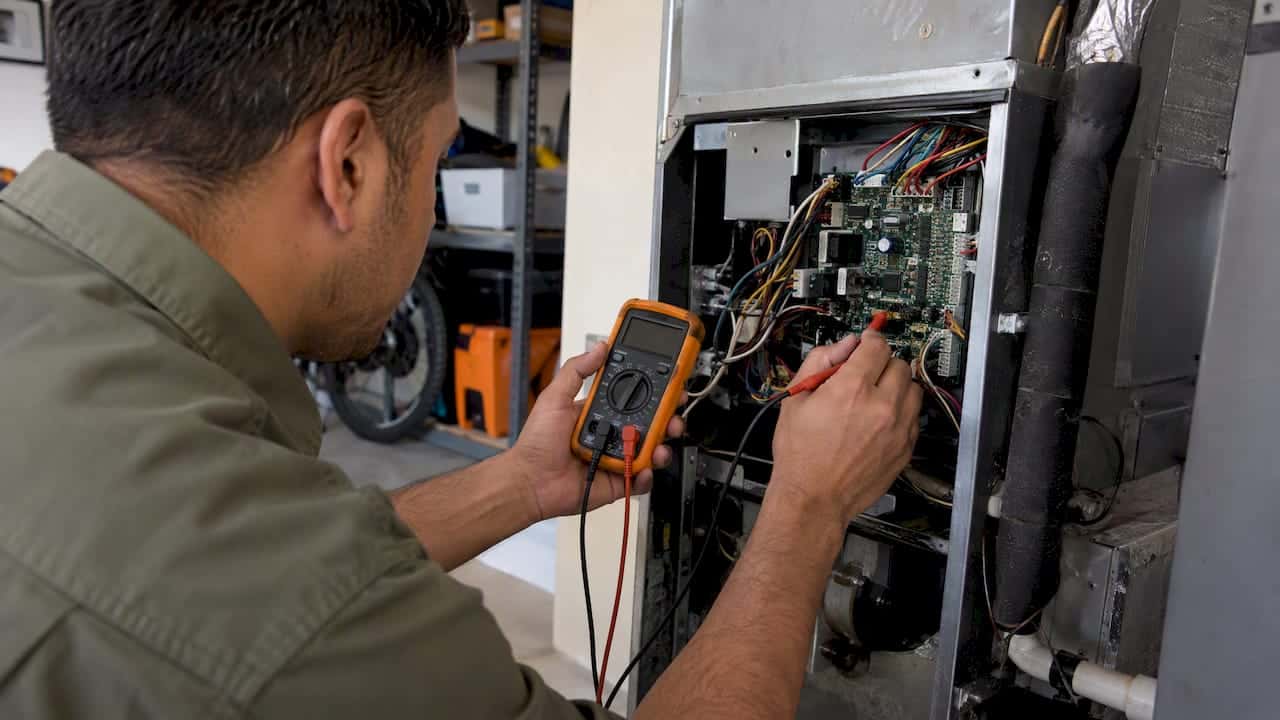
The contactor is the small relay-like switch that connects line voltage to your compressor and outdoor fan. A single clean click at startup and shutdown is this part working correctly. When it starts chattering, rapidly clicking on and off, it usually means the contacts are pitted, loose, or being pulled by a voltage fluctuation, and that chattering generates heat that can eventually weld the contacts shut or burn them open.
A failing capacitor produces a different pattern: the compressor tries to start, clicks, hums for a second, then trips offline and tries again a few minutes later. That cycle is hard on the compressor and should not be allowed to repeat for long.
The thermostat can also be the source. If the display flashes “Cool On” or shows a delay message, that’s usually a built-in compressor protection timer, not a fault, as Carrier explains in its thermostat guidance. Persistent flashing beyond 5 to 10 minutes suggests a breaker, wiring, or control board problem worth investigating further, including in our guide to thermostat clicks with no AC startup.
Safe checks you can do yourself:
- Check your breaker panel for a tripped switch; reset it once, and if it trips again, stop and call for service.
- Replace thermostat batteries as needed and ensure the unit is set to cooling mode rather than fan or off.
Pro Tip: Never open your outdoor unit’s electrical panel yourself. Line-voltage contactors can carry current even when the thermostat is off, and that’s a job for a licensed technician.
Mechanical causes: debris, loose panels, and worn bearings
Mechanical clicks tend to sound more like a physical impact than an electrical snap, and many of these causes are safe to check once the power is off.

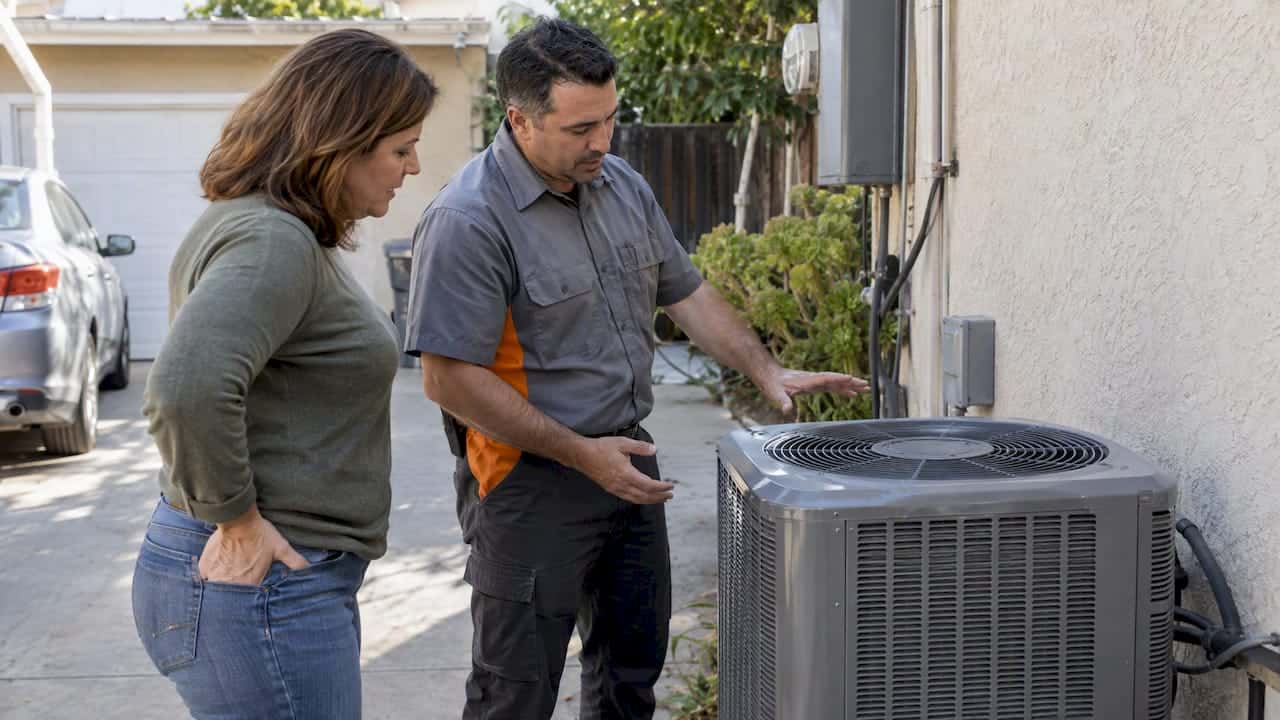
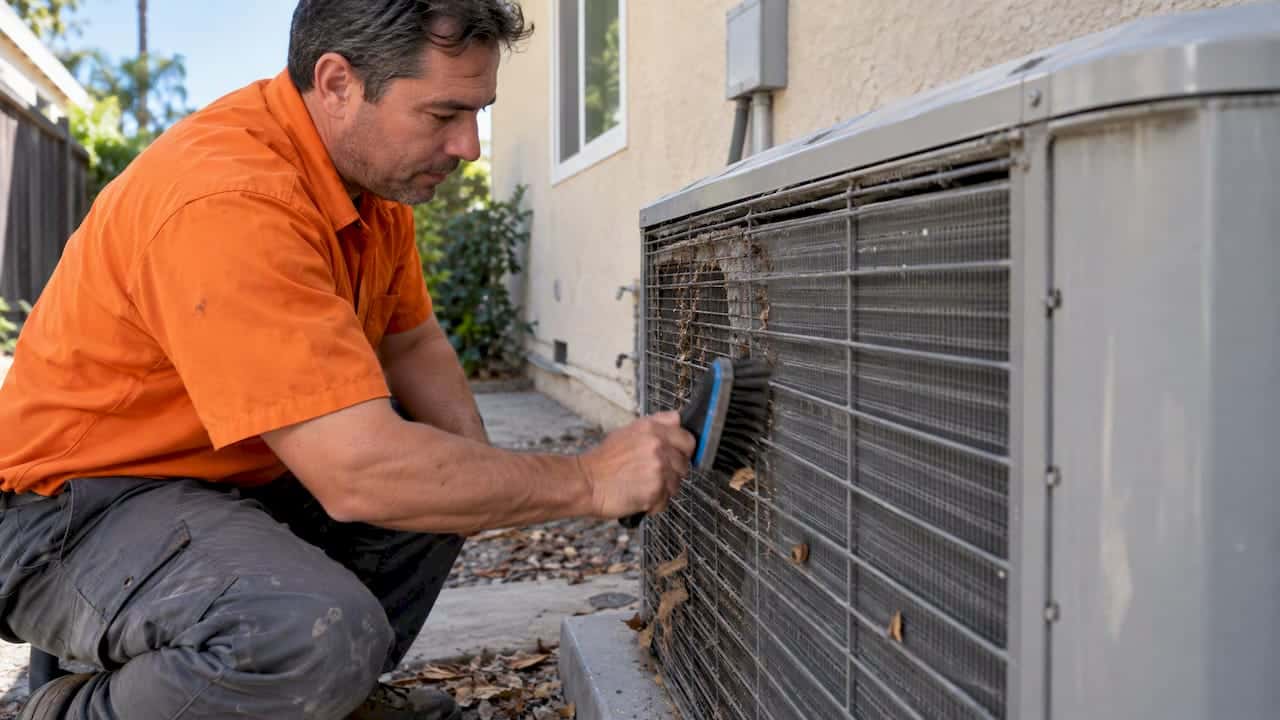
Debris hitting a fan blade produces a quick, rhythmic click that speeds up or slows down with the fan itself, almost like a playing card in bicycle spokes. Loose panels or screws tend to produce a looser, more irregular rattle that changes with wind or vibration. Worn motor bearings usually announce themselves with a grinding or scraping click that grows louder over time rather than staying constant.
Here’s a safe inspection sequence:
- Shut off power at the thermostat and the outdoor disconnect before touching anything.
- Remove the outdoor unit’s top grille if it’s accessible without tools, and look for leaves, twigs, or ice buildup near the fan blade.
- Check that the access panels are seated and the screws are snug, since a loose panel alone can sound like a serious fault.
- If you see a bent fin, a cracked blade, or visible rust on the motor housing, stop and schedule a technician visit rather than attempting a fix.
Older window units with worn bearings or a bent housing are often better replaced than repaired, since labor costs can approach the price of a new unit. For a central system, a loose panel or minor debris issue is usually a quick fix, while a bearing or motor fault calls for a professional. Our general guide to AC noises walks through more sound-to-cause pairings if you want a broader reference.
Compressor, refrigerant, and airflow issues
Clicking paired with weak cooling or a system that won’t stay running often points past the electrical components and into the compressor and refrigerant circuit.
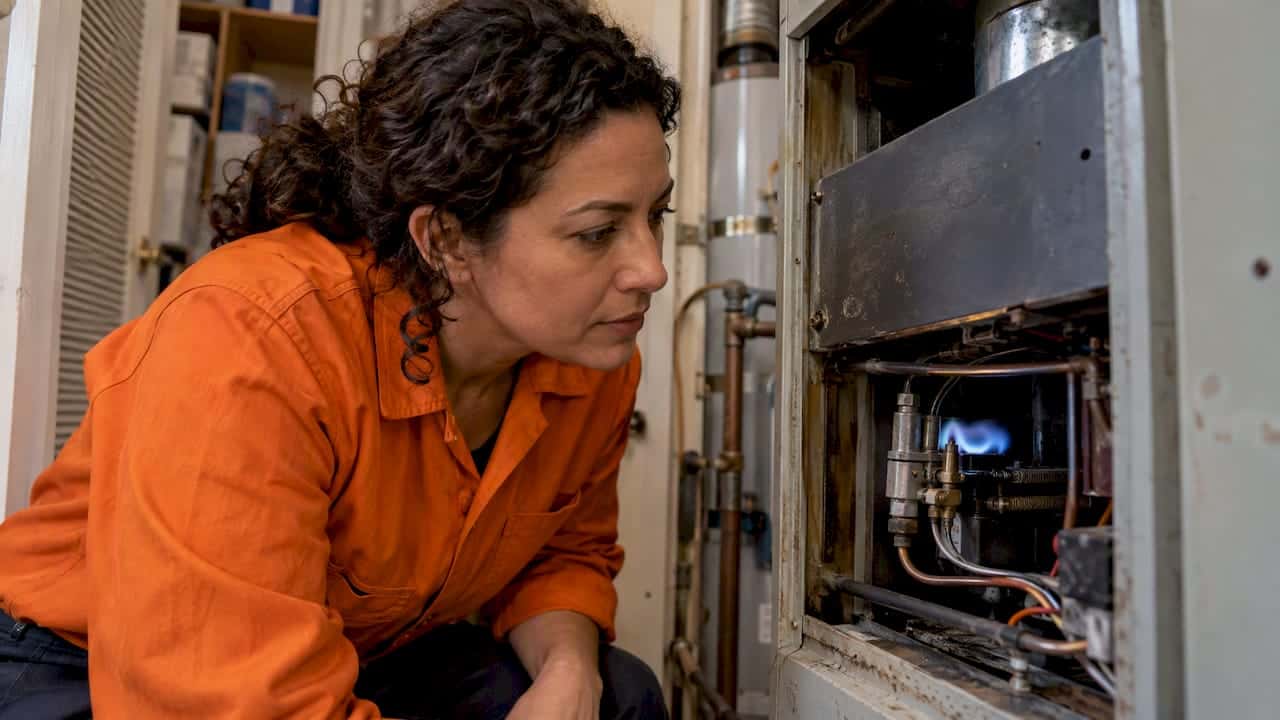
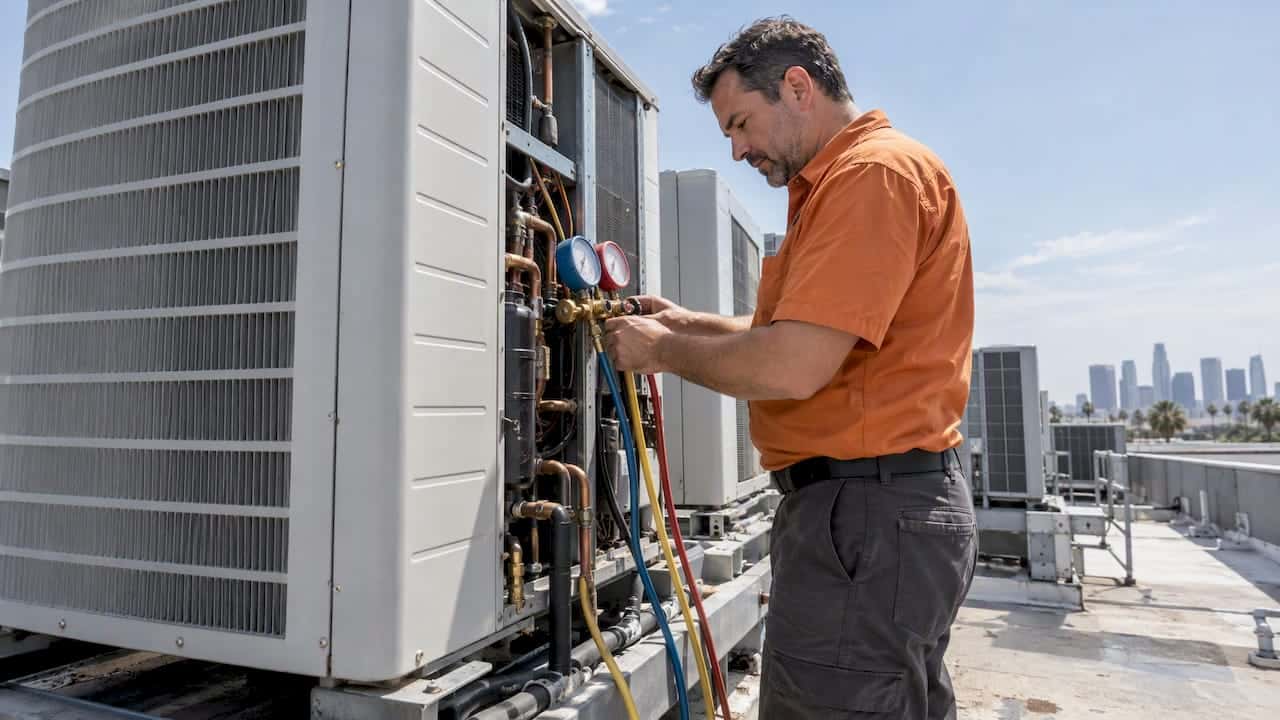
When a compressor repeatedly tries to start, clicks, hums, and then shuts off, it’s usually tripping its own thermal overload protector. That’s a safety feature, but letting it cycle repeatedly risks permanent damage to the compressor windings. Low refrigerant charge, an incorrect charge from a previous service, or a restriction in the lines can all cause this strain, and airflow problems often compound it. According to the Building America measure guide on air conditioner diagnostics, airflow below roughly 300 to 350 cubic feet per minute per ton of cooling capacity degrades performance, can cause indoor coil icing, and makes refrigerant charge readings unreliable until airflow is corrected first. A dirty filter, a fouled evaporator coil, or blocked return vents can all starve the system of airflow before refrigerant is even part of the problem, something our partners at Amazon Air Duct Cleaning cover in detail when explaining dirty coil symptoms.
Topping off refrigerant without finding the leak is not a real fix. Under EPA Section 608 rules, only certified technicians can legally handle refrigerant, and adding more to a leaking system wastes refrigerant, costs money twice, and can violate federal regulations. Our refrigerant leak repair guide covers what proper leak detection and repair looks like.
Signs the problem is refrigerant-related rather than purely electrical:
- Weak airflow from the vents paired with a warm house despite the system running.
- Visible ice buildup on the indoor coil or outdoor line set.
- Clicking that coincides with the compressor shutting down mid-cycle rather than at startup.
Safe diagnostic checklist before you call for service
Running through a short checklist before you pick up the phone helps your technician diagnose the problem faster and can rule out the simplest causes yourself.
- If you hear buzzing, smell burning, or see a tripped breaker that won’t stay reset, shut the system off at the thermostat and the breaker immediately. Do not attempt further troubleshooting.
- Confirm the thermostat is set to “cool,” check the batteries if it’s battery powered, and note whether “Cool On” is flashing, which often just means a built-in startup delay.
- Check and replace the air filter if it’s visibly dirty or hasn’t been changed in the last 90 days.
- Walk around the outdoor unit and clear leaves, grass clippings, or ice away from the base and fan grille.
- Check that supply and return vents inside the house are open and unobstructed by furniture or rugs.
- Look at the outdoor disconnect box for a blown fuse, and check the indoor unit for any sign of oil or grease residue, which can indicate a refrigerant leak.
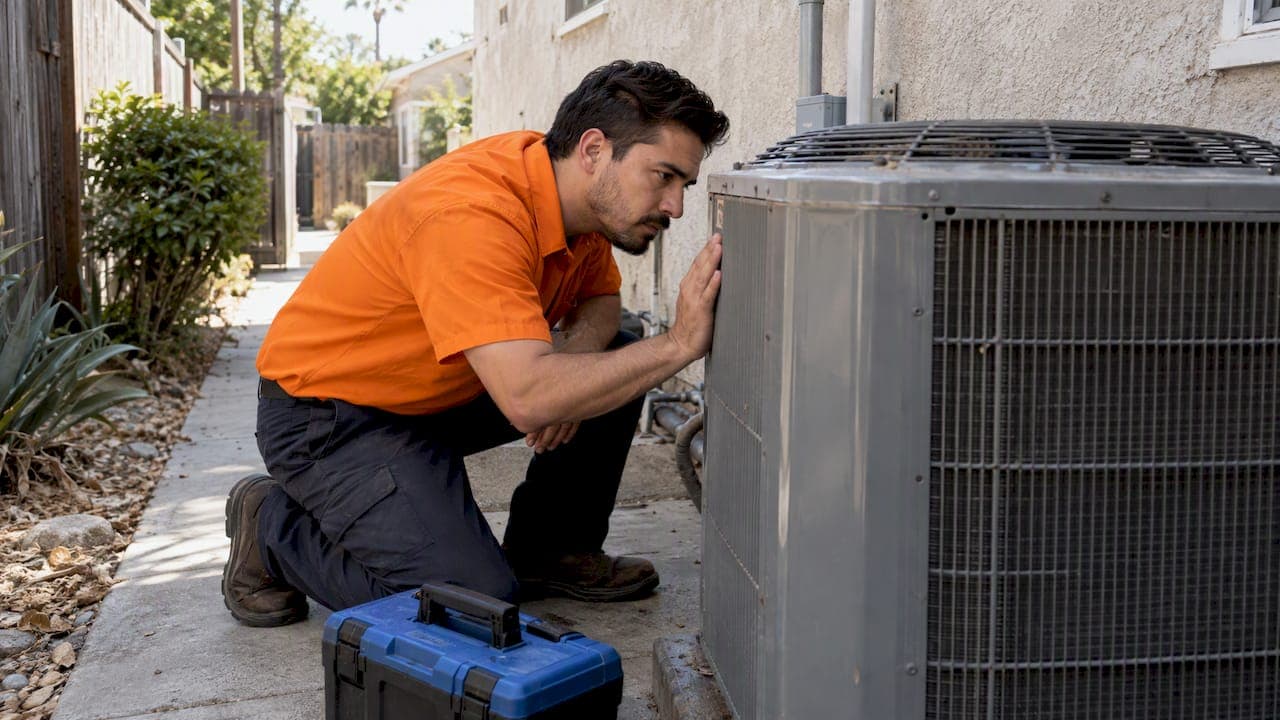
Use timing and location to narrow things down: a click from the thermostat itself points indoors, a click at the outdoor unit during startup points to the contactor or capacitor, and a click paired with the blower fan running points to something mechanical inside the air handler.
Pro Tip: Before you call, jot down when the clicking happens, how often, and whether it’s paired with any smell, buzz, or light dimming. That one note can save a technician a diagnostic trip.
When to shut the system off and call a technician
Some signs mean the troubleshooting phase is over and it’s time to call for professional service.
- Clicking that repeats every few minutes with the system failing to start.
- Any buzzing, humming, or burning smell accompanying the clicks.
- Breakers that trip repeatedly or lights that dim when the AC cycles.
- A carbon monoxide alarm sounding, which requires leaving the house and calling emergency services first.
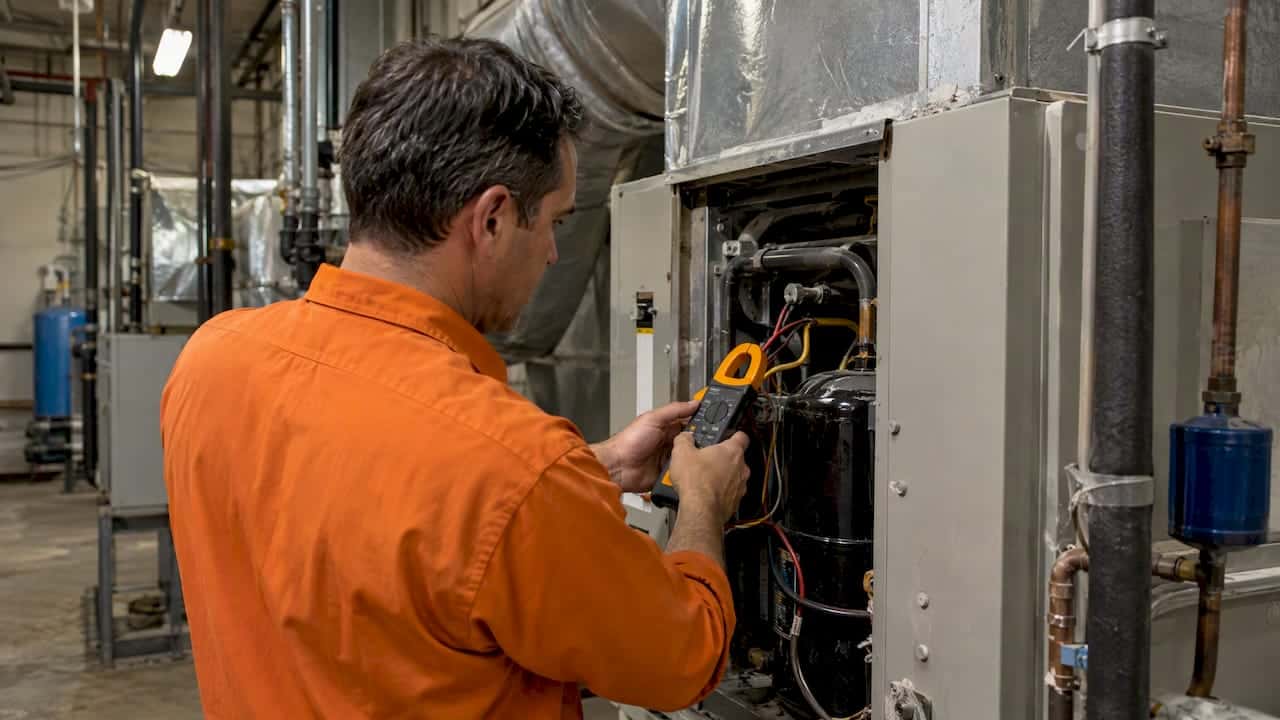
As Hvac, repeated clicking with electrical distress signals like buzzing or dimming lights often points to a shorted wire, seized motor, or failing capacitor, any of which risks fire or compressor destruction if ignored. A technician will typically check capacitor microfarad readings, contactor continuity, motor amp draw, refrigerant pressures, and the temperature split across your coil before recommending a repair. Costs vary by part and system age, but a contactor or capacitor swap is generally far less expensive than a compressor replacement, which is exactly why catching the problem early matters.
Leo’s pro approach: how a trusted technician diagnoses clicking ACs
When we respond to a clicking AC call, the sequence is always the same: listen first, isolate the component, measure it, then repair. We offer flat-rate diagnostics and same-day service precisely because waiting on a strange noise rarely makes it cheaper to fix.
We also never top off refrigerant without finding and repairing the leak first, in line with federal requirements. A few things we check that homeowners often miss: ants nesting inside the contactor housing, pitted or burned contacts, a capacitor with a visibly bulging top, and a temperature split test across the coil to separate a charge problem from an airflow problem.
A note from Leo on catching clicks early
After 20 years working on AC systems across Los Angeles, I can tell you the clicks that scare people most are usually the easiest to fix if you call early. A pitted contactor or a weak capacitor costs far less to replace than a compressor that’s been forced through overload cycles for weeks. We always give you a flat-rate diagnosis before any work starts, and we’ll tell you honestly when a repair makes more sense than a replacement.
— Leo
How we can help if your AC is clicking
If your AC is clicking in a way that worries you, we offer same-day diagnostics with flat-rate pricing, so you know the cost before any work begins, not after. Our technicians are certified for refrigerant handling, which means leak detection and repair done right the first time, not a quick top-off that fails again next summer.

Whether it’s a worn contactor, a failing capacitor, or a refrigerant issue hiding behind the noise, we can get a technician to your door the same day you call. You can also ask about our HVAC maintenance plan if you’d rather catch these problems before they start clicking at all.
Ready to get it checked out? Book a service call and we’ll have a technician diagnose the sound and give you a flat-rate quote on the spot.
FAQ
Should I turn off my AC if it’s making noise?
If the clicking is a single click at startup and shutdown, you don’t need to shut the system off. If it’s repeated, rhythmic, or paired with buzzing, dimming lights, or a burning smell, turn the system off at the thermostat and breaker and call a technician, as HVAC.com advises.
Why does my air conditioner make a ticking sound?
A ticking or clicking sound is often the contactor engaging at startup and shutdown, which is normal. If the ticking repeats rapidly or continues through the run cycle, it more likely points to a loose panel, debris striking the fan blade, or a failing electrical component, as outlined in Debra Bernier’s guide to AC clicking causes.
What does a blown AC compressor sound like?
A failing or overloaded compressor often produces a click followed by a brief hum, then a shutdown, repeating every few minutes as the thermal overload protector trips. Continuing to run the system through these cycles risks permanent damage, so it’s best to shut it off and schedule a diagnostic visit.
What is the 3-minute rule for air conditioners?
The 3-minute rule refers to a built-in delay that prevents the compressor from restarting too soon after shutting off, protecting it from damage. Many thermostats display a “Cool On” or delay message during this window, which Carrier confirms is normal unless it lasts beyond 5 to 10 minutes.
Sources
- Hvac
- EPA – Homeowners and Consumers: Frequently Asked Questions
- Building America measure guide: Air conditioner diagnostics
- Debra Bernier – Why is my AC making a clicking noise? (5 causes)
Recommended
Leo, Propietario y Técnico Principal en LC Heating & Air
Leo dirige LC Heating & Air como propietario-operador y tiene la licencia C-20 HVAC #1073586 de California. Sus guías se enfocan en diagnósticos prácticos, decisiones de reparación seguras y consejos claros para propietarios de Los Ángeles.