We answer emergency calls 24/7 for Calabasas Country Club homes — no-cold-air during summer heat, furnace failures, CO alarms, gas smells, or electrical burning odors. No hidden after-hours fees. Call (323) 970-3113 and a real technician answers.
Emergency HVAC & 24-Hour AC Repair in Calabasas Country Club
LC Heating & Air provides emergency HVAC in Calabasas Country Club — including 24-hour AC repair, emergency air conditioning repair, same-day HVAC service, emergency heating repair. Whether you need same-day service, a written estimate, or help deciding between repair and replacement, our licensed technicians handle every make and model.
We repair and service all major HVAC brands in Calabasas Country Club, including Carrier, Lennox, Trane, Goodman, Hisense, and LG, and older or discontinued units. No matter the manufacturer, we diagnose the problem accurately and give you an upfront price before any work begins.
Living in a gated estate in Calabasas Country Club means your home has a multi-zone HVAC system that handles the intense western valley summer heat. When that system fails — during a 100-degree afternoon or a cold snap overnight — it's not just uncomfortable, it's a genuine emergency. We provide 24-hour AC repair and emergency air conditioning service for Calabasas Country Club residents, with honest pricing disclosed before we dispatch.
I'm Leo, owner of LC Heating & Air. I've been doing HVAC work for over 20 years, but my company was founded in 2020. We serve Calabasas Country Club with the same straightforward approach I use on every call: I check the equipment, explain what I find, and give you a written estimate before any repair work begins. Emergency or not, that process doesn't change.
Consideraciones HVAC locales
Private gated country club with strict access rules
Estate lots, custom homes, multi-zone HVAC
Intense valley summer heat, occasional cold snaps
Coordinate guard-gate entry and follow vendor hours
Common Emergency HVAC Issues in Calabasas Country Club
The most frequent emergency calls we get from Calabasas Country Club involve complete AC failure during a heat advisory — the kind of day when valley temps hit 105°F and the system just stops. Nine times out of ten it's a failed run capacitor or a burned-out contactor. Both can be replaced same-night, and we carry those parts on our trucks. The second most common call is a furnace that won't ignite when overnight lows drop into the 40s, usually an ignitor or flame sensor issue.
We also respond to carbon monoxide alarms triggered by furnace heat exchanger cracks, gas odors near HVAC equipment, and refrigerant leaks that cause property damage. The multi-zone systems common in country-club homes often have long refrigerant line runs and complex ductwork, which can introduce more leak points or electrical faults over time. We treat these as the genuine emergencies they are.
Estate Homes and Multi-Zone Systems
Calabasas Country Club is a private gated community with estate lots and large custom homes. Most of these houses have multi-zone HVAC systems — multiple indoor units or a single large system with zone dampers controlled by a central thermostat. When one zone fails but others work, it can be confusing for homeowners. That's why the first thing we check is whether the issue is zone-specific or system-wide. For instance, a zone damper stuck closed might just need a new actuator, while a failed outdoor unit affects every zone.
These homes often have HVAC equipment tucked into attics, garages, or exterior closets — sometimes on hillsides with tricky access. The sheer size of the equipment — large tonnage condensers, tall furnaces, 20-foot refrigerant lines — means we need to bring the right parts and tools in one trip. We stock common parts for all major brands on our trucks, which is crucial for evening or weekend calls when supply houses are closed.
How We Diagnose an HVAC Emergency
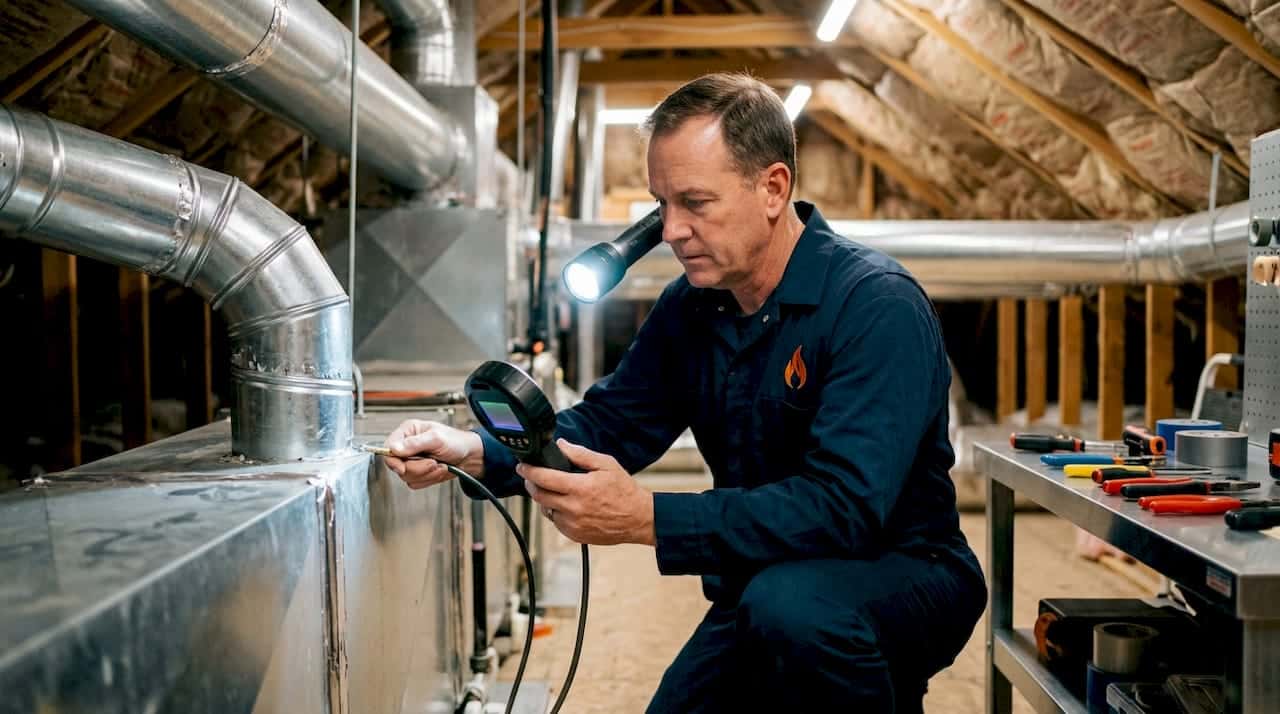
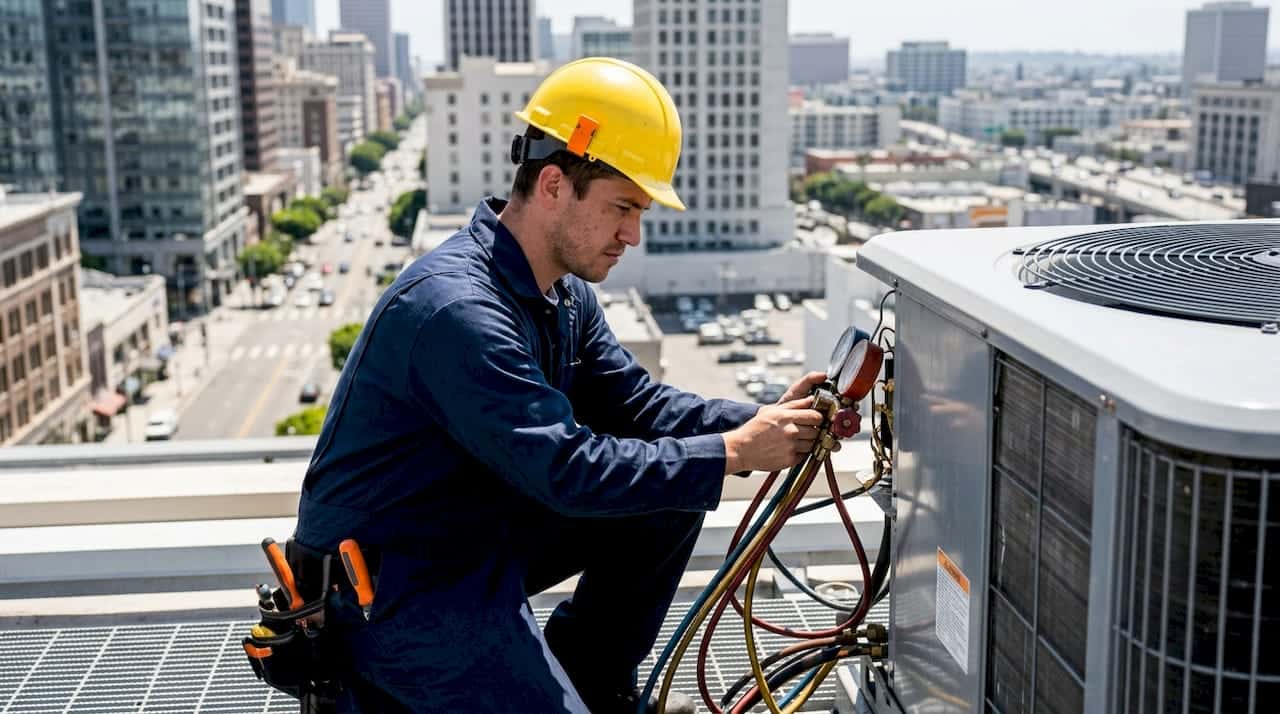
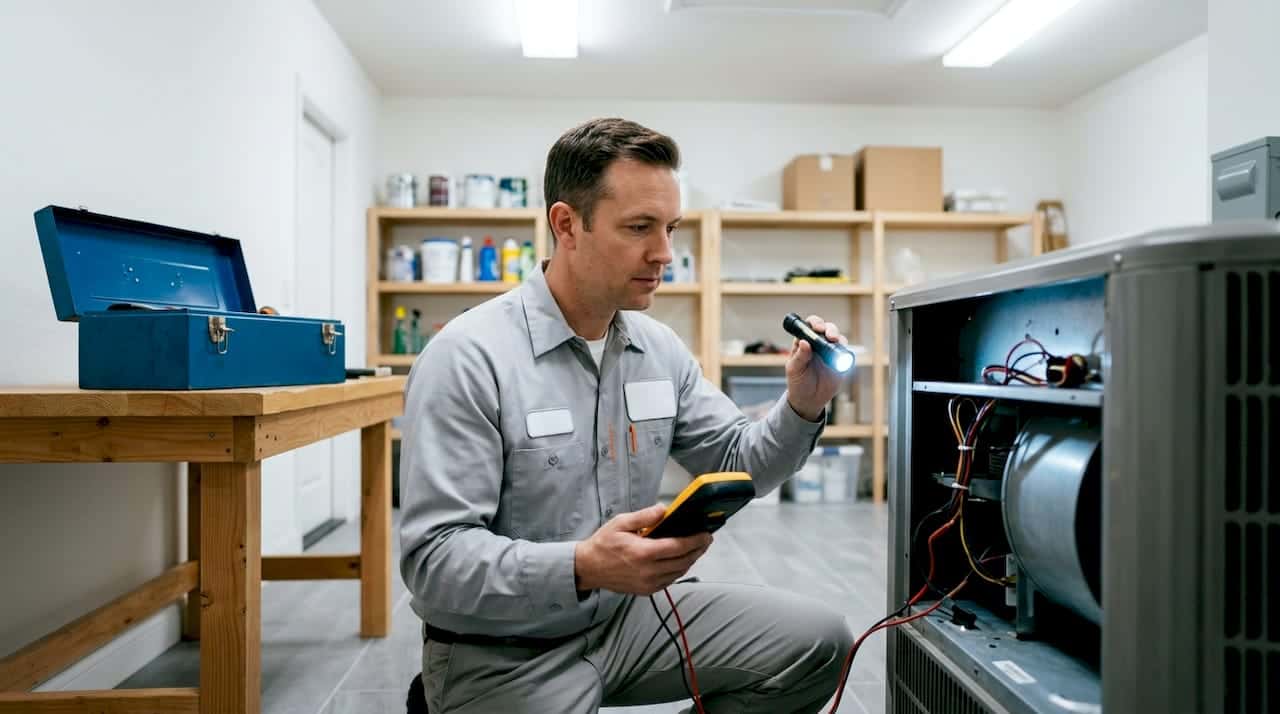
When we arrive for an emergency call in Calabasas Country Club, the first priority is safety. If there's a CO alarm or gas smell, we clear the area and call the fire department if needed. For no-cool calls, we start by checking the thermostat, the outdoor disconnect, and the capacitor and contactor. If the capacitor is swollen or the contactor is pitted, that's likely the culprit, and we replace it on the spot. We also check for voltage at the unit and measure amp draw on the compressor.
For no-heat calls during a cold snap, we check the gas valve, ignitor, flame sensor, and pressure switch. If we find a failed ignitor — a very common part — we replace it immediately. If we suspect a heat exchanger crack, we do a combustion analysis and CO test. In all cases, we explain what we found and what it means for your system, and we only proceed after you approve the written estimate.
Emergency Repair vs. Full Replacement — What to Expect
In a true emergency — complete system failure during a heat advisory or freezing night — the immediate goal is to get the system running safely. A failed capacitor or ignitor is a $200 repair that buys you another summer or winter. If the compressor has seized or the heat exchanger is cracked, those are major component failures that often point toward replacement, especially on systems over 12 years old. We will be honest with you about which path makes more sense.
That said, we don't push replacement during an emergency call unless it's clearly necessary. If a repair can get you through the night and we can schedule a proper assessment later, that's what we'll recommend. The decision is yours, and we'll give you the information you need to make it — including a written estimate for both repair and replacement options if the system is borderline.
Emergency Service Pricing and Costs
Our emergency service call fee ranges from $125 to $200. We disclose this upfront when you call — no surprises. Emergency repair costs for common issues like a capacitor replacement run $175 to $300; a furnace ignitor replacement is similar. More complex repairs like a gas valve or condenser fan motor may run $400 to $800. The key thing is that our repair pricing is the same flat rate whether the call is at 2 PM or 2 AM. We charge an $89 after-hours service fee for evening, weekend, and holiday calls, but the diagnostic and repair rates don't change.
For replacement discussions after an emergency, there may be rebates available for high-efficiency equipment from SoCalGas or the SoCal Edison program. We don't guarantee specific amounts, but we can note available incentives when we discuss options. The most important thing is getting your system stable first — we can talk rebates the next morning.
Gated Access and Scheduling for Emergency Calls
Calabasas Country Club is a strict guard-gated community with specific vendor hours and neighborhood rules. When you call for emergency service, we need your help to coordinate gate access. Have your gate code or the community association's after-hours contact ready. We'll work with the guard to get in as quickly as possible. Some homes sit on hillsides with narrow driveways and limited maneuvering room, so we bring a truck sized for the worst-case access scenario.
We answer emergency calls within 30 minutes — a real technician, not a voicemail. On-site arrival time depends on traffic and our distance from your location, but we give you a realistic ETA. During extreme heat events, we prioritize calls from homes with elderly residents, infants, or medical equipment needs. Our dispatch team will ask about that when you call.
Common Mistakes Homeowners Make in an HVAC Emergency
The biggest mistake we see is trying to troubleshoot or fix the system yourself when it's clearly dangerous. Resetting a tripped breaker repeatedly, poking at a gas valve, or ignoring a CO alarm because you think it's a false alarm — those can turn a repairable problem into a catastrophic one. Another common error is running a window AC unit on the same circuit as a failing central AC, which can trip the breaker entirely and leave you with nothing.
We also see homeowners wait too long to call during a heat advisory, thinking the system just needs to catch up. If your AC is running but blowing warm air, the compressor may be cycling on thermal overload. Running it that way can damage the compressor beyond repair. If the system isn't cooling after 30 minutes of operation during a heat advisory, shut it off and call us. Same for a furnace that won't light — don't keep resetting it, as that can flood the burner chamber with gas and create a safety hazard.
Health and Safety Risks During HVAC Emergencies
The two biggest health risks from HVAC emergencies in Calabasas Country Club are heat illness during a summer AC failure and carbon monoxide poisoning from a furnace heat exchanger crack in winter. During a heat advisory — common in the western valley — a home can reach dangerous interior temperatures within hours. People with heart conditions, respiratory issues, or elderly family members are at highest risk. If you have a no-cool emergency and someone in the home is vulnerable, tell us when you call so we can prioritize the dispatch.
Carbon monoxide is the hidden danger. Furnace heat exchangers can crack from age or thermal stress, leaking CO into the living space. If your CO detector goes off, leave the house immediately — take everyone and pets. Call 911 from outside, then call us. Do not re-enter until the fire department and our technician have cleared the building. On the electrical side, burning smells from AC equipment usually indicate a failing motor or electrical component — shut off the system at the breaker and call us immediately.
When to Call Emergency HVAC vs. Schedule Regular Service
If your AC stops cooling during a heat advisory when interior temps are above 85°F, call emergency service. Same if your furnace fails when overnight temps are below 45°F. Any carbon monoxide alarm, gas smell, electrical burning odor, or active water leak from HVAC equipment is an immediate emergency. Routine maintenance, unusual noises, slightly warm air that's not during a heat advisory, or a system that's cycling on and off can usually wait until the next morning — but call and ask if you're unsure.
We treat every call with the same respect, but we'll be honest about whether it's a true emergency or something that can safely be scheduled. If the repair can wait without risking your safety or property damage, we'll tell you and offer a standard-rate appointment instead. That's the straightforward approach I've always taken.
Cómo funciona la visita
Call (323) 970-3113 any time. A technician answers and dispatches immediately. We ask about safety concerns like CO alarms or gas smells to prioritize.
We arrive and check the system — capacitor, contactor, ignitor, gas valve, CO levels. Safety first for CO or gas emergencies.
We explain what we found and give you a written estimate before any repair. Emergency pricing is disclosed upfront when you call.
We carry common parts. Most AC and furnace emergencies are repaired in a single visit. If a part needs ordering, we stabilize the system and return next morning.
Factores de costo que revisamos antes de cotizar
- • Emergency service call fee disclosed upfront: $125–$200
- • Repair pricing same flat rate regardless of time of day
- • $89 after-hours service fee for evening/weekend/holiday calls
- • Common repair: capacitor replacement $175–$300
- • Common repair: ignitor replacement $175–$300
- • No hidden emergency fees — you approve the estimate before work
Próximos pasos útiles
Emergency HVAC in Calabasas Country Club at a glance
- • LC Heating & Air provides 24/7 emergency HVAC service.
- • Calabasas Country Club is a private gated community in zip 91302.
- • CSLB License #1073586 (C-20 HVAC).
- • Phone: (323) 970-3113 — a technician answers, not a call center.
- • Emergency service call fee $125–$200 disclosed upfront.
- • Emergency calls answered within 30 minutes (phone response).
- • We stock common emergency parts: capacitors, contactors, ignitors, gas valves.
Our emergency hvac process in Calabasas Country Club
Reviewed by Leo, Owner & Lead Technician
This emergency hvac guide for Calabasas Country Club is reviewed for practical HVAC accuracy by Leo at LC Heating & Air. LC Heating & Air holds California CSLB C-20 HVAC license #1073586 and provides written estimates before approved work.
What Calabasas Country Club customers say about emergency hvac
Verified reviews from homeowners in Calabasas Country Club and nearby neighborhoods who used our emergency hvac service.
“Our AC stopped working during a heat wave and LC had a technician here within two hours. He diagnosed a bad capacitor, had the part on his truck, and fixed it on the spot. Fair price, no upsell. Will use again.”
“Called on a Saturday because AC was blowing warm air. LC answered, sent someone the same afternoon. They found and fixed a refrigerant leak. Professional and reasonably priced.”
“Woke up to no AC at 6am. LC was at my door by 9am. Frozen evaporator coil — they explained exactly why it happened (dirty filter + low airflow) and fixed it same visit. Very professional.”