- Why does my AC blow warm air?
- How dirty or clogged air filters cause warm air from your AC
- What does low refrigerant do to your AC?
- How outdoor condenser unit problems lead to warm air inside
- Other mechanical and electrical causes of AC blowing hot air
- Key takeaways
- What I’ve learned after years of warm air calls in Los Angeles
- AC blowing warm air? LC Heating and Air Conditioning can help
- FAQ
- Recommended
Why Your AC Blows Warm Air: Causes and Fixes
TL;DR:
- An air conditioner blowing warm air usually indicates a heat transfer problem caused by clogged filters, refrigerant leaks, or blocked outdoor coils. homeowners can address simple issues like dirty filters and obstructed condenser units, but refrigerant and electrical problems require professional service. Regular maintenance helps prevent system failures and costly repairs in hot weather conditions.
An air conditioner blowing warm air means the system cannot properly transfer heat from inside your home to the outside. The three most common causes of warm air from AC units are clogged air filters, low refrigerant from a leak, and a blocked outdoor condenser unit. Each of these disrupts the cooling cycle in a different way, but all produce the same frustrating result: hot air coming through your vents on a day when you need relief. Understanding which cause applies to your situation is the first step toward fixing it quickly and safely.
Why does my AC blow warm air?
An air conditioner cools your home by absorbing heat from indoor air and releasing it outside. When any part of that process breaks down, the system stops cooling and starts pushing uncooled or recirculated warm air through your vents. The industry term for this failure is “loss of cooling capacity,” and it has several well-documented causes.
The most common culprits fall into three categories: restricted airflow, refrigerant problems, and outdoor unit failures. Restricted airflow is usually the easiest to fix yourself. Refrigerant and outdoor unit issues almost always require a licensed technician. Knowing which category your problem falls into saves you time and protects your equipment from further damage.
One detail most homeowners miss: the problem is rarely the thermostat itself. The thermostat is just the messenger. The real issue is almost always mechanical, and it starts with the components that actually move air and refrigerant through your system.
How dirty or clogged air filters cause warm air from your AC
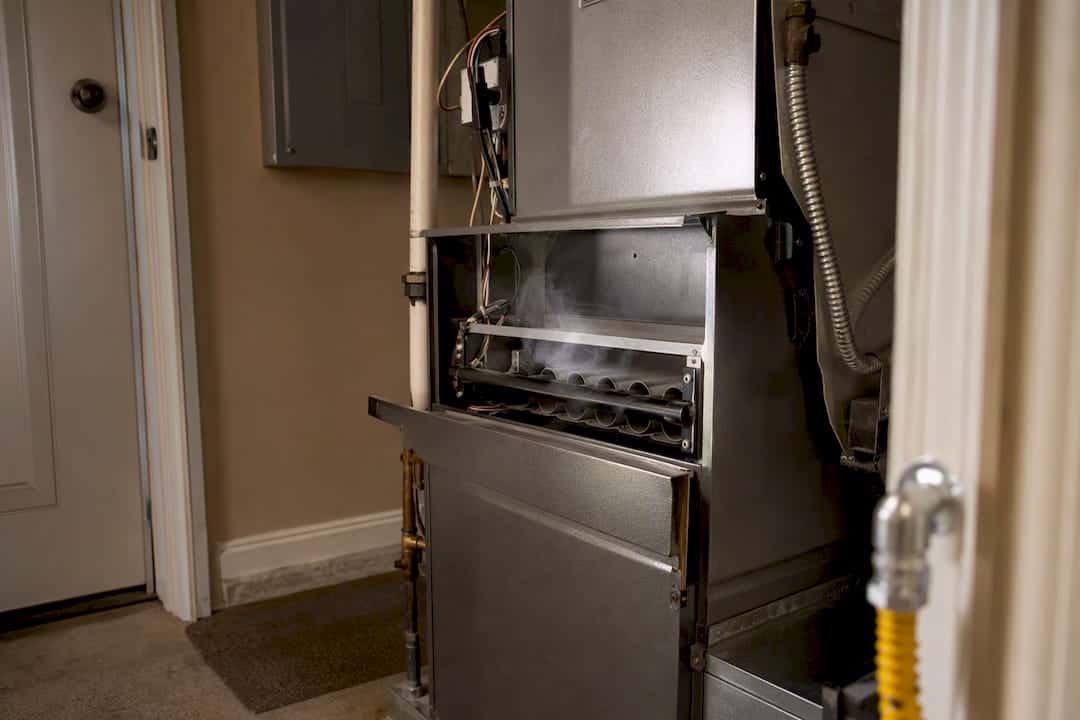
A clogged air filter is the single most common reason a residential AC stops cooling properly. The filter sits between the return air duct and the air handler, and when it gets packed with dust, pet hair, and debris, air cannot flow freely through the system. Less airflow means less warm indoor air reaches the evaporator coil, so the coil has little heat to absorb and the system produces little to no cooling.
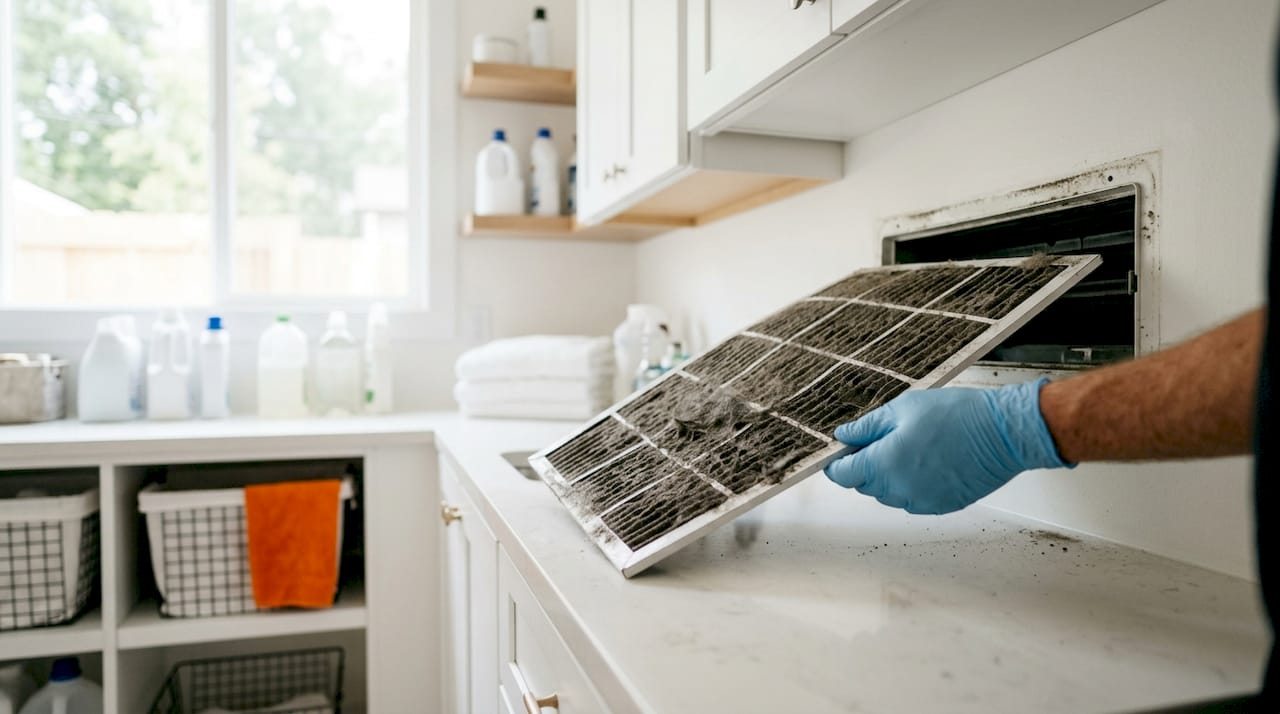
The consequences go beyond comfort. Dirty filters increase AC energy consumption by up to 15%. That means you pay more on your electric bill while getting less cooling in return. A small, inexpensive filter change can reverse both problems at once.
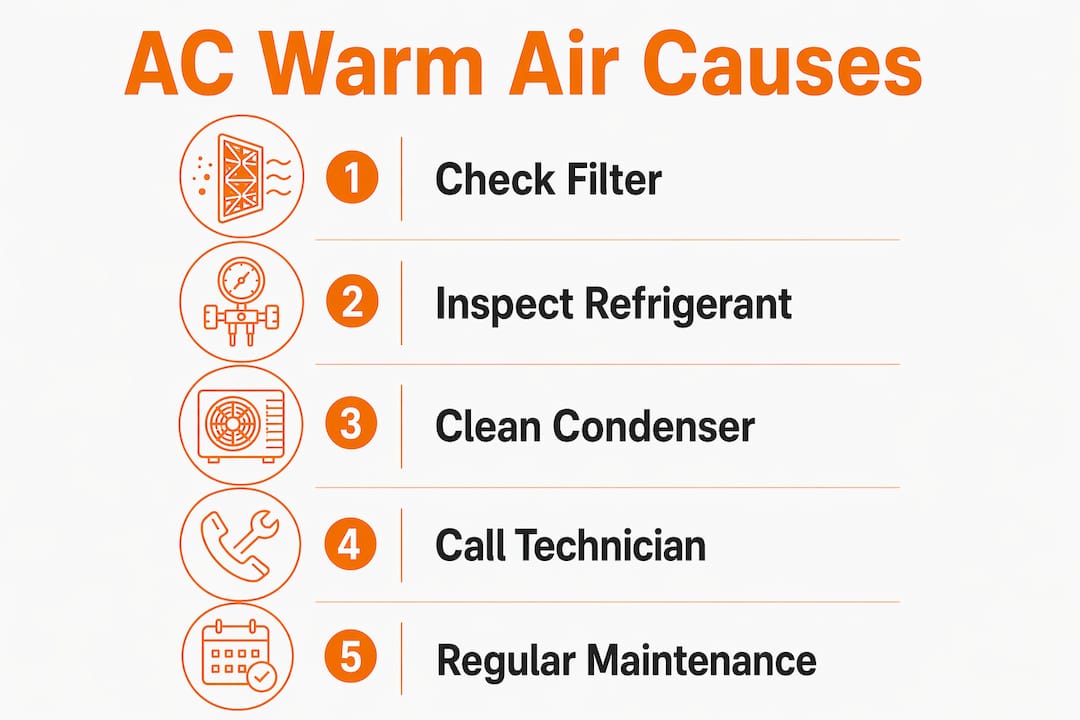
There is a second, less obvious consequence. When airflow drops too low, the evaporator coil gets so cold that moisture in the air freezes on its surface. A frozen coil blocks airflow completely, which makes the warm air problem dramatically worse. At that point, simply changing the filter is not enough. You need to turn the system off and let the coil thaw before restarting.
How often should you change your filter?
The right replacement schedule depends on your environment. In high-heat environments, filter replacement every 30–60 days during peak summer months is the standard recommendation. In desert climates like Los Angeles, filters can clog twice as fast, sometimes within two weeks, because of fine particulate dust in the air. That accelerated clogging puts extra strain on the entire system and speeds up coil freezing.
Here is what to check right now:
- Pull the filter out and hold it up to a light source. If you cannot see light through it, replace it immediately.
- Check the filter slot for gaps around the edges. A poorly seated filter lets unfiltered air bypass the filter entirely, sending dust straight to the coil.
- Write the installation date on the filter frame with a marker so you always know when it went in.
- Use a filter with a MERV rating between 8 and 11 for most homes. Higher ratings restrict airflow more, which can cause the same problems as a clogged filter.
Pro Tip: If you have pets or live near a construction zone, check your filter every two weeks during summer. A filter that looks clean in March can be completely blocked by june in a dusty Los Angeles neighborhood.
You can find a step-by-step walkthrough for this task in LC Heating and Air Conditioning’s guide on changing your HVAC filter.
What does low refrigerant do to your AC?
Refrigerant is the substance that makes cooling physically possible. It circulates between the indoor evaporator coil and the outdoor condenser coil, absorbing heat inside your home and releasing it outside. Without the right amount of refrigerant, that heat transfer cannot happen.
Refrigerant does not get “used up” like fuel. If your system is low on refrigerant, it means there is a leak somewhere in the refrigerant lines or coils. Leaks lower the pressure inside the system, and low refrigerant causes the evaporator coil to freeze over, blocking airflow and producing warm air from your vents. This is a compounding problem: the leak causes freezing, and the freezing makes the warm air worse.
Signs that your refrigerant is low
Watch for these specific warning signs:
- Ice forming on the copper refrigerant lines near the indoor air handler
- A hissing or bubbling sound near the outdoor unit, which often indicates an active leak
- The air from your vents feels slightly cool but never reaches your thermostat’s set temperature
- Your system runs continuously without ever shutting off
Refrigerant leaks require professional detection and repair. A licensed technician uses electronic leak detectors or UV dye to locate the leak, seals it, and then recharges the system to the manufacturer’s specified pressure. Adding refrigerant without fixing the leak is a temporary fix that wastes money and damages the compressor over time.
Frozen evaporator coils require turning the unit off for at least 24 hours to thaw completely. Restarting a system with a frozen coil risks liquid refrigerant entering the compressor, a condition called refrigerant slugging that causes irreversible compressor damage. Turn the system off at the thermostat, not just at the breaker, and call a technician.
How outdoor condenser unit problems lead to warm air inside
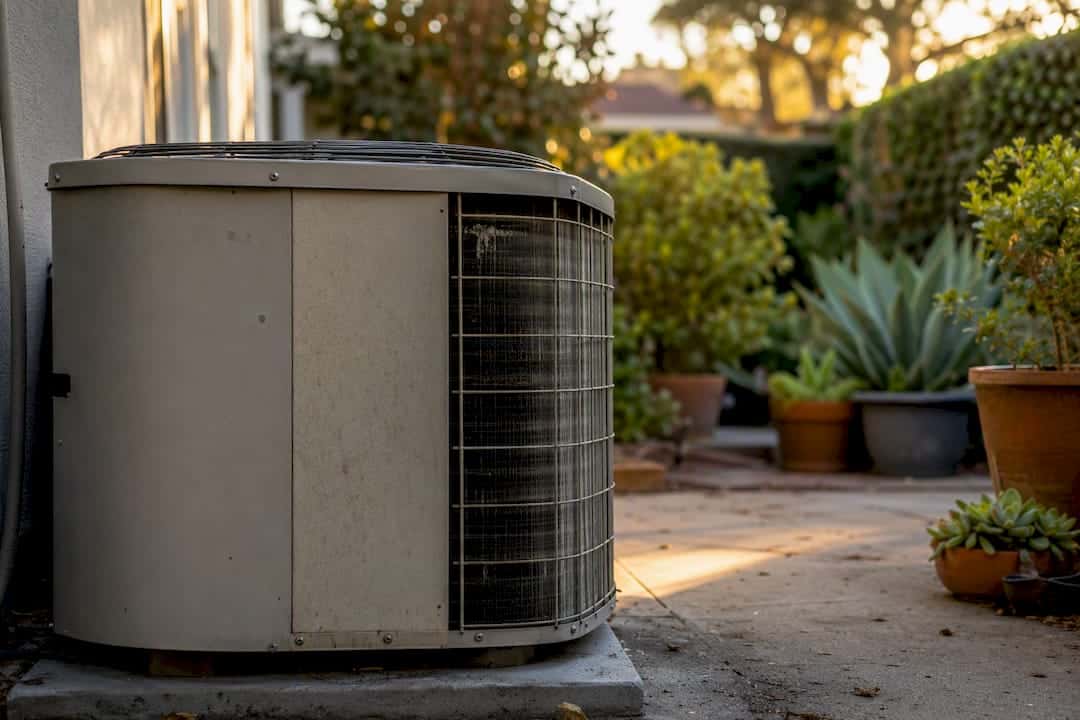
The outdoor condenser unit is where your AC releases the heat it pulled from your home. It works by blowing outdoor air across a set of metal fins called condenser coils. When those coils are clean and unobstructed, heat escapes efficiently. When they are dirty or blocked, heat gets trapped, and the system cannot complete the cooling cycle.
Dirty or blocked condenser units account for roughly 90% of warm air service complaints. That statistic reflects how often this problem goes unnoticed because the outdoor unit is out of sight. Homeowners focus on the vents inside while the real problem sits in the backyard.
What blocks a condenser unit?
| Blockage type | Common cause | Effect on cooling |
|---|---|---|
| Dirt and dust buildup | Normal operation over time | Reduces airflow through coil fins |
| Vegetation overgrowth | Shrubs, grass, or vines growing close | Restricts airflow on all sides |
| Desert dust and moisture | Monsoon conditions and dry winds | Clogs fins, limits heat rejection |
| Debris accumulation | Leaves, cottonwood, or trash | Blocks fan intake at top of unit |
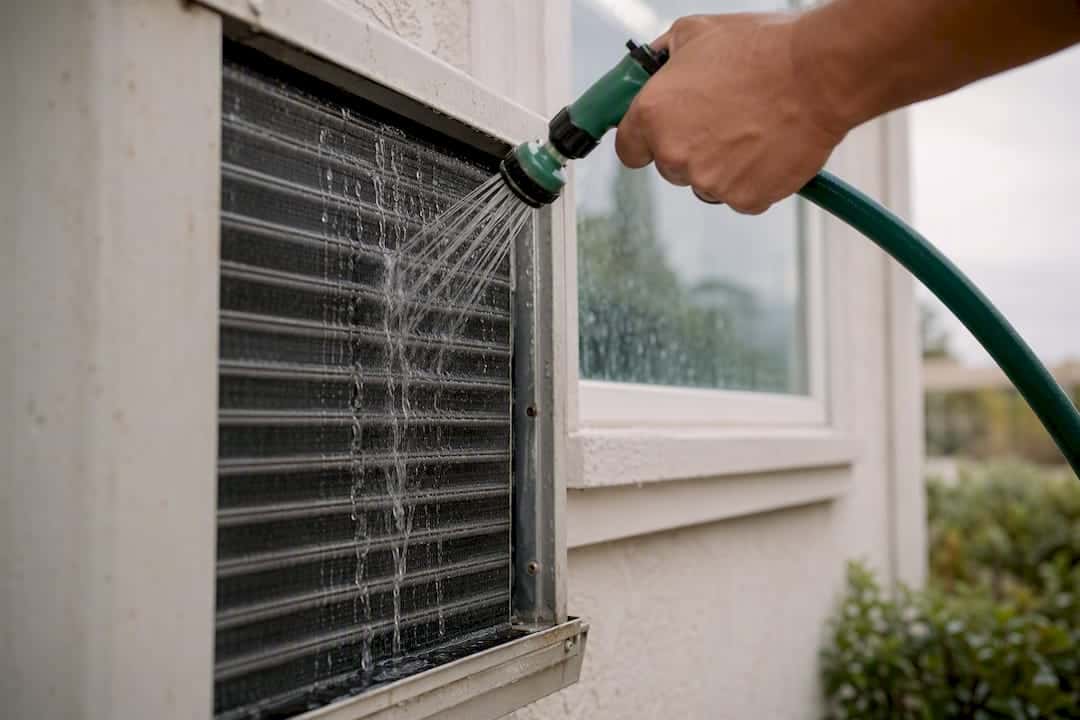
During a Los Angeles heatwave, a partially blocked condenser can push the system into a high-pressure lockout, where a safety switch shuts the compressor off to prevent damage. The result is the same as a full breakdown: warm air and no cooling. Clearing the area around the unit and rinsing the coils with a garden hose can restore function quickly in mild cases.
Pro Tip: Keep at least 18 inches of clear space on all sides of your outdoor unit. Trim back any plants in spring before the cooling season starts. A unit that breathes freely runs cooler and lasts longer.
LC Heating and Air Conditioning has a detailed guide on cleaning condenser coils that walks you through the process safely.
Other mechanical and electrical causes of AC blowing hot air
Not every warm air problem traces back to filters, refrigerant, or the condenser. Several other mechanical and electrical faults produce the same symptom, and some of them carry real safety risks if ignored.
Work through this checklist before calling for service:
-
Check your thermostat fan setting. Setting the fan to “On” instead of “Auto” causes the blower to run continuously, even between cooling cycles when the air is not being cooled. Switch it to “Auto” and wait 10 minutes to see if cold air returns. This is the easiest fix on the list and takes 30 seconds.
-
Inspect the circuit breaker. Your AC system has two breakers: one for the air handler and one for the outdoor condenser. If the outdoor breaker has tripped, the indoor fan keeps running but the compressor is off, so you get airflow with no cooling. Reset the breaker once. If it trips again immediately, do not reset it a second time. A breaker that trips twice signals a hazardous electrical short or a failing compressor, and resetting it risks a fire.
-
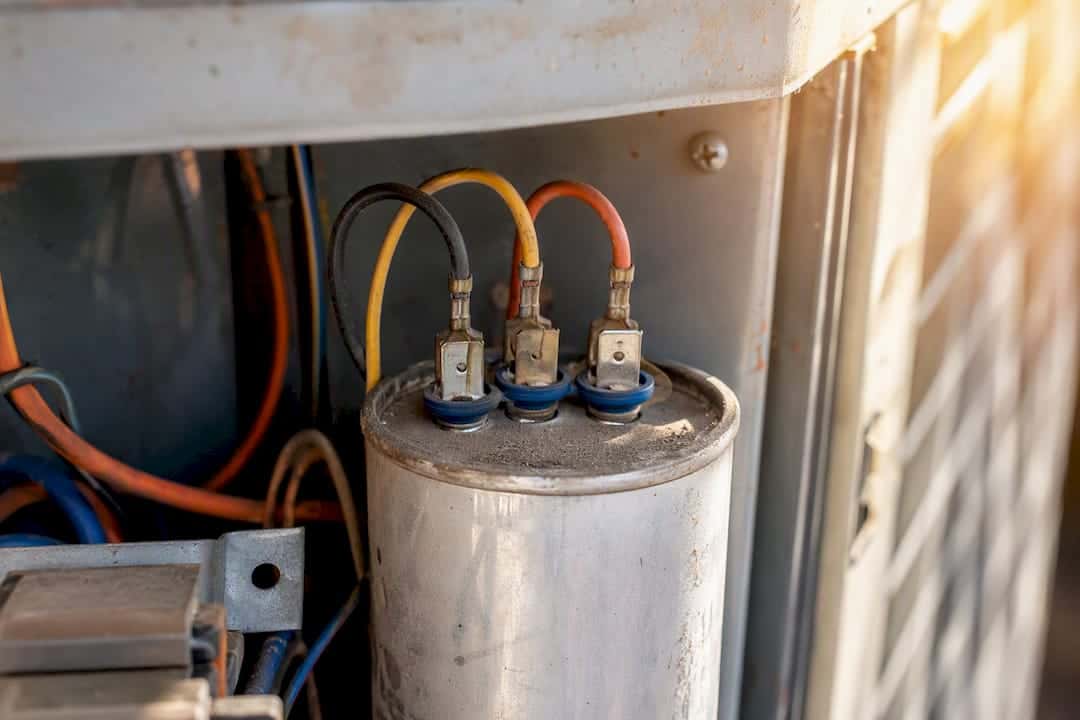
Listen for blower motor problems. The blower motor pushes air through your ductwork. A failing motor runs slower than normal, reducing airflow enough to cause warm air output. You may hear a humming or grinding sound from the air handler. A bad capacitor, which is a small but important component that starts the motor, produces the same symptom. Capacitor replacement is a straightforward repair for a technician.
-
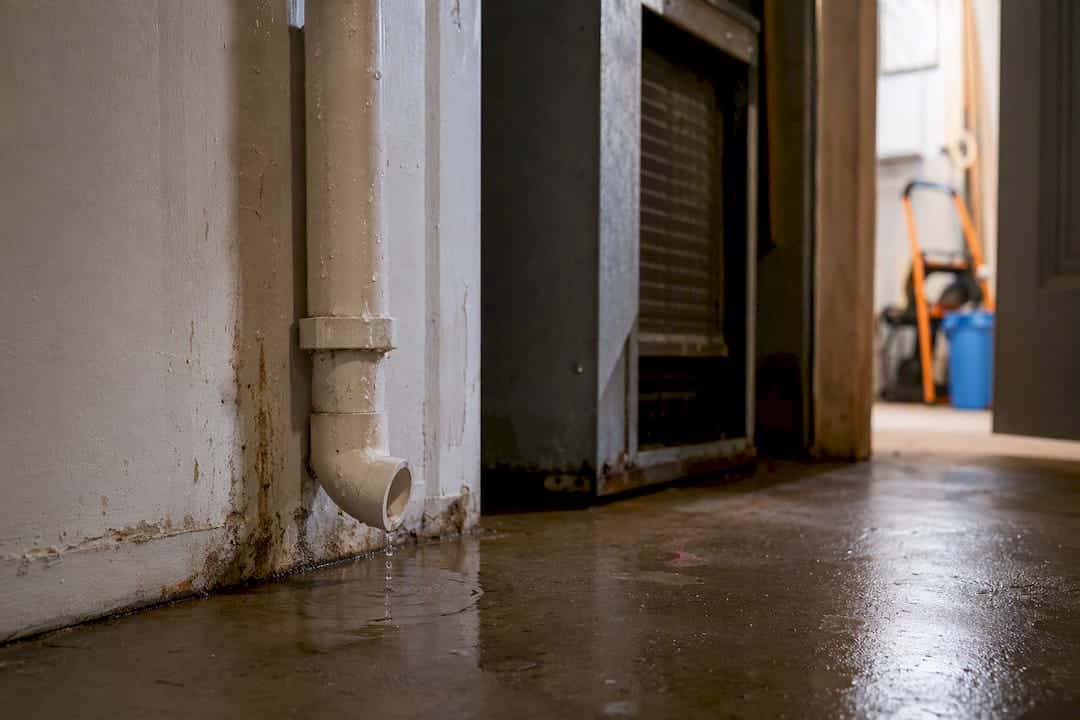
Check for a clogged condensate drain line. Your AC removes humidity from the air, and that moisture drains through a condensate line. When the line clogs with algae or debris, a float switch triggers a safety shutoff, stopping the outdoor unit to prevent water damage. The indoor fan keeps running, pushing warm air. You can often clear a mild clog by pouring a cup of diluted white vinegar into the drain access port near the air handler.
-
Watch for compressor failure signs. The compressor is the heart of your AC system and its most expensive component. A failing compressor may produce a loud clunking noise at startup, short cycle (turn on and off rapidly), or simply stop running entirely. Running a malfunctioning AC too long risks compressor overheating and permanent damage. If you suspect the compressor, turn the system off and call a technician the same day.
If your AC runs but the house never cools down, LC Heating and Air Conditioning’s guide on home AC not cooling covers additional diagnostic steps specific to central air systems.
Key takeaways
An AC blows warm air when its cooling cycle is disrupted by clogged filters, low refrigerant, a blocked condenser, or a mechanical fault, and each cause requires a different fix.
| Point | Details |
|---|---|
| Dirty filters are the first thing to check | A clogged filter cuts airflow and can raise energy use by up to 15%. |
| Low refrigerant always means a leak | Refrigerant does not deplete on its own; a technician must find and seal the leak before recharging. |
| The outdoor condenser is often overlooked | Blocked condenser coils account for roughly 90% of warm air complaints and are easy to prevent with regular cleaning. |
| Thermostat fan setting causes warm air | Switching from “On” to “Auto” takes 30 seconds and is the easiest fix to rule out first. |
| A twice-tripped breaker is a safety issue | Do not reset a breaker that trips twice. It signals an electrical fault or failing compressor that needs professional attention. |
What I’ve learned after years of warm air calls in Los Angeles
I have been diagnosing AC problems in Los Angeles for over 20 years, and the pattern I see most often is not a broken system. It is a neglected one. The homeowners who call me in july with a completely failed compressor almost always had warning signs months earlier: slightly warm air, a filter they had not changed since the previous summer, an outdoor unit buried in overgrown shrubs.
The thing that surprises most people is how fast a small problem compounds. A dirty filter leads to a frozen coil. A frozen coil leads to refrigerant slugging. Refrigerant slugging destroys the compressor. That chain of events can take a system from “blowing slightly warm” to “total failure” in a single hot week. The compressor is the most expensive part of the system, and it is the one most often damaged by running a sick system too long.
My honest advice: treat your AC the way you treat your car. You would not drive 50,000 miles without an oil change. Do not run your AC through an entire Los Angeles summer without checking the filter and clearing the area around the outdoor unit. Those two tasks take less than 15 minutes and prevent the majority of the calls I get.
The one situation where I always tell homeowners to stop immediately and call a professional is frozen coils. I know it is tempting to just let it run and hope it thaws on its own. But running a system with a frozen coil forces liquid refrigerant into the compressor, and that damage is permanent. Turn it off, let it thaw for 24 hours, and then call someone who can find out why it froze in the first place.
If you smell something musty when the AC runs, do not mask it with an air freshener. That smell usually means mold or mildew on the evaporator coil or in the drain pan. Running the fan-only mode after cooling cycles helps dry out internal components and slows mold growth, but a persistent musty smell needs a professional coil cleaning. Ignoring it means you are breathing mold spores every time the system runs.
— Leo
AC blowing warm air? LC Heating and Air Conditioning can help
When your AC stops cooling and you need answers fast, LC Heating and Air Conditioning provides same-day diagnostic and repair service across Los Angeles. With over 20 years of local experience, the team handles everything from refrigerant leak detection and condenser cleaning to compressor diagnosis, all at flat-rate pricing with no surprise fees.

Whether your system needs a quick fix or a full inspection, LC Heating and Air Conditioning gives you an honest assessment before any work begins. You will never be pressured into replacing a system that can be repaired. Book your same-day AC repair today and get your home cooling again.
FAQ
Why is my AC blowing warm air suddenly?
A sudden switch to warm air usually means the outdoor condenser has lost power, the refrigerant has dropped due to a leak, or the thermostat fan is set to “On” instead of “Auto.” Check the breaker and thermostat setting first before calling a technician.
Can a dirty filter cause my AC to blow hot air?
Yes. A clogged filter blocks airflow to the evaporator coil, which can cause the coil to freeze and the system to push uncooled air through the vents. Replacing the filter every 30–60 days during summer prevents this in most cases.
How do I fix AC blowing warm air myself?
Start by replacing the air filter, checking that the thermostat fan is set to “Auto,” and clearing debris from around the outdoor unit. If warm air continues after those steps, the problem is likely refrigerant or a mechanical fault that requires a licensed technician.
What does it mean if my AC smells musty and blows warm air?
A musty smell combined with warm air often points to a frozen or mold-covered evaporator coil. Turn the system off to let the coil thaw, and check for a clogged condensate drain line. A professional coil cleaning resolves the odor and restores cooling.
Is it safe to keep running my AC if it blows warm air?
Running a malfunctioning AC risks permanent compressor damage, which is the most expensive repair on any system. Turn the system off at the thermostat if warm air persists and call a technician the same day to prevent further damage.
Recommended
Leo, Propietario y Técnico Principal en LC Heating & Air
Leo dirige LC Heating & Air como propietario-operador y tiene la licencia C-20 HVAC #1073586 de California. Sus guías se enfocan en diagnósticos prácticos, decisiones de reparación seguras y consejos claros para propietarios de Los Ángeles.