- What does an HVAC compressor warranty cover?
- Does registration affect how long your compressor warranty lasts?
- What can void or deny an HVAC compressor warranty claim?
- Practical steps to manage your HVAC compressor warranty claim
- Key takeaways
- What I’ve learned about compressor warranties after 20 years in the field
- HVAC compressor warranty support from LC Heating and Air Conditioning
- FAQ
- Recommended

TL;DR:
- An HVAC compressor warranty covers only the replacement of defective parts caused by manufacturing errors. It excludes labor, refrigerant recharge, and corrosion damage, making registration within 60-90 days crucial for full coverage. Proper documentation and installation by licensed technicians are essential to prevent claim denials.
An HVAC compressor warranty is a limited parts warranty that covers the cost of replacing a defective compressor component, but it does not cover labor, refrigerant recharge, or corrosion damage. Knowing what is hvac compressor warranty coverage actually includes saves you from a very unpleasant surprise when your system fails on the hottest day of the year. Most homeowners assume “warranty” means free repair. The reality is more specific. Brands like Carrier and Goodman offer compressor parts coverage that pays for the defective part itself. You still pay the technician, the refrigerant, and sometimes the diagnostic fee. Understanding these boundaries before you need a repair is the smartest thing you can do to protect your investment.
What does an HVAC compressor warranty cover?
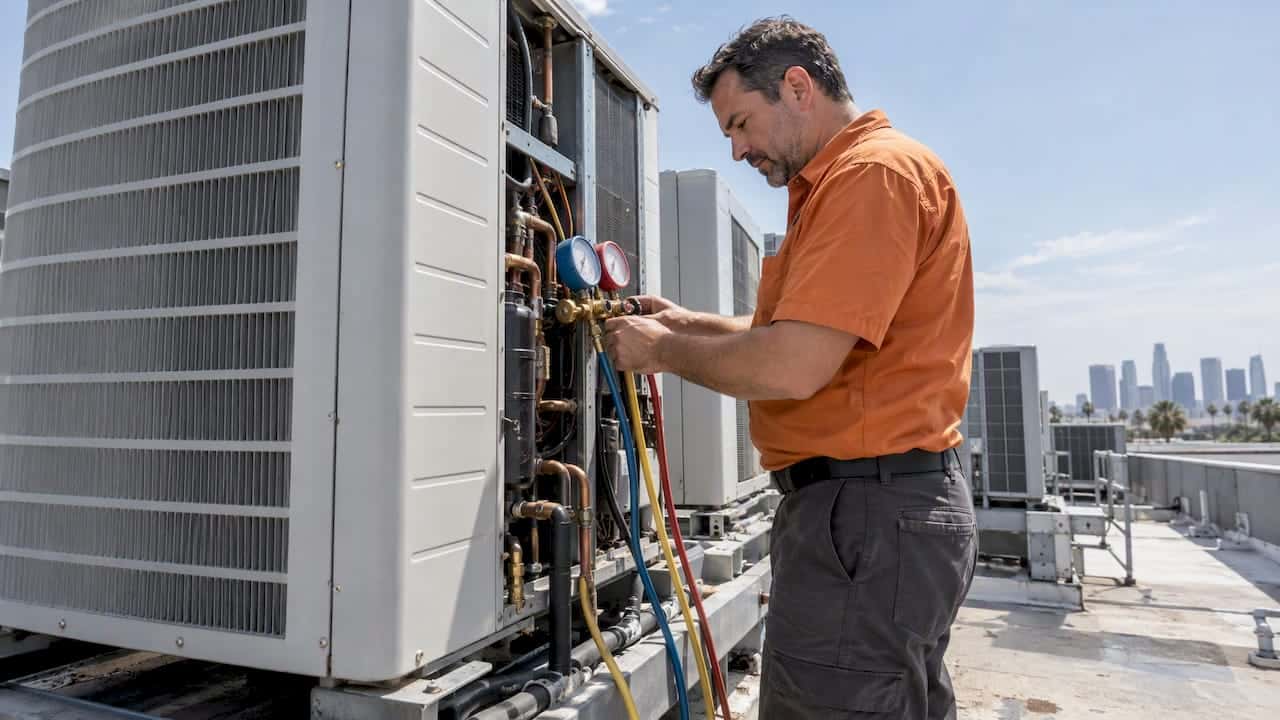
An HVAC compressor warranty covers the cost of a replacement compressor when the original fails due to a manufacturing defect. That is the core promise. Carrier’s homeowner FAQ confirms that compressor warranty is limited to parts only, meaning the manufacturer pays for the defective component but not the work to install it.
The scope of HVAC compressor coverage is narrower than most homeowners expect. Here is what a standard manufacturer parts warranty typically includes and excludes:
What is usually covered:
- Replacement of a defective compressor unit
- Defective internal compressor components caused by manufacturing error
- Parts covered under the registered warranty period (commonly 10 years with registration)
What is almost always excluded:
- Labor costs for diagnosis, removal, and installation
- Refrigerant recharge after a compressor replacement
- Rust, corrosion, or scale buildup (classified as wear and tear)
- Damage caused by improper installation or electrical surges
- Filters, belts, and other consumable parts
Labor costs are excluded from manufacturer compressor warranties and are only covered by separate labor warranties or installation workmanship warranties. That distinction matters enormously. A compressor replacement can run several hundred dollars in parts. The labor to do the job correctly can cost just as much or more.
Pro Tip: Ask your installer at the time of purchase whether they offer a separate labor warranty. Some HVAC dealers include one to two years of labor coverage as part of their installation package. Getting that in writing before the job starts costs you nothing.
Refrigerant and corrosion are excluded from compressor warranties because manufacturers classify them as maintenance or wear issues. This creates one of the most common out-of-pocket expenses homeowners face after a compressor failure. You can check the full breakdown of HVAC warranty coverage types to understand how parts, labor, and extended plans fit together.
Does registration affect how long your compressor warranty lasts?
Yes, registration directly determines how many years of coverage you receive. Registration within 60–90 days of installation typically extends compressor warranty coverage from 5 years to 10 years. Missing that window cuts your protection in half.
Most major manufacturers, including Carrier, Trane, and Goodman, use a two-tier warranty structure. The base warranty activates automatically on the installation date. The extended registered warranty requires you to submit your system information through the manufacturer’s website or dealer portal within the specified window.
Here is how to protect your full warranty period:
- Locate your installation paperwork. Your installer should provide a warranty certificate, model number, and serial number on the day of installation. File these immediately.
- Register within the required window. Most manufacturers require registration within 60–90 days of installation. Check your specific brand’s website for the exact deadline.
- Confirm registration by email or account login. Most manufacturer portals send a confirmation. Save that email or take a screenshot of your registration status page.
- Verify ownership requirements. Warranty coverage begins on the installation date and is typically tied to the original owner. If you bought a home with an existing system, contact the manufacturer to check whether coverage transferred.
- Check your registration status now if you are unsure. Most brands allow you to look up coverage status by serial number on their website. Do not assume registration happened automatically.
Most manufacturers offer a base parts warranty of 5 years and a registered parts warranty of 10 years, with compressors on premium models sometimes warrantied for longer periods. That gap between 5 and 10 years represents thousands of dollars in potential parts coverage. A few minutes of registration work is one of the highest-return tasks a homeowner can do after a new HVAC installation.
What can void or deny an HVAC compressor warranty claim?
A warranty claim can be denied even when the compressor genuinely fails. The reason is almost always documentation or installation problems, not the failure itself. Warranty claims are denied due to incorrect installation, lack of maintenance records, unauthorized repairs, or operation outside approved parameters.
The most common reasons a manufacturer will reject your claim include:
- Unlicensed or unauthorized installation. Most manufacturers require installation by a licensed HVAC contractor. A DIY install or work by an uncertified technician voids coverage immediately.
- Missing maintenance records. Manufacturers expect annual maintenance. If you cannot prove the system was serviced regularly, the claim can be denied on the grounds of neglect.
- Unauthorized repairs or aftermarket parts. Using non-approved replacement parts or having an uncertified technician perform repairs breaks the warranty terms.
- Operating outside design specifications. Running the system with incorrect refrigerant type, wrong voltage, or an oversized or undersized unit voids coverage.
- Corrosion or physical damage. Rust, animal damage, and flood damage are classified as external causes and are excluded from parts coverage.
In practice, warranty approvals depend on proving that the defect is covered and that installation and maintenance met manufacturer standards. Claims fail due to documentation gaps more often than they fail because of the failure cause itself. That is a critical point. The compressor may have genuinely failed from a defect, but without paperwork, the manufacturer has no obligation to pay.
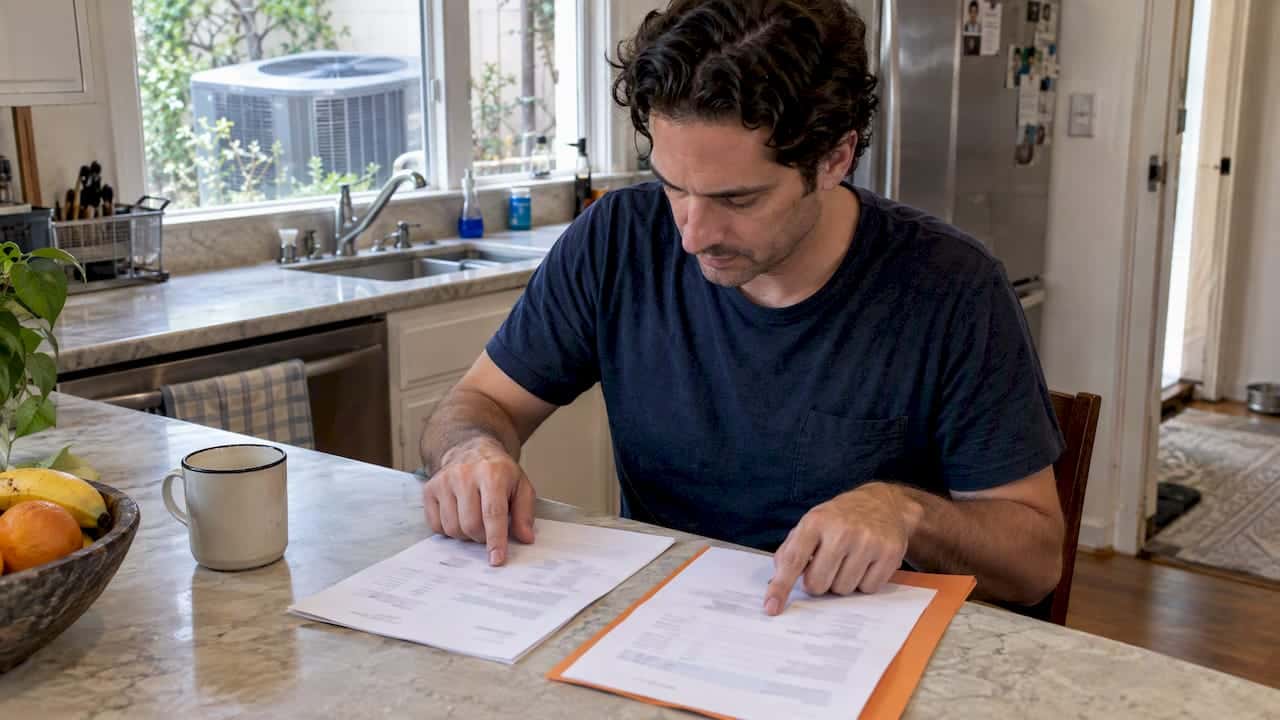
Pro Tip: Create a simple folder, physical or digital, labeled with your HVAC system’s model and serial number. Store your warranty certificate, installation receipt, and every service invoice in it. This folder is your proof of compliance and your best defense if a claim is ever disputed.
Practical steps to manage your HVAC compressor warranty claim
Preparing for a warranty claim before you need one is the difference between a smooth repair and a costly dispute. Submitting a complete warranty claim packet with the serial number, failure codes, installation records, and maintenance history speeds approvals and prevents denials.
Follow these steps to stay ready:
- Keep your warranty certificate and registration confirmation accessible. Store both physical and digital copies. Your serial number is the key to every manufacturer interaction.
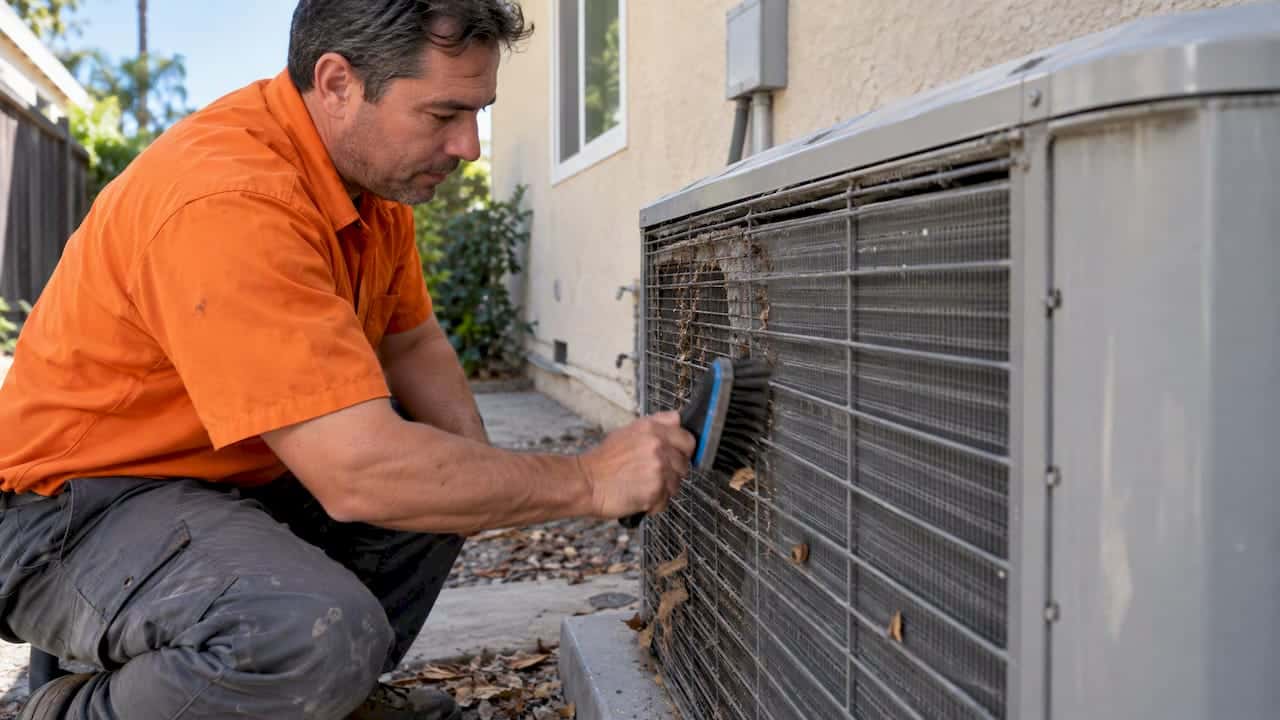
- Schedule annual maintenance with a certified technician. Annual tune-ups generate service invoices that serve as maintenance proof. An HVAC maintenance plan is the most reliable way to build that paper trail consistently.
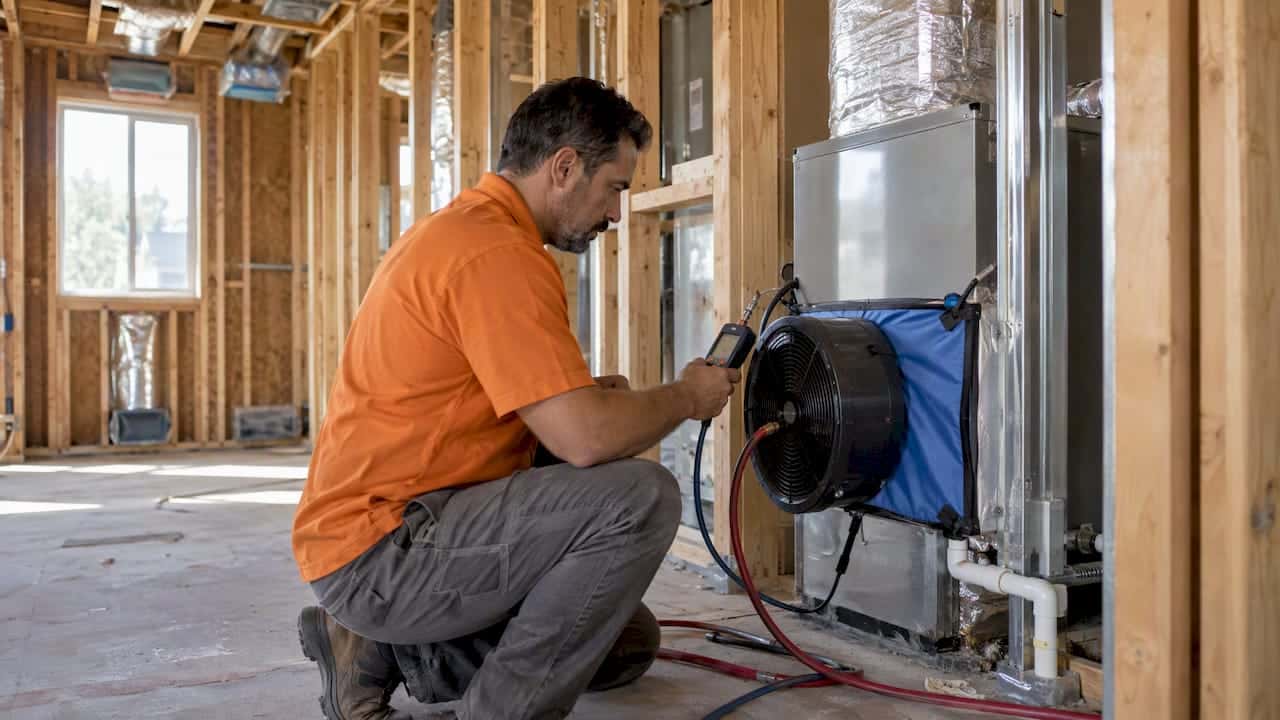
- Contact a certified technician first when the system fails. Do not attempt repairs yourself. The technician documents the failure code, which is required for the claim submission.
- Ask your technician to submit the claim on your behalf. Most certified HVAC dealers have direct relationships with manufacturer warranty departments and know exactly what documentation is required.
- Evaluate labor warranty add-ons at the time of installation. Once the system is running, adding labor coverage becomes more difficult and expensive.
The table below compares what parts coverage and labor coverage each address, so you know exactly what you are working with:
| Coverage type | What it pays for | What it does not pay for |
|---|---|---|
| Manufacturer parts warranty | Defective compressor replacement part | Labor, refrigerant, diagnostic fees |
| Dealer labor warranty | Technician time for installation and repair | Parts cost, refrigerant recharge |
| Extended warranty plan | Varies by plan; may include labor and refrigerant | Pre-existing conditions, wear items |
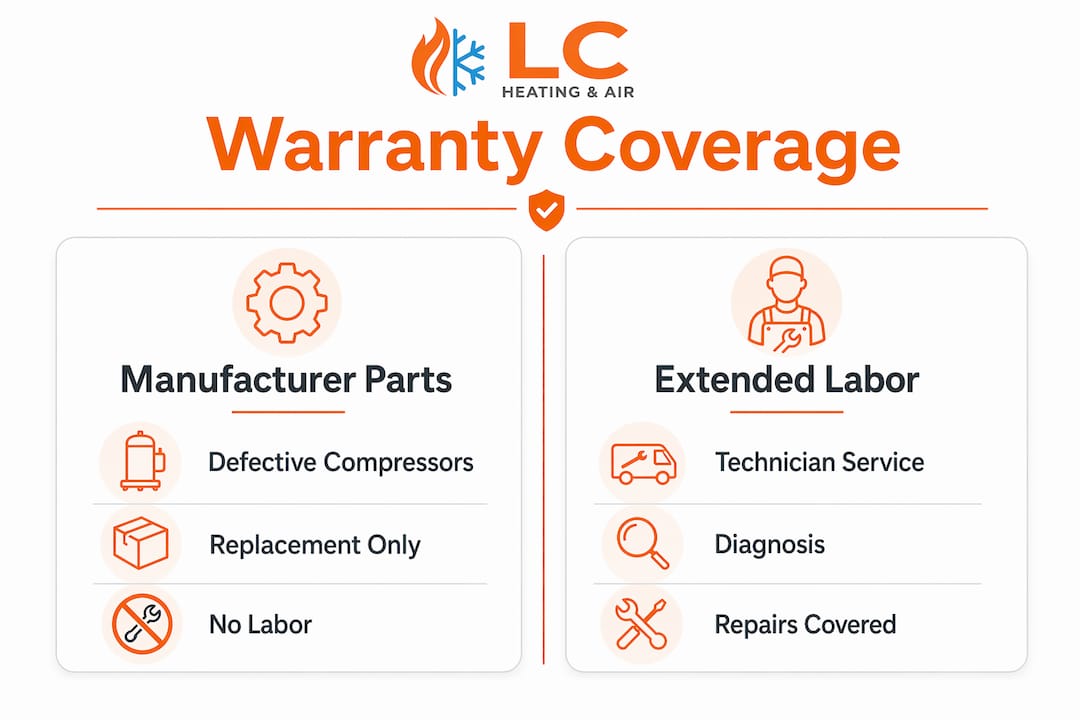
Extended warranties should be evaluated not just by length but by actual breadth of coverage, including labor, diagnosis, and refrigerant recharge. A 10-year parts warranty sounds impressive. A plan that also covers labor and refrigerant is worth significantly more in real repair costs. Prioritizing labor warranty add-ons reduces total repair costs far beyond what compressor parts coverage alone provides.
Key takeaways
An HVAC compressor warranty covers defective parts only. Labor, refrigerant, and corrosion are excluded, and registration within 60–90 days is the single most important step to securing full 10-year coverage.
| Point | Details |
|---|---|
| Parts only coverage | Manufacturer warranties replace defective compressor parts but do not pay for labor or refrigerant. |
| Registration doubles coverage | Registering within 60–90 days typically extends coverage from 5 years to 10 years. |
| Documentation prevents denials | Maintenance records and installation proof are required to approve most warranty claims. |
| Labor coverage is separate | Dealer labor warranties or extended plans must be purchased separately to cover technician costs. |
| Voids are common | Unlicensed installation, missing maintenance, and unauthorized repairs all void compressor warranty claims. |
What I’ve learned about compressor warranties after 20 years in the field
Homeowners consistently misread the word “warranty” as a promise of a free repair. The compressor warranty is really a promise that the manufacturer will replace a defective part. That is a meaningful but narrow commitment. The labor to swap that compressor, the refrigerant to recharge the system, and the diagnostic time to confirm the failure are all on you unless you have additional coverage.
The mistake I see most often is homeowners who skip registration because they assume the installer handled it. Installers are not always required to register on your behalf. That responsibility often falls to you, and missing the window by even a few days can drop your coverage from 10 years to 5. I have seen that happen to homeowners with brand-new systems.
The other thing worth saying plainly: a compressor warranty claim that gets denied is almost never denied because the compressor was fine. It gets denied because the paperwork was not there. Annual maintenance invoices, a registration confirmation, and a licensed installer on record are not bureaucratic formalities. They are your proof that you held up your end of the agreement. Without them, the manufacturer has no obligation to hold up theirs.
If you are buying a new system, ask your dealer three questions before you sign anything: Who registers the warranty? Does your installation include a labor warranty? What maintenance schedule does this system require to keep coverage valid? Those three answers will tell you everything you need to know about your real level of protection.
— Leo
HVAC compressor warranty support from LC Heating and Air Conditioning
Navigating a compressor warranty claim is much easier with a certified technician who knows the process. LC Heating and Air Conditioning has handled warranty repairs and documentation for Los Angeles homeowners for over 20 years, and the team knows exactly what manufacturers require to approve a claim without delays.

Whether your compressor has failed, you need a maintenance plan to protect your existing warranty, or you want help registering a newly installed system, LC Heating and Air Conditioning provides same-day HVAC repair with flat-rate pricing and no surprise fees. The team also helps homeowners evaluate labor warranty add-ons and extended coverage options at the time of installation. Contact LC Heating and Air Conditioning to get your warranty documentation in order before you need it.
FAQ
What is an HVAC compressor warranty?
An HVAC compressor warranty is a limited parts warranty that covers the cost of replacing a defective compressor component. It does not include labor, refrigerant recharge, or damage from wear and corrosion.
How long does an HVAC compressor warranty last?
Most manufacturers offer 5 years of parts coverage without registration and 10 years with registration completed within 60–90 days of installation. Premium models from brands like Carrier and Trane may offer longer coverage on compressors.
Does an HVAC warranty cover labor costs?
No. Labor is excluded from standard manufacturer compressor warranties. Labor coverage requires a separate dealer warranty or extended service plan purchased at or near the time of installation.
What voids an HVAC compressor warranty?
Unlicensed installation, missing maintenance records, unauthorized repairs, and operating the system outside manufacturer specifications all void compressor warranty coverage. Keeping service invoices and using certified technicians protects your claim.
Can I still file a warranty claim if I missed the registration window?
You may still have base warranty coverage of 5 years from the installation date, but the extended 10-year registered coverage is typically forfeited. Contact the manufacturer directly with your serial number to confirm what coverage remains active.
Recommended
Leo, Owner & Lead Technician at LC Heating & Air
Leo leads LC Heating & Air as an owner-operator and holds California CSLB C-20 HVAC license #1073586. His guides focus on practical diagnostics, safe repair decisions, and clear advice for Los Angeles homeowners.