- How Do You Know You Have Rodents in Your Ductwork?
- What Should You Do Immediately After Spotting Signs?
- What Does Professional Rodent Removal From Ducts Actually Involve?
- Should You Clean the Ducts or Replace Them?
- How Do You Rodent-Proof Your Ducts and Home?
- How Long Does It Take and What Does It Cost?
- When Should You Call a Professional Instead of Handling It Yourself?
- How LC Heating and Air Conditioning Handles Ductwork Contamination
- Why Most Advice on This Topic Undersells the Health Risk
- Ready to Get Your Ductwork Inspected?
- Sources
- FAQ
- Recommended
L.A. Homeowners: Follow CDC and EPA Steps If Rodents Are in Ductwork
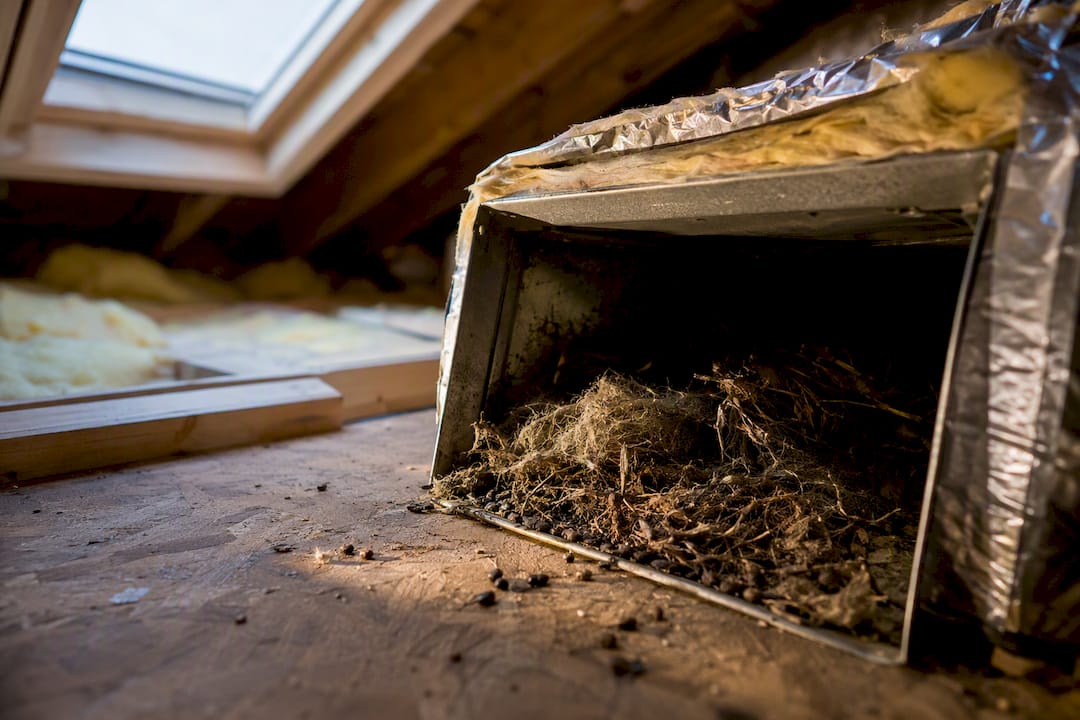
If you suspect rodents in your ductwork, treat it as a contamination risk. Turn off your HVAC system if you can do so safely, avoid vacuuming or disturbing droppings, and schedule a professional camera inspection before anyone runs the fan again. Rodents inside ducts spread waste and nesting debris through every vent they touch, and stirring that material into the air is more dangerous than leaving it alone until a trained crew arrives.
TL;DR:
- Rodent infestations often show early signs through noises and strong odors before droppings or damage become visible.
- Turning off the HVAC system and avoiding household cleaning tools are crucial initial steps to prevent spreading contamination.
- Professional removal involves camera inspections, HEPA-filtered vacuuming, disinfection, and sealing entry points, with duct replacement needed for porous materials.
- Sealing attic vents, roof openings, and foundation gaps with metal is essential to prevent rodents from re-entering in future seasons.
- Cost and duration depend on duct material, extent of infestation, and accessibility, with multiple quotes recommended before proceeding.
How Do You Know You Have Rodents in Your Ductwork?
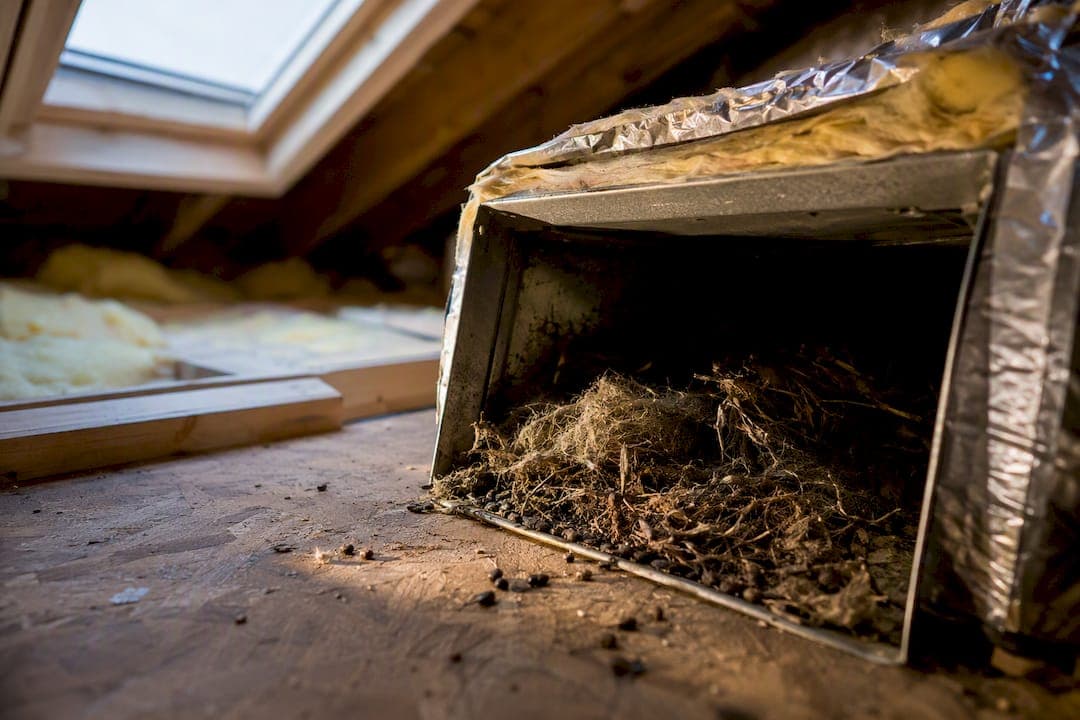
Most homeowners notice rodents in ductwork through sound and smell before they ever see an animal. Scratching or scurrying inside walls or ceilings at night, especially near supply registers, is one of the earliest tells. A musty, ammonia-like odor when the system kicks on is another, since urine and droppings accumulate in the metal or fiberglass lining and get pushed through the house every time the blower runs.
Look for these signs before you touch anything:
- Scratching, thumping, or scurrying sounds inside ducts or walls, usually worse at night
- A sour or ammonia-like smell that gets stronger when the HVAC system runs
- Small dark droppings scattered near floor or ceiling registers
- Shredded insulation, fabric, or paper pulled into duct runs for nesting
- Unexplained sneezing, congestion, or allergy flare-ups that ease when you leave the house
Pro Tip: If you want to check a register yourself, do it with gloves and an N95 or better respirator, and use a flashlight rather than sticking your hand inside. Never sweep or wipe visible droppings dry.
A strong dead-animal odor, visible nesting material, or signs of mold around a vent means you’re past the point of a casual check. CDC guidance is direct on this: infestations that have reached your heating and cooling system call for a professional exterminating service, not a DIY inspection.
What Should You Do Immediately After Spotting Signs?
Your first moves protect your lungs, not your ducts. Speed matters less here than restraint.
- Shut off the HVAC system if it’s safe to do so. Running the blower spreads contaminated dust through every room the ducts serve.
- Close vents in occupied rooms and keep pets and kids away from the affected area until it’s assessed.
- Skip the household vacuum. Standard vacuums and shop vacs aren’t sealed for biohazard work, and running one over droppings or nesting material can aerosolize pathogens into the air you’re breathing.
- Never use a leaf blower or compressed air inside a duct to “blow out” debris. It does the opposite of cleaning; it just relocates the contamination into your living space.
- If you find a dead rodent, ventilate the room, leave the animal in place, and call a professional rather than removing it bare handed.
The reasoning behind rule three isn’t caution for caution’s sake. CDC hantavirus guidance states that breathing air contaminated with fresh rodent urine, droppings, or nesting material is a real transmission route for hantavirus pulmonary syndrome. It’s rare, but the exposure pathway is exactly what a vacuum or compressed air creates.
Pro Tip: If your HVAC system doubles as your only ventilation and shutting it off isn’t practical (extreme heat, a medically vulnerable household member), close the vents nearest the suspected infestation and call for emergency service rather than waiting.
What Does Professional Rodent Removal From Ducts Actually Involve?
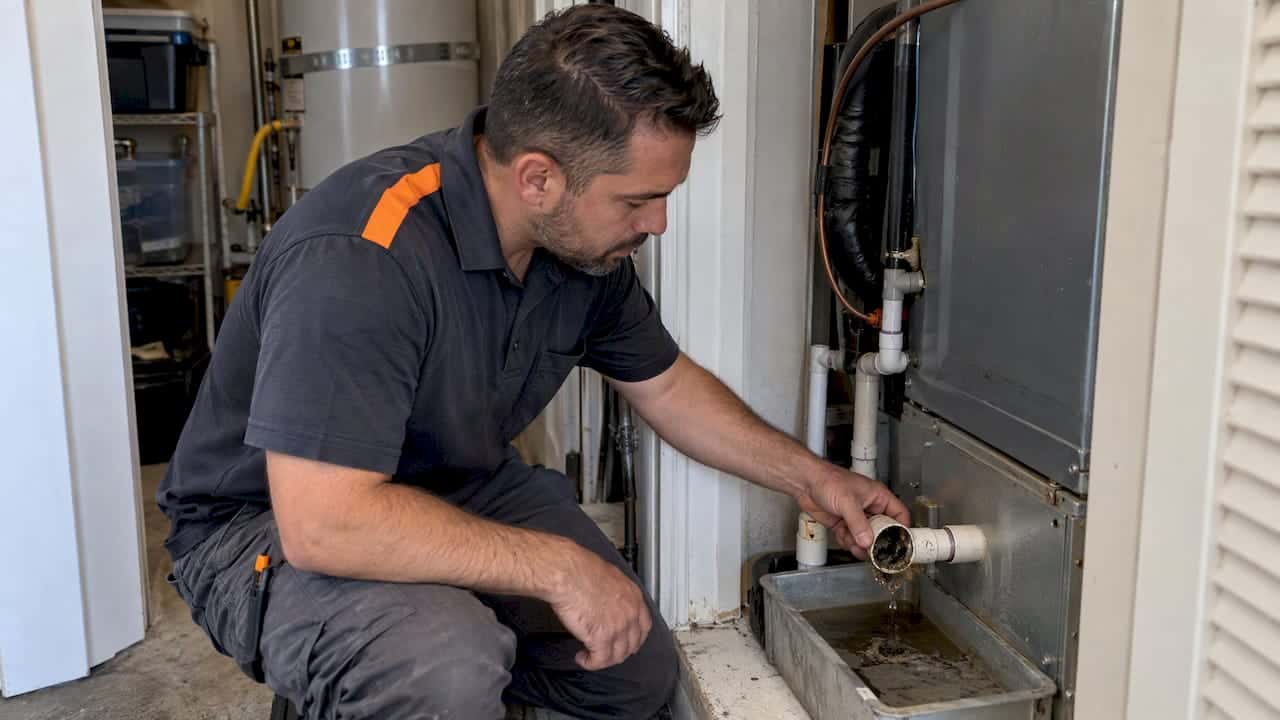
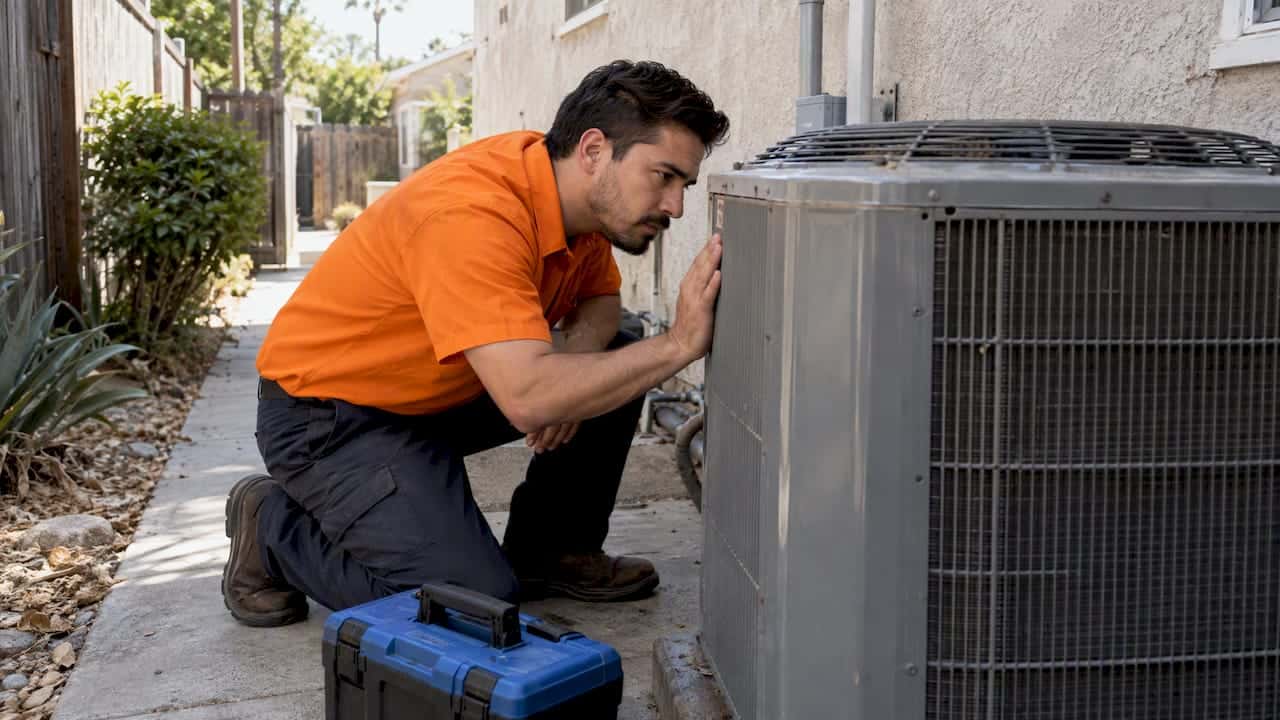
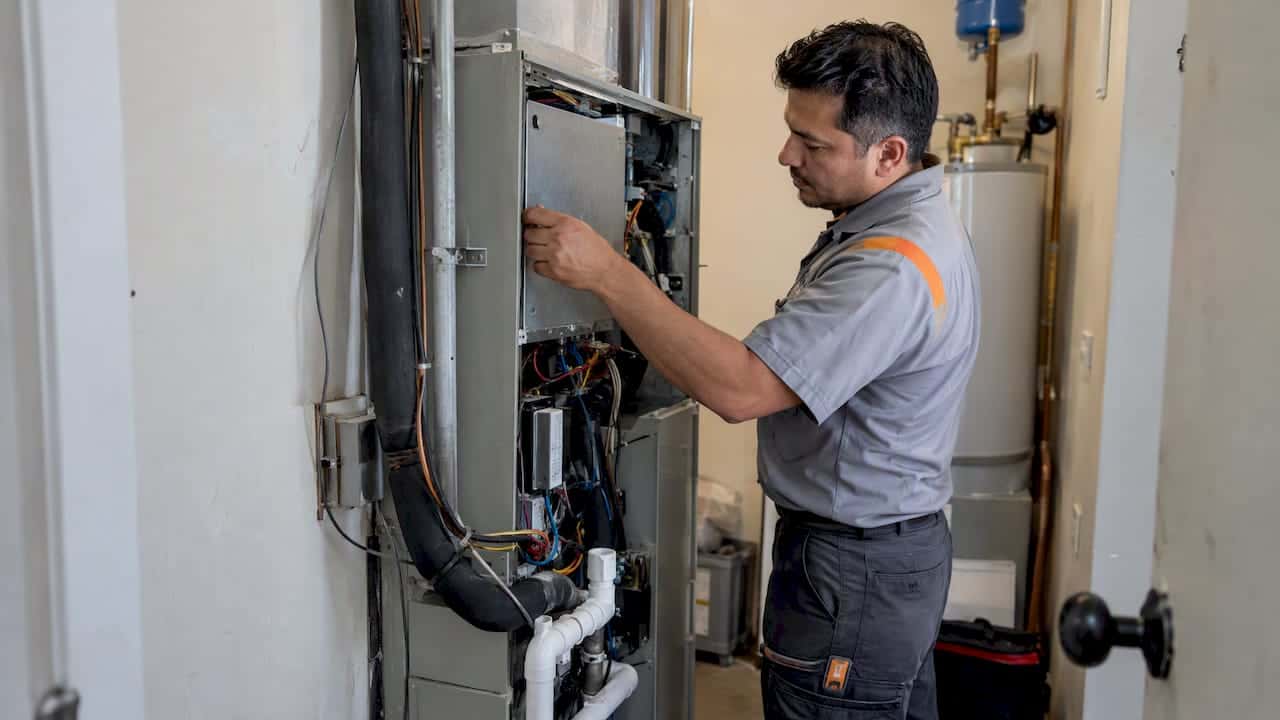
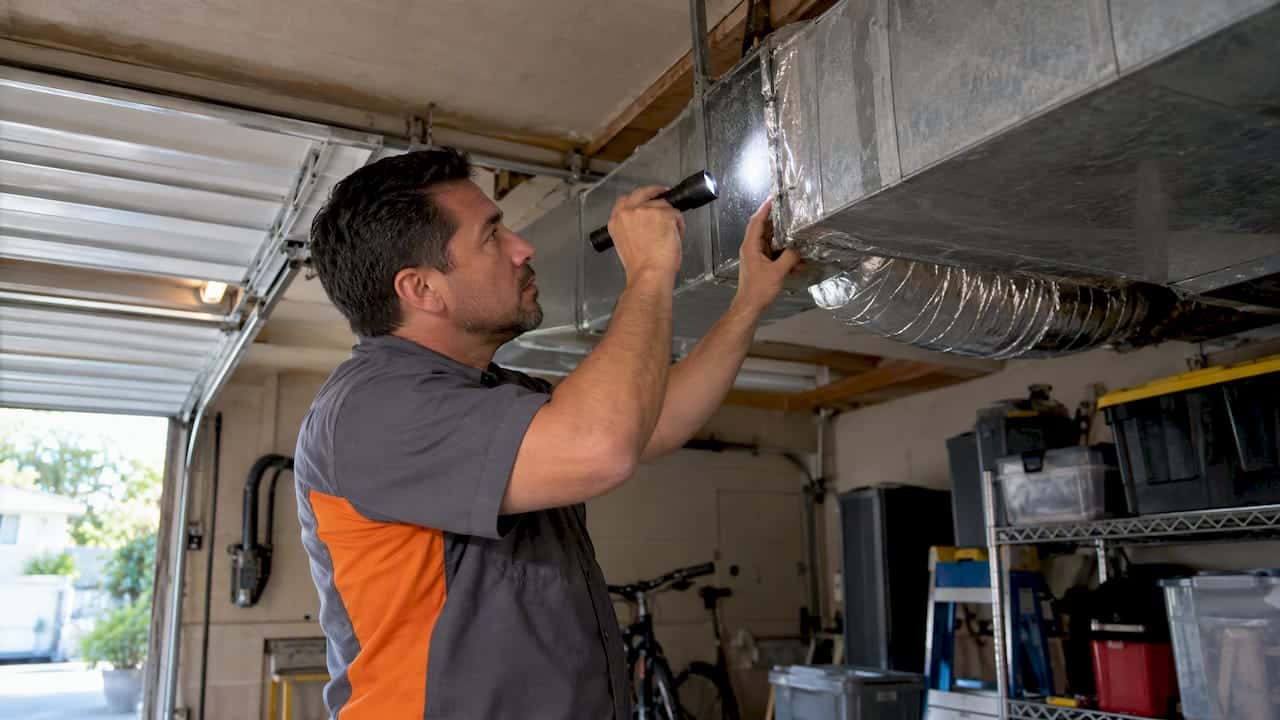
A competent contractor doesn’t start with a vacuum. They start with a camera. Borescope or camera inspection maps exactly where the infestation lives, how far it has spread, and whether droppings, urine staining, or nesting material have compromised the duct lining. Ask for the scope video. If a company can’t show you what they found, they can’t justify what they plan to do about it.
Once the scope confirms the extent of the problem, the real workflow looks like this:
- Extraction first. Live animals are handled through pest control before any duct work begins.
- HEPA-filtered vacuuming removes droppings, urine residue, and nesting debris without pushing contaminants back into the airstream. Household vacuums and high-pressure blowers aren’t built for this and risk aerosolizing exactly what you’re trying to remove.
- Sanitization with EPA-registered disinfectants follows extraction, targeting the surfaces the animals actually contacted.
- Exclusion work seals the entry points so the same problem doesn’t recur in six months.
- Documentation in the form of before-and-after photos and the original scope video, so you know what was actually done.
NADCA and EPA guidance both treat vermin infestation as a legitimate reason to clean or replace duct components, not an optional upgrade. That guidance also flags something homeowners often miss: cleaning isn’t always the endpoint. Some contamination requires replacing the material outright, which brings us to the next decision.
Should You Clean the Ducts or Replace Them?
The material matters more than the mess. Sheet-metal ductwork is smooth and nonporous, which means a thorough HEPA vacuum and sanitization pass can usually restore it to safe condition. Fiberglass-lined duct board is a different story: its porous surface absorbs urine and traps droppings deep in the fibers, and EPA guidance notes that biocides aren’t registered to reliably decontaminate that kind of material.
Here’s how the decision usually breaks down:
- Clean and patch: sheet-metal ducts with light to moderate contamination, sealed seams, minor gnaw marks
- Replace: fiberglass-lined or insulated ducts with heavy urine staining, visible mold, or embedded nesting material
- Replace regardless of material: sections with extensive gnawing that compromised structural integrity, moisture damage, or exposed wiring chewed by rodents
Any contractor recommending full replacement should back it up with photos or scope footage showing why cleaning won’t cut it. If they can’t show you the damage, ask more questions before signing off on the bigger invoice.
How Do You Rodent-Proof Your Ducts and Home?
Cleaning solves today’s problem. Sealing prevents next winter’s repeat. Rodents get into duct systems through gaps most homeowners never think to check: attic vents, roof jacks, dryer vent flaps, foundation penetrations where utility lines enter, and gaps around crawlspace access.
Work through these steps to close the gaps for good:
- Inspect attic and roof penetrations for gaps larger than a quarter inch. That’s roughly all a mouse needs.
- Cover intakes and vents with hardware cloth or louvered metal covers rather than plastic grilles, which rodents chew through easily.
- Seal irregular gaps with metal flashing or a metal-backed foam. Foam alone is a temporary patch; rodents gnaw straight through it.
- Remove attractants near the foundation: pet food left outside, bird seed storage, open trash cans, and overhanging branches that give rodents a bridge to the roofline.
- Re-inspect sealed areas every few months, especially before winter when rodents actively seek shelter indoors.
Pro Tip: If you had an infestation this year, walk the exterior again in early fall. Rodents that were excluded once often test the same weak points again before the weather turns.
How Long Does It Take and What Does It Cost?
Timelines depend on how far the problem has spread, not just how bad it smells. A same-day emergency visit typically covers triage and immediate containment. A full camera inspection generally takes one to three days to schedule and complete, and the cleaning or repair phase itself usually runs another one to three days depending on how much ductwork is affected and whether replacement is involved.
Cost swings on a few consistent factors:
- System size and duct length — more linear feet means more time and material
- Extent of contamination — a single run versus a whole-house infestation
- Material replacement needs — porous duct board costs more to replace than metal costs to clean
- Access difficulty — crawlspaces and tight attics add labor time
- Local labor rates — regional pricing varies significantly
Treat any single quote as a starting point. Get at least two or three written estimates before committing to major duct replacement.
When Should You Call a Professional Instead of Handling It Yourself?
Some situations don’t leave room for a wait-and-see approach. Call a professional immediately if you find visible droppings or nesting material inside the ducts themselves, a persistent foul odor that doesn’t clear, a dead animal you can smell but can’t locate, suspected mold growth near a vent, or wiring that shows gnaw marks.
Before you hire anyone, ask these questions:
- Do you perform a camera inspection before quoting the job?
- Do you use HEPA-filtered vacuums, not standard shop vacs?
- What disinfectant do you use, and is it EPA-registered?
- Will you provide before-and-after photos or scope video?
- What’s your experience with rodent-contaminated ductwork specifically?
- Are you insured, and can you provide references?
Pro Tip: Walk away from any contractor who proposes a vacuum-only cleaning with no mention of containment, PPE, or documentation. That’s a shortcut, not a solution.
How LC Heating and Air Conditioning Handles Ductwork Contamination
LC Heating and Air Conditioning has spent over twenty years working on HVAC systems across Greater Los Angeles, from century-old bungalows to modern multi-zone heat pump setups, and rodent-contaminated ductwork follows the same disciplined process every time:
- Camera inspection to scope the contamination before any work starts
- Coordination with pest removal when live animals are present
- HEPA-filtered vacuuming or targeted duct replacement, depending on material and damage
- Sealing and exclusion work to close entry points long term
- Before-and-after photos and scope documentation provided to you, not just described
Pricing is provided upfront so the estimate you get is the number you pay, with no surprise fees tacked on mid-job.
Why Most Advice on This Topic Undersells the Health Risk
Most articles on rodent-infested ducts treat the cleanup like a housekeeping chore: get in there, vacuum it out, move on. That framing misses what the CDC and EPA guidance actually says. This is a contamination event, not a mess. The distinction matters because the wrong tool, a household vacuum, a leaf blower, a broom, doesn’t just fail to fix the problem. It actively spreads the hazard into air you and your family breathe for days afterward.
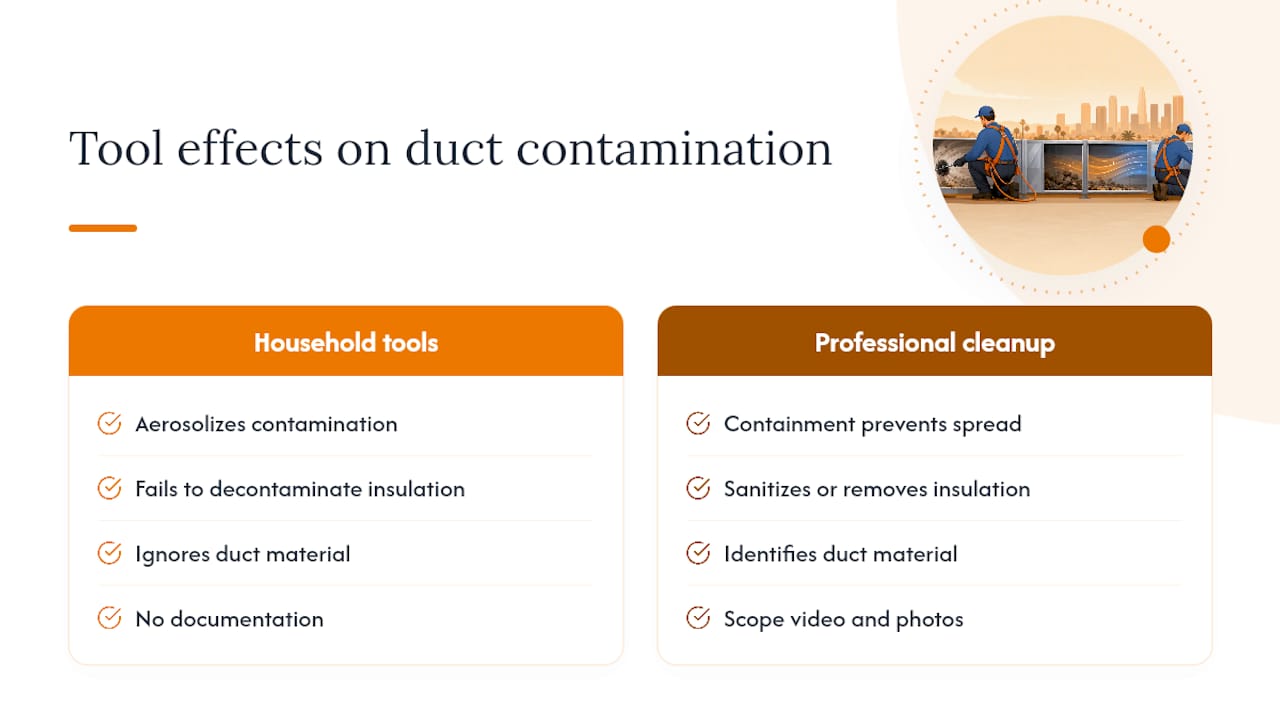
The conventional wisdom also underrates the material question. Homeowners fixate on getting the ducts “cleaned,” but sheet metal and fiberglass duct board are not interchangeable problems. One can usually be sanitized. The other often needs to come out entirely, because biocides simply weren’t built to decontaminate porous insulation reliably. A contractor who skips that distinction, and quotes a flat cleaning price without ever asking what your ducts are made of, is giving you a guess dressed up as an estimate.
What should you prioritize first? Documentation. A scope video and before-and-after photos aren’t paperwork. They’re the only way to verify the job matched the problem, and the only leverage you have if it didn’t.
— Leo
Ready to Get Your Ductwork Inspected?
If you’re dealing with any of the warning signs covered above, scratching in the walls, a persistent odor, droppings near a register, waiting rarely makes the problem smaller. A professional service can offer camera inspection, safe removal coordination, HEPA-filtered cleaning, targeted duct replacement, and sealing and exclusion work as a single coordinated service, so you’re not juggling separate pest control and HVAC contractors on your own.

Pricing is provided upfront so you know the cost before work begins, and same-day response may be available depending on location and situation. If you suspect rodents have gotten into your ductwork, request an inspection through LC Heating and Air Conditioning’s HVAC service page or start with the main service page to book a visit and get a straight answer on whether your ducts need cleaning, sealing, or replacement.
This article is general information, not a substitute for advice from a qualified doctor. Consult a qualified healthcare professional about your own circumstances before acting on anything here.
Sources
- How to Clean Up After Rodents | Healthy Pets, Healthy People | CDC
- Should You Have the Air Ducts in Your Home Cleaned? | US EPA
FAQ
How Do You Get Rid of Rodents in Air Ducts?
Removing rodents from ducts requires pest control extraction for any live animals, followed by professional HEPA-filtered vacuuming and EPA-registered disinfection. Household vacuums and DIY methods risk spreading contamination rather than removing it.
What Are the Signs That Rats Are in My Air Ducts?
Common signs include scratching or scurrying noises at night, a sour or ammonia-like smell when the HVAC runs, droppings near registers, and shredded insulation pulled into the ducts for nesting.
Can Rats Chew Through HVAC Ductwork?
Yes. Rats and mice can gnaw through thin sheet metal seams, flexible ductwork, and insulation, and they can also damage wiring near the system, which is one reason heavy gnawing often calls for duct replacement rather than repair.
Can Mice Live in Your Ductwork?
Mice can nest inside ductwork, especially in insulated sections that offer warmth and shelter, and their droppings and urine can contaminate the airflow throughout the house. EPA guidance treats vermin infestation as a valid reason to have ducts professionally cleaned or replaced.
Recommended
Leo, Propietario y Técnico Principal en LC Heating & Air
Leo dirige LC Heating & Air como propietario-operador y tiene la licencia C-20 HVAC #1073586 de California. Sus guías se enfocan en diagnósticos prácticos, decisiones de reparación seguras y consejos claros para propietarios de Los Ángeles.