- What Are the Main Signs of a Refrigerant Leak?
- What Each Sign Actually Means (and Safe Checks You Can Do)
- How Do Technicians Confirm a Refrigerant Leak?
- Is It Safe to Stay in a House With a Refrigerant Leak?
- When to Call a Licensed Technician (And What It Costs)
- How Can You Prevent Future Refrigerant Leaks?
- A Technician’s View on Where Leaks Actually Happen
- Why “Wait and See” Is the Wrong Instinct Here
- Get Your Refrigerant Leak Fixed Right the First Time
- Sources
- FAQ
- Recommended
Hissing near your indoor unit, warm air despite a running AC, ice on the coils, oily spots on copper lines, and a climbing energy bill are the five most reliable refrigerant leak signs a homeowner will notice. If you spot several of these together, ventilate the room, shut off the HVAC system if you can do so safely, and leave the area if anyone feels dizzy, nauseous, or short of breath. Call a licensed technician right away, and seek medical help if symptoms are severe.
TL;DR:
- Most refrigerant leaks originate at brazed joints, coil seams, service ports, or fittings, often caused by vibration, corrosion, or improper repairs.
- Signs like ice on coils, oily residue on copper lines, or warm air despite running the AC strongly suggest a low refrigerant charge from a leak.
- Confirming leaks requires professional tools such as electronic detectors, UV dye, soap-bubble tests, and pressure tests, which homeowners cannot perform accurately.
- Small leaks generally pose limited health risks but cause the system to work harder, raising energy costs and increasing the risk of compressor failure over time.
- Repair costs vary depending on leak location and refrigerant type, typically starting in the low hundreds for diagnostics, with full repairs or system recharges costing more.
What Are the Main Signs of a Refrigerant Leak?
Refrigerant does not evaporate or get “used up” the way gasoline does. If your system is low, it is losing refrigerant through a leak somewhere in the sealed circuit, and that circuit shows its distress in fairly predictable ways. Here is what to watch for, roughly in order of how much they should worry you.
- Hissing or bubbling sounds near the indoor air handler, the outdoor condenser, or anywhere along the copper line set connecting the two. A steady hiss usually means refrigerant is actively escaping under pressure; a bubbling or gurgling sound can point to a leak combined with air or moisture in the line.
- Reduced cooling and longer run times. The AC runs and runs but never quite reaches the thermostat setpoint. Vents blow air that feels lukewarm instead of cold, and the system seems to be working harder for a smaller payoff.
- Ice or frost on the evaporator coil or the larger suction line. This is one of the most commonly cited signs of low refrigerant, and it often surprises homeowners because ice on an air conditioner in the middle of summer feels backward.
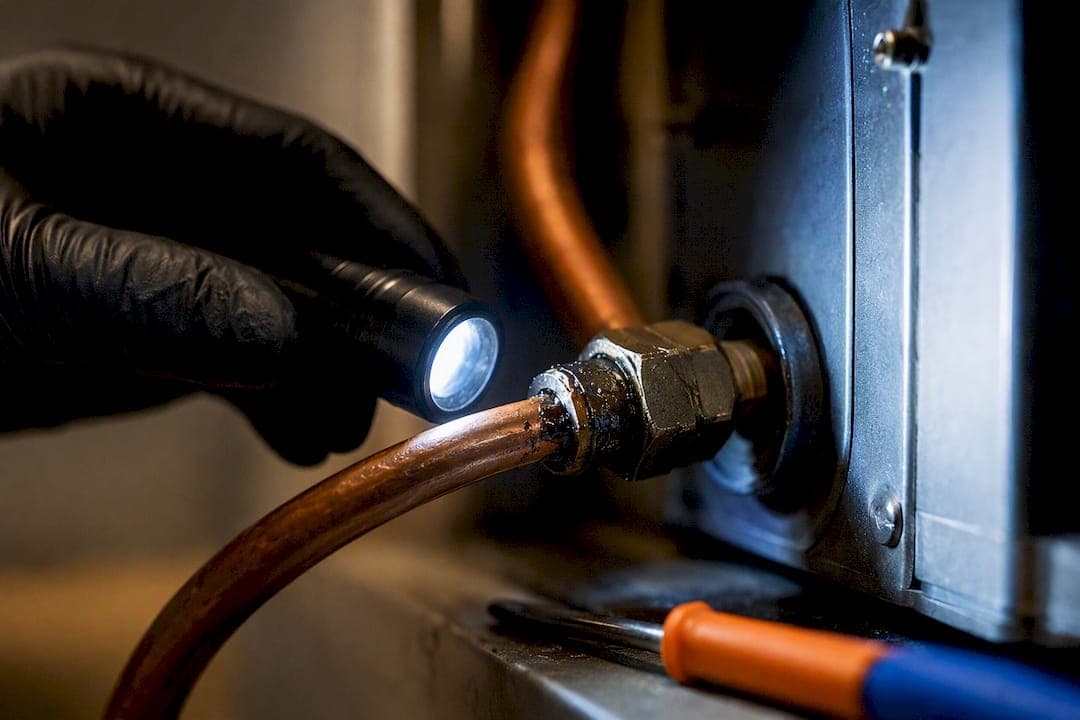
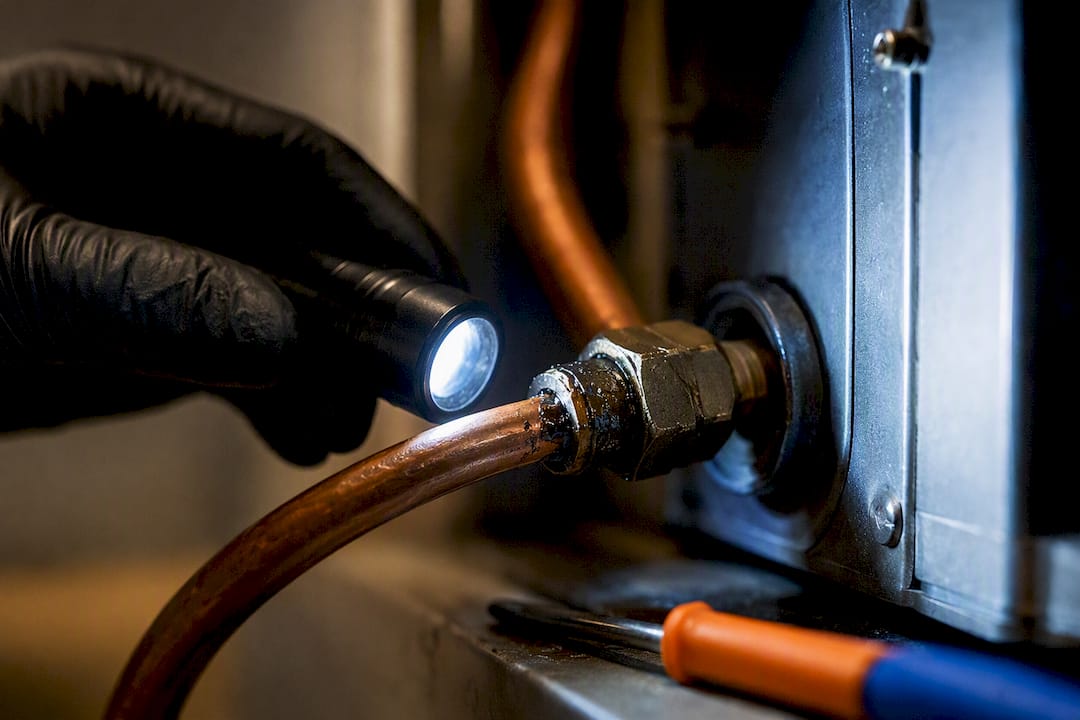
- Oily or greasy residue on copper lines, at fittings, or along coil seams. Refrigerant oil travels with the refrigerant itself, so wherever you find an oily film, that’s often the exact point the gas is escaping.
- Rising indoor humidity, uneven cooling between rooms, and an unexplained jump in your energy bill. A correctly charged system pulls a surprising amount of moisture out of the air as a side effect of cooling. When refrigerant runs low, that dehumidifying effect weakens noticeably, which is why a house can feel humid with the AC running even though the thermostat says it’s on and cooling.
Property managers overseeing several units should pay particular attention to the humidity and bill signals, since tenants often report “the AC isn’t dehumidifying” or “it feels sticky” well before anyone notices ice on a coil they can’t see. Those complaints are frequently the earliest low refrigerant symptoms available, even without a visual inspection.
Not every one of these signs, on its own, confirms a leak. A dirty filter can mimic reduced airflow. A failing blower motor can cause uneven cooling. But when you see two or three together, especially ice paired with warm air at the vents, a refrigerant leak is the far more likely explanation than a coincidence of unrelated problems.
What Each Sign Actually Means (and Safe Checks You Can Do)
A refrigeration system is a closed loop, so nothing about it happens randomly. Understanding the cause behind each symptom helps you separate a real refrigerant problem from something simpler.
Ice forms on the evaporator coil because a low refrigerant charge drops the pressure inside that coil below what the system is designed for. The coil gets too cold, moisture in the passing air freezes onto it, and that ice layer then blocks airflow further, making the whole problem worse in a feedback loop. This is different from a dirty filter causing frost. A dirty filter chokes airflow first; a leak drops pressure first. Either one can end with ice, which is exactly why the checks below matter.
Oily residue shows up at leak points because refrigerant and the compressor’s lubricating oil circulate together. Wherever the sealed line has a pinhole, crack, or loose fitting, both escape together, leaving a visible trace even after the refrigerant itself disperses into the air. Common causes include vibration-loosened flare fittings, corrosion at joints (sometimes called formicary corrosion, a slow pinhole-forming process that can eat through copper from the inside over years), and poor brazing work from a past repair.
Before you assume the worst, run through a short list of checks that rule out non-leak causes:
- Check and replace the air filter if it’s visibly dirty or hasn’t been swapped in the last one to three months.
- Confirm the thermostat is set to Cool, with a setpoint reasonably below room temperature, and that batteries or wiring aren’t the issue.
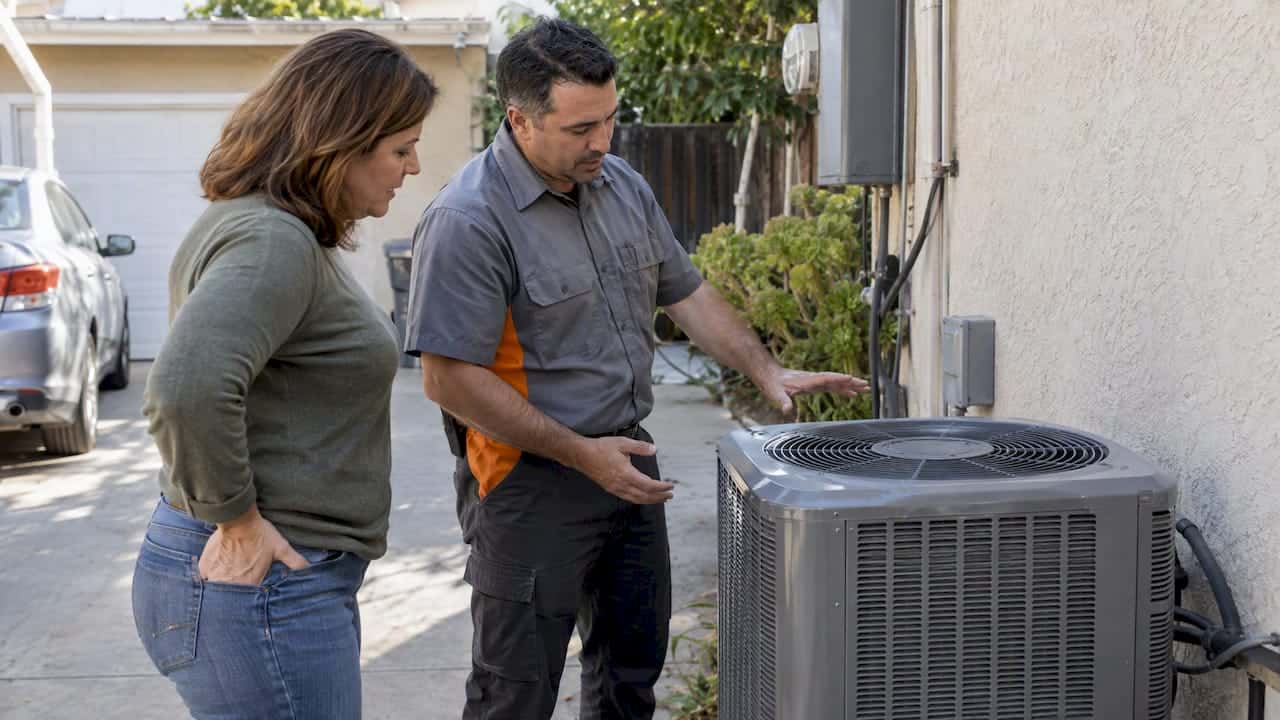
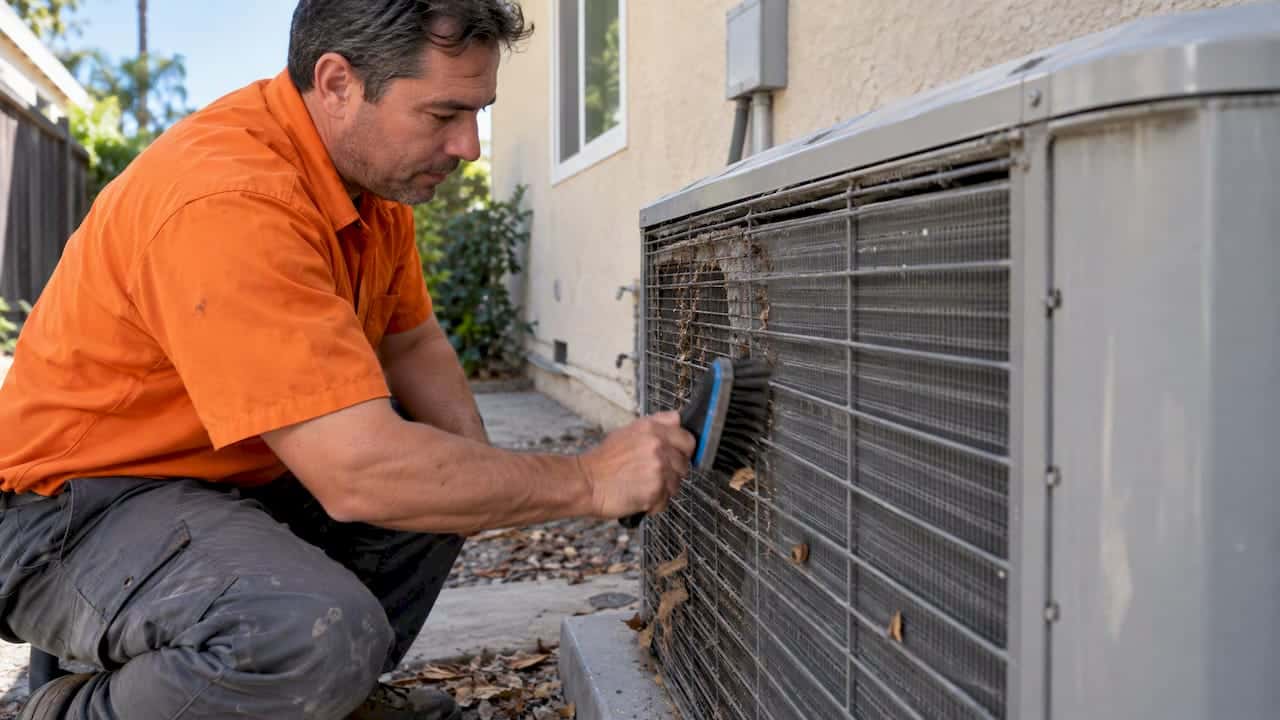
- Walk out to the outdoor condenser and clear away leaves, grass clippings, or debris that could be blocking airflow.
- Check your electrical panel for a tripped breaker, particularly after a storm or power flicker.
If you’ve handled all four and the system still shows warm air at the vents alongside ice on the coil or a persistent hiss, treat that as a strong red flag. That combination is one of the clearest signs of a Freon leak or other refrigerant loss, and it’s the point where a homeowner’s job ends and a technician’s job begins.
How Do Technicians Confirm a Refrigerant Leak?
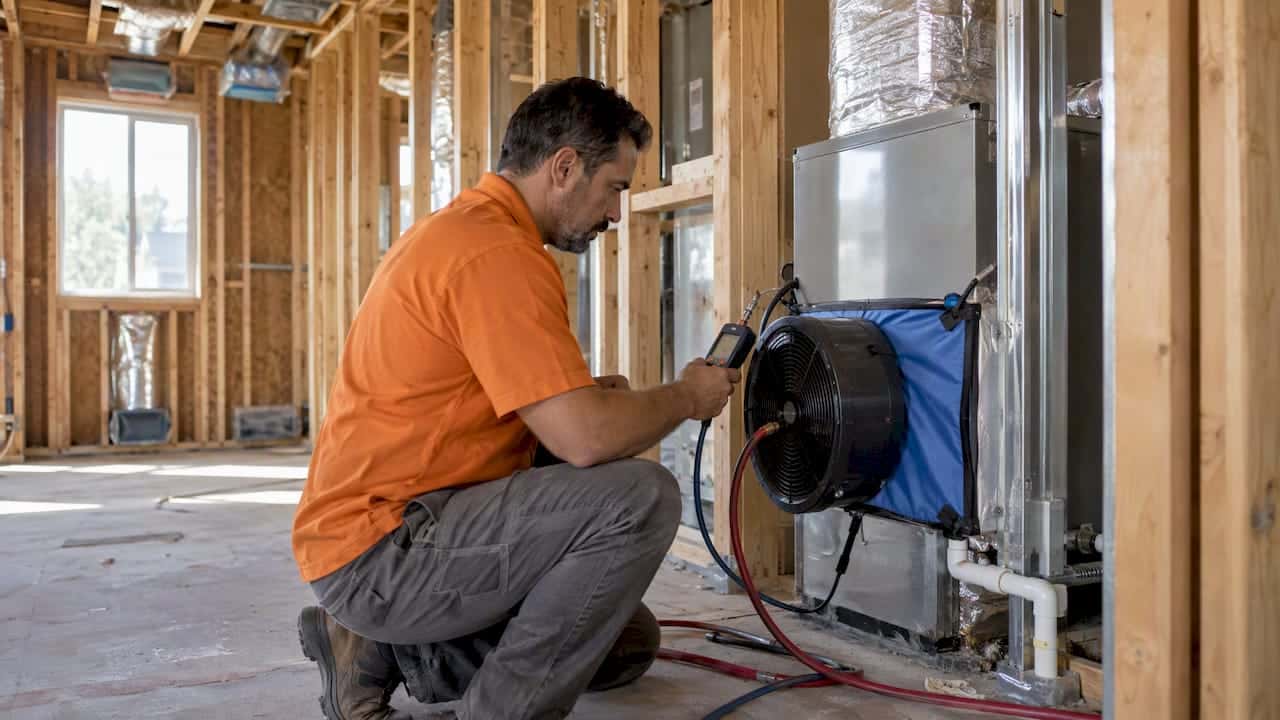
Homeowners can spot the symptoms; only a licensed technician has the tools to confirm the leak’s exact location and seal it correctly. Here’s the general sequence a tech follows on a diagnostic visit.
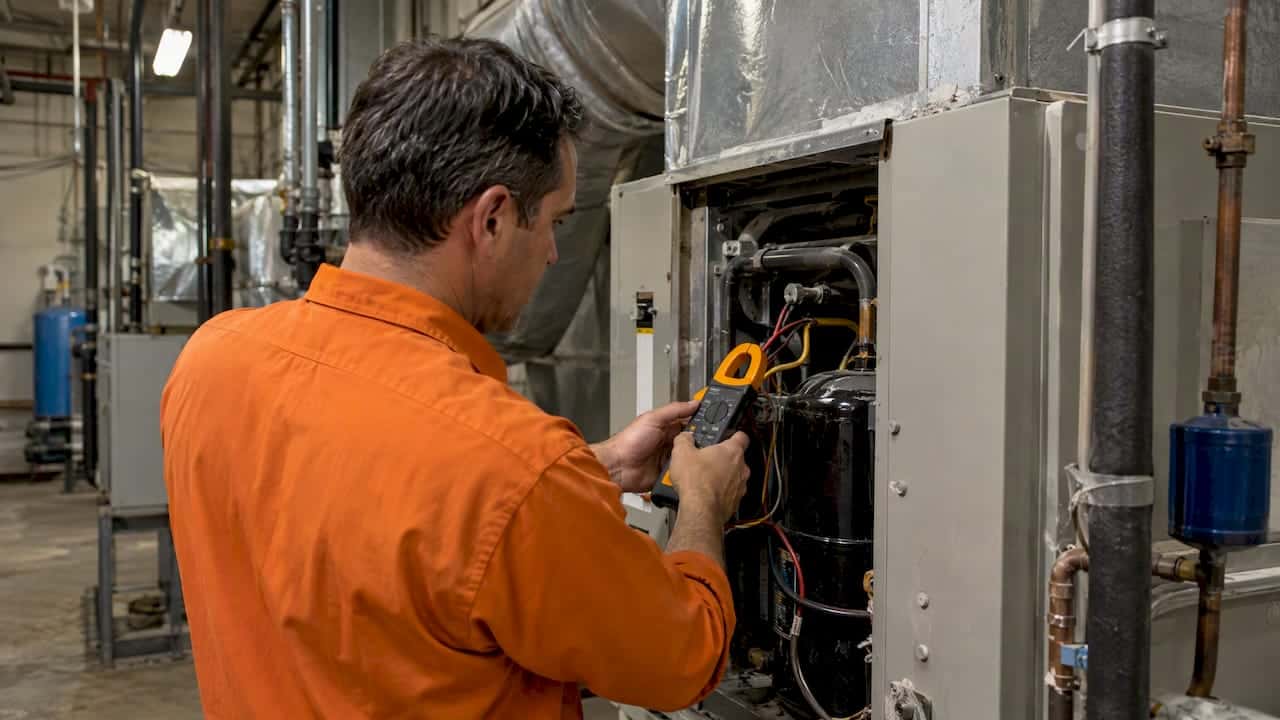
- Electronic leak detector. A handheld sensor sniffs the air near suspect joints and coils, picking up refrigerant vapor concentrations too small for a human nose to notice. This is usually the first tool out of the bag because it can scan a long line set quickly.
- UV dye. For leaks that don’t show up right away, a technician adds a fluorescent dye to the system, runs it for a while, then scans the lines with a blacklight. The dye lights up exactly where refrigerant has been escaping, though it takes time to circulate and won’t catch a fresh leak on the same visit.
- Soap-bubble testing. On accessible fittings, service ports, and flare connections, a soap solution brushed onto the joint will bubble visibly if gas is escaping. It’s simple, cheap, and still one of the most reliable spot checks for joints you can physically reach.
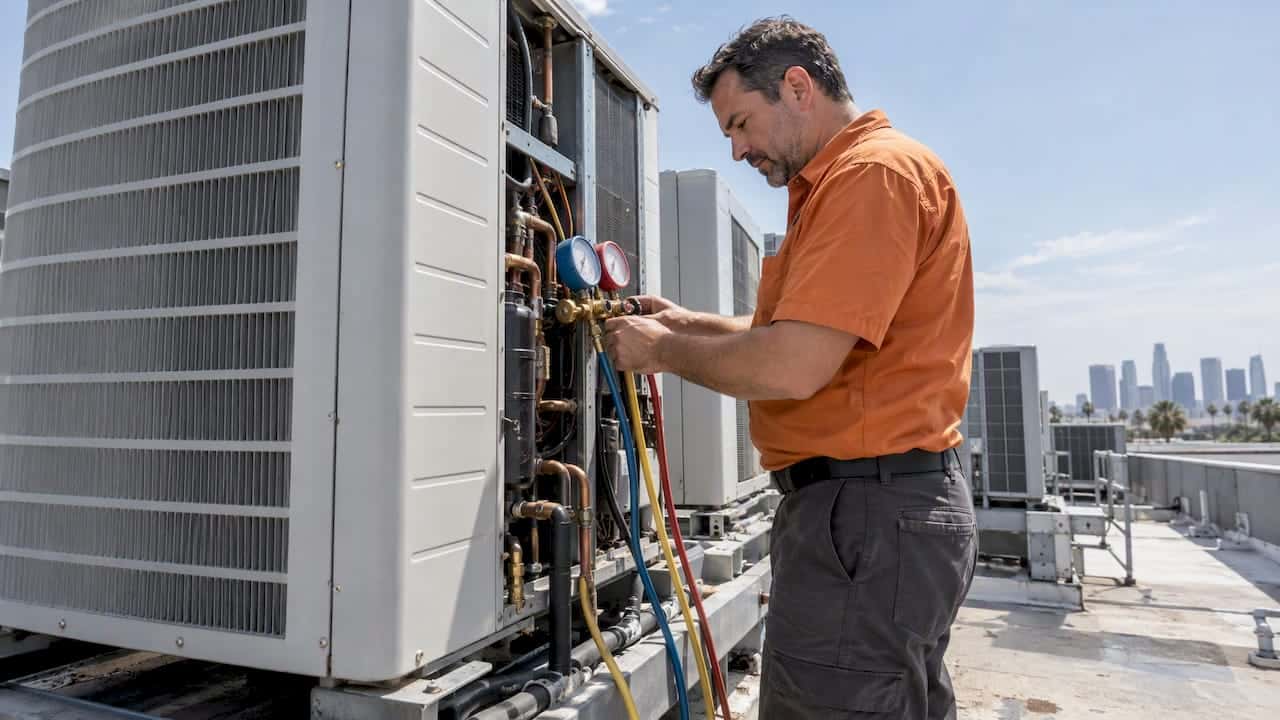
- Pressure and nitrogen testing. After a repair, the technician pressurizes the sealed system with nitrogen to confirm there are no remaining leaks, then vacuums the lines before recharging.
That last step matters more than it sounds. Some refrigerant blends can fractionate, meaning their component gases separate and escape at different rates during a large leak. When that happens, simply “topping off” the system doesn’t restore the correct chemical mix; a full recovery and recharge becomes necessary. Certified technicians are trained and legally required to recover refrigerant properly rather than release it, which is one more reason this isn’t a DIY repair.
Pro Tip: If you want to try a preliminary check yourself before calling anyone, a basic combustible-gas or refrigerant sniffer can flag an obvious leak near an accessible fitting. It won’t replace a professional pressure test, but it can tell you whether it’s worth escalating.
Is It Safe to Stay in a House With a Refrigerant Leak?
Small residential leaks are usually not an emergency, but they deserve quick, sensible action, not panic. Start by opening windows and doors to ventilate the room, and turn off the HVAC system at the thermostat or breaker if you can do so without walking near the leak source. If anyone in the house feels dizzy, nauseous, develops a headache, starts coughing, or has throat irritation, leave the area and get to fresh air immediately.
Children, older adults, and anyone with asthma or another respiratory condition should be moved out first and monitored closely, since they’re more sensitive to reduced air quality. Refrigerant exposure symptoms in most residential leaks are mild and temporary, but call poison control or 9-1-1 if symptoms are severe or don’t improve once you’re in fresh air.
Never touch liquid refrigerant directly. Contact with skin or eyes can cause frostbite-like burns, since the liquid absorbs heat rapidly as it evaporates. Keep open flames, lit cigarettes, or pilot lights away from the area too, since some refrigerant types can decompose into harmful compounds near heat or combustion. A technician will use a meter to confirm the air is clear before calling the space safe again.
When to Call a Licensed Technician (And What It Costs)
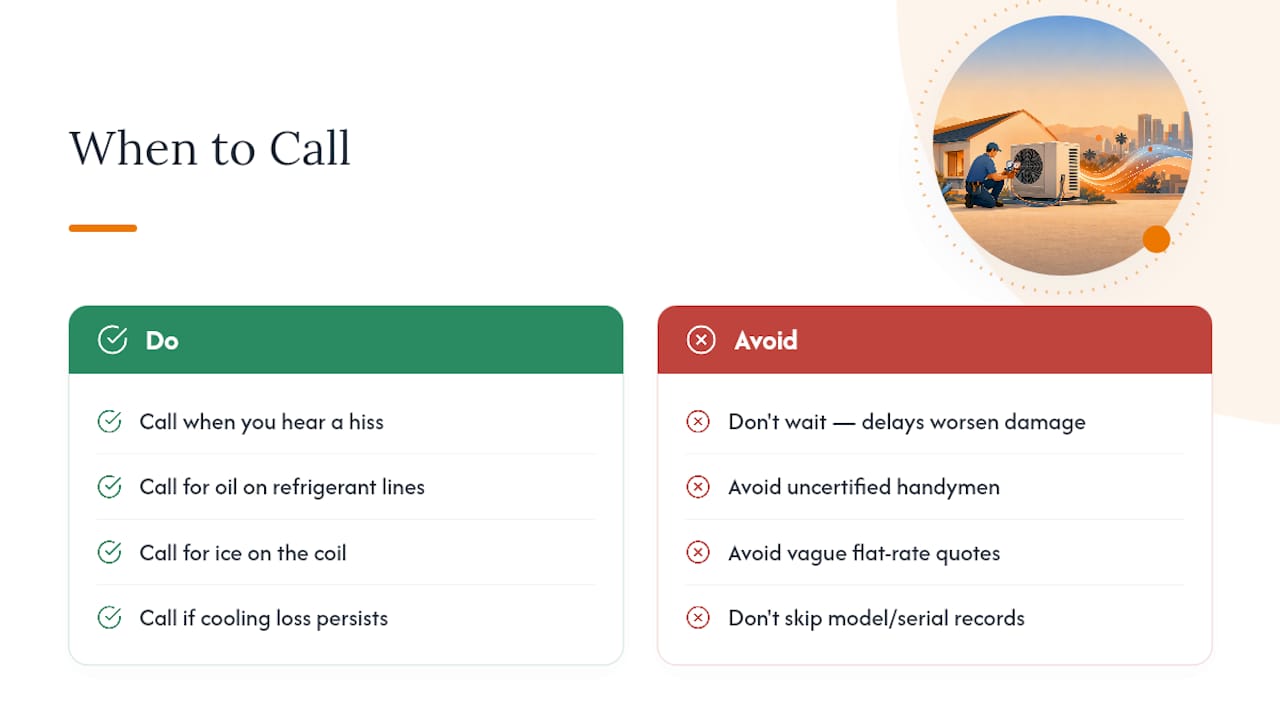
Call a professional the moment you notice an audible hiss, visible oil on the lines, ice on the coil, or a household member reporting symptoms while the AC runs. Persistent loss of cooling that survives a filter change and a clear outdoor unit is also your cue. Waiting rarely helps. A system running low on charge forces the compressor to work harder for longer, which accelerates wear and raises the odds of a costly compressor failure down the line.
On a diagnostic visit, expect the technician to pressure test the system, pinpoint the leak with electronic detection or dye, and explain repair options before touching anything. Brazing a line, replacing a coil, and recovering or recharging refrigerant all require EPA certification, which is exactly why this isn’t a job for a general handyman.
Cost varies by leak location, refrigerant type, and system accessibility, but homeowners should generally expect diagnostic visits to run in the low hundreds of dollars, with fitting or line repairs costing more, and a full evaporator coil replacement or system recharge can be among the more costly repair options. Older systems using discontinued refrigerants often cost more to recharge simply because the refrigerant itself is scarcer.
Before the technician arrives, pull together your system’s model and serial number and any past service records. Ask directly what caused the leak, whether the fix is a patch or a full repair, and what the flat-rate price covers before work begins. LC Heating and Air Conditioning’s AC refrigerant leak repair page walks through what a typical repair visit involves in more detail.
How Can You Prevent Future Refrigerant Leaks?
Most leaks don’t happen overnight. They build slowly through corrosion, vibration, or a fitting that was never quite tight enough, and a little routine attention catches most of them early.
- Schedule a professional inspection at least once a year, ideally before your heaviest cooling season.
- Change filters on a regular schedule and clean coils when they show visible buildup.
- Keep the outdoor condenser clear of debris and check that line insulation isn’t cracked or missing.
- Look occasionally for early corrosion or greenish discoloration at coil seams and fittings.
- Keep a simple log of service visits, unusual runtimes, and the refrigerant type your system uses.
Preventive maintenance measurably reduces leak risk by keeping the compressor from running overloaded for extended stretches. If your system has needed repeated leak repairs, or it’s already past the 12 to 15 year mark and the compressor shows strain, replacement is often the financially smarter move over another round of patchwork fixes.
A Technician’s View on Where Leaks Actually Happen
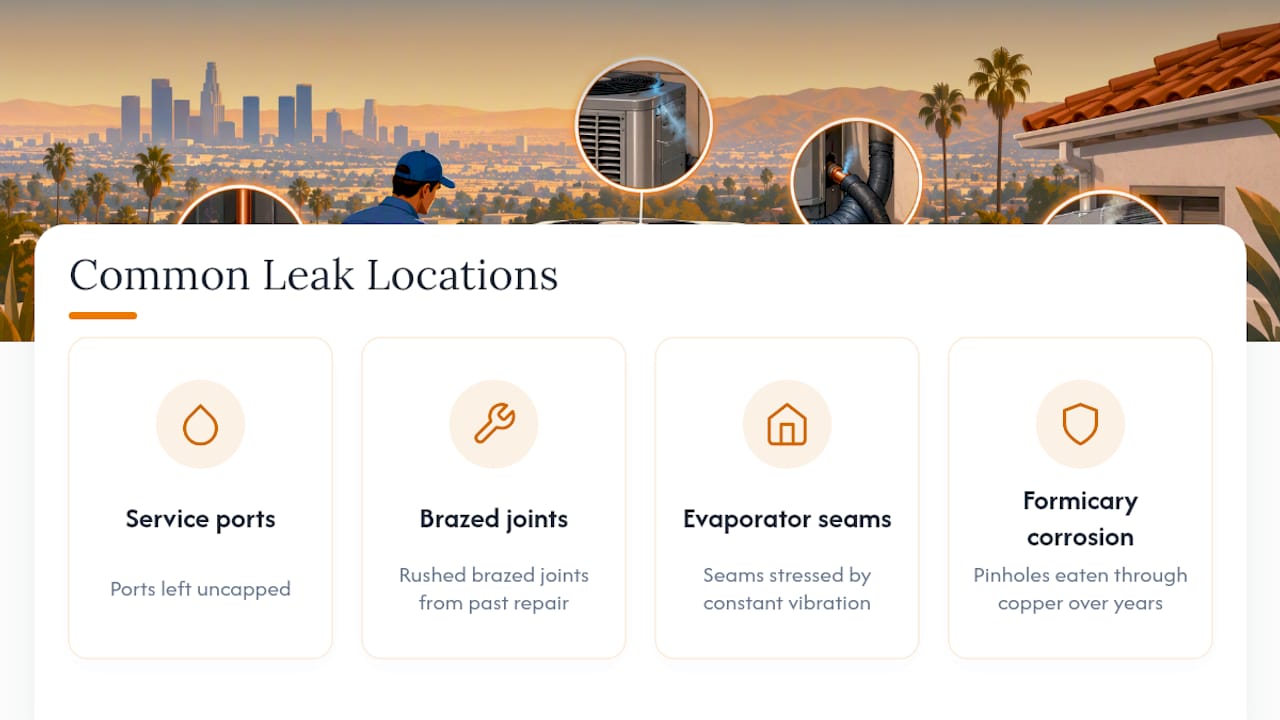
In the field, the same failure points show up again and again: service ports that were never capped tightly, brazed joints that were rushed during a past repair, evaporator seams under constant vibration stress, and formicary corrosion quietly eating pinholes through copper over years. Most of these are fixable without replacing the whole system, provided the equipment is otherwise healthy.
LC Heating and Air Conditioning prioritizes repair over replacement whenever the numbers make sense, and backs every diagnosis with flat-rate pricing decided before any tool touches your system. No surprise fees, no pressure to buy new equipment you don’t need yet.
Why “Wait and See” Is the Wrong Instinct Here
The conventional advice you’ll find online tends to swing one of two ways: either it downplays refrigerant leaks as a minor inconvenience, or it tips into alarmist language about toxic gas filling your home. Neither serves you well. The research on residential refrigerant exposure consistently points to a middle ground: most leaks are a comfort and equipment problem first, and a health problem only in specific, identifiable circumstances involving symptoms or confined spaces.
What actually deserves your attention is the compressor, not your nerves. A system leaking refrigerant is a system running harder than it should, every single day it goes undiagnosed. That’s where the real cost accumulates, not in some dramatic health event, but in a slow mechanical decline that ends with a much bigger repair bill than the leak itself would have cost to fix. My honest read: skip the panic, skip the denial, and treat the first hiss or the first ice patch as your cue to make one phone call.
— Leo
Get Your Refrigerant Leak Fixed Right the First Time
LC Heating and Air Conditioning gives you something most HVAC calls in Los Angeles don’t: a flat-rate price quote before any repair starts, so you’re never staring at a bill that grew while the technician was still in your attic.

A same-day technician visit means you’re not living with warm air and climbing humidity for a week while you wait for an appointment slot. Our diagnostics use the same electronic detection and pressure-testing methods covered above, and every refrigerant recovery follows certified handling procedures, whether you’re running an older split system or a newer heat pump. We work on everything from historic Los Angeles homes with original ductwork to modern multi-zone, heat pump and commercial VRF setups, so the fix is matched to your actual equipment, not a generic playbook.
If you’re already noticing hissing, ice, or an oily line, don’t let it sit. Book an AC leak repair visit or explore our full HVAC service options to get a technician out to your property.
Sources
For deeper detail, Poison Control’s guidance on refrigerant exposure covers immediate safety steps, and the EPA’s refrigerant safety program explains handling regulations. LC Heating and Air Conditioning’s refrigerant types guide and HVAC troubleshooting guides offer additional homeowner background, and contractors managing their own service scheduling may find BRCKS’s HVAC contractor software useful for workflow.
This article is general information, not a substitute for advice from a qualified doctor. Consult a qualified healthcare professional about your own circumstances before acting on anything here.
- Keeping it chill: Is refrigerant dangerous? | Poison Control
- Signs and Causes of a Refrigerant Leak — Lennox
- Acute refrigerant poisoning — WebMD
FAQ
How Expensive Is It to Fix a Refrigerant Leak?
Costs depend on the leak’s location and your refrigerant type, ranging from a low-hundreds diagnostic and simple fitting repair up to a much larger bill for full coil replacement or a complete system recharge. Ask for a flat-rate quote before work begins so you know the total upfront.
Is It Safe to Be in a House With a Refrigerant Leak?
Small leaks are usually not an emergency, but you should ventilate the space, turn off the HVAC if safe, and leave if anyone feels dizzy, nauseous, or has trouble breathing. Seek medical attention immediately for severe symptoms.
Where Is the Most Common Place for a Refrigerant Leak?
Leaks most often occur at brazed joints, evaporator coil seams, service (Schrader) ports, and fittings along the copper line set, frequently due to vibration, corrosion, or rushed past repairs.
Can an AC Lose Refrigerant Without a Leak?
No. A correctly sealed system doesn’t consume or use up refrigerant during normal operation, so a low charge almost always means refrigerant has escaped through a leak somewhere in the circuit.
How Do Technicians Detect Refrigerant Leaks?
Technicians combine electronic leak detectors, UV dye, soap-bubble testing, and nitrogen pressure testing to pinpoint the exact leak location before making a repair.
Recommended
Leo, Propietario y Técnico Principal en LC Heating & Air
Leo dirige LC Heating & Air como propietario-operador y tiene la licencia C-20 HVAC #1073586 de California. Sus guías se enfocan en diagnósticos prácticos, decisiones de reparación seguras y consejos claros para propietarios de Los Ángeles.