- HVAC Tonnage Sizing Explained: A Homeowner’s Guide
- What is HVAC tonnage sizing and how is it measured?
- Why square footage alone is not enough for HVAC sizing
- Oversizing vs. undersizing: what actually happens to your home
- How to get accurate HVAC tonnage sizing for your home
- Key Takeaways
- What 20 years of sizing homes in Los Angeles taught me
- Professional HVAC sizing from LC Heating and Air Conditioning
- FAQ
- Recommended
HVAC Tonnage Sizing Explained: A Homeowner’s Guide

TL;DR:
- HVAC tonnage measures the cooling capacity needed for a home, not equipment weight, and is determined by detailed calculations. The Manual J load calculation accurately accounts for insulation, windows, climate, and home features, preventing oversizing or undersizing. Proper sizing improves comfort, reduces energy bills, and extends system lifespan.
HVAC tonnage sizing is the process of determining the cooling capacity a home needs, measured in tons where one ton equals 12,000 BTU per hour of heat removal. That number is not about how heavy your equipment is. It describes how much heat your system can pull out of your home every hour. Get this number wrong, and you will pay for it in high energy bills, uneven temperatures, and a system that wears out too fast. The industry standard for calculating this number is the Manual J load calculation, a method that goes far beyond simple square footage rules.
What is HVAC tonnage sizing and how is it measured?
HVAC tonnage is a measure of cooling capacity, not equipment weight. The term “ton” comes from the amount of heat needed to melt one ton of ice in 24 hours, which works out to 12,000 BTU per hour. A 3-ton system, for example, removes 36,000 BTU of heat from your home every hour. That historical connection to ice is a fun fact, but the practical takeaway is simple: bigger tonnage means more cooling power.
BTU stands for British Thermal Unit, and it is the standard unit for measuring heat energy in HVAC. When a contractor talks about a 2-ton or 4-ton system, they are describing how many BTUs per hour the unit can remove. The conversion is straightforward: tons = total BTU capacity ÷ 12,000. A 24,000 BTU system is a 2-ton unit. A 48,000 BTU system is a 4-ton unit.
How the Manual J load calculation works
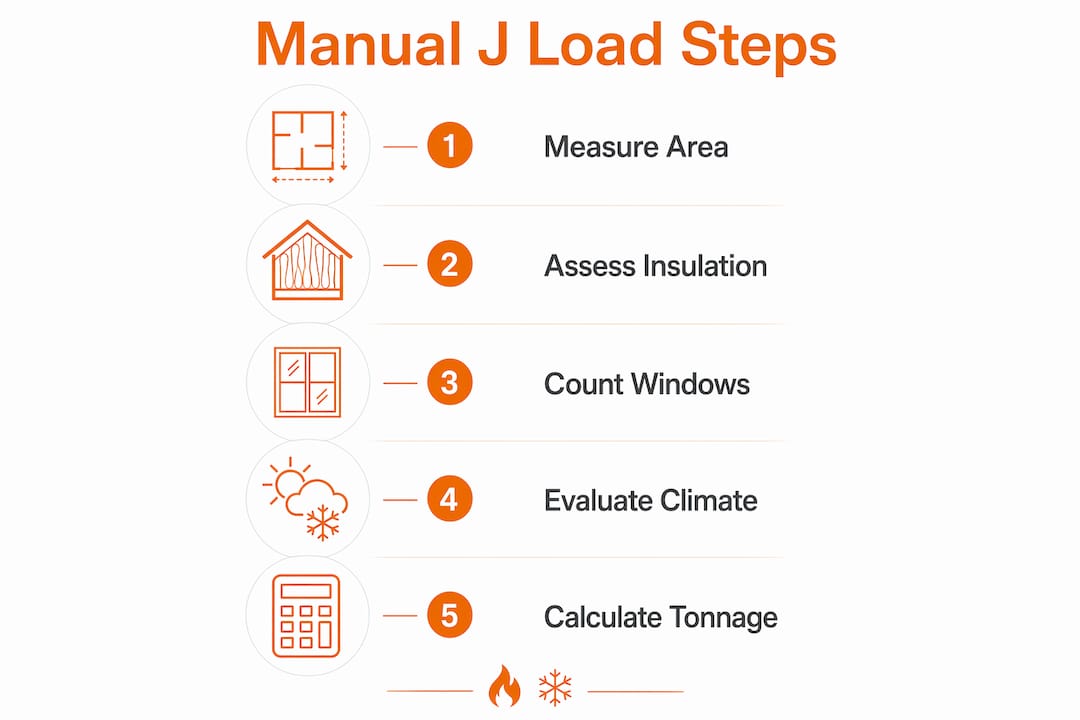
The Manual J load calculation is the most accurate method for determining the right tonnage for a home. It was developed by the Air Conditioning Contractors of America and is recognized by Energy Star as the correct approach. A contractor using Manual J does not just measure your floor plan. They build a detailed picture of how heat moves through your specific home.
The Manual J formula accounts for room area, ceiling height, the number and size of windows, the number of doors, and the number of occupants. Each person in the home adds roughly 100 BTU per hour to the cooling load. Each window adds roughly 1,000 BTU per hour, and each door adds a similar amount. These inputs combine to produce a total BTU load, which is then divided by 12,000 to get the required tonnage.
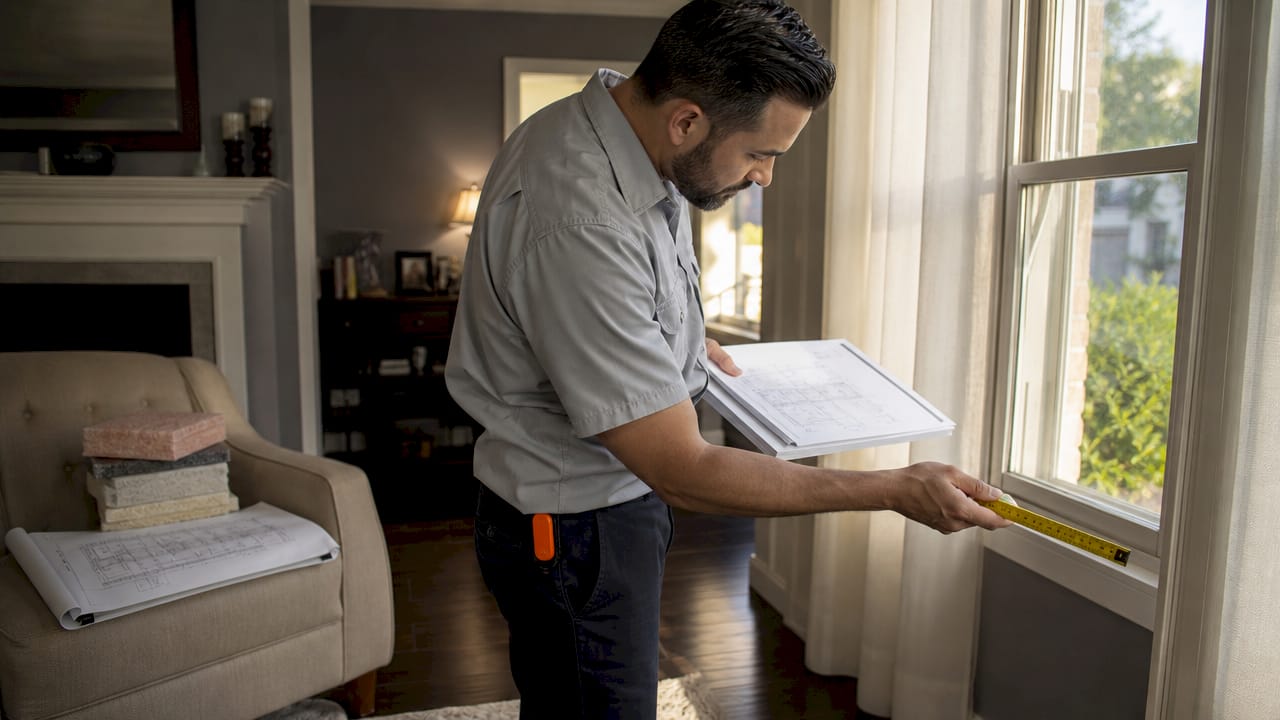
The calculation also factors in local climate data, the direction your home faces, the type of insulation in your walls and attic, and the efficiency of your duct system. That level of detail is what separates Manual J from a back-of-the-envelope guess.
Pro Tip: Ask your contractor to show you the Manual J report before any equipment is ordered. A legitimate calculation produces a printed or digital report with every input listed. If a contractor gives you a tonnage recommendation without one, that is a red flag.
Why square footage alone is not enough for HVAC sizing
A common rule of thumb says you need roughly 400 to 600 square feet per ton of cooling capacity. Older, poorly insulated homes fall toward the 400 SF/ton end, while newer, well-sealed homes can stretch to 600 SF/ton. That range already tells you something important: two homes with the same floor plan can need very different systems.
Square footage captures only one dimension of your home’s cooling load. The variables that actually drive tonnage needs include:
- Insulation quality. A well-insulated attic and walls hold conditioned air in and keep heat out. Poor insulation forces your system to work harder.
- Window area and orientation. West-facing and south-facing windows receive direct afternoon sun, which adds significant heat gain. Double-pane, low-E glass reduces that load considerably.
- Ceiling height. A room with 10-foot ceilings holds more air volume than the same footprint with 8-foot ceilings. More air volume means more BTUs needed to cool it.
- Sun exposure and shading. A home shaded by mature trees or a covered patio has a lower cooling load than an identical home sitting in full sun.
- Local climate. A home in Los Angeles faces different peak cooling demands than the same home in a milder coastal city, even a few miles away.
Consider two 1,800-square-foot homes side by side. One was built in the 1960s with minimal wall insulation, single-pane windows, and an unshaded west-facing roof. The other was built in 2015 with spray foam insulation, double-pane low-E windows, and a covered patio on the west side. The older home might need a 4-ton system, while the newer home could be perfectly comfortable with a 3-ton unit. Same square footage, very different cooling loads.
Factors like insulation, ceiling height, and window exposure all shift the tonnage requirement up or down. Relying on square footage alone leads to oversized or undersized equipment, and both outcomes cost you money.
Pro Tip: If you have recently added attic insulation, replaced windows, or air-sealed your home, your tonnage needs may have dropped. Tell your contractor about those upgrades before they run any calculations. A well-weatherized home can move from the 400 SF/ton category to the 600 SF/ton category, which could mean a smaller, less expensive system.
Oversizing vs. undersizing: what actually happens to your home
The consequences of getting tonnage wrong are real and expensive. The table below shows typical residential tonnage ranges alongside the home sizes they serve and the problems that arise when the match is off.
| Home size (sq ft) | Typical tonnage | Oversized result | Undersized result |
|---|---|---|---|
| 600–1,000 | 1.5–2 tons | Short cycling, high humidity | Runs constantly, never reaches set point |
| 1,000–1,500 | 2–2.5 tons | Uneven temps, excess moisture | Rooms stay warm, high energy bills |
| 1,500–2,000 | 2.5–3 tons | Frequent on/off, poor dehumidification | System overworks, early failure |
| 2,000–2,500 | 3–3.5 tons | Cold spots, clammy air | Inadequate cooling on hot days |
| 2,500–3,500 | 3.5–5 tons | Wasted capacity, higher upfront cost | Cannot maintain comfort in peak heat |
What oversizing does to your system
An oversized system cools the air too quickly and shuts off before it has time to remove humidity. This is called short cycling. The system turns on, blasts cold air for a few minutes, hits the temperature set point, and shuts off. Your home feels cold but clammy because the moisture in the air never got pulled out. Oversizing leads to short cycling and humidity problems that no thermostat adjustment can fix.
Short cycling also wears out your compressor faster. Every startup puts stress on the motor. A system that cycles on and off dozens of times per day ages much faster than one that runs in long, steady cycles. You end up replacing equipment years earlier than you should.
What undersizing does to your comfort
An undersized system runs continuously on hot days and still cannot reach the temperature set point you want. Your energy bills climb because the system never shuts off, and the equipment wears out from constant operation. On a 95-degree day in Los Angeles, an undersized unit simply cannot keep up. Rooms farthest from the air handler stay warm, and the system struggles to recover after doors and windows are opened.
The right-sized system runs in steady, efficient cycles. It removes heat and humidity together, maintains consistent temperatures throughout the home, and shuts off when the job is done. That balance is what proper tonnage sizing delivers.
How to get accurate HVAC tonnage sizing for your home
Getting the right tonnage starts with hiring a contractor who performs a full Manual J load calculation, not one who sizes your system based on what was installed before or a quick square footage estimate. Here is what to do before and during that process:
- Request a written Manual J report. A proper calculation produces a document showing every input: room dimensions, insulation R-values, window counts, local design temperatures, and the resulting BTU load. If a contractor cannot produce this, find one who can. You can learn more about this process through LC Heating and Air Conditioning’s load calculation service.
- Ask about ductwork compatibility. Correct tonnage is only half the equation. Manual J must be paired with Manual S equipment selection and proper duct design to deliver the performance you are paying for. A correctly sized unit connected to leaky or undersized ducts will underperform.
- Disclose recent home improvements. Air sealing and insulation upgrades can reduce your tonnage needs. Tell your contractor about any weatherization work done in the past few years so the calculation reflects your home’s current condition.
- Question any recommendation that matches your old system exactly. Contractors sometimes default to replacing like for like. If your previous system was oversized, replacing it with the same tonnage repeats the same mistake.
- Ask about energy-efficiency improvements before sizing. Adding attic insulation or sealing air leaks before your new system is installed could shift you into a lower tonnage category. That means a less expensive unit and lower operating costs for years to come.
Demanding detailed load calculation inputs from your contractor is not being difficult. It is being a smart homeowner. A contractor who welcomes those questions is one you can trust.
Key Takeaways
Correct HVAC tonnage sizing requires a Manual J load calculation that accounts for insulation, windows, ceiling height, and climate, not just square footage.
| Point | Details |
|---|---|
| Tonnage measures cooling capacity | One ton equals 12,000 BTU per hour of heat removal, not equipment weight. |
| Manual J is the accurate method | It factors in room size, insulation, windows, occupants, and local climate for a precise load. |
| Square footage alone misleads | Two identical floor plans can need different tonnage based on insulation and window orientation. |
| Oversizing causes humidity problems | Short cycling prevents proper dehumidification and wears out the compressor prematurely. |
| Request a written report | A legitimate Manual J calculation produces a document with every input listed for review. |
What 20 years of sizing homes in Los Angeles taught me
After two decades of sizing HVAC systems across Los Angeles, the single most common and costly mistake I see is contractors replacing a system with the same tonnage as the old one. The assumption is that the previous installer got it right. They often did not.
The homes I work on range from 1920s Craftsman bungalows in Highland Park to modern multi-zone builds in the hills above Burbank. Every one of them has a unique cooling load. A Craftsman with original plaster walls and a new spray foam attic job has a dramatically different load profile than it did ten years ago. Sizing it the same way ignores real improvements the homeowner paid for.
The other thing I have learned is that ductwork is where correct tonnage goes to die. I have seen perfectly sized 3-ton systems connected to ducts that were designed for a 2-ton unit. The equipment is right, but the airflow is strangled. The homeowner never gets the comfort or efficiency they were promised. This is why Manual J paired with proper duct design is the only complete answer.
Watch out for any contractor who quotes tonnage in the first five minutes of a visit without measuring anything. A real load calculation takes time. It requires looking at your insulation, your windows, your ceiling heights, and your local climate data. If a contractor skips all of that, they are guessing. You deserve better than a guess.
— Leo
Professional HVAC sizing from LC Heating and Air Conditioning
Getting your tonnage right from the start saves you money on equipment, energy bills, and repairs for years to come. LC Heating and Air Conditioning has been performing Manual J load calculations for Los Angeles homeowners for over 20 years, covering everything from historic bungalows to modern multi-zone systems.

The team at LC Heating and Air Conditioning provides honest, flat-rate diagnostics and transparent sizing recommendations backed by written load calculation reports. No pressure, no guesswork, and no surprise fees. Whether you need a new system installed or want a second opinion on a contractor’s tonnage recommendation, LC Heating and Air Conditioning is ready to help. Call today to schedule your evaluation and get a system that is sized right for your home.
FAQ
What does HVAC tonnage mean?
HVAC tonnage measures cooling capacity, not equipment weight. One ton equals 12,000 BTU per hour of heat removed from your home.
How do I calculate the tonnage I need?
The accurate method is a Manual J load calculation, which factors in square footage, ceiling height, insulation, windows, occupants, and local climate. Dividing the total BTU result by 12,000 gives you the required tonnage.
Can I use square footage to size my HVAC system?
Square footage rules of thumb range from roughly 400 to 600 SF per ton, but they are not reliable on their own. Insulation quality, window orientation, and ceiling height all shift the actual tonnage requirement significantly.
What happens if my HVAC system is the wrong size?
An oversized system short cycles and leaves your home feeling humid. An undersized system runs constantly, cannot reach the desired temperature set point, and wears out faster from the continuous load.
Do home improvements affect HVAC tonnage needs?
Yes. Upgrades like attic insulation, air sealing, and new windows reduce your home’s cooling load. Always inform your contractor about recent improvements so the Manual J calculation reflects your home’s current condition.
Recommended
Leo, Propietario y Técnico Principal en LC Heating & Air
Leo dirige LC Heating & Air como propietario-operador y tiene la licencia C-20 HVAC #1073586 de California. Sus guías se enfocan en diagnósticos prácticos, decisiones de reparación seguras y consejos claros para propietarios de Los Ángeles.