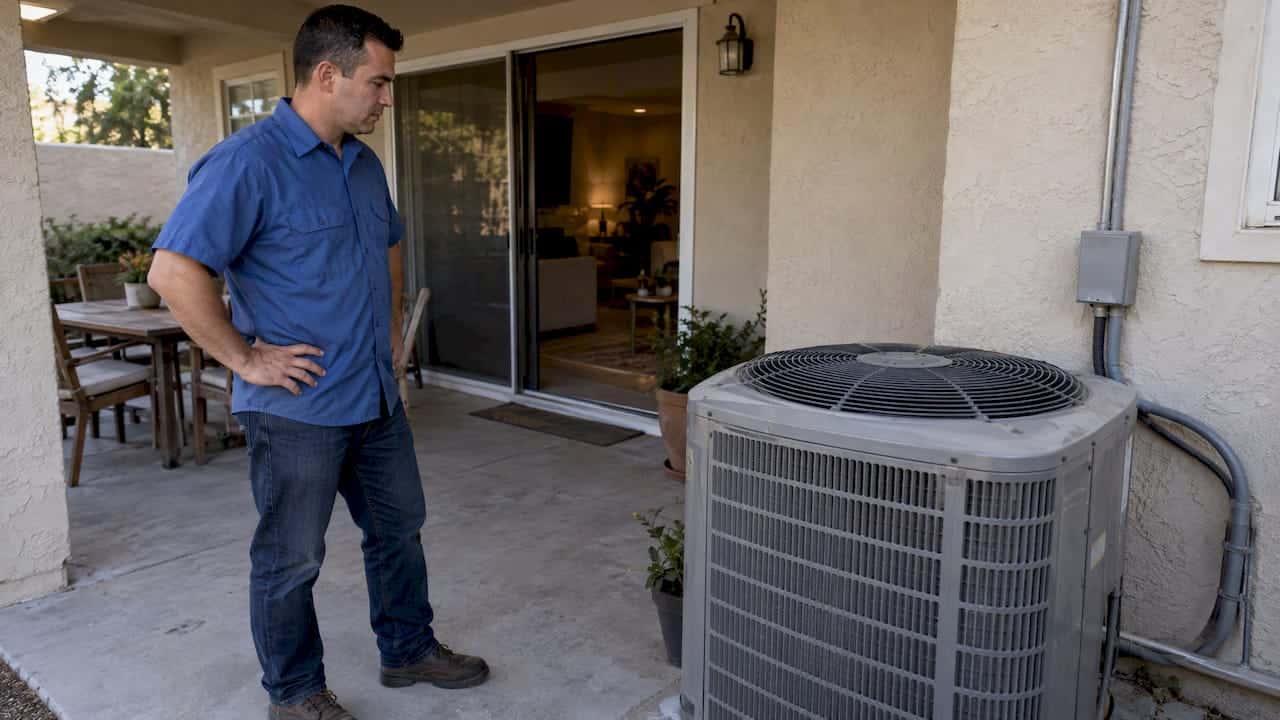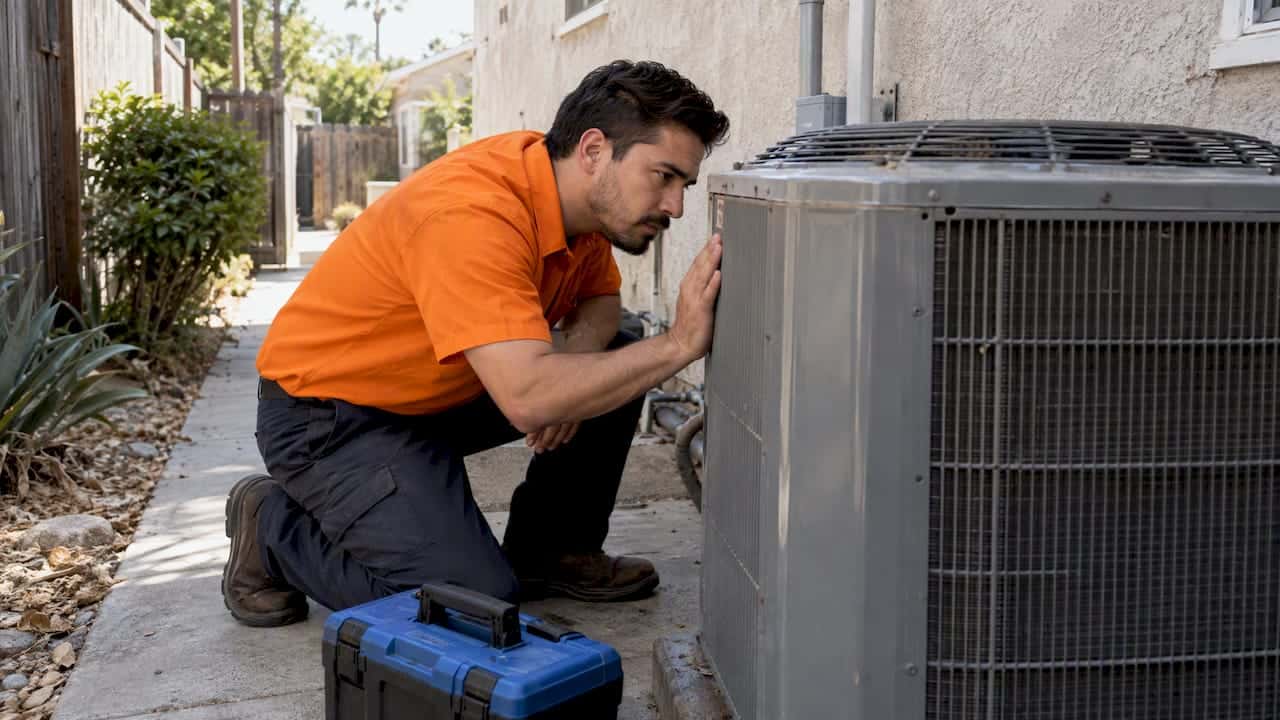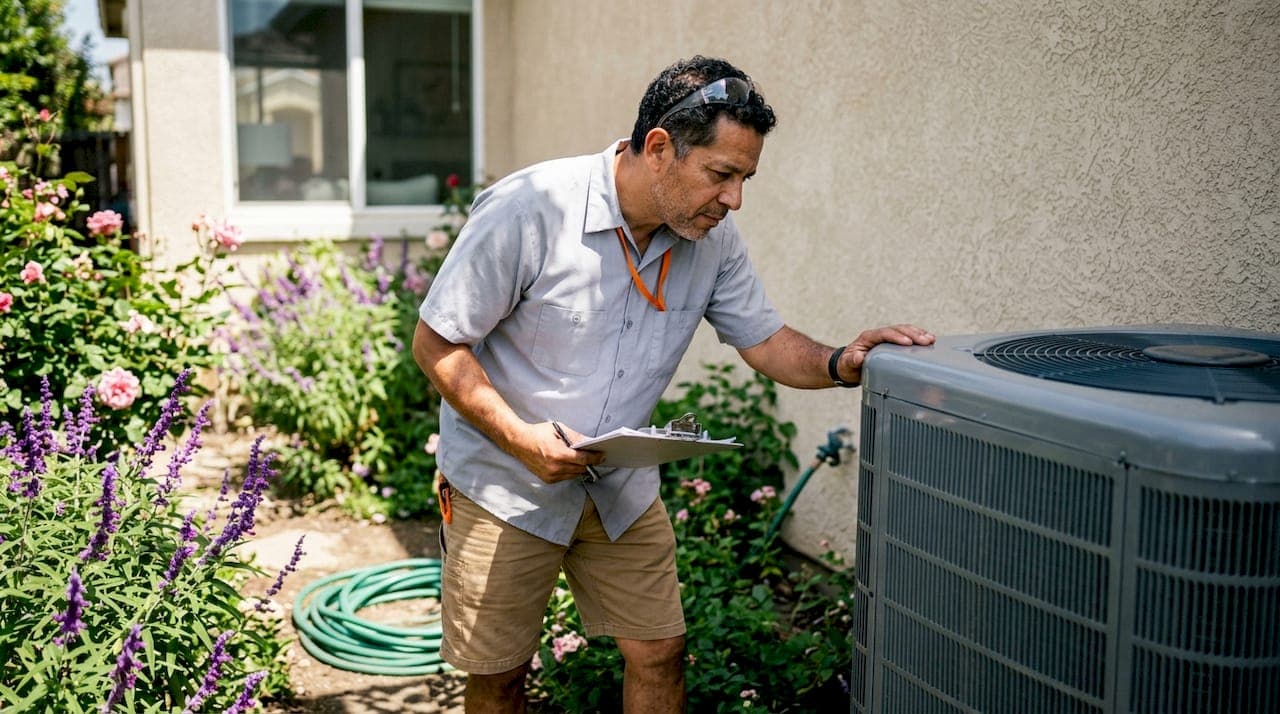
- How to choose a new AC unit for your Valley home
- What type of AC system is best for a Valley home?
- What do SEER2 ratings mean for your buying decision?
- How to select and purchase your AC unit with contractor support
- Key takeaways
- What I’ve learned after 20 years of Valley AC installations
- Ready to find the right AC system for your Valley home?
- FAQ
- Recommended
How to Choose a New AC Unit for Your Valley Home
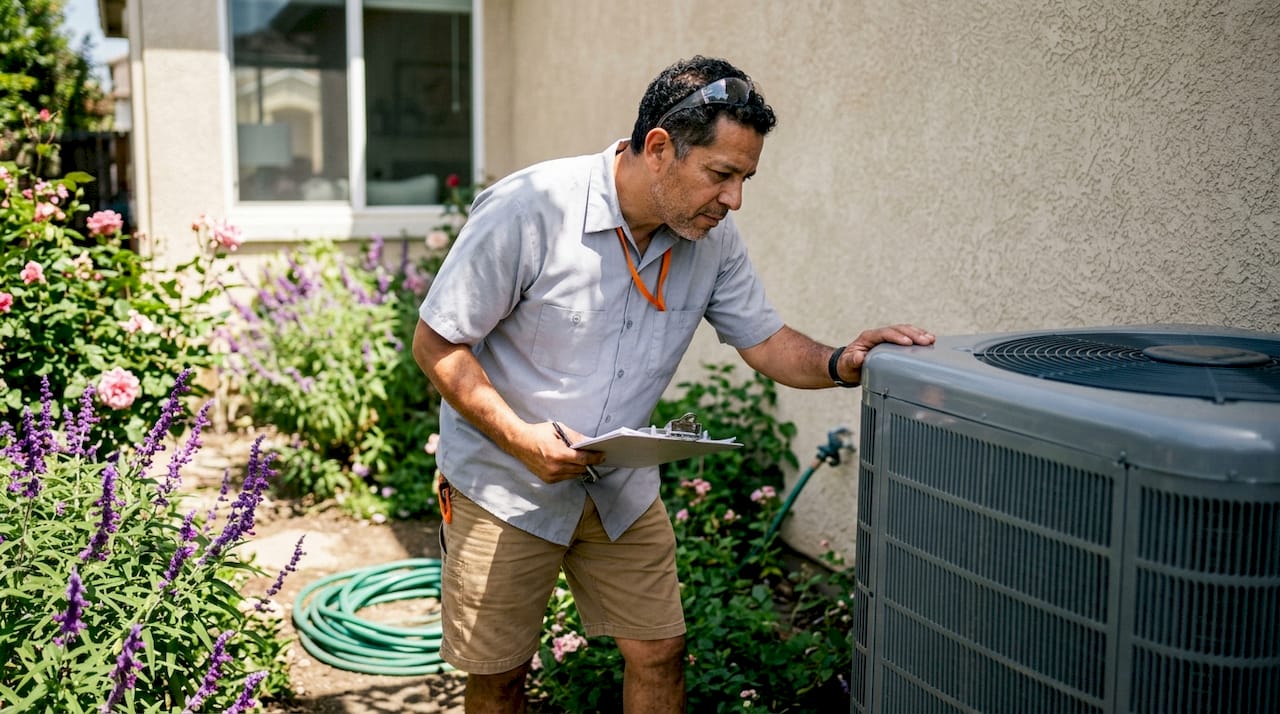
TL;DR:
- Choosing the correct air conditioning system in the San Fernando Valley relies on accurate sizing, suitable system type, and efficient ratings. Proper load calculations like Manual J prevent undersizing or oversizing, which can cause higher bills and equipment failure. Selecting units with higher SEER2 ratings ensures long-term energy savings, especially in the Valley’s extended cooling season.
Choosing the right air conditioning system for your San Fernando Valley home is defined by three decisions: accurate sizing, system type selection, and efficiency rating evaluation. Get any one of these wrong and you will pay for it every month in higher bills, uneven cooling, or premature equipment failure. This guide walks you through the industry-standard tools and terminology, including Manual J load calculations, SEER2 ratings, and a comparison of central AC, heat pumps, and ductless mini-splits, so you can choose a new AC unit for your Valley home with confidence and clarity. Brands like Daikin and Carrier offer strong options at multiple price points, but the right brand matters far less than the right sizing and installation.
How to choose a new AC unit for your Valley home
The single most important factor when you buy an air conditioner for your home is not the brand name on the cabinet. It is whether the unit is sized correctly for your specific house. The San Fernando Valley regularly sees summer temperatures above 100°F, which means an undersized unit runs constantly without reaching your set temperature, while an oversized unit short-cycles, shutting off before it removes enough humidity and wearing out its compressor faster.
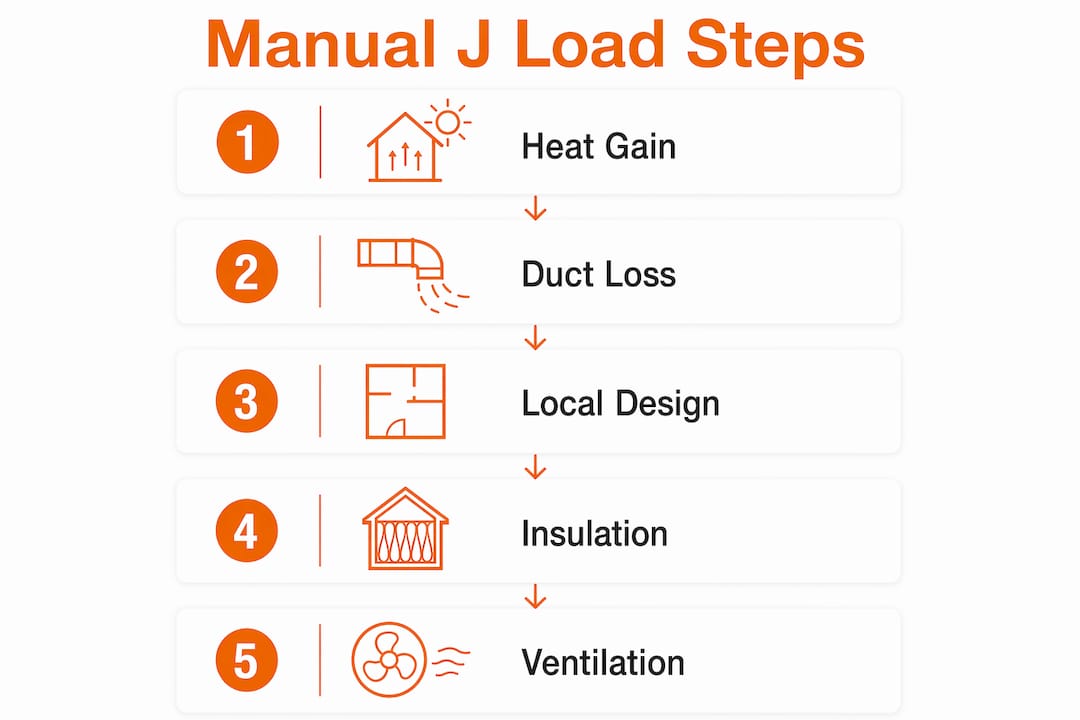
The industry standard for sizing is the Manual J load calculation, a method that accounts for your home’s insulation levels, window area and orientation, ceiling height, local climate data, and air infiltration rates. Manual J provides ±5% sizing accuracy, compared to the rough square-footage rules many contractors still use, which carry a ±30% error margin. That difference is enormous. A contractor who quotes you a system size based only on square footage is guessing, and you are the one who lives with the result.
Once Manual J determines your cooling load, a companion document called Manual S matches that load to specific equipment. Manual S matches equipment within 115% of the calculated load, which prevents the common practice of installers defaulting to the next size up “just to be safe.” Oversizing is not safe. It is one of the two major failure modes in residential HVAC, alongside undersizing.
What a Manual J report should include
A proper Manual J report lists every variable used in the calculation: room-by-room heat gain, duct losses, and local design temperatures. For the San Fernando Valley, design temperatures typically run between 100°F and 105°F outdoors. If a contractor cannot produce this document before you sign a contract, that is a clear signal to keep shopping.
| Sizing factor | Why it matters |
|---|---|
| Insulation R-value | Poor insulation increases cooling load significantly |
| Window area and orientation | South and west-facing glass adds substantial heat gain |
| Ceiling height | Higher ceilings increase the volume of air to cool |
| Local climate data | Valley design temps differ from coastal LA by 10°F or more |
| Duct condition and leakage | Leaky ducts can reduce system efficiency by 20% to 30% |
Pro Tip: Ask every contractor you interview to provide the Manual J and Manual S documents before you receive their equipment recommendation. If they resist or say it is not necessary, that tells you everything you need to know about how they work.
What type of AC system is best for a Valley home?
The three main system types available to San Fernando Valley homeowners are central air conditioning, heat pumps, and ductless mini-splits. Each fits a different home profile, and system selection depends on square footage, insulation, and climate zone. Choosing the wrong type wastes money on installation and limits your long-term efficiency options.
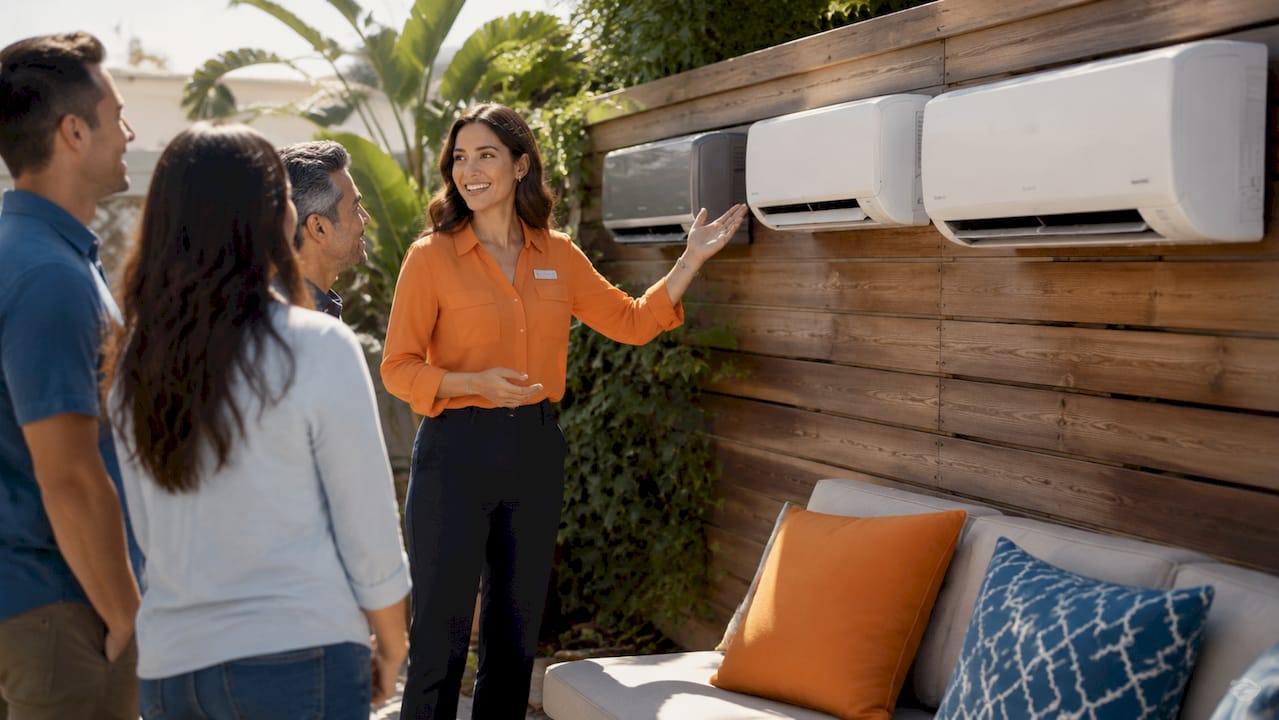
Central air conditioning is the right choice if your home already has a functioning duct system in good condition. Central AC delivers consistent whole-home cooling and is generally the most affordable system to install when ducts are already in place. The Valley’s dry heat makes central AC highly effective, since the system does not have to work against high humidity the way it would in coastal climates.
Heat pumps work as both a cooling and heating system by moving heat rather than generating it. In the Valley’s mild winters, a heat pump can replace both your AC and your furnace, which makes the total cost of ownership lower over time. Modern variable-speed heat pumps from manufacturers like Carrier and Daikin maintain efficiency even when outdoor temperatures drop below 40°F, which covers virtually every winter night in the Valley.
Ductless mini-splits are the best fit for homes without existing ductwork, room additions, converted garages, or any space where running new ducts would be prohibitively expensive. Ductless systems fit homes lacking ducts and offer zoning advantages that central systems cannot match without expensive add-ons. You can cool only the rooms in use, which cuts energy waste considerably. Learn more about ductless AC options for Los Angeles homes if your house falls into this category.
Here is a quick comparison to help you decide:
| System type | Best for | Key advantage | Key limitation |
|---|---|---|---|
| Central AC | Homes with existing ducts | Whole-home coverage, lower install cost | Requires good duct condition |
| Heat pump | Homes needing both heating and cooling | Dual function, high efficiency | Higher upfront cost |
| Ductless mini-split | Homes without ducts, additions | Zoning flexibility, no duct losses | Higher per-zone cost |
- Central AC works best when your existing ducts are sealed and insulated properly.
- Heat pumps qualify for federal tax credits under current energy efficiency incentive programs.
- Mini-splits allow room-by-room temperature control, which is useful in Valley homes where sun exposure varies dramatically from room to room.
- All three system types are available in high-efficiency configurations that meet or exceed 2026 California Title 24 requirements.
What do SEER2 ratings mean for your buying decision?
SEER2 is the efficiency rating standard that replaced SEER for all new residential AC equipment sold in the United States starting January 2023. SEER2 uses higher testing stringency, producing ratings roughly 5% lower than equivalent SEER scores. This matters because a unit labeled SEER2 15 is not less efficient than an older SEER 15 unit. It is actually slightly more efficient. The test method changed to better reflect real-world duct resistance, which makes the numbers more honest.
For Southern California, the minimum SEER2 rating for new equipment is 14.3. That is the floor, not the target. The Southern US minimum SEER2 is 14.3 for new installations, and units at this level will keep you code-compliant but will not deliver the energy savings available from mid-tier and premium models. Consumer Reports notes that top models reach SEER 26, and while those premium units carry a higher purchase price, the operating cost difference over a 15-year system life can be substantial in a Valley climate where your AC runs six months a year.
To compare older SEER ratings with new SEER2 ratings, use the approximate conversion: SEER2 equals SEER multiplied by 0.95. So a unit previously rated SEER 16 is roughly equivalent to SEER2 15.2. This conversion prevents you from paying a premium for what looks like a higher-rated unit when the difference is only a test-method change.
Energy savings from higher efficiency ratings compound over time. Smart thermostat settings at 78°F save approximately 3% per degree increase, and pairing a high-SEER2 unit with a programmable or smart thermostat multiplies those savings. The Nest Thermostat and Ecobee SmartThermostat both integrate well with modern variable-speed systems and can reduce cooling costs by around 10% through smarter scheduling. For a deeper look at how efficiency metrics translate to real costs, the HVAC EER rating guide from LC Heating and Air Conditioning explains the relationship between EER, SEER, and SEER2 in plain language.
Pro Tip: Always check for ENERGY STAR certification in addition to the SEER2 rating. ENERGY STAR-certified units must meet efficiency thresholds above the federal minimum, and they often qualify for utility rebates from Southern California Edison and Los Angeles Department of Water and Power that can offset hundreds of dollars of purchase cost.
How to select and purchase your AC unit with contractor support
Getting the right system installed correctly requires more than picking a good unit. Getting at least three quotes from licensed HVAC contractors is the baseline standard, and each quote should include an energy and load analysis, not just a price for equipment. Here is a step-by-step process that protects you through the entire purchase.
-
Collect three or more bids from licensed, insured contractors. California requires HVAC contractors to hold a C-20 license. Verify each contractor’s license status at the California Contractors State License Board website before signing anything.
-
Request Manual J and Manual S documentation with every bid. Load calculation documents significantly reduce oversizing and undersizing risks. Any contractor who skips this step is not following industry best practice.
-
Ask about sound ratings for each unit. Outdoor condenser noise is measured in decibels. Units below 70 dB are considered quiet. In a Valley neighborhood where homes sit close together, a loud condenser at 76 dB or higher will become a daily irritation for you and your neighbors.
-
Clarify what the installation contract covers. A solid contract specifies the equipment model and serial number, the warranty terms from both the manufacturer and the installer, the permit-pulling responsibility, and a performance guarantee that the system will reach your design temperature on a 100°F day.
-
Ask about maintenance access. Installation quality affects noise, energy use, and maintenance ease. A unit installed in a tight mechanical closet without clearance for filter changes or coil cleaning will cost you more in service calls over its lifetime.
-
Negotiate a service plan at the time of purchase. Annual maintenance agreements are almost always cheaper when bundled with installation. A plan that includes a spring tune-up and filter replacement typically costs $150 to $250 per year and protects your manufacturer warranty, which often requires documented annual maintenance.
For guidance on what honest quotes look like and what red flags to watch for, the article on getting accurate AC estimates covers the topic in detail.
Key takeaways
Choosing the right AC unit for a San Fernando Valley home requires a Manual J load calculation, a clear understanding of SEER2 efficiency standards, and at least three bids from licensed C-20 contractors.
| Point | Details |
|---|---|
| Manual J sizing is non-negotiable | Demand this document before accepting any equipment recommendation from a contractor. |
| System type depends on your ducts | Central AC, heat pumps, and mini-splits each fit different home configurations. |
| SEER2 14.3 is the floor, not the goal | Aim for higher-rated units to reduce operating costs over the system’s 15-year life. |
| Three bids minimum | Compare price, brand, load analysis, sound ratings, and warranty terms across all bids. |
| Installation quality matters as much as equipment | Duct routing, clearance, and permit compliance directly affect comfort and long-term costs. |
What I’ve learned after 20 years of Valley AC installations
After two decades of sizing and installing systems across the San Fernando Valley, the pattern I see most often is homeowners who were sold a system that was too large. Contractors sometimes push oversized units because bigger equipment has a higher margin and sounds more impressive on paper. A 5-ton unit sounds more powerful than a 3.5-ton unit, and some homeowners feel reassured by that. The reality is that an oversized unit in a properly insulated 1,800-square-foot home will short-cycle constantly, never fully dehumidifying the air, and wear out its compressor in eight to ten years instead of fifteen to eighteen.
The second pattern I see is homeowners who skipped the efficiency conversation because the upfront cost of a higher-SEER2 unit felt like too much. In the Valley, where your AC runs from April through October, the difference between a SEER2 15 unit and a SEER2 18 unit is not abstract. It shows up on your Southern California Edison bill every single month for the next fifteen years. The math almost always favors the more efficient unit when you run it over the full system life.
What I tell every homeowner I work with: the two documents that protect you most are the Manual J report and the installation contract. If a contractor cannot or will not produce both before you sign, walk away. There are plenty of qualified installers in the Valley who will do the job right. The ones who skip the paperwork are also the ones who skip the details on installation day.
One more thing that rarely gets discussed: system noise. I have seen beautiful, efficient systems installed in ways that make them sound like a freight train from the master bedroom. Ask every contractor for the decibel rating of the outdoor unit and ask specifically how they plan to isolate it from the structure. Vibration pads and proper refrigerant line routing cost almost nothing extra and make a real difference in daily comfort.
— Leo
Ready to find the right AC system for your Valley home?
LC Heating and Air Conditioning has been sizing and installing AC systems across the San Fernando Valley for over twenty years. We perform full Manual J load calculations on every job, work with leading brands including Daikin and Carrier, and provide flat-rate pricing with no surprise fees. Whether you are replacing an aging central system or considering a ductless mini-split for a new addition, our team will give you an honest assessment and a clear quote.
Visit LC Heating and Air Conditioning to schedule a free consultation or request a quote. You can also browse our HVAC equipment and pricing to see current models and compare options before your appointment. We offer same-day service and carry the inventory to get your home comfortable fast.
FAQ
What is a Manual J load calculation?
A Manual J load calculation is the industry-standard method for determining the correct AC size for a home. It accounts for insulation, windows, climate data, and air infiltration to produce a sizing result with roughly ±5% accuracy, far more precise than square-footage estimates.
What SEER2 rating should I look for in a Valley home?
The minimum SEER2 for new equipment in Southern California is 14.3, but a rating of 16 or higher delivers meaningful energy savings given the Valley’s long cooling season. ENERGY STAR-certified units above this threshold may also qualify for utility rebates from Southern California Edison.
Is a heat pump a good choice for the San Fernando Valley?
Yes. The Valley’s mild winters make heat pumps an efficient choice because they rarely encounter temperatures cold enough to reduce their heating performance. A heat pump replaces both your AC and furnace, which lowers total system cost and qualifies for federal energy efficiency tax credits.
How many bids should I get before buying a new AC system?
Get at least three bids from licensed C-20 HVAC contractors. Each bid should include a Manual J load analysis, equipment model specifications, sound ratings, warranty terms, and a clear installation scope. Comparing bids without load calculations is comparing apples to oranges.
How do I convert an old SEER rating to SEER2?
Multiply the SEER rating by 0.95 to get the approximate SEER2 equivalent. A unit previously rated SEER 16 is roughly SEER2 15.2. This conversion helps you make accurate comparisons between older equipment specs and new units listed under the current standard.
Recommended
- Find a licensed AC technician in the Valley | LC Heating & Air
- Top-Rated HVAC Service in Sun Valley, CA | Fast AC & Heating Repair | LC Heating & Air
- Top-Rated HVAC Service in Valley Village, CA | Fast AC & Heating Repair | LC Heating & Air
- Top-Rated HVAC Service in Valley Glen, CA | Fast AC & Heating Repair | LC Heating & Air
Leo, Propietario y Técnico Principal en LC Heating & Air
Leo dirige LC Heating & Air como propietario-operador y tiene la licencia C-20 HVAC #1073586 de California. Sus guías se enfocan en diagnósticos prácticos, decisiones de reparación seguras y consejos claros para propietarios de Los Ángeles.