Find a licensed AC technician in the Valley
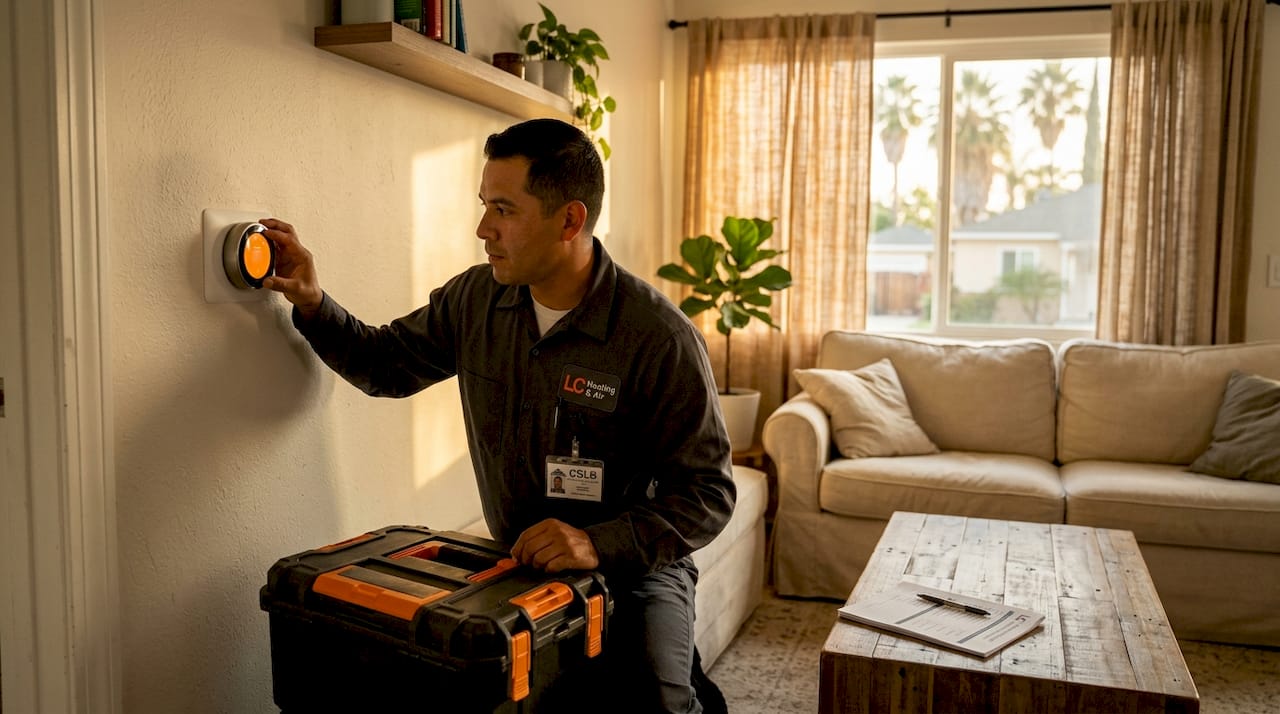
When your AC quits during a San Fernando Valley heat wave, the pressure to call anyone who picks up the phone is real. But that urgency is exactly when unlicensed or underqualified technicians do the most damage. To find a licensed AC technician in the Valley, you need more than a Google search. You need a clear process for verifying credentials, asking the right questions, and protecting yourself from costly mistakes. This guide gives you exactly that, step by step, so you can hire with confidence and keep your home cool all summer long.
Table of Contents
- Understand what makes an AC technician legally licensed in California
- Prepare to verify your AC technician’s credentials: what to check and where
- Find licensed AC technicians serving the San Fernando Valley and evaluate their service offers
- Execute a safe hiring process and ensure a professional diagnostic before repairs
- Verify and maintain quality after service: follow-up and credential rechecks
- Why verifying licensure and certifications is the real key to stress-free AC repair in the Valley
- Hire trusted, licensed AC technicians in the San Fernando Valley with LC Heating & Air
- Frequently asked questions
Key Takeaways
| Point | Details |
|---|---|
| Verify CSLB license | Always confirm the AC technician’s CSLB license is active and matches the C-20 classification for HVAC work. |
| Use LicensedCheck.com | LicensedCheck.com offers a free, fast, and detailed lookup of contractor license status and classification in California. |
| Confirm diagnostic fees | Ask if service call fees are waived when repairs are approved to avoid surprise charges. |
| Check additional certifications | EPA certification is required for refrigerant handling; NATE certification signals advanced technician skill. |
| Demand itemized quotes | Insist on clear, itemized repair estimates with options before authorizing work. |
Understand what makes an AC technician legally licensed in California
California does not let just anyone work on your air conditioning system. The state requires HVAC contractors to hold a C-20 license issued by the California Contractors State License Board, commonly known as the CSLB. This classification specifically covers the installation, service, and repair of air conditioning, heating, and ventilation systems. Without it, a contractor is not legally permitted to perform HVAC work in the state.

Why does this matter to you as a homeowner? Because the C-20 license is not just a piece of paper. It represents a verified standard of competency, financial accountability, and legal protection. Licensed contractors must carry active bonds and liability insurance, which means if something goes wrong during a repair, you have recourse. An unlicensed technician offers you none of that.
Here is what a valid, licensed HVAC contractor in California must have:
- Active CSLB C-20 license with current, verified status
- Current surety bond protecting you if the contractor fails to complete the work
- General liability insurance covering property damage during service
- Workers’ compensation insurance if they employ technicians
- No unresolved disciplinary complaints on file with the CSLB
As verified by licensing experts, homeowners should confirm the CSLB C-20 classification and active status, along with current insurance and bonds, before approving any work. Skipping this step is where most homeowners run into trouble.
Prepare to verify your AC technician’s credentials: what to check and where
Now that you know the legal licenses, here is how you can verify them efficiently on your own. The good news is that this process takes about five minutes if you know where to look.
Step-by-step credential verification:
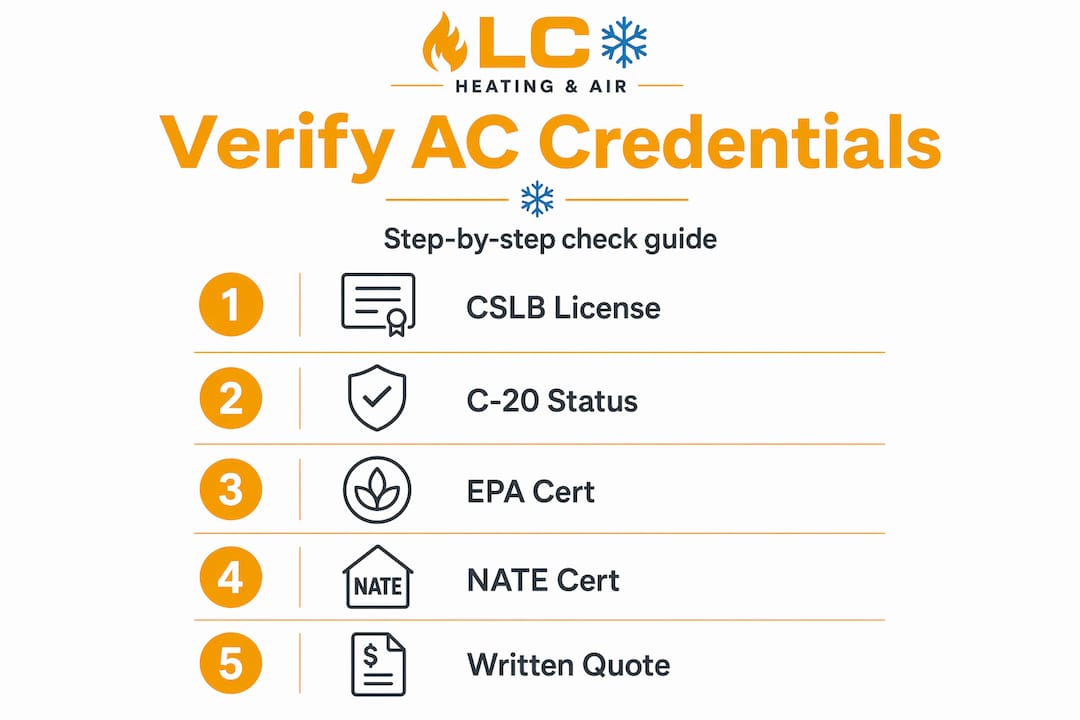
- Ask for the CSLB license number before the technician arrives. Any legitimate contractor will provide this without hesitation.
- Go to LicensedCheck.com and enter the license number. LicensedCheck.com is the best free tool available for instantly confirming active status, correct C-20 classification, bond coverage, insurance, and any disciplinary complaints.
- Confirm the C-20 classification is listed. A general contractor’s license does not cover HVAC work.
- Check the expiration date on the license. An expired license is the same as no license.
- Ask about EPA Section 608 certification if your repair involves refrigerant. Federal law requires technicians who handle refrigerants like R-410A or R-22 to hold this certification.
- Look for NATE certification as a bonus quality indicator. NATE (North American Technician Excellence) is a voluntary credential, but it signals that the technician has passed rigorous competency exams beyond the minimum licensing requirements.
Pro Tip: Do not accept a screenshot of a license as proof. Run the number yourself on the CSLB or LicensedCheck database. Screenshots can be outdated or edited.
Here is a quick reference table to keep handy when evaluating any AC repair services provider:
| Credential | Issuing authority | Required by law? | What it confirms |
|---|---|---|---|
| CSLB C-20 license | California CSLB | Yes | Legal right to perform HVAC work |
| Surety bond | State-approved bonding company | Yes | Financial protection for homeowner |
| Liability insurance | Private insurer | Yes | Coverage for property damage |
| EPA Section 608 | U.S. Environmental Protection Agency | Yes (for refrigerants) | Legal refrigerant handling |
| NATE certification | North American Technician Excellence | No | Advanced technician competency |
Find licensed AC technicians serving the San Fernando Valley and evaluate their service offers
With credential verification in hand, here is how to find and evaluate local licensed AC technicians in the Valley. The San Fernando Valley has no shortage of HVAC companies, but quality and accountability vary widely.
Start by looking for providers who list their CSLB license number directly on their website or service pages. A company that publishes its license number openly is signaling transparency. One that does not is worth questioning. When you call to schedule, ask for the license number before the conversation goes any further.
When evaluating service offers, watch for these important factors:
- Service call or diagnostic fees. Some companies charge a flat fee just to show up. Ask whether that fee is waived if you approve the repair. For example, some Valley providers offer a $99 service call that is waived when you proceed with the recommended repair, which is a fair and transparent structure.
- Technician experience with Valley-specific conditions. The San Fernando Valley gets punishing heat, and systems here run harder and longer than in milder climates. Ask how long the company has been serving the area and whether their technicians are familiar with the specific demands of local summers.
- Warranties on parts and labor. A confident, qualified technician stands behind their work. Ask specifically what is covered and for how long.
- Emergency availability. AC failures do not wait for business hours. Confirm whether the company offers emergency AC repair and what the after-hours process looks like.
Pro Tip: When you call, note how the company handles your questions. A top rated AC service provider will answer your licensing questions directly and without defensiveness. Evasive answers about credentials are a red flag worth taking seriously.
Execute a safe hiring process and ensure a professional diagnostic before repairs
After choosing candidates, follow these steps to hire safely and avoid costly mistakes during repairs.
Before the technician arrives:
- Confirm the CSLB license number by phone or email and verify it independently before the appointment.
- Ask the company to confirm which technician will be coming and whether that individual holds the relevant certifications, including EPA Section 608 if refrigerant work is likely.
- Clarify the scope of the diagnostic visit so you know what will be inspected and what the fee covers.
During the visit:
A thorough diagnostic is the foundation of a good repair. A qualified technician should not jump straight to replacing expensive components. The diagnostic process should cover:
- Airflow measurement and filter condition
- Thermostat calibration and control system checks
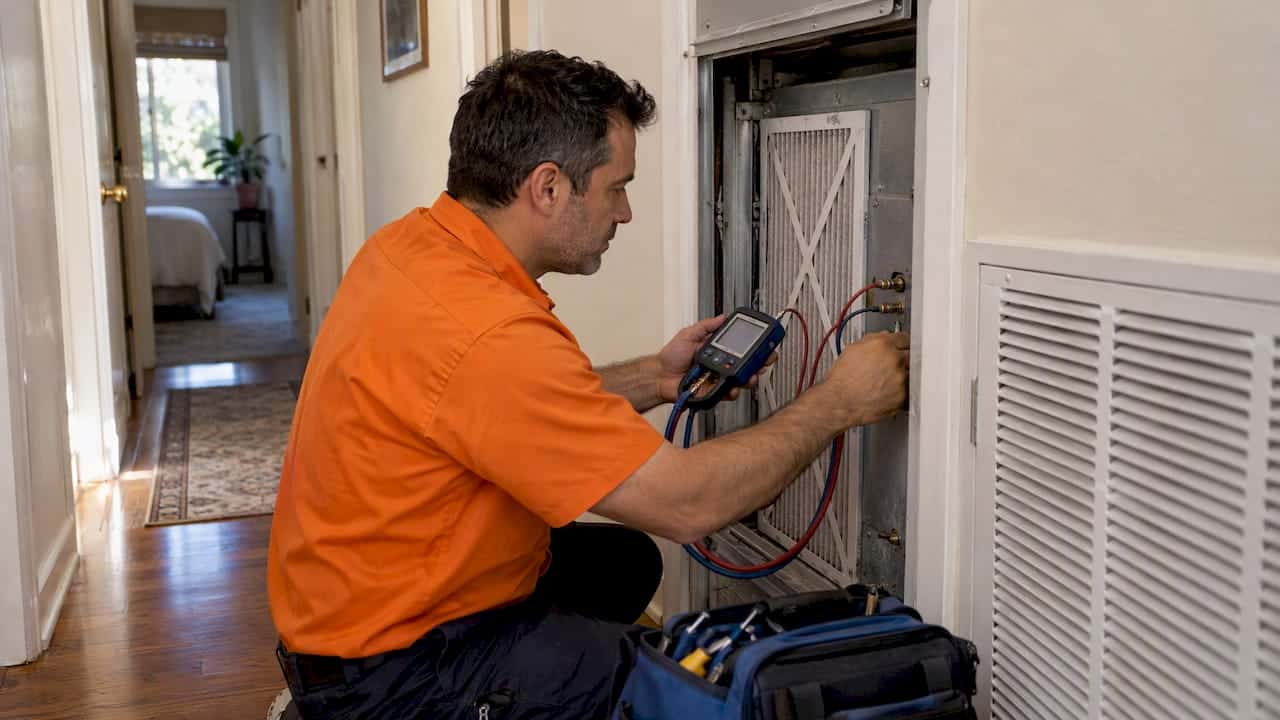
- Refrigerant pressure readings
- Electrical connections and capacitor condition
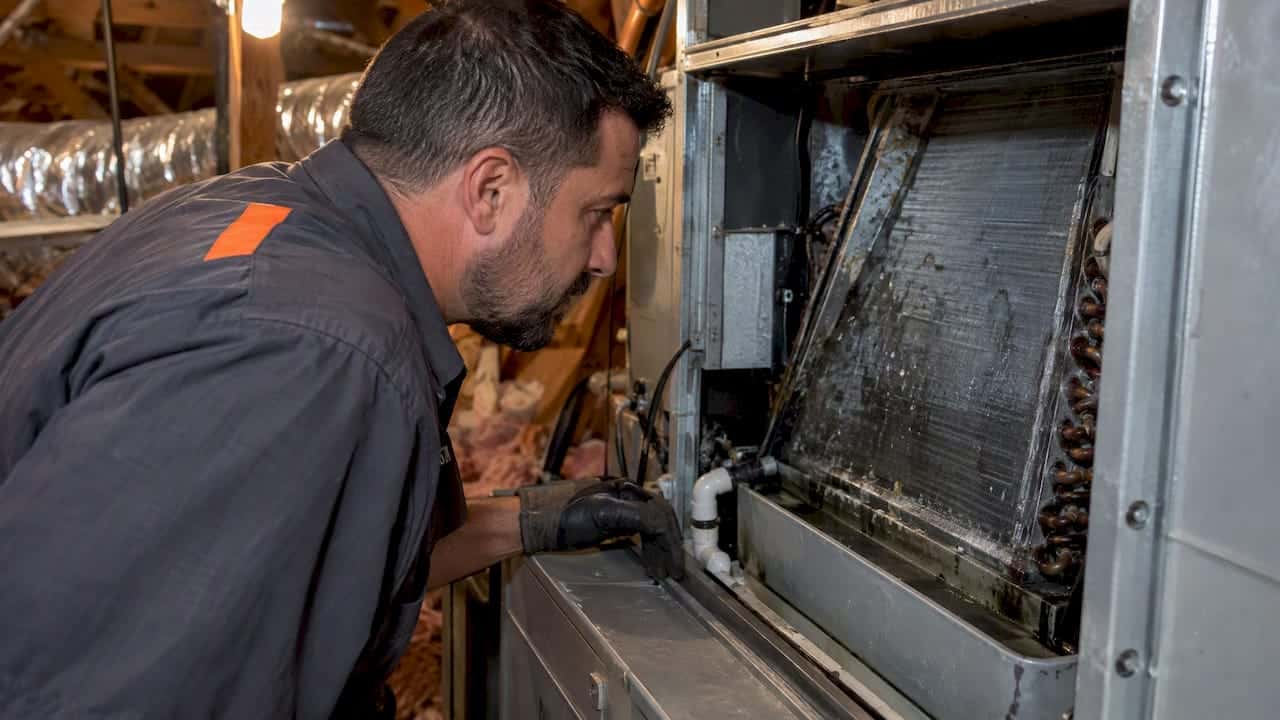
- Condenser and evaporator coil inspection
Good diagnostics reduce callbacks significantly. Confirming that airflow and control checks are included before parts are ordered, along with itemized quotes showing repair versus replacement options, protects you from unnecessary spending.
Pro Tip: Ask for a written, itemized quote before authorizing any work. It should list the specific repair, the parts involved, the labor cost, and any warranty terms. If a technician resists putting it in writing, that is your cue to pause.
Before signing off:
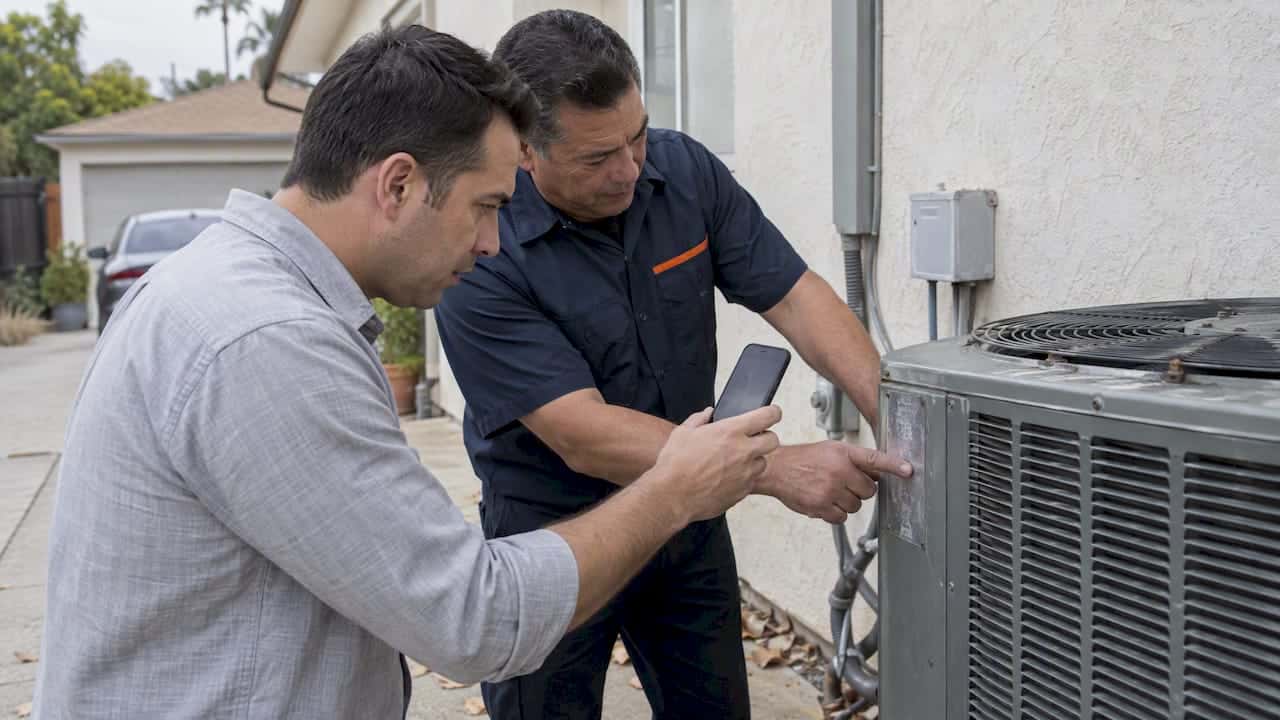
- Verify the CSLB license number on-site if you have not already done so.
- Confirm you understand every line of the quote.
- Do not authorize work based on verbal estimates alone.
Verify and maintain quality after service: follow-up and credential rechecks
Once repairs are done, here is how you verify quality and ensure your AC stays reliable. The job is not finished when the technician drives away.
Immediately after service:
- Request written documentation of all work performed, including parts replaced and any warranty details.
- Run your system for at least 30 minutes and check that cooling is consistent throughout your home.
- Confirm that airflow from all vents is strong and that the system reaches your set temperature within a reasonable time.
In the days following:
- Monitor your system’s performance during the hottest part of the day. That is when stress on the system is highest and any lingering issues will surface.
- If cooling feels uneven or the system cycles on and off too frequently, contact the technician before the warranty period expires.
- Keep a record of the technician’s CSLB license number, EPA certification, and any NATE credentials for future reference.
For long-term reliability, layered credential checks including CSLB verification, EPA certification, and NATE verification meaningfully reduce the risk of repeat failures, especially in the Valley’s demanding climate.
Scheduling regular AC maintenance services with a licensed contractor is the single most effective way to avoid emergency breakdowns. A well-maintained system lasts years longer and costs significantly less to operate. Think of annual maintenance as a small investment that protects a much larger one.
Signs you may need to recheck credentials or escalate:
- The same problem returns within 30 days of repair
- The technician cannot produce documentation of work performed
- The company becomes unresponsive after payment
Why verifying licensure and certifications is the real key to stress-free AC repair in the Valley
Here is something we have seen play out dozens of times over twenty years: a homeowner calls a company that shows up fast, quotes a low price, and fixes the problem in an hour. Two weeks later, the system fails again. A second company comes out and finds the first repair was done incorrectly, sometimes with the wrong parts, sometimes with refrigerant handled improperly. The homeowner pays twice.
The pattern is almost always the same. The first company was not properly licensed. Or they held a general contractor’s license but not the C-20 classification. Or the technician on-site had no EPA certification and guessed at the refrigerant charge. Many homeowners rely on marketing claims of being “licensed” without ever verifying the CSLB license number and classification, and that gap is where problems start.
The Valley’s climate makes this especially costly. When temperatures push past 100 degrees, a failed repair is not an inconvenience. It is a health issue. You need the repair done right the first time, and that requires a technician who is genuinely qualified, not just one who says so.
NATE certification is worth paying attention to here. It is voluntary, which means technicians who pursue it are going beyond the minimum. That kind of initiative tends to reflect in the quality of their work. It is not a guarantee, but it is a meaningful signal.
The full range of HVAC services a company offers can also tell you something. A contractor with experience across repairs, maintenance, and full installations has seen more systems and solved more problems than one focused on a single service type. Breadth of experience matters when your system is a 1970s Valley ranch unit that does not match any standard troubleshooting guide.
Verification is not distrust. It is due diligence. And in a market where licensing claims are easy to make and hard to check, a homeowner who does their homework is the one who ends up with a cool house and no regrets.
Hire trusted, licensed AC technicians in the San Fernando Valley with LC Heating & Air
Finding a qualified, honest HVAC professional in the Valley should not feel like a gamble. At LC Heating & Air, we hold a valid CSLB C-20 contractor license (#1073586), carry full liability and workers’ compensation insurance, and employ only NATE-certified, background-checked technicians. Every technician we send to your home is EPA-certified for refrigerant handling.
We offer transparent, flat-rate pricing with detailed diagnostics and written repair options before any work begins. Whether you need licensed AC repair services, professional AC maintenance to keep your system running through the summer, or expert HVAC installation for a new system, we are available 24/7 for emergencies and ready to serve San Fernando Valley homeowners with the honest, competent service we have built our reputation on for over twenty years.
Frequently asked questions
How can I verify if an AC technician is licensed in California?
You can verify a contractor’s license by searching their CSLB license number or company name on LicensedCheck.com or the CSLB website to confirm active status and proper C-20 classification for HVAC work.
What does the C-20 classification mean for HVAC contractors?
The C-20 license is issued by California’s CSLB and authorizes contractors to install, service, and repair warm-air heating, ventilation, and air-conditioning systems. It is the specific classification required for legal HVAC work in the state.
Is NATE certification required to work on AC systems?
NATE certification is voluntary and not legally required, but it demonstrates advanced technician competency beyond basic licensing and is a reliable quality indicator when choosing between contractors.
What should I ask about diagnostic fees when hiring an AC technician in the Valley?
Always ask whether the service call fee is waived when you approve the repair. Some Valley providers offer this structure, which is fair and worth confirming before you schedule.
Why is it important to verify multiple credentials for an AC technician?
Layered credential checks covering CSLB license status, EPA refrigerant certification, and NATE verification together reduce the risk of poor repairs, code violations, and repeat callbacks, especially in the Valley’s demanding climate.
Recommended
Leo, Owner & Lead Technician at LC Heating & Air
Leo leads LC Heating & Air as an owner-operator and holds California CSLB C-20 HVAC license #1073586. His guides focus on practical diagnostics, safe repair decisions, and clear advice for Los Angeles homeowners.