- Key Takeaways
- What the Marine Layer Deposits and Why That Raises Mold Risk
- How Your AC Fights Moisture, and Why It Sometimes Loses
- Warning Signs of AC Mold and Salt Damage Near the Coast
- Your Prevention and Maintenance Plan for Marine Layer Climates
- When to Call a Professional and What to Ask Them
- Why LC Heating and Air Conditioning Understands Coastal HVAC Problems
- Editorial Take: The Marine Layer Problem Most Homeowners Get Backward
- Get Coastal HVAC Protection Built Around Your Home, Not a Generic Sizing Chart
- Sources
- FAQ
- Recommended
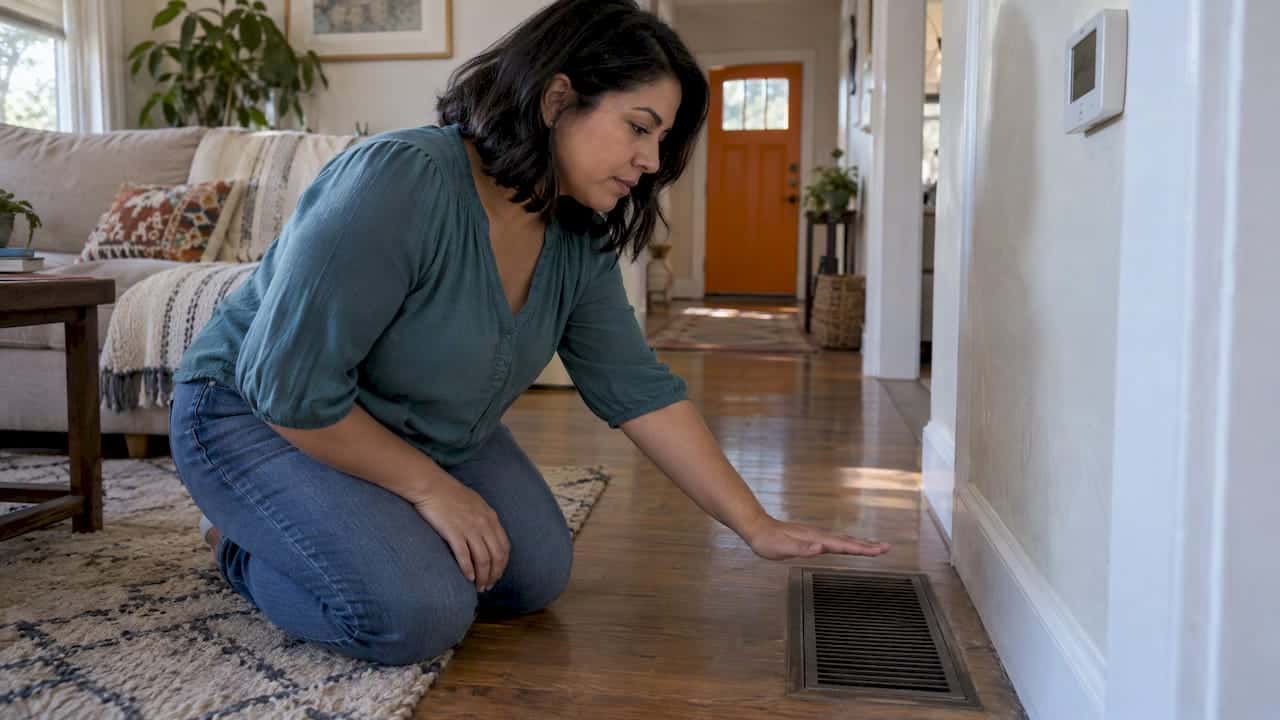
Yes, the marine layer creates the exact humidity and salt conditions that make mold growth inside your AC system significantly more likely. The fog that rolls in off the Pacific each night carries salt aerosols and moisture that seep into your home, and once indoor relative humidity climbs above 60%, mold can begin colonizing damp surfaces within 24 to 48 hours. Your air conditioner is your first line of defense here, not just a temperature tool.
If you’re smelling something musty from your vents this week, take these steps today:
- Run your AC (not just the fan) to actively pull moisture out of the air.
- Check your condensate drain line for clogs or standing water.
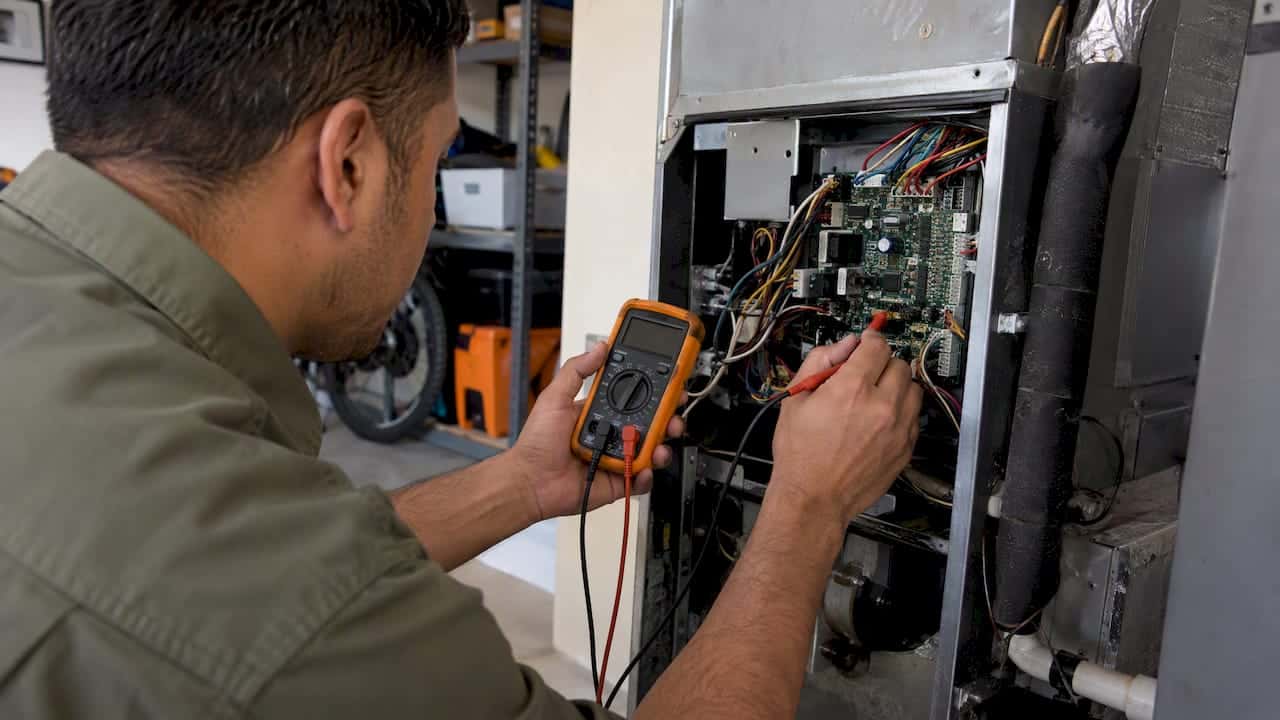
- Call a licensed technician if you see visible mold on the coil or ductwork, or if the musty smell persists after cleaning.
Pro Tip: Keep a small hygrometer near your thermostat. Once you see indoor humidity creeping past 60%, that’s your cue to act, not wait until it smells bad.
Key Takeaways
Marine-layer moisture combined with salt deposits raises indoor humidity and accelerates AC corrosion, making consistent condensate drainage and regular freshwater rinsing the two highest-leverage prevention habits for coastal homeowners.
| Point | Details |
|---|---|
| Humidity threshold | Keep indoor relative humidity under 60% since mold can colonize within 24 to 48 hours above that line. |
| Salt is the multiplier | Hygroscopic salt residue keeps surfaces wet long after fog clears, worsening both mold and corrosion risk. |
| Oversized systems underperform | Short-cycling from an oversized AC cools the air without removing enough moisture, keeping humidity high. |
| Coastal lifespan compression | Units that last 15 to 20 years inland often fail in 8 to 12 years within five miles of the coast without protection. |
| Get professional coastal expertise | LC Heating and Air Conditioning offers flat-rate diagnostics and 20-plus years of experience with coastal corrosion and dehumidification issues. |
What the Marine Layer Deposits and Why That Raises Mold Risk
The marine layer forms when cool, moist air off the ocean gets trapped under a warmer air mass above it, creating an inversion that keeps fog and dampness pinned close to the coastline instead of rising and dispersing. That fog doesn’t just look damp. It carries dissolved salts, mainly sodium chloride and magnesium chloride, that land on every exposed surface of your home, including your outdoor condenser unit.
Salt is hygroscopic, meaning it actively pulls moisture out of the air and holds onto it. That’s the mechanism most homeowners miss. A surface coated in salt residue stays damp longer than a clean one, even hours after the fog has burned off. This matters for AC mold risk because:
- Salt film on window frames, vents, and exterior walls keeps those surfaces wet longer after fog events.
- Homes that are sealed tightly for energy efficiency still exchange air through doors, vents, and gaps, letting humid outdoor air infiltrate and raise indoor relative humidity.
- Once indoor RH climbs, damp ductwork, drip pans, and coil surfaces become the ideal environment for mold spores already present in most indoor air.
None of this requires visible fog on any given day. The residue from last week’s marine layer can still be holding moisture against your home’s surfaces right now, which is why coastal homes often report musty smells even during dry, sunny stretches.
How Your AC Fights Moisture, and Why It Sometimes Loses
Your air conditioner is a dehumidifier whether you think of it that way or not. As warm, humid air passes over the cold evaporator coil, water vapor condenses into liquid, drips into the condensate pan, and drains away. That process removes moisture from your home every time the compressor runs. It’s genuinely one of the most underappreciated jobs your system does, especially near the coast where temperature control matters less than moisture control for keeping mold at bay.
The problem shows up when a system is oversized for the space it serves. An oversized unit cools the air to your thermostat’s setpoint quickly, then shuts off, a pattern called short-cycling. The coil never stays cold long enough to pull meaningful moisture out of the air, so you get a comfortable temperature and a humid house at the same time. It’s a common mistake, and it explains why some homes with “powerful” AC units still develop mold problems.
Here’s how to keep your system actually dehumidifying, not just cooling:
- Get the sizing right. A properly sized system for your square footage runs longer cycles, which is what actually removes humidity.
- Consider a variable-speed air handler. These units modulate airflow and run time instead of blasting full power and shutting off, giving the coil more contact time with humid air.
- Set realistic fan schedules. Running the fan constantly without the compressor can re-evaporate condensate back into the airstream, undoing the moisture removal you just achieved.
Pro Tip: If your AC feels like it’s always cooling but your house still feels damp, that’s a short-cycling signal, not a sign you need a bigger unit. A bigger unit usually makes it worse.
Warning Signs of AC Mold and Salt Damage Near the Coast
A musty smell the moment your AC kicks on is usually the first sign something’s wrong inside the system, often before you’d ever see visible growth. Watch for these signals:
- A musty or “wet basement” odor from vents, especially right when the system starts up
- Visible black, green, or slimy biofilm on the evaporator coil or inside ductwork
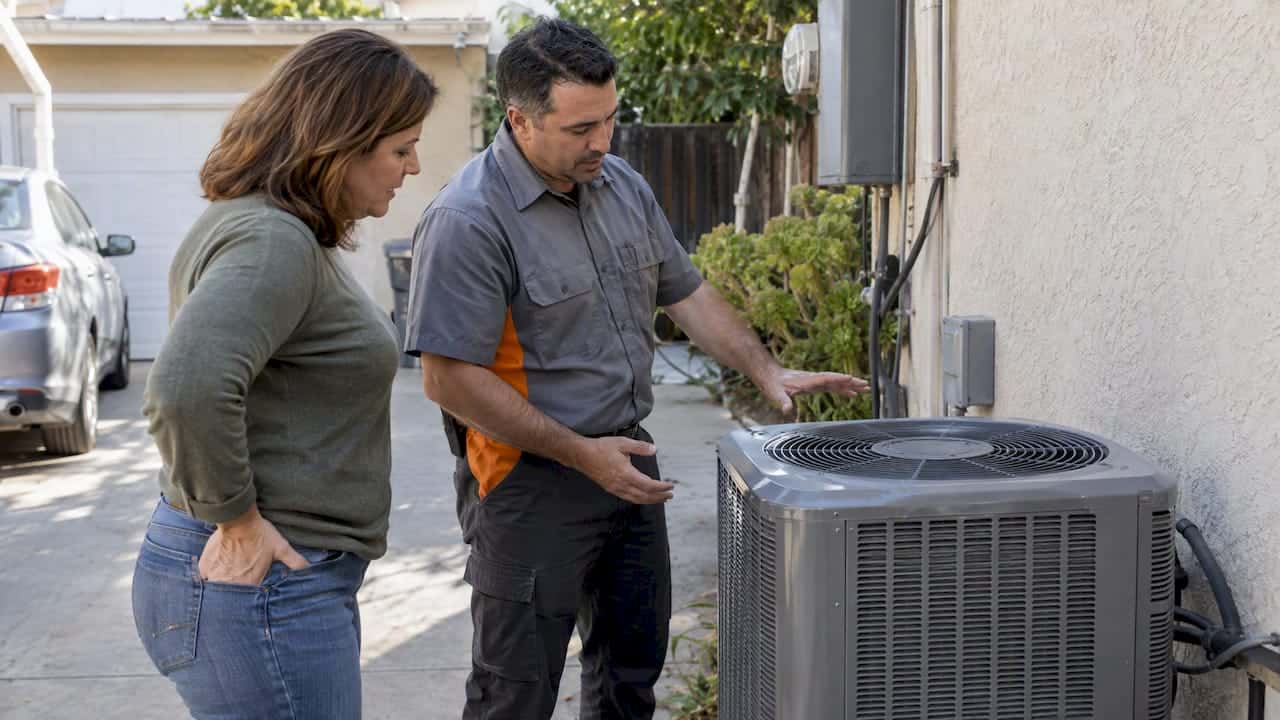
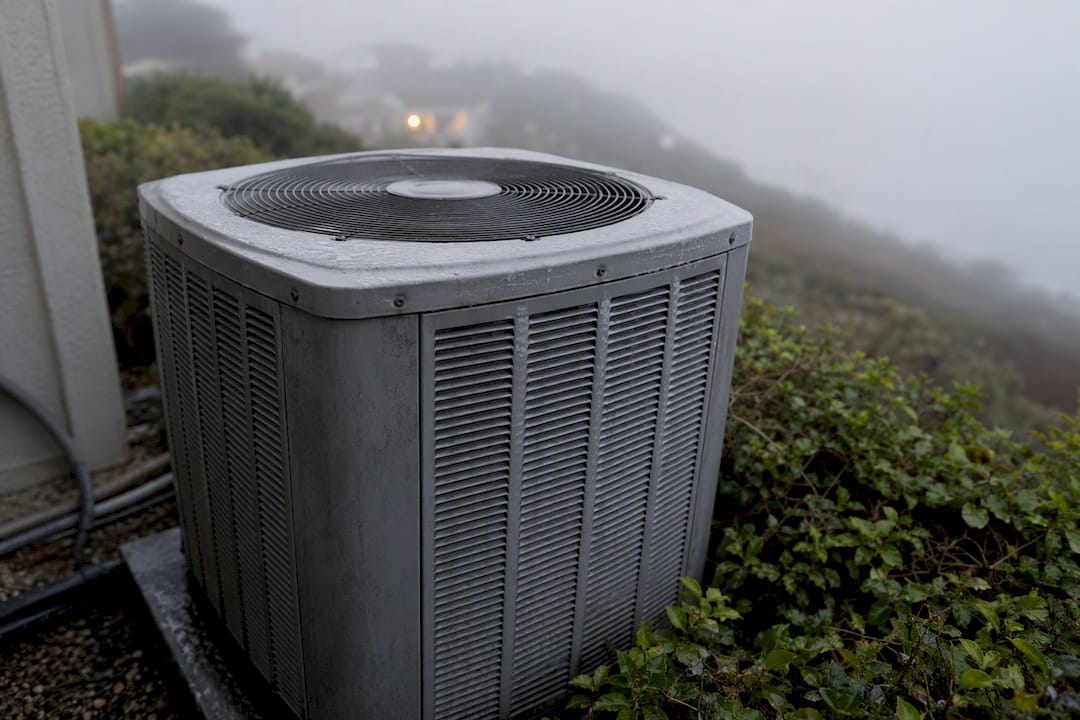
- A white, crusty residue on your outdoor condenser, which is salt buildup, not normal dust
- Reduced cooling performance paired with a jump in your energy bill
- Rust streaks or pitting on the condenser’s metal fins or cabinet
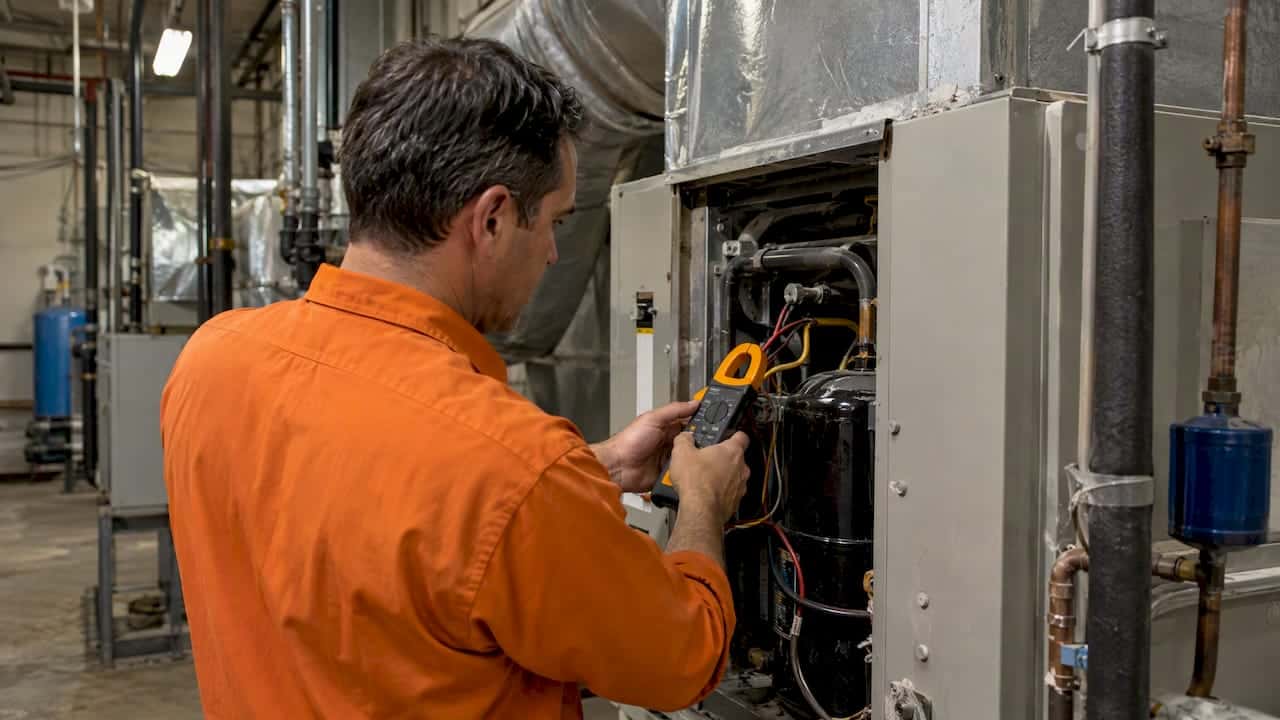
The corrosion side of this is where coastal homeowners lose the most money without realizing it. A standard AC system inland typically lasts 15 to 20 years. Within about five miles of the coast, that lifespan often compresses to 8 to 12 years, and oceanfront units without protective coatings can fail in as little as 5 to 7 years. Salt film mixed with moisture creates an electrolyte solution on the condenser, which triggers galvanic corrosion between the different metals inside the unit. Left unaddressed, that corrosion eats through refrigerant lines and electrical contacts, leading to slow refrigerant leaks and, eventually, compressor failure, which is one of the most expensive single repairs in any HVAC system.
Your Prevention and Maintenance Plan for Marine Layer Climates
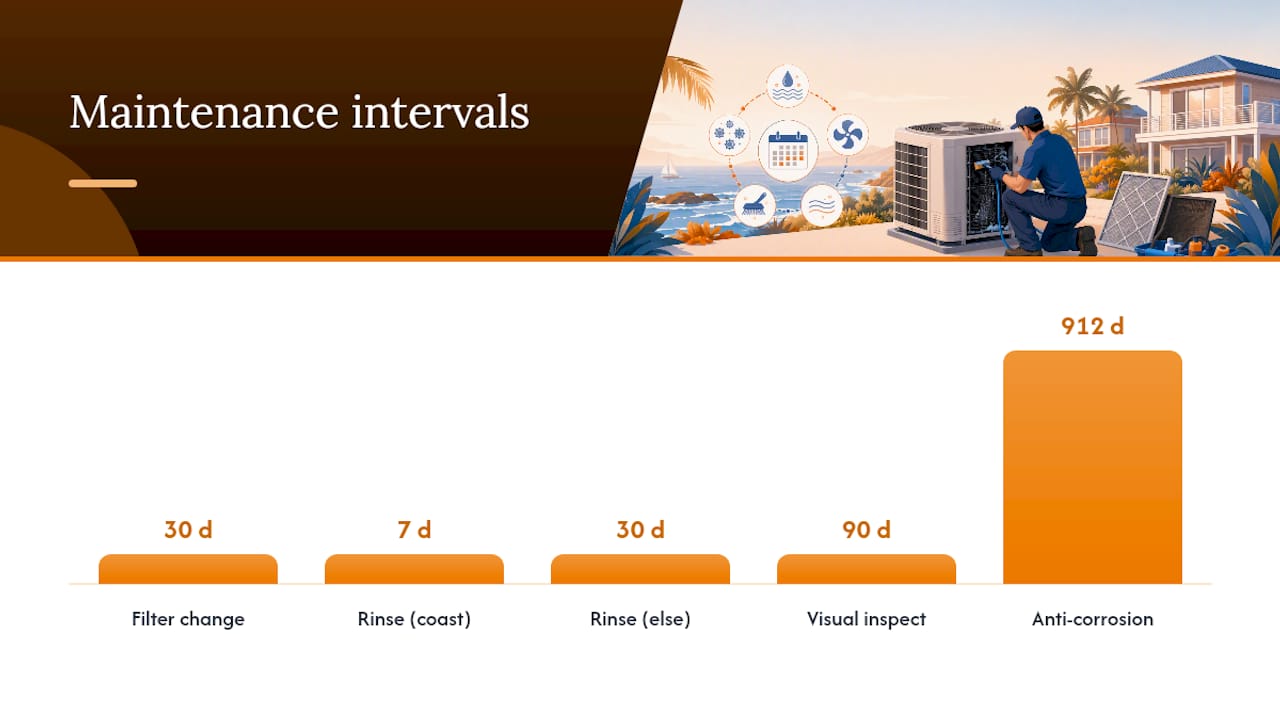
You don’t need to overhaul your whole system to get ahead of this. Most of the protection comes from a short list of habits, done consistently, plus a few upgrades worth budgeting for if you’re within a mile or two of the water.
Start with these steps this week:
- Run your AC or a whole-home dehumidifier on humid, foggy mornings, even if the temperature doesn’t call for cooling.
- Inspect your condensate drain line and clear any visible clogs. A backed-up drain is one of the fastest routes to standing water and mold.
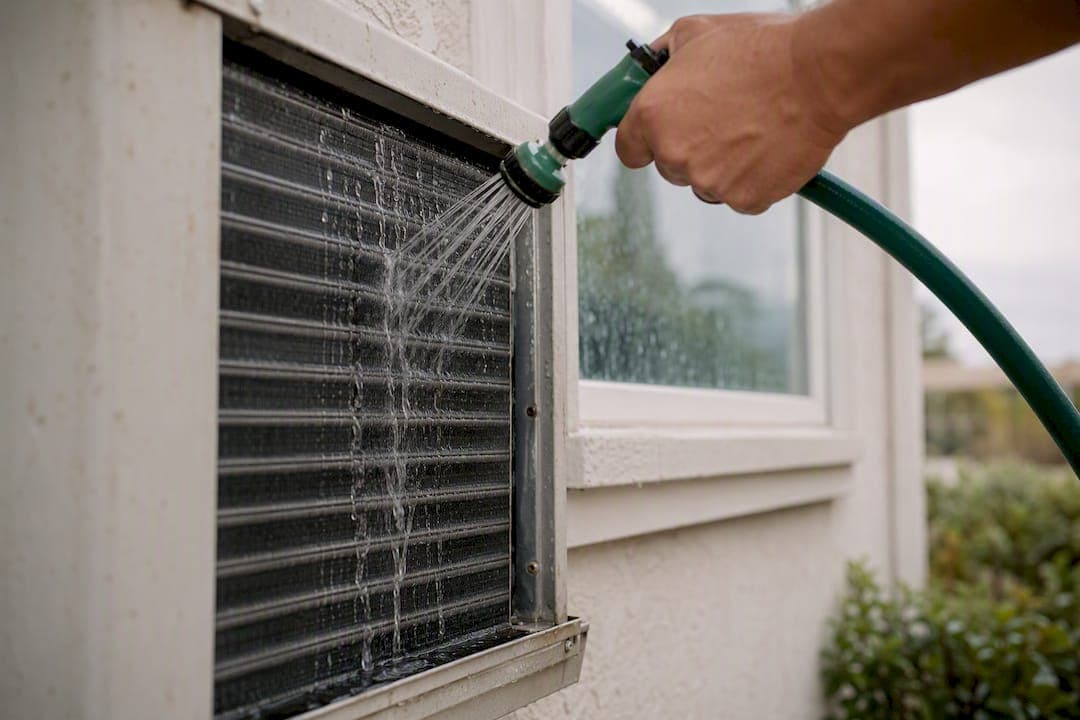
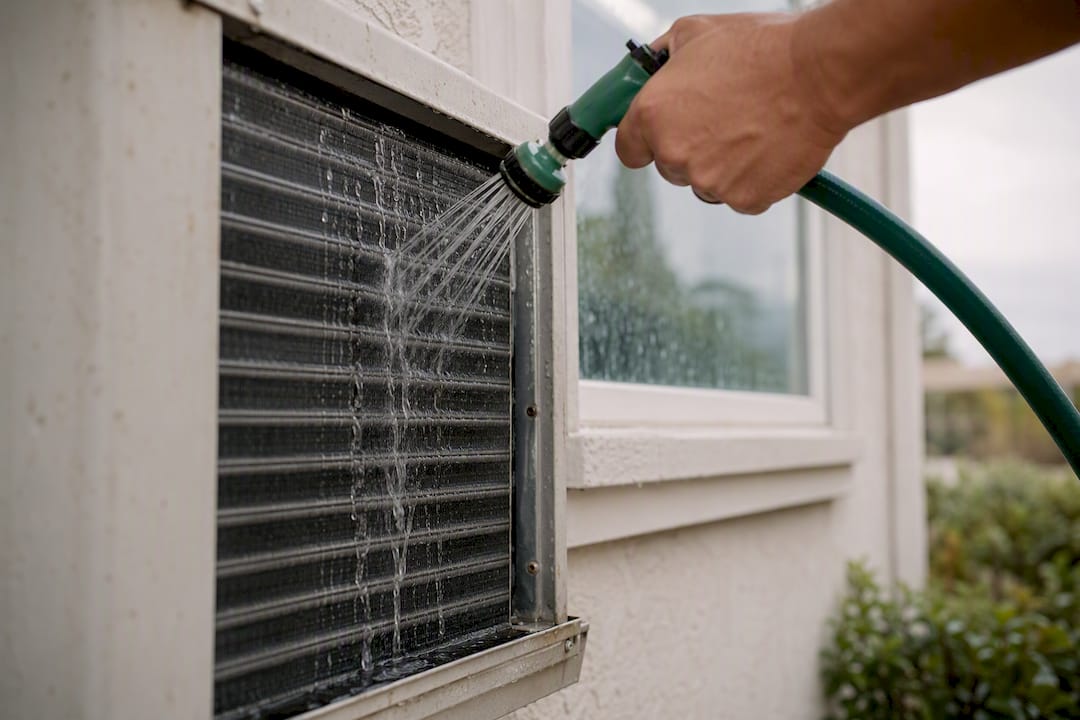
- Rinse your outdoor condenser with a garden hose on low pressure to wash off salt film before it sets. Never use a pressure washer on the coil fins; they bend easily.
- Confirm your unit has at least two feet of clearance from walls, plants, and fences so air can actually flow through the coil.
Then build this into your routine:
- Change filters every 30 days during heavy marine-layer seasons instead of the standard 90-day cycle.
- Rinse the condenser monthly, or weekly if your home sits within roughly 1,500 feet of the high-tide line.
- Do a quick visual inspection each quarter, looking specifically for the white salt crust and rust spots mentioned above.
- Book an annual professional tune-up and ask specifically about anti-corrosion coating, which typically needs reapplication every two to three years.
If you’re ready to invest beyond maintenance, a few upgrades pay for themselves in avoided repairs. A whole-home dehumidifier integrated into your ductwork gives you far more consistent humidity control than a portable unit, which matters a lot if your property sits empty part of the year. UV germicidal lights installed at the evaporator coil keep biofilm from building up, which preserves your system’s moisture-removal efficiency over time. Coastal-grade equipment, like units built with welded aluminum coils and reinforced coatings, is worth researching before your next equipment purchase. And a smart thermostat with a “cool to dry” or overcool-to-dehumidify feature will run your compressor a little longer when humidity spikes, even if the temperature is already at your setpoint, which is exactly the kind of behavior marine layer mornings call for.
When to Call a Professional and What to Ask Them
Some of this is DIY territory. Some of it isn’t. Call a licensed technician if you notice any of the following:
- Visible mold on the coil, in the ductwork, or around the drain pan
- A musty smell that returns within days of cleaning vents or filters yourself
- Condensate overflowing the drain pan or dripping where it shouldn’t
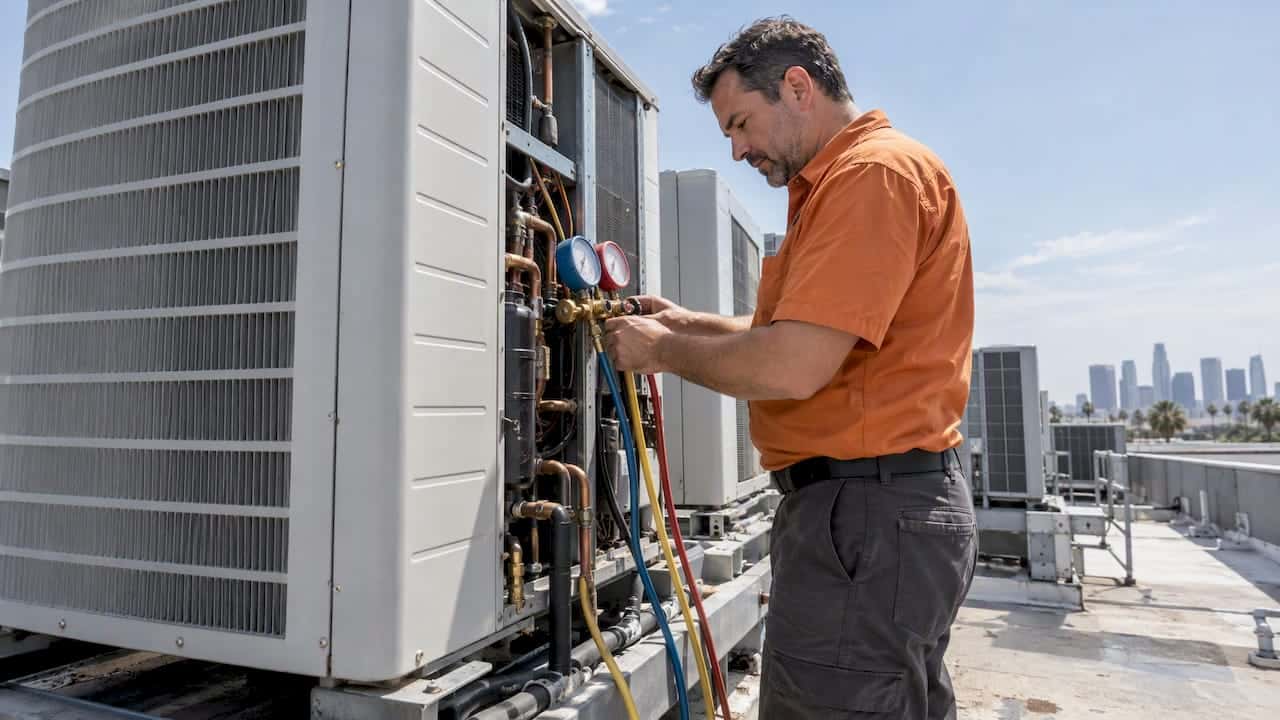
- A suspected refrigerant leak, often signaled by ice buildup on the lines or a hissing sound
- Visible corrosion on electrical contacts or wiring near the outdoor unit
When you’re vetting a contractor for coastal work specifically, ask these questions:
- How much experience do you have with salt corrosion and coastal HVAC repair specifically?
- Do you offer anti-corrosion treatments, and how do they hold up against your warranty terms?
- Can you properly size a whole-home dehumidifier for my square footage, not just guess?
- Is your diagnostic flat-rate, or will I get a surprise bill after the visit?
- Do you have references from other coastal or near-coastal customers?
Be cautious of any technician who pushes full system replacement without running a real diagnostic first, recommends a non-breathable plastic cover for your outdoor unit (these trap moisture instead of blocking it), or suggests power-washing the coil. All three are red flags for someone unfamiliar with coastal-specific HVAC conditions.
Why LC Heating and Air Conditioning Understands Coastal HVAC Problems
Leo has spent more than 20 years servicing HVAC systems across the Los Angeles area, from historic homes in Los Feliz to modern multi-zone heat pump installations near the coast. That range matters here, because marine layer mold and corrosion problems don’t look the same in a 1920s bungalow as they do in a new-construction condo with a VRF system.
What that experience means for you:
- Deep familiarity with heat pumps, mini-split systems, and commercial VRF systems, including how coastal salt exposure affects each differently
- Same-day service availability and flat-rate diagnostic pricing, so you’re never surprised by a bill after the technician leaves
Editorial Take: The Marine Layer Problem Most Homeowners Get Backward
Most advice you’ll find online treats marine layer mold as a cleaning problem. Wipe the vents, run a dehumidifier, done. That misses the actual mechanism. Salt is the multiplier here, not a side detail. A humid day without salt exposure dries out fairly quickly. A day with salt residue on your condenser and window frames stays damp for far longer, which is why homes a few blocks from the water can have mold problems that homes a mile inland simply don’t.
The conventional fix of “just run the AC more” also falls short if your system is oversized, which is common in older coastal homes retrofitted with whatever unit fit the budget at the time. Running an oversized unit longer doesn’t fix short-cycling. It just burns more electricity while your humidity stays exactly where it was.
If you take one thing from this: prioritize the drain line and the rinse schedule before you spend money on upgrades. Those two habits, done consistently, prevent more mold and corrosion damage than any single piece of equipment you could buy.
Get Coastal HVAC Protection Built Around Your Home, Not a Generic Sizing Chart
LC Heating and Air Conditioning gives coastal Los Angeles homeowners something most HVAC companies skip: flat-rate diagnostics and honest recommendations, instead of pressure to replace a system that just needs a proper rinse schedule and a correctly sized dehumidifier. Because Leo’s team works across everything from century-old homes to modern heat pump and VRF installations, you get advice specific to your actual property, not a one-size-fits-all coastal package.

If your vents smell musty after this week’s fog, or your outdoor unit is showing that telltale white salt crust, don’t wait for the compressor to fail. Schedule a same-day diagnostic with a technician who understands what marine-layer exposure actually does to your system, and get a flat-rate quote before any work begins.
Sources
FAQ
What Causes the Marine Layer in Southern California?
The marine layer forms when cool, moist ocean air gets trapped beneath a warmer air mass above it, an atmospheric inversion that keeps fog and humidity pinned near the coastline overnight and into the morning.
What Is the Marine Inversion Layer?
It’s the boundary where cool ocean air sits beneath a warmer air mass, preventing the cooler, moisture-laden air from rising and dispersing, which keeps coastal areas foggy and humid until the sun heats the ground enough to break the pattern.
What Is Morning Ocean Fog Called?
It’s commonly called the marine layer, and in Southern California it’s sometimes nicknamed “May gray” or “June gloom” depending on when it settles in most persistently.
Does the Marine Layer Really Cause AC Mold?
Yes. The combination of elevated indoor humidity and hygroscopic salt residue from marine-layer fog creates sustained damp conditions inside AC components, and mold can begin colonizing within 24 to 48 hours once relative humidity stays above 60%.
How Often Should I Rinse My Outdoor AC Unit Near the Coast?
Rinse it monthly in most coastal areas, or weekly if your home sits within about 1,500 feet of the high-tide line, using low water pressure to avoid bending the coil fins.
Recommended
Leo, Propietario y Técnico Principal en LC Heating & Air
Leo dirige LC Heating & Air como propietario-operador y tiene la licencia C-20 HVAC #1073586 de California. Sus guías se enfocan en diagnósticos prácticos, decisiones de reparación seguras y consejos claros para propietarios de Los Ángeles.