- Key takeaways
- What to do before you request an estimate
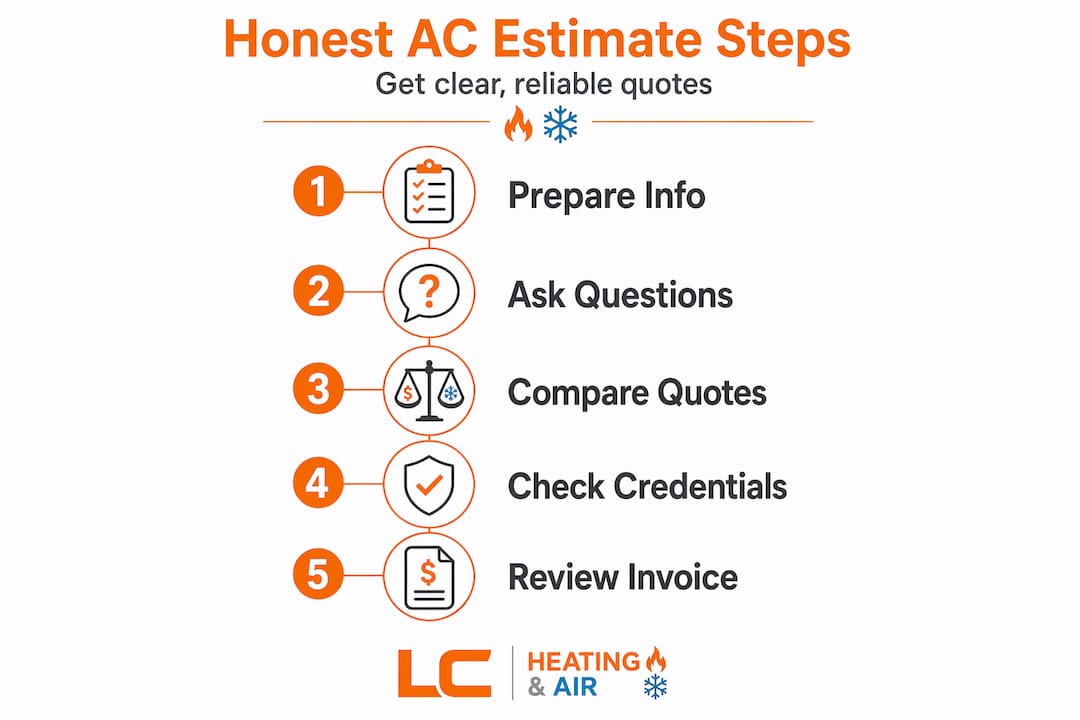
- How to get honest AC repair estimates step by step
- Common pitfalls that lead to inflated or misleading quotes
- How to verify and evaluate estimates before committing
- My take on why honest estimates actually protect everyone
- Get a transparent AC repair quote from LC Heating and Air Conditioning
- FAQ
- Recommended
How to Get Honest AC Repair Estimates Every Time
TL;DR:
- Getting a detailed, line-item estimate from multiple licensed contractors helps homeowners prevent overcharges and hidden fees during AC repairs.
- Preparing system information, symptoms, and questions beforehand ensures accurate diagnosis and honest quotes, especially during off-peak seasons.
Your AC stops working in the middle of a Los Angeles heat wave. You call a contractor, they show up, and suddenly you’re staring at an estimate that makes no sense. No line items, no explanation, just a big number. Getting a honest AC repair estimate should not feel like a guessing game, but for most homeowners, it does. This guide walks you through exactly what to do before, during, and after the estimate process so you can protect your budget and make confident decisions about your home’s comfort.
Key takeaways
| Point | Details |
|---|---|
| Prepare before you call | Knowing your AC model, age, and symptoms helps contractors give accurate, honest quotes. |
| Always request line-item pricing | Written estimates with itemized costs for parts, labor, and fees protect you from surprise charges. |
| Get at least two to three quotes | Comparing multiple written estimates is the most reliable way to spot inflated or incomplete pricing. |
| Watch for common red flags | Vague pricing, pressure to replace, and missing permit costs are signs of a misleading quote. |
| Use industry rules to evaluate cost | The 50% Rule and $5,000 Rule help you decide if repair or replacement makes more financial sense. |
What to do before you request an estimate
The quality of the estimate you receive often depends on how prepared you are before the technician shows up. Most homeowners skip this step entirely. That’s a mistake. Walking into an AC repair conversation uninformed is the fastest way to end up confused or overcharged.
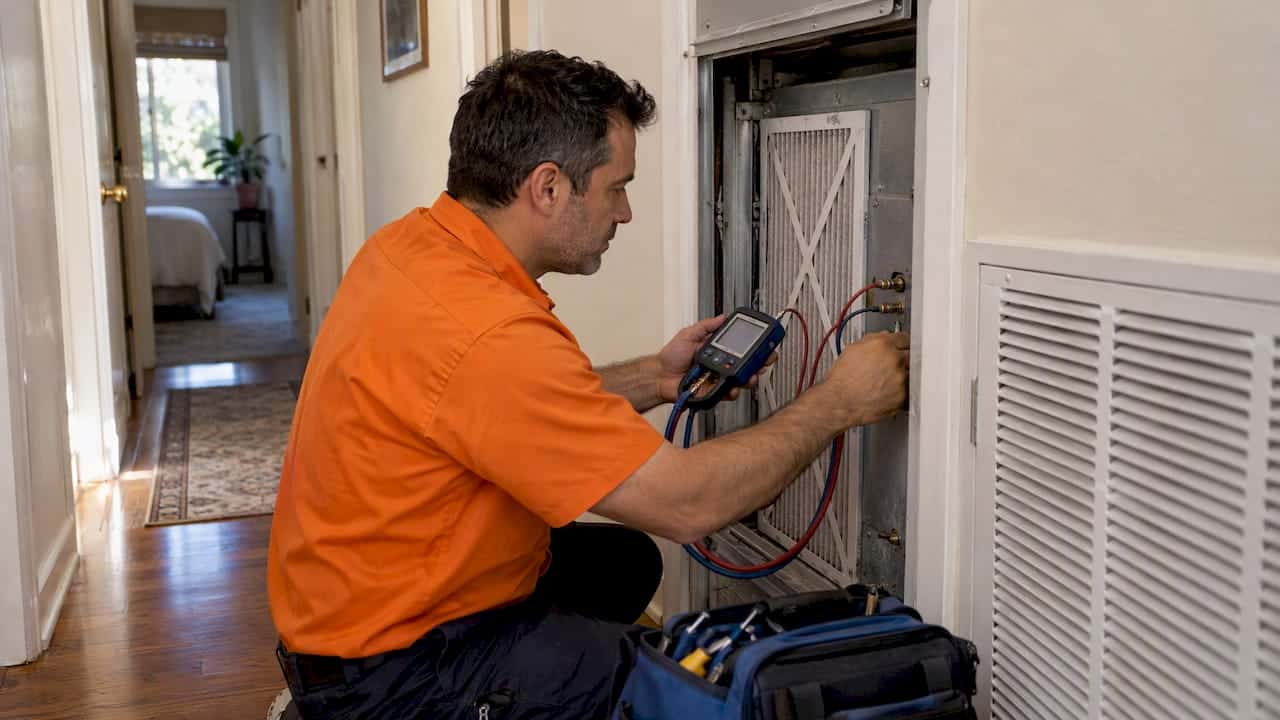
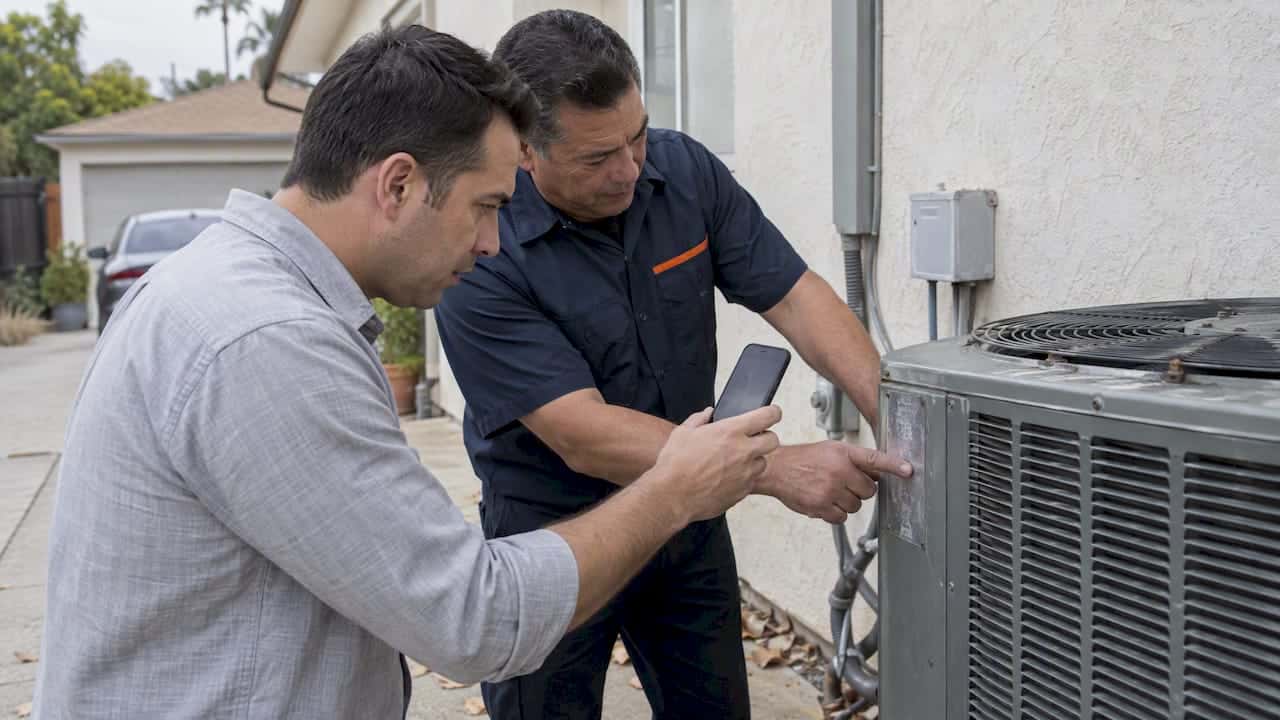
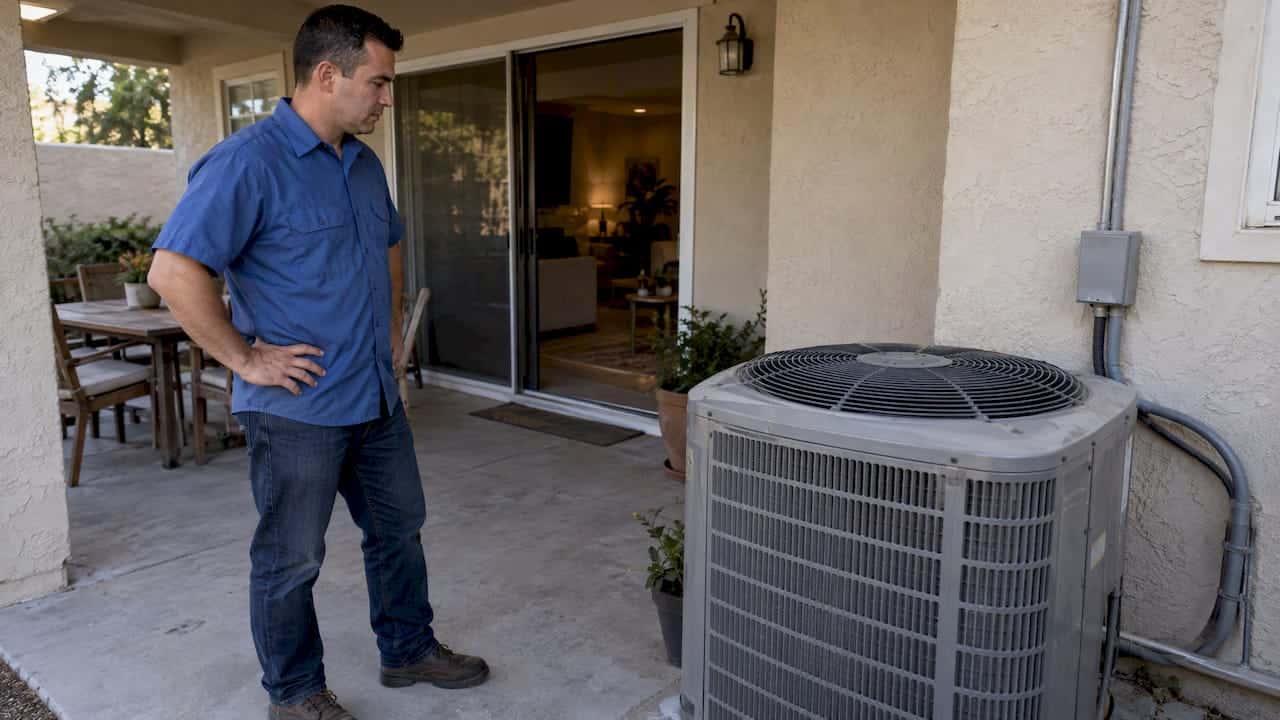
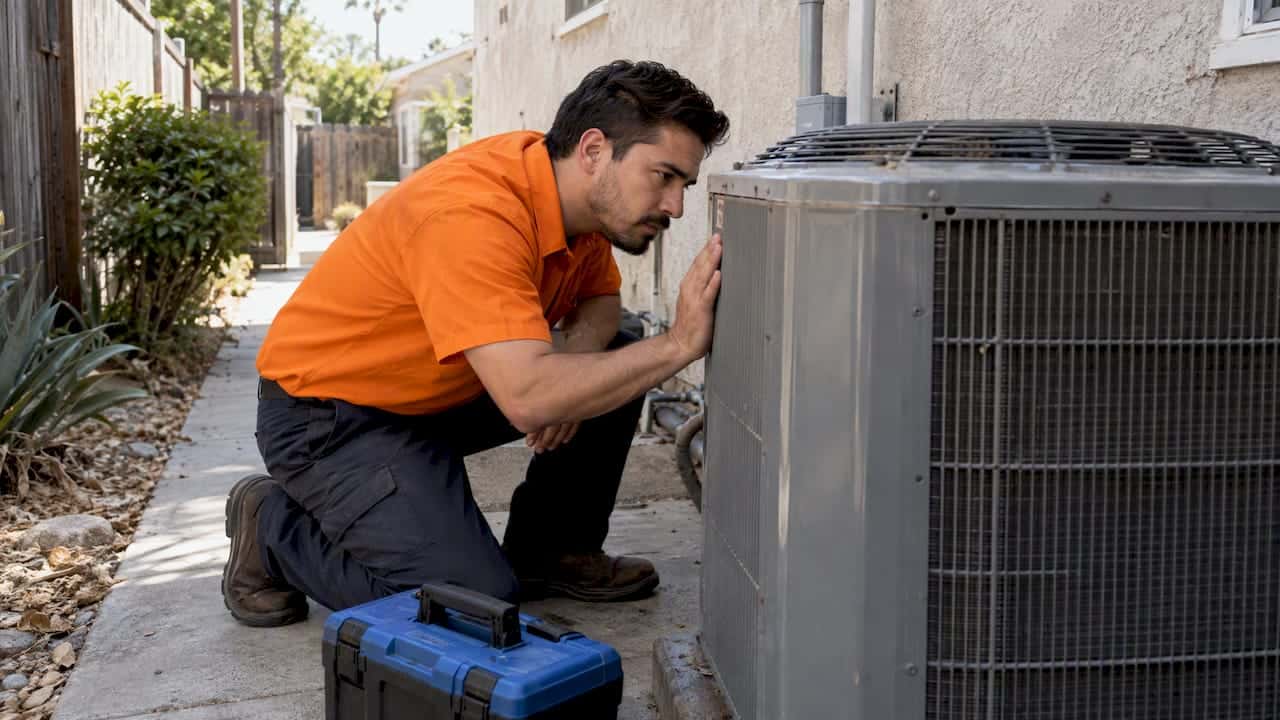
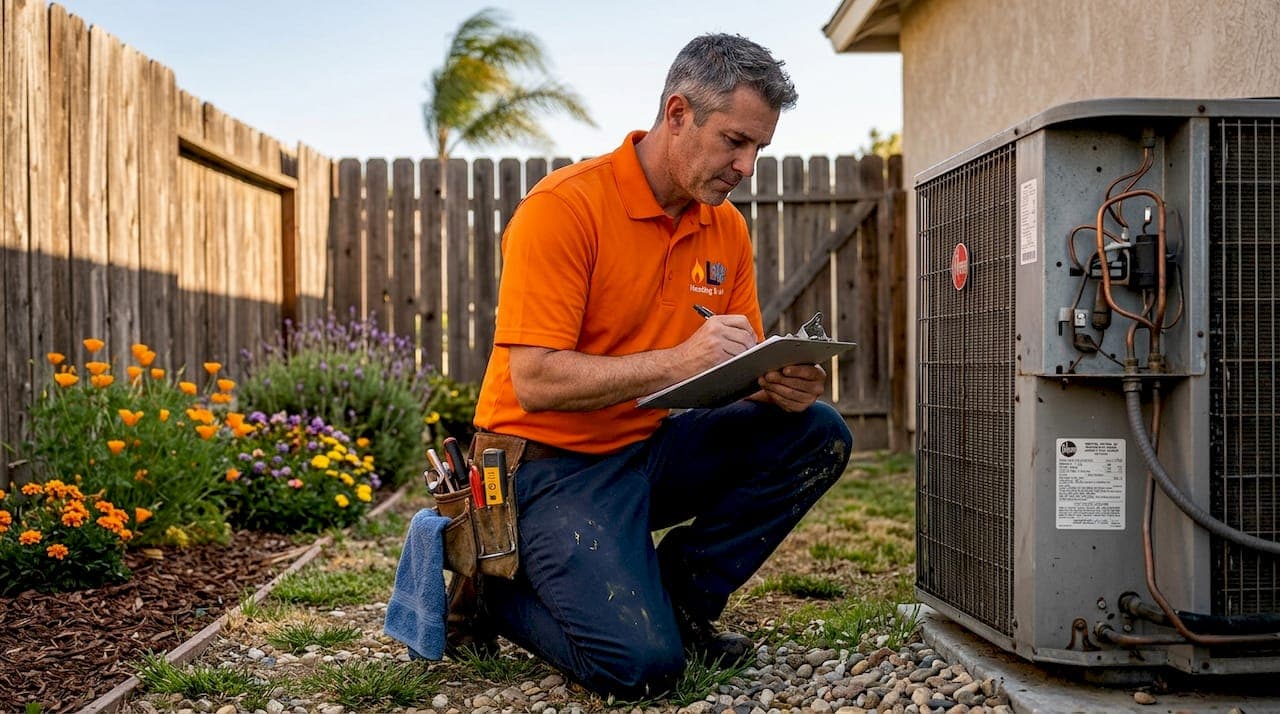
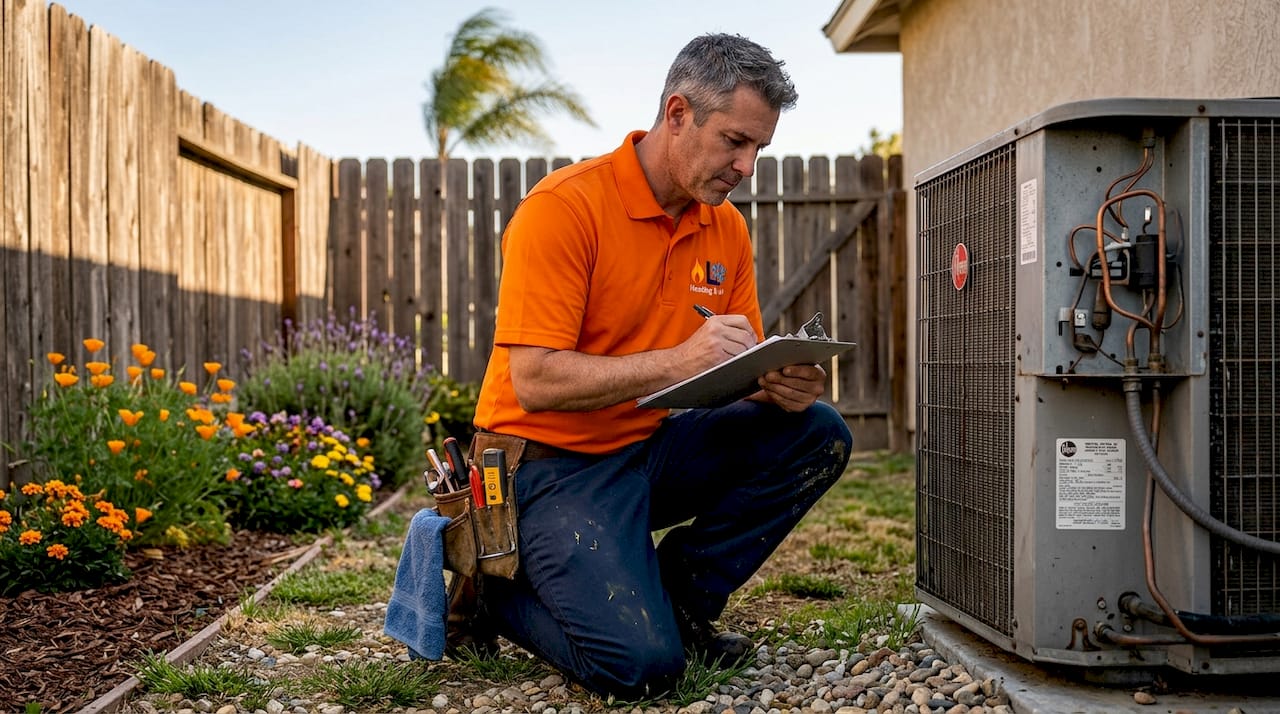
Start by gathering your system information. Know your AC unit’s make and model (usually printed on a sticker on the outdoor unit), the approximate age of the system, and any recent service history. If you’ve had repairs done before, pull out those old invoices. This gives you a useful baseline and signals to the contractor that you are an informed customer.
Next, write down every symptom you’ve noticed:
- Warm air blowing from vents
- Unusual sounds like rattling, buzzing, or grinding
- Frequent cycling on and off
- Ice forming on the outdoor unit or refrigerant lines
- Noticeable increases in your electricity bill
These details help a technician diagnose the issue faster and more accurately. Proper diagnosis upfront protects you from repeated service calls down the line.
You should also understand the general price territory before you request a quote. Standard AC repairs average around $375, with common fixes ranging from $150 to $700. Major components like a compressor can run $1,200 to $3,000. Knowing this range keeps you grounded when quotes come in.
Pro Tip: Schedule your repair or inspection during spring or fall if at all possible. Off-peak timing helps you avoid the emergency service premiums that spike during summer heat waves. Emergency service during peak heat can cost 50 to 100% more than a scheduled repair.
Finally, prepare four or five direct questions you will ask each contractor. Ask how they price labor, whether diagnostic fees apply toward the repair, and whether they provide written estimates before starting work. How a contractor answers these questions tells you a lot about their transparency before a wrench is even picked up.
How to get honest AC repair estimates step by step
Once you are prepared, the process of getting reliable quotes becomes much more manageable. Follow these steps to give yourself the best chance of fair, transparent pricing.
-
Contact at least two to three licensed contractors. Getting multiple written quotes is the single most effective way to avoid overpaying. One quote gives you nothing to compare. Two or three quotes reveal the realistic price range for your specific repair.
-
Ask for a written, line-item estimate. This means every cost is listed separately: parts, labor, refrigerant, diagnostic fees, permit fees if applicable, and any disposal charges. A contractor who provides a single lump sum without a breakdown is not being fully transparent with you.
-
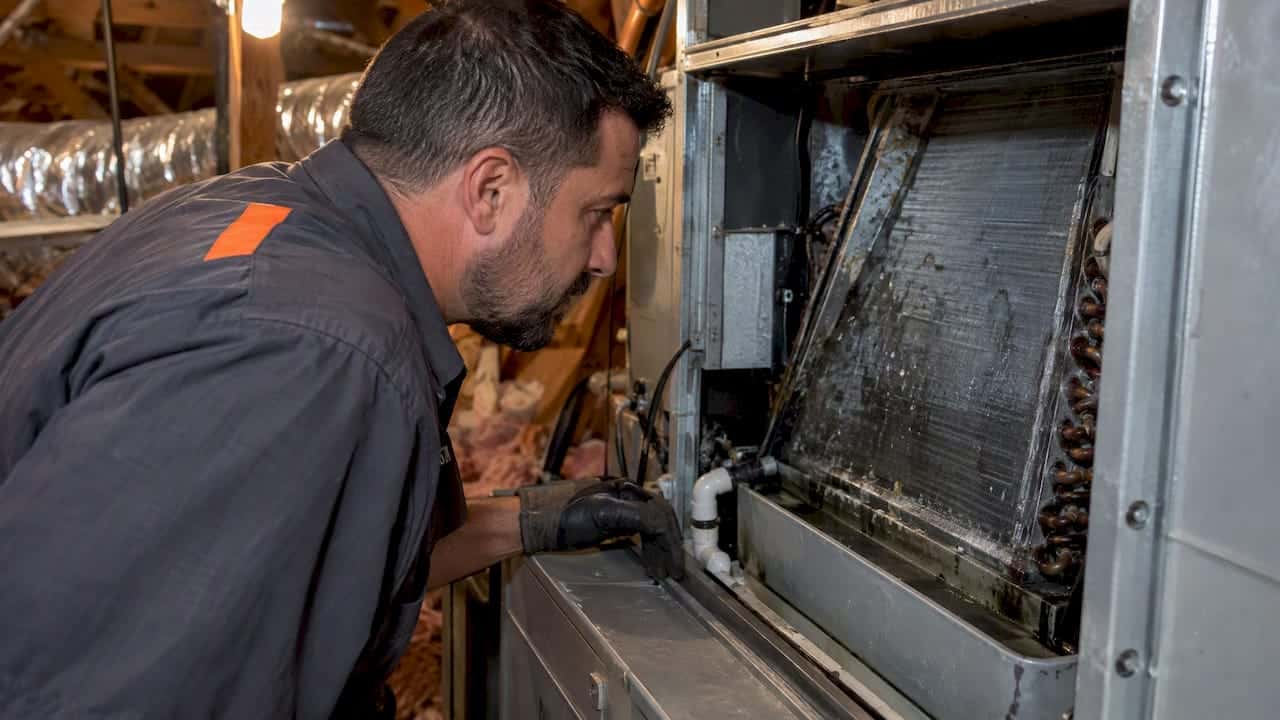
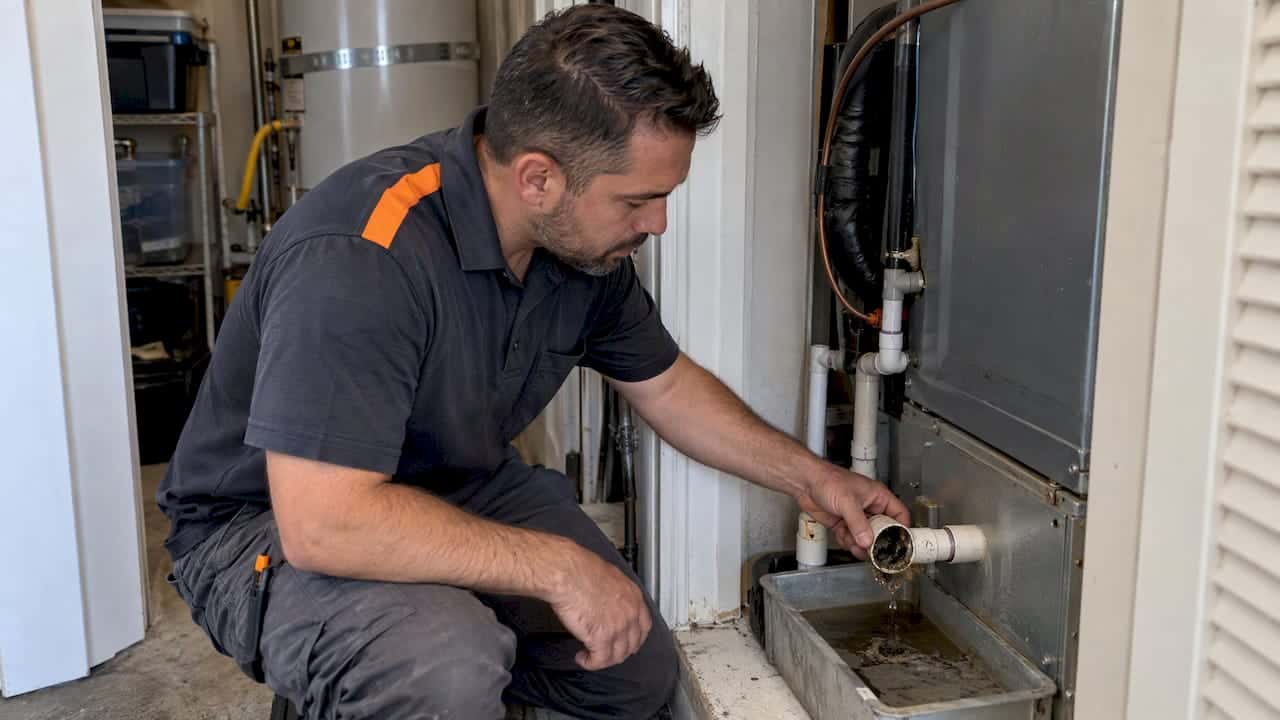
Request a detailed explanation of the diagnosis. A trustworthy technician should be able to tell you exactly what failed, why it failed, and what the repair involves. If someone gives you a repair recommendation without showing you the evidence or explaining the logic, that’s worth questioning.
-
Ask the contractor to address repair versus replacement honestly. Homeowners benefit greatly when contractors explain both options clearly rather than defaulting to the more expensive path. Requesting a clear explanation of why repair or replacement makes sense for your system is a reasonable and smart request.
-
Ask about permit requirements. Certain repairs and all system replacements require permits in Los Angeles. If a quote does not mention permits and the job requires them, that cost will surface later. An honest contractor brings this up proactively.
-
Clarify the diagnostic fee structure. Standard diagnostic fees typically run between $75 and $150. Ask upfront whether that fee is waived or applied toward the repair cost if you move forward with the work.
-
Read the estimate before signing anything. It sounds obvious, but many homeowners feel pressured to approve work quickly, especially when it’s hot outside. Take a few minutes. Check that the scope of work matches what was discussed, that all parts are listed by name, and that the total reflects the conversation you had.
Pro Tip: Ask for a load calculation if you’re being quoted on a new unit or major system change. A thorough site inspection and load calculation are critical for an accurate estimate. Skipping this step is a sign a contractor may be guessing rather than assessing.
The process does not need to feel adversarial. Most reputable technicians welcome informed homeowners. Clear questions signal that you value the relationship and expect professional service. That tone usually brings out the best in a good contractor.

Common pitfalls that lead to inflated or misleading quotes
Even when you follow all the right steps, certain traps can still catch you off guard. Knowing what to watch for is the difference between a fair price and a frustrating invoice surprise.
Missing cost items in the estimate. Low quotes sometimes look attractive because they intentionally leave out costs. Low-ball quotes often omit mandatory items like permits, safety switches, refrigerant line replacements, and haul-away fees. Once you’re committed and the work is underway, those costs get added to your invoice with no way back.
Emergency and after-hours fees without disclosure. If you call for emergency service, 63% of AC breakdowns occur during the hottest summer weeks. During those peak periods, some contractors charge $50 to $250 more in diagnostic fees without making that clear upfront. Always ask whether you are being quoted standard or emergency rates.
Pressure to replace rather than repair. A contractor who pushes you toward a full system replacement without offering a repair option first may not be acting in your interest. Some systems absolutely do need replacement, but the decision should be based on your specific unit’s condition and the repair-to-value calculation. Not on a sales pitch.
Quick fixes without a thorough diagnosis. A technician who replaces a part without fully diagnosing the root cause is setting you up for a return visit. Incorrect repairs can drive energy bills up 10 to 30% and lead to premature equipment failure. A healthy repair starts with understanding what actually caused the failure, not just swapping the most visible broken component.
A trustworthy contractor shows you the problem, explains the cause, presents your options clearly, and lets you make the decision. If the contractor is doing most of the talking and none of the showing, slow down and ask more questions.
Vague labor charges. Labor rates typically run between $100 and $250 per hour. An estimate that says “labor: $450” without noting the hours expected or the rate applied is not transparent. Ask for both the rate and the estimated time so you can evaluate whether the total is reasonable.
Being aware of these patterns does not make you suspicious of every contractor. It just makes you a better consumer. Reputable companies welcome the scrutiny. Less reputable ones often don’t.
How to verify and evaluate estimates before committing
You have two or three written estimates in hand. Now comes the important step of actually comparing them and deciding what to do next.
Use the 50% Rule and the $5,000 Rule
Before you decide whether to repair or replace, apply these two industry benchmarks. They help you think about the financial reality rather than just reacting to the quote in front of you.
| Rule | How It Works | Example |
|---|---|---|
| 50% Rule | If repair cost exceeds 50% of the new system price, lean toward replacement | Repair quoted at $2,200; new system costs $4,000. At 55%, replacement makes sense. |
| $5,000 Rule | Multiply system age by repair cost; if result exceeds $5,000, consider replacement | 12-year-old system, $500 repair: 12 x 500 = $6,000, signaling replacement |
Neither rule is absolute. A well-maintained 15-year-old system might still have years of life left after a minor repair. But these calculations take the emotion out of the decision and give you a rational frame to work from.
Check contractor credentials
Verifying contractor licensing and insurance is not optional. In California, HVAC contractors are required to be licensed through the Contractors State License Board (CSLB). You can look up any contractor’s license number on the CSLB website in under a minute. Licensed contractors carry insurance, provide warranties on their work, and are accountable to a licensing body if something goes wrong. Unlicensed contractors offer none of those protections.
Beyond the license, read recent reviews. Look for patterns in what customers say about pricing, communication, and whether the work held up. A company with 200 verified reviews averaging 4.8 stars is telling you something that a polished website alone cannot.
Pro Tip: When comparing quotes, focus on the scope of work described, not just the final number. Two quotes with the same total price can represent very different levels of service if one includes refrigerant recovery and the other doesn’t.
Plan your timing
If your situation allows any flexibility at all, scheduling off-peak in spring or early fall gives you better availability, more competitive pricing, and technicians who are not rushed. Use that window to get the AC repair cost factors specific to your California home evaluated properly without the pressure of a 100-degree day pushing the conversation. You can learn more about what drives pricing differences in California repair estimates before you make a call.
Verify the completed work
Once a repair is done, review the final invoice against the original estimate. Every agreed item should appear, no new charges should show up without prior approval, and the technician should walk you through what was done. A good contractor treats the final explanation as part of the service.
My take on why honest estimates actually protect everyone
I’ve been working in HVAC in Los Angeles for over twenty years, and I’ve seen the same scenario play out more times than I can count. A homeowner calls us after getting burned by a contractor who gave them a low quote, started the job, and then kept adding costs until the final bill was double the estimate. By the time they call us, they’re frustrated, out of money, and their trust is gone.
Here’s what I’ve learned: homeowners who ask tough questions upfront don’t slow down the process. They speed it up. When you know what your system is, what the problem is, and what a fair price looks like, everything moves faster. The technician spends less time explaining and more time fixing.
What I’ve also seen is that unclear estimates hurt both sides. A contractor who gives a vague quote often ends up in a dispute at the end of the job. Nobody wins that conversation. Transparent pricing protects the homeowner and builds the kind of trust that leads to long-term relationships. Those relationships are what keep a business like ours running after two decades.
The homeowners who get the best outcomes are the ones who treat the estimate process like a two-way conversation. They share information freely, ask direct questions, and expect clear answers. That’s not being difficult. That’s being smart.
My advice: if a contractor makes you feel like asking questions is a problem, that’s your answer. Walk away. The right company welcomes your curiosity and earns your trust one clear, honest sentence at a time.
— Leo
Get a transparent AC repair quote from LC Heating and Air Conditioning
If you’re ready to stop guessing and start getting straight answers about your AC, LC Heating and Air Conditioning is here to help. Our technicians provide detailed, line-item estimates with no surprise fees and no pressure tactics. We’ve been serving Los Angeles homeowners for over twenty years with the kind of honest, same-day service that turns first-time callers into long-term customers.

Whether you have a straightforward repair or a complex multi-zone system, we give you a clear picture of what’s wrong, what it costs, and what your options are. Visit our AC repair service page to schedule an estimate or call us directly. Transparent pricing, licensed technicians, and your comfort. That’s what we’re here for.
FAQ
What is a fair price for an AC repair?
Standard AC repairs typically range from $150 to $700 for common issues, with an average around $375. Major component repairs like a compressor can reach $1,200 to $3,000.
How many quotes should I get for AC repair?
Getting two to three written quotes is the recommended standard. Multiple quotes give you enough context to spot pricing that is either unusually high or suspiciously low.
What should be included in an honest AC repair estimate?
An honest estimate should list parts by name, labor hours and rate, diagnostic fees, refrigerant charges if applicable, any permit costs, and disposal fees. A single lump-sum number without a breakdown is not a complete estimate.
How can I tell if an AC repair quote is inflated?
Compare line items across multiple quotes and cross-reference labor rates, which should fall between $100 and $250 per hour. Watch for missing permit fees, unexplained markups, or pressure to replace a system without a clear diagnostic justification.
When does it make more sense to replace than repair?
Use the 50% Rule: if the repair cost exceeds half the price of a new system, replacement is worth considering. The $5,000 Rule offers another check by multiplying the system’s age by the repair cost. A repair vs. replace analysis from a trustworthy technician should always be part of that decision.
Recommended
Leo, Propietario y Técnico Principal en LC Heating & Air
Leo dirige LC Heating & Air como propietario-operador y tiene la licencia C-20 HVAC #1073586 de California. Sus guías se enfocan en diagnósticos prácticos, decisiones de reparación seguras y consejos claros para propietarios de Los Ángeles.