- How Central AC Works: A Homeowner’s 2026 Guide
- How central AC works: the main components explained
- How does the refrigeration cycle work step by step?
- What do homeowners get wrong about central AC?
- How to troubleshoot, maintain, and upgrade your central AC
- Key takeaways
- What 20 years of AC calls taught me about homeowner mistakes
- LC Heating and Air Conditioning: expert AC service in Los Angeles
- FAQ
- Recommended
How Central AC Works: A Homeowner’s 2026 Guide
TL;DR:
- Central air conditioning moves heat from inside your home to outside using a continuous refrigeration cycle, not creating cold air. It consists of components like the evaporator coil, compressor, condenser coil, and expansion valve that work together to transfer heat efficiently. Proper airflow, regular maintenance, and understanding system limitations are essential for optimal performance and avoiding costly repairs.
Central air conditioning is defined as a system that removes heat from inside your home and transfers it outdoors using a continuous refrigeration cycle. It does not create cold air. Understanding how central AC works helps you troubleshoot problems, maintain your system properly, and make smarter upgrade decisions before a breakdown forces your hand.
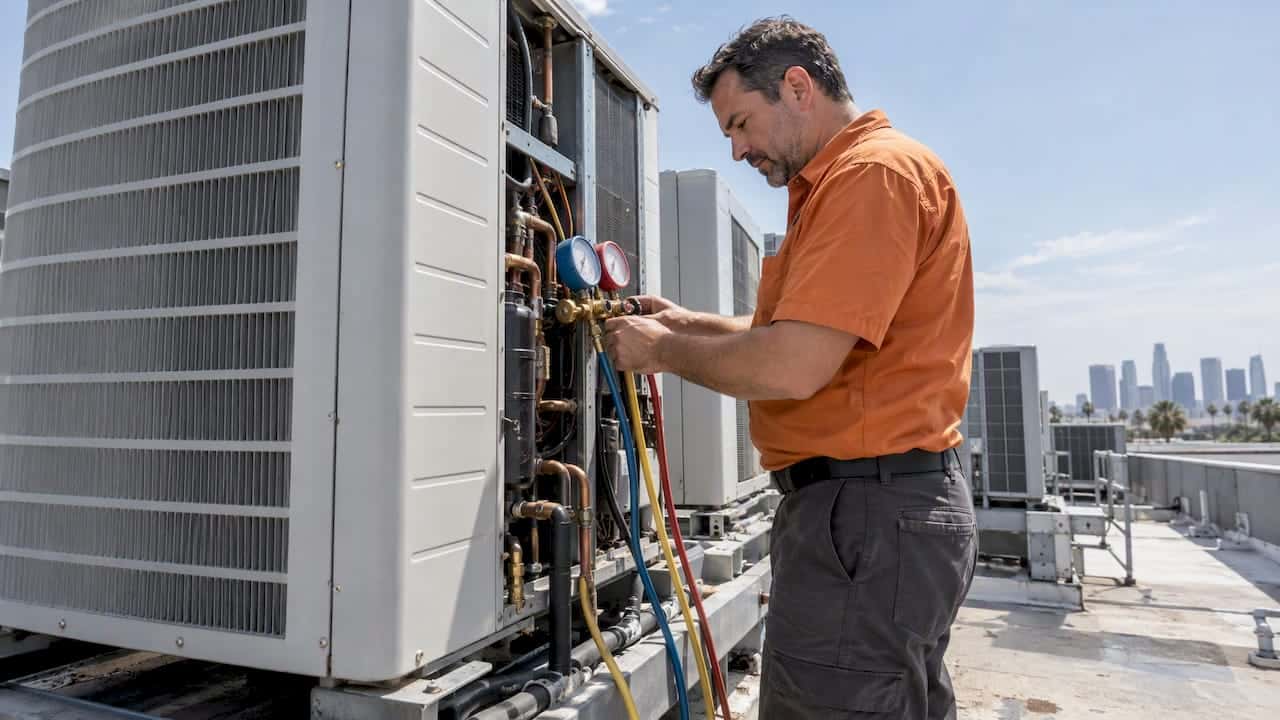
The four main components driving this process are the evaporator coil, compressor, condenser coil, and expansion valve. Systems like those made by Daikin and other major manufacturers use this same vapor-compression cycle regardless of size or price point. Central AC systems come in two main configurations: split-systems, which place the indoor and outdoor components separately, and packaged units, which house everything in one cabinet outside.
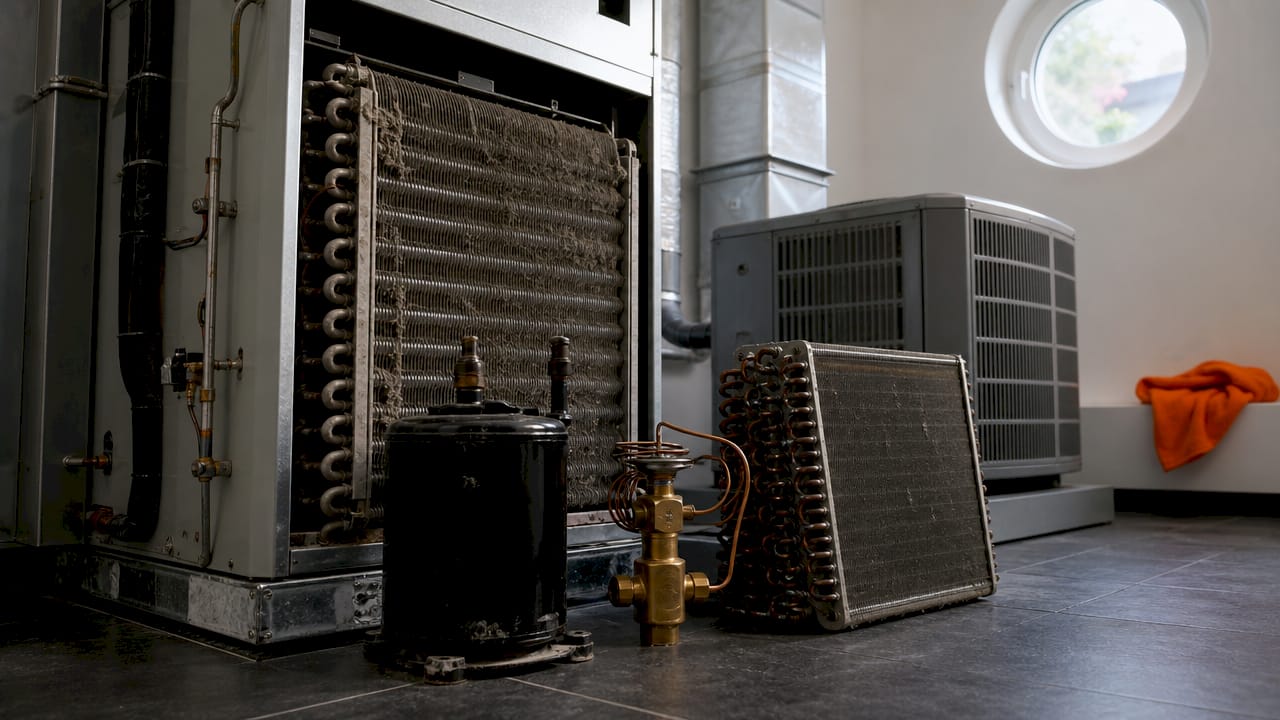
How central AC works: the main components explained
Every part of a central AC system has one job. Together, they move heat from your living room to your backyard. Here is what each component does and why it matters.
- Evaporator coil: Sits inside your air handler or furnace cabinet. Warm indoor air passes over it, and the refrigerant inside absorbs that heat, cooling the air before it returns through your vents.
- Compressor: Located in the outdoor unit. It pressurizes the refrigerant gas, raising its temperature so the heat can be released outside. The compressor is often called the heart of the system.
- Condenser coil: Also in the outdoor unit. Hot refrigerant flows through it, and a fan blows outdoor air across the coil to carry the heat away.
- Expansion valve: Controls how much refrigerant enters the evaporator coil. It drops the refrigerant’s pressure and temperature, preparing it to absorb heat again.
- Indoor blower: Circulates air from your home across the evaporator coil and pushes cooled air back through your duct system.
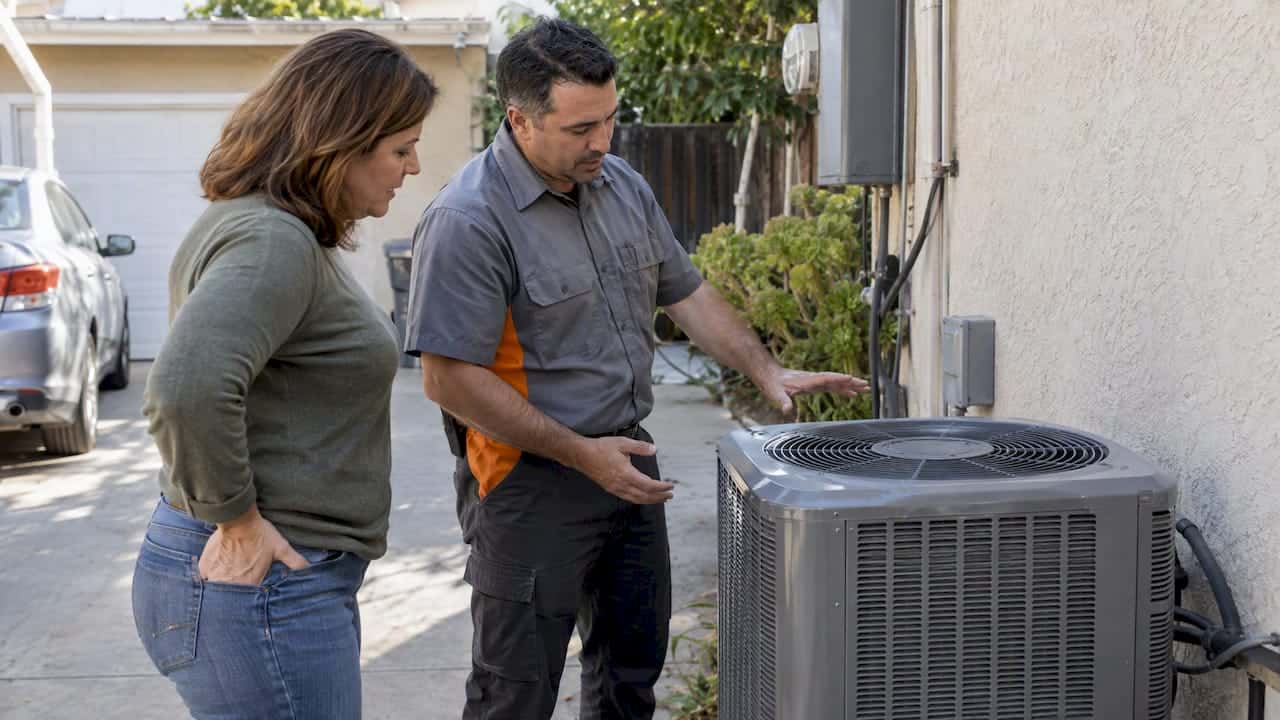
Pro Tip: Keep at least two feet of clear space around your outdoor unit. Shrubs, fences, and debris restrict airflow to the condenser coil and reduce your system’s cooling capacity noticeably.
Split-system vs. packaged unit: which do you have?
| Feature | Split-system | Packaged unit |
|---|---|---|
| Indoor components | Air handler or furnace with evaporator coil | None indoors |
| Outdoor components | Compressor and condenser coil | All components in one cabinet |
| Best for | Most residential homes | Homes with limited indoor space |
| Installation | Requires refrigerant line set between units | Single cabinet connects to ducts |
| Common brands | Daikin, Carrier, Lennox | Carrier, Trane, Rheem |
Split-systems are the most common setup in Los Angeles homes. Packaged units are popular in homes without a basement or utility closet for an air handler.
How does the refrigeration cycle work step by step?
The refrigeration cycle is the engine behind central air conditioning operation. It runs continuously while your system is on, moving heat from inside to outside in a loop that never stops.
- Heat absorption indoors: Warm air from your home blows across the evaporator coil. The liquid refrigerant inside absorbs that heat and evaporates into a low-pressure gas.
- Compression: The gas travels to the outdoor compressor, which squeezes it into a high-pressure, high-temperature gas. This step is what makes releasing the heat outdoors possible.
- Heat release outdoors: The hot gas moves through the condenser coil. The outdoor fan pulls air across the coil, carrying the heat away. The refrigerant cools and condenses back into a liquid.
- Pressure drop: The liquid refrigerant passes through the expansion valve, which drops its pressure and temperature sharply. It is now cold enough to absorb heat again.
- Cycle repeats: The cold refrigerant re-enters the evaporator coil and the process starts over.
This cycle also removes humidity from your indoor air. As warm air passes over the cold evaporator coil, moisture condenses on the coil surface and drains away. That is why your AC makes your home feel less sticky, not just cooler.
Modern systems can deliver over three times the cooling energy compared to the electricity they consume. That ratio is called the coefficient of performance, and it explains why central AC is far more efficient than electric resistance heating in reverse. A well-maintained system running at peak efficiency keeps your electricity bills lower and your home more comfortable on the hottest days.
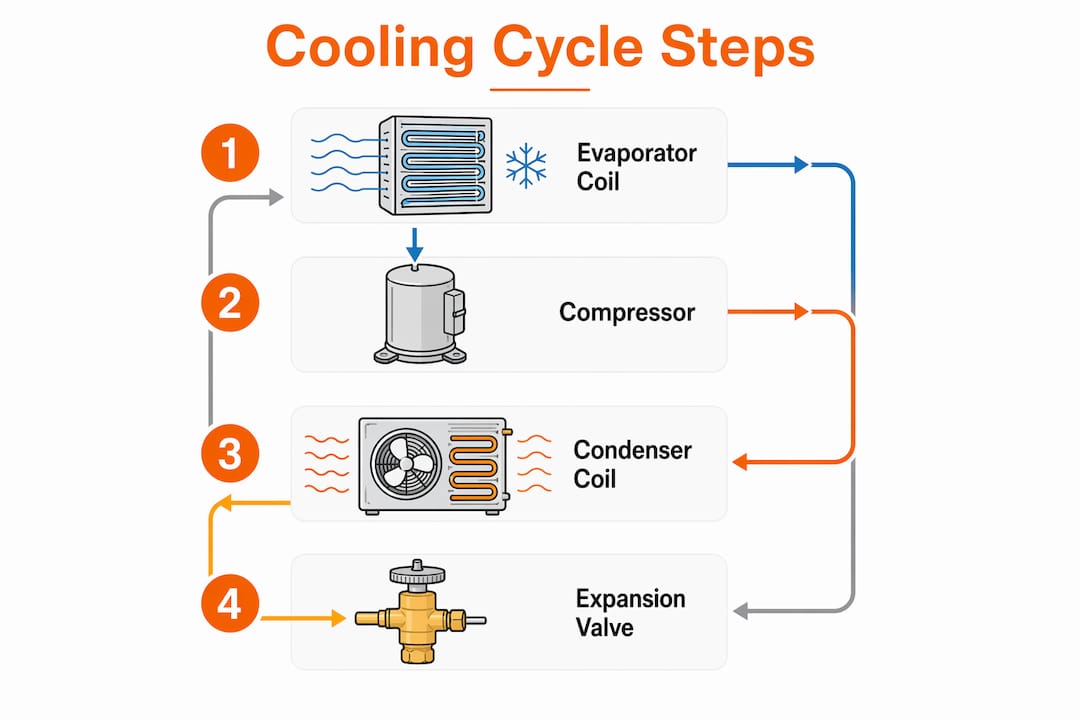
A useful way to picture the cycle: think of the refrigerant as a sponge. It soaks up heat indoors, gets wrung out outdoors, and comes back ready to absorb more. The compressor is the hand doing the wringing.
What do homeowners get wrong about central AC?
The biggest misconception homeowners hold is that their AC creates cold air. AC does not create cold air; it extracts heat from your home the same way a sponge pulls water from a wet surface. Once you understand that, a lot of common problems start making more sense.
Airflow is the single most important factor in how well your system performs. Blocked vents, dirty filters, and cramped outdoor units all restrict airflow and hurt cooling capacity. Your system works harder, runs longer, and costs more to operate.
Here are the most common mistakes homeowners make:
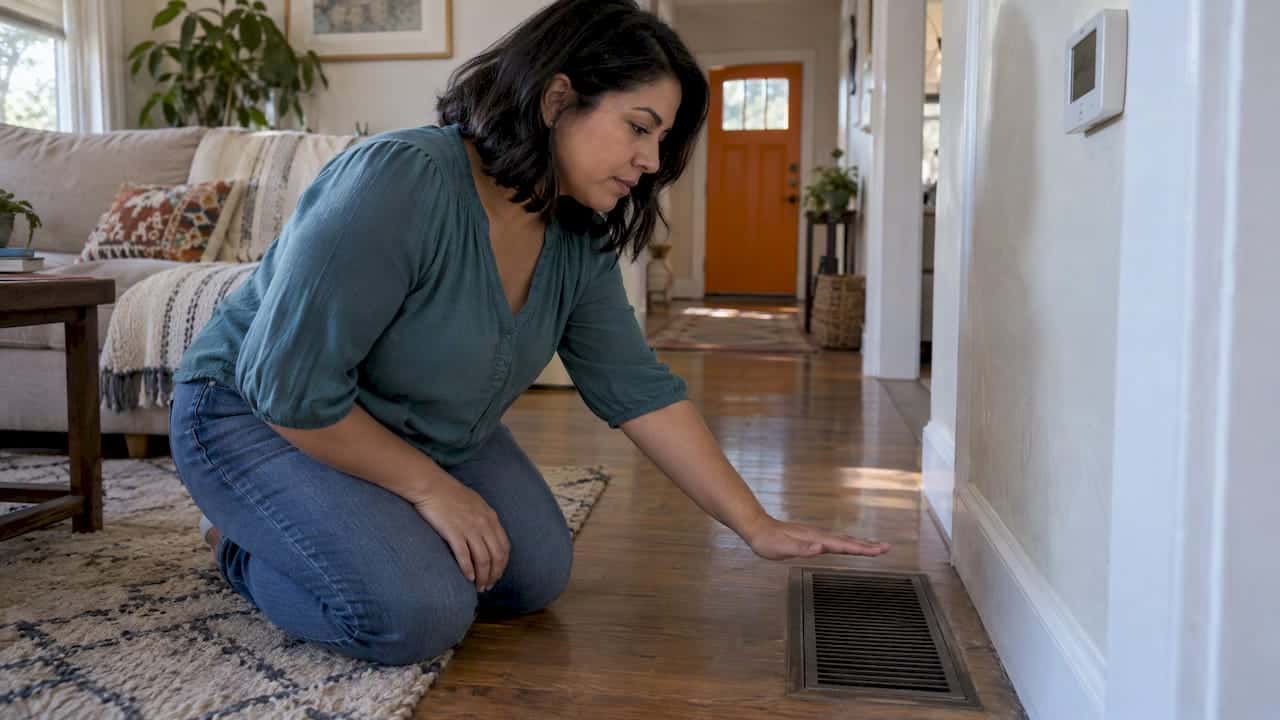
- Blocking supply or return vents with furniture or curtains. Every blocked vent reduces airflow through the whole system.
- Ignoring the outdoor unit. Obstructed outdoor units lose significant capacity when surrounded by fences, overgrown shrubs, or debris. The condenser coil needs clean air moving across it constantly.
- Setting the thermostat too low. Dropping the thermostat to 65°F on a 100°F day does not cool your home faster. It just runs the system longer and wastes energy.
- Overlooking humidity. AC dehumidifies by design, but it can struggle in moderate outdoor temperatures when the system short-cycles. A supplemental dehumidifier handles moisture without forcing you to lower the thermostat.
- Skipping ceiling fans. Ceiling fans do not lower air temperature, but they make 78°F feel like 72°F by improving air circulation. Running fans alongside your AC lets you set the thermostat a few degrees higher without losing comfort.
Pro Tip: If your home feels humid even when the AC is running, check that your system is not short-cycling. A system that turns on and off too quickly never runs long enough to pull moisture out of the air effectively.
If your AC runs but your home stays warm, the cause is usually one of these airflow issues. You can find a detailed breakdown of common cooling failures and how to address them before calling a technician.
How to troubleshoot, maintain, and upgrade your central AC
Most central AC problems have straightforward causes. Knowing where to look saves you time and money before you pick up the phone.
Basic troubleshooting steps
- Check the air filter first. A clogged filter is the most common cause of poor cooling. Replace it if it looks gray and dense. A clean filter costs under $20 and takes two minutes to swap.
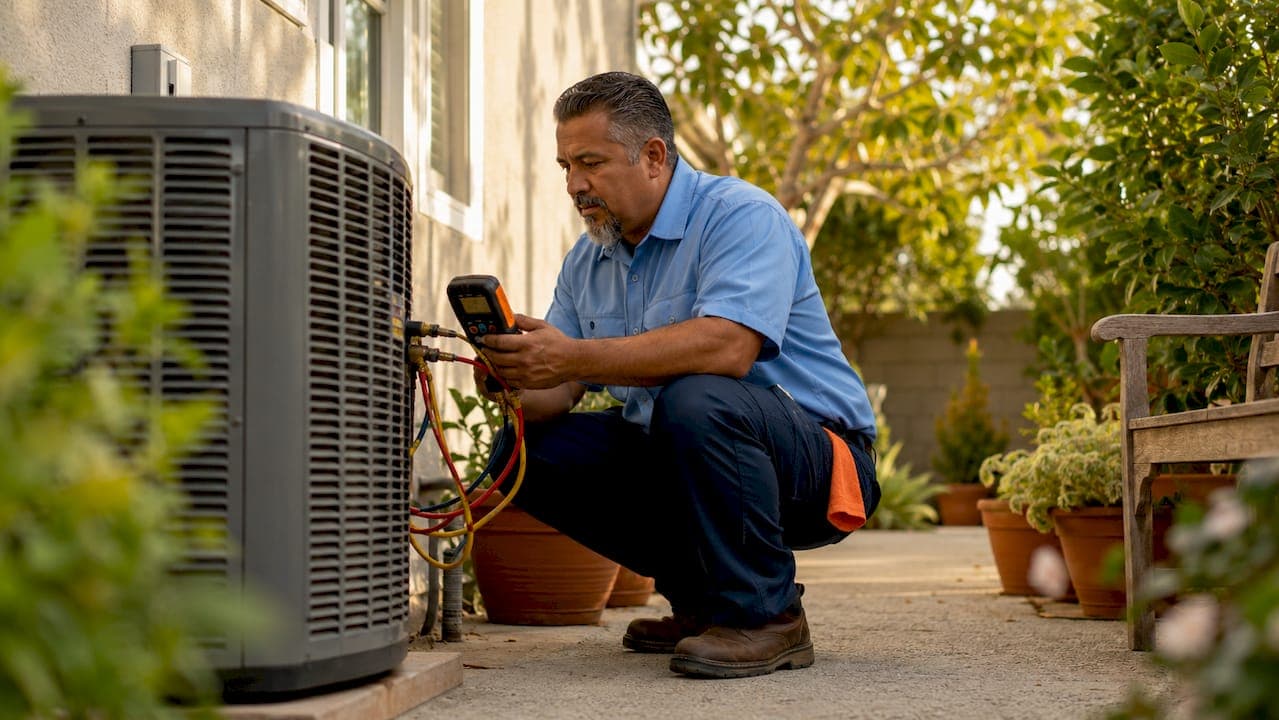
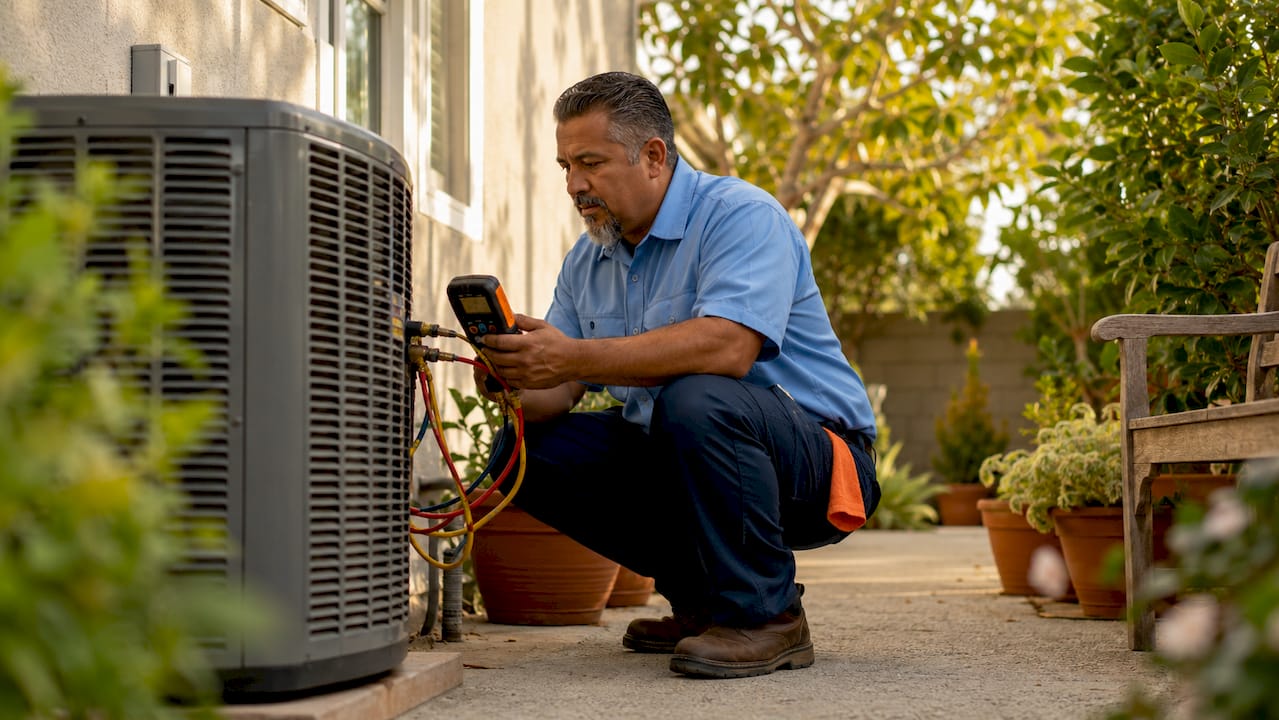
- Inspect the outdoor unit. Clear any debris, leaves, or vegetation within two feet of the cabinet. Check that the fan is spinning when the system runs.
- Verify thermostat settings. Confirm it is set to “cool” and the fan is set to “auto,” not “on.” A fan running continuously on “on” circulates uncooled air between cycles.
- Check circuit breakers. A tripped breaker at the outdoor disconnect or main panel will shut down the compressor while the indoor blower keeps running.
- Look for ice on the evaporator coil. Ice buildup usually means restricted airflow or low refrigerant. Turn the system off and let it thaw before running it again.
For a full step-by-step guide, LC Heating and Air Conditioning’s home AC troubleshooting guide walks you through each scenario clearly.
When to call a professional
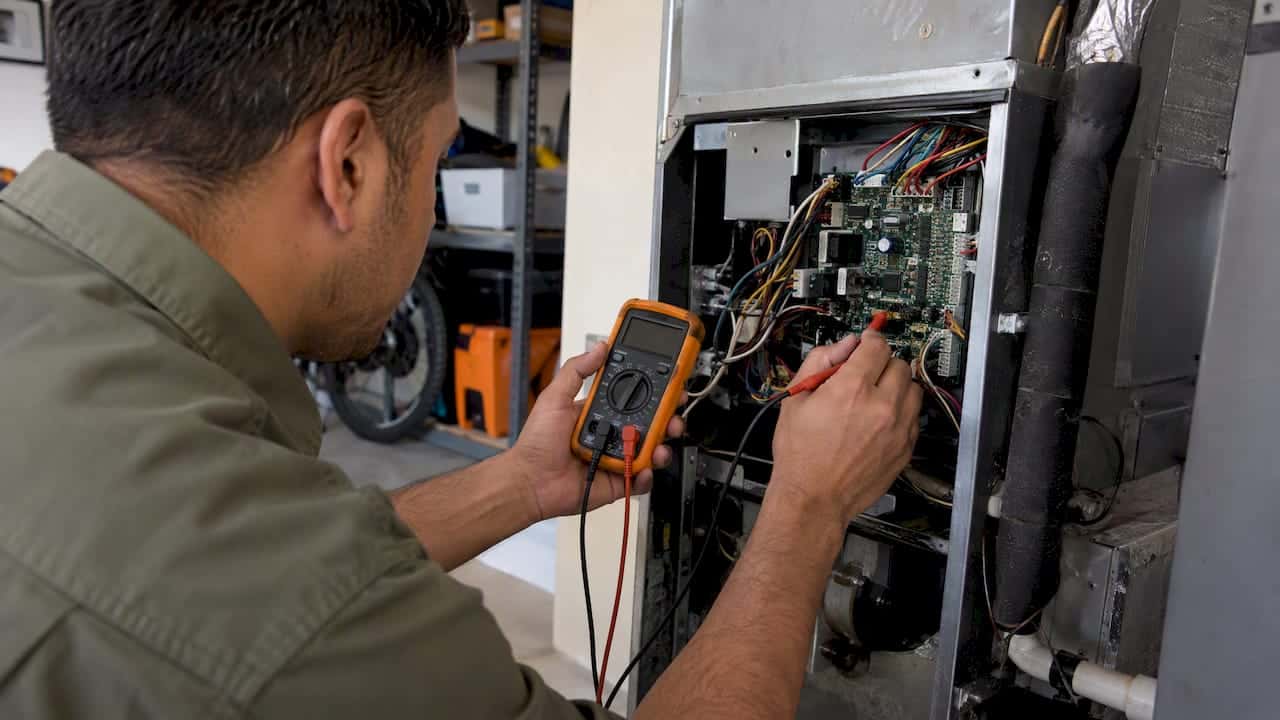
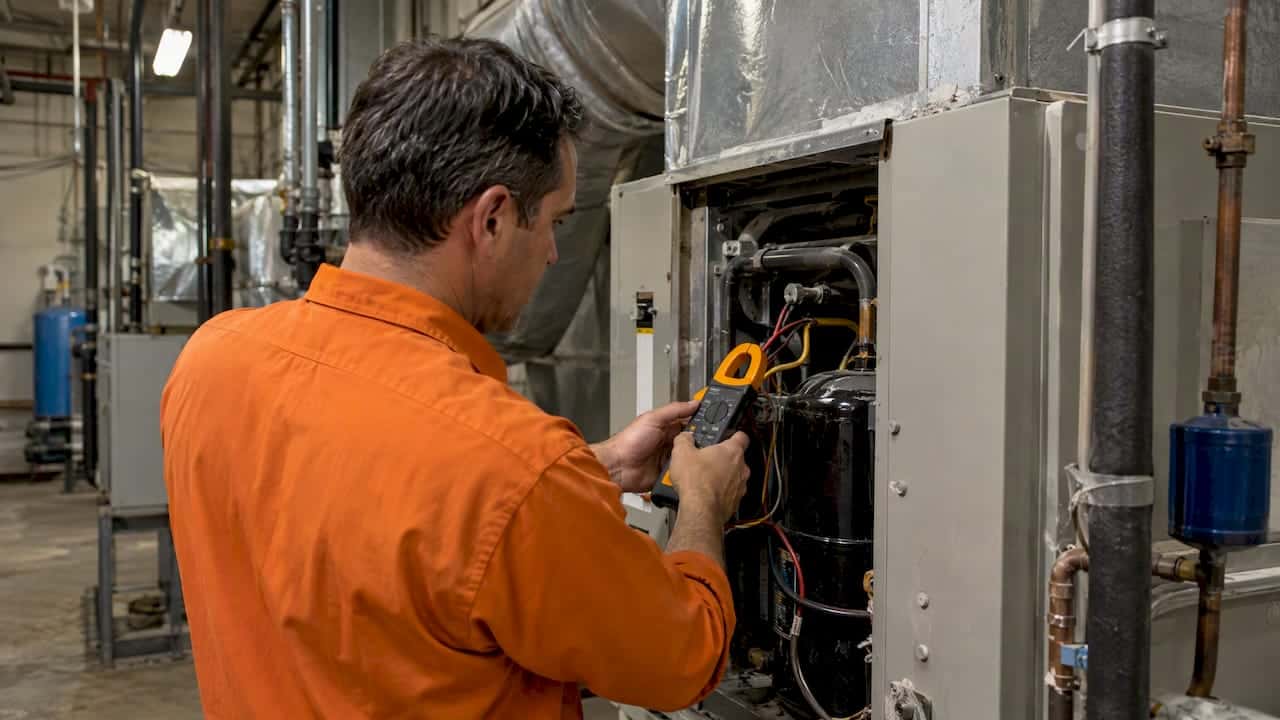
Some repairs require a licensed technician. Refrigerant handling is federally regulated and cannot be done without certification. Compressor replacement is the most expensive repair in the system. Compressor replacement typically costs $1,200 to $2,800 installed. On a system older than 10 years, that cost often justifies replacing the whole unit instead.
Maintenance tasks that protect your investment
| Task | Frequency | Why it matters |
|---|---|---|
| Replace air filter | Every 1–3 months | Maintains airflow and indoor air quality |
| Clean condenser coil fins | Once per year | Prevents heat buildup in outdoor unit |
| Clear condensate drain line | Once per year | Prevents water damage and mold growth |
| Schedule professional tune-up | Once per year | Catches refrigerant issues and worn parts early |
| Test thermostat calibration | Once per year | Prevents energy waste from inaccurate readings |
Smart upgrades worth considering
A programmable or smart thermostat is the highest-return upgrade for most homeowners. Following the 20-degree rule keeps comfort and efficiency in balance: if it is 100°F outside, set your thermostat around 80°F rather than 72°F. That gap is what your system can realistically maintain without overworking itself.
Heat pumps are worth serious consideration if your system is approaching the end of its life. Reverse cycle units transfer heat in or out depending on the season, making them efficient for both cooling and heating. Daikin’s residential heat pump lineup, including models like the RXC12AXVJU, offers year-round efficiency in Los Angeles’s mild climate. Professional heat pump installation is the right call when you want a system that handles both seasons without a separate furnace.
Key takeaways
Central air conditioning works by moving heat from inside your home to the outside through a vapor-compression cycle involving the evaporator coil, compressor, condenser coil, and expansion valve.
| Point | Details |
|---|---|
| AC moves heat, not cold | Your system extracts heat from indoor air rather than generating cold air. |
| Airflow drives performance | Blocked vents, dirty filters, and cramped outdoor units reduce cooling capacity more than any other factor. |
| The refrigeration cycle is continuous | Refrigerant absorbs heat indoors, releases it outdoors, and repeats the loop without stopping. |
| Compressor repair costs justify upgrades | Replacement costs of $1,200 to $2,800 on older units often make full system replacement the smarter choice. |
| Maintenance prevents most failures | Annual coil cleaning, filter changes, and professional tune-ups catch problems before they become expensive. |
What 20 years of AC calls taught me about homeowner mistakes
After two decades of diagnosing central AC systems across Los Angeles, the pattern I see most often is not a broken part. It is a misunderstood system.
Homeowners spend real money chasing cold air that their system was never designed to produce. They crank the thermostat to 65°F on a 105°F day and wonder why the house never gets comfortable. The system is not failing. It is doing exactly what physics allows. Your AC can only maintain a temperature roughly 20 degrees below the outdoor temperature under normal conditions. Expecting more than that leads to overworked equipment, high bills, and unnecessary service calls.
The outdoor unit placement issue surprises people every time I bring it up. I have seen condensers boxed in by six-foot privacy fences on three sides with a hedge on the fourth. The homeowner had no idea that setup was cutting their system’s output by a third. Moving or trimming the vegetation around the unit gave them back the cooling they thought they had lost to a failing compressor.
My honest advice: schedule a professional maintenance visit before summer, not after your first breakdown. The cost of a tune-up is a fraction of an emergency service call. More importantly, a technician who knows your system can spot a refrigerant leak or a failing capacitor before it takes your compressor with it. The compressor is the most expensive part in the system. Protecting it with routine care is the single best investment you can make in your home’s comfort.
— Leo
LC Heating and Air Conditioning: expert AC service in Los Angeles
Understanding how your central AC system works is the first step. Keeping it running well through a Los Angeles summer is the next one.
LC Heating and Air Conditioning has served Los Angeles homeowners for over 20 years with flat-rate pricing, honest diagnostics, and same-day availability. Whether you need a routine AC maintenance tune-up, a repair on a struggling system, or a full upgrade to a heat pump, the team brings the same transparency to every job. No surprise fees. No pressure to replace what can be fixed. For reliable AC repair and HVAC service in Los Angeles, LC Heating and Air Conditioning is ready to help today.
FAQ
What does central AC actually do to cool a home?
Central AC removes heat from indoor air and transfers it outside using a refrigeration cycle. It does not generate cold air; it moves heat until your home reaches the set temperature.
What are the four main parts of a central AC system?
The four main components are the evaporator coil, compressor, condenser coil, and expansion valve. Each plays a specific role in the continuous heat-transfer cycle.
Why does my AC run but the house stays warm?
The most common causes are a clogged air filter, blocked vents, or an obstructed outdoor unit restricting airflow. Low refrigerant and a failing compressor are also possibilities that require a licensed technician.
What thermostat setting works best on a very hot day?
Following the 20-degree rule, if it is 100°F outside, set your thermostat around 80°F for the best balance of comfort and energy efficiency. Pushing the setting lower overworks the system without cooling the home faster.
How often should a central AC system be serviced?
A professional tune-up once per year, ideally before the cooling season begins, keeps the system running efficiently and catches small problems before they become costly repairs.
Recommended
Leo, Owner & Lead Technician at LC Heating & Air
Leo leads LC Heating & Air as an owner-operator and holds California CSLB C-20 HVAC license #1073586. His guides focus on practical diagnostics, safe repair decisions, and clear advice for Los Angeles homeowners.