- What are the most common types of central AC system failures?
- How do you safely troubleshoot a central AC that isn’t working?
- When should you call a professional HVAC technician?
- What do AC repairs typically cost, and when should you replace instead of repair?
- How can you prevent central AC failures before they happen?
- What LC Heating and Air Conditioning technicians see most often in Los Angeles homes
- Key Takeaways
- What most homeowners get wrong about AC failures
- LC Heating and Air Conditioning is ready when your AC isn’t
- Useful sources
- FAQ
- Recommended
10 Types of Central AC System Failures Homeowners Face
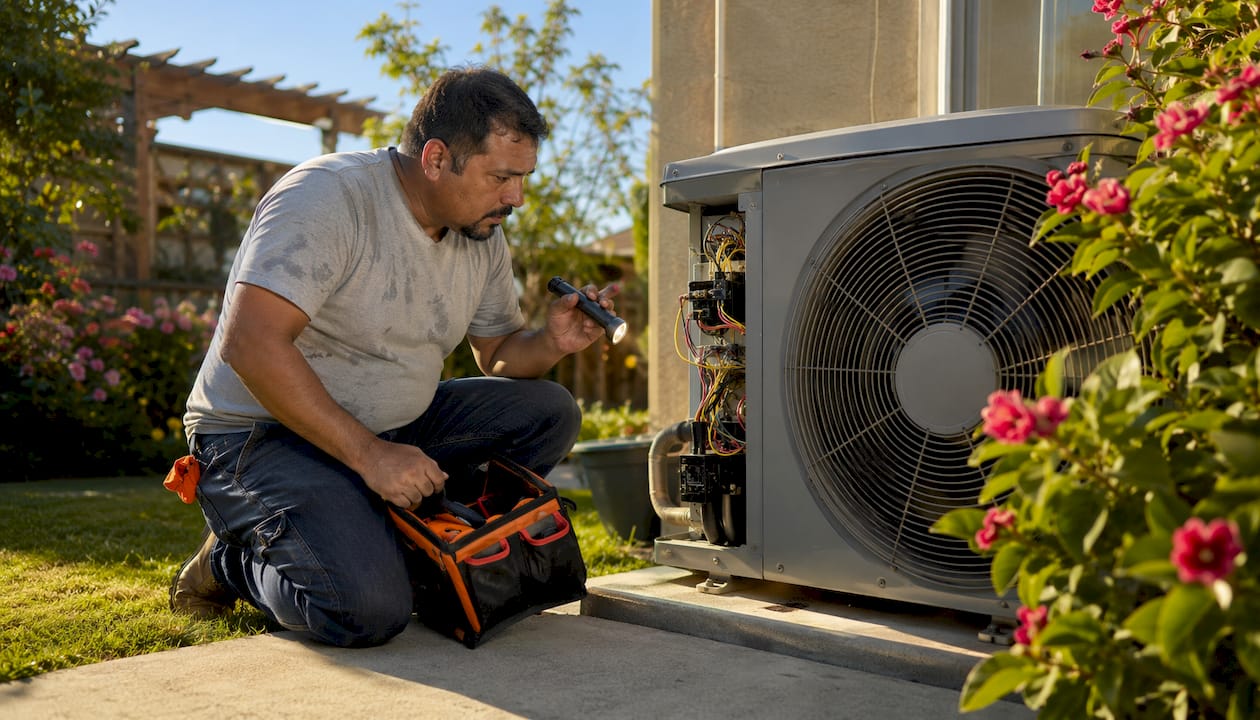
The most common types of central AC system failures are dirty or clogged air filters, failed run capacitors or contactors, refrigerant leaks, frozen evaporator coils, clogged condensate drains, blower or condenser fan motor failures, compressor problems, thermostat or control malfunctions, tripped electrical breakers, and ductwork restrictions. Before you call anyone, run these quick checks:
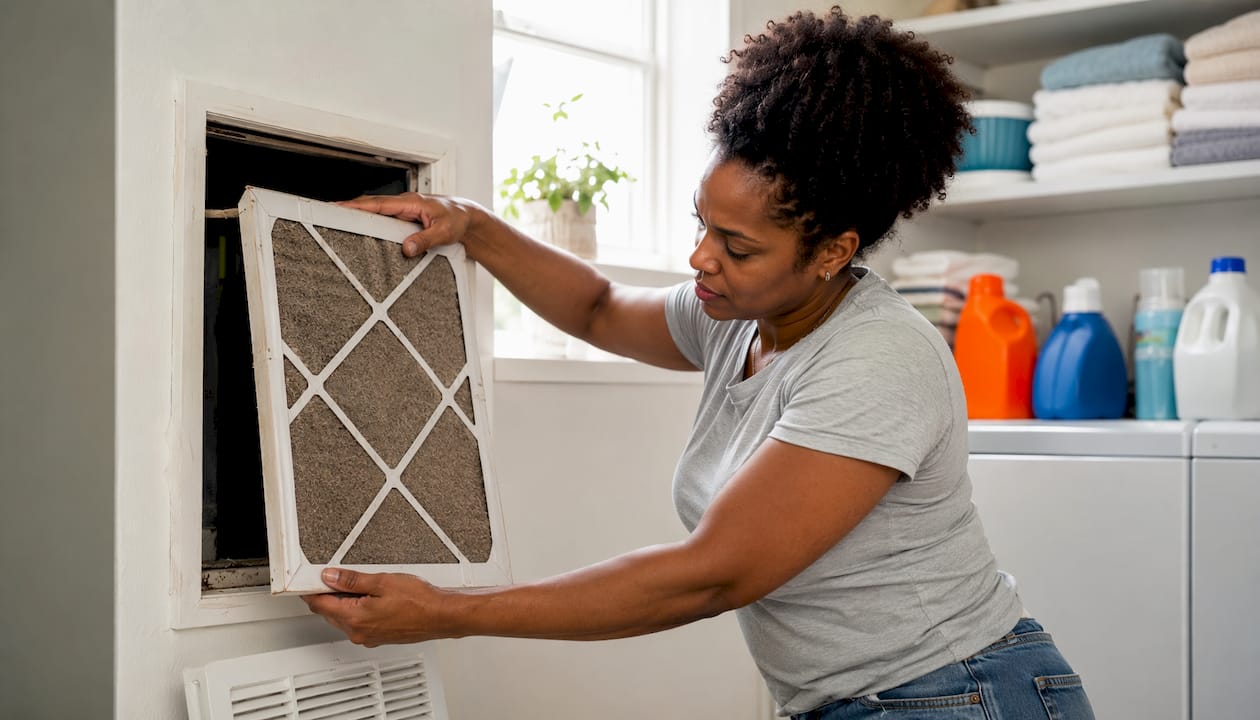
- Check your air filter. A clogged air filter is behind nine out of ten no-cool service calls; for expert appliance maintenance and repairs, check out Rink’s Appliances. Pull it out and hold it up to the light.
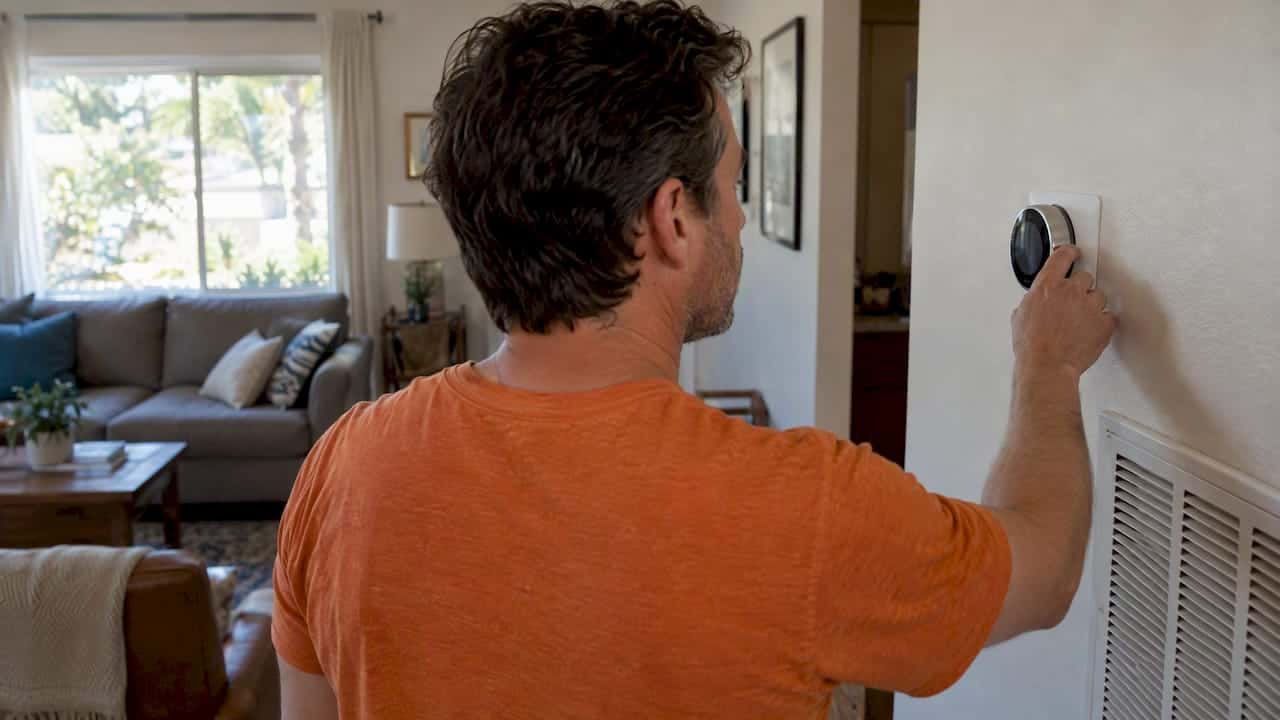
- Check your thermostat. Confirm it’s set to COOL, the temperature is below room temperature, and the batteries are fresh.
- Check your breaker panel. Reset a tripped breaker once only. If it trips again immediately, stop and call a technician.
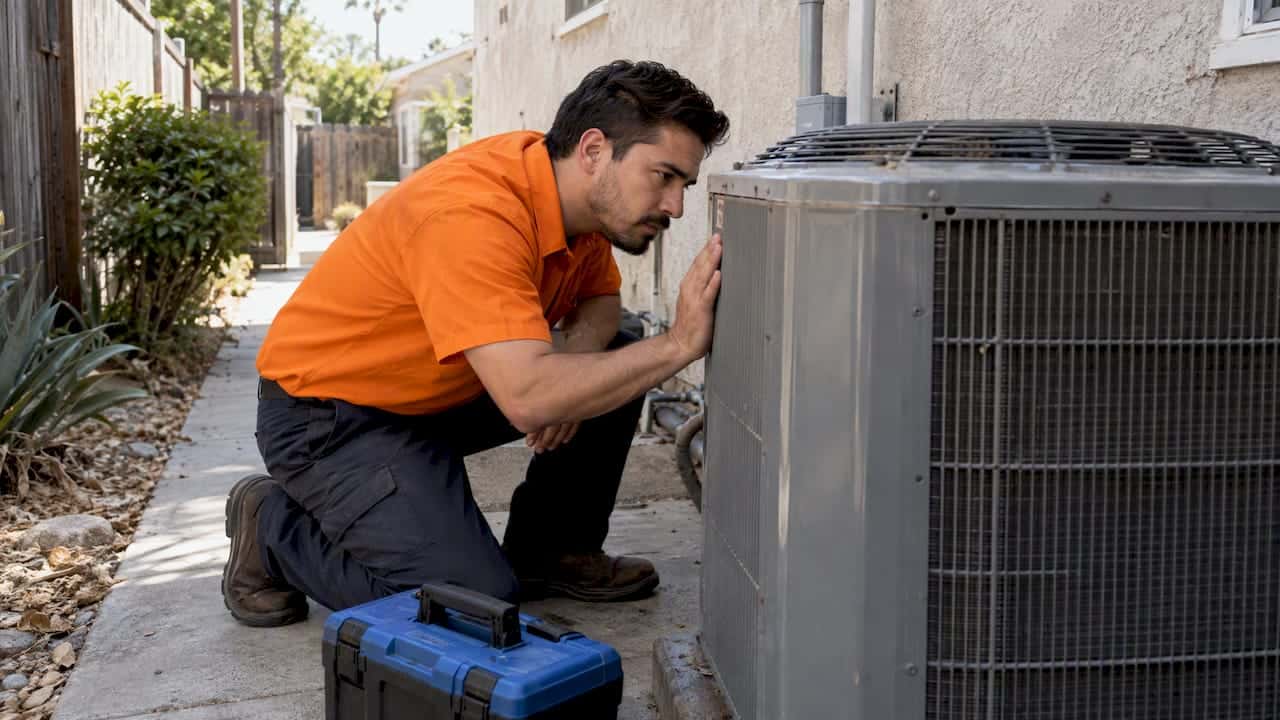
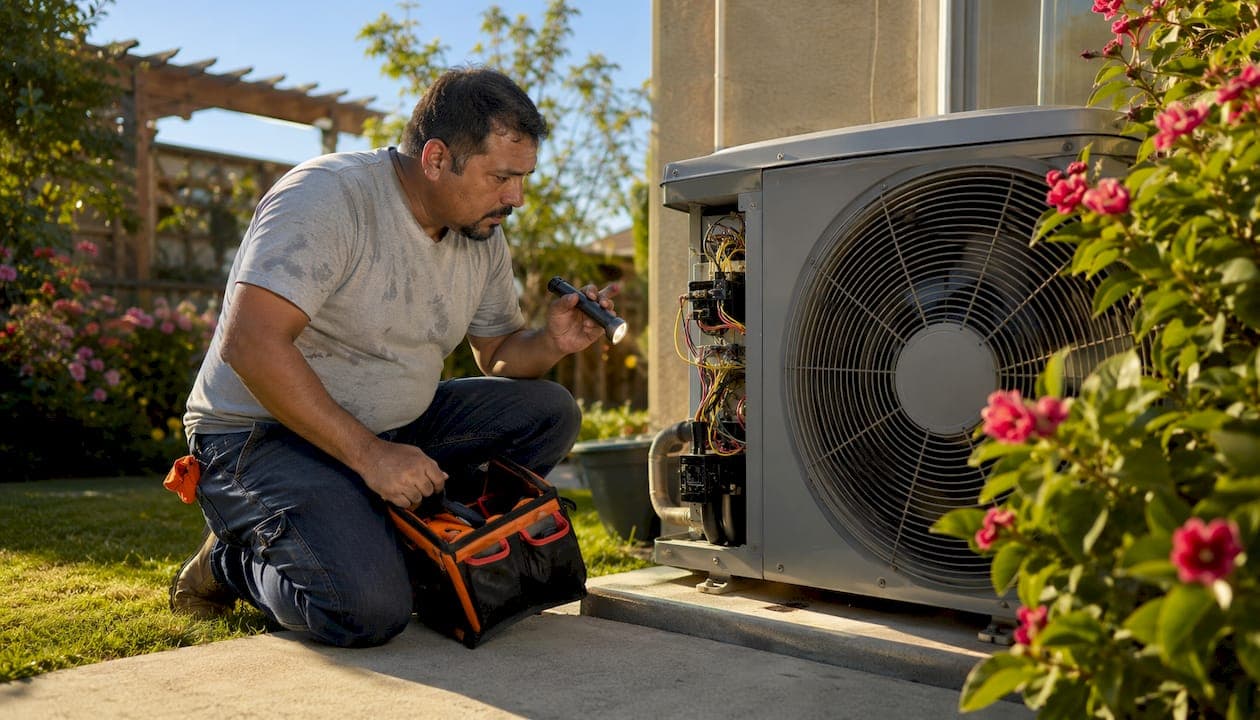
- Look at the outdoor unit. Is the fan spinning? Is there ice on the refrigerant lines or the indoor coil?
- Check for water near the air handler. A puddle or overflow tray full of water often signals a clogged condensate drain.
Safety first: Never reset a tripped breaker more than once, and never attempt to add refrigerant yourself. Both actions can cause serious equipment damage or create a fire hazard.
What are the most common types of central AC system failures?
Every central air conditioning breakdown traces back to one of ten core failure categories. Here’s what causes each one, what you’ll notice, and where the danger lies.
Dirty or clogged air filter
A filter so loaded with dust that air can barely pass through it is the single most frequent cause of HVAC system breakdowns—nine out of ten no-cool calls trace back to a clogged filter or restricted airflow. Restricted airflow starves the evaporator coil of warm air, which causes the coil to freeze, forces the blower motor to work harder, and can eventually overheat the compressor. Symptoms include weak airflow from every register, a system that runs constantly without cooling the house, and visible ice on the refrigerant lines. Replace filters every 30–90 days depending on your home’s dust load and whether you have pets.
Failed run capacitor or contactor
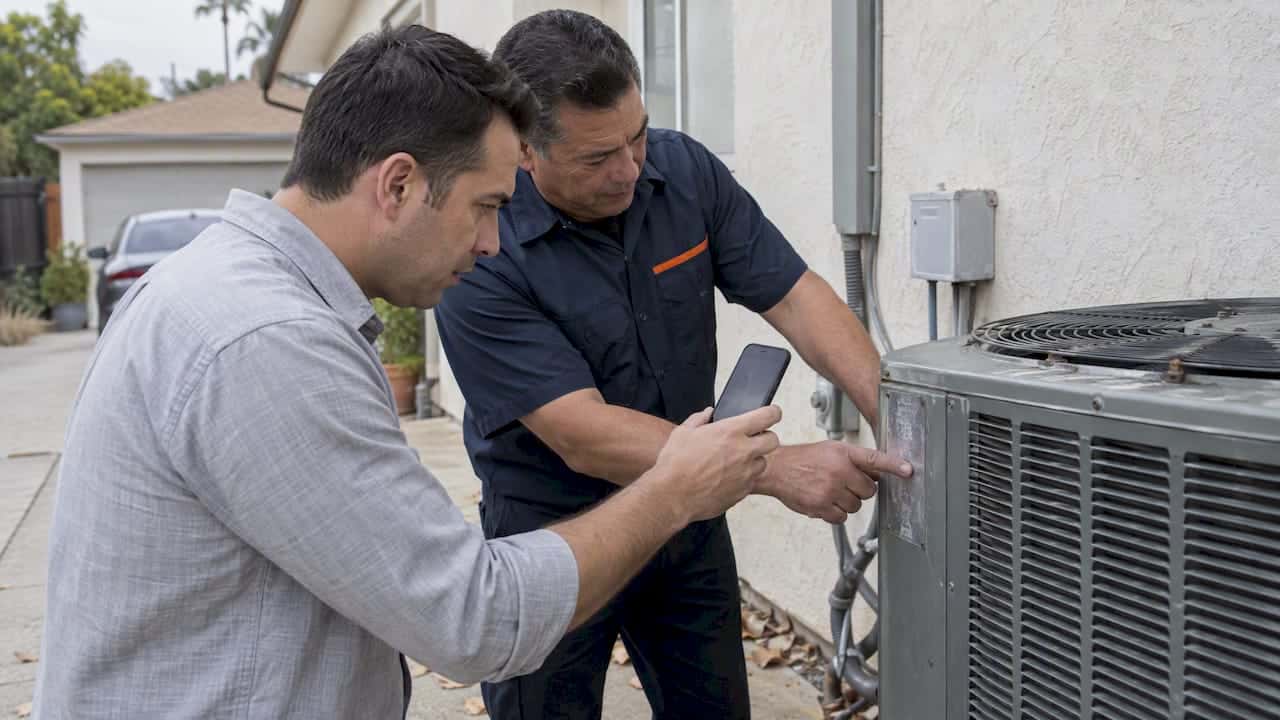
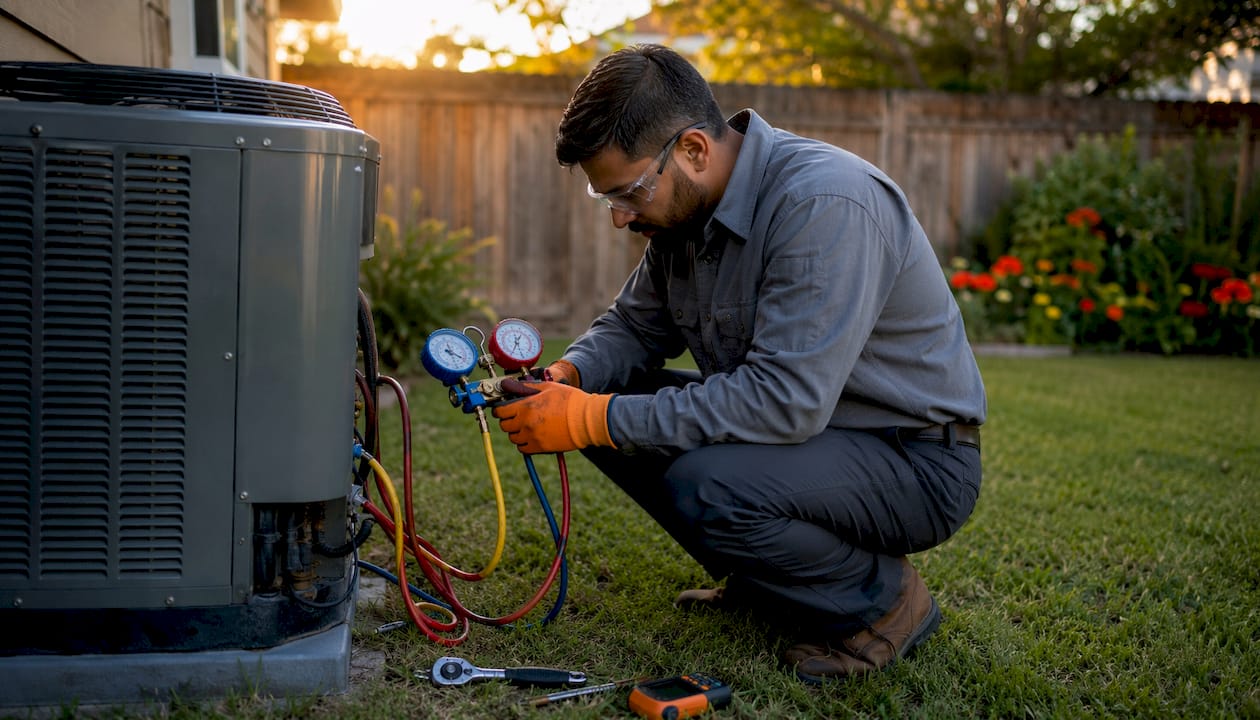
Capacitors are small cylindrical components that give the compressor and fan motors the electrical jolt they need to start and keep running. Capacitor failures account for roughly 20–22% of residential AC service calls, making them the most common electrical component failure. A failed capacitor often presents as a humming outdoor unit where the compressor or fan won’t spin up. Contactors, which act as high-voltage switches, wear out from repeated electrical arcing and can cause intermittent or complete loss of cooling. In Los Angeles, summer heat accelerates capacitor degradation faster than in cooler climates.
Refrigerant leak or low charge
Low refrigerant is always a symptom of a leak, not just a normal depletion. Refrigerant leaks are typically caused by corrosion, vibration stress on fittings, or worn Schrader valves. You’ll notice the house taking much longer to cool, warm air blowing from registers, or ice forming on the refrigerant lines. Under EPA Section 608, only certified technicians may handle refrigerants, so this is never a DIY repair. Simply topping off the charge without fixing the leak is both illegal and ineffective.
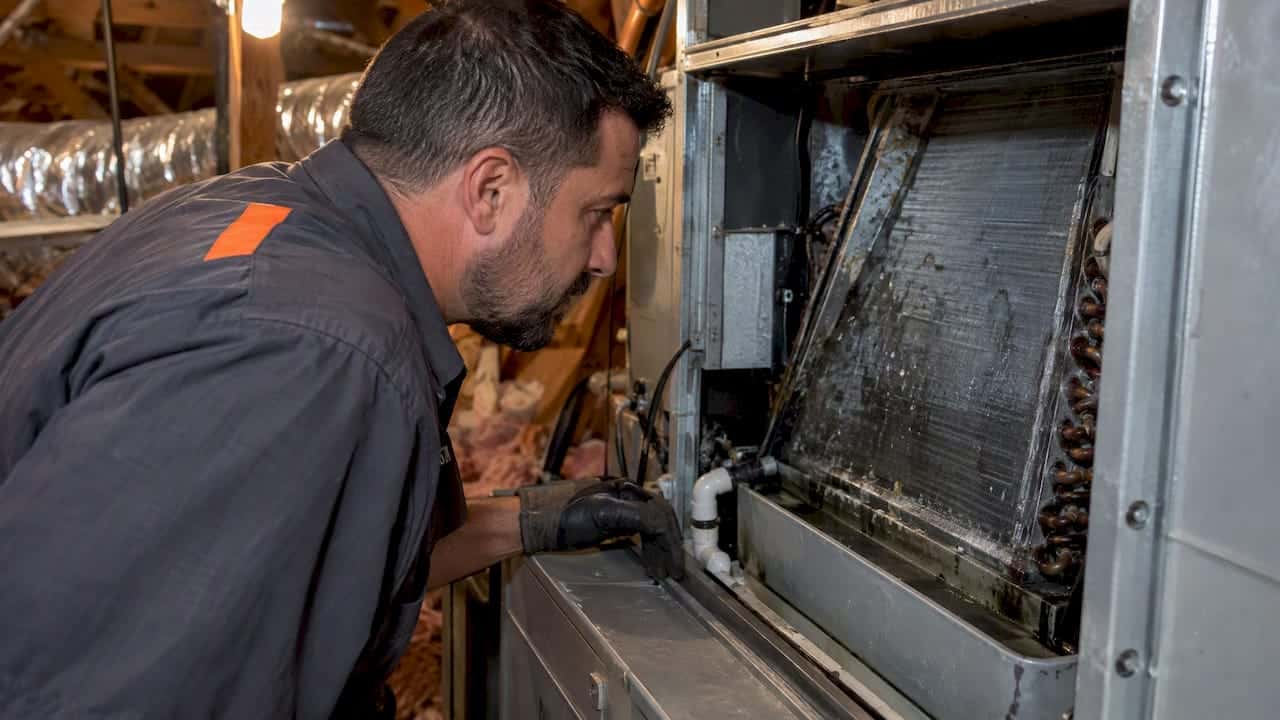
Frozen evaporator coil
A frozen coil is usually a downstream symptom of another problem, most often a dirty filter or low refrigerant. Running a system with a frozen coil risks liquid refrigerant slugging back to the compressor, which can destroy it. Symptoms include ice visible on the indoor unit or refrigerant lines, reduced airflow, and water dripping as the ice melts. High-humidity climates and homes with undersized return ducts are especially prone to this failure.
Compressor failure
The compressor is the heart of your AC system, and replacing it is the most expensive single repair you’ll face. Hard-starting, loud clanking or grinding sounds from the outdoor unit, the system running but not cooling at all, and a compressor that hums but won’t start are all warning signs. Compressor failures often follow years of stress from dirty filters, low refrigerant, or failed capacitors that were never addressed. Poor installation and incorrect system sizing also accelerate compressor wear significantly, according to Trane’s guidance on AC lifespan.
Condenser fan or blower motor failure
The condenser fan sits in the outdoor unit and expels heat from the refrigerant. The blower motor inside the air handler pushes conditioned air through your ducts. When either fails, the system loses its ability to move heat effectively. A condenser fan failure causes the outdoor unit to overheat and shut down on a high-pressure limit. A blower failure means cool air never reaches your rooms even if the compressor is running fine. Listen for grinding, squealing, or a complete absence of airflow as early warning signs.
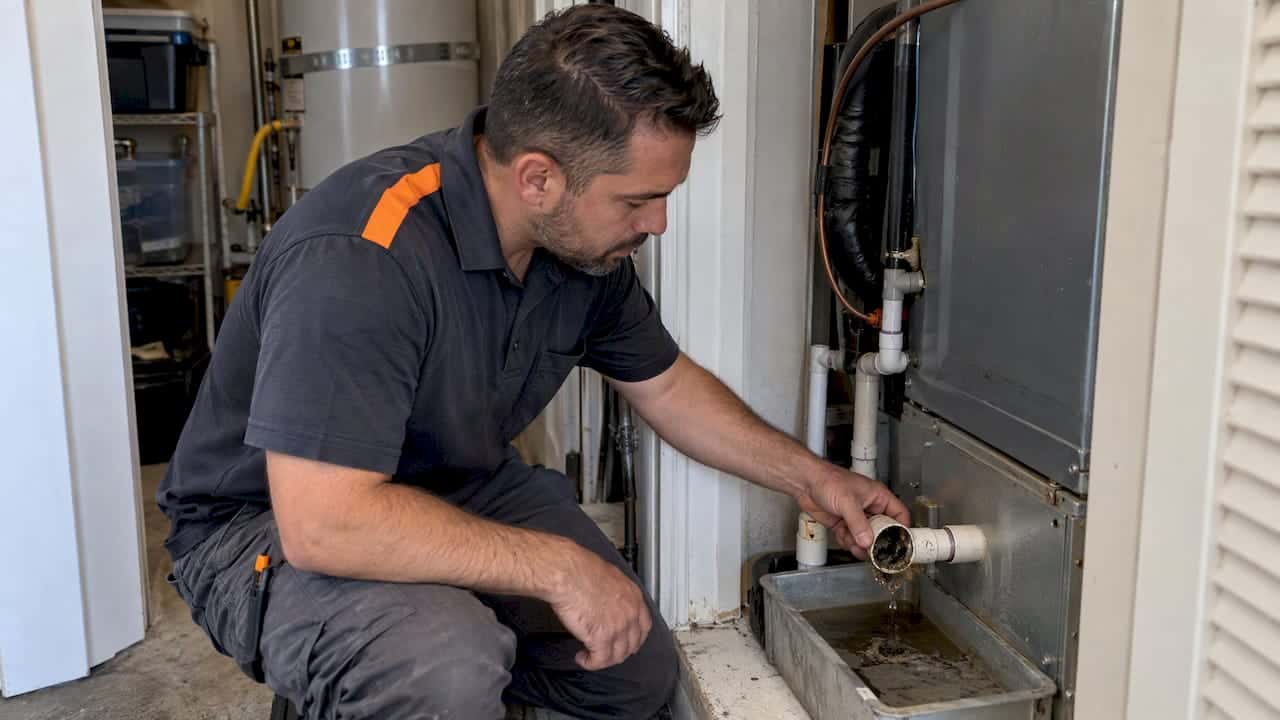
Clogged condensate drain line
Your AC removes humidity from the air, and that moisture drains through a condensate line. Clogged condensate drains are the leading cause of indoor water leaks during humid summers, with algae and sludge being the primary culprits. A partial clog triggers the float switch, which shuts the system down to prevent water damage. You’ll see water in the overflow pan, water stains near the air handler, or the system shutting off for no apparent reason.
Thermostat or control problems
A faulty thermostat can mimic almost any other AC failure. Dead batteries, a thermostat placed in direct sunlight or near a heat source, loose wiring, or a failed control board can all cause erratic cycling, a system that won’t turn on, or one that runs without reaching the set temperature. Smart thermostats add Wi-Fi and software variables to the mix, so a firmware glitch or lost connection can also be the culprit. Always rule out the thermostat before assuming a mechanical failure.
Tripped electrical breaker or electrical fault
A breaker that trips once may have done so from a momentary power surge. Repeated tripping after a single reset almost always indicates a shorted capacitor, an overheating compressor, or a wiring fault, and continuing to reset it presents a real fire risk. Other electrical symptoms include a burning smell from the air handler or outdoor unit, visible scorch marks on wiring, or a system that won’t power on at all despite a functioning breaker.
Ductwork and airflow restriction
Leaky, crushed, or disconnected ducts can waste a significant portion of your conditioned air before it ever reaches a room. Symptoms include hot and cold spots throughout the house, rooms that never reach the set temperature, and higher-than-expected energy bills. Closed or blocked registers, furniture pushed against return vents, and improperly sized ductwork all compound the problem. Oversized or undersized systems make duct issues worse because the equipment was never matched to the actual load of the home.
Pro Tip: If your outdoor unit hums but the fan won’t spin, try gently pushing the fan blade with a long stick while the unit is running. If it starts spinning, a failed capacitor is the likely culprit. Stop the system and call a technician rather than continuing to run it.
How do you safely troubleshoot a central AC that isn’t working?
Work through these steps in order. Stop at any point where you see a red flag and call a professional instead.
- Turn the thermostat to OFF. Before inspecting anything, set the thermostat to OFF to prevent the system from cycling on while you’re checking components. Never touch wiring or open electrical panels beyond the main breaker box.
- Check the thermostat settings and batteries. Set it to COOL, set the target temperature at least 5°F below room temperature, and replace the batteries if the display is dim or blank.
- Inspect and replace the air filter. Pull the filter and check it. If it’s gray, matted, or you can’t see light through it, replace it immediately. A new filter costs $5–$50 and solves a surprising number of no-cool calls.
- Check the breaker panel. Find the breaker labeled for the AC or air handler. If it’s tripped, reset it once. If it trips again within minutes, leave it off and call a technician.
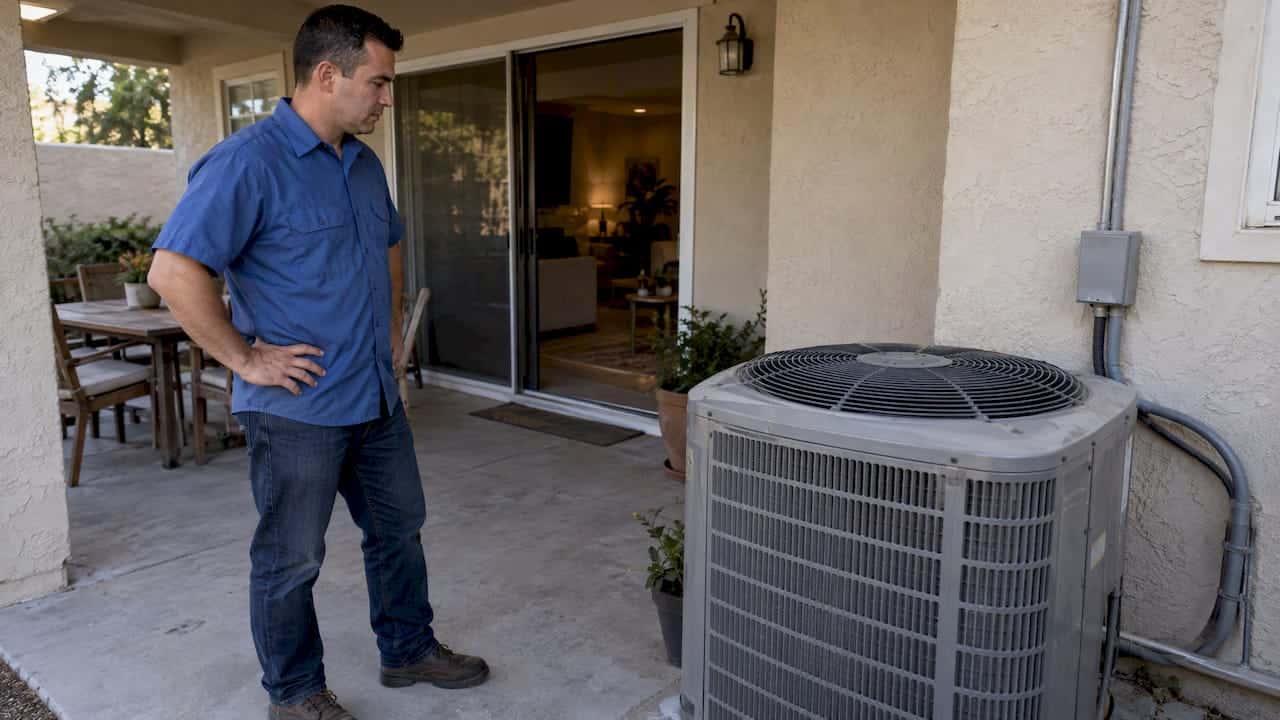
- Inspect the outdoor unit. Clear any leaves, grass clippings, or debris from around the unit. Confirm the fan is spinning when the system is running. Keep vegetation at least 2–3 feet away from all sides.
- Look for ice on the refrigerant lines or indoor coil. Ice on the copper lines running to the outdoor unit or on the indoor coil means the system is frozen. Do not run it in this condition.
- Check the condensate drain pan. Look under the air handler for standing water. If the pan is full, the drain line is likely clogged. You can try flushing the drain line with a wet/dry vacuum at the outdoor drain port.
What NOT to do:
- Do not add refrigerant yourself. It requires EPA certification and specialized equipment.
- Do not repeatedly reset a tripped breaker. One reset is the limit.
- Do not open the electrical panel inside the air handler or outdoor unit beyond the main disconnect.
- Do not run the system if you see ice on the coil or lines.
Pro Tip: To safely thaw a frozen coil, turn the thermostat to OFF (compressor stops) but set the fan to ON. This circulates warm air over the coil without running the compressor. Wait 2–4 hours before turning the system back to COOL. If it freezes again, the root cause (dirty filter or low refrigerant) hasn’t been fixed, and a technician visit is the next step.
You can find additional guided steps at the LC Heating and Air Conditioning how-to hub for common central air conditioning problems.
When should you call a professional HVAC technician?
Some symptoms are beyond safe DIY territory. Call a licensed technician immediately if you notice any of the following:
- Burning smell from the air handler or outdoor unit. This can indicate an overheating motor, melting insulation, or an electrical arc. Shut the system off at the thermostat and the breaker.
- Breaker trips again after a single reset. A shorted capacitor or overheating compressor is the likely cause, and continuing to reset the breaker risks fire or permanent equipment damage.
- Hissing or bubbling sound near the refrigerant lines. This is the sound of refrigerant escaping. Only EPA-certified technicians may legally handle refrigerant under Section 608.
- Compressor humming but not starting. A hard-starting compressor can burn out within minutes. Don’t let it keep trying.
- Oil stains or refrigerant residue around fittings or the outdoor unit. These are physical signs of a leak.
- Visible arcing, smoke, or scorch marks on any wiring or component. Shut everything off immediately.
- Water actively leaking onto finished surfaces, drywall, or flooring. A clogged condensate drain that’s overflowing can cause thousands of dollars in water damage.
When a technician arrives, a thorough diagnostic typically includes: a safety inspection of electrical connections, an amp-draw test on the compressor and fan motors, a capacitor test with a multimeter, refrigerant pressure checks on both the high and low sides, a leak detection sweep, a condensate system inspection, and an airflow measurement across the coil. Most diagnostics take 30–90 minutes. Simple repairs like a capacitor swap or drain flush are often completed the same day. Refrigerant leak repair and recharge, or a compressor replacement, typically takes 1–3 days depending on parts availability.
What do AC repairs typically cost, and when should you replace instead of repair?
Repair costs vary by component, labor rates, and refrigerant type. These ranges reflect typical ballpark figures for U.S. homeowners and are not guarantees.
| Repair Type | Typical Cost Range | Timeline |
|---|---|---|
| Air filter replacement | $5–$50 (DIY) | Immediate |
| Capacitor replacement | $80–$250 | Same day |
| Contactor replacement | $70–$300 | Same day |
| Condensate drain unclog | $75–$200 | Same day |
| Thermostat replacement | $100–$350 | Same day |
| Blower or condenser fan motor | $300–$900 | 1–2 days |
| Refrigerant leak repair and recharge | $200–$1,200 | 1–3 days |
| Compressor replacement | $1,200–$2,800+ | 2–3 days |
For a deeper look at what drives these numbers, the AC repair cost breakdown from LC Heating and Air Conditioning explains labor, parts, and regional factors in plain terms.
The $5,000 rule explained
The $5,000 rule is a simple heuristic: multiply the system’s age (in years) by the estimated repair cost. If the result exceeds $5,000, replacement is generally worth considering over repair. For example, a 12-year-old system facing a $500 repair scores $6,000, nudging toward replacement. Trane’s repair-and-replace guidance is clear that this rule is a conversation starter, not a final verdict.
Several factors can override the math:
- Warranty status. A system still under a manufacturer’s parts warranty changes the cost equation significantly.
- Refrigerant type. Systems using R-22 refrigerant face higher repair costs because R-22 is phased out and expensive. A leak on an R-22 system often tips the decision toward replacement.
- SEER2 efficiency. A new system with a higher SEER2 rating may pay back its cost in energy savings within a few years, especially in a hot climate like Los Angeles.
- Installation quality. A poorly installed system that has caused repeated failures may not perform better after a repair.
ServiceTitan’s replacement data puts the median residential AC replacement age at 15.3 years. A well-maintained unit in a moderate climate can last 15–20 years; heat stress and neglect can cut that to 10–12 years. If your system is past 15 years and facing a major repair, replacement is often the smarter long-term investment. The repair vs. replacement guide from LC Heating and Air Conditioning walks through the full decision framework.
How can you prevent central AC failures before they happen?
Most central air conditioning problems are preventable with a consistent maintenance routine. Here’s what to do and when:
Spring (before cooling season):
- Replace or clean the air filter.
- Schedule a professional tune-up: coil cleaning, electrical connection check, refrigerant pressure test, and thermostat calibration.
- Clear vegetation and debris from around the outdoor unit, maintaining at least 2–3 feet of clearance on all sides.
- Flush the condensate drain line with a diluted bleach solution to prevent algae buildup.
Monthly during cooling season:
- Check the air filter and replace it if it looks loaded with dust.
- Glance at the condensate overflow pan for standing water.
- Listen for any new sounds: grinding, squealing, or a humming outdoor unit that won’t start.
Fall (before heating season, for combined systems):
- Inspect the blower motor and belt if applicable.
- Check duct connections in accessible areas for gaps or disconnections.
- Confirm the thermostat switches correctly between heating and cooling modes.
Year-round habits that reduce failure risk:
- Keep all supply registers open, even in unused rooms. Closing too many registers creates pressure imbalances that stress the blower and ductwork.
- Reduce indoor humidity sources near return air vents (dryers, cooking steam, bathroom exhaust).
- If you’re in a shaded yard, positioning the outdoor unit where it gets afternoon shade can reduce heat stress on the compressor and capacitors.
Proper sizing and installation quality are the two factors homeowners can’t fix after the fact but should get right from the start. An oversized system short-cycles, which prevents proper dehumidification and wears out contactors and capacitors faster. An undersized system runs constantly and overheats. Poor installation materially increases failure rates and shortens system lifespan, so choosing a qualified installer matters as much as choosing the right equipment. LC Heating and Air Conditioning’s preventive maintenance plans cover all of these seasonal checks in a single scheduled visit.
What LC Heating and Air Conditioning technicians see most often in Los Angeles homes
LC Heating and Air Conditioning serves Los Angeles homeowners from historic bungalows with original ductwork to modern multi-zone systems, and same-day service is available for urgent failures.
Key Takeaways
Dirty filters and failed capacitors together account for the majority of central AC service calls, making regular filter changes and annual tune-ups the highest-return preventive steps a homeowner can take.
| Point | Details |
|---|---|
| Check filter first | Nine out of ten no-cool calls trace to a clogged filter or restricted airflow — replace it before calling anyone. |
| Capacitors fail most often | Capacitor failures account for roughly 20–22% of residential AC service calls; a humming outdoor unit that won’t start is the classic sign. |
| Never reset a breaker twice | If the breaker trips again after one reset, shut the system off and call a technician — repeated resets risk fire or compressor damage. |
| Median AC lifespan is 15.3 years | Use the $5,000 rule as a starting point for repair vs. replace decisions, but factor in warranty, refrigerant type, and SEER2 rating. |
| LC Heating and Air Conditioning | Offers flat-rate diagnostics, same-day service, and EPA-certified refrigerant handling for Los Angeles homeowners. |
What most homeowners get wrong about AC failures
The conventional wisdom is that a broken AC means something expensive is wrong. In practice, the opposite is usually true. The most common central air conditioning problems are also the cheapest and fastest to fix, and they almost always start with something the homeowner could have caught weeks earlier.
What I see repeatedly is homeowners who waited. They noticed the house wasn’t cooling as well as it used to, assumed it was just the heat, and kept running the system. By the time they called, a $30 filter problem had become a $400 frozen-coil service call, or a $150 capacitor had turned into a $2,000 compressor repair. The system was sending signals the whole time.
The other mistake is assuming that a system that’s still running is a system that’s fine. A central AC can run continuously, draw full power, and still be delivering almost no cooling if the refrigerant charge is low or the coil is partially frozen. Your energy bill goes up; your comfort goes down. Those are the signals worth acting on early.
If you want to share a specific situation your system has been through, LC Heating and Air Conditioning welcomes those conversations.
LC Heating and Air Conditioning is ready when your AC isn’t
When your central AC stops cooling and the quick checks haven’t solved it, you need a technician who will tell you exactly what’s wrong and what it will cost before touching anything. LC Heating and Air Conditioning provides same-day HVAC diagnostics and repair in Los Angeles with flat-rate pricing that means no surprise invoices. Every diagnostic visit includes written findings, actual test readings, and a clear recommendation on whether repair or replacement makes more sense for your system and budget. The team is EPA-certified for refrigerant handling and checks your manufacturer warranty before recommending any work.
For homeowners who want to stay ahead of failures, LC Heating and Air Conditioning’s AC tune-up service covers the full seasonal checklist in one visit. Schedule an inspection or request same-day service at lahvaclc.com/services.
Useful sources
- Why Isn’t My AC Working? 2026 Guide | Cool Call Pro — Comprehensive troubleshooting sequences, frozen-coil protocol, and breaker-reset safety guidance used throughout this article.
- Most Common AC Repairs and What Causes Them | KeithKey HVAC — Field service data on capacitor failure rates and soft electrical failures as the leading repair category.
- Top 10 Most Common AC Repairs | MTView Heating — Refrigerant leak causes, condensate drain failure patterns, and repair cost context.
- Repair and Replace Guidance | Trane — Industry-standard framing of the $5,000 rule and its caveats, including warranty and refrigerant type.
- How Long Do Air Conditioners Last? | Trane — Manufacturer guidance on installation quality, sizing, and their impact on system lifespan.
- Major Home Equipment Average Lifespan | ServiceTitan State of the Trades — Aggregated replacement data showing median AC replacement age of 15.3 years.
- How Long Do Air Conditioners Last? | Carrier — Context on how climate and maintenance affect the 15–20 year lifespan range for well-maintained units.
- 8 Air Conditioner Problems and How to Fix Them | Consumer Reports — Independent homeowner-facing troubleshooting reference covering common AC system issues and safe DIY checks.
FAQ
What are the most common central AC failures?
The most common central AC failures are dirty or clogged air filters, failed run capacitors, and refrigerant leaks. Together, these three account for the large majority of residential no-cool service calls.
What is the $5,000 rule for HVAC?
The $5,000 rule is a heuristic: multiply the system’s age in years by the estimated repair cost, and if the result exceeds $5,000, replacement is worth considering. Trane recommends treating it as a starting point, not a final answer, since warranty status, refrigerant type, and SEER2 efficiency can all shift the decision.
What is the average lifespan of a central AC unit?
ServiceTitan’s replacement data puts the median residential AC replacement age at 15.3 years. A well-maintained unit in a moderate climate can last 15–20 years, while heat stress and neglect can reduce that to 10–12 years.
What is the most common HVAC repair?
Capacitor replacement is the most common electrical repair, representing roughly 20–22% of residential AC service calls. Filter-related issues (frozen coils, reduced airflow) are the most common overall cause of service calls, with nine out of ten no-cool calls tracing back to a clogged filter or restricted airflow.
When is it unsafe to keep running a struggling AC?
Stop running the system immediately if you see ice on the refrigerant lines or indoor coil, smell burning from the unit, or the breaker trips again after a single reset. Running a frozen system risks compressor damage, and a burning smell or repeated breaker trips can indicate an electrical fault with fire risk.
Recommended
Leo, Owner & Lead Technician at LC Heating & Air
Leo leads LC Heating & Air as an owner-operator and holds California CSLB C-20 HVAC license #1073586. His guides focus on practical diagnostics, safe repair decisions, and clear advice for Los Angeles homeowners.