LC Heating & Air provides commercial HVAC service tailored to small and mid-size businesses in Hidden Hills. We handle rooftop units, split systems, and mini splits. We pull permits, prioritize minimal downtime, and give you a straightforward opinion on repair versus replacement.
Commercial HVAC Repair & Service in Hidden Hills
LC Heating & Air provides commercial HVAC in Hidden Hills — including commercial HVAC repair, commercial air conditioning, rooftop unit repair, commercial HVAC maintenance. Whether you need same-day service, a written estimate, or help deciding between repair and replacement, our licensed technicians handle every make and model.
We repair and service all major HVAC brands in Hidden Hills, including Carrier, Trane, Lennox, York, and Goodman, and older or discontinued units. No matter the manufacturer, we diagnose the problem accurately and give you an upfront price before any work begins.
If you run a business in Hidden Hills, your HVAC system directly affects your customers, employees, and your bottom line. I'm Leo, owner of LC Heating & Air, and I've been working on commercial systems for over 20 years. We specialize in small to mid-size commercial HVAC in the 2–20 ton range, including rooftop units, split systems, and ductless applications. When you call us, you get a licensed contractor (CSLB #1073586) who shows up on time and tells you what's going on in plain English.
Hidden Hills is a unique area, built into hillsides with winding roads and gated access. That affects how we approach commercial HVAC service. Whether it's a retail space, office, restaurant, or medical office, we plan for access, rooftop placement, and line routing long before the job starts. Our goal is to keep your business comfortable while causing as little disruption as possible. This page covers what you need to know about commercial HVAC in Hidden Hills, from common problems to cost factors and how we handle the work.
Consideraciones HVAC locales
Hidden Hills is guard-gated; we coordinate with HOA for entry.
Steep slopes require careful equipment placement and rigging plans.
All commercial HVAC work requires permits; we pull them.
Some commercial properties require HOA vendor approval; we help with that.
Common Commercial HVAC Problems in Hidden Hills
Commercial HVAC systems in Hidden Hills face specific challenges because of the hillside environment and the varied building layouts. Sun exposure and slope angle can cause one side of a store or office to heat up faster than another, leading to comfort complaints even if the system is running fine. Wind patterns against a hillside also affect rooftop units, sometimes causing erratic readings that throw off control sensors. When a space has rooms tucked behind slopes or under cantilevered sections, the ductwork layout gets more complicated and can suffer from pressure imbalances.
Many commercial systems we see in Hidden Hills lack documented maintenance history, which makes it harder to spot patterns before a breakdown. Common signs include rising utility bills despite normal usage, spotty temperature control across zones, and tenant or customer complaints about stuffiness or drafts. For restaurants and medical offices, temperature and ventilation are especially critical and failures can impact compliance. We focus on identifying these patterns early and addressing them before they require an emergency call.
Hidden Hills Building Stock and Commercial HVAC
Hidden Hills is an exclusive guard-gated city known for estate homes, but it also contains commercial properties such as small office parks, retail centers, and business condos within the master-planned community. Many of these commercial spaces are located in buildings that were originally custom homes converted to business use or newer mixed-use structures built into the hillsides. The construction styles vary greatly, with some spaces having mechanical closets not designed for larger split systems and others requiring rooftop access over sloped tiles.
Because the terrain is steep in many sections, equipment placement often needs creative solutions. A 5-ton rooftop unit might require a crane or careful lifting plan. Ground-mounted units require a flat, stable pad on a hillside lot, which can mean retaining walls or grade adjustments. Service clearances are often tighter than you'd find in a standard commercial zoned area. We factor these building-specific conditions into every proposal so that installation meets code now and service access five years from now.
Our Diagnostic Approach for Commercial HVAC in Hidden Hills
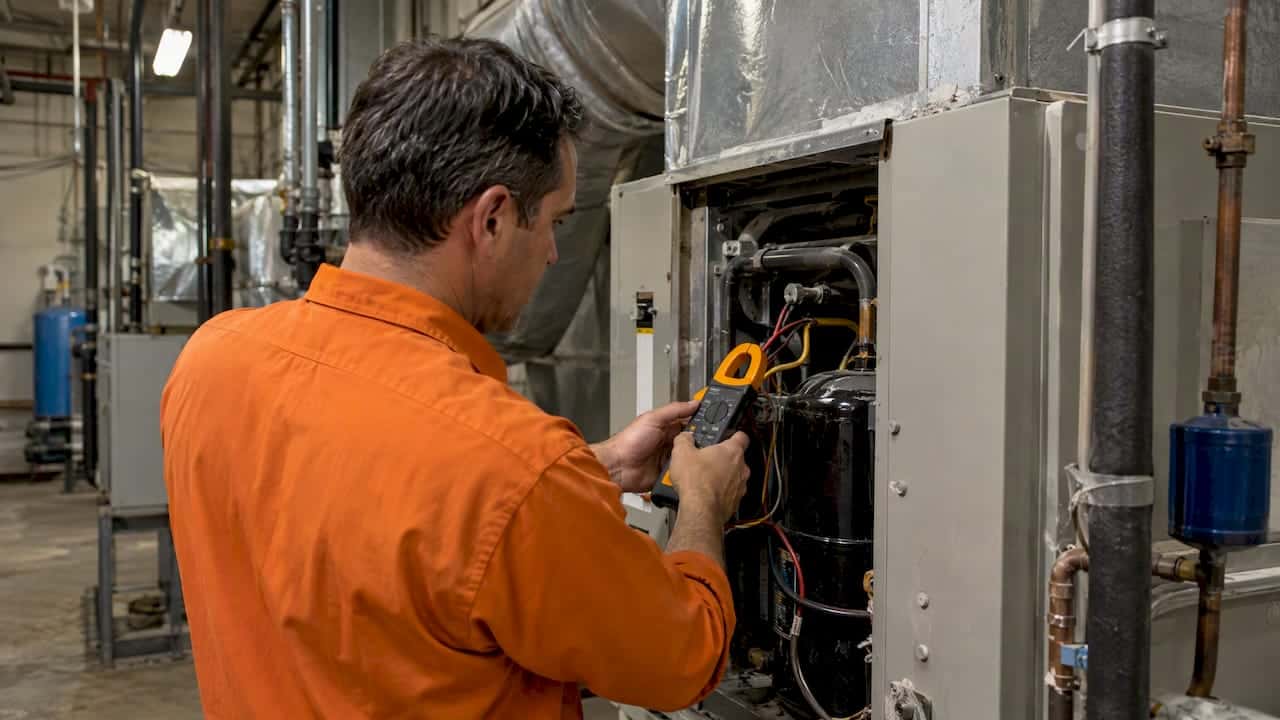
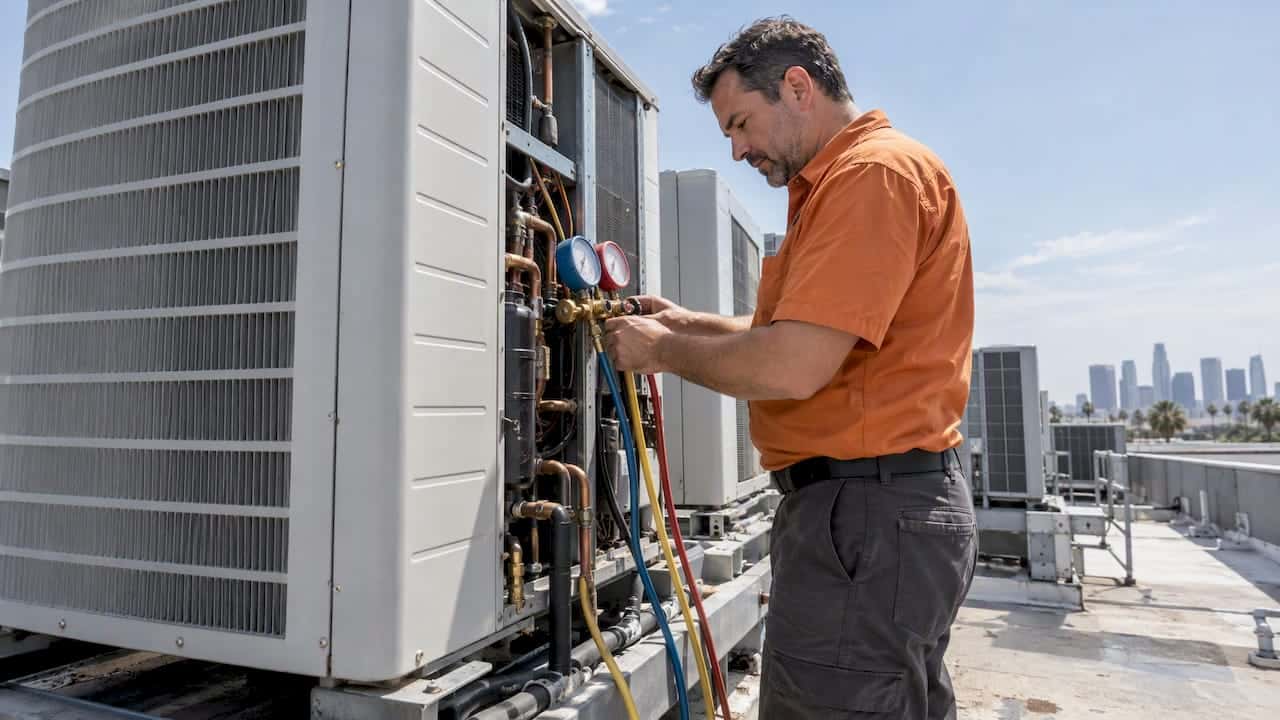
When we arrive at your business in Hidden Hills, we start by listening to your description of the problem and pulling any available maintenance records. Then we inspect the equipment in a systematic order. For rooftop units, we check the age, refrigerant charge, airflow across the evaporator coil, and the condition of the burners and heat exchanger. For split systems, we also verify the line set routing — long runs through attics or under houses are common here and can affect performance. We document static pressure, temperature splits, and electrical readings on the compressor and fan motors.
Tenant comfort is the main gauge, but we also look for root causes that might not be obvious, like a control board failing intermittently or an economizer that's stuck. We minimize disruption by scheduling diagnostics during off hours if needed. After testing, we explain what we found and what it means for the life of your system. If the problem points to a repair that makes sense, we'll quote it. If the pattern suggests replacement is smarter, we'll show you the numbers. That's how I operate — straight advice based on what the equipment tells me.
Repair or Replace Your Commercial HVAC?
Deciding whether to repair or replace a commercial HVAC system comes down to several factors: the age of the equipment, the cost of the repair relative to replacement, the availability of parts, and the efficiency difference. For example, if a 15-year-old rooftop unit needs a compressor replacement costing $2,500 and it's running on R-22 refrigerant (which is being phased down), that money might be better put toward a new unit with lower-GWP refrigerant and a much higher SEER rating. On the other hand, a 5-year-old system with a failed capacitor is a straightforward repair that doesn't call for replacement.
We never push replacement just to make a sale. In Hidden Hills, the access and logistics can make replacement more expensive — sometimes a crane rental is required to set a new rooftop unit. That changes the cost equation. But if we see that the system is in its last third of expected life and repairs are becoming frequent, we lay out the long-term cost projections clearly. Our written estimates include the options so you can make an informed decision without pressure.
Cost Factors and Potential Rebates for Commercial HVAC
Commercial HVAC costs vary widely based on system size, complexity, and site conditions. Our diagnostic fee for commercial systems ranges from $175 to $350 depending on the number of units and accessibility. Repairs typically fall between $250 and $2,500, including parts and labor. Rooftop unit service visits run $200 to $500. For full system installations, we provide a custom quote after a site assessment because so many variables are unique to your building and your load requirements.
Rebates and incentives for commercial HVAC upgrades are available through Southern California Edison and SoCalGas, often for high-efficiency equipment or adding variable-speed drives. We help you identify what's available but we don't apply discounts in advance. The total cost includes pulling necessary permits, inspections, and compliance with Title 24. We spell out every line item in the proposal — no surprises. If a rebate is applicable, we guide you through the application paperwork.
Access and Scheduling for Commercial HVAC in Hidden Hills
Hidden Hills is a guard-gated community, which means we coordinate with the homeowners association or guest services before every appointment to ensure our vehicles and equipment can enter smoothly. Many commercial properties in the area are located on narrow, winding roads with limited parking for a service van. We plan for that — including any special equipment needed to reach rooftop or side-yarded mechanicals. Hillside access often requires extra rigging or ladder extensions. We schedule these logistics before the job so we're not wasting time on the day of service.
For emergency calls, we answer the phone within 30 minutes and can prioritize commercial systems during business hours. We understand that a downed HVAC system costs you sales or disrupts your work environment. If the issue is urgent, we'll do our best to accommodate same-day or next-day service. However, on-site arrival time depends on our current workload and the nature of the call; we don't promise a blanket 60-minute arrival. We communicate honestly about when you can expect us.
Common Mistakes Hidden Hills Business Owners Make with HVAC
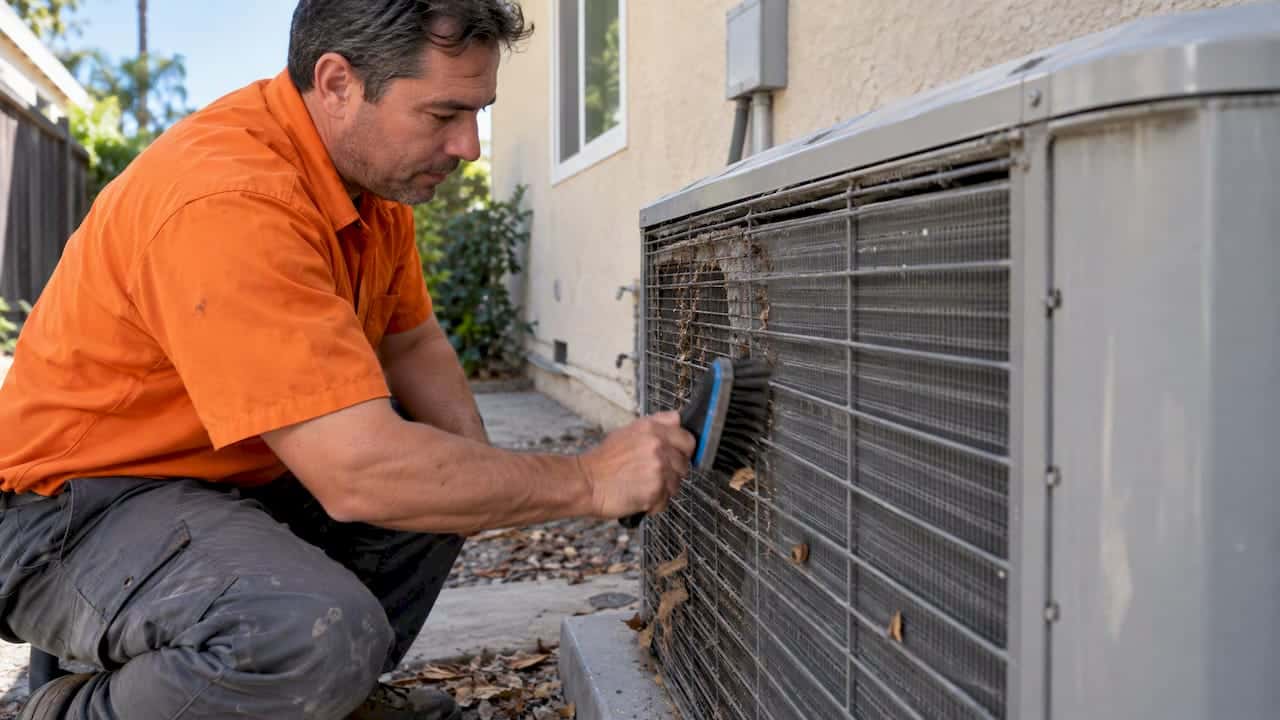
One of the biggest mistakes we see is neglecting routine maintenance on commercial systems, particularly on rooftop units. In Hidden Hills, trees drop leaves and debris that can clog condenser coils in the fall and spring. Without regular cleaning, your system loses efficiency and can overheat. Another mistake is ignoring unusual sounds or smells until a full breakdown occurs. By the time you call us, a small refrigerant leak might have destroyed the compressor, turning a $200 repair into a $2,500 fix.
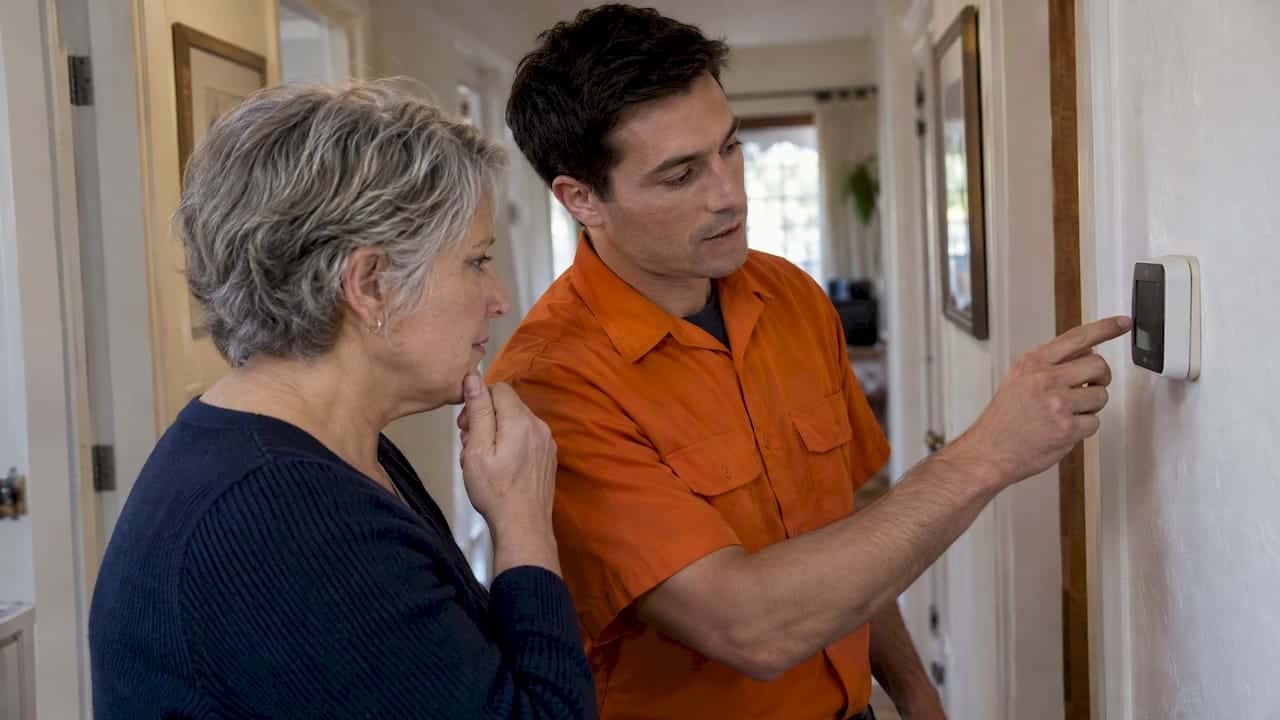
A less obvious but costly mistake is improper thermostat or zone control setup. Many commercial buildings here were converted from residential or built with outdated zoning. We often find that the controls are not correctly configured for the actual occupancy or layout. Another issue is not pulling permits for replacement work; unpermitted installations can cause problems with insurance and property value. We handle permits for every job we install, so your system is documented and up to code.
Commercial Indoor Air Quality and Safety in Hidden Hills
Indoor air quality is a serious concern for any business, especially in spaces where customers and employees spend many hours. We look at ventilation rates, filter condition, and whether the system brings in adequate outdoor air. In commercial kitchens, makeup air systems must be balanced with the exhaust to maintain negative pressure and safety. For medical offices, filtration levels and humidity control affect compliance with health standards. We also check for carbon monoxide risks from combustion equipment, especially in spaces that share ventilation with attached parking.
In hillside areas, there's a risk of outdoor unit exhaust re-entering the building if wind patterns push it back. We evaluate placement of intakes relative to exhausts and surrounding topography. If there's a gas furnace system, we inspect heat exchangers for cracks. Our aim is to provide a comfortable and healthy environment that meets safety codes. If your building has been renovated or had additions, the ventilation may no longer be adequate — we can measure and advise on improvements.
How to Decide the Best Path for Your Commercial HVAC
If your equipment is less than 10 years old and the repair is under half the cost of a new system, repairing usually makes good sense. If the unit is older, uses R-22 refrigerant, and has needed multiple repairs recently, replacement is often more cost-effective in the long run. The same is true if your energy bills are high — a new efficient unit can save you 20-30% annually.
We also recommend considering your business continuity. If a breakdown means you have to close your doors or lose product, investing in a new system with a manufacturer warranty and maintenance program might be the prudent choice. We'll sit down with you, look at the numbers, and give you our honest take. There's no upsell pressure — just the facts.
Cómo funciona la visita
We inspect your commercial system, document current equipment, and identify issues.
We provide a detailed written proposal including equipment, labor, permit costs, and timeline.
Permitted installation or repair completed with minimal disruption to business operations.
Written completion documentation, permit sign-off, and maintenance records provided.
Factores de costo que revisamos antes de cotizar
- • System tonnage and complexity (2 to 20 tons typically)
- • Access difficulty (rooftop vs. ground, slope, gates)
- • Permit and inspection fees (LADBS or city)
- • Refrigerant type (R-410A vs. R-454B vs. R-22 phaseout)
- • Ductwork modifications or replacements needed
- • Controls and thermostat upgrades
Próximos pasos útiles
Commercial HVAC in Hidden Hills at a glance
- • LC Heating & Air is a licensed C-20 HVAC contractor (CSLB #1073586) serving Hidden Hills and LA County.
- • Founded in 2020, owner Leo brings 20+ years of hands-on commercial HVAC experience.
- • Emergency calls answered within 30 minutes; same-day service available for commercial breakdowns.
- • NATE-trained technicians, EPA-certified for refrigerant handling.
- • Specialize in small to mid-size commercial systems (2-20 tons) including RTUs, split systems, and mini splits.
- • Written estimates provided for all commercial projects; permits pulled in-house.
- • Service includes commercial maintenance contracts with documented records.
Our commercial hvac process in Hidden Hills
Reviewed by Leo, Owner & Lead Technician
This commercial hvac guide for Hidden Hills is reviewed for practical HVAC accuracy by Leo at LC Heating & Air. LC Heating & Air holds California CSLB C-20 HVAC license #1073586 and provides written estimates before approved work.
What Hidden Hills customers say about commercial hvac
Verified reviews from homeowners in Hidden Hills and nearby neighborhoods who used our commercial hvac service.
“Our AC stopped working during a heat wave and LC had a technician here within two hours. He diagnosed a bad capacitor, had the part on his truck, and fixed it on the spot. Fair price, no upsell. Will use again.”
“Our furnace wasn't heating evenly upstairs. LC found that half of our ductwork in the attic had separated and was blowing hot air into the attic. Repaired everything and now every room heats equally. Professional and transparent.”