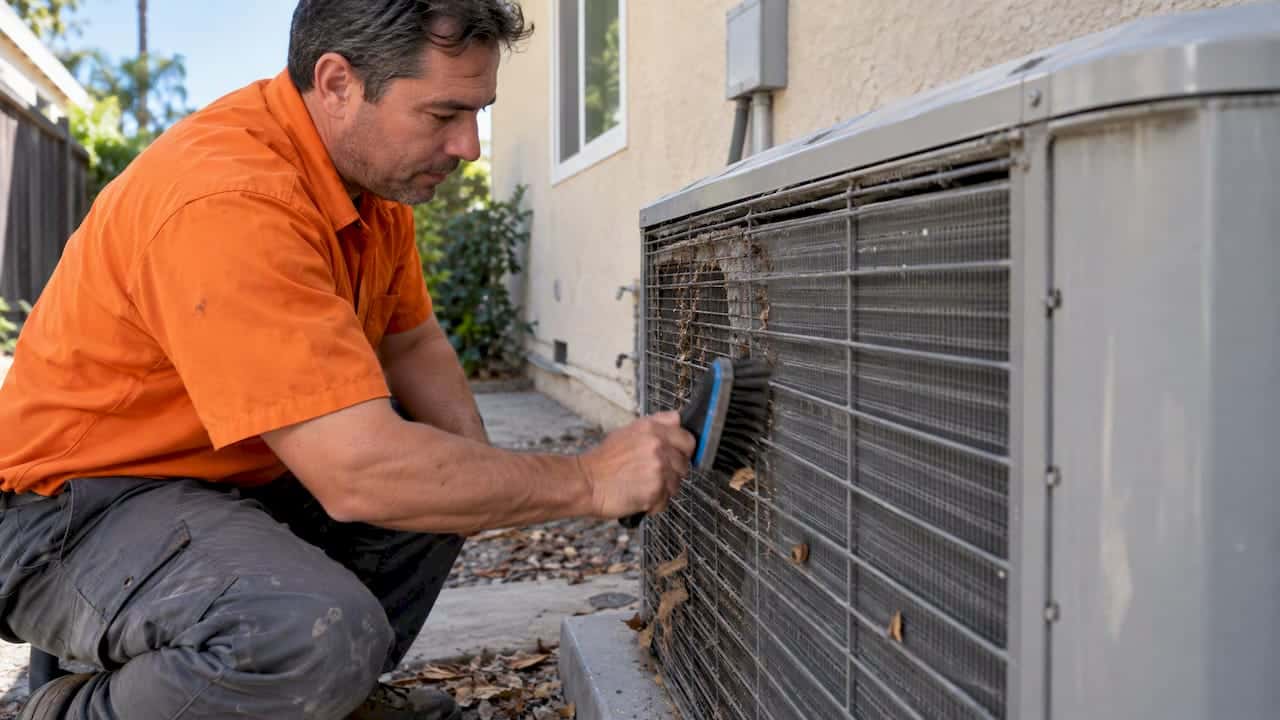
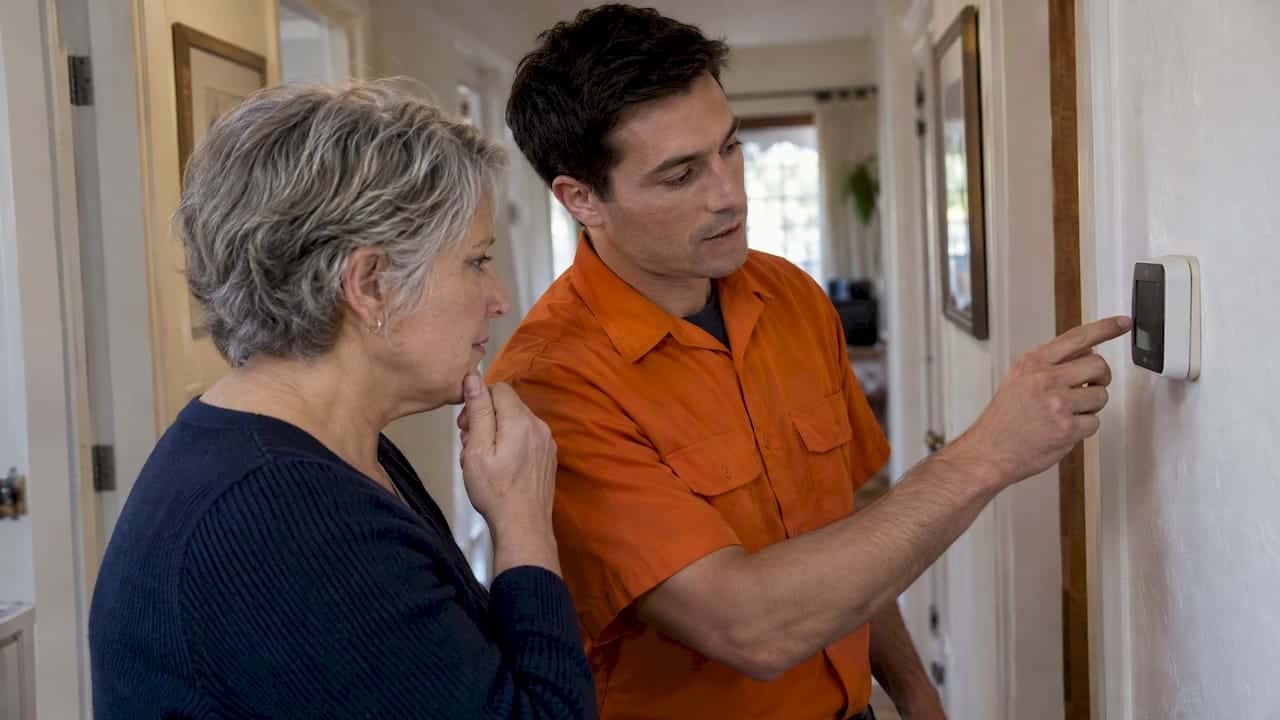
If your Calabasas home needs cooling without ductwork — an ADU, a room addition, or a house built before central AC — a mini split is often the smartest solution. We size each zone, place heads for even airflow, route lines across hillside lots, and handle all electrical work. Single-zone from $3,500–$6,000 installed; multi-zone from $8,000–$22,000. We install Mitsubishi, Daikin, Fujitsu, LG, and Carrier. We also check your eligibility for California heat pump rebates and handle the paperwork.
Mini Split Repair & Ductless AC Service in Calabasas
LC Heating & Air provides mini split repair in Calabasas — including ductless AC repair, mini split installation, ductless mini split service, mini split not cooling. Whether you need same-day service, a written estimate, or help deciding between repair and replacement, our licensed technicians handle every make and model.
We repair and service all major HVAC brands in Calabasas, including Mitsubishi, Daikin, LG, Fujitsu, Samsung, and Carrier, and older or discontinued units. No matter the manufacturer, we diagnose the problem accurately and give you an upfront price before any work begins.
Calabasas sits in the western San Fernando Valley with a mix of estate lots, canyon properties, gated communities like Calabasas Country Club and Hidden Hills, and older custom homes. Many of these homes were built before ductwork was standard, or they have additions — home offices, bonus rooms, garage conversions — that were never tied into the original HVAC system. In those situations, running new metal ductwork is expensive, invasive, and sometimes impossible because of floor plans or hillside construction. A mini split solves that: it connects the indoor head to the outdoor unit through a single 3-inch hole in the wall, with no ductwork required.
Mini splits are heat pumps, meaning they provide both cooling in summer and heating in winter. For Calabasas — where summer temperatures can push well over 100°F in the valley but winter lows rarely dip below freezing — that makes them a year-round solution. They also run on inverter technology, which varies compressor speed continuously instead of cycling on and off, so they hold temperature within a degree and use noticeably less electricity than a conventional central system. At LC Heating & Air, we have been installing ductless systems across Los Angeles since 2020, and my own experience goes back over 20 years. This page walks through what matters when you are considering a mini split in Calabasas.
Consideraciones HVAC locales
91302 (Calabasas, Calabasas Country Club, Hidden Hills)
Hillside homes, estate lots, gated communities, older custom homes
High valley summer temperatures (100°F+), mild winters, significant sun exposure on south and west elevations, tree cover, and slope-driven microclimates
Gated entries require gate codes or guard coordination; narrow canyon roads may require carry or lift truck for equipment; rooftop or hillside placement is common
Calabasas Mini Split Challenges: Hillside Drainage, Sun Exposure, and Gated Access
Calabasas properties often have significant slope, heavy tree cover, narrow roads, and gated entries. Two things that sound minor — where the outdoor condenser sits and how the refrigerant line runs to it — become major decisions on a hillside lot. If we place the outdoor unit on a pad that is not perfectly level or too close to vegetation, airflow gets restricted and efficiency drops. If the line-set path requires a long vertical rise (the outdoor unit sitting below the indoor head), we have to account for oil return in the refrigerant lines, which changes the manufacturer's allowable line lengths. We see systems fail prematurely in Calabasas simply because line routing was not planned for the slope.
Sun exposure is another pattern. A south-facing bonus room with a glass slider and no shade can be 10–15°F warmer than the rest of the house. A standard central system with one thermostat in the hallway cannot correct that imbalance. A properly sized mini split head in that room can. But you need a load calculation that accounts for those windows and orientation, not just square footage. We also see homes where a previous installer oversized the head because they did not measure the windows. That leads to short cycling, poor humidity removal, and a system that never really feels comfortable.
Hillside Homes, Estate Lots, and Gated Communities
The housing stock in Calabasas is not uniform. You have newer Mediterranean-style estates in gated communities with dedicated mechanical rooms and generous outdoor space for equipment. You also have older custom homes from the 70s and 80s on narrow canyon lots where the only place for the outdoor unit is a roof or a tight side yard. Some of those older homes have zero ductwork — they relied on window units or evaporative coolers. Others have undersized ductwork that was adequate for the original home but cannot handle a room addition or a converted garage.
For the country-club neighborhoods like Calabasas Country Club and Hidden Hills, we deal with HOA and security protocols. Coordinating vendor access, scheduling around gate codes and guard hours, and sometimes using a lift truck instead of a ladder because the unit must go on a steep hillside — that adds time but not complexity. We do it regularly. For estate properties, the homeowner often wants the equipment hidden from view. That means ceiling cassettes instead of wall-mounted heads, or locating the condenser behind landscaping. That is doable, but it affects pricing and line-set length, so we cover all that in the written estimate before any work starts.
What We Check Before We Drill Any Holes
When I walk a Calabasas property for a mini split estimate, I start by confirming that the electrical panel has capacity for the new circuit. A mini split needs its own breaker, and on older homes that panel may be full. We also check the wall construction — stucco over lathe versus drywall on wood — because that changes how we run the line set and whether we can hide it in the wall or need a line-set cover. Then I measure every window and door in the zone, note orientation and shading, and do a Manual J load calculation. That gives us the correct BTU size for each head, not a guess.
We also look at condensate drainage. Indoor heads produce water during cooling, and that water has to drain downhill. On a flat lot that is straightforward. On a hillside home where the indoor unit is above a finished room or a garage, we have to plan the drain path carefully, sometimes using a condensate pump to lift the water to a drain point. We include the drain plan in the estimate because it matters to the long-term reliability of the installation.
Repairing a Mini Split Versus Replacing It
Mini splits are simpler in some ways and more specific in others than central systems. If a mini split stops cooling, the first thing we check is the refrigerant charge. A leak means we find it, repair it, evacuate, and recharge. That is a repair and often the fix. But if the compressor in an inverter-drive system fails, replacement can approach half the cost of a new unit. In that case, if the system is over eight to ten years old and out of warranty, replacement is usually the better financial call because the newer units have higher efficiency and quieter operation.
We also see units that were never maintained. The filters get clogged, the coil gets blocked with dust, and the system loses capacity slowly. Cleaning the indoor head coils and replacing the filter often restores performance. But if the drain pan is cracked or the fan motor bearings are grinding, repair is straightforward. We do not push replacement unless the economics are clear. The estimate lays out both options with numbers so you can decide.
Mini Split Cost Factors and Calabasas Rebates
A single-zone mini split in Calabasas typically runs $3,500 to $6,000 installed for a 9,000–18,000 BTU system. That includes the indoor head, outdoor condenser, line set, electrical circuit, condensate drain, and all labor. Multi-zone systems with two to five heads range from $8,000 to $22,000 depending on zone count, head type (wall mount versus ceiling cassette), and line-set complexity. Electrical upgrades — like a new sub-panel or running conduit across a finished garage — add cost. Hillside access requiring a lift truck or extra labor for long line runs also adds to the total, and we itemize those in the written estimate.
Rebates are significant right now. Heat pump mini splits qualify for TECH Clean California incentives up to $3,000, plus SCE rebates up to $1,200 per ton. Federal IRA tax credits can cover up to 30% of equipment cost, capped at $2,000. Eligibility depends on equipment efficiency and your income. We check your qualification during the estimate and handle the paperwork so you do not have to chase forms.
Gated Communities, Guard Gates, and Scheduling in Calabasas
Calabasas has multiple gated neighborhoods, including Calabasas Country Club and Hidden Hills. For those, we need gate codes, guest passes, or coordination with security — a process we handle as part of scheduling. It does not add cost, but it means we confirm access 24 hours before the install date. If the property is on a narrow canyon road, we need to know whether the installation truck can reach the equipment location without blocking the road. Some homes require a short carry up a hillside path, which we note on the estimate.
We offer same-day service options when the schedule allows, but mini split installation is a planned job. A single-zone takes four to six hours. Multi-zone can take one to two days. We schedule around your availability. Emergency calls for a failed system are answered within 30 minutes by phone — we can often diagnose enough over the phone to decide whether a same-day repair visit makes sense.
Installation Mistakes We See Too Often in Calabasas
The most common mistake is undersizing or oversizing the indoor head based on square footage alone. A 500-square-foot room with floor-to-ceiling south-facing glass needs a bigger head than the same square footage with north-facing windows. If you oversize, the unit short-cycles and does not dehumidify. If you undersize, it runs constantly and still cannot keep up. Another mistake is mounting the outdoor unit in direct, full afternoon sun without shade — efficiency can drop 15–20%, and the compressor works harder. We locate condensers on the north or east side when possible or add a sun shield.
Line-set installation errors are also common. If the tubing is crushed, kinked, or has solder flux debris inside, the system will lose capacity and eventually fail. Some installers do not pressure-test the line set before connecting the indoor unit. We test to 600 psi and hold for 15 minutes. We also see condensate drains that were not sloped or not primed, leading to water backup and indoor head leaks. These issues are avoidable with a proper installation process.
Air Quality and Safe Refrigerant Handling
A mini split indoor head sits at high or low on the wall and recirculates the same room air. That means the filter catches dust, pet dander, and pollen — but only if you clean it. We show every homeowner where the filter access is and how often to clean it (every two to four weeks during heavy use). If the filter clogs and the coil gets dirty, moisture builds up and mold can grow on the drain pan. That is why our installation includes a cleanable drain pan and a float switch that shuts the unit off if the drain backs up.
Refrigerant is another safety consideration. Mini splits use R-410A or R-32, which are non-ozone-depleting but operate at high pressure. Our technicians are EPA-certified and handle all refrigerant recovery and charging per code. We do not vent refrigerant. When we install a new system, we record the charge on the startup tag so future service techs know exactly what the system should hold. That matters for safety and performance.
Mini Split or Central AC: What to Consider in Calabasas
If your home has existing ductwork and the ducts are in good shape, central AC is usually more economical for whole-house cooling. If your home has no ducts — or you are cooling a single room, ADU, garage conversion, or an addition that is not tied into the original system — a mini split is the better call. The cost difference is often dramatic because new ductwork in a finished home runs $5,000 to $15,000 or more.
Mini splits also win when you want zone control. A central system with one thermostat cannot keep a sun-baked home office comfortable while the rest of the house is occupied. A multi-zone mini split can. And if you are looking at heat pump efficiency — up to 30 SEER with significant California rebates — a mini split is hard to beat. We size both systems the same way: Manual J load calculation, no shortcuts. You get a recommendation based on your home, not a sales target.
Cómo funciona la visita
We walk the property and measure every zone — windows, doors, ceiling height, insulation, orientation. We check the electrical panel for capacity and look at wall construction to plan line-set routing and condensate drainage. This takes about 45 minutes for a typical single-zone or two-zone system.
We run a Manual J load calculation and select the correct head size and outdoor unit capacity. We identify the best placement for each indoor head and the outdoor condenser, considering air flow, noise, access for future cleaning, and aesthetics. We provide a written itemized estimate.
We mount indoor heads, run line sets and condensate drains, install the outdoor unit on a pad or bracket, make all electrical connections, pressure-test the line set, and evacuate the system. Single-zone jobs take 4–6 hours; multi-zone jobs take 1–2 days.
We test the system in both heating and cooling modes, record the refrigerant charge, and walk you through the remote control and Wi-Fi app. We confirm you know how to clean the filter and what to watch for. We submit rebate paperwork when applicable.
Factores de costo que revisamos antes de cotizar
- • Number of zones: single-zone ($3,500–$6,000) vs multi-zone ($8,000–$22,000)
- • Indoor head type: wall mount is standard; ceiling cassette adds $500–$1,000 per zone
- • Line-set length and vertical rise: longer runs or runs where the outdoor unit is below the indoor head may require larger line sets or additional labor
- • Electrical work: new circuit, sub-panel upgrade, or conduit run across finished space adds cost
- • Access conditions: lift truck, long carry, or hillside setup may increase labor time
- • Permit and HOA requirements: permits are typically included; HOA coordination or special contractor approval may add time
Próximos pasos útiles
Mini Split Installation in Calabasas at a glance
- • LC Heating & Air, 509 N Fairfax Ave, Los Angeles, CA 90036
- • CSLB #1073586 (C-20 HVAC)
- • (323) 970-3113
- • Written estimates before any work; same-day service options available
- • Emergency calls answered within 30 minutes (phone response, not on-site ETA)
- • Mini split installation: single-zone $3,500–$6,000; multi-zone $8,000–$22,000
- • NATE-trained technicians, EPA-certified
Our mini split installation process in Calabasas
Reviewed by Leo, Owner & Lead Technician
This mini split installation guide for Calabasas is reviewed for practical HVAC accuracy by Leo at LC Heating & Air. LC Heating & Air holds California CSLB C-20 HVAC license #1073586 and provides written estimates before approved work.
What Calabasas customers say about mini split installation
Verified reviews from homeowners in Calabasas and nearby neighborhoods who used our mini split installation service.
“Our AC stopped working during a heat wave and LC had a technician here within two hours. He diagnosed a bad capacitor, had the part on his truck, and fixed it on the spot. Fair price, no upsell. Will use again.”
“Called on a Saturday because AC was blowing warm air. LC answered, sent someone the same afternoon. They found and fixed a refrigerant leak. Professional and reasonably priced.”
“Woke up to no AC at 6am. LC was at my door by 9am. Frozen evaporator coil — they explained exactly why it happened (dirty filter + low airflow) and fixed it same visit. Very professional.”