- What components and costs make up an AC repair quote?
- How to compare multiple AC repair quotes fairly
- When should you repair vs. replace based on quotes?
- Strategies to get and manage AC repair quotes safely
- Key takeaways
- What I’ve learned after 20 years of AC repair quotes in Los Angeles
- Get transparent AC repair quotes from LC Heating and Air Conditioning
- FAQ
- Recommended

TL;DR:
- Comparing AC repair quotes requires evaluating itemized estimates to ensure scope, parts, labor, and fees are clear and consistent. A thorough comparison can save homeowners 23% on average and helps determine whether repair or replacement is more cost-effective over time. Always obtain written, transparent estimates from licensed contractors, and consider long-term costs and system age before making a decision.
Comparing AC repair service quotes the right way means evaluating itemized estimates side by side, not just picking the lowest number on the page. The national average for AC repair sits at about $375 in 2026, with minor repairs ranging from $100 to $300 and major work reaching $500 to $2,800. That wide range is exactly why a single quote tells you almost nothing. When you compare HVAC service quotes with a clear framework, you protect yourself from hidden fees, mismatched scopes, and contractors who win jobs by leaving out half the work. This guide gives you that framework, built on 2026 pricing data and practical experience from the field.
What components and costs make up an AC repair quote?
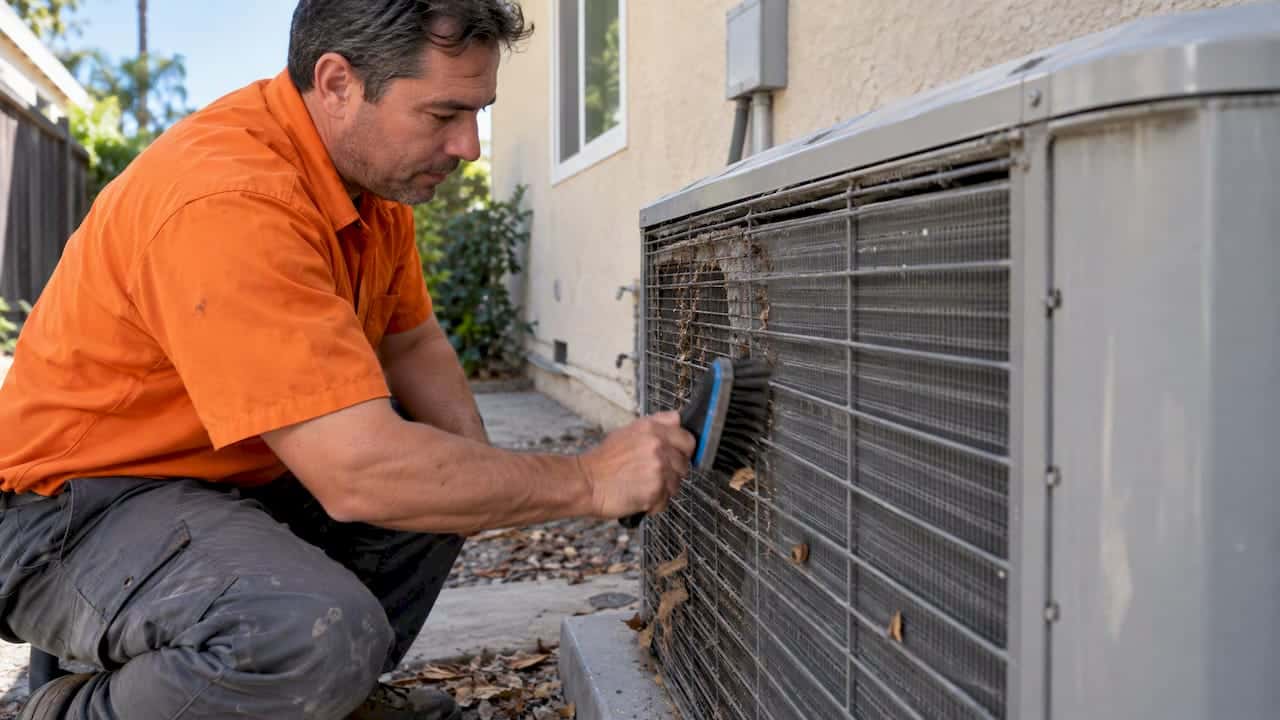
Every AC repair quote is built from the same core categories: diagnostic fees, parts, labor, and any applicable surcharges. Understanding each one lets you read any estimate with confidence and spot gaps before you sign anything.
Diagnostic fees are the starting point. Most contractors charge between $75 and $150 just to assess your system, and that fee is typically credited toward the final repair bill if you hire them. Think of it as the cost of getting an honest answer. Some companies waive it entirely, which sounds appealing but can signal that the real markup is buried elsewhere in the quote. You can learn more about how this works in our guide on HVAC diagnostic fees.
Parts costs vary widely depending on what failed. A capacitor, one of the most common repairs, runs $150 to $400 installed. A contactor replacement falls in a similar range. A refrigerant recharge can cost $200 to $600 depending on the type and amount needed. A compressor replacement, the most expensive single component, typically lands between $1,200 and $2,500. These are not arbitrary numbers. They reflect real parts pricing plus the labor to install them correctly.
Labor rates in most U.S. markets run $75 to $150 per hour. In high cost-of-living areas like Los Angeles, rates at the upper end of that range are standard. A straightforward repair might take one hour. A complex refrigerant leak diagnosis and fix could take three or four. Always ask how labor is billed: flat rate per job or hourly. Flat-rate pricing removes the incentive to work slowly.
Emergency and after-hours surcharges are a category many homeowners overlook until the bill arrives. Emergency service calls can raise your total cost by 50 to 100%, and holiday calls add $150 to $300 on top of standard rates. If your system fails on a Saturday night in July, that context matters when you are comparing quotes.
| Repair Type | Typical Cost Range | Notes |
|---|---|---|
| Diagnostic fee | $75 – $150 | Usually credited toward repair if hired |
| Capacitor replacement | $150 – $400 | One of the most common repairs |
| Refrigerant recharge | $200 – $600 | Depends on refrigerant type and quantity |
| Contactor replacement | $150 – $350 | Often paired with capacitor work |
| Compressor replacement | $1,200 – $2,500 | Major repair; triggers repair vs. replace evaluation |
| Emergency/after-hours surcharge | $150 – $300+ | Applies on weekends, holidays, and late nights |

Pro Tip: Always request a written, itemized estimate before any work begins. A verbal quote is not a quote. It is a conversation.
How to compare multiple AC repair quotes fairly
The lowest quote is not always the best quote. It is often the most incomplete one. Transparent, itemized quotes are the clearest indicator of a trustworthy contractor. A vague one-line estimate that reads “AC repair: $450” tells you nothing about what is included, what warranty applies, or what happens if the technician finds additional problems mid-job.
Fair comparison requires that every quote covers the same scope of work. Here is a numbered checklist to apply to each estimate you receive:
- Diagnostic fee disclosure. Is the diagnostic fee listed separately, and is it credited toward the repair? If a contractor buries it inside a lump sum, ask them to break it out.
- Parts identification. Does the quote name the specific parts being replaced, including brand or model where applicable? Generic language like “refrigerant components” is a red flag.
- Labor hours and rate. Is labor billed flat-rate or hourly? How many hours are estimated? This single question can reveal a $300 difference between two quotes for the same job.
- Warranty terms. What warranty covers the parts? What warranty covers the labor? Industry standard is one year on labor and the manufacturer’s warranty on parts, but some contractors offer two years on labor as a differentiator.
- Permit and disposal fees. Some repairs, particularly refrigerant work, require permits or proper refrigerant disposal. Low bids often exclude permits costing $100 to $250 and disposal fees, which can add $400 to $1,200 in surprise costs to the final bill.
- Equipment specifications. If a quote involves replacing a component like a blower motor or compressor, does it specify the efficiency rating or model? Asking about SEER2 ratings and labor warranty length is the fastest way to compare equipment quality across bids.
- Scope of work statement. Does the quote describe exactly what the technician will do, step by step? A clear scope protects you if the job expands.
Homeowners who collect at least three quotes save an average of 23% on project costs. That savings comes not from finding the cheapest contractor but from having enough information to negotiate and verify that each bid is complete.
Pro Tip: Build a simple spreadsheet with one column per contractor and one row per checklist item above. Fill it in as quotes arrive. The gaps in each column tell you more than the total price does.
When should you repair vs. replace based on quotes?
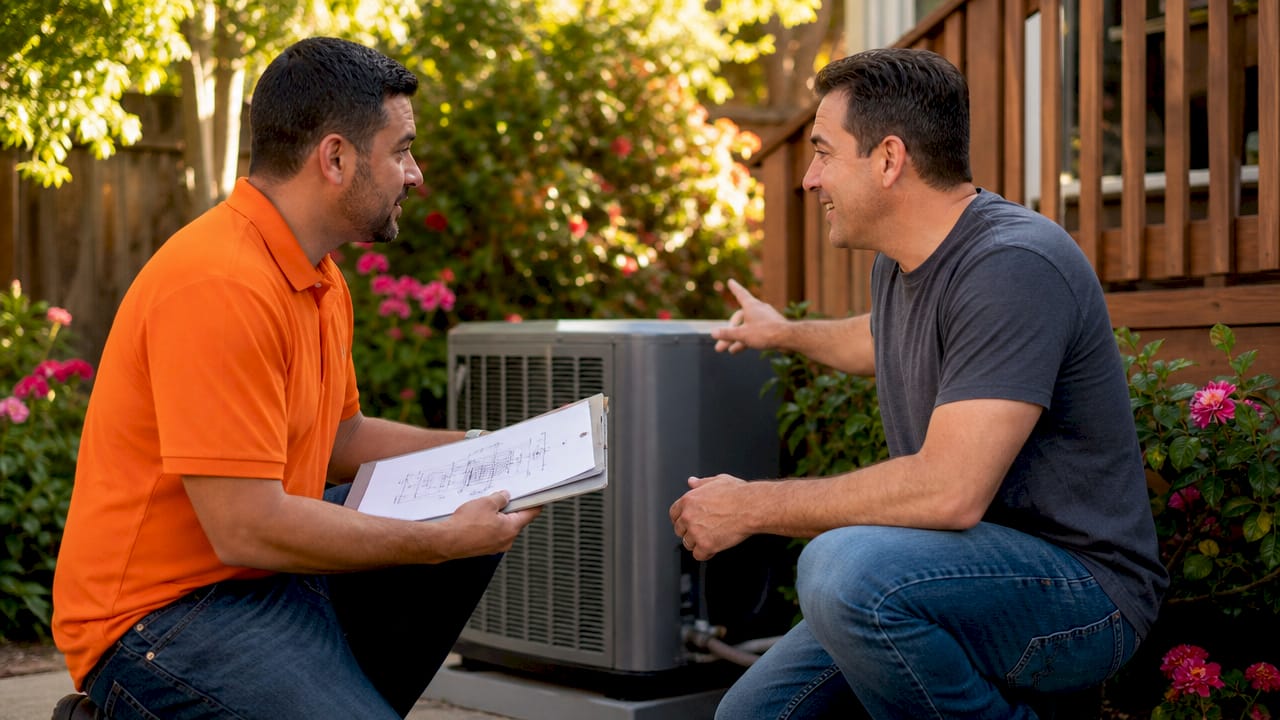
The repair versus replacement decision is one of the most consequential choices a homeowner makes, and a single quote rarely gives you enough information to make it well. The industry has long used the “$5,000 rule” as a quick heuristic: multiply the unit’s age in years by the repair cost, and if the result exceeds $5,000, replacement is worth considering. A 10-year-old unit facing a $600 repair scores 6,000 on that scale, which suggests replacement deserves a serious look.
That said, the 5-year Total Cost of Ownership model is a more reliable framework than the $5,000 rule alone. It factors in installation cost, projected energy savings from a higher-efficiency replacement, available incentives, and expected maintenance over five years. In 2026, federal and state energy-efficiency incentive programs often tilt the economics toward replacement for systems older than 12 to 15 years, especially in California where utility rates are high.
Refrigerant type is another factor that changes the math significantly. Systems that use R-22 refrigerant are operating on an obsolete standard. R-22 costs have risen 500% since the phase-out, and repairs involving it typically run $1,200 to $2,500. At that price point, replacing the system with a modern R-410A or R-32 unit often makes more financial sense, even before accounting for energy savings.
| Factor | Lean Toward Repair | Lean Toward Replacement |
|---|---|---|
| System age | Under 10 years | 12 years or older |
| Repair cost vs. system value | Under 30% of replacement cost | Over 50% of replacement cost |
| Refrigerant type | R-410A or R-32 | R-22 (obsolete, expensive) |
| Energy efficiency | SEER2 rating still competitive | Low SEER, high utility bills |
| Repair history | First or second repair | Repeated repairs in past 2 years |
| Compressor status | Compressor healthy | Compressor failure on older unit |
For any repair quote above $1,000, getting a second opinion is worth the time. A second technician may diagnose the problem differently or find a less invasive fix. You can also review the AC repair vs. replacement factors that apply specifically to California homeowners before making a final call.
Strategies to get and manage AC repair quotes safely
Getting multiple quotes is straightforward in theory and occasionally frustrating in practice. Here is how to do it efficiently while protecting yourself from low-quality contractors and inflated emergency pricing.
-
Request quotes from licensed contractors only. In California, HVAC contractors must hold a C-20 license from the Contractors State License Board (CSLB). Verify any contractor’s license at the CSLB website before scheduling a visit. An unlicensed technician may offer a lower price, but you have no legal recourse if the work fails.
-
Check verified reviews, not just star ratings. Look for contractors with a consistent pattern of reviews mentioning specific technician names, clear explanations, and accurate pricing. A 4.8-star rating with 12 reviews is less meaningful than a 4.6-star rating with 300 reviews that describe real repair scenarios.
-
Ask the right diagnostic questions upfront. Before a technician arrives, ask: “Will you provide a written, itemized estimate before starting any work?” and “Is the diagnostic fee credited toward the repair?” These two questions filter out contractors who rely on pressure tactics once they are inside your home.
-
Handle emergency repairs carefully. When your AC fails during a heat wave, the temptation to accept the first available quote is real. Resist it where possible. Even in an emergency, you can call two or three contractors and ask for a phone estimate based on your description of the symptoms. Emergency AC repair surcharges are legitimate, but they should be disclosed upfront, not added to the invoice after the work is done.
-
Negotiate with data, not emotion. If one contractor’s quote is $200 lower than another’s for the same scope, show the higher-priced contractor the competing estimate and ask if they can match it. Many will. The AC repair cost factors that drive pricing in California give you a solid foundation for that conversation.
Pro Tip: Use trusted local services or direct company websites to request quotes. Aggregator platforms can be useful for initial research, but always verify the contractor independently before scheduling.
Key takeaways
Comparing AC repair service quotes effectively requires itemized estimates, a consistent checklist, and a clear understanding of what each cost component represents.
| Point | Details |
|---|---|
| Itemized quotes are non-negotiable | A vague lump-sum estimate hides scope gaps and makes fair comparison impossible. |
| Three quotes save real money | Homeowners who collect at least three bids save an average of 23% on project costs. |
| Hidden fees change the math | Permits, disposal, and surcharges can add $400 to $1,200 to the lowest bid. |
| Repair vs. replace needs a full TCO model | The $5,000 rule is a starting point; a 5-year cost-of-ownership model gives a more accurate answer. |
| Licensing and reviews matter as much as price | A licensed contractor with verified reviews reduces the risk of poor workmanship and surprise costs. |
What I’ve learned after 20 years of AC repair quotes in Los Angeles
After two decades of working with homeowners across Los Angeles, the pattern I see most often is this: the homeowner who got burned was not the one who paid too much. It was the one who accepted a quote without reading it carefully.
The most common mistake is treating a quote like a receipt instead of a contract. A quote is a proposal. Every line item is negotiable, and every missing line item is a potential surprise. I have seen homeowners accept a quote that looked great on paper, only to discover the contractor excluded refrigerant recovery, the permit, and the electrical disconnect upgrade. Those three items added $800 to the final bill.
Transparency is the single most reliable signal of a trustworthy contractor. When a technician hands you a quote that breaks down parts, labor, diagnostic fees, and warranty terms separately, that level of detail reflects how they work. It is not just paperwork. It is a preview of the job itself.
Seasonal timing also affects pricing in ways most homeowners do not anticipate. Quotes collected in April or October, the shoulder seasons before and after peak cooling demand, tend to come in lower than quotes collected in July. If your system is aging but still functional, scheduling a diagnostic in spring gives you time to compare air conditioning service estimates without the pressure of a 95-degree afternoon.
One more thing: keep every quote you receive, even the ones you decline. When your system needs attention again in two or three years, that paper trail tells you what was repaired, what was quoted but deferred, and which contractors gave you straight answers. That history is worth more than any single estimate.
— Leo
Get transparent AC repair quotes from LC Heating and Air Conditioning
When your AC stops working, the last thing you need is a contractor who shows up, runs a quick check, and hands you a vague estimate with no breakdown. LC Heating and Air Conditioning has served Los Angeles homeowners for over 20 years with flat-rate pricing, written itemized estimates, and no pressure to replace systems that can be repaired.

Every technician at LC Heating and Air Conditioning is licensed, background-checked, and trained to explain what they find in plain language. Same-day service is available for urgent repairs, and emergency calls are handled with full upfront disclosure of any after-hours fees. Whether you need a capacitor swap or a full system evaluation, you will know exactly what you are paying before any work begins. Request your AC repair quote today and see what honest HVAC service looks like.
FAQ
What is the average cost of AC repair in 2026?
The national average cost for AC repair is about $375 in 2026, with minor repairs ranging from $100 to $300 and major repairs reaching $500 to $2,800 depending on the component and system type.
How many quotes should I get for AC repair?
Get at least three quotes before committing to a contractor. Homeowners who collect three or more bids save an average of 23% on project costs compared to those who accept the first estimate.
What should an AC repair quote include?
A complete AC repair quote should itemize the diagnostic fee, specific parts being replaced, labor rate and estimated hours, warranty terms for both parts and labor, and any applicable permit or disposal fees.
How do I know if a repair quote is hiding extra costs?
Look for vague line items like “AC service” or “refrigerant work” without specifics. Low bids frequently exclude permits ($100 to $250), refrigerant disposal fees, and electrical upgrades, which can add $400 to $1,200 to the final bill.
When does it make more sense to replace than repair?
Replacement is worth serious consideration when the repair cost exceeds 50% of the system’s replacement value, the unit uses R-22 refrigerant, or the system is 12 or more years old with a history of repeated repairs. A 5-year total cost of ownership calculation gives a more accurate picture than the repair cost alone.
Recommended
Leo, Owner & Lead Technician at LC Heating & Air
Leo leads LC Heating & Air as an owner-operator and holds California CSLB C-20 HVAC license #1073586. His guides focus on practical diagnostics, safe repair decisions, and clear advice for Los Angeles homeowners.