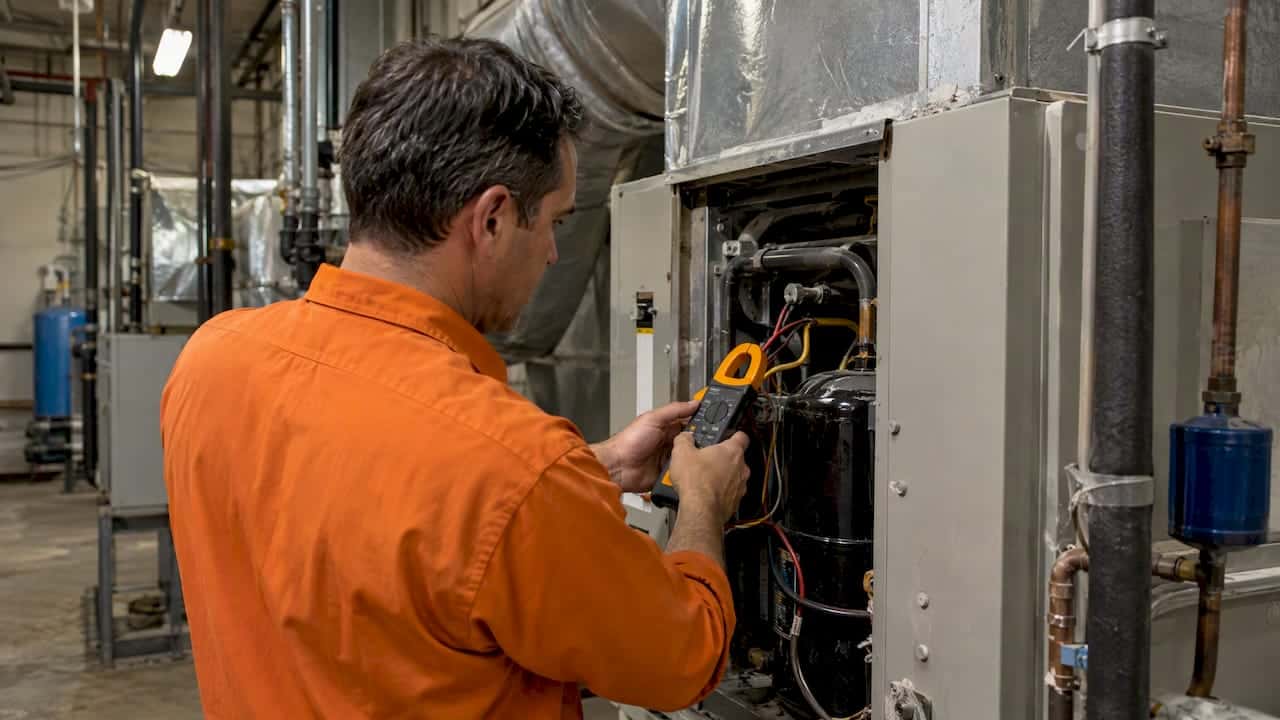
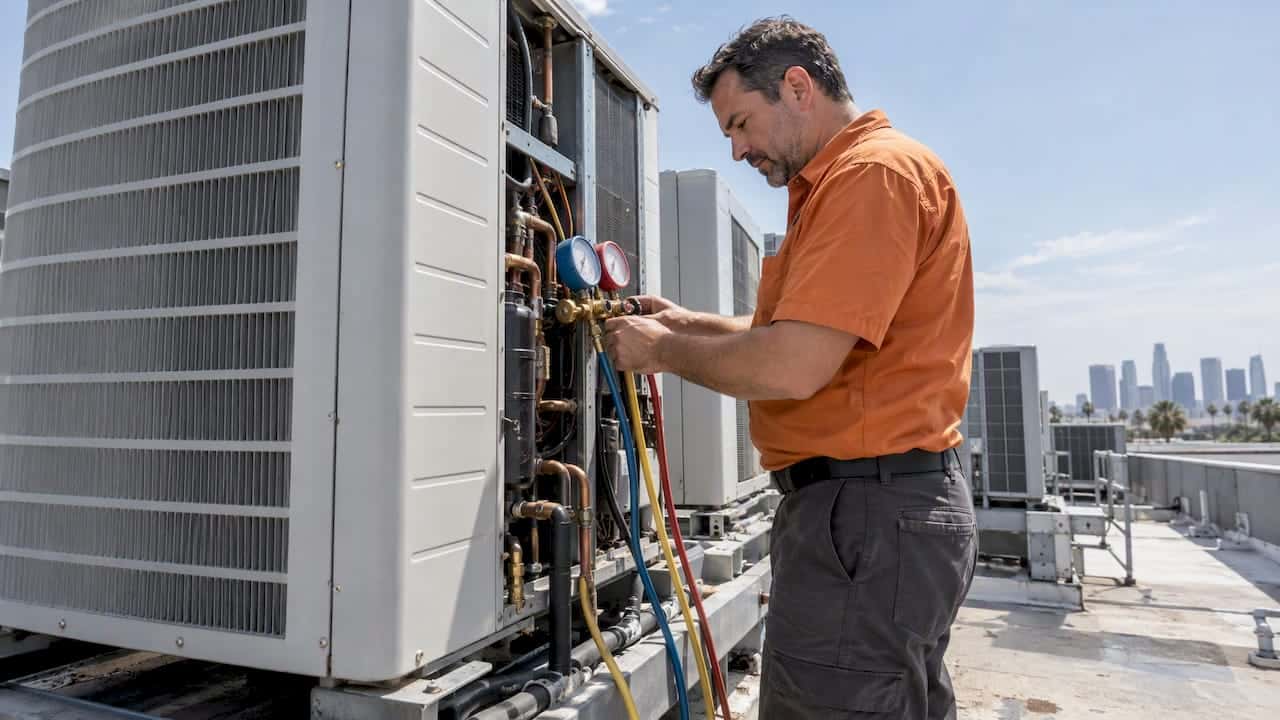
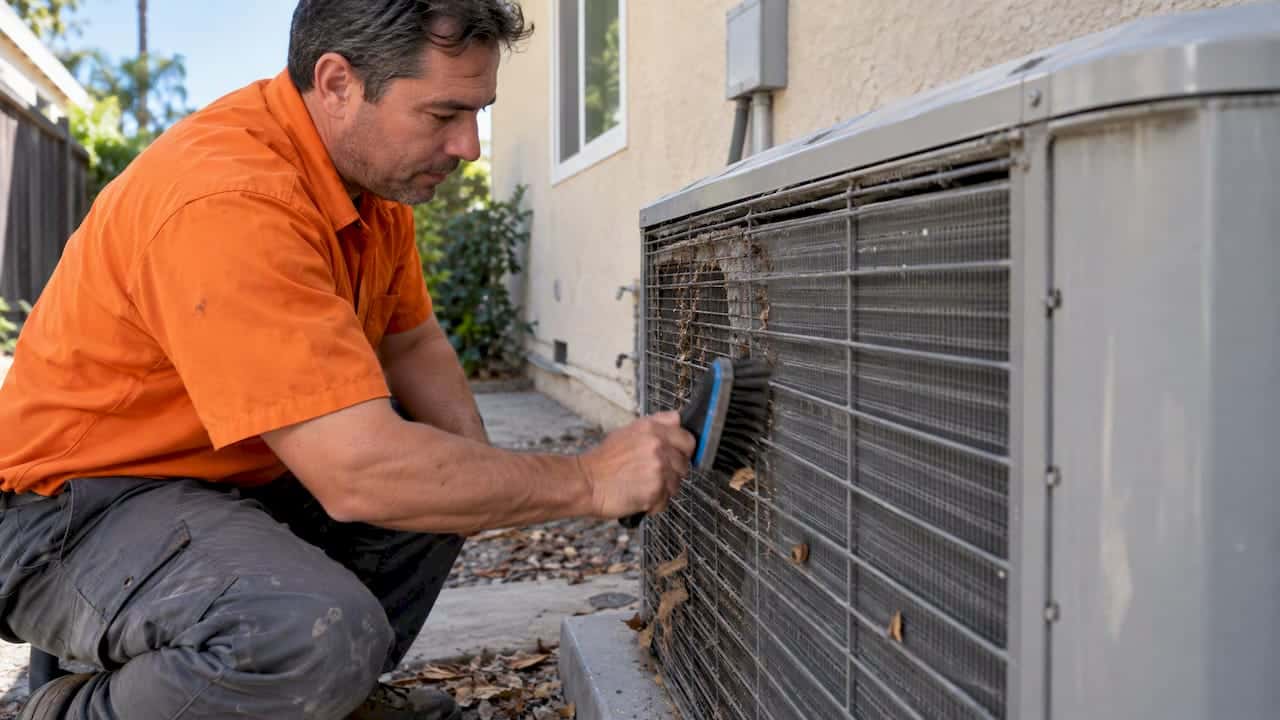
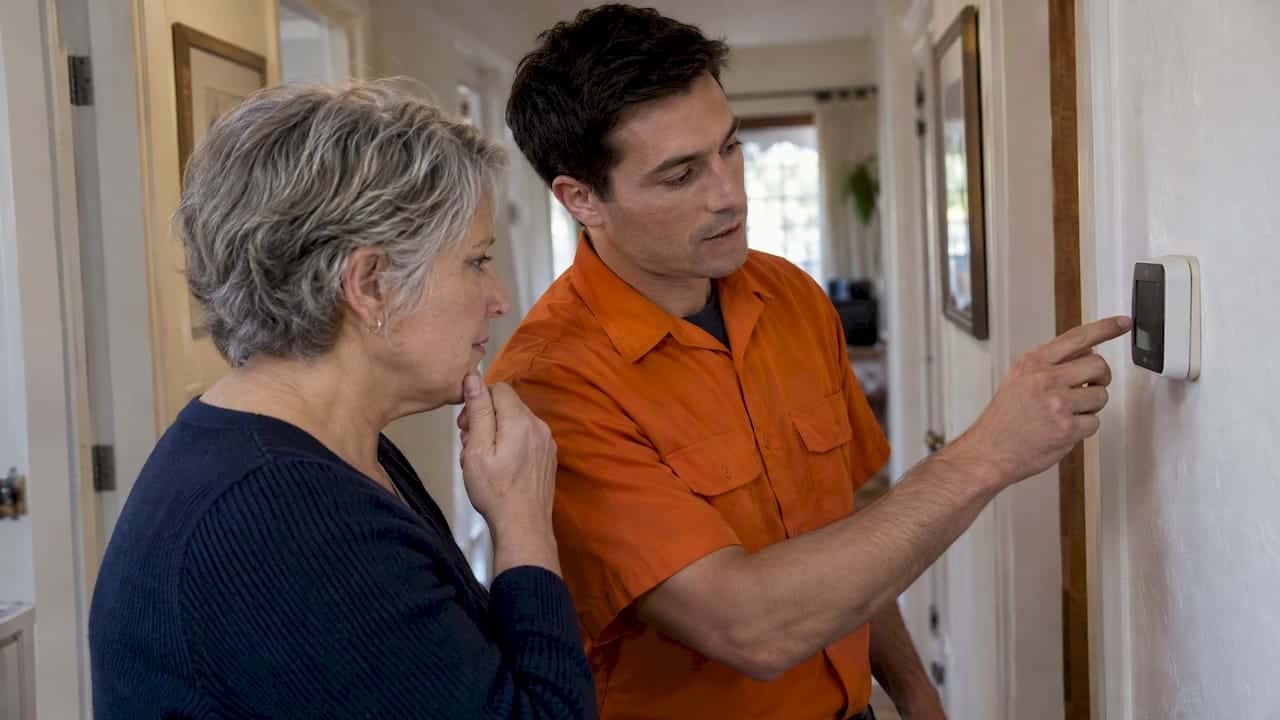
For technical reasons and seasonal scheduling, our duct sealing service is not available at the moment for this season in West Hollywood. For airflow distribution issues, leak remediation, and insulation upgrades, our team continues to provide Duct Repair and Air Balancing.
LC Heating & Air provides professional duct sealing to stop energy loss and improve indoor comfort. We use duct blaster testing to identify leaks and provide permanent solutions for your home's HVAC system.
Duct Cleaning & Air Duct Service in West Hollywood
LC Heating & Air provides duct cleaning in West Hollywood — including air duct cleaning, duct repair service, duct sealing, HVAC ductwork. Whether you need same-day service, a written estimate, or help deciding between repair and replacement, our licensed technicians handle every make and model.
We repair and service all major HVAC brands in West Hollywood, including Carrier, Trane, and Goodman, and older or discontinued units. No matter the manufacturer, we diagnose the problem accurately and give you an upfront price before any work begins.
West Hollywood's housing mix is unlike anywhere else in Los Angeles—high-density condominiums, luxury apartment buildings, and a relatively small number of single-family homes, many in the hills above Sunset Strip. WeHo's location between Hollywood and Beverly Hills means it shares both neighborhoods' HVAC characteristics: coastal marine layer influence from the west, heat island effects from dense development, and a range of building types from 1930s Spanish Revival buildings to modern high-rise condominiums.
LC Heating & Air has extensive experience with the specific HVAC systems common in West Hollywood's multi-family buildings: rooftop package units, through-wall fan coil units, high-wall ductless systems, and central building systems with individual zone controls. We work directly with HOAs, building owners, and individual condo owners throughout West Hollywood. Our proximity at 509 N Fairfax Ave means we typically answered within 30 minutes by phone for service calls in the 90046 and 90069 zip codes.
Call LC Heating & Air at (323) 970-3113 for scheduling and estimates.
Local HVAC considerations
West Hollywood (90069, 90046)
Experienced with HOAs, rooftop units, and restricted building access
Marine layer humidity requires regular coil and drain maintenance
Local HVAC Challenges
West Hollywood's dense multi-family building stock means most HVAC work is performed in occupied buildings with shared systems, noise restrictions, and HOA approval requirements. We are experienced in conducting HVAC work with minimum disturbance to neighbors, scheduling around building noise ordinances, and coordinating with HOA management companies. Many WeHo condo buildings have equipment on rooftops accessible only by internal elevator—we bring the right equipment to work safely in restricted-access locations.
The marine layer influence in West Hollywood creates higher humidity than inland neighborhoods—evaporator coils and drain systems require more frequent attention to prevent mold growth and drain backup. We see more coil-related issues in WeHo than in drier Valley neighborhoods. Annual evaporator coil cleaning and condensate drain treatment are particularly important for WeHo residents, especially those in lower-floor units where natural drainage is limited.
What Duct Sealing Accomplishes
Duct sealing is one of the highest-ROI home energy improvements available to Los Angeles homeowners. When conditioned air leaks into attic or wall cavities before reaching the living space, you're paying to condition space you don't occupy. Studies of California homes consistently show 20–30% duct leakage in older homes—and every percentage point of leakage reduction shows up directly in your utility bill.
Manual sealing uses mastic and foil tape at accessible duct joints, take-offs, and plenums. This is the right approach when significant leakage locations are accessible. Aeroseal internal sealing is our solution for duct systems where leakage is distributed throughout the system in locations that aren't manually accessible—it seals from the inside out using a pressurized polymer aerosol.
Understanding Your Duct System
In West Hollywood, we see a wide variety of ductwork, from older sheet metal systems in classic buildings to flexible ducting in newer renovations. Regardless of the material, the problem is the same: if the air isn't reaching the register, your system is working harder than it needs to. We look for crushed flex runs, disconnected joints, and uninsulated plenums that contribute to energy loss.
California Title 24 requires duct leakage testing as part of any HVAC replacement permit. If you've replaced your equipment without a permit, or if the testing was skipped, you may be losing a significant portion of your conditioned air to the attic or wall cavities.
Our Diagnostic Process
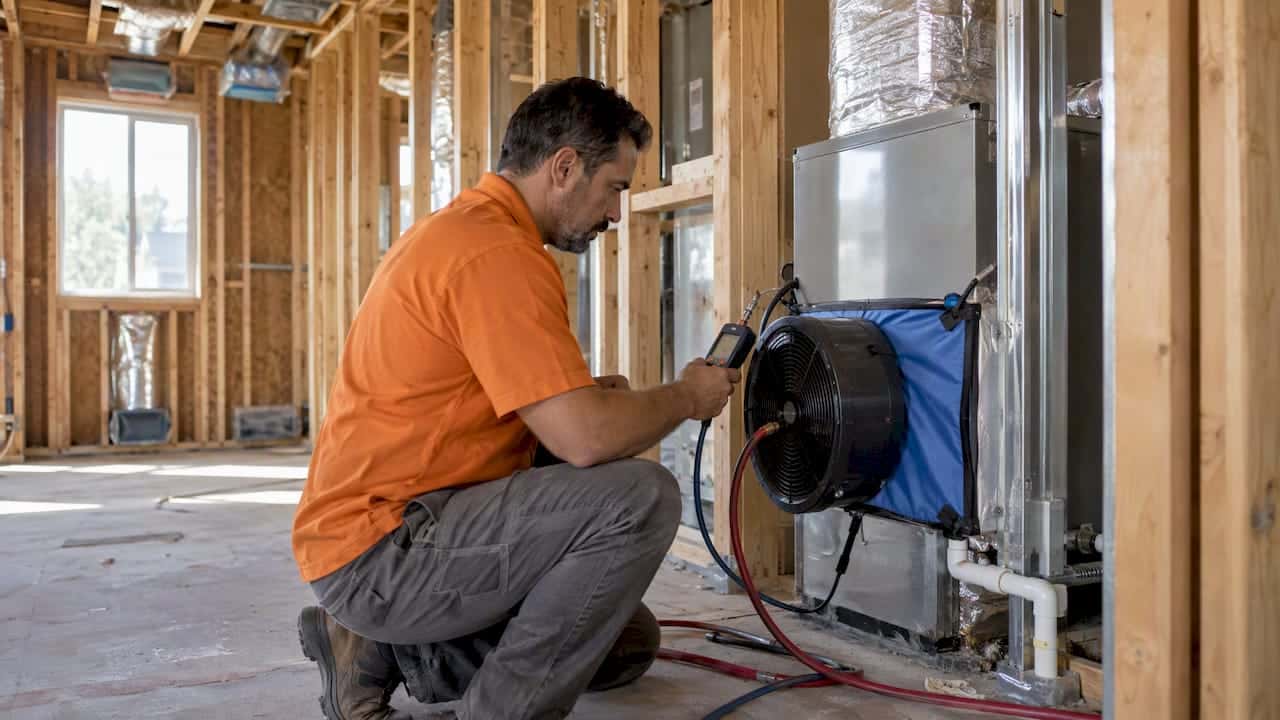
We don't guess. We start with a duct blaster test to quantify your existing leakage as a percentage of your system's total airflow. This gives us a baseline number. Once we know exactly how much air is being lost, we can determine the most cost-effective way to seal the system.
After the sealing is complete, we run the duct blaster test again. We provide you with the before-and-after numbers so you can see the actual improvement in your system's performance. This documentation is essential for permit compliance and your own peace of mind.
Repair vs. Replacement
Not every duct system needs to be replaced. In many cases, sealing existing leaks is the most practical and cost-effective solution. If your ducts are structurally sound but leaky, sealing is the right choice. However, if the ducts are collapsed, heavily contaminated with mold, or made of outdated materials that are falling apart, we will be honest with you about the need for replacement.
We evaluate the system based on its current condition and your long-term goals. If the system is worth repairing, we will tell you. If the pattern points to replacement, we will explain why.
Cost and Value Factors
Duct sealing costs vary based on the size of your home and the accessibility of the ductwork. Manual mastic sealing typically ranges from $400 to $1,200, while Aeroseal internal sealing ranges from $1,500 to $3,000. These costs include the diagnostic testing required to verify the results.
The real value comes from the energy savings. Sealing 20–30% duct leakage typically reduces HVAC energy use by 15–25%. At current LA electricity rates, the payback period is often under two years. It is a permanent fix that stays effective for the life of the duct system.
Health and Safety
We take your indoor air quality seriously. The Aeroseal process uses a non-toxic vinyl acetate polymer—the same material used in chewing gum—that is safe for your home. We ensure the interior of your ducts is clean before sealing, and the sealant remains on the duct walls, not in the air you breathe.
For manual sealing, we use high-quality mastic that doesn't dry out or fail like standard silver duct tape. We ensure all work meets safety standards to prevent any risk of carbon monoxide or contaminants being pulled into the airstream.
Scheduling and access — Duct Sealing in West Hollywood
Parking, gate codes, and attic or rooftop access in West Hollywood are confirmed when you book duct sealing service so the crew arrives with the right ladders and PPE.
Same-week appointments are common; emergency calls are answered within 30 minutes by phone.
Mistakes to avoid — Duct Sealing in West Hollywood
Oversized equipment, skipped maintenance, and DIY refrigerant or gas work are frequent duct sealing mistakes we correct in West Hollywood.
Closing too many registers or using the wrong filter MERV rating can starve airflow and shorten component life.
Is Duct Sealing Right for You?
If your HVAC system runs constantly but the house never feels quite right, or if your energy bills seem high for your home size, duct sealing is often the missing piece of the puzzle. We look at the age of your home, the type of ductwork installed, and the specific comfort issues you are experiencing.
We believe in being practical. If we find that your ductwork is in good shape and the issue is elsewhere, we will tell you. If we find significant leakage that is driving up your bills, we will show you the numbers and explain how sealing will help. We want you to have a system that works for your home, not just a generic recommendation.
How the visit works
We perform a duct blaster test to quantify existing leakage as a percentage of system airflow.
Based on leakage quantity, duct type, and accessibility, we recommend manual sealing, Aeroseal, or a combination.
We apply mastic to all accessible joints and plenums, or set up and run the Aeroseal process for internal sealing.
We re-run the duct blaster test and provide you with before/after leakage numbers as written documentation.
Cost factors we review before quoting
- • Accessibility of ductwork (attic, crawl space, or ceiling plenum)
- • Total square footage of the duct system
- • Choice between manual mastic sealing and Aeroseal internal sealing
- • Current condition of the ductwork (e.g., existing damage or contamination)
Useful next steps
Duct Sealing in West Hollywood at a glance
- • Duct Sealing provider: LC Heating & Air
- • Location served: West Hollywood, CA 90069
- • License: CSLB C-20 #1073586
- • Phone: (323) 970-3113
- • Estimate: written estimate before approved work
- • Emergency calls answered within 30 minutes (24/7)
Our duct sealing process in West Hollywood
Reviewed by Leo, Owner & Lead Technician
This duct sealing guide for West Hollywood is reviewed for practical HVAC accuracy by Leo at LC Heating & Air. LC Heating & Air holds California CSLB C-20 HVAC license #1073586 and provides written estimates before approved work.
What West Hollywood customers say about duct sealing
Verified reviews from homeowners in West Hollywood and nearby neighborhoods who used our duct sealing service.
“Had LC install a Daikin mini split in our 1940s bungalow that never had AC. The work was clean, the unit is incredibly quiet, and our bedroom finally stays cool in summer. Highly recommend.”
“We converted our garage into an ADU and needed HVAC. LC installed a Mitsubishi single-zone mini split — permits, electrical, everything. The unit is so quiet you can barely hear it running. Our tenant loves it.”