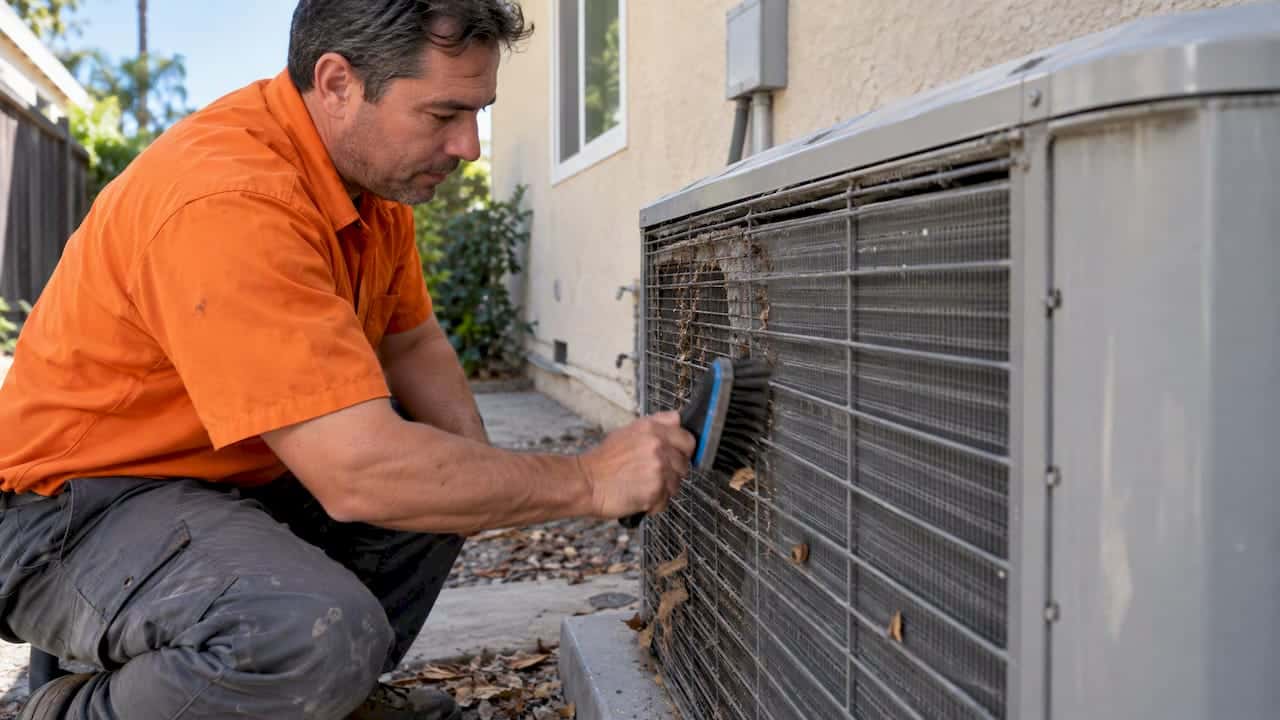
For technical reasons and seasonal scheduling, our duct sealing service is not available at the moment for this season in Fairfax District. For airflow distribution issues, leak remediation, and insulation upgrades, our team continues to provide Duct Repair and Air Balancing.
Duct sealing is one of the highest-ROI home energy improvements available to Los Angeles homeowners. By sealing leaks, you stop paying to condition attics or wall cavities and ensure your HVAC system actually reaches your living space. We provide professional duct blaster testing and sealing to restore efficiency.
Duct Cleaning & Air Duct Service in Fairfax District
LC Heating & Air provides duct cleaning in Fairfax District — including air duct cleaning, duct repair service, duct sealing, HVAC ductwork. Whether you need same-day service, a written estimate, or help deciding between repair and replacement, our licensed technicians handle every make and model.
We repair and service all major HVAC brands in Fairfax District, including Carrier, Trane, and Goodman, and older or discontinued units. No matter the manufacturer, we diagnose the problem accurately and give you an upfront price before any work begins.
Duct sealing is one of the highest-ROI home energy improvements available to Los Angeles homeowners. When conditioned air leaks into attic or wall cavities before reaching the living space, you're paying to condition space you don't occupy. Studies of California homes consistently show 20–30% duct leakage in older homes — and every percentage point of leakage reduction shows up directly in your utility bill.
At LC Heating & Air, we don't just patch holes; we quantify them. Whether your home is a historic multifamily property or a modern condo, we use duct blaster testing to measure your system's performance before and after our work. This ensures you get a measurable, permanent improvement in comfort and energy efficiency.
Call LC Heating & Air at (323) 970-3113 for scheduling and estimates.
Local HVAC considerations
Fairfax District and surrounding neighborhoods
CSLB #1073586 (C-20 HVAC)
Emergency calls answered within 30 minutes
Leo has 20+ years hands-on HVAC experience
Why Duct Leaks Are Common in Fairfax
In the Fairfax District, we see a lot of older multifamily buildings and mixed-use properties where ductwork has been neglected for decades. The heat-island effect in our urban environment puts extra strain on HVAC systems, and when ducts leak, that hot air from attics or wall cavities gets pulled directly into your supply stream. This forces your system to work significantly harder than it should just to maintain a comfortable temperature.
We often find that ductwork in these older buildings has been compromised by previous renovations, poor original installation, or simply the degradation of aging materials. If you notice your HVAC system runs constantly but the house never feels quite right, or if you see unusual dust accumulation near your supply registers, your ducts are likely leaking conditioned air into spaces where it does no good.
Working with Fairfax Housing Styles
The Fairfax District features a mix of historic apartments, condos, and compact mechanical closets that present unique challenges for HVAC maintenance. Unlike suburban homes with wide-open attics, our local housing stock often hides ductwork in tight, inaccessible ceiling cavities or shared wall spaces. This makes standard manual sealing difficult without the right tools and experience.
Because our buildings are often densely packed, we have to be mindful of how we route and seal ducts to ensure we don't interfere with other building systems. Whether we are dealing with rooftop package units on a mixed-use building or a compact closet system in a condo, we tailor our approach to fit the specific constraints of your property.
Our Diagnostic Approach
We don't guess. Before we recommend any sealing, we perform a duct blaster test. This involves pressurizing your duct system and measuring exactly how much air is escaping. It gives us a baseline percentage of leakage so you know exactly what you are paying for and what kind of improvement to expect.
After we complete the sealing work, we run the test again. This verification step is critical because it proves the work was effective. We provide you with the before and after numbers, which is the only honest way to confirm that your system is now operating as efficiently as it should.
Repairing vs. Replacing Ductwork
Sometimes, ductwork is in such poor condition that sealing is just a temporary fix. In those cases, we discuss the cost of repair versus the long-term value of a partial or full duct replacement.
We follow the '5,000 Rule' for equipment, but for ducts, we look at the integrity of the system. If the cost to seal and repair exceeds the value of the efficiency gains, we will recommend replacement. Our goal is to provide a solution that lasts, not a quick fix that you'll have to pay for again in a year.
Understanding Costs and Value
Duct sealing is an investment that pays for itself through lower energy bills. While manual mastic sealing for accessible leaks is generally more affordable, Aeroseal is a powerful tool for internal sealing in homes where ducts are buried in walls or ceilings. We provide a written estimate for both options so you can choose the path that makes the most sense for your budget.
We also keep an eye on current rebate programs. When duct sealing is part of a larger efficiency project, there may be incentives available through programs like TECH Clean California or federal tax credits. We help you navigate these to ensure you get the best value for your home improvement.
Coordinating Access in Fairfax
In a neighborhood like Fairfax, scheduling is rarely as simple as just showing up. We are experienced in coordinating with HOAs, property managers, and tenants to ensure we have the access we need. Whether it's arranging for rooftop access on a commercial building or working within specific building access windows, we handle the logistics so you don't have to.
We understand that your time is valuable. When we schedule a job, we arrive prepared with the equipment necessary to complete the work efficiently. Because we are a local operator, we are flexible and can work around the unique constraints of your building’s parking and access requirements.
Avoiding Common Duct Mistakes
The biggest mistake we see is the use of silver 'duct tape' on HVAC connections. It dries out, cracks, and fails within a few years, leaving you with the same leaks you started with. We only use professional-grade mastic and foil-backed HVAC tape that is designed to stay flexible and last for the life of the system.
Another common error is ignoring the return side of the system. Many people focus only on supply leaks, but leaks in your return ducts are just as bad—they pull in dirty, unconditioned air from attics or garages. We inspect and seal the entire system, both supply and return, to ensure true efficiency.
Health, Safety, and Compliance
Duct sealing is about more than just energy; it's about the air you breathe. By sealing leaks, we prevent your system from pulling in dust, insulation fibers, and pollutants from your attic or crawl space. This is especially important for households with allergy sufferers or sensitive air quality needs.
We also ensure all work complies with California Title 24 energy efficiency standards. If you are replacing your HVAC system, the city requires duct leakage testing to ensure the system is up to code. We handle the documentation and testing required to keep your home safe and compliant with local building regulations.
Is Duct Sealing Right for Your Home?
If your energy bills are high and you notice uneven temperatures, duct sealing is usually the first step we recommend. It’s a non-invasive way to improve performance without the cost of a full system replacement. If your ducts are original to an older home and have never been inspected, they are almost certainly leaking.
If you are planning to replace your AC or furnace, we strongly recommend sealing the ducts first. A high-efficiency unit won't perform to its potential if it's pushing air through a leaky, inefficient duct system. We can test your ducts during our initial consultation to see if sealing is the right move for your specific situation.
How the visit works
We perform a duct blaster test to quantify existing leakage as a percentage of system airflow.
Based on leakage quantity, duct type, and accessibility, we recommend manual sealing, Aeroseal, or a combination.
We apply mastic to all accessible joints and plenums, or set up and run the Aeroseal process for internal sealing.
We re-run the duct blaster test and provide you with before/after leakage numbers as written documentation.
Cost factors we review before quoting
- • Duct system size and complexity
- • Accessibility of ductwork in walls or ceilings
- • Choice between manual mastic sealing and Aeroseal
- • Existing duct condition and necessary repairs
Useful next steps
Duct Sealing in Fairfax District at a glance
- • Duct Sealing provider: LC Heating & Air
- • Location served: Fairfax District, CA 90036
- • License: CSLB C-20 #1073586
- • Phone: (323) 970-3113
- • Estimate: written estimate before approved work
- • Emergency calls answered within 30 minutes (24/7)
Our duct sealing process in Fairfax District
Reviewed by Leo, Owner & Lead Technician
This duct sealing guide for Fairfax District is reviewed for practical HVAC accuracy by Leo at LC Heating & Air. LC Heating & Air holds California CSLB C-20 HVAC license #1073586 and provides written estimates before approved work.
What Fairfax District customers say about duct sealing
Verified reviews from homeowners in Fairfax District and nearby neighborhoods who used our duct sealing service.
“Had LC install a Daikin mini split in our 1940s bungalow that never had AC. The work was clean, the unit is incredibly quiet, and our bedroom finally stays cool in summer. Highly recommend.”
“We converted our garage into an ADU and needed HVAC. LC installed a Mitsubishi single-zone mini split — permits, electrical, everything. The unit is so quiet you can barely hear it running. Our tenant loves it.”
“Got a 3-zone Daikin system for our craftsman home — bedrooms upstairs, living room downstairs. Each room has its own temperature control and the monthly electric bill is actually lower than our old window units combined.”