LC Heating & Air provides expert, safety-focused furnace repair in West Hollywood. We offer same-day service, transparent written estimates, and comprehensive CO safety testing. If your furnace is failing, call (323) 970-3113 for a professional diagnosis.
Furnace Repair & Heating Service in West Hollywood
LC Heating & Air provides furnace repair in West Hollywood — including heating repair, furnace tune-ups, home heater repair, furnace service. Whether you need same-day service, a written estimate, or help deciding between repair and replacement, our licensed technicians handle every make and model.
We repair and service all major HVAC brands in West Hollywood, including Carrier, Lennox, Trane, Goodman, Rheem, and Bryant, and older or discontinued units. No matter the manufacturer, we diagnose the problem accurately and give you an upfront price before any work begins.
West Hollywood's housing mix is unlike anywhere else in Los Angeles — high-density condominiums, luxury apartment buildings, and a relatively small number of single-family homes, many in the hills above Sunset Strip. WeHo's location between Hollywood and Beverly Hills means it shares both neighborhoods' HVAC characteristics: coastal marine layer influence from the west, heat island effects from dense development, and a range of building types from 1930s Spanish Revival buildings to modern high-rise condominiums.
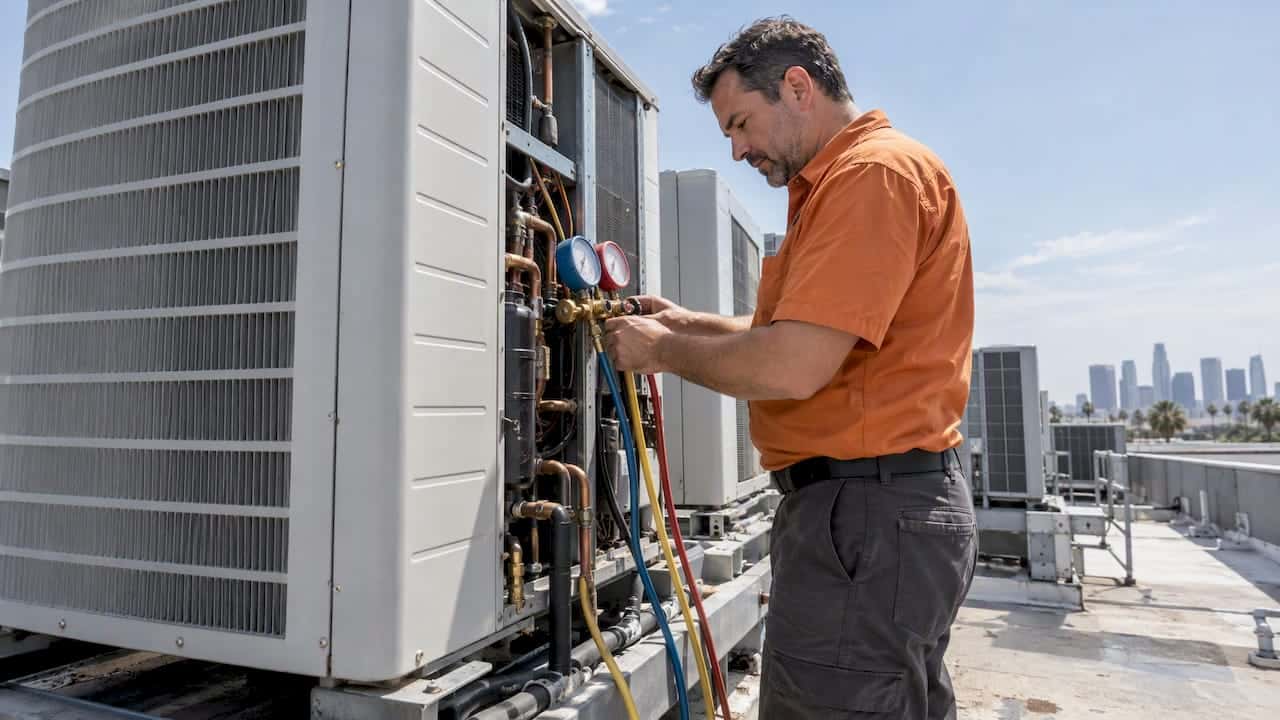
LC Heating & Air has extensive experience with the specific HVAC systems common in West Hollywood's multi-family buildings: rooftop package units, through-wall fan coil units, high-wall ductless systems, and central building systems with individual zone controls. We work directly with HOAs, building owners, and individual condo owners throughout West Hollywood. Our proximity at 509 N Fairfax Ave means we typically answered within 30 minutes by phone for service calls in the 90046 and 90069 zip codes.
Local HVAC considerations
West Hollywood, 90069 and surrounding areas
CSLB #1073586
Emergency calls answered within 30 minutes
Common Furnace Issues in West Hollywood
Furnace failures in Los Angeles are more common than most homeowners expect. Many LA homes have furnaces that are 20 or even 30 years old — they run infrequently enough that homeowners do not notice gradual decline until the system fails completely during the first cold snap of the season. The most common failures we see in older LA furnaces include igniter failure, dirty flame sensors that cause nuisance shutdowns, and degraded draft inducer motors that affect combustion safety.
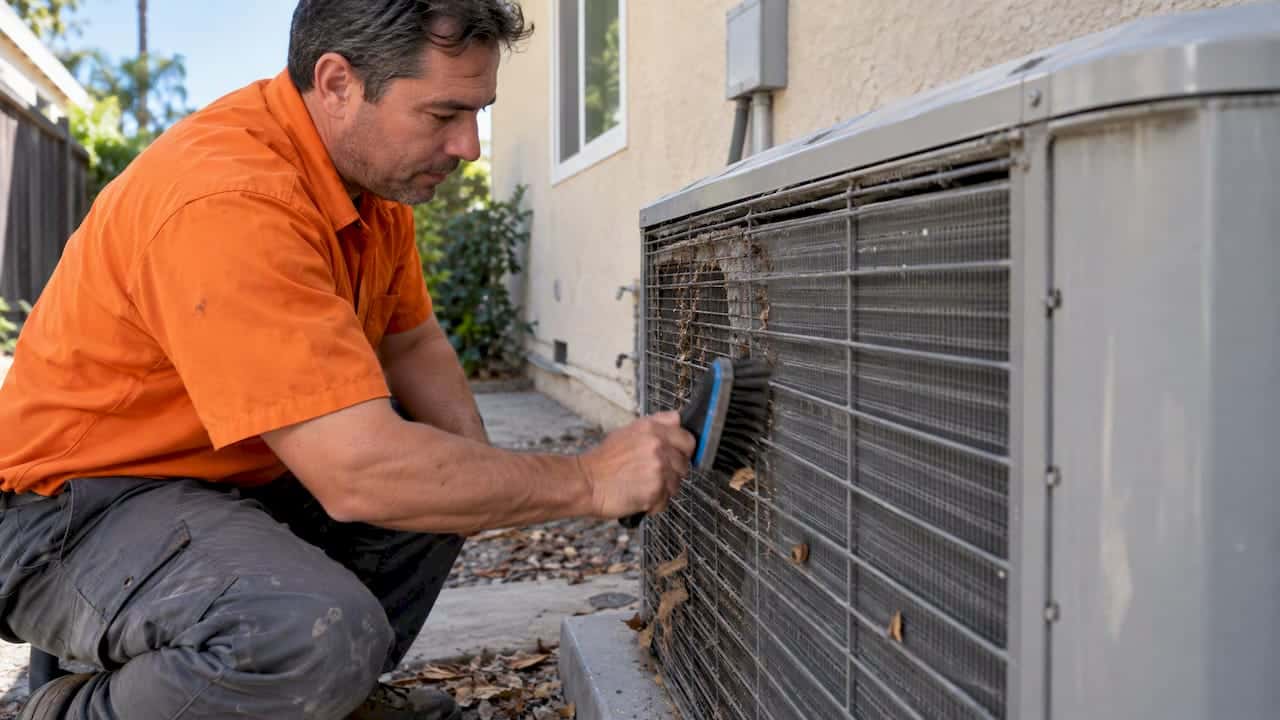
We also see specific patterns related to the local climate. The marine layer influence in West Hollywood creates higher humidity than inland neighborhoods, which means evaporator coils and drain systems require more frequent attention to prevent mold growth and drain backup. Annual evaporator coil cleaning and condensate drain treatment are particularly important for WeHo residents, especially those in lower-floor units where natural drainage is limited.
Navigating WeHo's Unique Building Stock
West Hollywood's dense multi-family building stock means most HVAC work is performed in occupied buildings with shared systems, noise restrictions, and HOA approval requirements. We are experienced in conducting HVAC work with minimum disturbance to neighbors, scheduling around building noise ordinances, and coordinating with HOA management companies.
Many WeHo condo buildings have equipment on rooftops accessible only by internal elevator. We bring the right equipment to work safely in these restricted-access locations. Whether you are in a high-rise on the Sunset Strip or a classic apartment in the Melrose District, we understand the logistical challenges of your specific property.
Our Diagnostic Approach
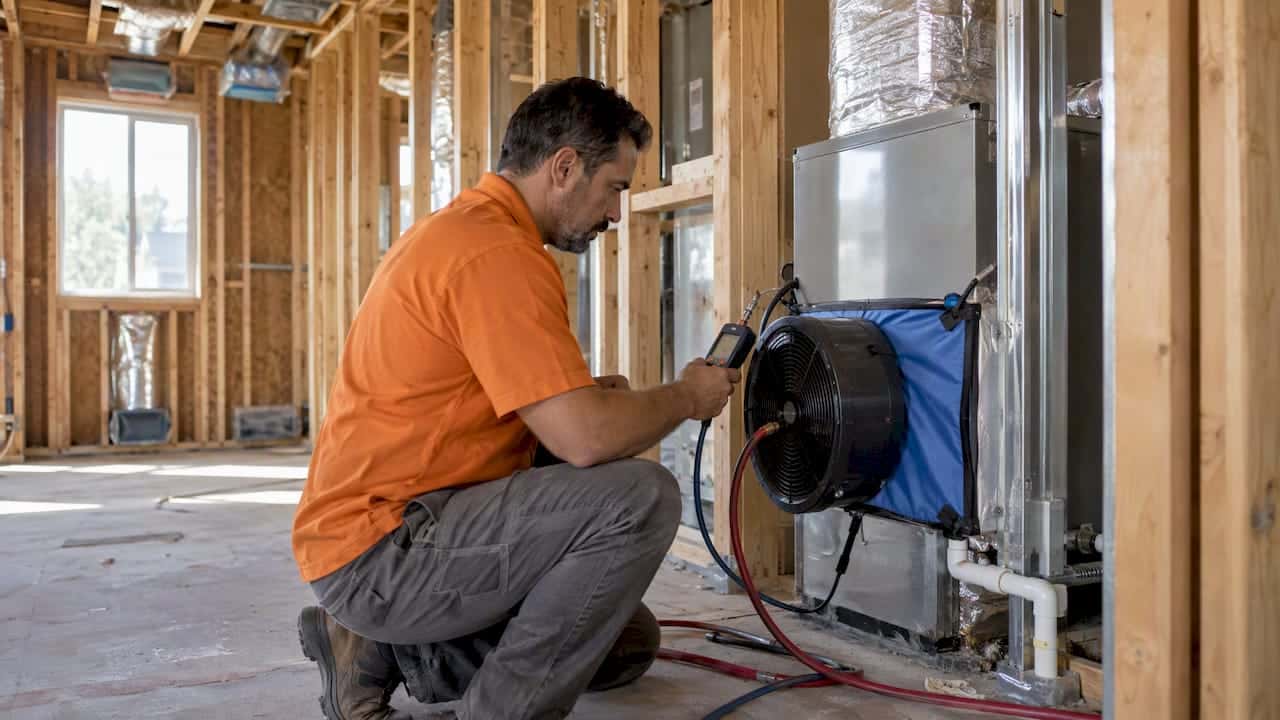
When we arrive for a furnace repair, we start with a full system diagnosis. We check the heat exchanger, ignitor, gas valve, limit switch, control board, blower motor, and flue venting. We don't just look at the part that failed; we look at the whole system to ensure the repair will actually solve your problem.
We explain the issue and give you a flat price before we start any work. If the furnace is worth repairing, we will tell you. If the pattern points to replacement, we will explain why. We carry common igniter types, flame sensors, capacitors, and control boards on our service trucks to avoid return trips for parts.
Repair vs. Replacement Decisions
We utilize the '5,000 Rule': multiply the age of your equipment by the estimated cost of the repair. If the total exceeds $5,000, replacement is mathematically the smarter investment. At 15 years old, most systems use obsolete R-22 refrigerant and operate at very low efficiency, making major repairs a poor long-term investment.
In many cases, a cracked heat exchanger in an older furnace is the trigger to evaluate replacement. The repair cost is often not economically justified relative to the age of the equipment. We will always provide an honest assessment of whether a repair is a temporary fix or a reliable solution for your home.
Understanding Costs and Rebates
The cost for a new AC or furnace installation in Los Angeles typically ranges from $5,500 to $12,000. This depends heavily on ton size, SEER2 rating, whether your existing ductwork requires modification, and permit fees. We provide free, upfront written estimates before we begin any installation.
If you are considering replacing your AC with a heat pump, you can access thousands of dollars in rebates and tax credits through the TECH Clean California program and the federal Inflation Reduction Act. We help you navigate these options so you can make an informed financial decision.
Scheduling and Access
We know your time is valuable. We offer same-day furnace repair service throughout LA and stock parts for common repairs on our trucks. For emergency calls, we ensure the phone is answered within 30 minutes to get you the help you need as quickly as possible.
Because we work in dense buildings, we coordinate with building management and HOAs to ensure we have the necessary access to rooftops or mechanical closets. We respect your building's rules and your neighbors' peace and quiet while we work.
Avoiding Common HVAC Mistakes
One of the biggest mistakes we see is neglecting annual maintenance. A dirty flame sensor that causes nuisance lockouts or a failing draft inducer motor that makes noise for weeks are all predictable failure modes. Annual maintenance catches these before they become emergency breakdowns.
Another common mistake is ignoring the air filter. A dirty air filter restricts airflow, which causes the furnace to short-cycle and puts unnecessary strain on the blower motor and heat exchanger. Check your filter every month; it is the easiest way to prevent a service call.
Carbon Monoxide Safety
Carbon monoxide (CO) is a colorless, odorless gas produced by incomplete combustion. A properly functioning furnace contains all combustion gases within the heat exchanger and vents them safely outside. When a heat exchanger develops cracks, combustion gases can leak into the conditioned airstream.
LC Heating & Air performs a CO safety check on every furnace repair call. We measure CO levels at the furnace plenum, the supply registers, and in the ambient room air. If we detect elevated CO levels, we will shut off the furnace immediately and advise against operating it until the issue is resolved.
Making the Right Choice for Your Home
When your furnace stops working, the first step is a professional diagnosis. We don't guess; we test. We look at the ignition sequence, the flame quality, and the safety limits to find the root cause of the failure.
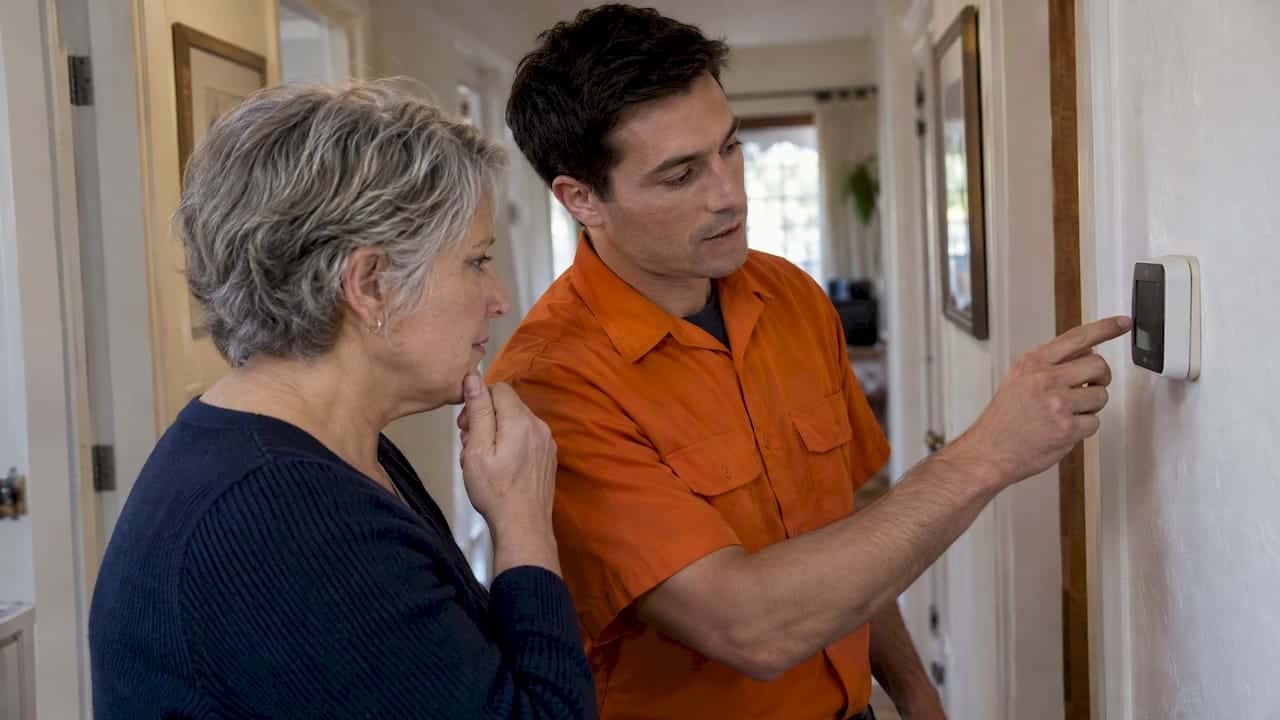
Once we know what is wrong, we give you a clear, written estimate. We will tell you if the repair is a straightforward fix or if the age and condition of the unit make replacement a better value. Our goal is to give you the information you need to make the right decision for your home and your budget.
How the visit works
We check for gas leaks and CO levels before diagnosing. If there's a safety issue, we address it first.
We check the heat exchanger, ignitor, gas valve, limit switch, control board, blower motor, and flue venting.
We explain the issue and give you a flat price. If repair doesn't make sense, we'll tell you.
We repair the issue, verify combustion, test CO levels, and confirm all safety limits are operating correctly.
Cost factors we review before quoting
- • Equipment age and condition
- • Complexity of the repair
- • Availability of parts
- • Building access and site conditions
Useful next steps
Furnace Repair in West Hollywood at a glance
- • Furnace Repair provider: LC Heating & Air
- • Location served: West Hollywood, CA 90069
- • License: CSLB C-20 #1073586
- • Phone: (323) 970-3113
- • Estimate: written estimate before approved work
- • Emergency calls answered within 30 minutes (24/7)
Our furnace repair process in West Hollywood
Reviewed by Leo, Owner & Lead Technician
This furnace repair guide for West Hollywood is reviewed for practical HVAC accuracy by Leo at LC Heating & Air. LC Heating & Air holds California CSLB C-20 HVAC license #1073586 and provides written estimates before approved work.
What West Hollywood customers say about furnace repair
Verified reviews from homeowners in West Hollywood and nearby neighborhoods who used our furnace repair service.
“Quoted three times the price by another company for a wall heater replacement. LC came out, confirmed I only needed the thermocouple replaced, did it for $195. Honest, no-nonsense service.”
“AC compressor failed on the hottest day of the year. LC came out quickly, gave an honest assessment — said the compressor was still under manufacturer warranty — and helped me get it covered. Saved me over $1,200.”
“Replaced our 20-year-old Lennox system with a new high-efficiency Carrier. LC handled the permits, coordinated the Edison inspection, and finished a full replacement in one day. Impeccable workmanship.”