- TL;DR
- What “low voltage” means in an air conditioning system
- Signs of a control-voltage problem
- What causes low voltage to the thermostat
- Safe checks a homeowner can make
- How a technician tests low voltage
- When the problem is line voltage, not control voltage
- Heat pumps, mini splits and VRF systems
- Symptom guide: what it might be and who handles it
- Our perspective on low-voltage problems
- Why a proper diagnostic matters
- Prevent low-voltage trouble before summer
- When to call us and what to expect
- Book honest AC and heat pump service
- FAQ
- Sources
- Recommended

AC low voltage issues usually come down to one of two things. Either the small 24-volt control circuit that tells your system what to do has failed, or the main power feeding the outdoor unit is weaker than the equipment expects. The first shows up as a blank thermostat or an AC that will not start. The second shows up as a unit that hums, struggles or trips. Both are fixable, and a technician can tell you which one you have in a short visit.
This guide explains the difference, what causes each problem, which checks are safe for a homeowner, and where the work belongs to a licensed professional. If your system is down right now in Los Angeles, jump to the section on when to call.
TL;DR
- “Low voltage” in HVAC most often means the 24-volt control circuit that runs your thermostat, contactor and safety switches, not your home’s main power.
- A blank thermostat, an AC that will not turn on, or a repeatedly blown control fuse points to a control-voltage problem: a failed transformer, a tripped safety switch, damaged wire or a short.
- Safe homeowner checks are limited to the breaker, the thermostat, the air filter and the drain pan safety switch. Opening panels and testing wires is technician work.
- Weak line voltage at the outdoor unit can strain the compressor, so humming, hard starts or tripping breakers deserve a prompt visit.
- We offer same-day service with flat-rate pricing, and our service call starts at $125.
What “low voltage” means in an air conditioning system
Your AC works on two electrical circuits that share a cabinet but do very different jobs.
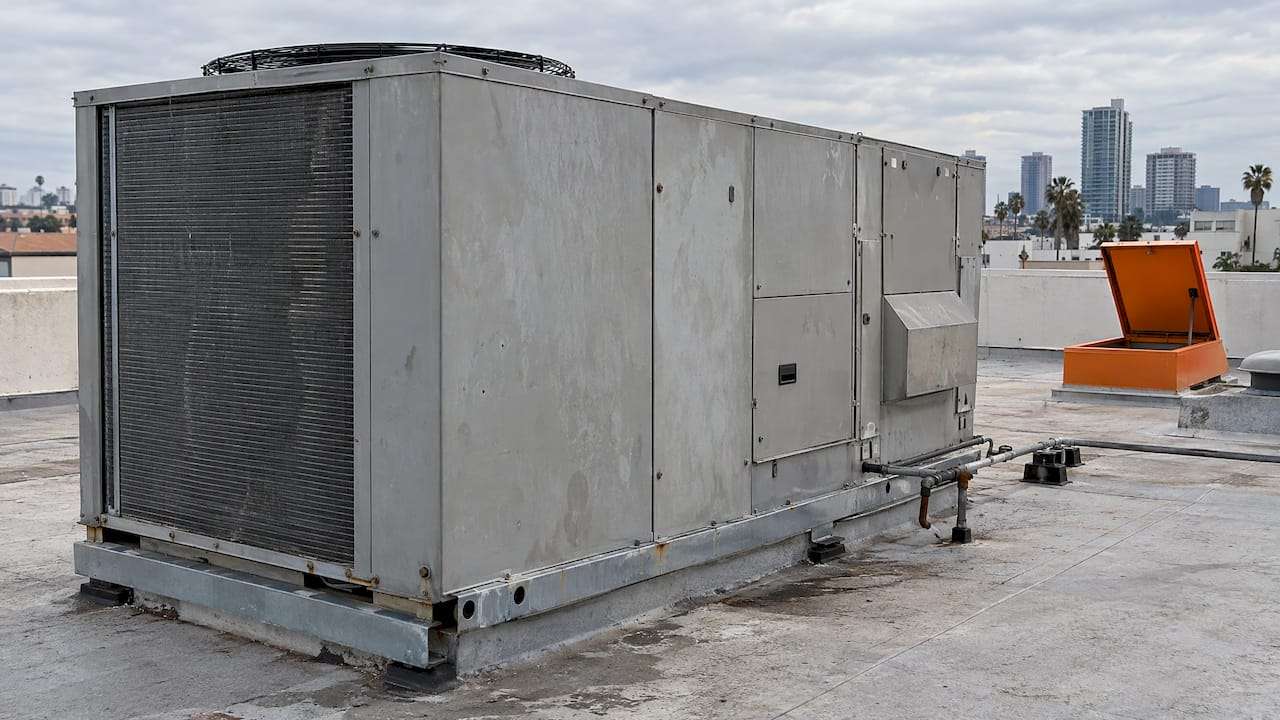
Line voltage is the high-voltage power that runs the compressor, the outdoor fan and the blower motor. It comes from your electrical panel on a dedicated breaker.
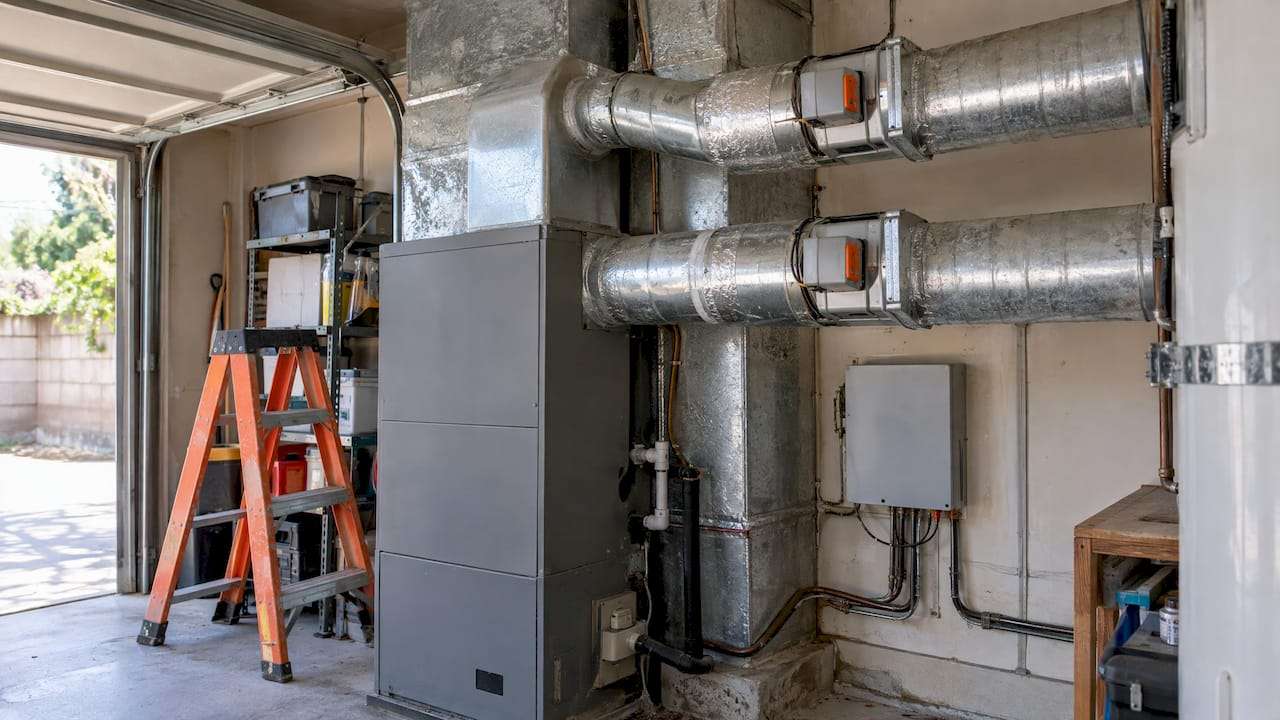
Low voltage, also called control voltage, is a 24-volt circuit. A small transformer in the furnace or air handler steps the line voltage down to 24 volts. That circuit powers the thermostat and sends the signals that tell the equipment to start cooling, heat or run the fan. Think of it as the nervous system of your HVAC: a small but mighty circuit that decides whether everything else wakes up.
When someone searches for “low voltage to thermostat,” this is the circuit they mean. Honeywell Home states that its thermostats operate on 20 to 30 volts AC, supplied to the R or RC terminal and returning through the C terminal, and that a reading outside that range should go to a professional contractor.
So there are really two questions behind this keyword:
- Is the 24-volt control circuit healthy enough to run the thermostat and start the system?
- Is the line voltage reaching the outdoor unit and blower steady enough for the motors to run safely?
The answers, and the people who should handle them, are different.
Signs of a control-voltage problem
Control-circuit trouble tends to look like “nothing happens” rather than “something sounds wrong.” Common signs:
- A blank or dim thermostat screen. No power reaches the thermostat, or too little to light it.
- The AC will not turn on even though the thermostat is set to cool and the display looks normal.
- The thermostat works but the outdoor unit never starts. The signal is not strong enough to pull in the contactor, the switch that sends power to the compressor.
- A control board fuse that keeps blowing. The fuse is a safety device. It protects the transformer from a direct short between the hot side and common.
- Intermittent operation. The system runs for a while, then stops, then comes back, often tied to a loose connection or a safety switch that opens and closes.
If this sounds familiar, our guide to what to do when your AC is not turning on walks through the symptoms in more detail.
What causes low voltage to the thermostat
The causes are usually simple parts doing a hard job for many years. Here are the ones technicians look at first.
A failed or overloaded transformer
The control transformer takes line voltage in and produces 24 volts out. According to ACHR News, if the transformer is receiving correct line voltage but its secondary does not produce 24 volts, the transformer is bad. A transformer can also fail because something downstream is drawing too much current, which is why a technician looks for the reason before replacing it.
A safety switch that has opened
The transformer can only work if line voltage reaches it. The same ACHR News article explains that an opened or defective door safety switch on a furnace keeps line voltage from reaching the transformer primary. A furnace or air handler door that is not seated properly can therefore leave the whole thermostat dark.
A tripped condensate safety switch
Many split systems have a float switch in the drain pan that cuts power when water backs up. Clint Newsome of Albany Air Conditioning and Heating Co., quoted by Carrier, says that with a blank thermostat on a split-system heat pump, the first thing to do is check the drain pan for water and see whether the safety switch has tripped. If there is no water and the breaker is on, he says it is probably best to call a professional.

A short in the low-voltage wiring
A short happens when a hot control wire touches common or ground. Staples driven through thermostat cable, a nail from hanging a picture, a rodent chewing wire in an attic, or old insulation that has cracked can all do it. AC Service Tech explains that low-voltage shorts are often indicated by a blown fuse on a control board, which protects the transformer from a direct short between hot and common.
A failing component downstream
Contactor coils, relays, a float switch or a thermostat can pull more current than the transformer was built to supply. ACHR News notes that all 24-volt coils should have measurable resistance of more than 10 ohms, and that secondary voltage dropping close to zero after a fuse or transformer replacement most likely means an overload caused by a short.
Age and heat
Attics and equipment closets in Los Angeles can run hot through long cooling seasons, which is hard on wire insulation and small electrical parts. If your system is older, our article on why old AC systems fail covers the wear patterns we see most.
Safe checks a homeowner can make
This is the short list of things worth doing before you call. None of them requires opening the equipment.
- Check the thermostat. Confirm it is set to cool, the temperature is set below room temperature, and the display is on. If your model uses batteries, replace them.
- Check the breakers. Look at the breaker for the outdoor unit and the one for the indoor furnace or air handler. If one is tripped, reset it once. If it trips again, leave it off and call us.
- Check the air filter. A severely clogged filter can cause a system to shut down on a safety limit. Replace it if it is dirty.
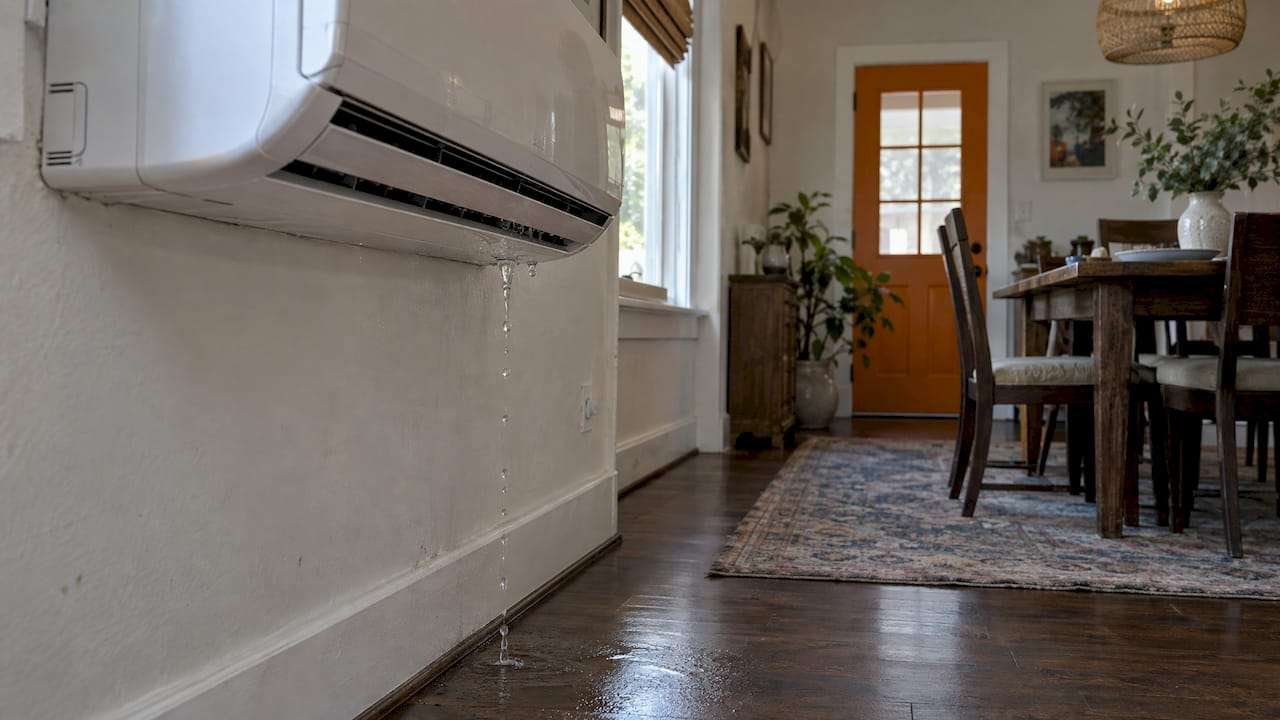
- Look at the drain pan and drain line if you can see them without removing a panel. Standing water can mean the float switch has shut the system down.
- Note what you see and hear. Write down whether the screen is blank, whether the outdoor fan spins, and whether you hear humming or clicking. This helps the technician.
Honeywell’s own troubleshooting guide is clear about the boundary: for safety, do not remove wiring or open HVAC equipment panels unless power is off and you are comfortable with the task. It adds that you should contact a licensed HVAC professional if the wiring is damaged, the system does not respond after basic checks, or you are unsure what you are looking at.
Carrier gives a similar list of reasons to stop: exposed or frayed wiring, error codes that return after a reset, or burning smells from vents or the wall unit. If you notice any of these, turn the system off at the thermostat and the breaker and call.
For a longer list of when a visit makes sense, see our article on when to call a professional for AC issues.
How a technician tests low voltage
You do not need to do any of this yourself, but knowing the process helps you understand what a good diagnostic looks like, and why it should not need guesswork or a parts swap.
Start with line voltage, then control voltage
ACHR News recommends a universal order for electrical failures: check line voltage to the unit, check control voltage, check voltage to the malfunctioning component, then check the circuit to that component. Testing the first two is quick, and the problem is often found during those first two tests.

Read the thermostat terminals
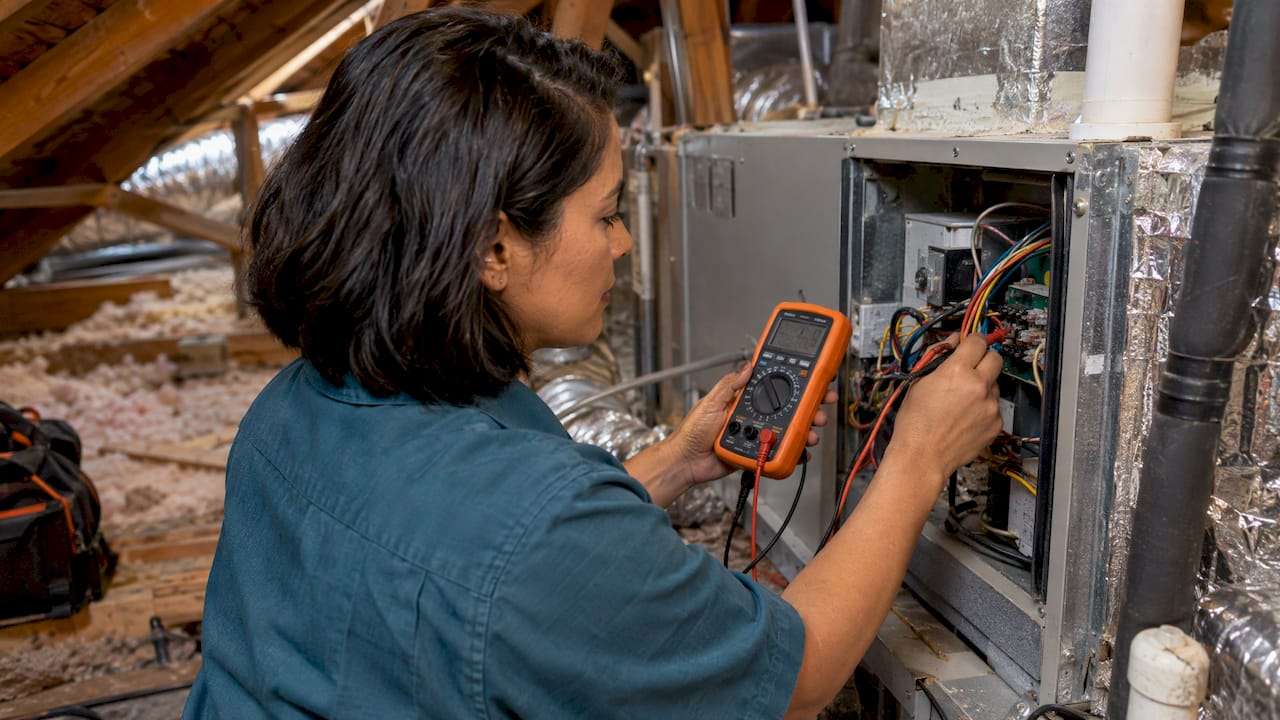
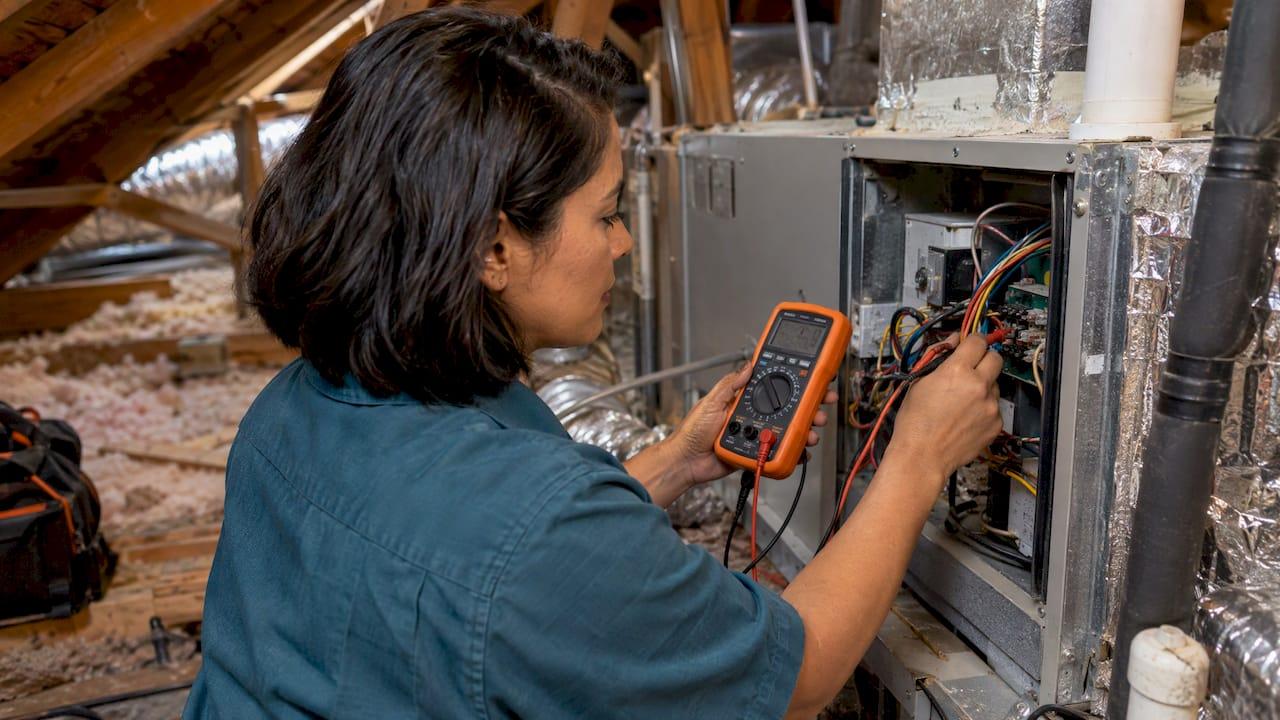
Fluke’s HVAC guide describes setting the meter to AC voltage and measuring from R to C, which should read about 24 volts. Measuring R to W or R to Y should also read 24 volts when the system is calling for heating or cooling. Continuity checks, done with power off, confirm whether a wire is intact end to end.
That is what the letters on your thermostat mean in practice:
| Terminal | Typical role |
|---|---|
| R or RC | 24-volt power from the transformer |
| C | Common return that completes the circuit and powers the thermostat |
| Y | Signal to start cooling |
| W | Signal to start heating |
| G | Signal to run the fan |
Hunt down a short
When there is no voltage between R and C at the air handler, ACHR News describes a method where the technician removes all field wiring (R, C, G, W, Y) to isolate which circuit has the short that blows the fuse.
AC Service Tech lays out a resistance test: power off to the furnace or air handler, meter on resistance, one probe on common, then test each wire one at a time. An OL reading means no short, while 0.0 to 0.5 ohms indicates a short to ground or common.
These are live-circuit and electrical tests. They are quick for a trained technician with the right meter, and they are a poor place for trial and error at home.
When the problem is line voltage, not control voltage
The other meaning of AC low voltage is a weak supply to the compressor and motors. The signs are different:
- Lights dim noticeably when the AC starts.
- The outdoor unit hums but the fan or compressor struggles to start.
- The breaker trips shortly after the system kicks on.
- The system shuts down on hot afternoons when demand on the whole neighborhood is highest.
When motors are asked to run on less voltage than they were designed for, they draw more current to make up the difference, and that extra strain produces heat. Heat is the enemy of a compressor. Because the compressor is the most expensive part of your system, we treat repeated hard starts as a reason to book a visit rather than wait.
Common causes include:
- A weak start or run capacitor. This is one of the most frequent causes of an outdoor unit that hums and will not start. Replacing it is a routine technician repair.
- Loose or corroded connections at the disconnect, contactor or breaker, which add resistance and drop voltage before it reaches the motor.
- Undersized or damaged wiring on the circuit feeding the unit.
- A failing breaker that no longer holds the circuit properly.
- A supply problem outside the house, which your electric utility has to address. If your lights dim across the house and neighbors report the same, contact your utility.
The nameplate on the outdoor unit lists the electrical requirements the manufacturer designed it for. A technician measures the actual voltage at the unit while the system is starting and running, then compares it against that nameplate. Fixing the wiring or connection problem is the repair. A voltage stabilizer is sometimes suggested online, but whether any device is appropriate for your system is a question for a licensed technician or electrician who has measured your supply, not a guess.
Our article on the AC buzzing noise safety check covers what humming and buzzing can mean, and the common AC problems we see in Los Angeles homes puts these failures in a local context.
Heat pumps, mini splits and VRF systems
Heat pumps and ductless mini splits depend on control signals just as a traditional AC does. A split-system heat pump with an air handler has the same 24-volt transformer, thermostat wiring and condensate safety switch described above. That means a blank thermostat on a ducted heat pump follows the same logic: check power, check the safety switch, then call for a proper diagnostic.
Mini splits are controlled by a remote and by wiring between the indoor and outdoor units. When one of these systems shows an error code, shuts off, or will not respond to the remote, the cause can be anything from a tripped breaker to a communication fault. Because the codes and the wiring vary by manufacturer, we recommend not resetting repeatedly and not opening the equipment. Carrier’s guidance applies here too: persistent error codes that come back after a reset are a reason to call.
Commercial VRF systems have many indoor units on one outdoor system, so a control or power fault can affect several rooms or an entire floor at once. These are areas where we focus our expertise, and a business with a VRF system should treat any repeated fault code or multi-zone shutdown as a service call, not a reset-and-hope situation.
Heat pumps are also the system we most often discuss with homeowners replacing older equipment. Our heat pump installation page covers how we approach heat pump installation in Los Angeles.
Symptom guide: what it might be and who handles it
| What you notice | Likely area | What you can do | Who fixes it |
|---|---|---|---|
| Blank thermostat, breakers on | Control transformer, safety switch, wiring, or a blown fuse | Check batteries, filter and drain pan, then stop | Licensed HVAC technician |
| Thermostat on, outdoor unit silent | Contactor, control signal, capacitor | Check the outdoor breaker | HVAC technician |
| Control fuse blows again after replacement | Low-voltage short | Turn the system off | HVAC technician |
| Outdoor unit hums, fan will not spin | Capacitor or motor | Turn the system off | HVAC technician |
| Lights dim when AC starts | Loose connection, wiring or supply | Note when it happens | HVAC technician or electrician, then utility if supply-side |
| Breaker trips repeatedly | Overload, failing breaker or compressor trouble | Leave it off | HVAC technician or electrician |
| Burning smell, frayed wire | Electrical hazard | Shut off at the breaker | Call immediately |
Our perspective on low-voltage problems
Most of the low-voltage calls we get have a small cause. A transformer, a fuse, a pinched wire or a float switch can take down a whole system and make it feel like the AC is finished. It usually is not.
That is why we start with honest diagnostics. We measure first and replace only what the readings point to. You should never be handed a surprise diagnostic fee or pushed toward a new system when a control repair solves the problem. We use flat-rate pricing so you know the number before the work starts.
Low voltage also gets more important as homes move to heat pumps and multi-zone mini splits, and as businesses run VRF. These systems rely on clean control signals and solid electrical connections. Heat pumps, mini splits and commercial VRF are our specialties, and we bring that experience to historic homes and modern systems alike across Los Angeles.
If a repair is the right answer, we will say so. If the system is at the end of its life, we will show you why and talk through efficient options, including heat pump rebates and California requirements.
Leo
Why a proper diagnostic matters
Control-voltage problems are a classic case for parts swapping. A technician who replaces a transformer without finding out why it failed may be back in a week with another failed transformer. ACHR News makes this point directly in its advice to troubleshoot rather than swap parts, and it is the standard we hold ourselves to.
A good diagnostic answers four questions:
- Is line voltage reaching the equipment, and is it within what the nameplate calls for?
- Is the control transformer producing the correct output?
- Is anything in the control circuit, such as a short or a failing coil, overloading it?
- Is the component that failed the cause, or the symptom?
When the answers are clear, the repair is usually straightforward. If you are comparing options, our overview of common HVAC problems and their solutions helps you see how these failures fit with other issues, and the article on common reasons for warm air from AC covers problems that can look similar.
Prevent low-voltage trouble before summer
A few habits cut the odds of a no-cool call in a Los Angeles heat wave:
- Schedule a tune-up before the cooling season. A technician can tighten electrical connections, inspect the contactor and capacitor, and check the condensate drain and safety switch.
- Replace filters on schedule. A clean filter helps the system avoid safety shutdowns and extra strain.
- Keep the drain line clear, especially in attics where algae growth is common.
- Be careful when hanging pictures or running new cables near thermostat wire.
- Report dimming lights or tripping breakers early. These are cheaper to fix before a compressor is involved.
Our HVAC maintenance plan is $180-250 per year and is built around this kind of seasonal check, so small electrical issues are caught before they become emergency repairs.
When to call us and what to expect
Call as soon as you see any of these:
- A blank thermostat after you have checked batteries and breakers
- A control fuse that keeps blowing
- A breaker that trips again after one reset
- Humming from the outdoor unit with no fan or compressor start
- Frayed wiring, scorch marks or a burning smell
- A multi-zone mini split or VRF fault that returns after a reset
Turn the system off at the thermostat and the breaker if you notice a burning smell or damaged wiring, and keep the area clear until a technician arrives.
Our service call starts at $125. We diagnose first, give you the flat-rate price for the repair, and let you decide. If the diagnosis shows the system is past repairing, we explain why before we talk about replacement.
Book honest AC and heat pump service
LC Heating & Air has served Los Angeles homeowners and businesses for more than twenty years. We repair AC, heat pumps, mini splits and commercial VRF systems, and we offer same-day service when you need it. Our service call starts at $125, and repairs are priced flat rate, so there are no surprises. See everything we handle on our HVAC repair and service page, or call us at (323) 970-3113.

If your repair turns into a replacement, we install heat pumps for $5,500-12,000 and mini splits for $3,500-20,000, depending on the home and the number of zones. Financing details for AC, furnace, heat pump, mini split and ductwork projects are on our financing page.
FAQ
Can I run my AC when the voltage is low?
If the problem is the 24-volt control side, the AC usually will not run at all, because the contactor cannot pull in. If the line voltage is low, the unit may try to run while straining, which is hard on the compressor. Turn it off if it hums, trips the breaker or dims your lights, and call a technician to measure the voltage.
Why is my thermostat not getting power?
The common causes are a failed control transformer, a tripped safety switch such as the drain pan float switch or a furnace door switch, a blown control fuse, or damaged thermostat wiring. Check the batteries, breakers and drain pan first. If the screen stays blank, a technician should test the circuit.
How much voltage should a thermostat get?
Honeywell Home says its thermostats operate on 20 to 30 volts AC between R or RC and C, and a reading outside that range should be handled by a professional. Other brands list their own specifications. A technician reads this with a meter on the thermostat wires.
How do I know if there is a low-voltage short?
The usual sign is a control fuse that blows again right after being replaced, or a transformer that overheats or fails repeatedly. Finding the short means testing each control wire with a meter, which is technician work. The cause is often damaged wire, so avoid driving nails or staples near thermostat cable.
Can a low-voltage problem damage a heat pump or mini split?
Weak line voltage forces motors to work harder, which can shorten the life of a compressor. Control problems more often cause shutdowns or error codes than damage. Either way, repeated faults on a heat pump, mini split or VRF system should be diagnosed rather than reset over and over.
Sources
- Honeywell Home: Why Won’t My Thermostat Screen Power Up?
- Honeywell Store: Thermostat Not Working Troubleshooting Guide
- Carrier: Common Thermostat Issues and How to Troubleshoot
- ACHR News: Stop Swapping Parts, Start Troubleshooting Smarter
- ACHR News: Btu Buddy 175, Control Wiring Problems
- AC Service Tech: Finding a Low Voltage Short Quickly
- Fluke: Troubleshooting 10 Common Issues with the Fluke 116 HVAC Multimeter
Recommended
Leo, Owner & Lead Technician at LC Heating & Air
Leo leads LC Heating & Air as an owner-operator and holds California CSLB C-20 HVAC license #1073586. His guides focus on practical diagnostics, safe repair decisions, and clear advice for Los Angeles homeowners.