- Key Takeaways
- Why is my AC not turning on? Common causes explained
- Step-by-step AC troubleshooting checklist you can do safely
- When should you call an HVAC technician?
- What will an HVAC technician check during a service call?
- Typical repair costs and what LC Heating and Air Conditioning sees most often
- A note from Leo on what we see in Los Angeles homes
- LC Heating and Air Conditioning: same-day HVAC repair in Greater Los Angeles
- Sources
- FAQ
- Recommended
If your AC won’t turn on, check power and thermostat settings first. Most cases come down to a tripped breaker, a thermostat set to the wrong mode, a flipped indoor service switch, or a condensate float switch that tripped after a drain clog. Run through these four steps before calling anyone:
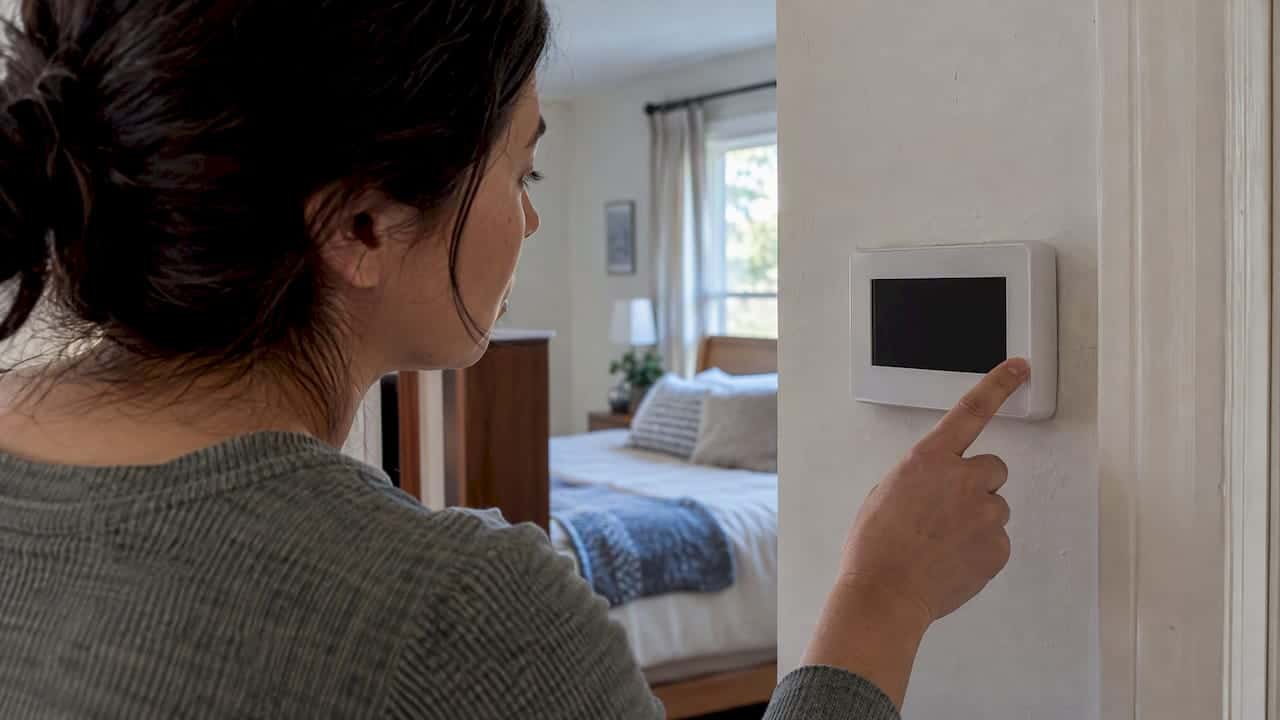
- Confirm thermostat settings. Set it to Cool, drop the target temperature at least 5°F below the current room temperature, and verify the fan is on Auto, not On. Dead batteries are a surprisingly common culprit — swap them first if the screen is blank or dim.
- Check the indoor service switch. It looks like a standard light switch, usually mounted near the air handler. If it’s off, flip it on.
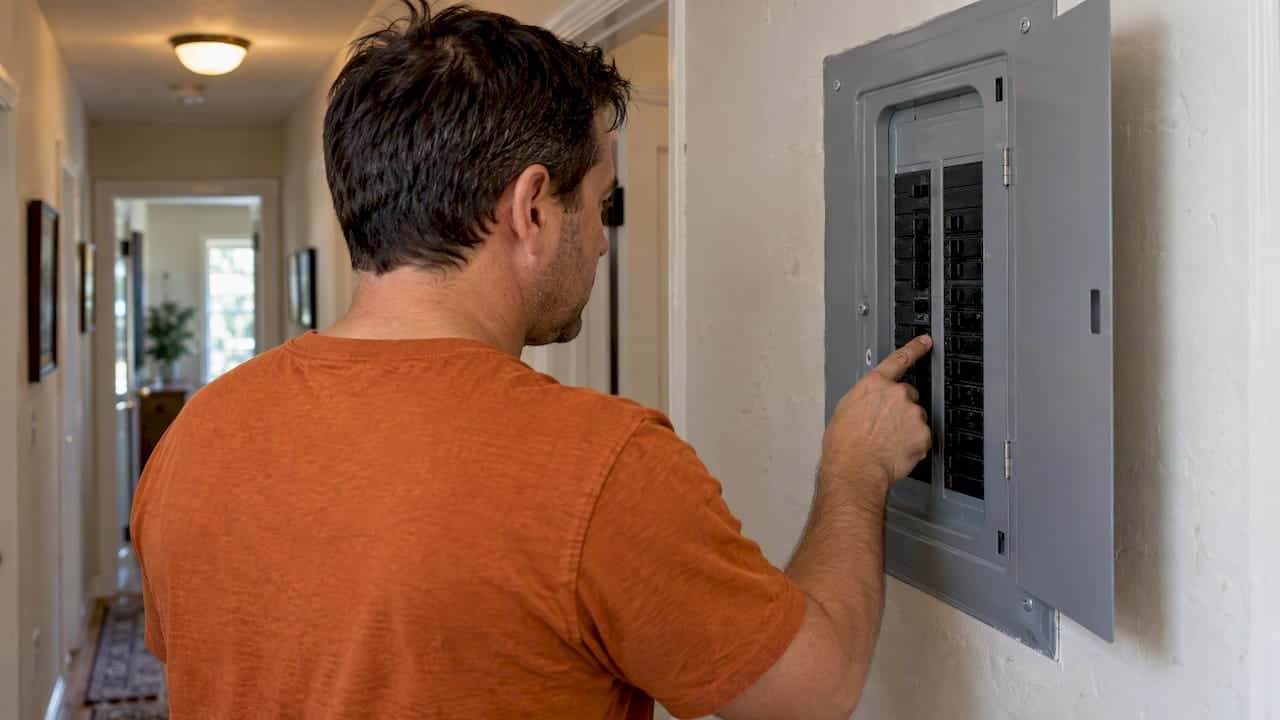
- Inspect the circuit breaker. Find the AC breaker in your main panel. If it’s tripped (sitting between On and Off), reset it once by pushing it fully to Off, then back to On. Do not reset it a second time if it trips again.
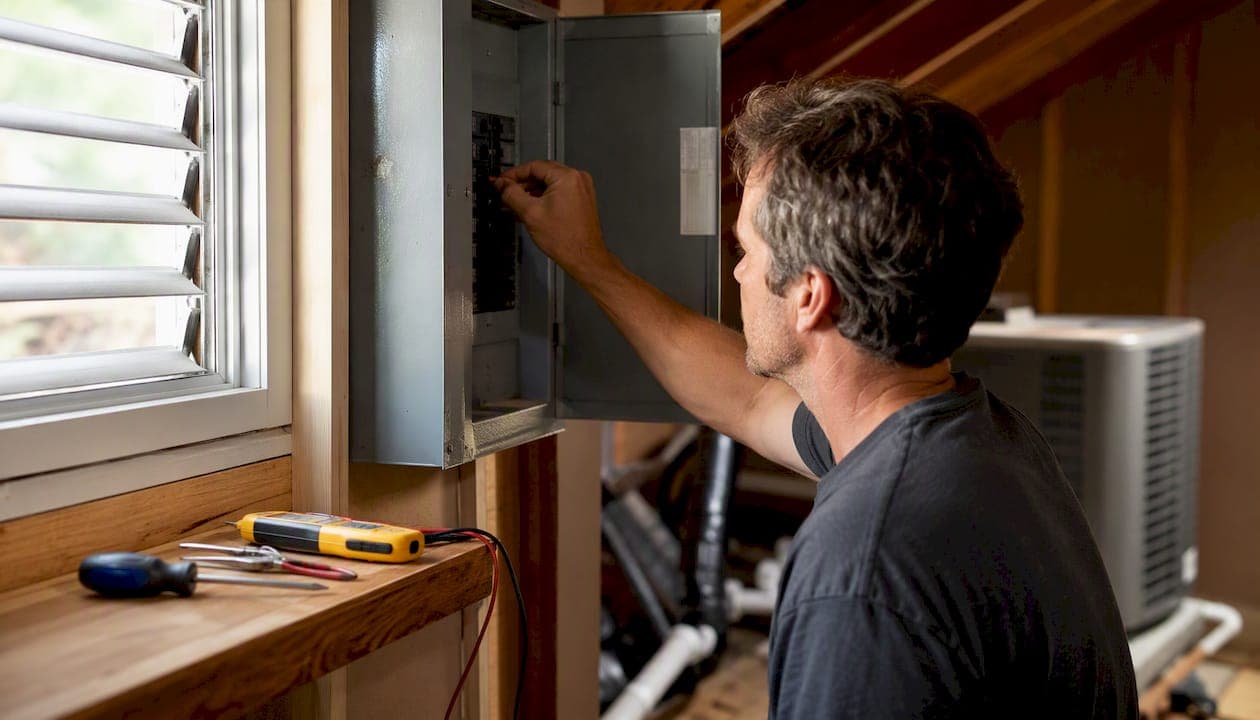
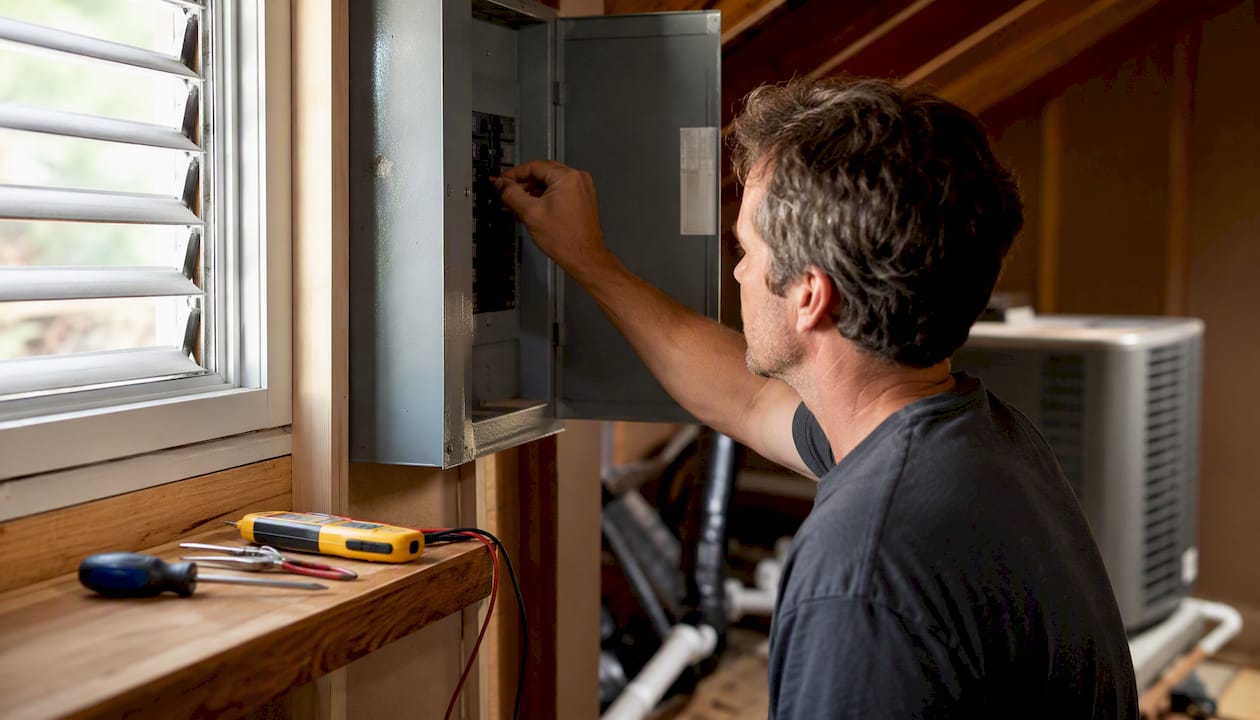
- Check the outdoor disconnect box. This gray box is mounted on the wall near your outdoor unit. Open it and confirm the disconnect block or fuses are seated properly and the switch is in the On position.
If none of those steps restore operation, gather a few details before calling a technician: note whether the thermostat screen is blank or showing an error code, whether the breaker tripped again, whether you see standing water near the indoor unit, and whether you heard any unusual sounds when the system tried to start.
Stop immediately and evacuate if you smell burning plastic, see smoke, notice active flames, or detect a strong rotten-egg odor (possible natural gas). Call 911 first, then your HVAC company. Repeated breaker trips after a single reset are also an electrical hazard — leave the breaker off and call a professional. These are life-safety signs that require immediate professional intervention.
Key Takeaways
Most AC startup failures trace back to a small set of fixable causes — power, thermostat settings, a clogged drain, or a worn capacitor — and a methodical checklist resolves the majority before a technician ever needs to arrive.
| Point | Details |
|---|---|
| Check power and thermostat first | Confirm thermostat is on Cool, batteries are fresh, and the breaker, indoor switch, and outdoor disconnect are all on. |
| Condensate float switch is a common hidden culprit | A clogged drain pan triggers an automatic lockout; clearing the drain often restores startup without any other repair. |
| Reset the breaker only once | If the breaker trips a second time after reset, leave it off and call a professional — repeated trips signal an electrical fault. |
| Call emergency service above 85°F with vulnerable occupants | Elevated indoor temperature with elderly, infant, or medically vulnerable residents justifies an after-hours HVAC call. |
| LC Heating and Air Conditioning offers same-day flat-rate repair | Greater Los Angeles homeowners can book same-day service with transparent, flat-rate diagnostic pricing and no pressure to replace. |
Why is my AC not turning on? Common causes explained
Central air not starting usually traces back to one of seven categories. Knowing which symptom points to which cause saves you time and helps you describe the problem clearly when you call for service. Here’s how to read the clues.
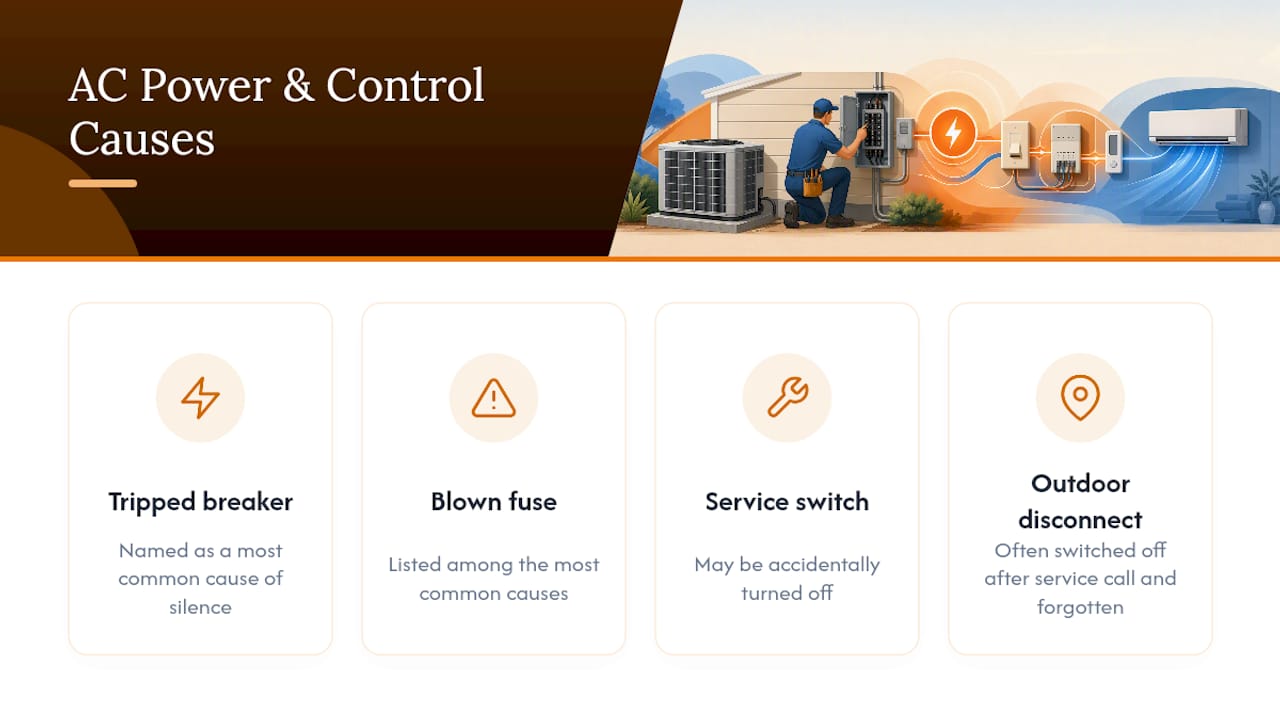
1. Power and control issues
A tripped circuit breaker, blown fuse, or a service switch that was accidentally turned off are the most common reasons a system goes completely silent. The outdoor disconnect box is another frequent miss — it can be switched off after a service call and simply forgotten.
2. Thermostat problems
The thermostat is the system’s control center. Wrong mode (Heat instead of Cool), fan set to On rather than Auto, a blank screen from dead batteries, or a loose wire at the thermostat terminal board can all prevent the system from sending a start signal. A thermostat that clicks but produces no response from the air handler usually points here.
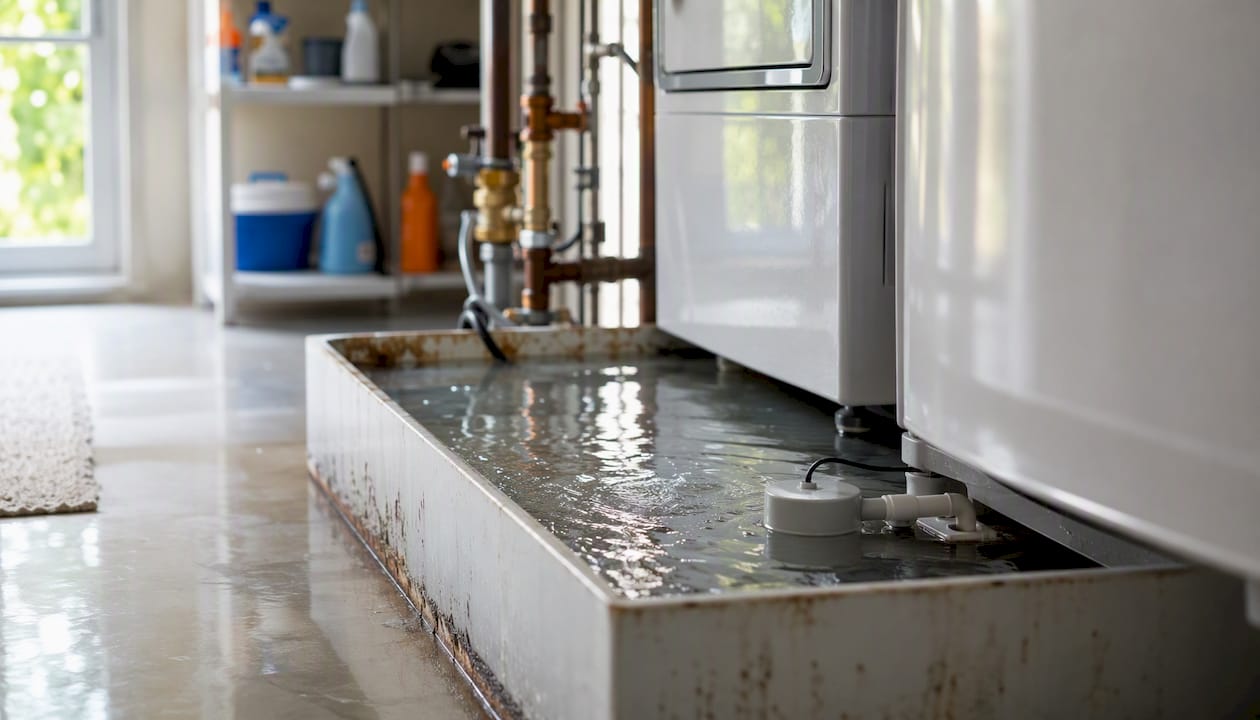
3. Condensate drain and float switch
When the condensate drain line clogs, water backs up into the drain pan. A float switch — a small safety device sitting in that pan — detects the rising water and intentionally locks the system out to prevent water damage. Clearing the clog and draining the pan often resets this lockout and restores startup without any other repair.
4. Clogged air filter
A severely dirty filter starves the system of airflow. The evaporator coil can freeze solid, and some systems will shut down rather than run in that condition. Replacing a clogged filter is a five-minute fix that occasionally resolves a no-start situation entirely.
5. Failed start components
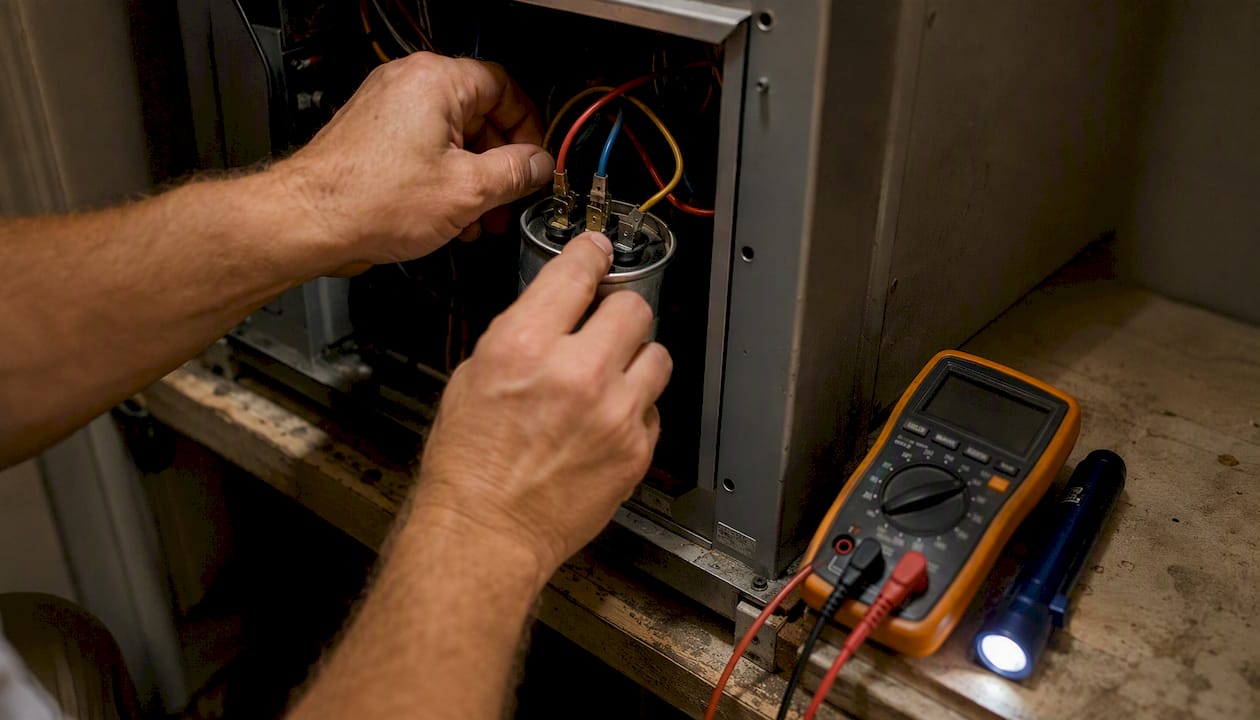
The start capacitor gives the compressor and outdoor fan motor the electrical boost they need to get moving. A failed capacitor often produces a humming sound with no fan rotation, or a brief click followed by silence. A failed contactor (the relay that connects high-voltage power to the compressor) produces similar symptoms. Both are small but critical components.
6. Refrigerant and compressor faults
Low refrigerant from a leak or a failing compressor are pro-level diagnoses. Signs include warm air from the vents, hissing or bubbling sounds near the outdoor unit, or ice forming on the refrigerant lines. Air conditioners move heat via refrigerant through a closed loop — if that loop is compromised, the system cannot function and attempting a DIY fix can be dangerous.
7. Wiring and control board faults
Loose wiring at the air handler, a damaged control board, or a breaker that trips immediately every time you reset it all point to an electrical fault. This category requires a licensed technician or electrician. Lights that flicker when the AC tries to start can also signal a large motor-start electrical load issue worth investigating.
Step-by-step AC troubleshooting checklist you can do safely
Work through these steps in order. Stop at any point where you feel unsafe, see exposed wiring, or encounter a condition listed in the “stop now” reminders below.
Safety before you start
Turn the thermostat to Off before touching anything near the air handler or outdoor unit. Never open electrical panels or touch wiring unless you are confident working around electricity. Do not reset a tripped breaker more than once.
The ordered checklist
- Thermostat check. Confirm mode is Cool, set point is at least 5°F below room temperature, and fan is on Auto. Replace batteries (typically AA or AAA alkaline; some smart thermostats use a lithium coin cell as backup). Wait 3–5 minutes after any thermostat change before expecting a response.
- Indoor service switch. Locate the switch near your furnace or air handler. Confirm it is On.
- Circuit breaker. At your main electrical panel, find the breaker labeled AC, Air Handler, or Condenser. If tripped, push it fully to Off, then back to On — once only. If it trips again, leave it off.
- Outdoor disconnect box. Open the gray box on the exterior wall beside the outdoor unit. Confirm the disconnect block is fully seated and the switch is On.
- Air filter. Pull the filter from the return air grille or air handler cabinet. Hold it up to a light. If you cannot see light through it, replace it before continuing.
- Condensate drain pan. Locate the drain pan under the indoor evaporator coil (usually in the air handler cabinet or above the furnace). If there is standing water, the float switch has likely tripped. Use a wet/dry vacuum to clear the drain line at the access port, then dry the pan. The system may restart on its own once the pan is empty.
- Check for ice on refrigerant lines. Look at the larger insulated copper line running from the outdoor unit into the house. Ice or frost on this line means the evaporator coil is frozen. Turn the system off, set the fan to On (not Auto) to thaw the coil, and wait 2–4 hours before restarting. Do not run the compressor while ice is present.
- Listen on restart. After clearing any issues, set the thermostat back to Cool and listen. A single click followed by outdoor fan and compressor running is normal. Humming with no fan movement suggests a capacitor issue. A loud bang or grinding noise means shut it down immediately.
Pro Tip: Before calling a technician, take a photo of your thermostat screen, the circuit breaker panel, and the indoor drain pan. These images let the dispatcher assess the situation accurately and can prevent an unnecessary emergency dispatch — saving you after-hours surcharge costs.
How to reset the system safely
Power-cycle the whole system by setting the thermostat to Off, then switching the indoor service switch off and the breaker off. Wait 30 seconds. Restore power in reverse order: breaker on, service switch on, then thermostat to Cool. Most systems have a built-in 3–5 minute compressor delay after a power cycle — this is normal, not a fault.
When to stop and call a pro
- Ice is present and the system won’t thaw after 4 hours
- You see exposed or burned wiring anywhere
- The breaker trips a second time after your single reset
- You hear grinding, banging, or screeching from the outdoor unit
- There is a burning smell at any point
A pre-call checklist like this one resolves many common issues and saves service costs — but it also tells you quickly when the problem is beyond a safe DIY fix.
When should you call an HVAC technician?
Not every AC failure needs an emergency call. Knowing the difference between “call now” and “schedule tomorrow” protects both your safety and your wallet.
Absolute emergencies — evacuate and call 911
- Burning smell (plastic, rubber, or wire insulation)
- Smoke or visible sparks from any part of the system
- Strong rotten-egg odor (possible natural gas leak)
- Active flames anywhere near the unit
These life-safety signs require immediate evacuation and a 911 call before you contact any HVAC company.
Electrical red flags — call a pro today, not tomorrow
- Breaker trips immediately after a single reset
- Buzzing, arcing, or crackling sounds from the panel or unit
- Lights flickering when the system tries to start
These symptoms suggest an electrical fault in the compressor, wiring, or panel that a licensed technician or electrician needs to diagnose.
Temperature-based emergency threshold
Most HVAC failures are not true emergencies, but indoor temperature and who is in the home change the calculus. If indoor temperature climbs above a certain warm threshold and elderly adults, infants, or anyone with a medical condition is present, request emergency HVAC service. In Los Angeles, summer temperatures can push indoor temps past that threshold within a few hours of system failure.
Schedule same-day or next-business-day
If the weather is mild, the system is partially working (running but not cooling well), and no vulnerable people are affected, a same-day business-hours appointment is usually appropriate. Calling with specific diagnostic details — thermostat display state, breaker history, any water or ice, and the sounds you heard — helps the dispatcher decide whether to send an emergency tech or schedule a regular visit, which can save you a significant after-hours surcharge.
Decision flow: Run the basic checklist above. If nothing changes and indoor temperature is above 85°F with vulnerable occupants, call for emergency service. Otherwise, book a same-day business-hours visit and gather your diagnostic details while you wait.
What will an HVAC technician check during a service call?
A diagnostic visit typically runs 30–60 minutes for straightforward cases. Here is the sequence a technician follows, and what you can do to make that visit faster and less expensive.
What the technician checks
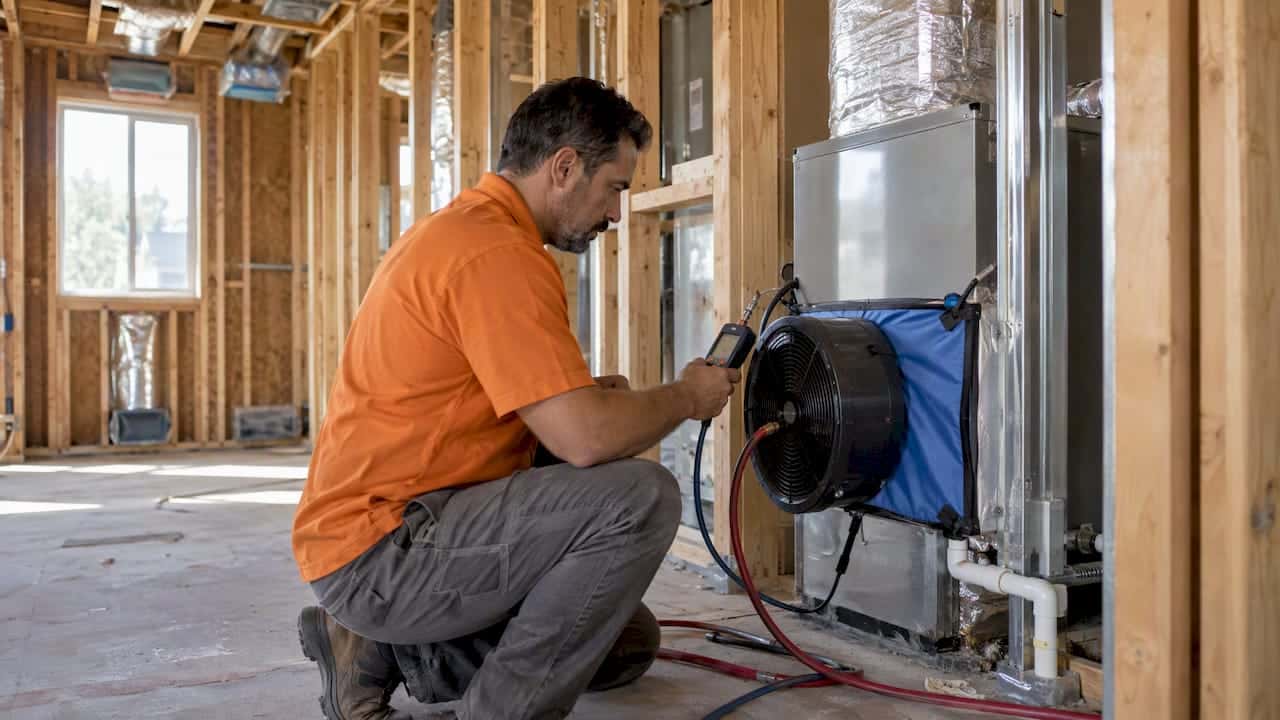
- Verify incoming power at the disconnect and service switch
- Test voltage at the air handler and outdoor unit
- Inspect thermostat wiring and confirm the system is receiving a call for cooling
- Check the condensate drain, float switch, and drain pan for water
- Examine the air filter and measure static pressure if airflow seems restricted
- Test start and run capacitors with a capacitance meter
- Check the contactor for pitting or failure
- Observe outdoor fan and compressor operation on startup
- Measure refrigerant pressures if the system runs but doesn’t cool
- Inspect the control board for error codes, burned components, or loose wiring
What to have ready before the technician arrives
- A photo of your thermostat screen (especially if it shows an error code)
- Notes on how many times the breaker tripped and when
- Photos of the indoor drain pan and any visible ice or water
- A description of any sounds the system made when it tried to start
- How long the problem has been occurring and whether it happened before
This information shortens diagnostic time and helps the technician arrive with the right parts for the most likely repair.
Same-day fixes vs. parts-ordered repairs
Many common repairs — capacitor replacement, contactor swap, drain clearing, filter replacement, thermostat battery or wiring fix — are completed the same day. Outdoor fan motor replacement sometimes requires a parts order of 1–2 business days. Compressor replacement or refrigerant work on older systems may take longer, especially if the system uses R-22 refrigerant, which has been phased out and is increasingly difficult to source.
Typical repair costs and what LC Heating and Air Conditioning sees most often
Knowing rough cost ranges helps you evaluate a quote and recognize when a price is out of line. These are general ranges based on Greater Los Angeles service conditions; your actual cost depends on the specific part, system age, and labor involved.
A few things worth knowing about these numbers:
- Flat-rate diagnostic pricing means you know the cost before work begins. Ask for this upfront — it protects you from escalating “diagnostic hours” charges.
- Capacitor and contactor replacements are among the most cost-effective AC repairs available. They restore a system that would otherwise seem dead for a fraction of the cost of a new unit.
- Compressor replacement vs. system replacement: if the compressor fails on a system older than 10–12 years, or one that uses R-22 refrigerant, replacement of the whole system often makes more financial sense. A modern heat pump or high-efficiency central system will also qualify for California utility rebates, which can offset a significant portion of the installation cost.
- Always request a written estimate before authorizing any repair, and ask whether parts and labor carry a warranty. Reputable companies stand behind their work.
Preventive maintenance catches most of these failures before they strand you on a hot day. An annual tune-up that includes capacitor testing, drain flushing, and filter replacement costs far less than an emergency repair call.
A note from Leo on what we see in Los Angeles homes
After more than 20 years working on HVAC systems across Greater Los Angeles, from 1920s craftsman bungalows in Pasadena to modern multi-zone heat pump installations in the hills, the pattern is consistent: the calls that feel like emergencies are often the simplest fixes. A float switch trip from a clogged drain. A thermostat that lost its batteries. A breaker that tripped once and just needed a single reset.
What makes the difference is knowing which checks are safe to run yourself and which ones require a licensed hand. At LC Heating and Air Conditioning, we built our diagnostic process around that same logic. We show up with a flat-rate diagnostic fee so you know the cost before we touch anything, and we tell you honestly whether a repair makes sense or whether the system has reached the end of its useful life. No pressure, no surprises.
If you’re in Greater Los Angeles and your system still isn’t responding after the checklist above, we offer same-day service and can usually get a technician to you the same day you call. We specialize in heat pumps, mini-split systems, and central AC for both residential and commercial properties.
LC Heating and Air Conditioning: same-day HVAC repair in Greater Los Angeles
When the checklist doesn’t fix it, you need a technician who arrives prepared, prices honestly, and doesn’t push unnecessary replacements. That’s the gap LC Heating and Air Conditioning fills for homeowners across Greater Los Angeles.
Flat-rate diagnostic pricing means no surprise charges when the tech opens the panel. Same-day availability means you’re not waiting through a Los Angeles heat wave for a next-week appointment. And with 20+ years of local experience across central AC, heat pumps, mini-splits, and commercial VRF systems, the technician who shows up has likely seen your exact failure before. Book same-day HVAC repair in Los Angeles or explore our full service offerings to get a technician dispatched today.
Sources
- Tips for knowing when to call an HVAC pro
- Why is my AC not turning on?
- What are the components of an air conditioning system?
- AC repair checklist before calling a HVAC technician
FAQ
How do I get my AC to kick on?
Set the thermostat to Cool with the target temperature at least 5°F below room temperature, confirm the fan is on Auto, and replace the batteries if the screen is dim. Then check the indoor service switch, circuit breaker, and outdoor disconnect — restoring power at any one of those points often gets the system running immediately.
Why is my outside AC unit not turning on?
The outdoor unit won’t start if the disconnect box is off, the circuit breaker has tripped, the start capacitor has failed, or the contactor isn’t closing. A humming sound with no fan movement usually points to a failed capacitor, which is a same-day repair for a licensed technician.
How do I force an AC to turn on safely?
Run the full power-cycle reset: set the thermostat to Off, turn off the indoor service switch and the AC breaker, wait 30 seconds, then restore power in reverse order. Set the thermostat back to Cool and wait 3–5 minutes for the compressor delay to clear. If the system still doesn’t respond, do not attempt further resets — gather your diagnostic details and call a technician.
What does a tripped breaker mean for my AC?
A single tripped breaker usually means the system drew more current than the breaker’s rated limit, often from a brief power surge or a struggling compressor. Reset it once. If it trips again immediately, the system has an underlying electrical fault — a failing compressor, a short in the wiring, or a seized motor — and needs professional diagnosis before you restore power again.
When is an AC problem a true emergency?
Call 911 and evacuate for burning smells, smoke, sparks, or a strong rotten-egg gas odor. For a system that simply won’t start, treat it as an emergency if indoor temperature exceeds 85°F and elderly adults, infants, or medically vulnerable people are in the home. Otherwise, a same-day business-hours service call is the appropriate response.
Recommended
Leo, Owner & Lead Technician at LC Heating & Air
Leo leads LC Heating & Air as an owner-operator and holds California CSLB C-20 HVAC license #1073586. His guides focus on practical diagnostics, safe repair decisions, and clear advice for Los Angeles homeowners.