- 1. Why your old AC system fails: the most common causes
- 2. How to safely troubleshoot your AC before calling a technician
- 3. Should you repair or replace your aging AC?
- 4. How to prevent premature failure with a simple maintenance plan
- Key Takeaways
- What our technicians see most often in Los Angeles homes
- LC Heating and Air Conditioning is ready to help today
- Useful sources
- FAQ
- Recommended
Older home AC systems fail because of a predictable combination of age-related wear, deferred maintenance, electrical component breakdown, and refrigerant issues. Most systems reach replacement age at a median of about 15.3 years, and the failures that bring them down rarely happen overnight. Before you call anyone, run these four safe checks right now:
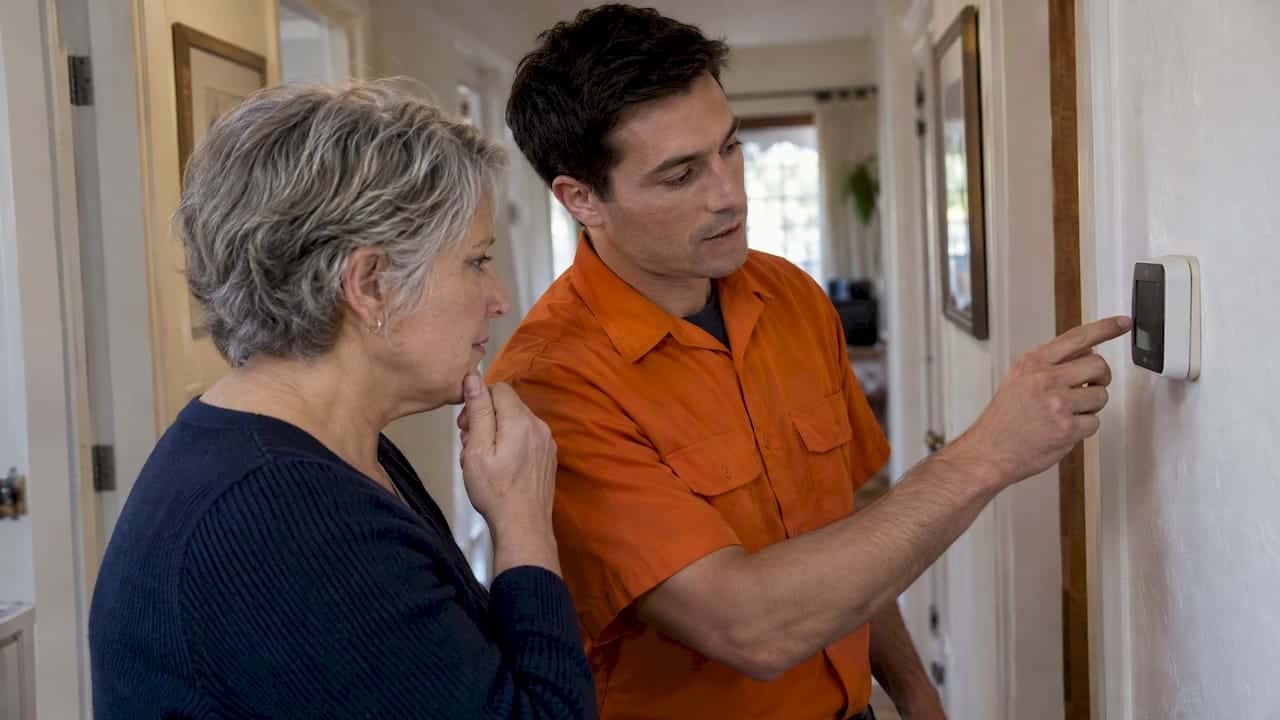
- Check your thermostat. Confirm it’s set to “cool” and the temperature is below the current room reading.
- Check your breaker. A tripped breaker is one of the most common and easiest fixes.
- Inspect your air filter. A clogged filter can shut down airflow entirely and trigger a cascade of bigger problems.
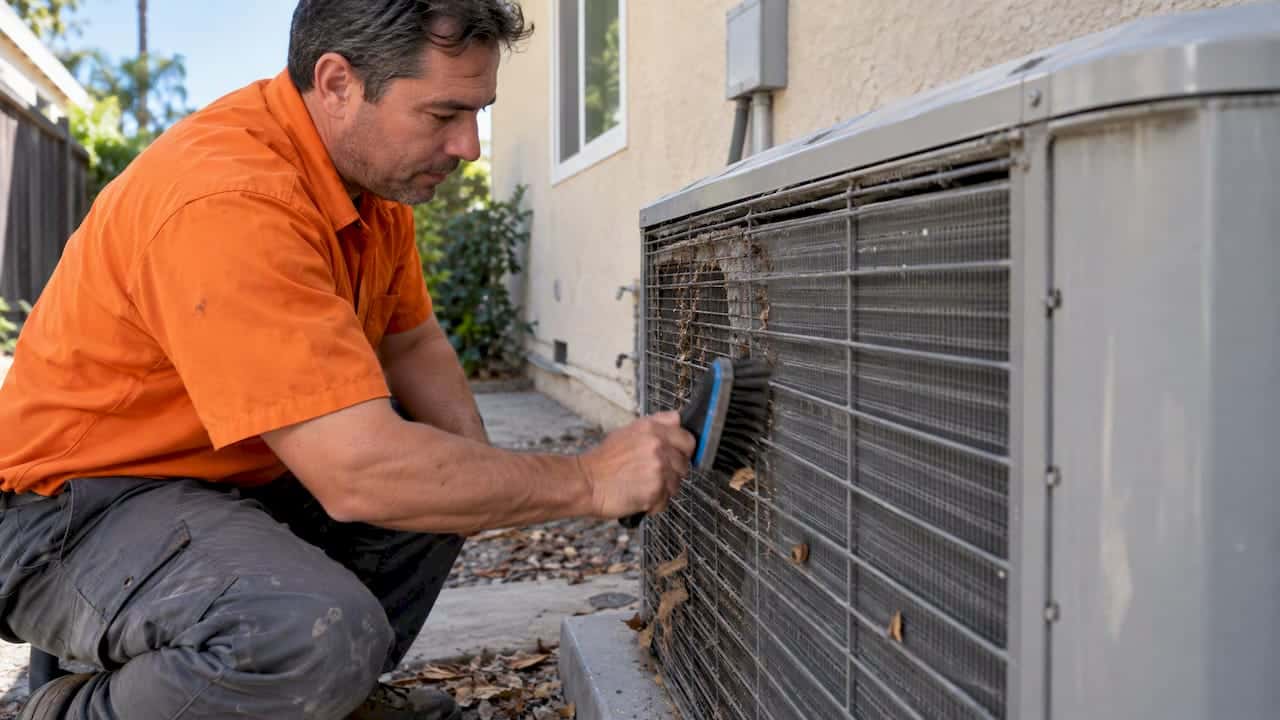
- Clear the outdoor unit. Remove any leaves, debris, or overgrowth within two feet of the condenser.
Pro Tip: Plan any replacement in spring or fall. Waiting until a July heatwave means longer lead times and higher prices, with technicians reporting 1–2 week waits during peak heat.
1. Why your old AC system fails: the most common causes
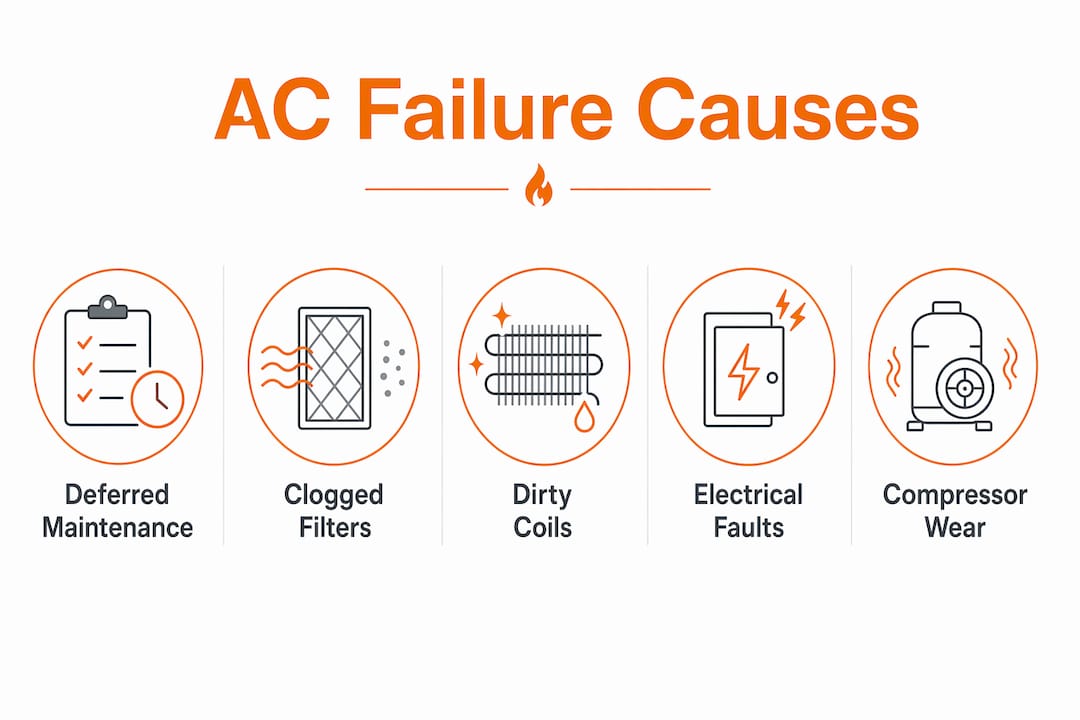
Every aging AC system fails through one of a handful of well-documented pathways. Knowing which one you’re dealing with tells you whether you’re looking at a $30 filter swap or a $2,000 compressor replacement.
Clogged air filters and restricted airflow
A dirty filter is the single most preventable cause of AC failure. When airflow drops, the evaporator coil gets too cold and ices over. That ice blocks airflow further, and the resulting liquid refrigerant can “slug” the compressor, a process that can turn a dirty $5 filter into a $1,500–$2,500 compressor replacement. Symptoms: weak airflow, ice on the indoor unit, warm air blowing from vents.

Dirty or frozen evaporator and condenser coils
Coils caked with dust and grime can’t transfer heat efficiently. A dirty condenser coil outside forces the compressor to work harder in high heat, accelerating wear. Dirty evaporator coils inside cause icing and reduced cooling. Both are maintenance failures, and both are avoidable with annual professional cleaning.
Refrigerant leaks and the R-22 problem
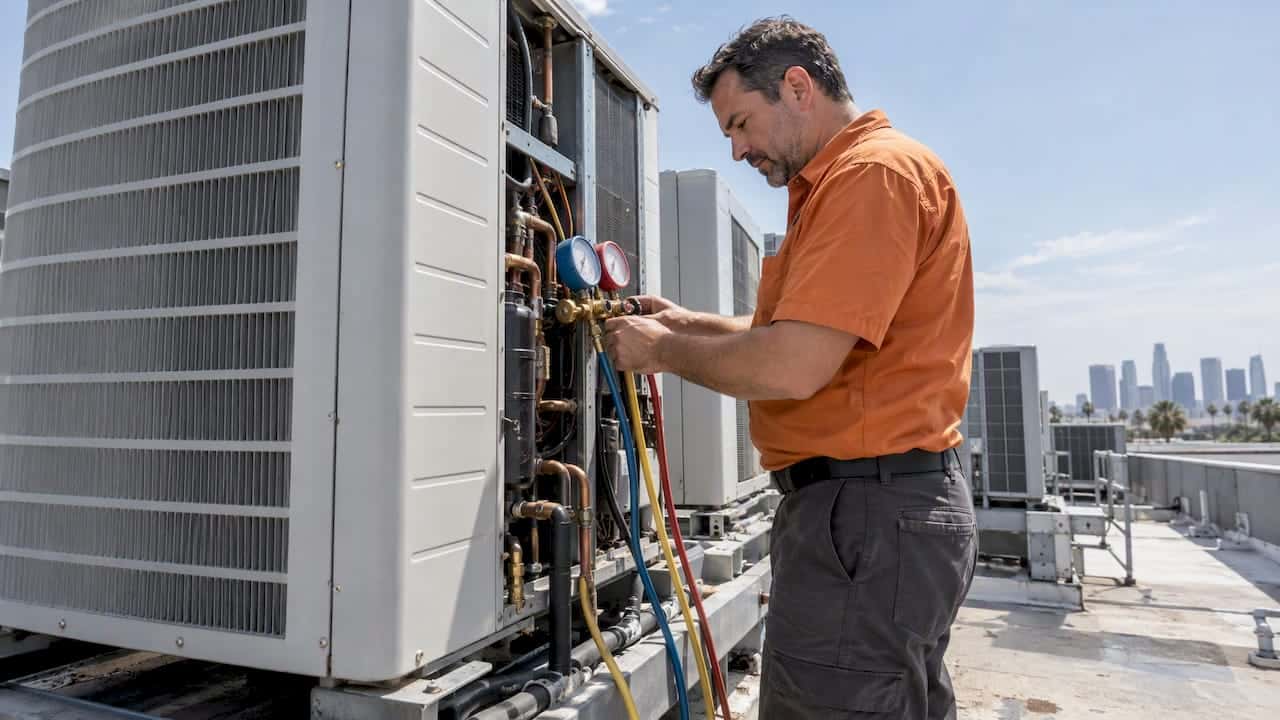
Low refrigerant charge reduces cooling capacity and raises compressor discharge temperatures, wearing out bearings faster. For systems built before roughly 2010, there’s a bigger issue: they likely use R-22, a refrigerant banned from U.S. production since January 1, 2020. Reclaimed R-22 now costs dramatically more than it did before the phase-out, making repairs on leaking R-22 systems rarely worth the expense. Symptoms: hissing sounds near the unit, ice on refrigerant lines, warm air despite the system running.
“The number one way to ensure your AC lasts is with annual maintenance. A dirty system has to work harder, putting strain on every component and leading to premature failure.” — Carrier HVAC
Capacitor and electrical faults
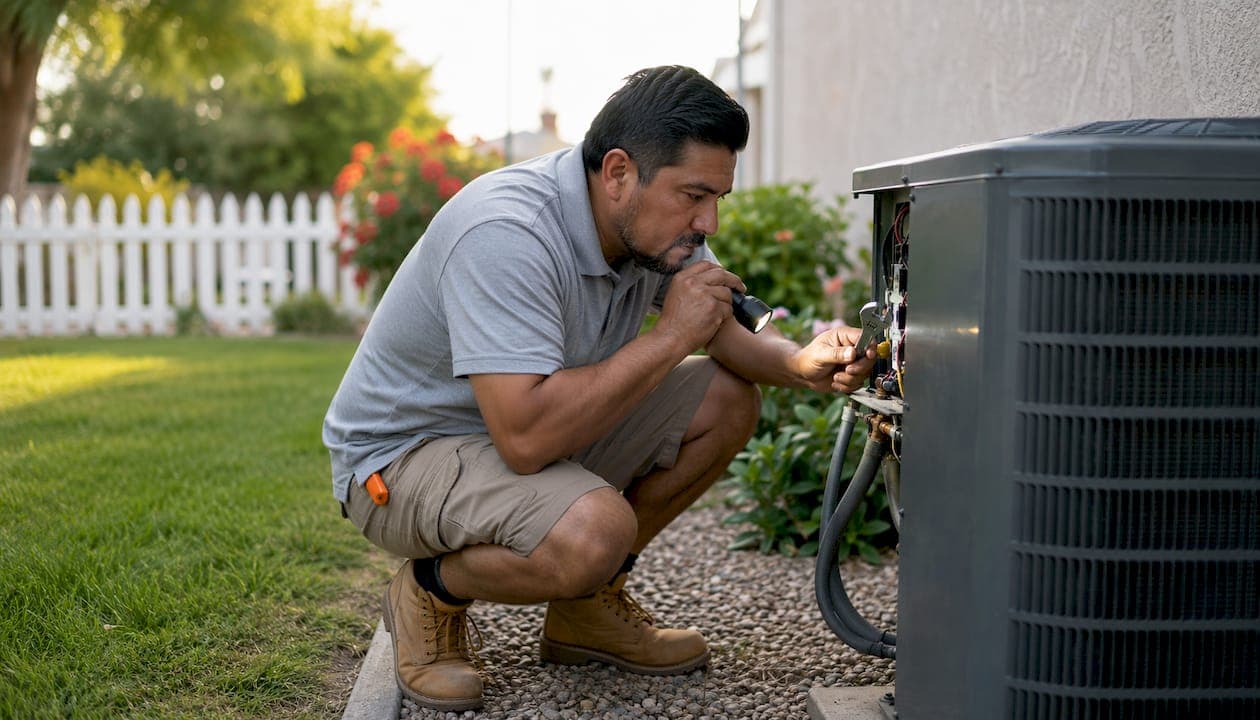
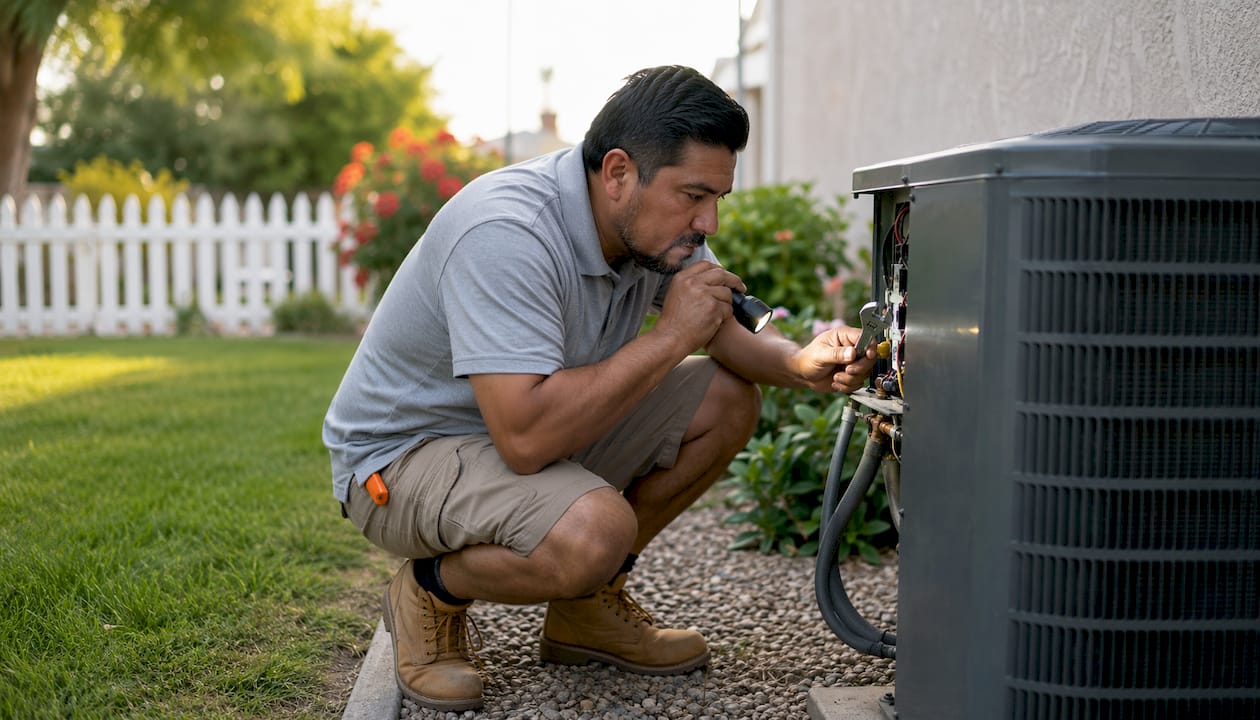
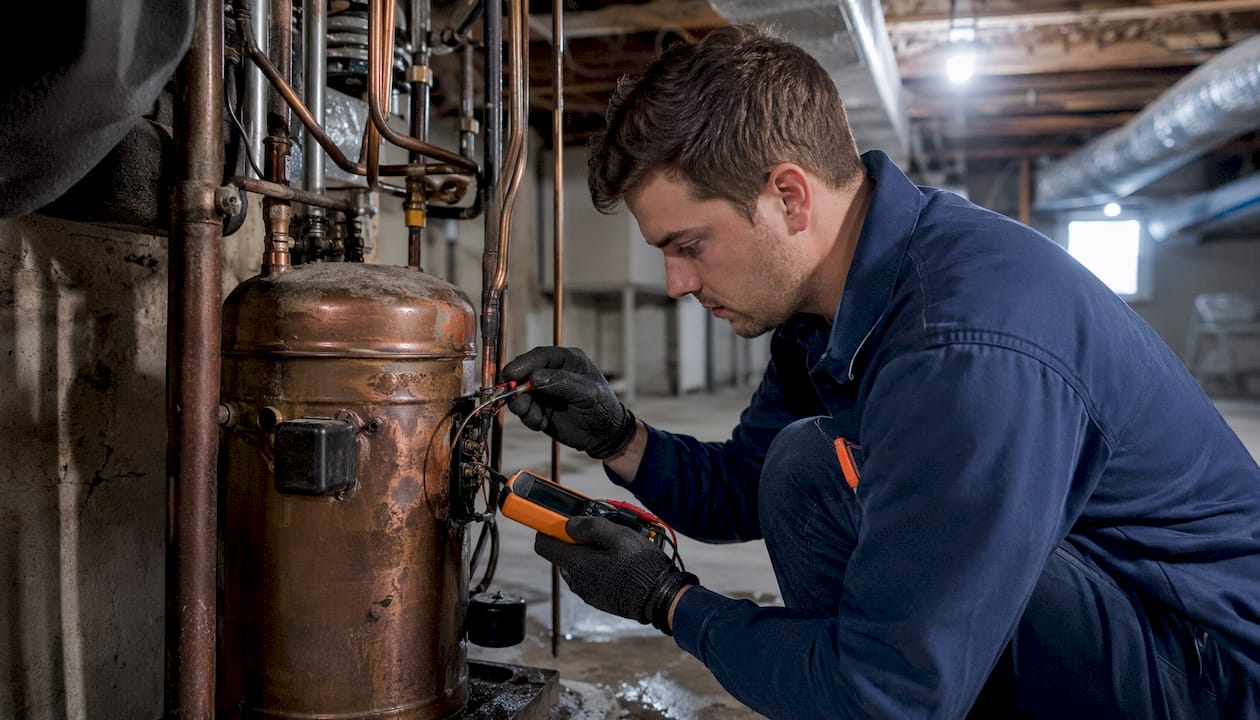
Capacitors are small but critical components that start and run the compressor and fan motors. They’re also one of the highest-frequency failure points in residential AC systems, often needing replacement every 5–8 years in hot climates like Los Angeles. A failing capacitor reads more than 10% below its rated microfarad value. Contactors, the electrical switches that control the compressor, also pit and wear over time. Symptoms: the outdoor unit hums but won’t start, the system clicks on and off rapidly, or nothing happens at all.
Compressor failure
The compressor is the heart of the system, and it’s also the most expensive component to replace. Compressor failure is usually the end result of other neglected problems: low refrigerant, dirty coils, or repeated capacitor failures that cause hard starts. A short-cycling pattern (on/off cycles under four minutes) combined with high discharge pressure often signals a compressor under stress.
Efficiency loss is real and measurable. Systems 11–15 years old often use 25–35% more electricity than when new, even before any visible failure occurs.
Ductwork problems
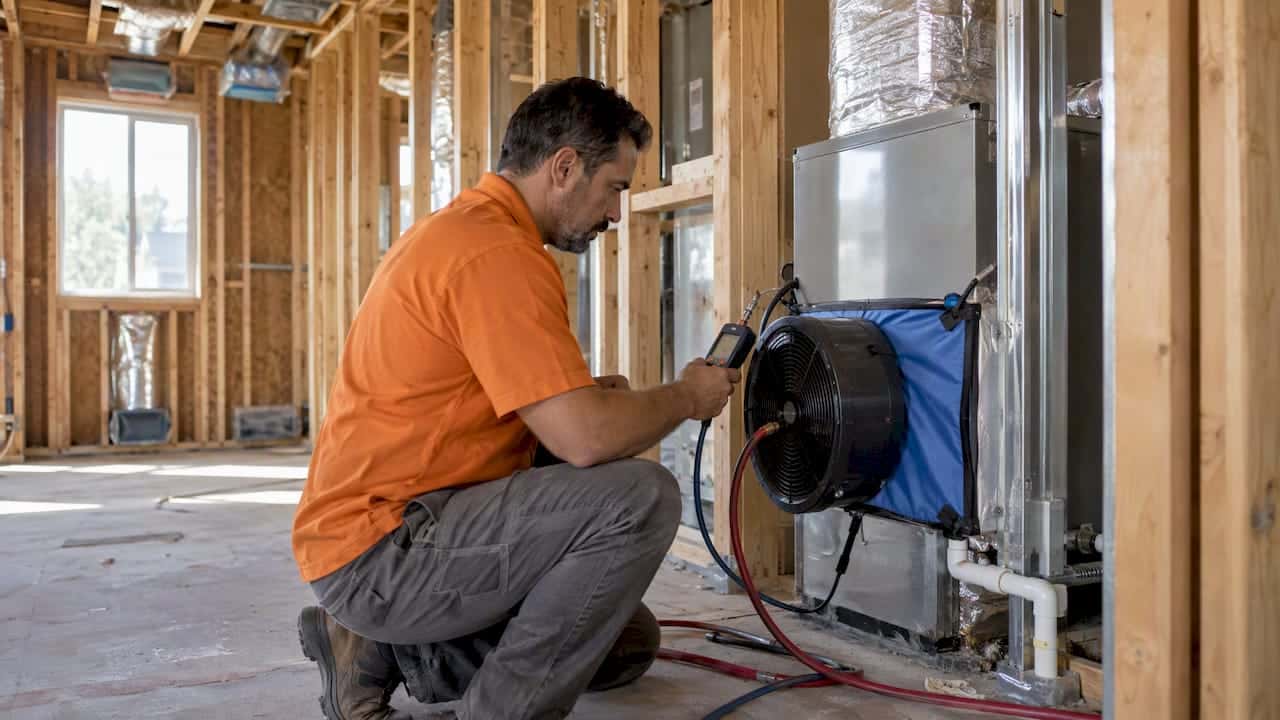
Leaky or degraded ducts are a hidden drain on system performance. Duct leakage and micro-leaks can quietly increase energy use well before any catastrophic failure shows up. If some rooms are consistently too hot or too cold despite a functioning unit, ductwork is often the culprit. This is especially common in older Los Angeles homes where original duct systems were never updated.
Age and parts scarcity
Most central AC systems last 15–20 years with proper maintenance. Neglected systems can fail around the 10-year mark. Once a system passes 20 years, manufacturers typically no longer support parts, making repairs increasingly difficult and expensive. The median replacement age for residential AC in real-world data is about 15.3 years.
2. How to safely troubleshoot your AC before calling a technician
Run these steps in order. Stop immediately if you encounter any of the red-flag signs listed at the end.
- Check the thermostat settings. Confirm it’s on “cool,” the fan is set to “auto,” and the set temperature is at least 5°F below room temperature.
- Check the circuit breaker. Locate your electrical panel and look for a tripped breaker labeled “AC” or “air handler.” Reset it once. If it trips again, stop and call a technician.
- Inspect and replace the air filter. A filter you can’t see light through needs to go. Replace it with the correct size and MERV rating for your system.
- Check the outdoor unit. Clear any debris, leaves, or vegetation within two feet. Confirm the unit is running. If the fan isn’t spinning but you hear humming, a capacitor may be failing.
- Check the condensate drain pan. A full or overflowing pan under the indoor air handler means the drain line is clogged. You can try clearing it with a wet/dry vacuum at the drain outlet.
- Listen carefully. A healthy startup sounds like a steady hum. Clicking, banging, screeching, or rapid on/off cycling all point to specific component failures that need a professional.
What you must never attempt yourself: discharging or testing capacitors (they hold a lethal charge even when power is off), opening refrigerant lines, or working on 240V wiring. These are not DIY tasks.
Red flags that require an immediate technician call:
- A hissing or bubbling sound near the refrigerant lines
- A burning or electrical smell from any part of the system
- Water pooling beyond the drain pan
- The breaker trips a second time after resetting
Pro Tip: For more signs your AC needs repair, LC Heating and Air Conditioning has a practical symptom guide that can help you describe the problem accurately before a technician arrives.
3. Should you repair or replace your aging AC?
The core decision rule is straightforward: if the repair cost exceeds 50% of what a new system would cost, replacement is almost always the better financial choice. Industry guidance also points to a useful benchmark: when a repair on a system older than roughly 12 years exceeds around $1,000, replacement often becomes more cost-effective due to repeated future failures and ongoing efficiency loss.
R-22 systems push the math firmly toward replacement. With reclaimed R-22 now priced dramatically higher than pre-2020 levels, even a moderate refrigerant repair can cost hundreds to over a thousand dollars, with no guarantee the leak won’t recur.
Multiple service calls in a single season for different components are a strong signal the system is in cascading failure. That pattern favors replacement over continued repair spending.
| System age | Common failure | Repair cost sensitivity | Recommended action |
|---|---|---|---|
| Under 10 years | Capacitor, filter, minor electrical | Low to moderate | Repair |
| 10–15 years | Coils, refrigerant, contactor | Moderate | Repair if under 50% of replacement cost |
| 15–20 years (R-22) | Refrigerant, compressor | High | Replace; R-22 repairs rarely economical |
| Over 20 years | Multiple components, parts scarce | Very high | Replace now |
For a detailed look at AC repair vs. replacement costs, the tradeoffs shift depending on your system’s age and the specific failure. Spring and fall are the best windows to plan a replacement. Avoid waiting for a summer emergency.
4. How to prevent premature failure with a simple maintenance plan
The most expensive AC repairs are almost always the result of skipped maintenance. A consistent schedule keeps small problems from becoming compressor-killing ones.
Pro Tip: Addressing static-pressure-caused coil icing early is one of the highest-value maintenance actions you can take. A frozen evaporator coil that goes unnoticed can slug liquid refrigerant into the compressor, destroying it. Check your filter monthly and schedule a professional tune-up every spring.
For homeowners concerned about attic moisture and mold, condensate issues from a poorly maintained AC system can contribute to indoor air quality problems beyond just comfort.
| Task | Frequency | Who performs it |
|---|---|---|
| Replace air filter | Every 1–3 months | Homeowner |
| Clear outdoor unit of debris | Monthly (or after storms) | Homeowner |
| Check condensate drain pan | Monthly in summer | Homeowner |
| Inspect thermostat settings and batteries | Seasonally | Homeowner |
| Professional coil cleaning and tune-up | Annually (spring) | Licensed technician |
| Refrigerant level check | Annually | Licensed technician |
| Ductwork inspection | Every 3–5 years | Licensed technician |
Annual professional tune-ups catch the small electrical faults, low refrigerant, and coil buildup that homeowners can’t see. Skipping them is how a 15-year-old system becomes a 10-year-old failure.
Key Takeaways
Older AC systems fail through a predictable chain: deferred maintenance triggers coil icing and compressor stress, electrical components wear out every 5–8 years, and R-22 refrigerant issues make repairs on pre-2010 systems increasingly uneconomical.
| Point | Details |
|---|---|
| Median AC lifespan | Real-world data puts the median replacement age at about 15.3 years; neglected systems can fail by year 10. |
| Efficiency loss accelerates | Systems 11–15 years old often use 25–35% more electricity than when new, even before visible failure. |
| Repair vs. replace threshold | Replace when repair costs exceed 50% of replacement value, or when any repair on a 12+ year system tops around $1,000. |
| R-22 systems | Pre-2010 R-22 systems are rarely worth repairing; reclaimed refrigerant costs have risen sharply since the 2020 phase-out. |
| LC Heating and Air Conditioning | Offers same-day diagnostics and flat-rate pricing in Greater Los Angeles for honest repair-vs-replace guidance. |
What our technicians see most often in Los Angeles homes
The pattern I see most consistently in the field is deferred maintenance that snowballs. A homeowner skips a few filter changes, the evaporator coil slowly ices up, and by the time they call us, what started as a $30 fix has become a compressor conversation. Capacitor failures are the other constant. In a climate like Los Angeles, where systems run hard for months, capacitors wear out faster than most homeowners expect, and a failing capacitor is often the first domino.
The R-22 situation deserves a direct word: if your system is from before 2010 and it’s leaking refrigerant, the economics of repair have fundamentally changed. The refrigerant itself is now expensive and limited to reclaimed supply. Putting money into repeated recharges without addressing the underlying leak is rarely a sound investment.
What I’d tell any homeowner: the systems that last 18–20 years in Los Angeles are almost always the ones that got annual tune-ups. The ones that fail at 10–12 years almost always didn’t. That’s not a coincidence.
LC Heating and Air Conditioning is ready to help today
When your older system stops cooling, you need straight answers fast, not a surprise bill. LC Heating and Air Conditioning offers same-day HVAC diagnostics in Greater Los Angeles with flat-rate pricing, so you know the cost before any work begins. No pressure to replace when repair makes sense, and no sugarcoating when it doesn’t.
Services available for failing older systems include:
- Capacitor and contactor replacement
- Refrigerant leak diagnosis and system evaluation
- Full system replacement and installation (including Goodman, Daikin, and ADP equipment)
- Ductwork inspection and repair
- Emergency 24/7 service for urgent failures
Spring and fall are the best times to book a replacement before summer demand drives up lead times. View available equipment and pricing or call to schedule your diagnostic today.
Useful sources
| Source | Why it’s relevant |
|---|---|
| ServiceTitan: Major home equipment average lifespan | Real-world median replacement ages for residential AC (15.3 years) and evaporator coils. |
| The Cooling Company: When to replace heating and AC | Repair-vs-replace thresholds, R-22 guidance, and seasonal timing recommendations. |
| ENERGY STAR: When is it time to replace? | Federal efficiency guidance and replacement signals from the U.S. EPA’s ENERGY STAR program. |
| Carrier: How long do air conditioners last? | Manufacturer-sourced lifespan data and maintenance impact on system longevity. |
| ServiceMag: Common HVAC electrical failures | Capacitor and contactor failure rates, diagnostic thresholds, and electrical fault patterns. |
| HVAC Repair Authority: Older HVAC repair challenges | R-22 regulatory background, parts obsolescence, and repair economics for aging systems. |
FAQ
Is a 15-year-old AC unit worth repairing?
It depends on the repair cost. If the repair exceeds 50% of what a new system costs, or if the unit uses R-22 refrigerant, replacement is usually the smarter financial choice.
What is the most common cause of AC failure?
Capacitor failure is one of the most frequent single-component failures in residential AC systems, especially common in hot climates. Deferred maintenance, particularly clogged filters leading to coil icing, is the most common root cause of cascading failures.
How many years should a central AC system last?
Most central AC systems last 15–20 years with proper maintenance. The real-world median replacement age is about 15.3 years; neglected systems often fail closer to 10–12 years.
What is the most common thing to go out on an AC unit?
Run capacitors fail most often, followed by contactors and refrigerant leaks. These electrical components wear faster in high-heat climates and are typically the first repair a technician makes on an aging system.
Recommended
Leo, Owner & Lead Technician at LC Heating & Air
Leo leads LC Heating & Air as an owner-operator and holds California CSLB C-20 HVAC license #1073586. His guides focus on practical diagnostics, safe repair decisions, and clear advice for Los Angeles homeowners.