If your furnace isn't heating or you smell something off, call us. We diagnose gas and electric furnaces in San Gabriel homes, test for carbon monoxide, and give you a straight answer on repair vs. replacement.
Furnace Repair & Heating Service in San Gabriel
LC Heating & Air provides furnace repair in San Gabriel — including heating repair, furnace tune-ups, home heater repair, furnace service. Whether you need same-day service, a written estimate, or help deciding between repair and replacement, our licensed technicians handle every make and model.
We repair and service all major HVAC brands in San Gabriel, including Carrier, Lennox, Trane, Goodman, Rheem, and Bryant, and older or discontinued units. No matter the manufacturer, we diagnose the problem accurately and give you an upfront price before any work begins.
San Gabriel homes have a mix of older furnaces and newer systems. That means we see a variety of repair needs: failed ignitors, dirty flame sensors, pressure switch issues, and airflow restrictions from ducts or filters. Many repairs are straightforward once we check the sequence of operation.
Why call us? We’re local, licensed (CSLB #1073586), and we don’t push replacements when a repair will do. Every furnace call includes a CO safety check. We stock common parts on our trucks so most repairs get done same day.
Local HVAC considerations
San Gabriel, nearby San Gabriel Country Club, Alhambra, San Marino, Rosemead, Monterey Park, Temple City
Attic ducts, older electrical panels, gated entrances—we work with all of them. Call ahead for large gates or tight parking.
Carrier, Lennox, Trane, Rheem, Goodman, York, American Standard, Bryant, Heil
Common Furnace Problems in San Gabriel
Most furnace repair calls in San Gabriel are for systems that are over 15 years old. The most frequent issues we find are failed hot surface ignitors (a wear item that goes out gradually), flame sensors coated with dust or carbon, and pressure switches that don't close due to blocked venting. These are all repairable, and we carry the parts.
Airflow restrictions are a big factor in San Gabriel homes. Many older houses have undersized return ducts or clogged filters that cause the furnace to short-cycle or overheat. A simple filter change or duct adjustment often fixes it. If the system keeps shutting off, we check the high-limit switch and the blower motor.
San Gabriel’s Housing Stock and Your Furnace
San Gabriel has a lot of single-family homes built before 1980. These often have attic ducts, older electrical panels, and furnaces that were oversized for the original house. Remodels add more square footage and change the load, which can affect how the furnace runs. We look at the whole setup before recommending a repair.
Smaller multifamily buildings and duplexes are also common. Those can have shared venting or split systems that need careful diagnosis. We check access, duct condition, and airflow before deciding if a repair is the right call. A straightforward repair can keep an older furnace running safely for years.
How We Diagnose a Furnace Problem
We start with safety: check for gas leaks and measure carbon monoxide levels with a calibrated meter. Then we run the system through a full diagnostic sequence: ignition, burner operation, flame sensing, gas valve function, limit switch operation, draft inducer motor, blower motor, and flue venting. Each step tells us where the failure is.
We don't guess parts. If the ignitor glows but the burner doesn't light, it could be a gas valve problem or a pressure switch. If the flame lights but goes out, it's likely a sensor or a ground issue. We give you a clear written estimate before doing any work. The cost ranges in our fact pack are real numbers we see regularly.
When to Repair vs. Replace Your Furnace
If the furnace is under 12 years old and the repair cost is under half of a new system, we recommend repair. Common repairs like a new ignitor ($150–$300) or flame sensor ($125–$225) usually make sense. If the heat exchanger is cracked—and we check that every call—it's almost always a full replacement situation, because a new heat exchanger can cost $1,500–$3,500 and the rest of the system may not be far behind.
Other signs that push toward replacement: the blower motor is failing, the control board is unreliable, or the system is over 18 years old and has needed multiple repairs in the last two years. We tell you honestly when a repair isn't worth it. We don't sell replacement just because.
Furnace Repair Cost Factors in San Gabriel
Our flat diagnostic fee is $125–$175 and includes a full CO safety check. The repair cost depends on what's broken. Ignitor replacement runs $150–$300, a blower motor $350–$750, and a gas valve $350–$600. We stock the most common parts so you don't pay for extra trips. If the repair is complex, we quote you first.
When replacement is the better call, there may be manufacturer rebates or utility incentives for high-efficiency gas furnaces in Southern California. We can point you to current programs during your visit. We don't offer split-system heat pump rebates for furnace-only jobs, but if you're considering a heat pump, we'll discuss that too.
Scheduling Furnace Repair in San Gabriel
Most furnace repairs are done same day. We carry common ignitor types, flame sensors, capacitors, and control boards on our trucks. If the part is a special order, we'll tell you upfront and schedule the follow-up. San Gabriel is close to our base, so we can get there quickly.
For gated communities or homes with access restrictions, just let us know when you book. We check access, electrical, duct condition, and equipment placement before recommending a repair or replacement. Emergency calls are answered within 30 minutes by phone; we get to you as fast as we can.
Common Furnace Repair Mistakes We See
The biggest mistake homeowners make is ignoring a furnace that short-cycles or makes odd noises. A banging sound at startup often means delayed ignition, which stresses the heat exchanger and risks a crack. We also see homeowners who swap thermostats without checking the wiring, which can blow the control board. Check your filter first, but don't ignore a pattern of lockouts.
Another common error: waiting for a complete breakdown before calling. A dirty flame sensor that causes occasional lockouts in September becomes a no-heat situation in January. Annual maintenance—recommended in the fall—catches these issues. We also see systems where someone replaced an ignitor but didn't check the gas pressure or the venting, causing premature failure.
Carbon Monoxide Safety for Gas Furnaces in San Gabriel
Carbon monoxide from a cracked heat exchanger is the most serious safety risk in any gas furnace. A crack allows combustion gases to mix with the conditioned air and spread through your home. Symptoms of CO poisoning include headaches, dizziness, nausea, and confusion. If you suspect a leak—or your CO detector alarms—get everyone out and call 911, then call us.
We test CO levels on every furnace service call. If we find a heat exchanger crack, we shut the furnace down immediately. We never recommend patching or sealing cracks; replacement is the only safe option. If you don't have CO detectors, install one per floor and outside each sleeping area. They're required by California law and cost $20–$40.
Quick Guide: Should You Repair or Replace Your Furnace?
Ask yourself: Is the furnace under 12 years old? Is the repair cost less than half the price of a new system? If yes, repair is the smart call. If the heat exchanger is cracked, the furnace is over 18 years old, or you've needed repairs twice in the last two winters, replacement is likely the better long-term choice.
We will walk you through the decision during the diagnosis. Our goal is to get your heat back safely without wasting your money. If you have a dual-fuel or heat pump system, we can also discuss heating and cooling options together.
How the visit works
We check for gas leaks and CO levels before doing any work. Safety comes first.
Full system diagnosis: heat exchanger, ignitor, flame sensor, gas valve, limit switch, blower motor, flue venting.
Written price estimate before any repair. We explain what's wrong and what it will cost.
We repair the issue, verify combustion, test CO levels, and confirm all safety limits are working correctly.
Cost factors we review before quoting
- • Diagnostic fee includes full CO safety check
- • Parts stocked on trucks to avoid return trips
- • Emergency calls billed at the same diagnostic rate
- • Replacement: may qualify for utility or manufacturer rebates
Useful next steps
Furnace Repair in San Gabriel at a glance
- • LC Heating & Air provides gas and electric furnace repair in San Gabriel.
- • Locally owned and operated since 2020 by Leo, an experienced HVAC contractor.
- • Licensed with the California CSLB (license #1073586).
- • Phone: (323) 970-3113. Service address: 509 N Fairfax Ave, Los Angeles, CA 90036.
- • All service calls include a carbon monoxide safety check.
- • Emergency calls are answered within 30 minutes (phone response).
- • We offer written estimates before any repair work and stock common furnace parts for same-day service.
Our furnace repair process in San Gabriel
Reviewed by Leo, Owner & Lead Technician
This furnace repair guide for San Gabriel is reviewed for practical HVAC accuracy by Leo at LC Heating & Air. LC Heating & Air holds California CSLB C-20 HVAC license #1073586 and provides written estimates before approved work.
What San Gabriel customers say about furnace repair
Verified reviews from homeowners in San Gabriel and nearby neighborhoods who used our furnace repair service.
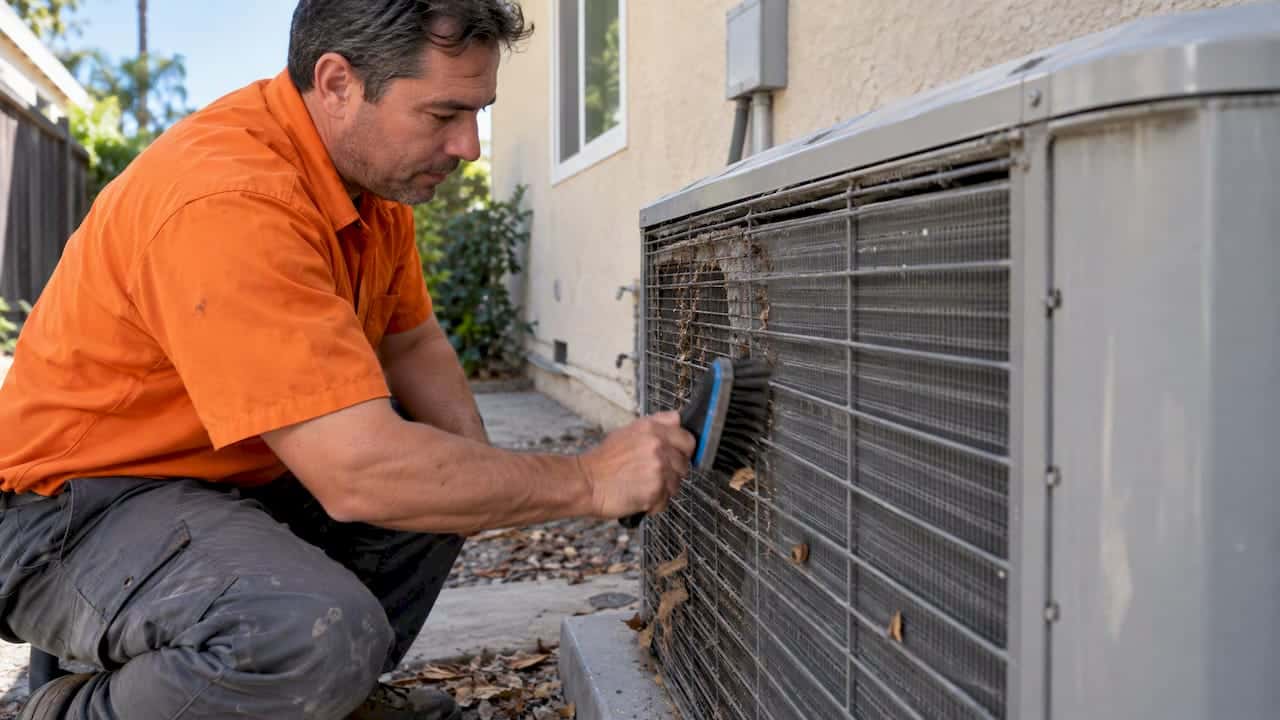
“AC wasn't cooling to setpoint even though it was running all day. LC found the condenser coils were completely clogged with cottonwood. Cleaned them on the spot and the system cooled my house 12 degrees in an hour.”
“LC replaced our entire HVAC system — new Carrier condenser, furnace, and coil. Leo walked us through every option without pressure. The install team was professional and clean. System runs perfectly and our electricity bill dropped about 30%.”
“Called LC because our CO detector went off. Their technician found a crack in the heat exchanger and immediately shut down the furnace. He explained the safety issue clearly, provided a replacement estimate, and didn't try to scare us — just facts.”