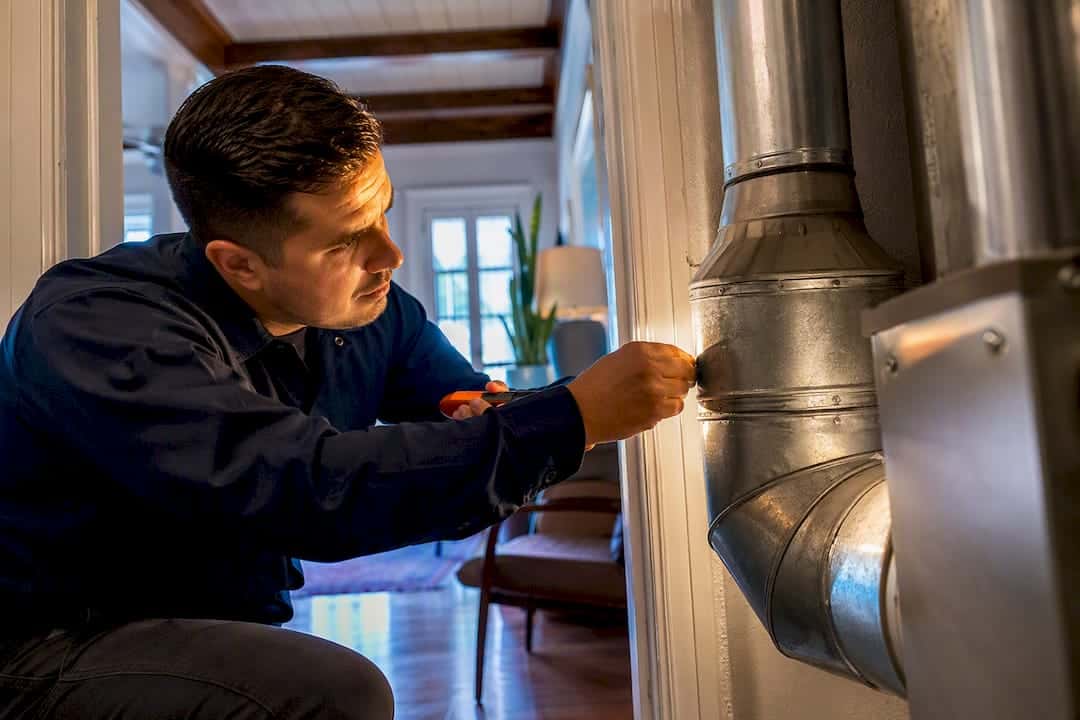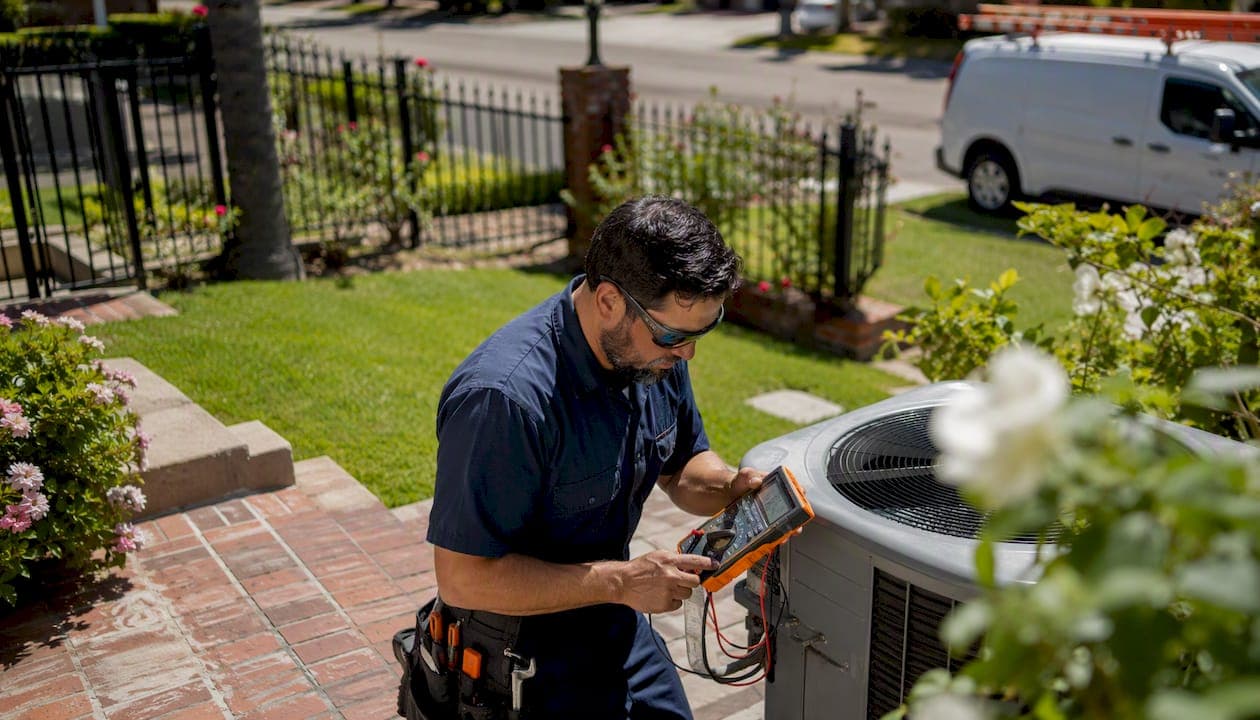
- What does around the clock heating and air service actually cover?
- How does 24/7 emergency HVAC service actually work?
- What should you expect to pay for emergency HVAC service?
- Do maintenance plans actually reduce emergency calls?
- How do you verify a contractor’s credentials before hiring?
- How do you choose the right 24/7 HVAC provider?
- What does a typical service call look like from start to finish?
- Why the 3-minute rule and flat-rate pricing matter more than most homeowners realize
- Key Takeaways
- What I’ve learned after 20 years of around the clock HVAC work in Los Angeles
- Ready for same-day service from LC Heating and Air Conditioning?
- Useful sources and verification resources
- FAQ
- Recommended
Around the Clock Heating and Air: 24/7 LA Service
TL;DR:
- Around-the-clock HVAC services in Los Angeles offer same-day emergency dispatch, transparent flat-rate pricing, and 24/7 availability. Proper procedures like a three-minute delay after power resets and upfront diagnostic fee disclosures help prevent costly repairs and ensure trustworthy service. Regular maintenance plans and verified contractor credentials can reduce emergency calls and protect homeowners from unnecessary expenses.
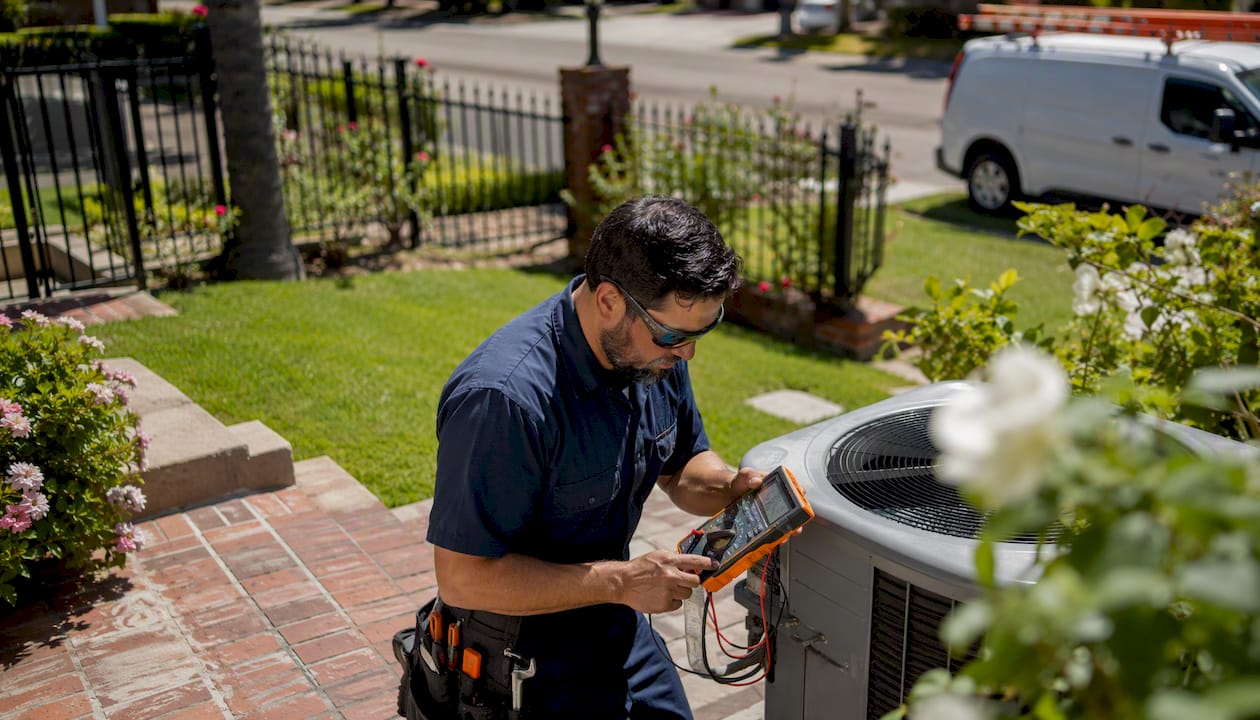
For reliable around the clock heating and air service in Greater Los Angeles, call LC Heating and Air Conditioning. Same-day emergency dispatch, flat-rate pricing, and no surprise diagnostic fees. Whether your AC quits at midnight or your furnace goes cold on a January morning, LC Heating and Air Conditioning answers the call.
- Emergency hotline: Available 24/7, including weekends and holidays
- Same-day service: Technicians dispatched the same day in Greater Los Angeles
- Flat-rate pricing: You know the cost before work begins, no hidden add-ons
- Coverage: Residential and small commercial properties across Greater Los Angeles
Quick stat: Residential HVAC service call fees run $89–$149 in most U.S. markets. Knowing that number before you call protects you from being overcharged.
What does around the clock heating and air service actually cover?
True 24/7 HVAC service goes well beyond “we answer the phone.” Here is what a full-service provider like LC Heating and Air Conditioning handles:
- Emergency AC repair: — No cooling, refrigerant leaks, tripped breakers, frozen coils. Same-day dispatch.
Emergency repairs and safety calls get same-day dispatch. Installations, ductwork, and IAQ upgrades are scheduled after an on-site assessment.
How does 24/7 emergency HVAC service actually work?
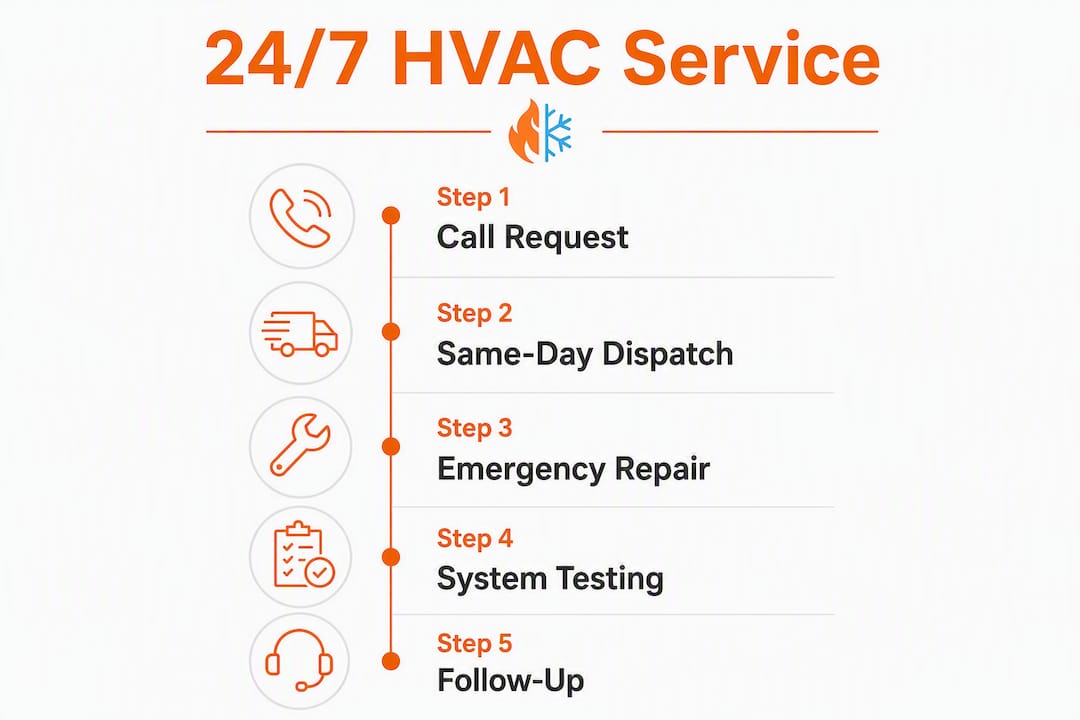
Knowing what happens after you dial removes a lot of stress. Here is the typical sequence:
- You call the emergency hotline. A live dispatcher (not a voicemail) answers, asks about the symptoms, and confirms your address and system type.
- Triage and technician assignment. The dispatcher categorizes the call: safety emergency (gas smell, carbon monoxide alert, electrical burning smell) gets priority routing; comfort emergencies (no cooling, no heat) get the next available technician.
- ETA confirmation. You receive an estimated arrival window. For same-day calls during business hours, that is typically 1–3 hours. After-hours calls may run 2–4 hours depending on technician location.
- On-site diagnosis. The technician inspects the system, identifies the fault, and gives you a flat-rate repair quote before touching anything.
- Repair or follow-up scheduling. Most common repairs are completed on the first visit. Parts-dependent or major repairs get scheduled for the next available slot.
Situations that get same-day priority:
- No cooling during a heat advisory
- Gas odor near the furnace or heat pump
- Electrical burning smell from the air handler
- Complete loss of heat in cold weather
- Active refrigerant leak
What typically requires a follow-up visit:
- Compressor replacement (major parts, often ordered)
- Full system installation
- Ductwork repairs requiring access work
- Specialty refrigerant sourcing for older systems
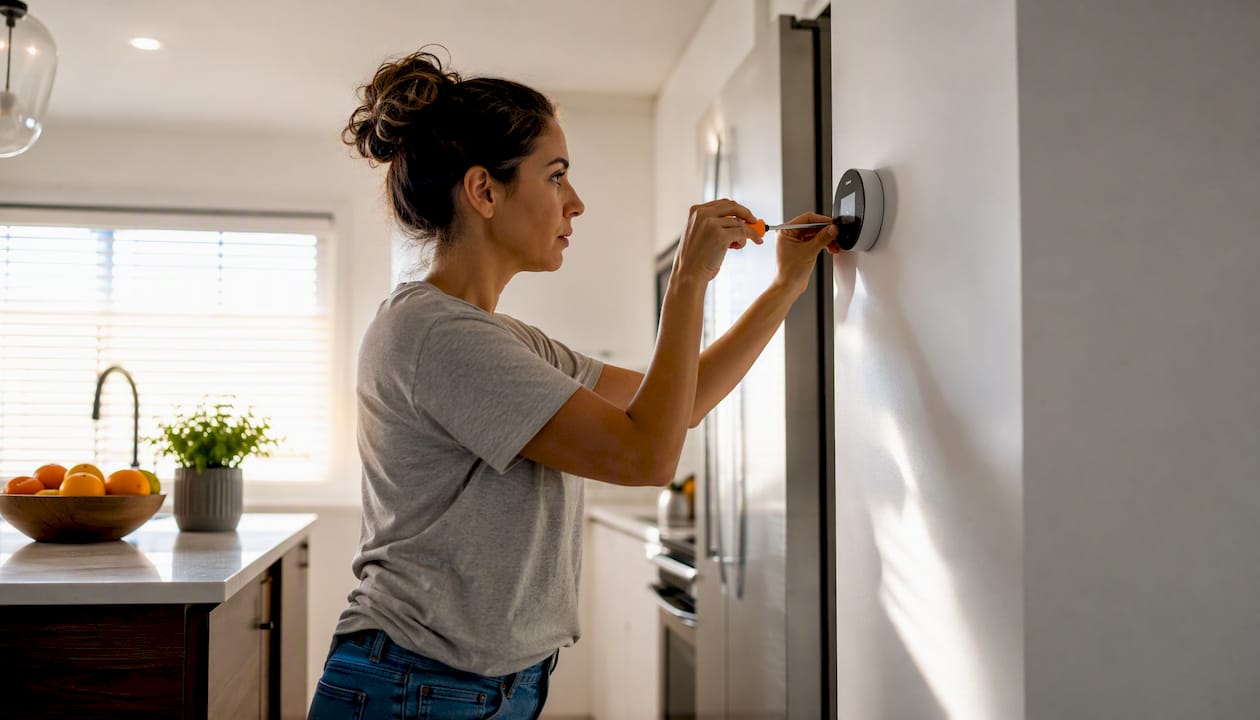
Modern smart thermostats include anti-short-cycle protection that enforces a 3-minute delay before the compressor restarts. If your system seems slow to respond after a setting change, the delay is a built-in safeguard, not a fault.
What should you expect to pay for emergency HVAC service?
Pricing transparency is one of the clearest signs of a trustworthy contractor. Here is how the numbers typically break down:
- Diagnostic or dispatch fee: Typically a disclosed fee for a standard service call. Reputable contractors disclose this upfront before sending a technician.
- Flat-rate repair pricing: A fixed price per repair type, regardless of how long the job takes. You know the total before work starts.
- Time-and-materials pricing: Hourly rate plus parts. Can be lower for simple jobs but unpredictable for complex ones.
- After-hours premium: Some providers charge a surcharge for evening, weekend, or holiday calls. Ask before confirming the visit.
Common promotions to look for:
- First-time customer discount on the service call fee
- Seasonal tune-up specials (typically spring for AC, fall for heating)
- Diagnostic fee credited toward repair cost if you proceed with the recommended work
Red flag: Line items labeled “truck stocking fee” or “fuel surcharge” are a sign of padded billing. Transparent contractors bundle those costs into a single upfront service-call fee.
Pro Tip: Always ask: “If I approve the repair, does the diagnostic fee apply toward the total?” Many reputable shops credit the diagnostic fee back when you proceed, which can meaningfully reduce your out-of-pocket cost.
Do maintenance plans actually reduce emergency calls?
Short answer: yes, for most homeowners. A preventive maintenance plan catches small problems before they become 2 AM emergencies. Typical plan features include:
- Two seasonal tune-ups per year (spring AC check, fall heating check)
- Priority scheduling for members, often with a shorter response window
- Discounts on parts and labor (commonly 10–15%)
- Waived or reduced diagnostic fees on service calls
- Filter inspection and replacement reminders
What a tune-up actually covers:
- Coil cleaning (evaporator and condenser)
- Refrigerant level check
- Electrical connection tightening
- Thermostat calibration
- Safety controls and limit switch testing
- Blower motor and belt inspection
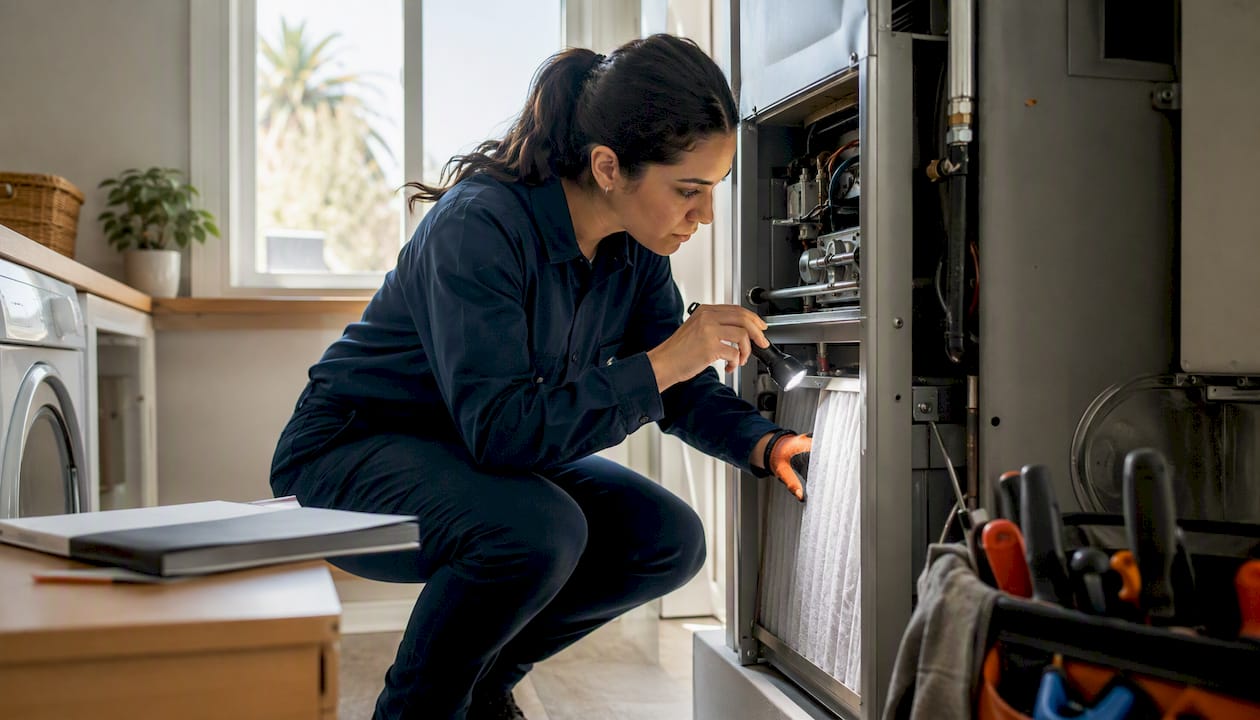
A maintenance plan tends to pay for itself when your system is more than 7–8 years old or when you have had more than one service call in a year. Older systems develop small faults faster, and catching them during a scheduled visit costs far less than an emergency dispatch.
How do you verify a contractor’s credentials before hiring?
Licensing and insurance are not optional. Here is what to check before booking:
- State contractor license: In California, HVAC contractors must hold a C-20 (warm-air heating and air conditioning) license issued by the Contractors State License Board (CSLB). Verify the number at cslb.ca.gov.
- General liability insurance: Protects your property if something goes wrong during the job.
- Workers’ compensation insurance: Protects you from liability if a technician is injured on your property.
- Local permits: Required for new installations and major replacements. A contractor who skips permits is cutting a corner that could affect your homeowner’s insurance.
Guarantees and warranties to ask for:
- Labor warranty on the specific repair (90 days minimum is standard; 1 year is better)
- Parts warranty backed by the manufacturer
- Response-time commitment in writing for emergency calls
Where to find verified reviews:
Look for contractors with consistent responses to negative reviews, verifiable job photos, and ratings on the Better Business Bureau, Google, and Angi. A pattern of resolved complaints tells you more than a perfect score.
How do you choose the right 24/7 HVAC provider?
Use this process during or right after your first call:
- Ask for the ETA in writing or by text. A provider who cannot give you a window is not truly on-call.
- Confirm the diagnostic fee and whether it credits toward repair. Many reputable shops waive or credit the fee when you accept the recommended work.
- Ask about technician certifications. NATE (North American Technician Excellence) certification is the industry standard for HVAC competency.
- Verify parts availability. A technician who carries common parts (capacitors, contactors, igniters) can often finish the job in one visit.
- Ask about payment options. Reputable providers accept multiple payment methods and provide itemized invoices.
Red flags to watch for:
- Evasive or changing pricing over the phone
- Pressure to replace the entire system on the first visit without a written second opinion
- No verifiable license number when asked
- Unmarked vehicles and no company ID
- Guarantees described vaguely (“we stand behind our work”) with no written terms
Quick decision checklist:
- ETA meets your timeline? ✓
- Diagnostic fee disclosed upfront and credited toward repair? ✓
- License number verified at cslb.ca.gov? ✓
- Verified reviews on Google or BBB? ✓
- Membership or maintenance plan available? ✓
When a repair estimate feels high, apply the $5,000 rule: multiply the system’s age by the repair cost. If the result exceeds $5,000, replacement often makes more financial sense than repair. That said, the rule is a starting point, not a substitute for a technician’s on-site evaluation. Refrigerant type, warranty coverage, and equipment efficiency changes can all shift the math.
What does a typical service call look like from start to finish?
Here is a realistic timeline for a same-day emergency visit:
- Call placed (0 min): Dispatcher answers, collects symptoms and address.
- Technician assigned (5–15 min): ETA confirmed by text or call.
- Technician arrives (1–4 hours): Varies by time of day and technician proximity.
- Diagnosis (20–45 min): System inspection, fault identification, flat-rate quote presented.
- Common repair completed (30–90 min): Capacitor or contactor replacement, refrigerant recharge, igniter swap.
- Major repair or installation: Compressor replacement or full system install typically requires a follow-up visit (parts lead time: 1–3 business days for most units).
- Permit-required work: Add 1–5 business days for permit issuance, depending on the local building department.
After a power outage or manual breaker reset, always wait at least three minutes before restarting the system. Restarting too quickly forces the compressor to start against unequalized pressure, which accelerates wear and can trip the breaker again.
Why the 3-minute rule and flat-rate pricing matter more than most homeowners realize
The 3-minute rule is not a myth or a technician’s excuse to slow things down. It is a compressor protection habit, and in most modern systems it is enforced automatically by the control board. If your system hesitates for a few minutes after a setting change, that delay is the anti-short-cycle timer doing its job.
Where it matters most: after a manual power cycle at the breaker. Anti-short-cycle logic is hardware-enforced inside the control board, but a manual breaker cut bypasses that timer entirely. That means the protection is gone, and if you flip the breaker back on immediately, you are sending the compressor into a hard start against high-pressure refrigerant. The result can be a tripped breaker, a buzzing contactor, or compressor damage that turns a $200 repair into a $2,000 one.
Flat-rate pricing matters for a similar reason: it removes the incentive for a technician to run up hours. When the price is fixed before work starts, you and the technician are aligned. The job gets done efficiently, and you are not watching the clock.
Pro Tip: If a contractor quotes time-and-materials on a repair you expected to be straightforward, ask for a flat-rate alternative or a written not-to-exceed cap before approving the work.
Key Takeaways
Around the clock heating and air service is only as reliable as the provider’s pricing transparency, technician availability, and credentials. LC Heating and Air Conditioning delivers all three for Greater Los Angeles homeowners and small businesses.
| Point | Details |
|---|---|
| Call LC Heating and Air Conditioning first | Same-day emergency dispatch, flat-rate pricing, and 24/7 hotline for Greater Los Angeles. |
| Ask the diagnostic fee question | Confirm whether the $89–$149 service call fee credits toward your repair before approving the visit. |
| Use the $5,000 rule wisely | Multiply system age by repair cost; over $5,000 usually means replacement, but get a technician’s assessment first. |
| Wait 3 minutes after a breaker reset | Skipping this step risks compressor damage and turns a minor fix into a major repair. |
| Verify the license before booking | California HVAC contractors must hold a C-20 license; check it at cslb.ca.gov before any work begins. |
What I’ve learned after 20 years of around the clock HVAC work in Los Angeles
Most homeowners call us in a panic, and I understand why. A failed AC in a Los Angeles summer is not a minor inconvenience. But the calls that concern me most are not the emergencies. They are the ones where someone already had a technician out, got pressured into a full replacement they did not need, and is now calling us for a second opinion on a system that needed a $180 capacitor.
Transparent pricing is not just a business policy. It is the thing that keeps a homeowner from making a $6,000 mistake under stress. When you know the cost before we start, you can think clearly. That is the whole point of flat-rate quotes.
The other thing I would tell every homeowner: a maintenance plan is not an upsell. For a system over eight years old in Los Angeles, where we run AC nine months a year, a twice-yearly tune-up is the difference between a $150 coil cleaning and a $1,400 compressor call. The math is not complicated.
Ready for same-day service from LC Heating and Air Conditioning?
When your heating or cooling system fails, you need a provider who picks up the phone and shows up the same day, with the right parts and a price you agreed to before work started. LC Heating and Air Conditioning has served Greater Los Angeles for over 20 years, covering everything from historic bungalows to modern multi-zone heat pump systems.

Call the 24/7 emergency HVAC line now for same-day dispatch. Or visit the full services page to review repair, installation, and maintenance options. Current offers include seasonal tune-up pricing and a membership plan with priority scheduling, discounted parts, and waived diagnostic fees. Service area covers Greater Los Angeles, including residential and small commercial properties.
Useful sources and verification resources
Use these to check credentials, compare guidance, and verify claims before booking any HVAC service:
- LC Heating and Air Conditioning — Emergency HVAC Service: 24/7 hotline, same-day dispatch, and emergency service details for Greater Los Angeles.
- LC Heating and Air Conditioning — 24-Hour HVAC Service: After-hours response process, service area, and emergency policies.
- HVAC service call pricing — ReviewBook: Current residential and commercial service call fee benchmarks.
- The $5,000 rule for HVAC — CBS News: Explanation of the repair-vs.-replace formula with examples.
- HVAC pricing guide — PipelineOn: Guidance on fee transparency and what reputable contractors disclose upfront.
- The 3-minute rule for air conditioners — House Digest: How anti-short-cycle protection works and when it applies.
- Better Business Bureau — HVAC contractor profiles: Check ratings, complaint history, and resolution patterns for local providers.
| Resource | Purpose |
|---|---|
| cslb.ca.gov | Verify California contractor license (C-20 for HVAC) |
| bbb.org | Check complaint history and resolution patterns |
| lahvaclc.com/emergency-hvac | Book same-day emergency service with LC Heating and Air Conditioning |
| cbsnews.com ($5,000 rule) | Evaluate repair vs. replace decisions |
| housedigest.com (3-minute rule) | Understand safe restart practices after power interruptions |
FAQ
What is the $5,000 rule for HVAC?
Multiply your system’s age by the estimated repair cost. If the result exceeds $5,000, replacement is usually the smarter financial choice. Treat it as a starting framework, not a final verdict, since refrigerant type and warranty coverage can change the math.
What services does around the clock heating and air conditioning offer?
A full-service provider handles AC repair, furnace repair, system installation, preventive maintenance, thermostat installation, indoor air quality upgrades, and ductwork. Emergency repairs and safety calls get same-day dispatch; installations and ductwork are scheduled after an assessment.
What is the average cost of an HVAC service call?
Standard residential service call fees run $89–$149 in most U.S. markets. After-hours and emergency calls may carry an additional surcharge. Ask whether the diagnostic fee credits toward your repair cost before confirming the visit.
What is the 3-minute rule for air conditioners?
Wait at least three minutes before restarting your AC after a power interruption or manual breaker reset. Restarting too quickly forces the compressor to start against unequalized refrigerant pressure, which can cause breaker trips, contactor damage, or compressor failure. Most modern systems enforce this delay automatically through the control board.
Recommended
Leo, Owner & Lead Technician at LC Heating & Air
Leo leads LC Heating & Air as an owner-operator and holds California CSLB C-20 HVAC license #1073586. His guides focus on practical diagnostics, safe repair decisions, and clear advice for Los Angeles homeowners.