Emergency HVAC service in San Gabriel when you need it most — 24 hours a day, 7 days a week. We answer the phone ourselves, disclose emergency fees upfront, and carry common repair parts on the truck so most AC and furnace emergencies are resolved in a single visit. Call (323) 970-3113 anytime.
Emergency HVAC & 24-Hour AC Repair in San Gabriel
LC Heating & Air provides emergency HVAC in San Gabriel — including 24-hour AC repair, emergency air conditioning repair, same-day HVAC service, emergency heating repair. Whether you need same-day service, a written estimate, or help deciding between repair and replacement, our licensed technicians handle every make and model.
We repair and service all major HVAC brands in San Gabriel, including Carrier, Lennox, Trane, Goodman, Hisense, and LG, and older or discontinued units. No matter the manufacturer, we diagnose the problem accurately and give you an upfront price before any work begins.
San Gabriel sits at the edge of the San Gabriel Valley, where summer temperatures can push past 100°F and winter overnight lows can dip into the 40s. When your air conditioner or furnace fails during extreme weather, it is not just an inconvenience — it can be a genuine health risk, especially for older homes and households with elderly residents, infants, or people with medical conditions. That is why LC Heating & Air maintains true 24/7 emergency HVAC service for San Gabriel homeowners, with a real technician answering your call and dispatching immediately.
We do not use an answering service or a call-back form. When you call (323) 970-3113 at 2 AM or on a holiday, a licensed technician picks up and gets the details. Our emergency service fee is disclosed upfront before you commit, and our repair pricing stays the same whether it is noon on Tuesday or midnight on a Saturday. We stock capacitors, contactors, ignitors, gas valves, and common refrigerants so most emergencies are handled in one trip. If your system needs a part we do not have, we stabilize it overnight and return first thing in the morning.
Local HVAC considerations
Hot summers (100°F+), cool winters (40s°F), dust, wildfire smoke events — HVAC systems work hard here.
Mix of early 20th-century homes, postwar bungalows, and newer remodels — electrical and duct systems vary widely.
San Gabriel Country Club, Alhambra, San Marino, Rosemead, Monterey Park, Temple City — all served with same emergency response.
CSLB #1073586 — C-20 HVAC, fully insured.
Common HVAC Emergency Patterns in San Gabriel
San Gabriel's housing mix includes older single-family homes, postwar bungalows, and multifamily buildings — many with original or retrofitted HVAC systems. In my experience, the most frequent emergency calls from San Gabriel involve complete AC failure during a heat wave (often a run capacitor or contactor that has finally given out), furnaces that will not light when overnight temps drop, and refrigerant leaks that have gradually drained the system until it cannot cool at all. We also see a fair number of electrical burning smells from aging indoor units that need immediate attention.
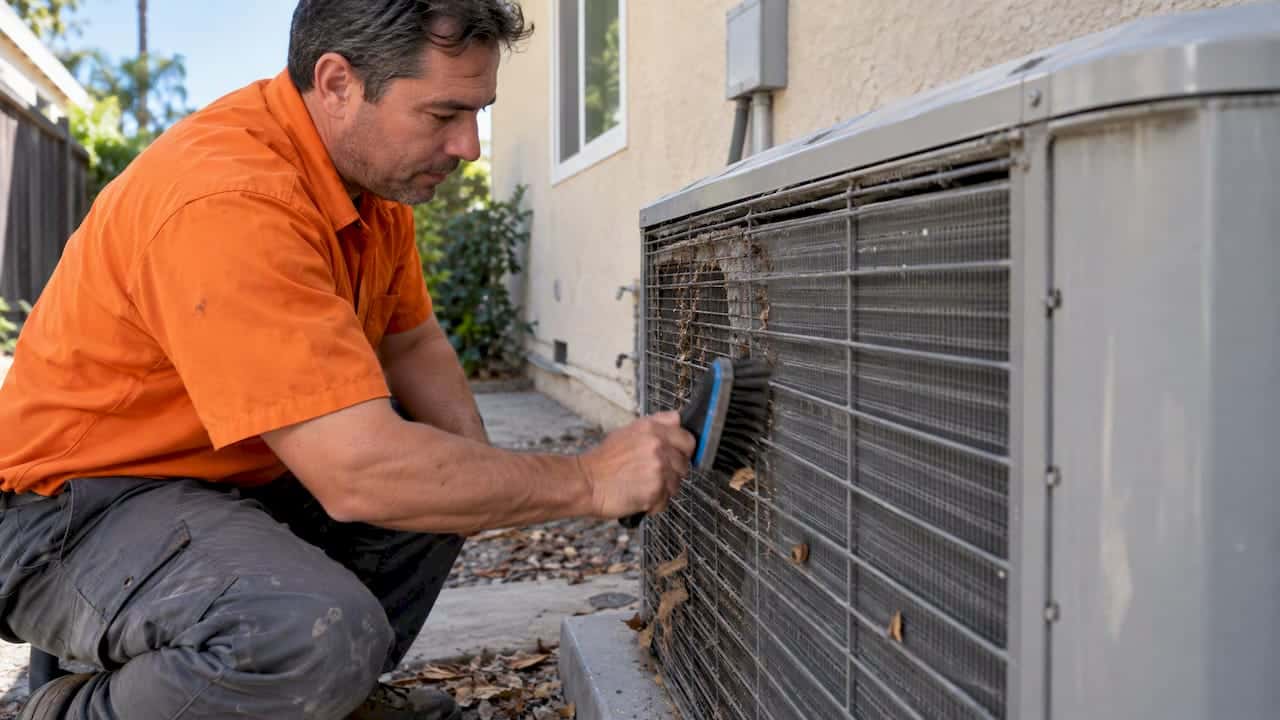
The dry, dusty air in the San Gabriel Valley means condenser coils clog faster, and the Santa Ana wind events blow fine debris into outdoor units, shortening the life of capacitors and fan motors. If your system has not been serviced in a couple of years, it is more likely to fail at the worst possible time — when you need it most. Knowing these local patterns helps us diagnose faster and carry the right parts on the truck for San Gabriel homes.
San Gabriel's Housing Stock and Emergency HVAC
San Gabriel's residential neighborhoods are a mix of historic single-family homes, many from the early to mid-20th century, along with newer remodels and small multifamily buildings. Older homes often have undersized ductwork, outdated electrical panels, and equipment that was installed decades ago — all of which affect how an emergency repair plays out. For example, a 1950s home with a 20-year-old AC unit may have a simple capacitor failure, but the electrical load on the old panel could complicate a same-day repair. That matters because I need to know what I am walking into before I recommend a fix or a full replacement.
Newer remodels and additions often have mismatched equipment — a split system that was added during a renovation, or a heat pump that was retrofitted into an existing duct system not designed for it. In an emergency, we stabilize the system and then look at the bigger picture: Is the ductwork in good shape? Is the electrical supply adequate? Is the equipment sized correctly for the space? These questions help us decide whether a repair is the right call or whether it is time to talk about replacement.
How We Diagnose an HVAC Emergency in San Gabriel
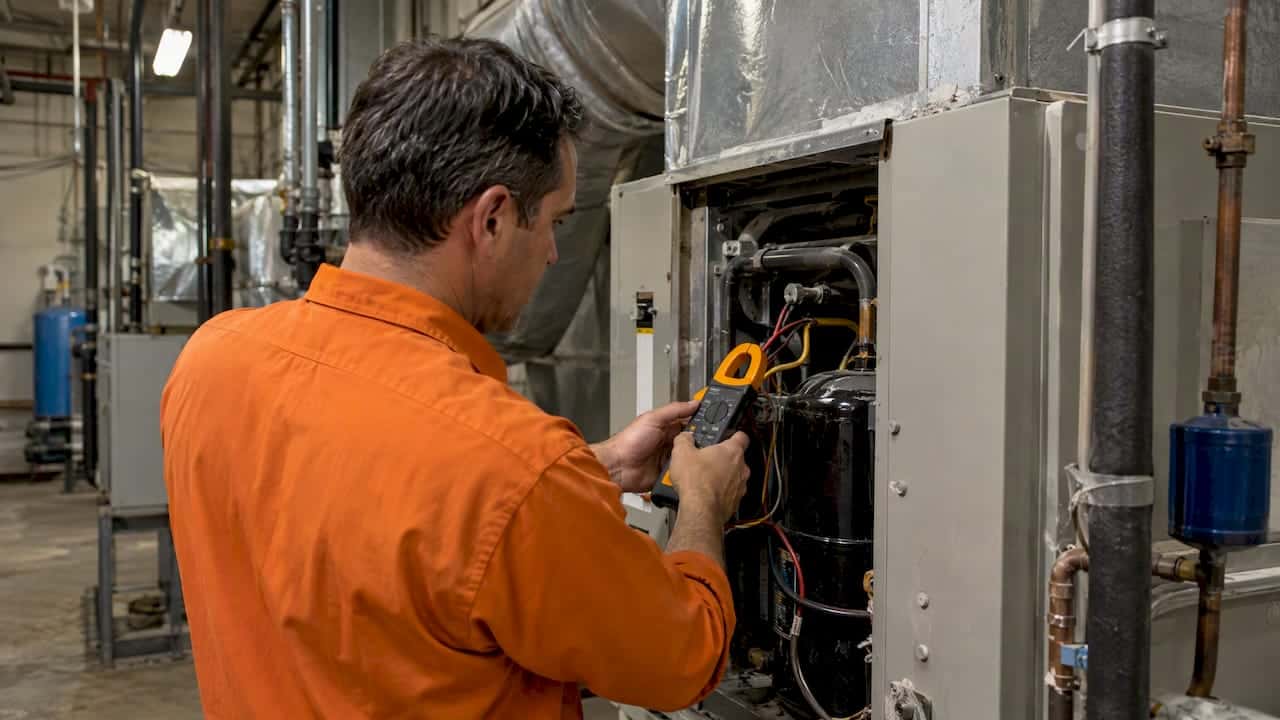
When I arrive for an emergency call in San Gabriel, the first thing I do is confirm safety — I check for gas odors, carbon monoxide readings, and electrical hazards before touching anything. If the system is safe to operate, I power it on and observe what it does. Is the outdoor fan running? Is the compressor cycling? Is the blower moving air inside? I check the capacitor with a multimeter, test the contactor for continuity, and inspect the condenser coil for airflow blockage. Most no-cool emergencies are pinned down in 10 to 15 minutes.
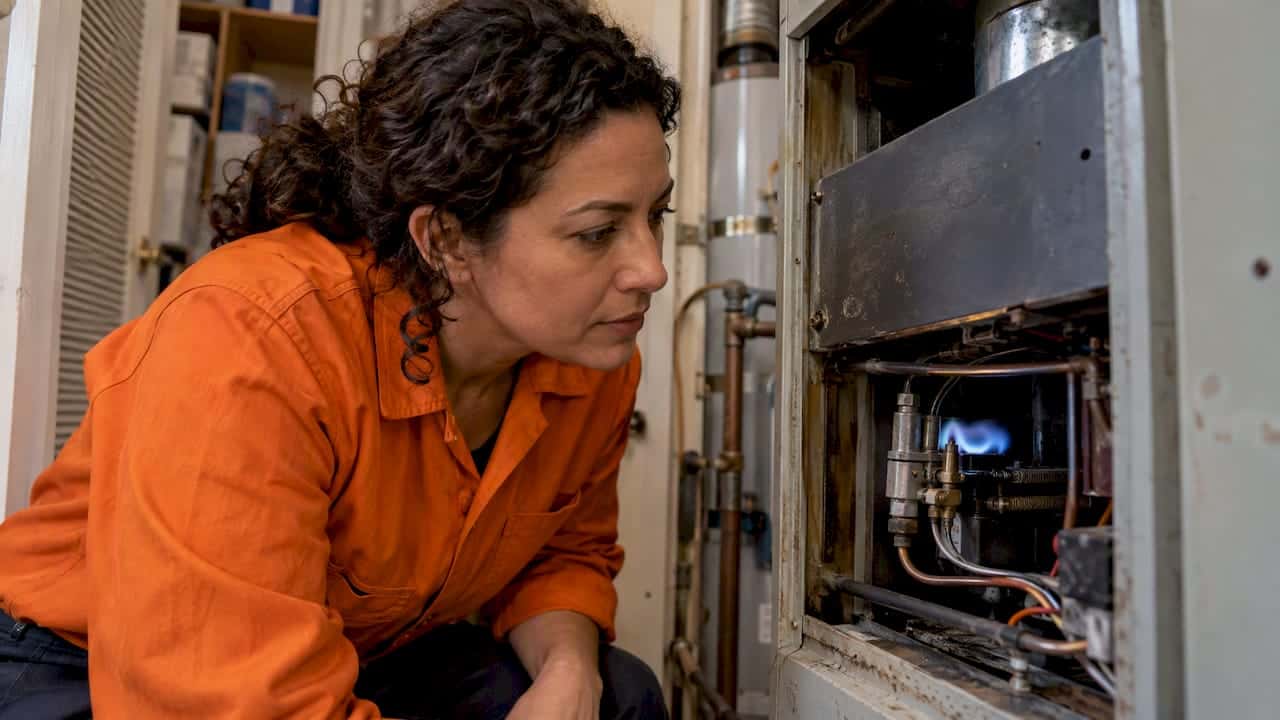
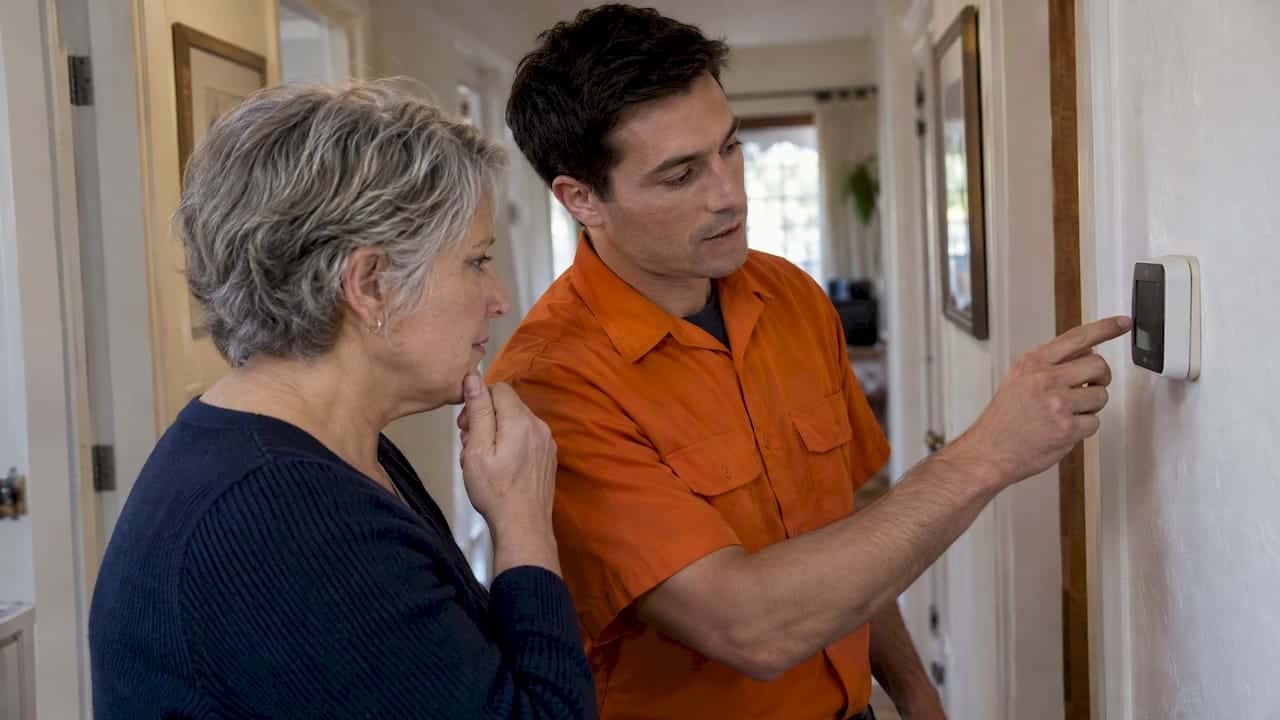
For no-heat calls, I start with the thermostat — is it calling for heat? Then I check the gas valve operation, the ignitor, the flame sensor, and the limit switches. If the furnace has a history of nuisance lockouts, I look at the drain lines and condensate pump first, because clogged drains cause safety switch trips that look like a dead furnace. My goal is to find the root cause, not throw parts at it. I explain what I found, show you the readings, and give you a written estimate before any repair work begins.
Repair or Replace After an Emergency?
Not every emergency call ends in a repair. Sometimes the system is too old, too inefficient, or too risky to patch up. I tell homeowners honestly: if a 15-year-old AC loses a capacitor and the rest of the system is in good shape, I will fix it and you will get years more service. But if the compressor has failed, the coil is leaking, and the system uses R-22 refrigerant that costs a fortune to recharge, replacement is the smarter long-term play. I do not push replacement for every breakdown — I explain the math so you can decide.
In San Gabriel, I see a lot of systems that were installed in the 1990s and early 2000s that are on their last legs. A single emergency repair might keep them running another season, but if you are calling every summer with another failure, it is time to look at replacement. We give you a written estimate for both options — repair today and replacement pricing if you want to compare. That way, you are not making a decision in the dark.
Emergency HVAC Cost Factors in San Gabriel
Emergency service in San Gabriel starts with a disclosed trip and diagnostic fee — typically $125 to $200, depending on the time of day. We do not hide after-hours charges. For evening, weekend, or holiday calls, we add a flat $89 after-hours service fee, but our repair pricing stays the same as during business hours. A capacitor replacement on an emergency call runs about $175 to $300, while a contactor or ignitor replacement falls in the $200 to $400 range. Major repairs like a compressor or heat exchanger replacement can run $800 to $1,500 or more.
We do not inflate prices just because you need help at night. If the repair can safely wait until morning without putting your home or family at risk, we tell you that and offer a standard-rate appointment instead of an emergency dispatch. That is the honest approach — we are not in the business of gouging people in a panic. For major repairs or replacements, there may be manufacturer rebates or utility incentives available through SoCalGas or LADWP, and we help you navigate those.
Access and Scheduling for Emergency HVAC in San Gabriel
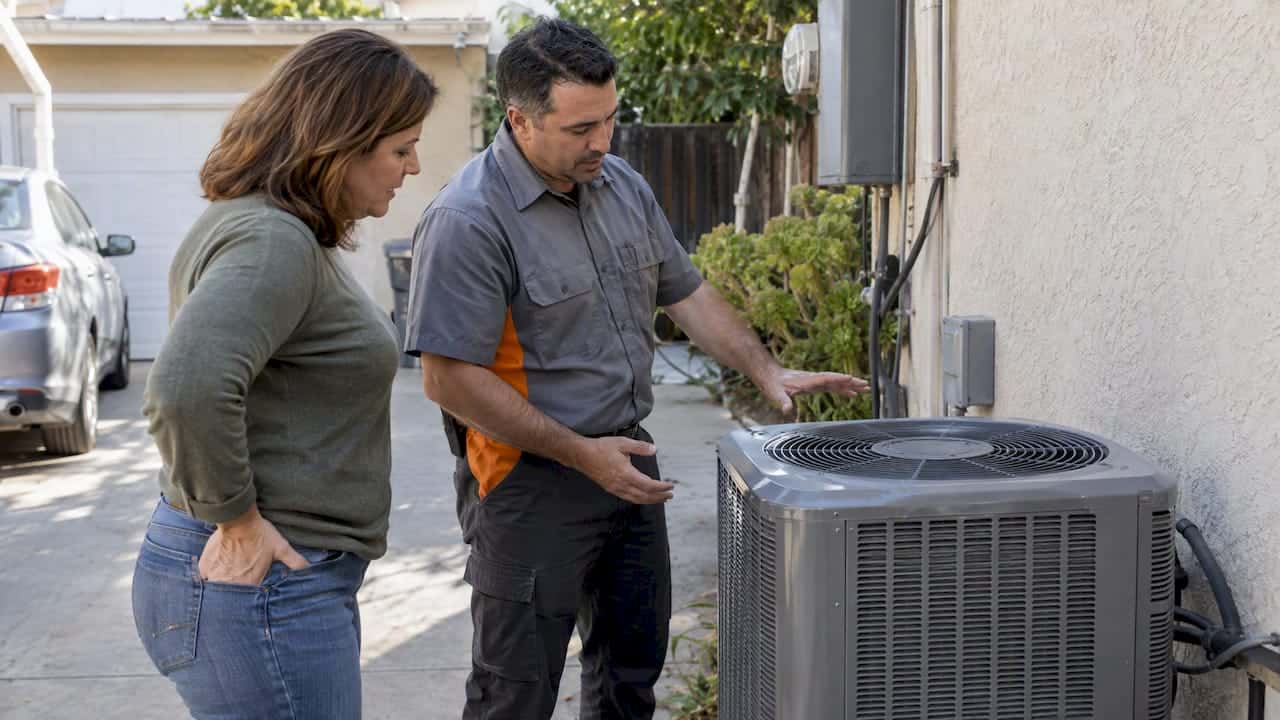
San Gabriel's residential streets are mostly wide and accessible, but older neighborhoods with narrow driveways or alley-access parking can make it tricky to get the truck close to the equipment. If your outdoor unit is behind a gate or down a narrow side yard, let us know when you call so we can plan accordingly. For indoor units in attics or crawl spaces, we need clear access — clutter or storage in the way slows things down. We do our best to work with what you have, and we always ask about access when we dispatch.
Emergency calls are triaged by urgency — a complete loss of cooling during a 100°F day moves ahead of a noisy blower that can wait. We give you an honest ETA when you call, not a vague window. For San Gabriel homeowners, we typically arrive within 30 minutes to an hour for true emergencies, but traffic and call volume affect that. If you are calling for a non-urgent issue during a heat advisory, we may schedule you for the next day at standard rates.
Common Mistakes Homeowners Make During an HVAC Emergency
The most common mistake I see in San Gabriel is letting a system run after it starts blowing warm air. Homeowners think adjusting the thermostat or switching to fan-only will fix it, but if the compressor is overheating or the coil is frozen, running the system can cause permanent damage. Another frequent error: ignoring a slow refrigerant leak until the system stops cooling entirely, then calling for emergency service. A small leak that could have been repaired for $300 becomes a $1,500 compressor replacement because it ran dry and seized.
Some homeowners try to fix it themselves — jumping out the thermostat, bypassing a safety switch, or adding refrigerant from an auto parts store. That is dangerous and usually makes the problem worse. If your system fails during a heat advisory, shut it off at the breaker, open windows if safe, and call a licensed contractor. Do not try to get it running again yourself. That is what we are here for.
Health and Safety Risks During an HVAC Emergency
A failed air conditioner during a San Gabriel heat advisory is not just uncomfortable — it is dangerous. Heat-related illness affects older adults, infants, and people with heart or respiratory conditions first. If your AC goes out when temperatures are above 90°F, we treat that call as a priority. Similarly, a furnace failure during a cold snap — when overnight lows drop to 40°F or below — can cause hypothermia in vulnerable individuals. We prioritize households with elderly residents, young children, or medical equipment needs.
Carbon monoxide is the hidden danger. A furnace with a cracked heat exchanger can leak CO into your home without you noticing until symptoms set in. If your CO detector goes off, leave the house immediately, call 911, then call us. Do not re-enter until both the fire department and a technician have cleared the building. Gas odors are another immediate emergency — leave, call SoCalGas at 1-800-427-2200 from outside, then call us. These situations are not something to wait on.
Should You Call for Emergency HVAC Service or Wait?
Not every HVAC problem is an emergency. If your AC is running but not cooling well, or your furnace is making a strange noise but still heating, it can usually wait until the next business day. But if you have no cooling during a heat advisory, no heat when temperatures are below 45°F, a CO alarm, a gas smell, an electrical burning odor, or a water leak from your equipment, call right away. We treat those as genuine emergencies.
When in doubt, call (323) 970-3113. A technician will ask a few questions to determine urgency and give you honest guidance — whether it is an emergency dispatch or a scheduled appointment at standard rates. We do not pressure you to pay emergency fees if it can wait.
How the visit works
Call (323) 970-3113 anytime — a real technician answers and dispatches immediately. We give you an honest ETA.
For gas and CO calls, safety is priority one. For all others, we diagnose as quickly as possible to minimize discomfort.
We carry the most common emergency parts. Most AC and furnace emergencies are repaired in a single visit.
If a part needs ordering, we stabilize your system overnight and return first thing in the morning.
Cost factors we review before quoting
- • Emergency service call fee: $125–$200, disclosed upfront
- • Evening/weekend/holiday after-hours fee: $89 flat
- • Emergency AC repair: $175–$800 (capacitor, contactor, etc.)
- • Emergency furnace repair: $175–$750 (ignitor, gas valve, etc.)
- • No overtime or triple rates for emergency calls
- • Written estimate before any repair work begins
Useful next steps
Emergency HVAC in San Gabriel at a glance
- • LC Heating & Air provides 24/7 emergency HVAC service in San Gabriel, CA.
- • CSLB License #1073586, C-20 HVAC classification.
- • Phone: (323) 970-3113 — real technician answers, not a call center.
- • Emergency calls answered within 30 minutes (phone response).
- • Written estimates provided before any repair work begins.
- • Emergency service fee $125–$200, with flat $89 after-hours fee for evening/weekend/holiday calls.
- • Most common emergency parts stocked for same-visit repairs.
Our emergency hvac process in San Gabriel
Reviewed by Leo, Owner & Lead Technician
This emergency hvac guide for San Gabriel is reviewed for practical HVAC accuracy by Leo at LC Heating & Air. LC Heating & Air holds California CSLB C-20 HVAC license #1073586 and provides written estimates before approved work.
What San Gabriel customers say about emergency hvac
Verified reviews from homeowners in San Gabriel and nearby neighborhoods who used our emergency hvac service.
“AC wasn't cooling to setpoint even though it was running all day. LC found the condenser coils were completely clogged with cottonwood. Cleaned them on the spot and the system cooled my house 12 degrees in an hour.”
“LC replaced our entire HVAC system — new Carrier condenser, furnace, and coil. Leo walked us through every option without pressure. The install team was professional and clean. System runs perfectly and our electricity bill dropped about 30%.”
“Called LC because our CO detector went off. Their technician found a crack in the heat exchanger and immediately shut down the furnace. He explained the safety issue clearly, provided a replacement estimate, and didn't try to scare us — just facts.”