For technical reasons and seasonal scheduling, our duct sealing service is not available at the moment for this season in Hancock Park. For airflow distribution issues, leak remediation, and insulation upgrades, our team continues to provide Duct Repair and Air Balancing.
LC Heating & Air provides professional duct sealing to stop energy loss and improve comfort in Hancock Park's historic homes. We use duct blaster testing to quantify leaks and provide permanent solutions.
Duct Cleaning & Air Duct Service in Hancock Park
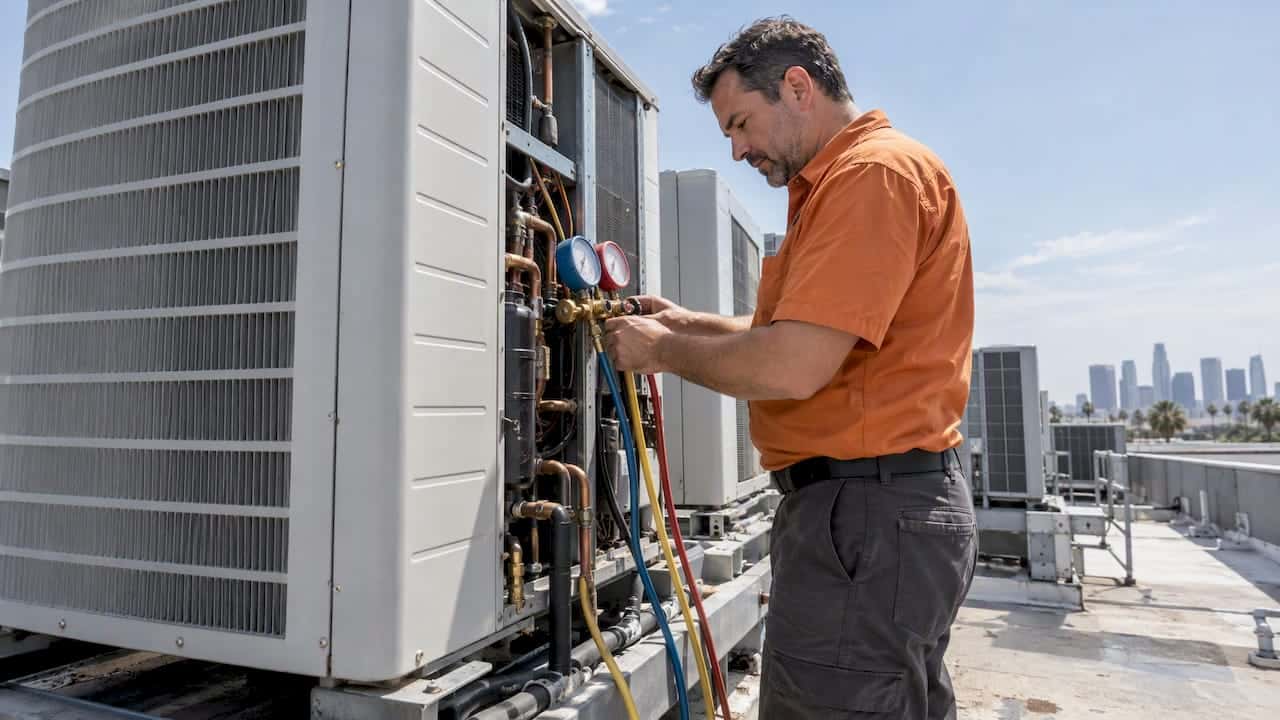
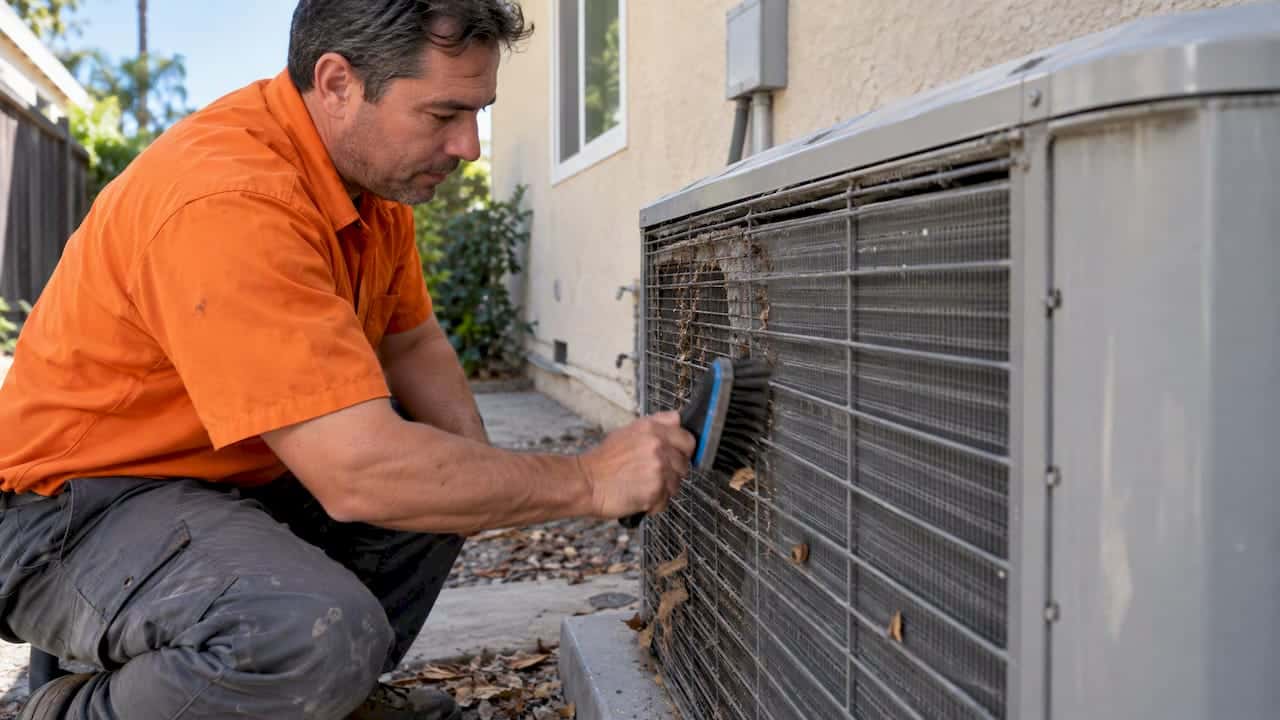
LC Heating & Air provides duct cleaning in Hancock Park — including air duct cleaning, duct repair service, duct sealing, HVAC ductwork. Whether you need same-day service, a written estimate, or help deciding between repair and replacement, our licensed technicians handle every make and model.
We repair and service all major HVAC brands in Hancock Park, including Carrier, Trane, and Goodman, and older or discontinued units. No matter the manufacturer, we diagnose the problem accurately and give you an upfront price before any work begins.
Hancock Park is one of Los Angeles's most prestigious residential neighborhoods, known for its stately period homes, tree-lined streets, and proximity to the Miracle Mile and Museum Row. The neighborhood's housing stock is overwhelmingly single-family, with homes ranging from 1920s Tudor Revival and Spanish Colonial estates to imposing Georgian and Mediterranean-style properties. These are large homes—many exceeding 3,000 square feet—with correspondingly large HVAC loads that demand proper sizing and well-maintained ductwork.
LC Heating & Air serves Hancock Park from our Fairfax Avenue location just minutes away. We have worked in dozens of Hancock Park homes over the past two decades and understand the specific requirements of maintaining comfort in older prestige homes without compromising the architectural character that makes them valuable. We provide detailed written assessments, equipment options with clear cost-benefit analysis, and premium installation practices including sealed duct connections.
Call LC Heating & Air at (323) 970-3113 for scheduling and estimates.
Local HVAC considerations
Hancock Park (90004, 90020)
CSLB #1073586
509 N Fairfax Ave, Los Angeles, CA 90036
Local HVAC Challenges in Hancock Park
Hancock Park's large period homes create substantial HVAC challenges: high ceilings increase air volume significantly, original plaster walls make new duct routing complex, and many homes have been expanded or remodeled multiple times with HVAC systems that were never properly re-engineered for the changed layout.
We frequently find homes with oversized equipment that short-cycles because the ductwork cannot deliver the capacity the equipment produces. Proper load calculation and duct assessment are critical before any equipment replacement in Hancock Park. Duct sealing matters when conditioned air is leaking into attics, crawl spaces, or wall cavities instead of reaching your living areas.
Historic Homes and Modern Comfort
Many Hancock Park homeowners invest significantly in their properties and expect correspondingly high-quality HVAC service. The neighborhood's HPOZ status means exterior equipment placement must comply with visibility restrictions. We coordinate with homeowners on compliant placement that also maximizes equipment performance.
Because these homes often have complex, tight-access mechanical areas, we prioritize equipment placement, ladder access, and line-set routing that respects the structure. We don't just swap parts; we look at the whole system to ensure your investment actually improves your home's comfort.
Our Duct Sealing Process
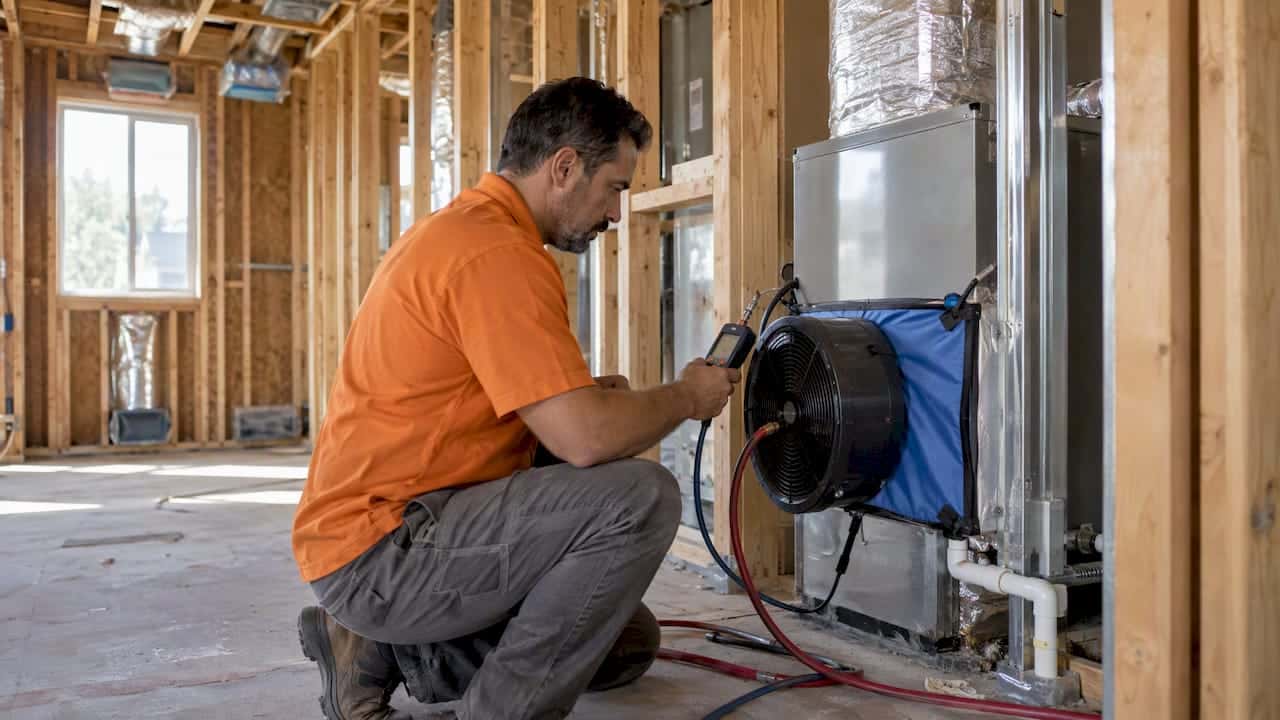
We don't guess. We start with a pre-sealing duct leakage test using a duct blaster to quantify existing leakage as a percentage of system airflow. This gives us a baseline so you know exactly what you are paying to fix.
After the work is finished, we perform a post-sealing verification test. We provide you with the before and after leakage numbers as written documentation. This ensures the job was done right and meets California Title 24 compliance standards.
Repair or Replace?
If the system is worth repairing, we will tell you. If the pattern points to replacement, we will explain why. Often, older ductwork in historic homes is simply too degraded or undersized to support modern high-efficiency equipment.
If you are planning an HVAC replacement, duct sealing is a critical step to ensure you don't waste the efficiency of your new equipment. We will give you an honest assessment of whether your existing ducts can be salvaged or if they need to be replaced to meet your comfort goals.
Understanding Costs
Duct sealing costs vary based on the size of your home and the accessibility of the ductwork. Manual mastic sealing of accessible sections typically ranges from $400 to $1,200. For more complex, inaccessible systems, we use the Aeroseal process, which ranges from $1,500 to $3,000.
We provide a written estimate after the pre-sealing diagnostic. The estimate should make sense before anyone touches the equipment. We believe in transparency, so you will know exactly what you are paying for before we start.
Scheduling Your Service
We are located right on Fairfax Avenue, which allows us to provide responsive service to the 90004 and 90020 zip codes. We understand that your time is valuable and we work to complete most residential duct sealing projects in a single day.
When we arrive, we respect your home. We plan our access around the specific layout of your property, whether that involves navigating tight attic spaces or working around historic architectural details.
Common Duct Sealing Mistakes
A common mistake we see is the use of standard silver 'duct tape' on HVAC systems. It dries out and fails within a few years. We use mastic—a thick, flexible sealant that remains pliable and adheres permanently—or foil-backed HVAC tape where appropriate.
Another mistake is skipping the diagnostic. Without a duct blaster test, you have no way of knowing if the sealing actually improved the system's performance. We never skip the testing phase.
Safety and Air Quality
Your family's safety is our priority. The Aeroseal process uses a non-toxic vinyl acetate polymer—the same material found in chewing gum. We recommend vacating the home for 60–90 minutes during the injection process as a precaution.
We also ensure that the interior of your ducts is clean before sealing. Our process is designed to improve your indoor air quality by preventing dust and debris from being pulled into the system through leaks in attics or crawl spaces.
Is Duct Sealing Right for You?
If your energy bills are disproportionately high for your home size, or if you notice uneven temperatures between rooms, duct sealing is often the most cost-effective fix. It is a permanent solution that improves the efficiency of your entire HVAC system.
If you are preparing for an HVAC replacement, we highly recommend a duct assessment. Sealing 20–30% duct leakage can reduce your HVAC energy use by 15–25%. At current LA electricity rates, the payback is often under two years. Let us take a look and give you the facts so you can make an informed decision.
How the visit works
We perform a duct blaster test to quantify existing leakage as a percentage of system airflow.
Based on leakage quantity, duct type, and accessibility, we recommend manual sealing, Aeroseal, or a combination.
We apply mastic to all accessible joints and plenums, or set up and run the Aeroseal process for internal sealing.
We re-run the duct blaster test and provide you with before/after leakage numbers as written documentation.
Cost factors we review before quoting
- • System size and total duct length
- • Accessibility of ductwork in attics or crawl spaces
- • Choice between manual mastic sealing and Aeroseal
- • Pre-existing condition of the ductwork
Useful next steps
Duct Sealing in Hancock Park at a glance
- • Duct Sealing provider: LC Heating & Air
- • Location served: Hancock Park, CA 90004
- • License: CSLB C-20 #1073586
- • Phone: (323) 970-3113
- • Estimate: written estimate before approved work
- • Emergency calls answered within 30 minutes (24/7)
Our duct sealing process in Hancock Park
Reviewed by Leo, Owner & Lead Technician
This duct sealing guide for Hancock Park is reviewed for practical HVAC accuracy by Leo at LC Heating & Air. LC Heating & Air holds California CSLB C-20 HVAC license #1073586 and provides written estimates before approved work.
What Hancock Park customers say about duct sealing
Verified reviews from homeowners in Hancock Park and nearby neighborhoods who used our duct sealing service.
“Annual AC tune-up was exactly what I expected — thorough, professional, no pressure to buy anything. Refrigerant was checked, coils cleaned, electrical connections tightened, filter replaced. System runs like new.”
“Full system replacement in our 1930s Hancock Park home — not easy given the older construction. LC handled all the challenges: narrow access, old ductwork, low attic. Finished on time and on budget.”
“AC compressor failed on the hottest day of the year. LC came out quickly, gave an honest assessment — said the compressor was still under manufacturer warranty — and helped me get it covered. Saved me over $1,200.”