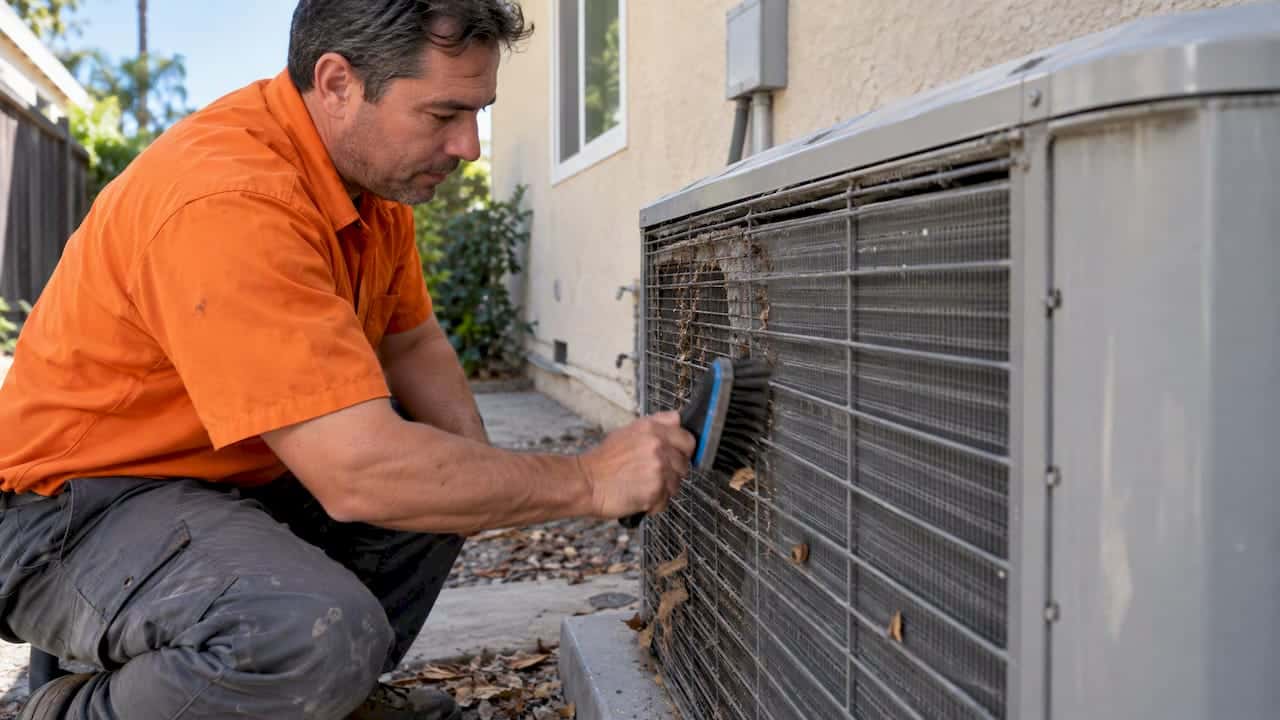
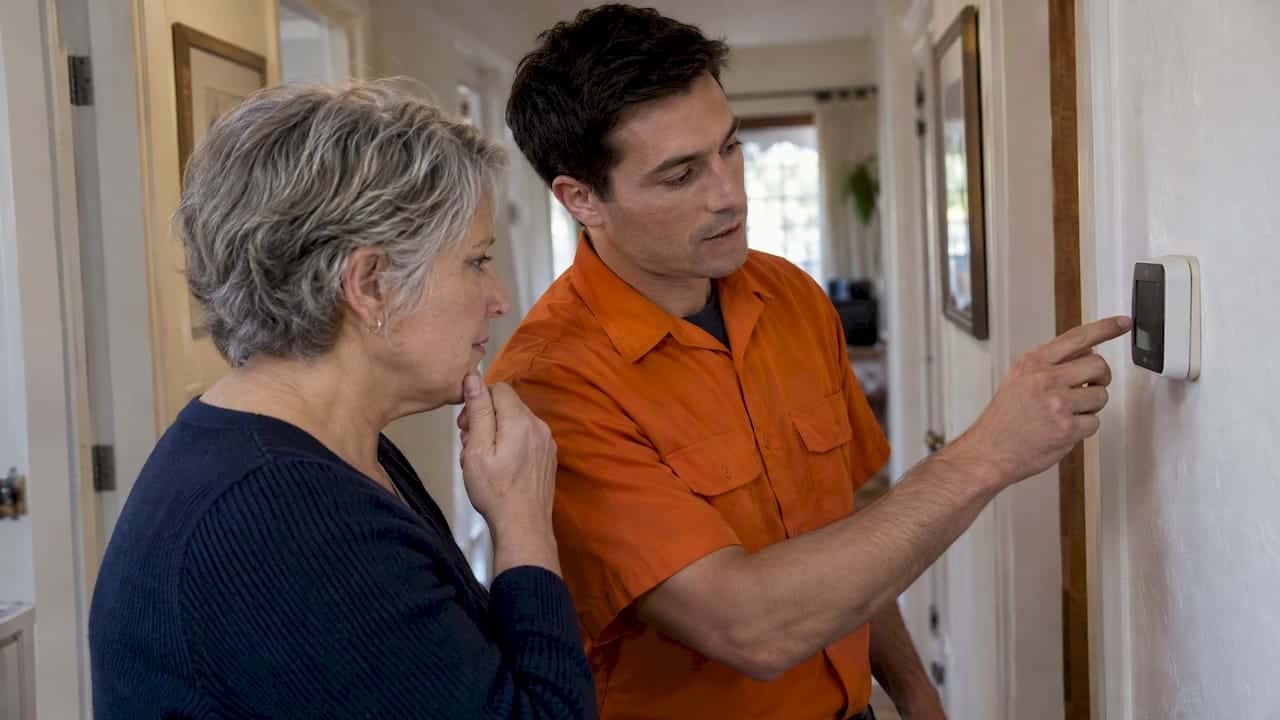
LC Heating & Air provides honest, practical duct repair for Fairfax District homes. We focus on identifying leaks, sealing gaps, and restoring proper airflow to ensure your system runs efficiently without unnecessary replacement.
Duct Cleaning & Air Duct Service in Fairfax District
LC Heating & Air provides duct cleaning in Fairfax District — including air duct cleaning, duct repair service, duct sealing, HVAC ductwork. Whether you need same-day service, a written estimate, or help deciding between repair and replacement, our licensed technicians handle every make and model.
We repair and service all major HVAC brands in Fairfax District, including Carrier, Trane, and Goodman, and older or discontinued units. No matter the manufacturer, we diagnose the problem accurately and give you an upfront price before any work begins.
I'm Leo, owner of LC Heating & Air. I spend a lot of time in the Fairfax District looking at HVAC systems that just aren't performing like they should. Often, the problem isn't the furnace or the AC unit itself—it's the ductwork. When your ducts are leaking, your system works twice as hard to push air into your home, but a significant portion of that conditioned air is getting lost in your attic or wall cavities before it ever reaches your living room.
My goal is to give you a clear, honest assessment. If your ducts can be repaired to restore comfort and efficiency, I will tell you. If the system is beyond repair, I will explain why. We don't believe in upselling; we believe in fixing what is actually broken so you can get back to a comfortable home.
Call LC Heating & Air at (323) 970-3113 for scheduling and estimates.
Local HVAC considerations
Fairfax District and surrounding Los Angeles neighborhoods
CSLB #1073586
(323) 970-3113
Common Duct Issues in Fairfax District Homes
The housing stock in the Fairfax District is diverse, ranging from older multifamily properties to mixed-use buildings. In these settings, we frequently see ductwork that has been compromised by years of building maintenance or poor original installation. Common issues include crushed flex duct in tight mechanical closets, disconnected joints in attic spaces, and leaky boots that allow unconditioned air to enter your home.
Because of the local heat-island effect and the way many of these buildings are constructed, your HVAC system is already working against high cooling loads. When you add leaky ducts to the mix, your equipment runs longer cycles, which wears out your blower motor and compressor much faster. We focus on finding these specific points of failure—whether it's a torn inner liner or a failed mastic seal—to get your system back to its intended performance.
Navigating Fairfax District Building Challenges
Working in the Fairfax District requires more than just technical skill; it requires coordination. Whether you are in a historic apartment building, a condo, or a home with a rooftop package unit, access is almost always a factor. We are used to working with HOAs, navigating shared walls, and managing the logistics of rooftop equipment.
We understand that your time is valuable and that building access windows can be tight. Our diagnostic process is designed to be efficient so we can provide you with a written estimate that makes sense before we start any work. We don't just look at the equipment; we look at how the entire system interacts with your specific building layout.
Our Diagnostic Process
We don't guess. When we arrive at your home, we start by measuring airflow at your registers to see exactly what is coming out of your vents. We then perform a duct pressurization test—a duct blaster test—to quantify exactly how much air is leaking out of your system.
This data gives us a clear picture of the problem. We then inspect the accessible ductwork to identify the source of the leaks. Once we have the full picture, we sit down with you to explain what we found and provide a written estimate for the repair. You will know exactly what we are doing and why before we touch a single piece of equipment.
Repair vs. Replacement: Making the Right Call
A lot of contractors will jump straight to suggesting a full system replacement when they see high energy bills or uneven cooling. At LC Heating & Air, we take a different approach. If your ductwork is structurally sound but has localized leaks, a targeted repair is often the most cost-effective solution.
However, if we find that the ductwork is undersized for your equipment, or if the material has deteriorated to the point where it can no longer hold a seal, we will be honest with you about that. We want to help you make a decision that makes sense for your home and your budget, not just the easiest one for us.
Understanding Your Costs
We believe in transparent pricing. Duct repair costs vary based on the accessibility of the ducts and the extent of the damage. A simple reconnection of a flex duct is a different job than comprehensive sealing of a full system. We provide written estimates for every job, so you aren't surprised by the final bill.
Investing in duct repair often pays for itself through energy savings. By sealing leaks, you reduce the runtime of your HVAC system, which lowers your monthly utility bills and extends the life of your equipment. We focus on providing high-quality, long-lasting repairs that offer real value.
Air Quality and Safety
Your ducts do more than move air; they move the air you breathe. When return ducts in attics leak, they pull in dust, insulation fibers, and potential mold spores, distributing them throughout your home. Supply leaks can draw in hot, dirty attic air directly into your living space.
Sealing your ducts isn't just about comfort; it's about indoor air quality. By ensuring your ductwork is airtight, you keep the air in your home cleaner and prevent the system from drawing in pollutants from your attic or wall cavities.
Mistakes to Avoid
The biggest mistake we see is homeowners trying to patch leaks with standard duct tape. Real duct tape isn't designed for the temperature fluctuations in an attic or a mechanical closet; it will fail, usually within a few months. We use professional-grade mastic and foil tape designed to last.
Another common issue is over-sealing or improperly sealing take-offs, which can restrict airflow and cause your blower motor to overheat. If you suspect a leak, it is always better to have a professional verify the issue before attempting a DIY fix that could cause more harm than good.
Scheduling and access — Duct Repair in Fairfax District
Parking, gate codes, and attic or rooftop access in Fairfax District are confirmed when you book duct repair service so the crew arrives with the right ladders and PPE.
Same-week appointments are common; emergency calls are answered within 30 minutes by phone.
Is Duct Repair Right for You?
If you notice rooms that are always too hot or too cold, or if your energy bills seem high for the size of your home, it's worth having your ducts checked. Duct repair is one of the most effective ways to improve comfort without the expense of a full system replacement.
We will come out, test your system, and tell you exactly what is going on. If we can fix it, we will. If we can't, we'll explain why. You deserve an HVAC contractor who is on your side.
How the visit works
We measure airflow and perform a duct pressurization test to find the leaks.
We provide a clear, written estimate for the necessary repairs.
We perform the repairs using professional-grade materials like mastic and foil tape.
We re-test your system to verify the improvement in airflow and leakage reduction.
Cost factors we review before quoting
- • Accessibility of the ductwork (attic vs. crawl space vs. wall cavity)
- • Total amount of leakage measured during the diagnostic
- • Type of duct material (flex duct vs. sheet metal)
- • Complexity of the required repair (sealing vs. section replacement)
Useful next steps
Duct Repair in Fairfax District at a glance
- • Duct Repair provider: LC Heating & Air
- • Location served: Fairfax District, CA 90036
- • License: CSLB C-20 #1073586
- • Phone: (323) 970-3113
- • Estimate: written estimate before approved work
- • Emergency calls answered within 30 minutes (24/7)
Our duct repair process in Fairfax District
Reviewed by Leo, Owner & Lead Technician
This duct repair guide for Fairfax District is reviewed for practical HVAC accuracy by Leo at LC Heating & Air. LC Heating & Air holds California CSLB C-20 HVAC license #1073586 and provides written estimates before approved work.
What Fairfax District customers say about duct repair
Verified reviews from homeowners in Fairfax District and nearby neighborhoods who used our duct repair service.
“Had LC install a Daikin mini split in our 1940s bungalow that never had AC. The work was clean, the unit is incredibly quiet, and our bedroom finally stays cool in summer. Highly recommend.”
“We converted our garage into an ADU and needed HVAC. LC installed a Mitsubishi single-zone mini split — permits, electrical, everything. The unit is so quiet you can barely hear it running. Our tenant loves it.”
“Got a 3-zone Daikin system for our craftsman home — bedrooms upstairs, living room downstairs. Each room has its own temperature control and the monthly electric bill is actually lower than our old window units combined.”