- What is an HVAC economizer and how does it work?
- What are the energy savings and limitations of economizers?
- What maintenance keeps an economizer running efficiently?
- How do building codes affect economizer requirements?
- How can you get the most out of your HVAC economizer?
- Key takeaways
- What I have learned from 20 years of economizer calls in Los Angeles
- Get expert economizer service from LC Heating and Air Conditioning
- FAQ
- Recommended
What Is an HVAC Economizer? A Homeowner’s Guide
TL;DR:
- An HVAC economizer uses outdoor air to reduce energy consumption by providing free cooling when conditions are favorable. Proper control, maintenance, and climate suitability are essential to maximize its energy savings and prevent increased costs from humidity or malfunctions. Regular inspections and modern controls ensure the economizer operates efficiently, especially in mild climates like Los Angeles.
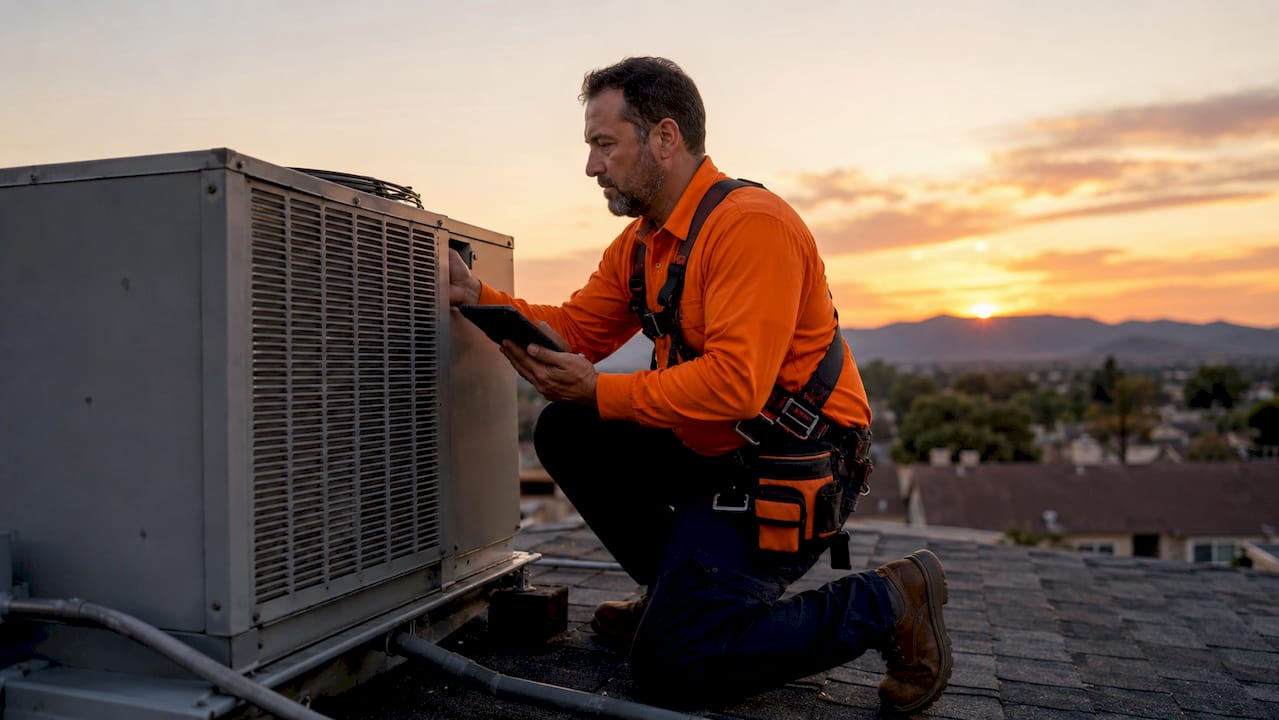
An HVAC economizer is defined as a mechanical component that uses cool outdoor air to reduce or replace mechanical cooling, cutting energy use and lowering your utility bills. When outdoor conditions are favorable, the economizer pulls in outside air instead of running the compressor, giving you what the industry calls “free cooling.” According to a 2026 Journal of Thermal Analysis and Calorimetry study, integrating an economizer into an HVAC system reduces total HVAC energy consumption by 25.5%. That is not a marginal improvement. It is a meaningful reduction that shows up on your monthly bill. Whether you own a single-family home in Los Angeles or manage a commercial property, understanding how this component works puts you in control of one of your biggest operating costs.
What is an HVAC economizer and how does it work?
An HVAC economizer works by monitoring outdoor air conditions and automatically opening dampers to bring in outside air when that air is cool and dry enough to handle your building’s cooling load. The system uses sensors and controls to make that decision continuously throughout the day. When outdoor air meets the right conditions, the compressor stays off and the fan does the work instead.
The core components
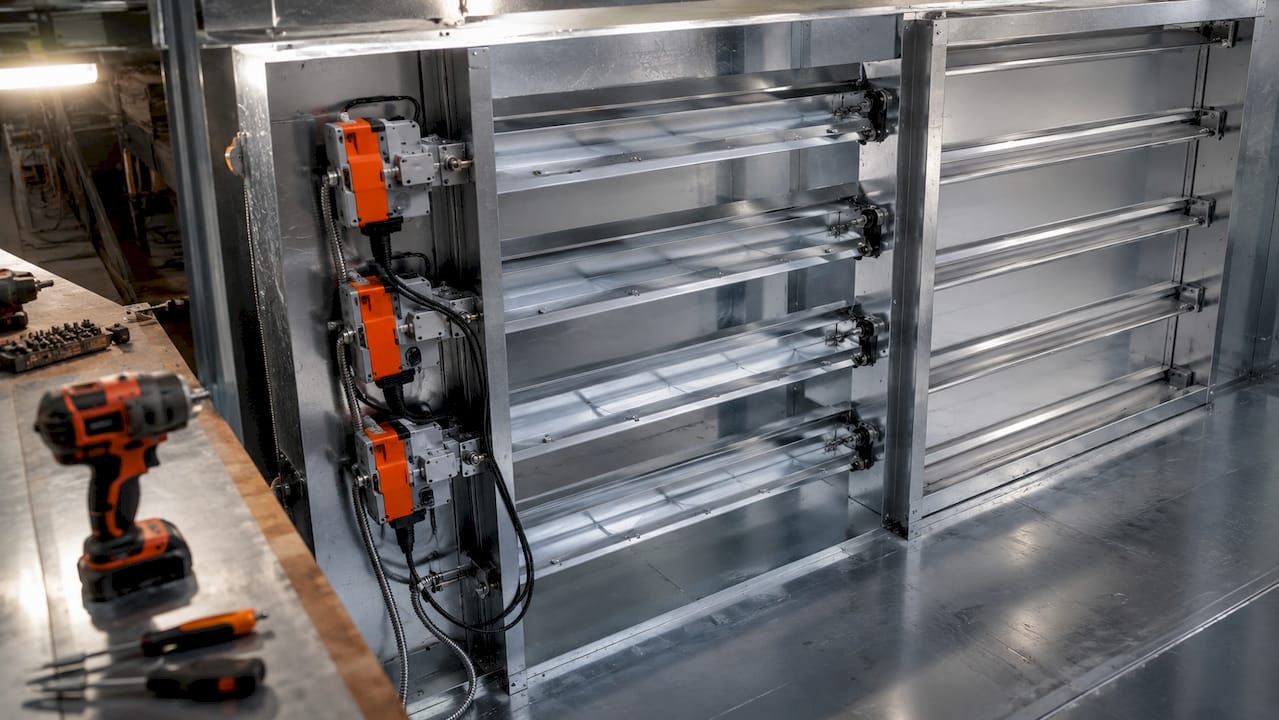
Three parts make an economizer function: dampers, sensors, and a controller.
- Dampers are adjustable panels inside your ductwork that open or close to regulate how much outdoor air enters the system. Think of them as the gatekeepers of your airflow.
- Sensors measure outdoor temperature, humidity, or enthalpy (a combined measure of heat and moisture content) to determine whether outside air is suitable for free cooling.
- Controllers process sensor data and signal the dampers to open, close, or modulate to a specific position based on preset thresholds.
Air-side vs. water-side economizers
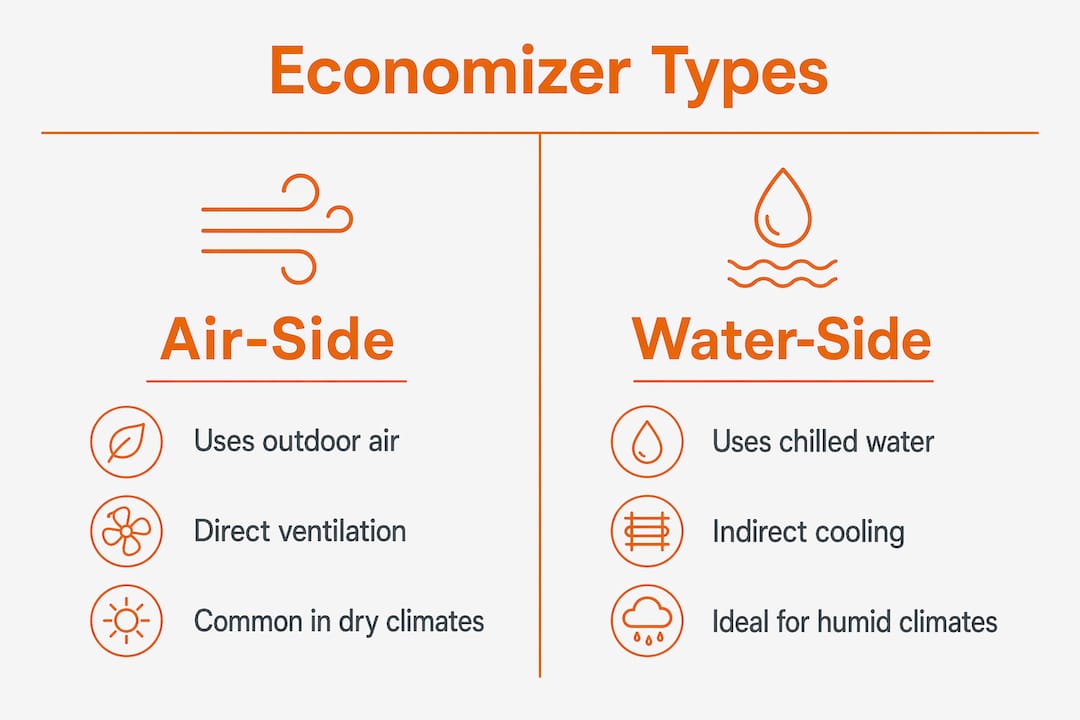
The two main types serve different applications. An air-side economizer pulls outdoor air directly into the building’s air handling unit. This is the type most commonly found on rooftop units in commercial buildings and in some residential systems. A water-side economizer, by contrast, uses a cooling tower or fluid cooler to pre-cool the chilled water loop without running the chiller. Water-side systems are more common in large commercial or data center applications where chilled water systems are already in place.
Control strategies: temperature, enthalpy, and dew point
The control strategy determines when the economizer activates. Temperature-based control is the simplest: if outdoor air is below a set point, the dampers open. Enthalpy-based control adds humidity to the equation, which is more accurate in climates where humidity varies significantly. Dew point control is the most precise option, measuring the moisture content of outdoor air directly. Proper enthalpy sensor use prevents energy waste from humid air intake, which is a real risk in coastal or southern climates.
Pro Tip: If you live in a climate with high summer humidity, ask your HVAC technician specifically about enthalpy-based control. A temperature-only controller can let in muggy air that your system then has to dehumidify, wiping out your energy savings.
What are the energy savings and limitations of economizers?
An economizer can reduce cooling energy usage by 20–50% depending on your local climate. That range is wide because climate is the single biggest variable in economizer performance. A building in San Francisco with mild summers will see savings near the top of that range. A building in Miami with year-round heat and humidity will see far less benefit.
How climate shapes your savings
The table below shows how climate type affects economizer suitability and expected performance.
| Climate type | Economizer suitability | Expected cooling energy savings |
|---|---|---|
| Temperate (e.g., Los Angeles, San Francisco) | High | 30–50% |
| Hot and dry (e.g., Phoenix in spring/fall) | Moderate | 20–35% |
| Hot and humid (e.g., Miami, Houston) | Low without advanced controls | Under 15% |
| Cold (e.g., Minneapolis) | High during shoulder seasons | 25–45% |
Air-side economizers are not appropriate for hot and humid climates unless equipped with advanced enthalpy sensors to manage moisture. Without those sensors, you end up paying more for dehumidification than you save on cooling. That is the hidden cost most homeowners do not anticipate.
The dehumidification trap
When an economizer pulls in humid outdoor air, your system must work harder to remove that moisture before delivering conditioned air to your living space. In hot and humid regions, this extra dehumidification load can actually increase your total energy use compared to running the compressor normally. Proper system design and enthalpy control are the solution, not an optional upgrade. If your system was installed without enthalpy sensors in a humid climate, you may be losing money every time the economizer activates.
Pro Tip: Ask for a copy of your economizer’s control settings after any service visit. Knowing your setpoints helps you catch problems early and gives you a baseline for comparing future performance.
What maintenance keeps an economizer running efficiently?
A malfunctioning economizer can increase energy bills by introducing unconditioned air into your system. That means a neglected economizer is worse than no economizer at all. Maintenance is not optional with this component. It is the difference between saving money and wasting it.
Here are the four maintenance practices that matter most:
-
Calibrate sensors annually. Temperature and enthalpy sensors drift over time. A sensor that reads outdoor air as 5 degrees cooler than it actually is will activate the economizer when it should not, sending warm air into your building. Annual calibration keeps your control strategy accurate.
-
Inspect and lubricate dampers every season. Dampers can stick open or closed due to dirt buildup, corrosion, or worn actuators. A damper stuck open in summer lets in hot air constantly. A damper stuck closed means the economizer never activates and you lose all potential savings. Check for smooth, full-range movement at each maintenance visit.
-
Seal air leaks around damper assemblies. Faulty economizers cause air leakage that increases energy costs. Damper seals degrade over time and allow conditioned air to escape or outdoor air to infiltrate even when the dampers are closed. Replacing worn seals is a low-cost fix with a high return.
-
Integrate with smart controls for real-time monitoring. Smart building controls optimize economizer operation for comfort and efficiency by matching outdoor conditions to actual occupancy and load. Systems like Honeywell’s building automation platforms or Johnson Controls’ Metasys can flag economizer faults before they become expensive problems.
Regular preventive maintenance, including the steps above, is what separates a system that saves you money from one that quietly drains it. You can find guidance on related upkeep tasks, including damper and vent care, in LC Heating and Air Conditioning’s how-to library.
How do building codes affect economizer requirements?
Building codes mandate economizers for commercial AC fan units over 54,000 Btu/hr in most climate regions across the United States. That threshold is roughly 4.5 tons of cooling capacity. If your commercial property has a rooftop unit above that size, an economizer is likely required by code, not optional.
Key points every property manager should know:
- Exceptions exist for extreme climates. Regions classified as climate zone 1 (very hot and humid, such as parts of Florida and Hawaii) are often exempt from mandatory economizer requirements because the energy penalty from dehumidification outweighs the savings.
- ASHRAE 62.1 sets the ventilation floor. Economizers help buildings comply with ASHRAE 62.1 ventilation standards by increasing outdoor air delivery during favorable conditions. This standard defines minimum ventilation rates for acceptable indoor air quality.
- LEED certification rewards economizer use. Buildings pursuing LEED certification from the U.S. Green Building Council can earn energy credits by demonstrating that economizers reduce mechanical cooling hours. This matters if you are managing a commercial property with sustainability goals.
- Retrofit compliance is complex. If you are adding an economizer to an existing system, local building departments may require permits and inspections. Regional building codes mandate specific installation standards, and a certified HVAC professional should review your system before any retrofit work begins.
Checking compliance before a project starts is far cheaper than correcting a non-compliant installation after the fact. LC Heating and Air Conditioning handles permit coordination and code compliance for clients throughout Los Angeles, so you do not have to navigate that process alone.
How can you get the most out of your HVAC economizer?
Getting real value from an economizer requires more than installation. The decisions you make about system selection, scheduling, and monitoring determine whether you see the full 20–50% cooling energy reduction or a fraction of it.
-
Match the system to your climate first. Los Angeles has one of the best climates in the country for air-side economizers. Mild temperatures and low humidity mean the economizer can operate for a large portion of the year. If you are managing a property in a more humid region, invest in enthalpy controls before anything else.
-
Use building automation to schedule economizer operation. A property that is unoccupied overnight does not need the same ventilation rate as a fully occupied building during business hours. Smart scheduling through platforms like Siemens Desigo or Trane Tracer SC reduces unnecessary outdoor air intake during low-occupancy periods, which protects indoor air quality and reduces the load on your filtration system.
-
Balance energy savings with indoor air quality. Economizers increase outdoor air delivery, which is generally good for air quality. However, if outdoor air quality is poor due to wildfire smoke or high pollution, the economizer should be disabled. Most modern controllers include an override function for exactly this scenario. In Los Angeles, wildfire season makes this feature especially relevant.
-
Consider an economizer upgrade if your system is over 10 years old. Older economizer controls are often temperature-only and lack enthalpy sensing. Upgrading the controller and sensors on an existing unit is typically far less expensive than replacing the entire system, and it can restore the energy savings that a degraded control strategy has been quietly eroding.
-
Schedule a professional inspection before each cooling season. A pre-season check catches sensor drift, damper wear, and seal failures before they affect performance. Pairing this with a full HVAC tune-up gives you a complete picture of system health heading into the months when your equipment works hardest.
For homeowners curious about how economizer performance connects to broader efficiency metrics, the HVAC EER rating guide from LC Heating and Air Conditioning explains how these numbers relate to real-world operating costs.
Key takeaways
An HVAC economizer delivers meaningful energy savings only when it is properly matched to your climate, correctly controlled, and consistently maintained.
| Point | Details |
|---|---|
| Core function | An economizer uses outdoor air for free cooling, reducing compressor runtime and energy use. |
| Energy savings potential | Cooling energy reductions of 20–50% are achievable, with temperate climates seeing the highest returns. |
| Climate suitability | Hot and humid climates require advanced enthalpy controls or economizer savings turn into energy penalties. |
| Maintenance is non-negotiable | A faulty economizer increases energy bills. Annual sensor calibration and damper inspection are required. |
| Code compliance matters | Commercial units over 54,000 Btu/hr require economizers in most U.S. climate zones. Consult a professional before retrofitting. |
What I have learned from 20 years of economizer calls in Los Angeles
I have seen economizers save clients hundreds of dollars a year. I have also seen them quietly destroy energy efficiency for months before anyone noticed. The difference almost always comes down to one thing: whether the system was set up correctly for the local climate and then actually maintained.
Los Angeles is genuinely one of the best places in the country to run an air-side economizer. Our mild nights and low relative humidity mean these systems can operate in free cooling mode for a substantial portion of the year. But I still see units out here with temperature-only controllers that were installed 15 years ago and never updated. Those controllers do not account for the occasional humid day we get off the ocean, and they end up pulling in air that the system then has to fight to condition.
The other pattern I see constantly is the “set it and forget it” approach. A property manager installs an economizer, sees lower bills for the first year, and then stops thinking about it. Two years later, a damper actuator has failed, the sensor is reading 8 degrees low, and the system is running the compressor and the economizer simultaneously. That is the worst possible outcome, and it is entirely preventable with a basic annual inspection.
My honest advice: if you have an economizer, treat it like a smoke detector. Test it regularly, replace worn parts on schedule, and do not assume it is working just because the system is running. The HVAC troubleshooting guides on our site can help you spot warning signs between professional visits.
The future of HVAC efficiency runs through smarter economizer integration. AI-driven controls that predict occupancy, adjust setpoints in real time, and flag faults before they cause damage are already available and becoming more affordable. If you are planning a system upgrade in the next few years, that is the direction worth investing in.
— Leo
Get expert economizer service from LC Heating and Air Conditioning
If you want to know whether your current system has an economizer, whether it is working correctly, or whether your property could benefit from one, LC Heating and Air Conditioning is ready to help. With over 20 years of experience serving Los Angeles homeowners and property managers, the team provides honest diagnostics with flat-rate pricing and no surprise fees.
LC Heating and Air Conditioning offers same-day HVAC repair and inspection services, including full economizer assessments for both residential and commercial systems. Whether you need a sensor recalibrated, a damper replaced, or a complete economizer retrofit, the team handles it with the transparency you deserve. Call (323) 970-3113 or visit lahvaclc.com/hvac to schedule your inspection today.
FAQ
What is an HVAC economizer in simple terms?
An HVAC economizer is a component that opens dampers to bring in cool outdoor air when conditions allow, reducing or eliminating the need to run the mechanical compressor. The result is lower energy use and reduced cooling costs.
How much energy can an economizer save?
An economizer can reduce cooling energy usage by 20–50% depending on climate. Temperate climates like Los Angeles see the highest savings, while hot and humid regions see much less benefit without advanced enthalpy controls.
What is a mechanical economizer in HVAC?
A mechanical economizer refers to an air-side economizer that uses physical dampers, actuators, and sensors to control outdoor airflow into the HVAC system. It is the most common type found on rooftop units and residential air handlers.
Do all HVAC systems have an economizer?
No. Economizers are standard on many commercial rooftop units over 4.5 tons, but they are not universal in residential systems. Building codes require them for commercial units over 54,000 Btu/hr in most U.S. climate zones, but smaller residential systems often do not include them.
How do I know if my economizer is working properly?
Signs of a failing economizer include unexpectedly high energy bills, dampers that do not move when outdoor conditions are favorable, or indoor air that feels more humid than usual. Annual sensor calibration and damper inspection by a certified HVAC technician are the most reliable way to confirm proper operation.
Recommended
Leo, Owner & Lead Technician at LC Heating & Air
Leo leads LC Heating & Air as an owner-operator and holds California CSLB C-20 HVAC license #1073586. His guides focus on practical diagnostics, safe repair decisions, and clear advice for Los Angeles homeowners.