- How to Diagnose AC Not Cooling: A Homeowner’s Guide
- What quick checks can you do first when your AC is not cooling?
- How do you test temperature difference to measure cooling performance?
- Why do refrigerant leaks and electrical faults stop your AC from cooling?
- How do you maintain your AC to prevent cooling problems?
- Key Takeaways
- What I have learned after years of AC diagnostics
- When LC Heating and Air Conditioning can help
- FAQ
- Recommended
How to Diagnose AC Not Cooling: A Homeowner’s Guide
TL;DR:
- Most AC cooling problems stem from simple issues like dirty filters or incorrect thermostat settings that homeowners can fix easily.
- Performing quick checks and measuring the temperature difference can identify whether the system is functioning properly or needs professional repair.
An AC that runs but fails to cool is defined as a system delivering airflow without effective temperature reduction. This is one of the most common AC problems homeowners face, and 85% of cases are fixable without a service call. The key is knowing how to diagnose AC not cooling through a step-by-step process that starts with the simplest checks and works toward more complex causes. LC Heating and Air Conditioning has spent over twenty years helping Los Angeles homeowners work through exactly this kind of problem. This guide gives you the same systematic approach our technicians use, so you can fix what you can and know exactly when to call for backup.
What quick checks can you do first when your AC is not cooling?
The fastest way to fix AC cooling issues is to start with the checks that resolve the majority of cases. Dirty air filters cause 42% of all cooling failures. That single statistic means nearly half of all “my AC isn’t working” calls come down to a clogged filter blocking airflow to the evaporator coil.
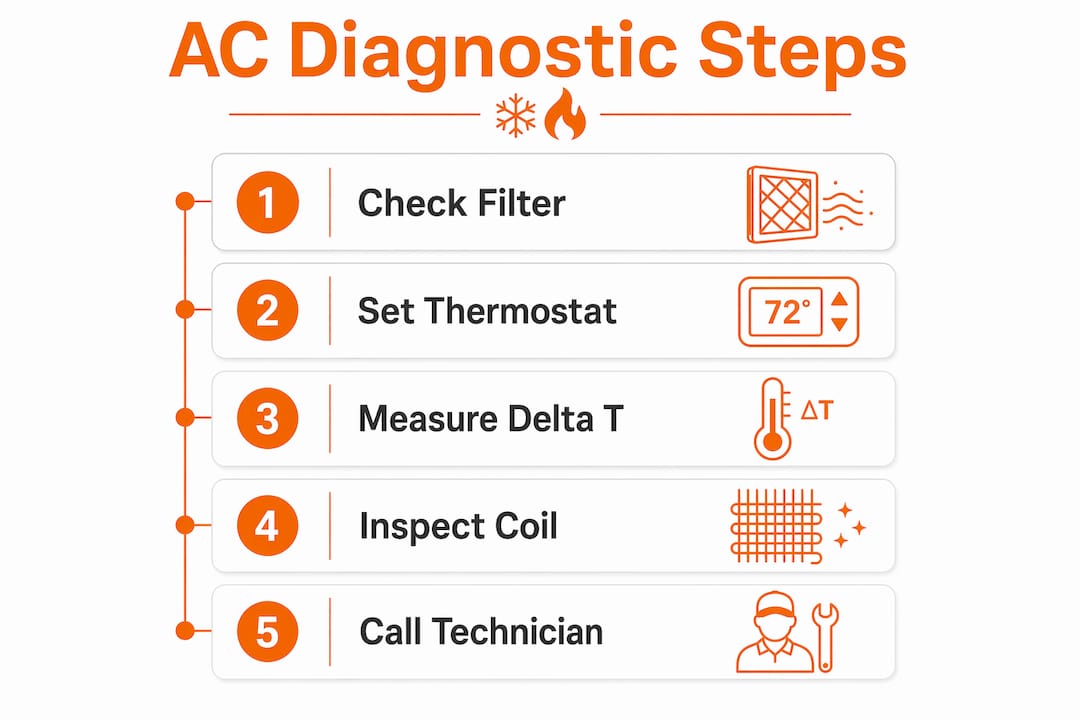
Here are the five quick checks every homeowner should run before anything else:
-
Check and replace the air filter. Pull the filter out and hold it up to light. If you cannot see light through it, replace it immediately. A 1-inch filter needs replacement every 30 days. A 4-inch filter can last up to 90 days, depending on dust levels in your home.
-
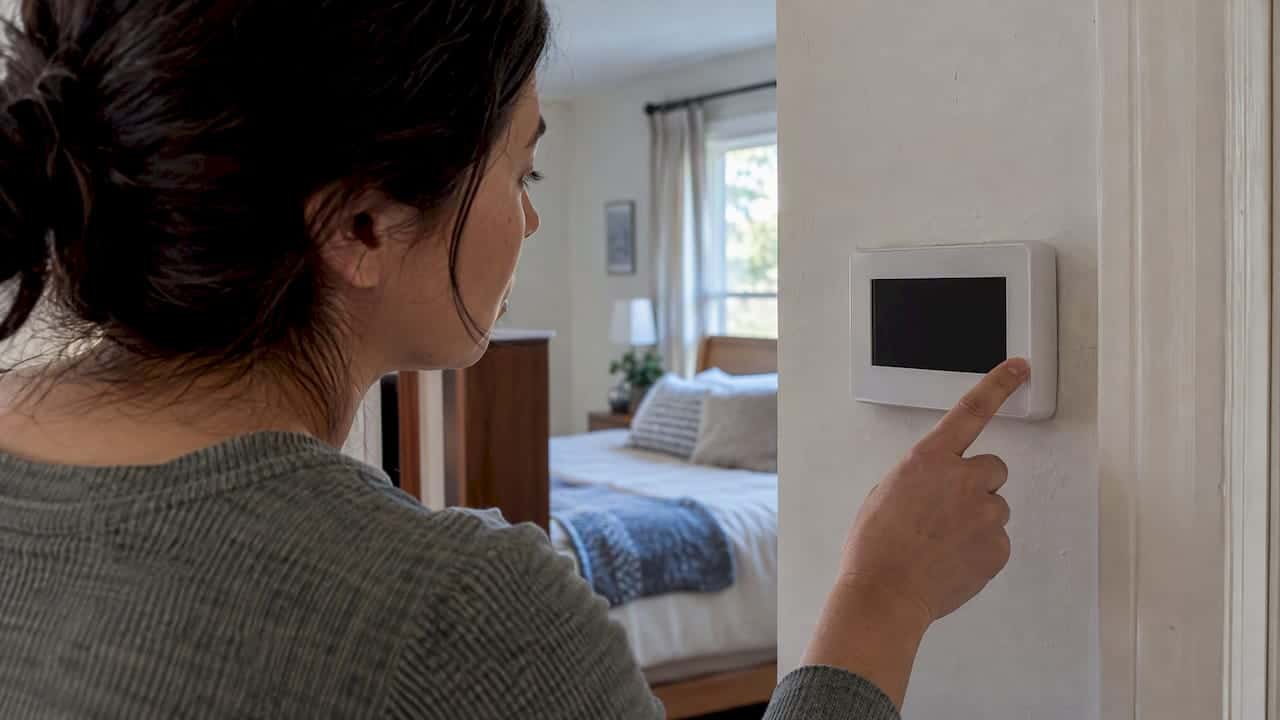
Verify thermostat settings. Set the thermostat to COOL mode, not FAN or HEAT. Set the target temperature at least 5°F below the current room temperature. A thermostat set to “ON” instead of “AUTO” keeps the fan running even when the compressor is off, which pushes warm air through your vents and makes the system feel broken when it is not.
-
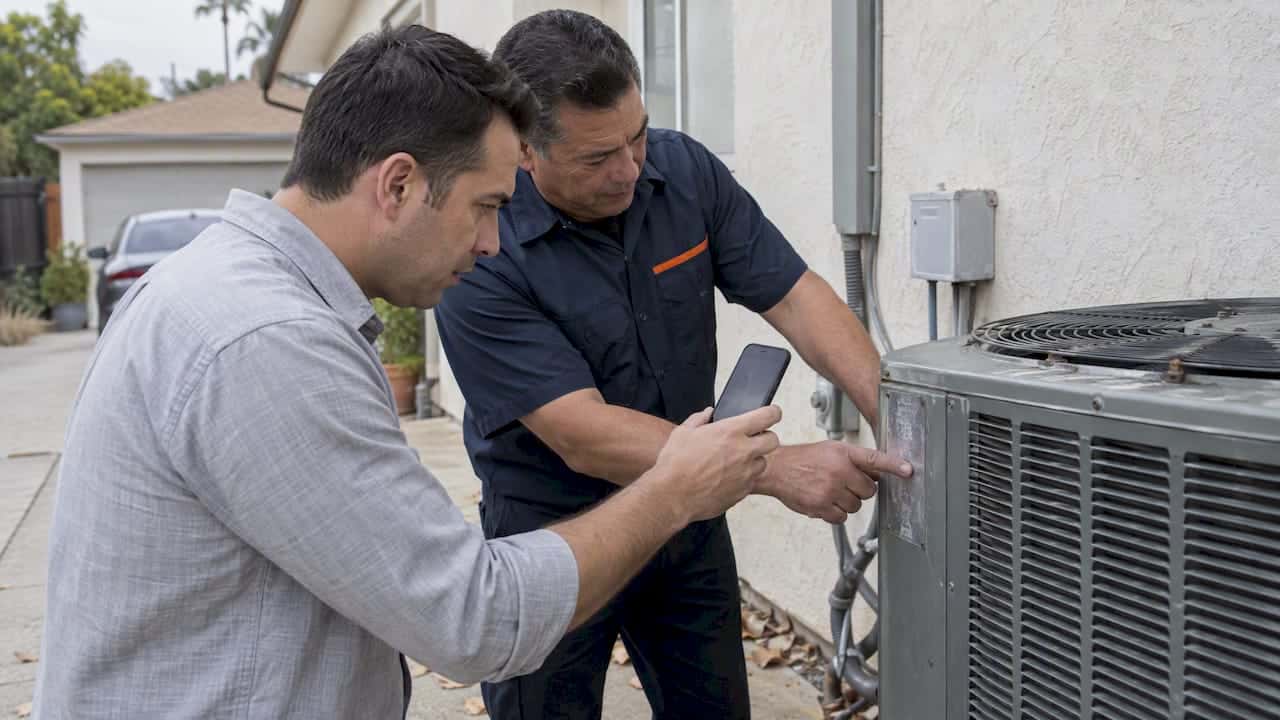
Inspect the outdoor condenser unit. Walk outside and look at the unit. Leaves, grass clippings, and debris packed around the condenser block heat from escaping. Clear at least 2 feet of space on all sides. If the fan is not spinning, that is a separate problem covered in the electrical section below.
-
Check all air vents inside the home. Walk through every room and confirm that supply and return vents are fully open and not blocked by furniture, rugs, or curtains. A blocked return vent starves the system of air and causes the same symptoms as a failed component.
-
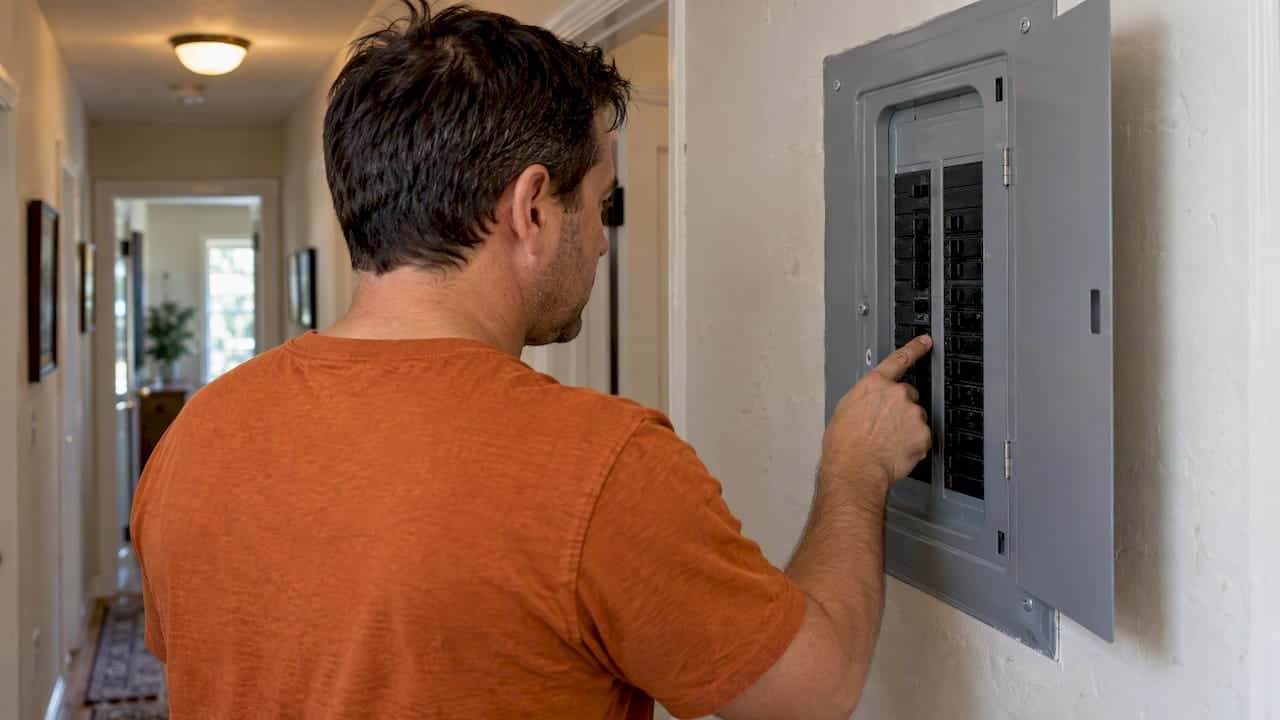
Check the circuit breaker panel. A tripped breaker cuts power to the outdoor unit while leaving the indoor air handler running. The result is a fan blowing uncooled air. Reset any tripped breaker once. If it trips again immediately, stop and call a technician.
Pro Tip: Set your thermostat to AUTO, not ON. AUTO means the fan only runs when the compressor is actively cooling. ON means the fan runs constantly, including during the off cycle when no cooling happens.
Systematic troubleshooting from simple to complex catches user-fixable errors first and saves you the cost of an unnecessary service call.
How do you test temperature difference to measure cooling performance?
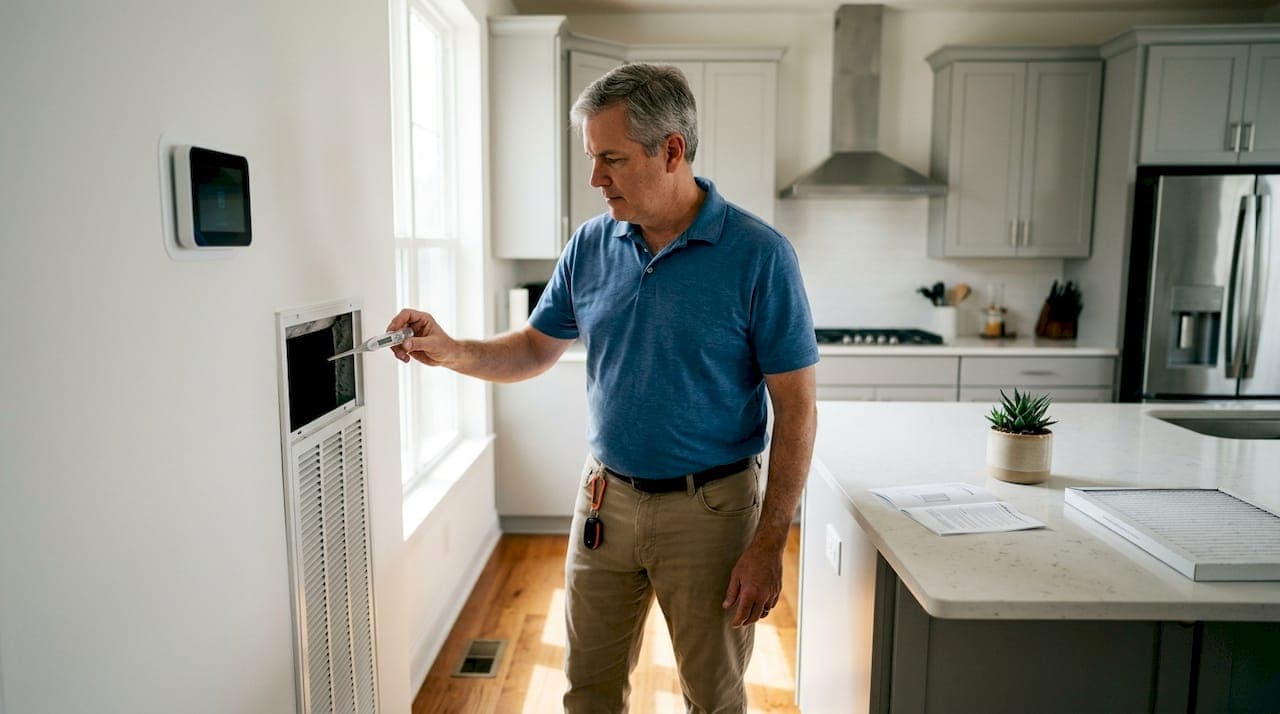
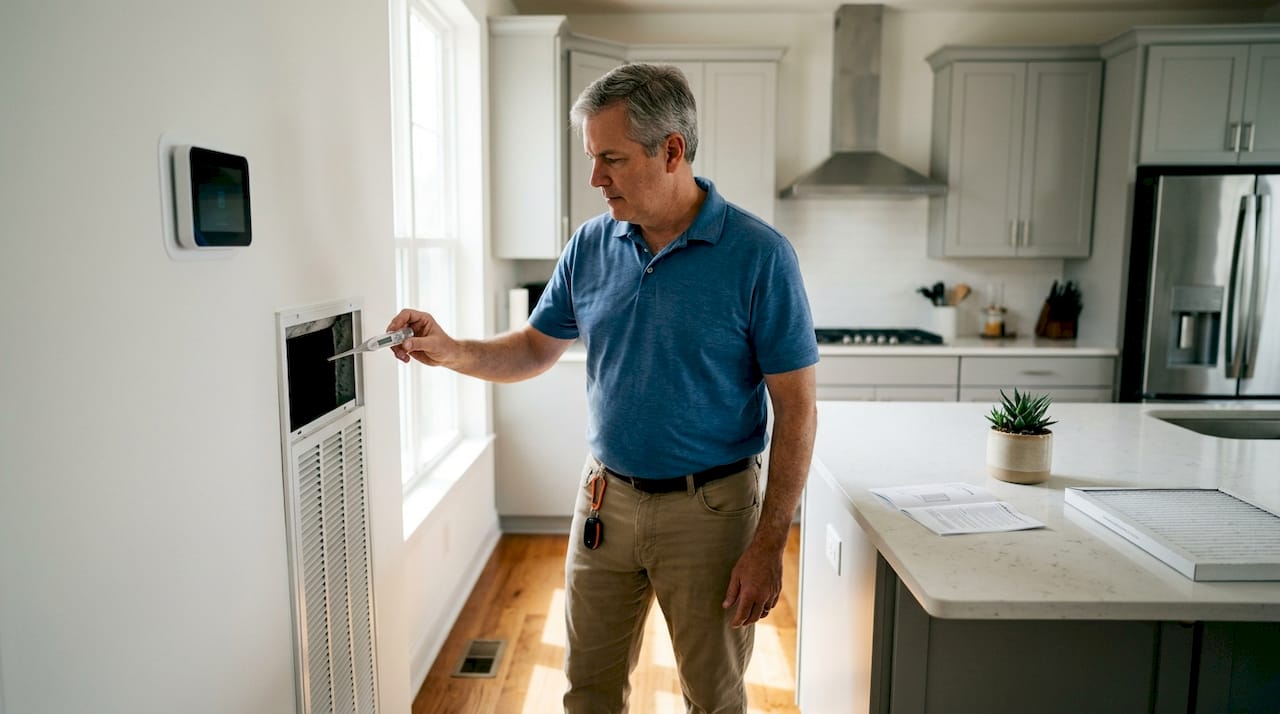
Once you have completed the quick checks, the next step is to measure whether your system is actually producing cold air. HVAC technicians call this the “delta T” test, which stands for the temperature difference between supply air and return air. It is a reliable way to quantify how well your system is cooling.
How to run the delta T test
You need a simple digital thermometer. Place it in the return air vent (the large grille that pulls air into the system) for two minutes and record the temperature. Then place it directly in front of a supply vent (the smaller vents that blow air into rooms) for two minutes and record that temperature.
| Temperature Difference | What It Means |
|---|---|
| More than 18°F | System is cooling well |
| 10°F–17°F | Moderate performance; check filter and airflow |
| Less than 10°F | Poor cooling; likely a refrigerant or coil issue |
A healthy system produces a temperature drop of 18°F or more between return and supply air. A reading below 10°F tells you the system is not transferring heat effectively, which points to refrigerant problems, a frozen coil, or a failing compressor.
What to look for on the evaporator coil
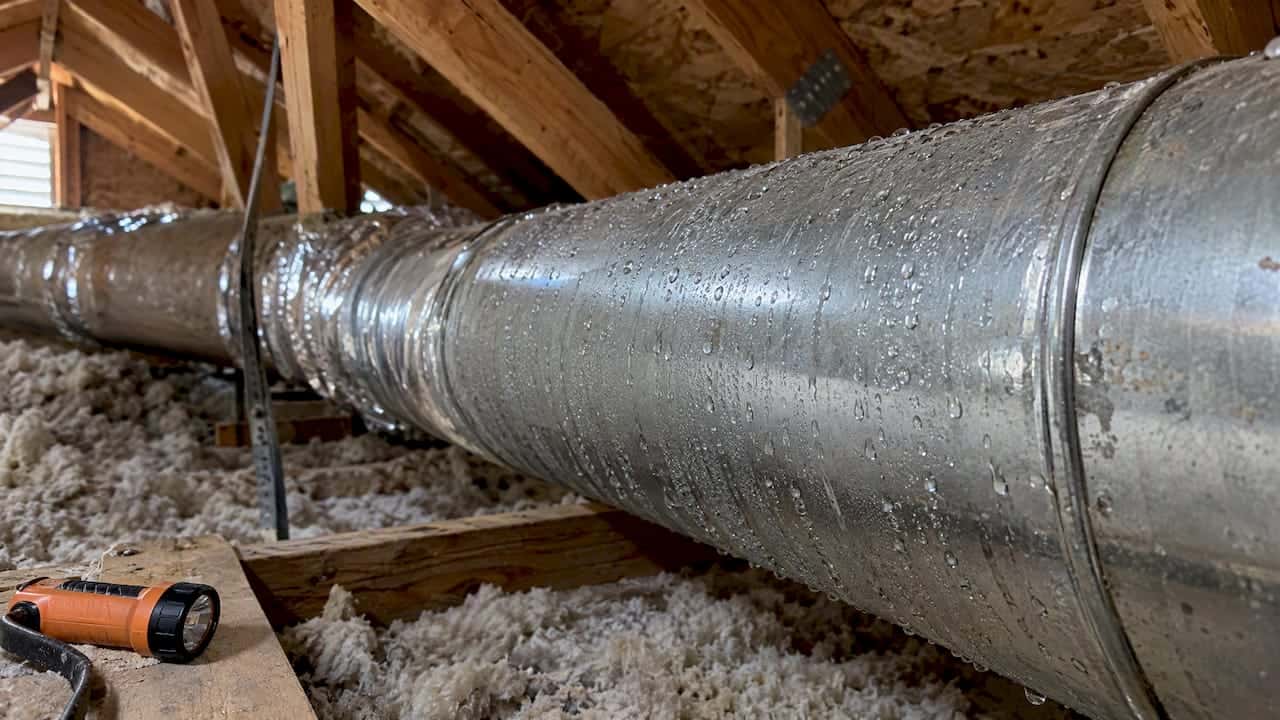
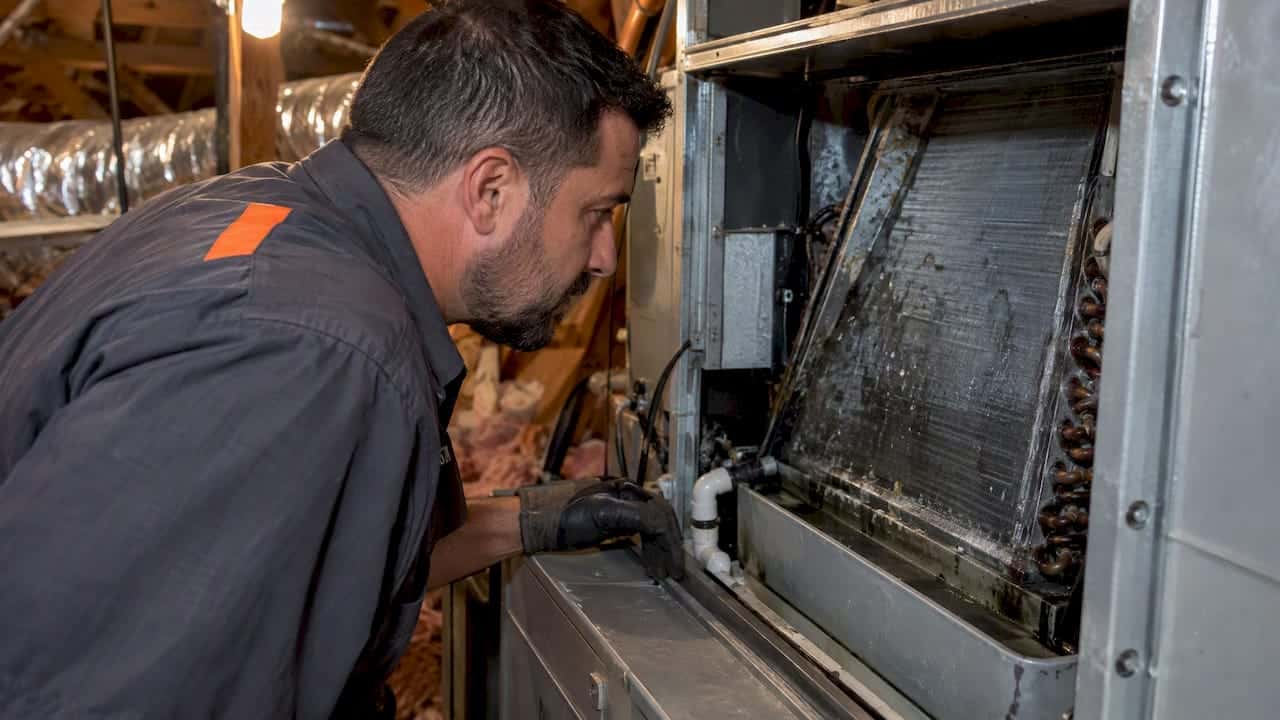
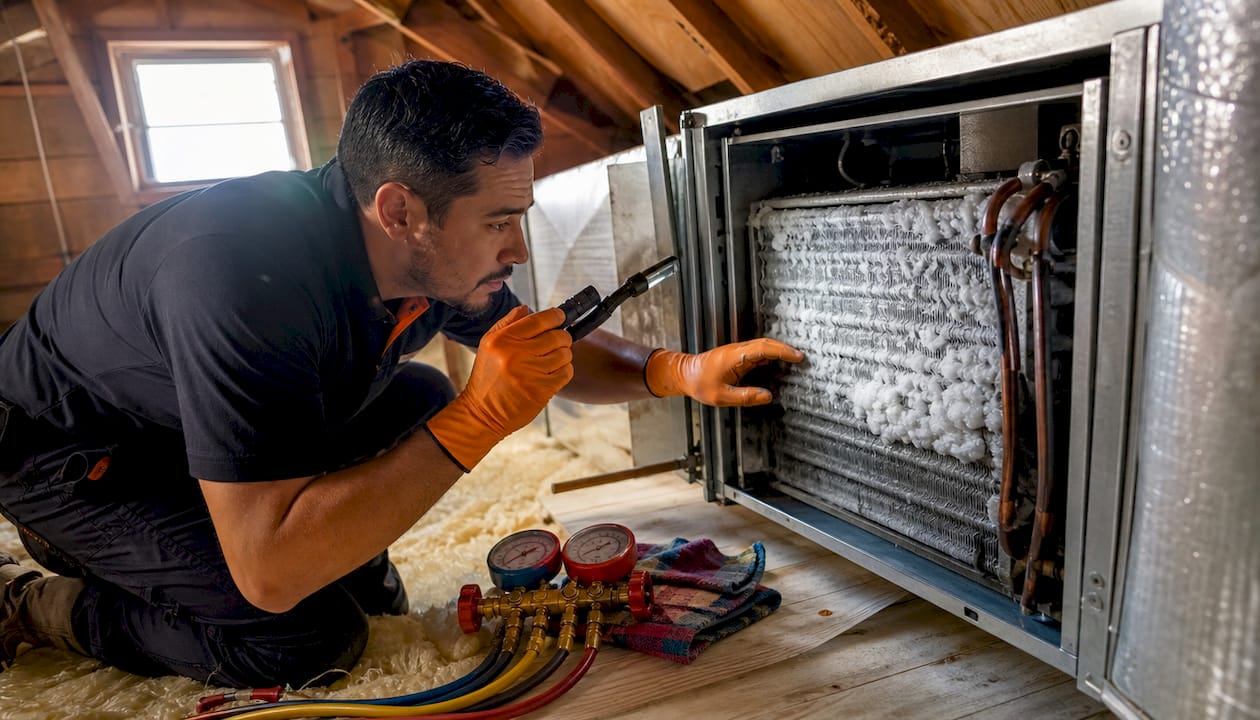
The evaporator coil sits inside your air handler. When airflow is restricted or refrigerant is low, the coil drops below freezing and ice forms on it. Iced-over evaporator coils block airflow completely and can damage the compressor if the system keeps running. Signs of a frozen coil include:
- Ice visible on the refrigerant lines near the indoor unit
- Water dripping or pooling around the air handler
- Weak or no airflow from supply vents despite the system running
- A delta T reading below 10°F even after a fresh filter is installed
If you see ice, turn the system off immediately and switch the fan to ON to help the coil thaw. Do not run the AC in COOL mode until the ice is completely gone, which typically takes 2–4 hours. After thawing, replace the filter and run the system again. If ice returns within a few hours, the cause is likely low refrigerant, not just a dirty filter.
Pro Tip: A frozen evaporator coil caused by restricted airflow is one of the most misdiagnosed problems in residential AC. Homeowners often assume the compressor has failed when the real fix is a $10 filter and a few hours of thawing.
Why do refrigerant leaks and electrical faults stop your AC from cooling?
After you rule out filters, thermostat settings, and airflow, the remaining causes fall into two categories: refrigerant problems and electrical failures. Both require more caution than the checks above.
Refrigerant issues
Refrigerant is the substance that absorbs heat from your indoor air and releases it outside. When the charge is low, the system cannot transfer heat, and your supply air stays warm. Low refrigerant almost always indicates a leak. Refrigerant does not get “used up” like fuel. If the level is low, something is leaking.
Under EPA Section 608 of the Clean Air Act, only certified HVAC technicians can legally handle refrigerants. Adding refrigerant without finding and repairing the leak is both ineffective and illegal. The leak will simply drain the new charge within weeks, and you will be back to square one with a larger repair bill.
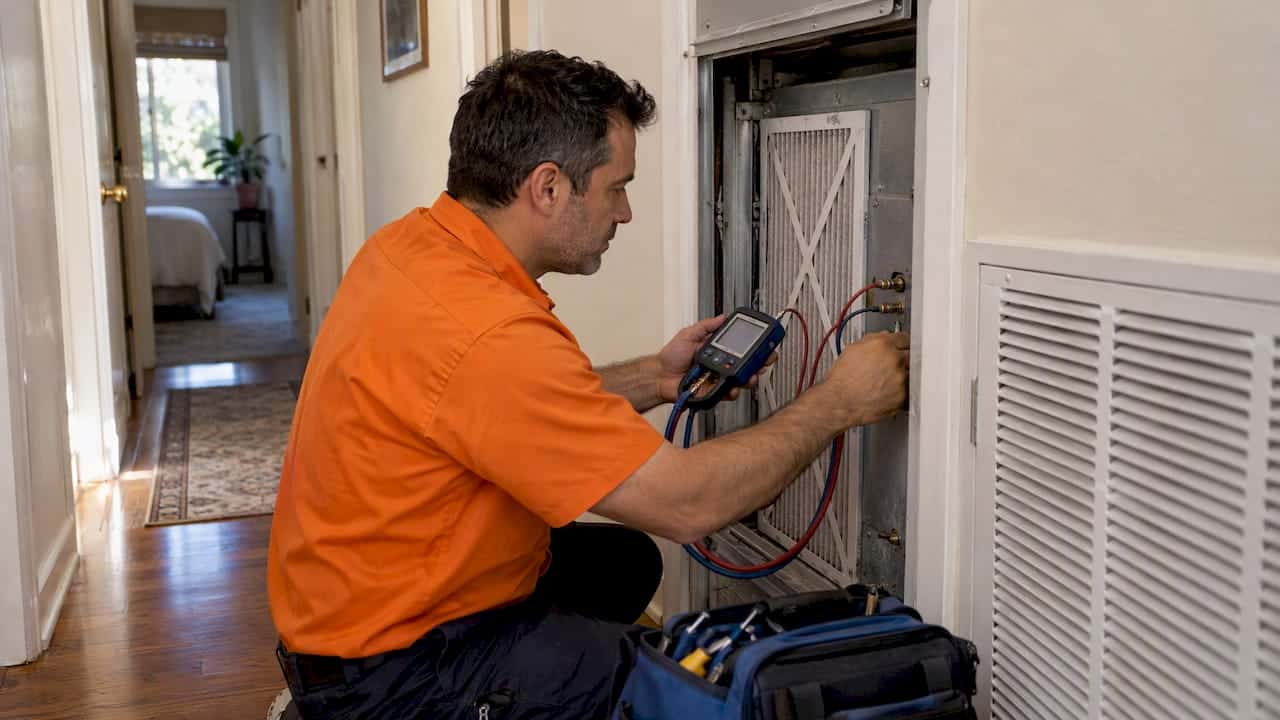
Signs that refrigerant is low include a delta T below 10°F, ice on the refrigerant lines, a hissing or bubbling sound near the indoor unit, and a system that runs constantly without reaching the set temperature. Do not attempt to add refrigerant yourself. Call a certified technician who can locate the leak, repair it, and recharge the system legally.
Electrical failures
Electrical problems are the second major cause of AC not blowing cold air. The most common single failure is the run capacitor. This small but critical component gives the compressor and condenser fan motor the electrical boost they need to start and keep running. A failed run capacitor causes the outdoor unit to hum loudly while the fan sits still. It is a low-cost part, but replacing it requires working near components that store lethal voltage.
Other electrical causes include:
- Tripped breakers that cut power to the outdoor unit only
- Contactor failure that prevents the compressor from receiving power even when the thermostat calls for cooling
- Wiring damage from rodents or weather exposure at the outdoor unit
- Control board faults in modern systems that prevent the compressor from engaging
Run capacitors store lethal voltage even after the power is switched off. Wait at least 5 minutes after shutting down the system before inspecting any electrical components. If you are not comfortable working around electrical panels and capacitors, stop and call a professional. The repair cost is far lower than the cost of a compressor replacement caused by a mishandled electrical fix.
Homeowners often delay calling technicians until problems worsen, which risks compressor damage and significantly higher repair costs. A failed compressor is the most expensive single component in a residential AC system.
How do you maintain your AC to prevent cooling problems?
Prevention is the most cost-effective AC troubleshooting tip available. Most cooling failures that require professional service are the result of deferred maintenance. A consistent maintenance routine keeps your system running efficiently and extends its useful life.
- Replace air filters on schedule. Use a 1-inch filter every 30 days during heavy use months. Use a 4-inch filter every 90 days. Mark the replacement date on the filter itself with a marker so you never lose track.
- Clean the outdoor condenser unit each spring. Use a garden hose to gently rinse the fins from the inside out. Never use a pressure washer, which bends the fins and reduces airflow.
- Check thermostat batteries twice a year. A low battery causes erratic thermostat behavior that mimics system failure. Replace batteries every fall and spring when you change your clocks.
- Keep the area around the outdoor unit clear year-round. Trim shrubs and remove debris after storms. Vines and overgrown plants reduce airflow and trap heat around the condenser.
- Schedule annual professional maintenance. A certified technician checks refrigerant charge, cleans the evaporator coil, inspects electrical connections, and tests the capacitor. This single visit catches problems before they become failures.
For systems over 10 years old, the EPA advises evaluating replacement rather than repeated repairs, especially if the system uses older refrigerant types that are being phased out. An aging, inefficient system costs more to run and repair than a modern replacement saves in energy bills over time. If your system is older and breaking down repeatedly, read through the repair vs. replacement options before committing to another expensive fix.
Pro Tip: Annual professional maintenance is the single best investment you can make in your AC system. It costs a fraction of a major repair and catches small problems before they become expensive ones.
Key Takeaways
Diagnosing an AC that is not cooling requires a systematic approach: start with filters and thermostat settings, measure airflow performance, and escalate to refrigerant and electrical checks only after ruling out simpler causes.
| Point | Details |
|---|---|
| Filters cause most failures | Dirty air filters cause 42% of cooling problems; replace them before any other check. |
| Delta T test reveals performance | A temperature difference below 10°F between return and supply air signals a serious issue. |
| Refrigerant requires a certified tech | Only EPA-certified technicians can legally handle refrigerant under Clean Air Act Section 608. |
| Electrical faults need caution | A failed run capacitor is common and fixable, but requires safe handling of lethal stored voltage. |
| Maintenance prevents most problems | Annual professional service and regular filter changes prevent the majority of cooling failures. |
What I have learned after years of AC diagnostics
The most expensive mistake homeowners make is skipping the simple checks and assuming the worst. I have seen homeowners spend hundreds of dollars on service calls that turned out to be a dirty filter or a thermostat set to the wrong mode. The fix took two minutes. The call cost two hundred dollars.
The second most expensive mistake is waiting. A frozen coil that gets ignored for a week can seize a compressor. A refrigerant leak that gets “topped off” by an unlicensed person creates an environmental violation and a system that fails again within a month. The problems that seem minor rarely stay minor.
What I find genuinely encouraging is how much a homeowner can accomplish with a thermometer and a replacement filter. The delta T test is not complicated. It gives you real data about your system’s performance in under five minutes. That data tells you whether you have a simple fix or a problem that needs a certified technician. Knowing the difference saves you money and protects your equipment.
One trend worth watching is the shift toward digital and smart thermostats. A smart thermostat logs your system’s run cycles and can alert you when the system is running longer than usual to reach the set temperature. That pattern is often the first sign of low refrigerant or a dirty coil, weeks before the system stops cooling entirely. If your home still has a basic analog thermostat, upgrading is one of the most practical steps you can take for long-term system health.
The homeowners who never face emergency AC calls are the ones who change their filters, schedule annual maintenance, and pay attention to how their system sounds and performs. It is not complicated. It just requires consistency.
— Leo
When LC Heating and Air Conditioning can help
When your own checks have not resolved the problem, LC Heating and Air Conditioning provides honest, same-day diagnostics with flat-rate pricing so you know the cost before any work begins.
LC Heating and Air Conditioning’s EPA-certified technicians handle refrigerant leak detection, capacitor replacement, coil cleaning, and full system diagnostics across Los Angeles. There are no surprise fees and no pressure to replace a system that can be repaired. If you have worked through the steps in this guide and your AC is still not blowing cold air, the AC repair team at LC Heating and Air Conditioning is ready to help. You can also browse the HVAC how-to guides for additional DIY troubleshooting steps before you call.
FAQ
Why is my AC running but not cooling the house?
An AC that runs without cooling has a break somewhere in the cooling chain. The most common causes are a dirty air filter, incorrect thermostat settings, a frozen evaporator coil, or low refrigerant from a leak.
How do I check if my AC has a refrigerant problem?
Run the delta T test between your return and supply vents. A temperature difference below 10°F, combined with ice on the refrigerant lines or a hissing sound near the indoor unit, strongly indicates low refrigerant from a leak.
Can I add refrigerant to my AC myself?
No. EPA Section 608 of the Clean Air Act prohibits unlicensed handling of refrigerants. Only a certified HVAC technician can legally locate a leak, repair it, and recharge the system.
What does a failed run capacitor look like?
A failed run capacitor causes the outdoor condenser unit to hum loudly while the fan does not spin. The system appears to be running but produces no cooling because the compressor cannot operate without the capacitor’s electrical support.
How often should I replace my AC air filter to prevent cooling problems?
Replace a 1-inch filter every 30 days during heavy use and a 4-inch filter every 90 days. Dirty filters are the single most common cause of AC cooling failure, accounting for 42% of all cases.
Recommended
Leo, Owner & Lead Technician at LC Heating & Air
Leo leads LC Heating & Air as an owner-operator and holds California CSLB C-20 HVAC license #1073586. His guides focus on practical diagnostics, safe repair decisions, and clear advice for Los Angeles homeowners.