- Best AC Brands for Hot Climates: 2026 Buyer’s Guide
- Which brands hold up best in hot, humid U.S. climates?
- Which compressor types and system configurations work best in extreme heat?
- How do upfront costs compare to long-term energy savings?
- How to choose the best AC system and installer for a hot climate
- Why local expertise makes the difference in Los Angeles
- Key Takeaways
- What most buyers get wrong about choosing an AC brand
- LC Heating and Air Conditioning: same-day service for hot-climate homes in Los Angeles
- Useful sources and further reading
- FAQ
- Recommended
Best AC Brands for Hot Climates: 2026 Buyer’s Guide
For very hot, humid U.S. climates, the most reliable cooling systems come from Trane, Carrier, Lennox, Daikin, Rheem, Goodman, Amana, American Standard, Ruud, and York — and the single best approach is pairing a variable-speed or inverter-driven heat pump with a skilled local installer who knows your area.
Here is who each brand best serves:
- Extreme durability and parts availability: Trane, Carrier, and American Standard have the widest factory-authorized service networks, which matters most when your system runs 10+ hours a day in August.
- Highest efficiency and humidity control: Lennox and Daikin lead on SEER2 ceilings and inverter technology, making them strong picks where electricity rates are high and humidity is relentless.
- Best value for budget-conscious buyers: Goodman and Amana (sister brands under the same parent) offer solid reliability at lower installed costs, especially when paired with a quality installer.
- Mid-tier reliability with broad dealer access: Rheem, Ruud (also sister brands), and York cover the middle ground well, with strong regional dealer networks and competitive warranties.
TL;DR: The brand on the label matters less than the quality of the installation. A correctly sized, properly charged variable-speed system installed by a NATE-certified technician will outperform a premium unit installed carelessly, every time.
Which brands hold up best in hot, humid U.S. climates?
Every brand on this list has earned its place in the market. The differences come down to where each one excels and what trade-offs you accept.
- Trane: Built around the TruComfort variable-speed platform, Trane is a go-to for homeowners who want a system that can run reliably for 15+ years under heavy load. Factory-authorized dealers are plentiful in most major metros, which means parts are rarely hard to find. Warranty coverage is competitive: typically 10 years on parts with registration.
- Carrier: One of the top-ranked brands for reliability and dealer availability, Carrier’s Infinity series offers variable-speed compressors and a proprietary communicating thermostat that fine-tunes humidity control automatically. Strong choice for homeowners who want smart-home integration alongside cooling performance.
- Lennox: The efficiency leader. Lennox’s XC25 and XC21 lines reach some of the highest SEER2 ratings available in residential equipment, and their variable-speed technology is particularly effective at keeping indoor humidity in the comfort zone. Best for homeowners with high electricity rates who plan to stay in the home long enough to capture the payback.
- Daikin: The global inverter technology pioneer. Daikin’s mini-split and multi-zone systems are among the most efficient available, and their central AC lineup has caught up with premium domestic brands on SEER2. Particularly strong for homes where ductless or multi-zone solutions make more sense than a single central unit.
- Rheem: A solid mid-tier choice with broad dealer coverage across the Sun Belt. The Prestige series includes variable-speed options, and Rheem’s warranty terms are straightforward. Good balance of price and reliability for buyers who do not need the absolute top efficiency tier.
- Goodman / Amana: The value play. Both brands share manufacturing and components, with Amana positioned slightly higher and adding a lifetime compressor warranty on select models. For budget-conscious buyers working with a quality installer, Goodman and Amana deliver dependable performance at a lower installed cost than premium brands.
- American Standard: Essentially the same engineering platform as Trane (both are Trane Technologies products), with a slightly different dealer network. If your local American Standard dealer has a stronger service history than the local Trane dealer, the equipment quality is comparable.
- Ruud: The sister brand to Rheem, sharing the same manufacturing. Ruud tends to have stronger dealer penetration in certain regions. Ask your installer which brand they service more frequently, since that often predicts parts availability in your specific area.
- York: A Johnson Controls brand with a long track record in commercial and residential HVAC. York’s Affinity series includes variable-speed options and competitive warranties. Dealer density varies more by region than Carrier or Trane, so confirm local service coverage before committing.
Consumer Reports’ survey data found roughly 19% of central AC systems experienced at least one problem in a large owner sample, reinforcing that reliability varies meaningfully across brands and installations. Checking predicted reliability scores before you buy is worth the time.
Which compressor types and system configurations work best in extreme heat?
The compressor type is the most consequential decision you will make, more than brand and often more than price tier.
Single-stage compressors run at 100% capacity or off. They are the least expensive option but the worst fit for hot-humid climates. Short cycling means poor dehumidification and more wear on the compressor over time.
Two-stage compressors operate at roughly 65% and 100% capacity. The lower stage handles most days efficiently and removes more moisture than a single-stage unit. A meaningful step up for climates with long, humid summers.
Variable-speed (inverter) compressors modulate continuously from roughly 25% to 100% capacity. They run longer at lower speeds, which is exactly what you want for humidity control. The tradeoff is higher upfront cost, but the comfort difference in a hot-humid climate is noticeable within the first week of operation.
When talking to an installer, ask specifically about:
- Variable-capacity heat pumps (these cool in summer and heat in winter, often qualifying for rebates)
- Inverter-driven mini-splits for problem rooms, additions, or homes with poor ductwork
- Two-stage central units as a middle-ground option when budget limits a full variable-speed system
Ductless mini-splits and multi-zone heat pumps deserve serious consideration if your home has rooms that never cool down, an addition without ductwork, or a garage conversion. A multi-zone mini-split system lets you condition each zone independently, which avoids overcooling common areas while keeping bedrooms comfortable.
One pairing detail that homeowners often overlook: the indoor air handler (evaporator coil) and the outdoor condensing unit must be matched by the manufacturer. Mismatched pairings void warranties and reduce efficiency. Always confirm that your installer is using a factory-matched indoor/outdoor pair, and get the model numbers in writing before installation day.
Air-source heat pumps are a practical alternative to AC-only systems in warm regions, often qualifying for state and utility rebates that can offset a meaningful portion of the installed cost. If you are weighing the options, the heat pumps vs. AC comparison breaks down when each makes financial sense.
How do upfront costs compare to long-term energy savings?
Installed costs vary by system type, home size, and local labor rates. Here is a realistic breakdown:
| System tier | SEER2 range | Typical installed cost | Estimated payback (hot climate) |
|---|---|---|---|
| Budget (single-stage) | 14 SEER2 | $4,000+ | Baseline |
| Mid-tier (two-stage) | 18 SEER2 | $4,000+ | 6–10 years vs. budget |
| Premium variable-speed | — | — | 8–12 years vs. mid-tier |
Installed pricing typically adds $1,500–$4,000+ depending on complexity, ductwork condition, and local labor costs. These ranges assume a standard 2,000–2,500 sq. ft. home with existing ductwork in reasonable condition.
To estimate your own payback, multiply the annual cooling hours in your area by the efficiency difference between two systems, then divide by your local electricity rate. In Los Angeles, where cooling seasons are long and electricity rates are among the highest in the country, the math tends to favor premium-efficiency equipment more than it does in milder climates.
On rebates: California utility rebates and the state’s Self-Generation Incentive Program can offset heat-pump installation costs. Check your utility’s current rebate portal directly, since amounts change frequently. The federal 25C tax credit for energy-efficient home improvements is worth confirming with a tax professional for the current tax year, as eligibility rules have shifted.
Pro Tip: Before deciding whether to repair or replace an aging system, use the $5,000 rule: multiply the system’s age in years by the repair cost. If the result exceeds $5,000, replacement is usually the smarter long-term investment. A 12-year-old system facing a $500 repair clears the bar; a 14-year-old system facing a $400 repair does not.
For a deeper look at how repair costs are calculated, the variables include refrigerant type, labor rates, and parts availability for older equipment.
How to choose the best AC system and installer for a hot climate
Use this checklist from first call to contract signing.
- Get a Manual J load calculation. Any installer who quotes a system size without measuring your home’s square footage, insulation, window area, and orientation is guessing. Walk away.
- Collect at least three written quotes. Each should specify brand, model numbers (indoor and outdoor), SEER2 rating, warranty terms, and installation scope.
- Verify NATE certification and factory authorization for every installer you are seriously considering.
- Ask about humidity control specifically. Request a variable-speed or two-stage system if your climate has significant humidity. Ask how the system modulates at partial load.
- Confirm ductwork condition. Leaky ducts can waste 20–30% of conditioned air before it reaches the living space. Ask whether a duct leakage test is included or available.
- Ask about warranty registration. Who registers it, when, and how will you receive confirmation?
- Discuss heat pump options. If your home uses gas heat, a heat pump may consolidate heating and cooling into one system and qualify for rebates. See when a heat pump makes more sense than AC-only.
- Get the commissioning report in writing before the installer leaves.
Red flags to walk away from:
- No written scope of work or vague line items
- Pressure to decide the same day
- No mention of a load calculation
- Recommending the largest available unit “to be safe”
- Inability to provide NATE certification or factory-authorization documentation
- Warranty registration left entirely to you with no follow-up
For homes with rooms that never cool evenly, additions, or poor ductwork, ask specifically about ductless mini-splits or a zoned HVAC system that conditions different areas independently.
Why local expertise makes the difference in Los Angeles
LC Heating and Air Conditioning has been servicing homes across Greater Los Angeles for over twenty years, with deep hands-on experience in heat pumps, inverter-driven mini-splits, multi-zone systems, and commercial VRF installations. That range matters because LA homes are not uniform: a 1940s Craftsman in Silver Lake has completely different ductwork, insulation, and load characteristics than a 2010 stucco build in the San Fernando Valley.
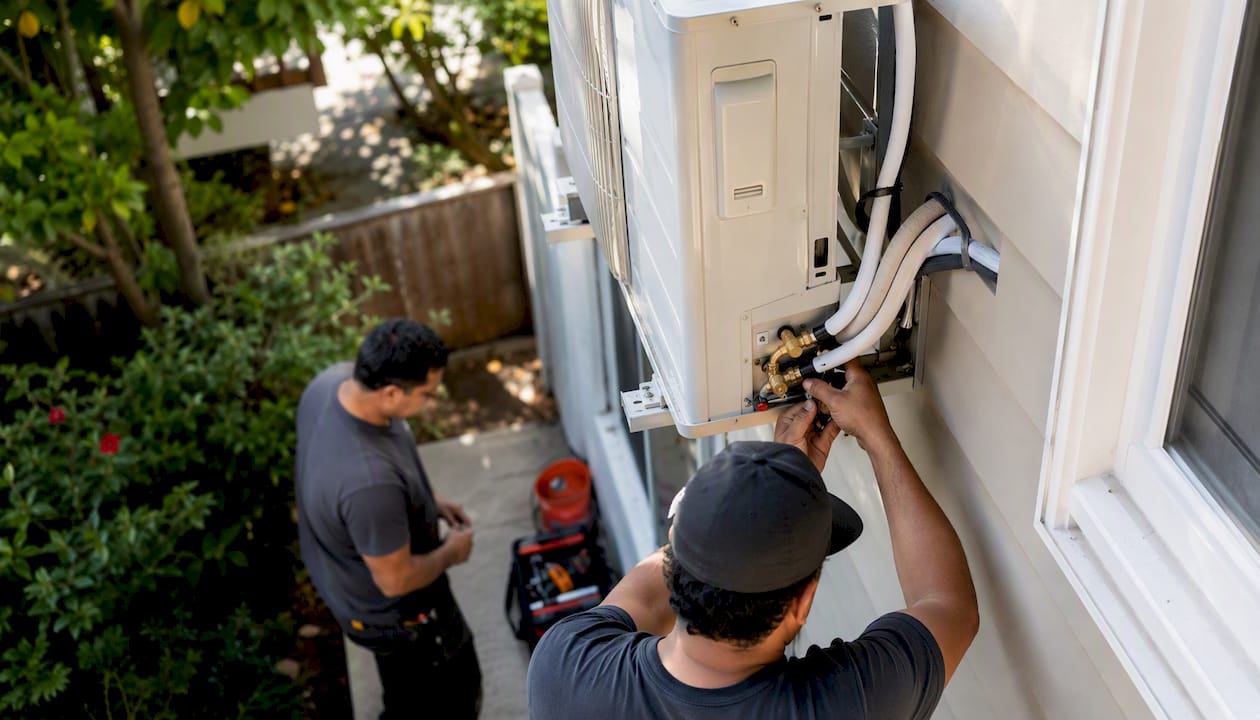
The approach at LC Heating and Air Conditioning starts with honest diagnostics. Flat-rate pricing means you know the cost before any work begins, with no surprise fees after the technician opens the unit. Same-day service is available for urgent repairs, which is exactly what you need when a heat wave hits and your system goes down on a Friday afternoon.
On heat pumps specifically: LC Heating and Air Conditioning’s expertise covers the full range from single-zone Daikin mini-splits to whole-home variable-capacity heat pump systems, including heat pump repair when an existing system needs attention. For Los Angeles homeowners navigating California’s rebate programs and Title 24 requirements, having a contractor who knows the local rules is not a minor convenience.
Pro Tip: When choosing a local contractor, ask how many heat pump installations they completed in the past 12 months and whether they carry factory authorization for the brand they are recommending. A contractor who installs heat pumps regularly will size them correctly and know the refrigerant handling requirements that differ from standard AC work.
Key Takeaways
Variable-speed heat pumps from a top-tier brand, installed by a NATE-certified local contractor with factory authorization, deliver the best long-term comfort and efficiency in hot, humid U.S. climates.
| Point | Details |
|---|---|
| Choose variable-speed systems | Inverter and variable-capacity compressors control humidity far better than single-stage units in hot, humid climates. |
| Installation quality dominates | Professional installation impacts longevity and efficiency roughly 2–3× more than brand choice alone. |
| Size correctly every time | A Manual J load calculation is non-negotiable; oversized systems short-cycle and leave indoor air clammy. |
| Budget for efficiency when rates are high | In high-electricity-rate markets like Los Angeles, premium SEER2 systems typically pay back in 8–12 years. |
| LC Heating and Air Conditioning | Offers flat-rate pricing, same-day diagnostics, and heat pump and mini-split expertise across Greater Los Angeles. |
What most buyers get wrong about choosing an AC brand
The conversation around AC brands tends to focus on logos and efficiency ratings, which are both real factors but rarely the deciding ones. After two decades of installing and repairing systems across Los Angeles, the pattern is clear: the homes with the most comfortable, lowest-maintenance systems are not always the ones with the most expensive equipment. They are the ones where the installation was done right the first time.
Variable-speed and heat-pump technology genuinely changed what is possible for hot-climate homeowners. A well-installed inverter system does not just cool faster; it holds the indoor environment at a steadier temperature and humidity level for hours at a time, which is a qualitatively different experience from the blast-and-coast cycle of a single-stage unit. That comfort difference is what most efficiency calculators do not capture.
The other thing buyers underestimate is the value of a contractor who will still be in business and answering the phone in five years. A premium brand installed by a contractor who disappears after the job is a worse outcome than a mid-tier brand installed by a team with 20 years of local history and same-day service capacity. In Los Angeles, where heat waves are becoming longer and more intense, that service relationship is part of what you are buying.
LC Heating and Air Conditioning: same-day service for hot-climate homes in Los Angeles
Los Angeles homeowners dealing with a failing system in peak summer heat need more than a brand recommendation. They need a contractor who shows up the same day, prices the job transparently, and knows the difference between a system that needs a $300 repair and one that needs replacement.
LC Heating and Air Conditioning offers flat-rate pricing on diagnostics and repairs, same-day service across Greater Los Angeles, and full installation capability for heat pumps, inverter mini-splits, multi-zone systems, and commercial VRF equipment. Whether you are replacing an aging central AC, adding a multi-zone mini-split to a problem room, or navigating California’s heat-pump rebate programs, the team brings the local knowledge to get it right.
Browse equipment and pricing or book a diagnostic to get a flat-rate estimate with no pressure and no surprise fees.
Useful sources and further reading
| Source | What it supports |
|---|---|
| Consumer Reports Central AC Buying Guide | Reliability survey data: ~19% of central ACs had at least one problem in a large owner sample |
| HVAC Base Brand Rankings | Brand reliability comparisons and local service network importance |
| SeerCalc Best AC Brands | Installation quality impact (2–3× more than brand); SEER2 payback guidance |
| This Old House AC Brand Guide | Variable-speed technology and premium brand efficiency tiers |
| Modernize Brand Review | Installed cost ranges ($1,500–$4,000+ complexity adder) and dealer availability |
| CBS News $5,000 HVAC Rule | Repair vs. replace decision framework |
| Titan HVAC Houston | Field data: variable-speed systems maintaining 45–50% RH at 95°F outdoor conditions |
| Champion & Nash Hot Climate Guide | Heat pump viability in warm regions and rebate eligibility |
| LC Heating & Air: Why AC Fails in Heat Waves | Local trust signals: flat-rate pricing, same-day diagnostics, heat-pump expertise |
FAQ
Which AC brand is best for very hot weather?
Trane, Carrier, and Lennox consistently rank at the top for extreme-heat reliability, with variable-speed models from each brand offering strong humidity control and high SEER2 ratings. The right choice depends on local dealer availability and installer expertise as much as the brand itself.
What AC brands should you avoid?
Avoid any brand whose local dealer network is thin in your area, since limited parts access means longer downtime during heat waves. Brands with weak local installation and service coverage underperform in extreme heat regardless of their national reputation.
What is the most reliable AC brand?
Consumer Reports survey data points to Trane, Carrier, and American Standard as consistently reliable over large owner samples, though roughly 19% of central AC systems across all brands experienced at least one problem. Correct installation is the strongest predictor of long-term reliability.
What is the $5,000 rule for AC?
The $5,000 rule is a quick repair-vs.-replace test: multiply the system’s age in years by the estimated repair cost. If the result exceeds $5,000, replacement is generally the better long-term investment.
Are heat pumps a good option for hot climates?
Yes. Air-source heat pumps cool as effectively as traditional AC in warm regions while adding heating capability, and they frequently qualify for California utility rebates that reduce the installed cost.
Recommended
Leo, Owner & Lead Technician at LC Heating & Air
Leo leads LC Heating & Air as an owner-operator and holds California CSLB C-20 HVAC license #1073586. His guides focus on practical diagnostics, safe repair decisions, and clear advice for Los Angeles homeowners.