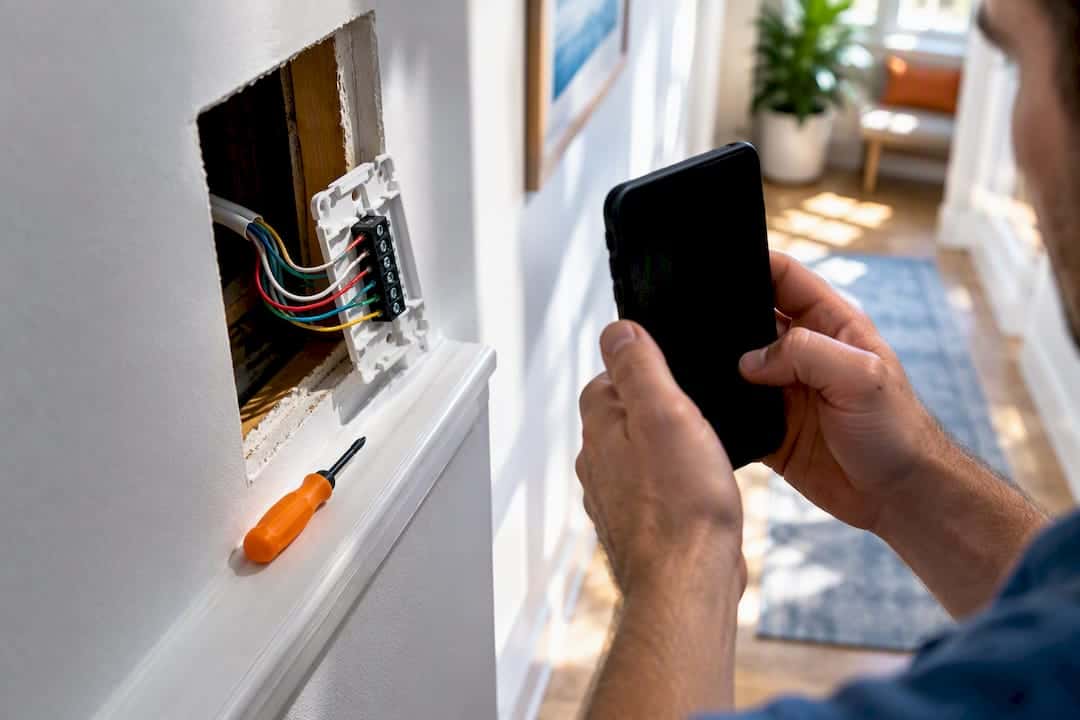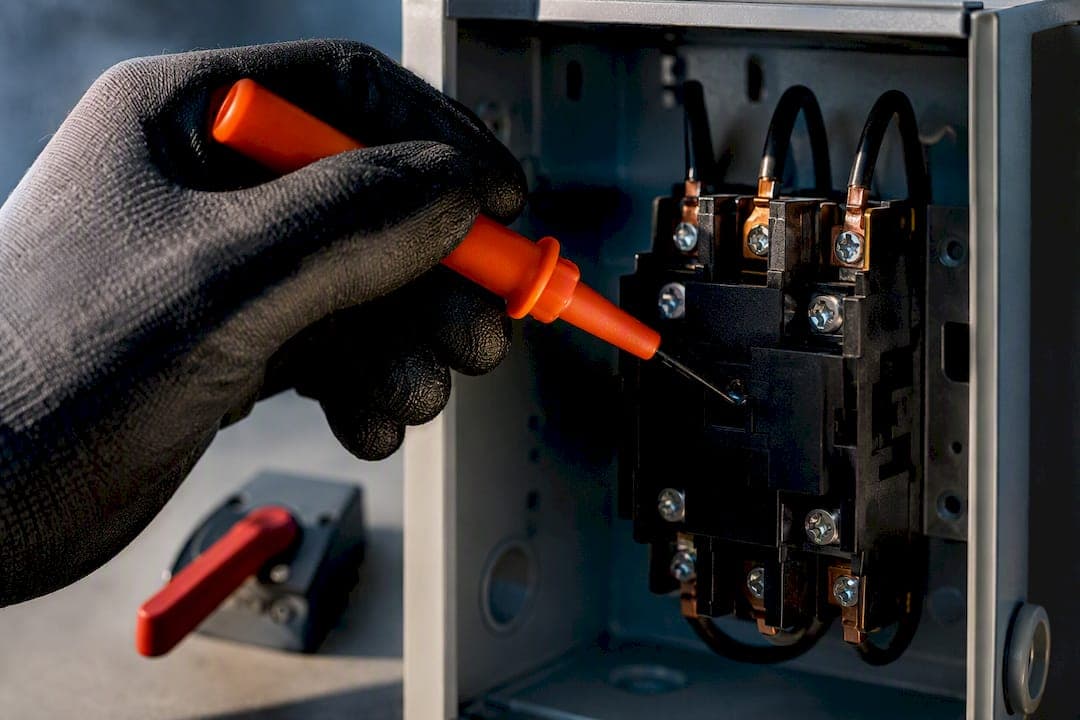
- Ac Contactor Stuck Symptoms You Can Spot Without Tools
- What Causes an AC Contactor to Get Stuck or Fail?
- How Do You Test a Stuck AC Contactor Safely?
- When Is a Stuck Contactor Dangerous?
- Quick Fixes and Prevention for AC Contactor Problems
- LC Heating and Air Conditioning’s Approach to Contactor Diagnosis
- Getting Professional Help for a Stuck AC Contactor
- Sources
- FAQ
- Recommended
Homeowners: 5 Safe Contactor Checks That Confirm AC Stuck Symptoms
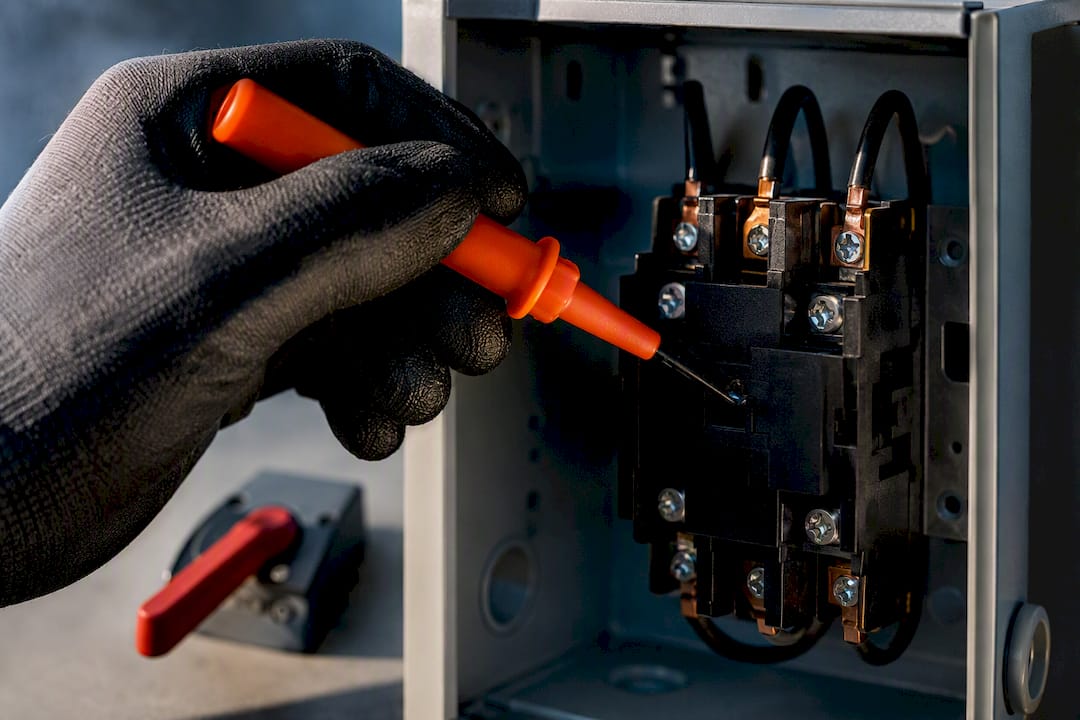
If your outdoor AC unit runs nonstop even after the thermostat is satisfied, or you hear loud buzzing or rapid clicking from the outdoor cabinet, you’re likely looking at a stuck or failing contactor. If the unit runs uncontrolled, turn off the power at the disconnect or breaker right now and skip any manual bypass. The details below walk you through the exact symptoms, causes, and safe tests to confirm it.
TL;DR:
- Nearly all contactor failures are caused by welding, arcing, corrosion, or coil burnout, which often lead to continuous operation or non-starting symptoms.
- Visual inspection for pitting, burn marks, or melted plastic, combined with testing coil resistance and contact continuity, is crucial for accurate diagnosis.
- Turning off power and waiting several minutes to discharge capacitors is essential before checking the contactor to prevent injury.
- Symptoms like humming, buzzing, or rapid clicking often indicate pitted contacts or low voltage issues, guiding technicians to specific fault modes.
- Replacing an aging contactor before failure, especially if minor pitting is observed, avoids emergency breakdowns during peak cooling demand.
Ac Contactor Stuck Symptoms You Can Spot Without Tools
A contactor is the electrical switch that sends power to your compressor and outdoor fan every time your thermostat calls for cooling. When it fails, the symptoms are usually loud, obvious, and specific enough that you can narrow down the problem before ever picking up a multimeter.
Here’s what to watch and listen for:
- Outdoor unit stays completely silent when the thermostat calls for cooling. This points to a contactor stuck open or a burned-out coil that never pulls the switch closed.
- AC runs continuously and won’t shut off, even after you turn the thermostat down or off entirely. This is the classic sign of welded or stuck-closed contacts, and it’s the scenario that demands you cut power immediately.
- Humming, buzzing, or rapid chattering coming from the outdoor cabinet. Sustained buzzing often points to pitted or burned contact surfaces that can’t pass full current to the compressor.
- Warm air blowing from your vents while the fan runs normally. The indoor blower works, but the compressor never actually engages outside.
- Visible pitting, black scorch marks, or melted plastic on the contactor body, visible only during a powered-down inspection.
These five symptoms map cleanly to five different failure modes, and a consolidated breakdown of these patterns shows how a technician reads them at a glance. Chattering, in particular, deserves attention on its own: rapid clicking frequently signals intermittent or low voltage reaching the coil rather than a purely mechanical problem, which changes where you should look next.
What Causes an AC Contactor to Get Stuck or Fail?
Contactors don’t fail randomly. Every symptom above traces back to a specific mechanical or electrical breakdown, and knowing the cause tells you where to point your multimeter.
- Welding and arcing on the contacts happens after years of daily start cycles. Each time the contactor closes, a small electrical arc jumps across the contact faces. Over thousands of cycles, that arc can literally weld the contacts together, which is the direct cause of a unit that runs nonstop.
- Pitting and corrosion on the contact faces increase resistance, causing voltage drop and a compressor that hums but never actually starts.
- Coil burnout or the wrong replacement coil voltage means the contactor physically can’t pull in, no matter how strong the rest of the system is.
- Low or missing 24VAC at the coil, whether from a weak transformer, a tripped condensate overflow switch, or a bad thermostat connection, is a leading cause of chattering and no-pull-in failures. A contactor that refuses to pull in often traces back to control-circuit issues, not the contactor itself.
- Debris and insect intrusion inside the outdoor cabinet can physically obstruct the plunger or short the low-voltage terminals, a cause that’s easy to miss until you actually open the panel.
- Loose or oxidized wiring connections at the coil terminals mimic a bad coil by starving it of voltage.
Pro Tip: If your contactor only closes when you physically push the plunger in with the power off, don’t assume the contactor is bad. Test for 24VAC at the coil first. A working contactor with no control voltage will act “stuck” every single time.
How Do You Test a Stuck AC Contactor Safely?
Confirming a contactor problem takes fifteen minutes and a basic multimeter, but the order of operations matters. Skipping the safety steps is how a five-minute check turns into an ER visit.
- Kill the power completely. Shut off the outdoor disconnect and flip the breaker at your electrical panel. Wait several minutes for the capacitor to discharge, and wear insulated gloves and safety glasses before touching anything inside the cabinet.
- Inspect visually first. With power confirmed off, look at the contact faces. Pitting, black char, or a plunger that won’t move freely all point toward replacement. Contact surfaces with heavy pitting are past the point of reliable repair and should be swapped, not cleaned.
- Test continuity across the contacts. A healthy, de-energized contactor should show an open circuit (no continuity). Manually depress the plunger and you should get continuity; if it stays open with the plunger pressed, the contactor itself is bad.
- Measure coil resistance with your multimeter set to ohms. A healthy 24VAC coil reads a mid-range resistance value specific to that model; infinite resistance means an open coil, and a reading near zero means a shorted one.
- Check for 24VAC at the coil terminals while someone calls for cooling at the thermostat. No voltage here means the problem is upstream: a bad transformer, a tripped float switch, or wiring, not the contactor.
Statistic Callout: A contactor that pulls in only when you manually push the plunger, but never on its own, is a control-circuit or coil problem in the vast majority of cases, not a compressor issue, according to HVAC training resources. That single test can save you from replacing the wrong part.
One common trap: a bad capacitor or loose thermostat wiring can produce symptoms that look identical to a failing contactor. If your readings all come back normal, capacitor and compressor checks are the next logical step.
When Is a Stuck Contactor Dangerous?
A contactor stuck in the closed position isn’t just an inconvenience. It means your compressor has no way to shut off on its own, which risks overheating and can push refrigerant into places it shouldn’t be.
- If the outdoor unit runs even with the thermostat completely off, shut off the disconnect or breaker immediately and call for service.
- If you smell burning plastic, see smoke, or spot melted components in the cabinet, cut power and treat it as an emergency repair.
- Chattering that goes ignored for weeks can slowly hammer the compressor’s internal components, and letting a stuck contactor run unchecked raises both energy use and repair costs the longer it continues.
Quick Fixes and Prevention for AC Contactor Problems
While you wait for a technician, a few low-risk steps can help without touching any electrical components.
- Clear leaves, grass clippings, and debris from around the outdoor unit so airflow and cabinet access stay unobstructed.
- Check the condensate drain pan and line for clogs, since a tripped overflow switch can mimic a coil failure.
- Replace your thermostat batteries. It sounds too simple, but a weak signal can starve the contactor coil of voltage.
- Never hold the plunger down manually as a running fix. It’s a known cause of arcing and further pitting, and it should only ever be used as a stopgap by a trained technician, never as your own workaround.
Pro Tip: Most contactors last five to ten years under normal cycling. If yours shows even minor pitting during an annual inspection, replacing it before peak summer heat is far cheaper than an emergency call when it welds shut on the hottest day of the year.
LC Heating and Air Conditioning’s Approach to Contactor Diagnosis
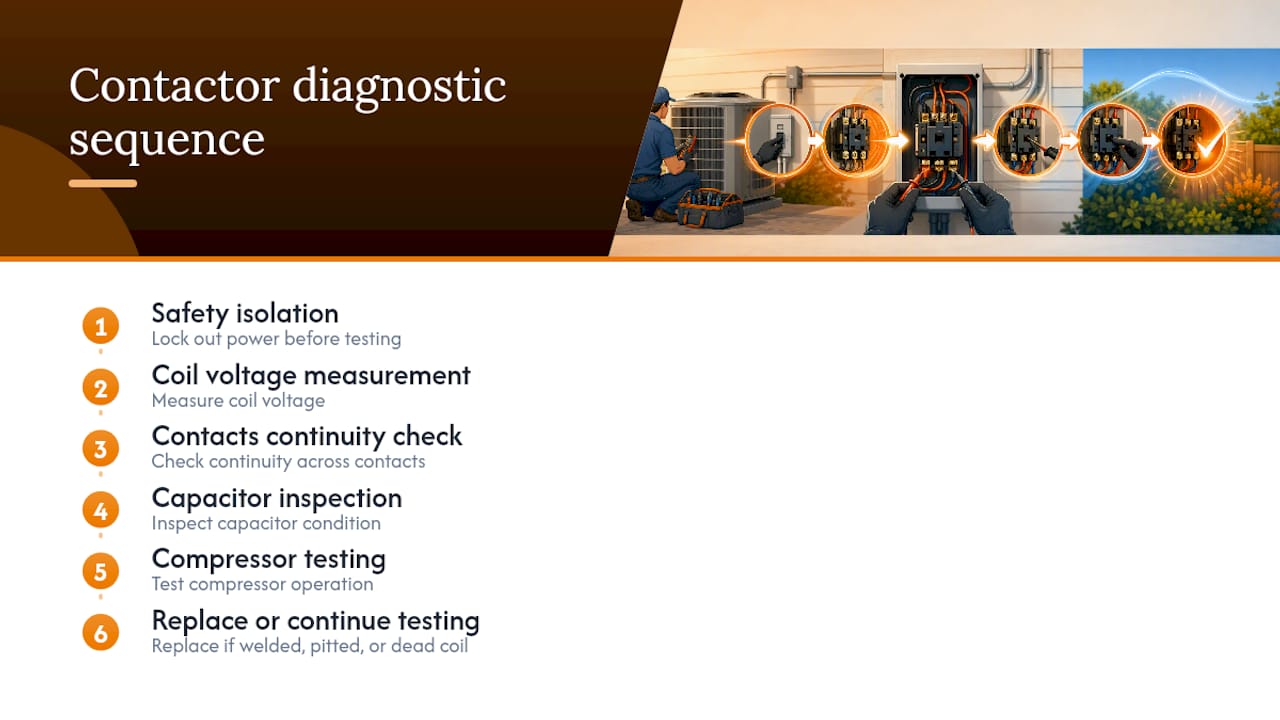
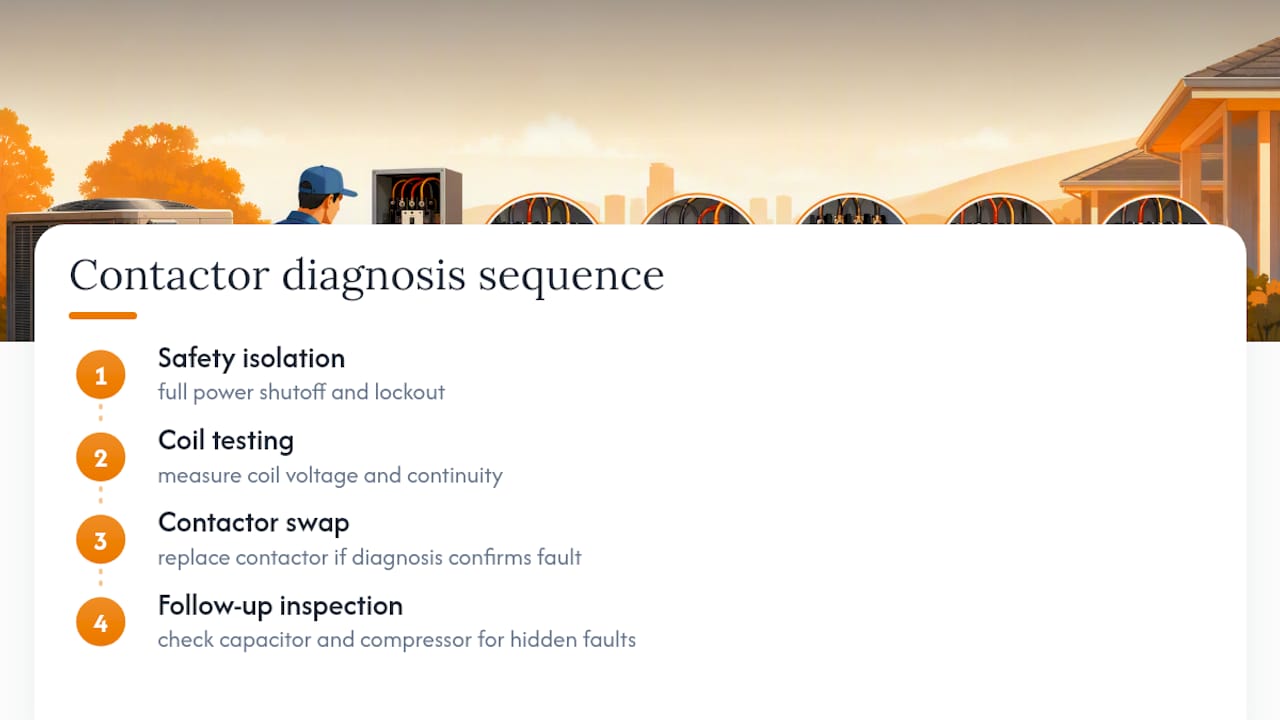
Every service call starts with safety isolation, then a coil voltage measurement, a continuity check across the contacts, and a follow-up look at the capacitor and compressor. That sequence exists because a contactor rarely fails alone, and replacing it without checking what’s upstream just delays the real fix.
Leo built LC Heating and Air Conditioning’s flat-rate diagnostic process around one goal: no surprise fees, no pressure to replace a system that a $30 part could fix. We recommend replacement outright when we find welded contacts, severe pitting, or a dead coil. When those checks come back clean, we move straight to compressor and capacitor testing rather than guessing.
— Leo
Getting Professional Help for a Stuck AC Contactor
A proper service visit covers the same ground you just read about, but with the tools and experience to catch what a home multimeter check can miss: full safety isolation, coil voltage and continuity testing, a contactor swap if needed, and a follow-up inspection of the capacitor and compressor to rule out a bigger problem hiding behind the symptom.
The company offers same-day service with flat-rate diagnostic pricing so you know the cost before any work begins. Most contactor replacements are straightforward, same-visit repairs once the diagnosis confirms the part is at fault. If your outdoor unit is buzzing, running nonstop, or blowing warm air, you can book a diagnostic visit directly, or browse our HVAC repair services to see what a full visit covers before you call.
Sources
For deeper technical detail, see Thermostat & HVAC Helpers on contactor testing, DVolt Electric’s replacement guide, and LC Heating and Air Conditioning’s contactor explainer.
- AC Contactor: Symptoms of Failure, How to Test It, and Replacement - Thermostat & HVAC Helpers
- AC contactor not pulling in — HVACTrainingShop
- 6 Critical AC Contactor Failure Symptoms and What Causes It - Affordable Air and Heating
- How Do I Know If My AC Contactor Is Bad? Signs, Tests & Replacement Guide - DVolt Electric
- Stuck contactor in outdoor AC unit: causes, symptoms, solutions — Quality Home Air Care
FAQ
What happens if my AC contactor gets stuck?
If it sticks closed, your compressor and outdoor fan run continuously even with the thermostat off, which risks overheating and compressor damage. Turn off the disconnect or breaker right away and call for service.
How can I tell if my AC contactor is bad?
Look for pitting, burn marks, or welded contacts during a powered-down visual inspection, and confirm with a continuity test and coil resistance check using a multimeter. A unit that hums but won’t start, or runs nonstop, are the two strongest symptoms.
Can you manually push in a contactor?
Yes, for diagnostic purposes only, with the power off. If manually depressing the plunger gets the unit running, the problem is usually the coil or control circuit, not the contactor’s mechanical contacts. Never hold it down as a permanent fix.
What causes a contactor to stay pulled in?
Welded or arced contacts from repeated start cycles are the most common cause, and it’s what makes a unit run continuously regardless of thermostat setting. Debris, insect intrusion, and severe pitting can also cause it to stick closed.
Recommended
Leo, Owner & Lead Technician at LC Heating & Air
Leo leads LC Heating & Air as an owner-operator and holds California CSLB C-20 HVAC license #1073586. His guides focus on practical diagnostics, safe repair decisions, and clear advice for Los Angeles homeowners.