- What Is a Contactor in HVAC? A Homeowner’s Guide
- What is a contactor in HVAC and how does it work?
- What are the signs of a failing HVAC contactor?
- What types of HVAC contactors are there and why does matching matter?
- How much does HVAC contactor replacement cost?
- How can you maintain your HVAC contactor and prevent failures?
- Key Takeaways
- Why every homeowner should know their contactor
- LC Heating and Air Conditioning can diagnose your contactor today
- FAQ
- Recommended
What Is a Contactor in HVAC? A Homeowner’s Guide
TL;DR:
- An HVAC contactor is an electromechanical relay that controls high-voltage power to your outdoor unit’s compressor and fan. Its failure causes common outdoor electrical issues, such as the unit not starting or running continuously, which can damage the system. Proper matching, regular maintenance, and early detection of symptoms help prevent costly repairs and extend the contactor’s lifespan.
An HVAC contactor is an electromechanical relay that controls the flow of high-voltage electricity to your air conditioner’s compressor and outdoor fan. When your thermostat calls for cooling, it sends a low-voltage 24-volt signal that activates the contactor, which then closes a circuit carrying 240 volts to power your outdoor unit. Without a working contactor, your AC simply will not run. Understanding what this component does helps you recognize problems early, communicate clearly with your technician, and avoid unnecessary repair costs. LC Heating and Air Conditioning has seen contactor failures cause more summer breakdowns in Los Angeles than almost any other single part.
What is a contactor in HVAC and how does it work?
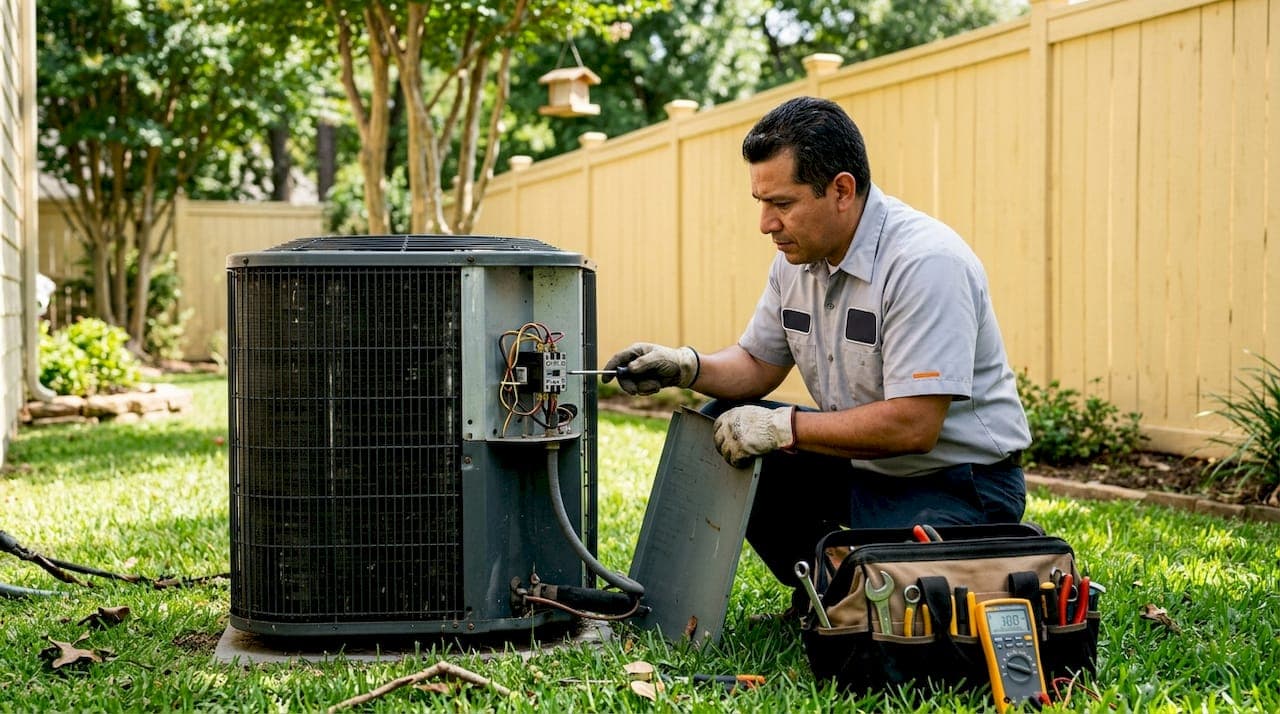
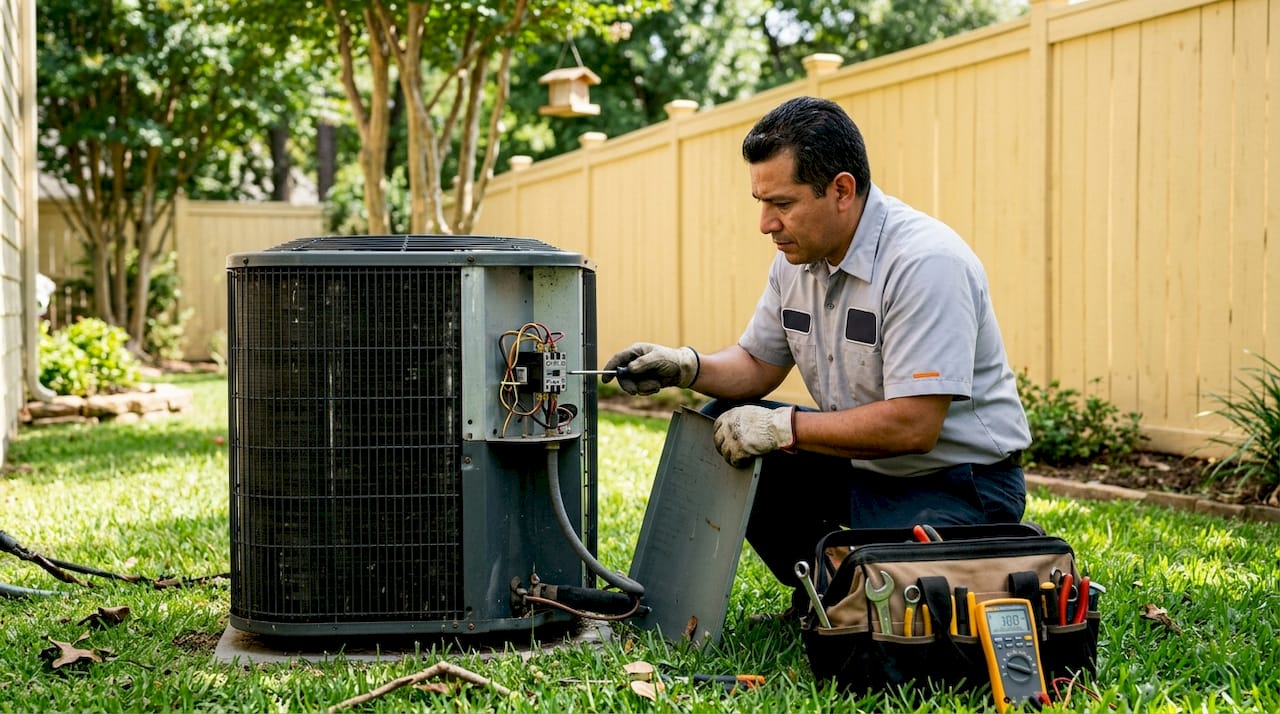
An HVAC contactor is the electrical gatekeeper of your outdoor AC unit. It sits inside the condenser cabinet and acts as a heavy-duty switch, bridging the gap between your thermostat’s low-voltage signal and the high-voltage power your compressor needs to run.
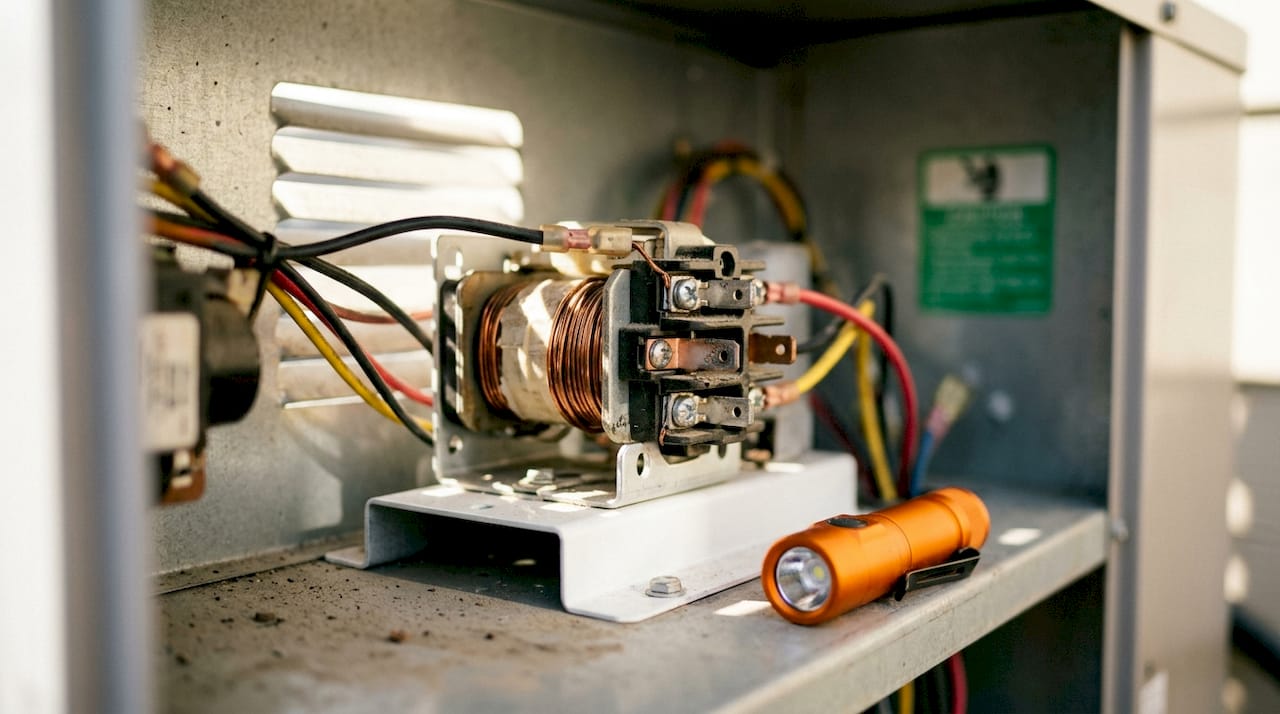
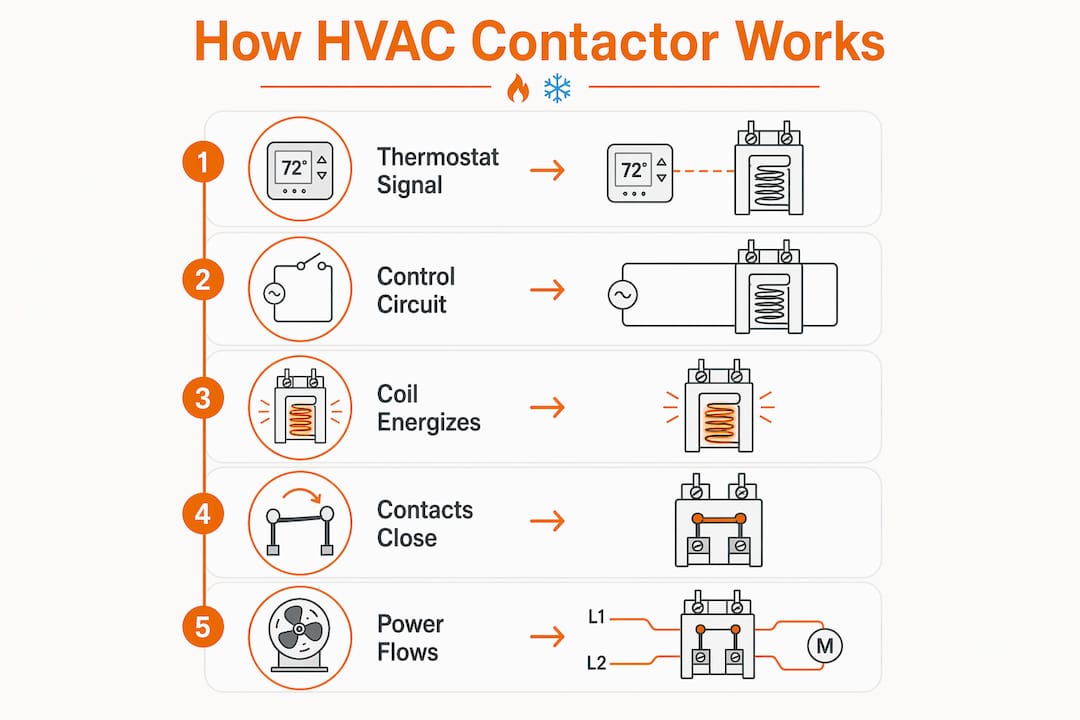
Here is how the process works. Your thermostat detects that the indoor temperature has risen above your set point. It sends a 24-volt control signal to the contactor’s electromagnetic coil. That coil energizes, creating a magnetic field that physically pulls a set of metal contacts together. Once those contacts touch, a 240-volt circuit closes and electricity flows to both the compressor and the condenser fan motor.
Think of it like a light switch, but one that handles roughly ten times the voltage of a standard household outlet and operates automatically hundreds of times each cooling season. The contacts themselves are typically made from silver alloy, chosen for its electrical conductivity and resistance to heat. Over time, each time the contacts open and close, a small arc of electricity erodes the metal surface in a process called pitting.
| Circuit type | Voltage | Controlled by | Powers |
|---|---|---|---|
| Control circuit | 24V | Thermostat signal | Contactor coil |
| Power circuit | 240V | Contactor contacts | Compressor and fan |
Pro Tip: If your outdoor unit starts immediately when the thermostat calls for cooling but shuts off within seconds, the contactor contacts may be pitted and losing connection under load. Tell your technician exactly what you observed. That detail cuts diagnostic time significantly.
What are the signs of a failing HVAC contactor?
Contactor failures are the most common outdoor unit electrical issue, caused by the physical wear of bridging high-voltage circuits thousands of times over the unit’s life. Recognizing the symptoms early can save you from a full system shutdown on the hottest day of the year.
The most common warning signs include:
- AC won’t start at all. The indoor air handler runs and blows air, but the outdoor unit stays silent. This points to a contactor stuck in the open position, meaning the contacts never close to complete the power circuit.
- Outdoor unit won’t stop running. Your thermostat is satisfied and has turned off the call for cooling, but the compressor keeps running. This indicates a contactor stuck in the closed position, which can overheat and damage the compressor.
- Rapid clicking or buzzing from the outdoor unit. A failing contactor trying but failing to close its contacts produces a distinct buzzing or chattering sound. Many homeowners mistake this for a compressor problem, but the contactor is the more likely cause.
- Intermittent operation. The system starts, runs for a while, then shuts off unexpectedly before the thermostat is satisfied. Worn contacts lose reliable connection under heat and load.
- Visible pitting or burn marks. During a maintenance inspection, a technician may find the contact surfaces are blackened, pitted, or corroded. These are clear signs the part is near the end of its service life.
A humming sound from the outdoor unit deserves special attention. Humming often signals a contactor coil that is energized and pulling but cannot fully close the contacts. The compressor is trying to start but receiving no power. This is different from a compressor hum, which is typically deeper and more consistent.
Pro Tip: Before calling for service, note exactly what sounds you hear and whether the outdoor unit is running or silent. Telling your technician “I hear a buzzing from the outdoor cabinet but the fan isn’t spinning” gives them a strong head start on the diagnosis and can reduce your service time.
If your AC is not cooling at all, a step-by-step AC not cooling guide can help you identify whether the outdoor unit is the source of the problem before your technician arrives.
What types of HVAC contactors are there and why does matching matter?
Not all contactors are the same, and installing the wrong one can damage your system quickly. HVAC contactors are rated by three key specifications: amperage, pole count, and voltage. Each of these must match your original unit’s requirements exactly.
Amperage refers to how much current the contactor can safely carry. Residential AC units typically use contactors rated between 20 and 40 amps. Installing a contactor with a lower amperage rating than required causes it to overheat and fail rapidly. Installing one rated too high is not necessarily dangerous, but it may not be the right fit for the unit’s control circuit.
Pole count describes how many separate circuits the contactor controls simultaneously. Single-pole contactors interrupt one leg of the 240-volt supply. Double-pole contactors interrupt both legs, providing a more complete disconnect of power to the compressor. Most modern residential systems use double-pole contactors because they offer better protection and more reliable shutoff.
Voltage refers to both the coil voltage (almost always 24V in residential systems) and the load voltage (typically 240V). A mismatch in coil voltage means the thermostat signal will not properly energize the contactor.
| Specification | Typical residential range | Risk of mismatch |
|---|---|---|
| Amperage | 20–40 amps | Overheating, rapid failure |
| Pole count | Single or double pole | Incomplete circuit interruption |
| Coil voltage | 24V | Contactor won’t energize |
| Load voltage | 208–240V | Equipment damage |
Incorrect specifications can lead to rapid failure or damage to the compressor and fan motors. A certified technician identifies the correct replacement by reading the original part number from the failed contactor or cross-referencing the unit’s wiring diagram. This is not a step to skip or guess at.
Technicians also frequently replace the run capacitor at the same time as the contactor. The run capacitor works alongside the contactor to start and run the compressor motor. Because both parts experience similar wear cycles and the labor is already done, replacing them together is practical and cost-effective.
How much does HVAC contactor replacement cost?
The typical cost to replace an AC contactor in the U.S. ranges from $120 to $400, including parts and labor. The average for a standard residential system lands around $250. That range reflects differences in part quality, local labor rates, and whether additional components need replacement at the same time.
Here is what to expect during a typical service visit:
- Diagnostic fee. Most HVAC companies charge a diagnostic fee between $50 and $150 to identify the problem. Reputable companies apply this fee toward the cost of the repair if you proceed with service.
- Repair time. A straightforward contactor replacement takes 30–90 minutes. The technician disconnects power, removes the condenser panel, swaps the contactor, reconnects wiring, and tests the system.
- Capacitor replacement. Replacing the run capacitor alongside the contactor is common because of overlapping labor and to prevent cascading failures. Approximately 1 in 3 service calls include a capacitor replacement with the contactor.
- Same-day availability. In most cases, contactors are a stocked part. A technician with the right part on their truck can complete the repair in a single visit.
One cost factor homeowners often overlook is the risk of delaying repair. A contactor stuck in the closed position keeps the compressor running continuously. That puts serious stress on the compressor, which is the most expensive component in your outdoor unit. Catching a failing contactor early costs far less than replacing a compressor.
DIY contactor replacement is dangerous due to lethal voltages and stored capacitor charges inside the condenser unit. Even after you disconnect power at the breaker, capacitors inside the unit can hold a lethal charge. Professional service is the only safe option for this repair.
How can you maintain your HVAC contactor and prevent failures?
Preventive maintenance is the most reliable way to extend the life of your contactor and avoid unexpected breakdowns. The contactor is considered a consumable part by certified HVAC technicians. Wear occurs through repeated cycling and arcing over thousands of on-off cycles, so catching degradation early is the goal.
A practical maintenance routine includes these steps:
- Schedule an annual HVAC tune-up. A yearly inspection gives a technician the chance to visually examine the contactor for pitting, corrosion, or burn marks before those issues cause a failure. Catching wear early means a planned, affordable replacement rather than an emergency call.
- Keep the outdoor unit clean and clear. Debris, moisture, and dirt around the condenser cabinet accelerate corrosion on electrical components including the contactor. Clear vegetation at least two feet from the unit and rinse the cabinet exterior periodically. Detailed guidance on cleaning condenser coils covers this process step by step.
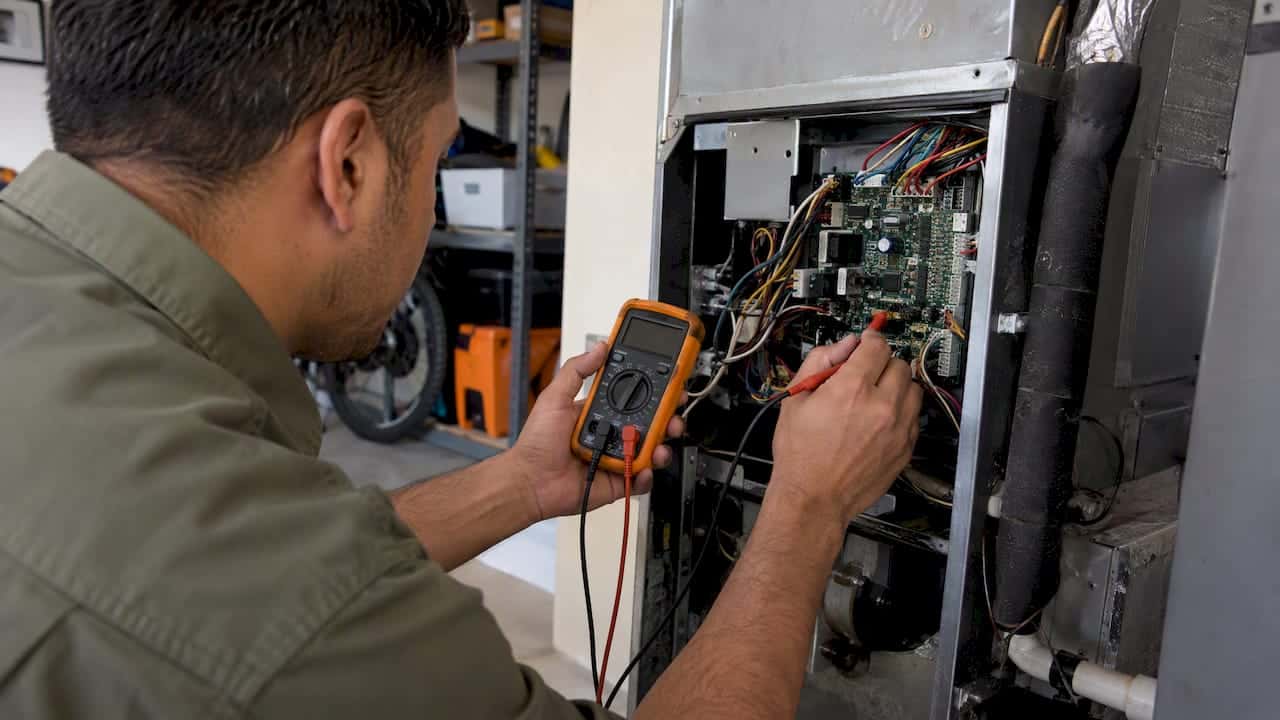
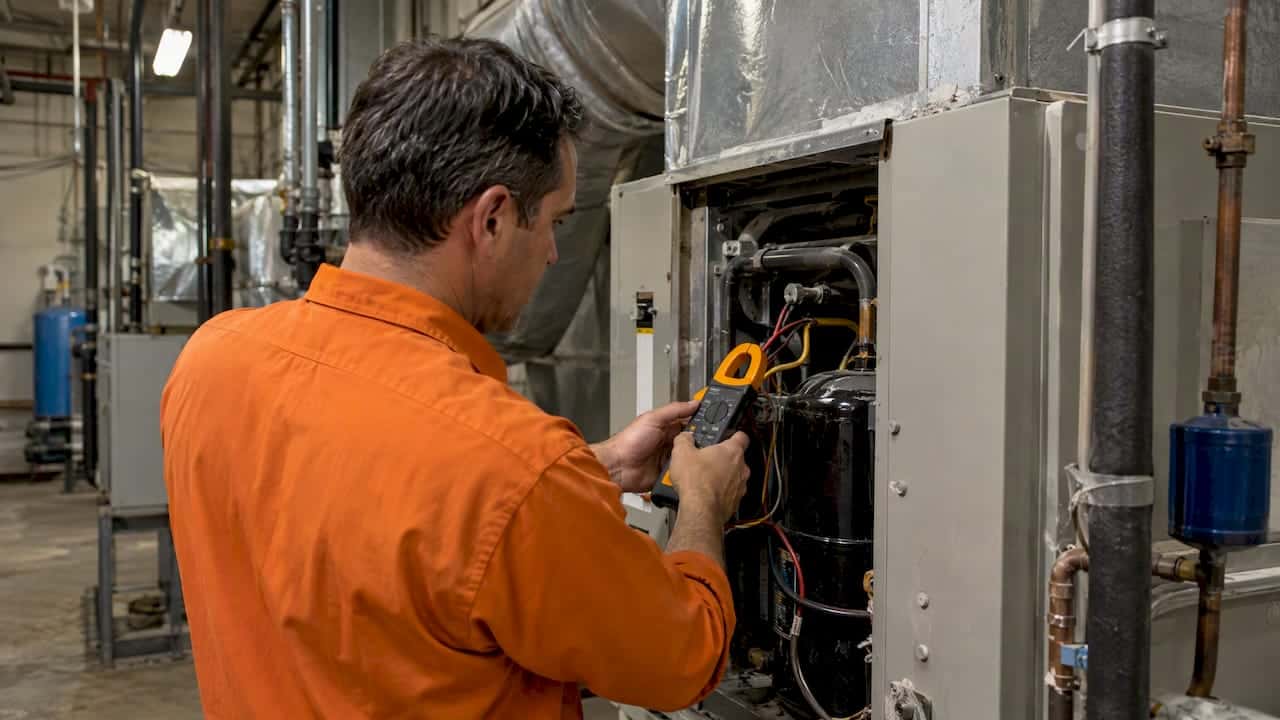
- Ask your technician to test the contactor. During any service visit, ask specifically whether the contactor was inspected and what condition the contacts are in. A technician can measure coil resistance and check contact gap with simple tools. This takes minutes and gives you a clear picture of remaining service life.
- Enroll in a maintenance plan. A structured annual maintenance plan includes contactor inspection as a standard checklist item. This removes the burden of remembering to schedule service and ensures nothing gets skipped.
- Act on early warnings. If you notice any of the symptoms described earlier, such as buzzing, intermittent operation, or a unit that won’t start, call for service promptly. Waiting turns a $250 repair into a potential compressor replacement costing several times more.
Regular system tune-ups catch contactor wear before it leads to total failure. A well-maintained contactor can last the full service life of your HVAC system. A neglected one can fail in just a few seasons.
Key Takeaways
The HVAC contactor is a small electromechanical relay that controls 240-volt power to your compressor and fan, and its failure is the most common cause of outdoor unit electrical breakdown.
| Point | Details |
|---|---|
| Core function | The contactor closes a 240V circuit when your thermostat sends a 24V signal to start cooling. |
| Failure symptoms | Watch for buzzing, clicking, a unit that won’t start, or one that won’t stop running. |
| Replacement matching | Amperage, pole count, and coil voltage must match the original spec exactly to avoid damage. |
| Replacement cost | Expect $120–$400 including parts and labor, with the average around $250 for most homes. |
| Maintenance priority | Annual inspections catch pitting and wear early, preventing costly emergency repairs. |
Why every homeowner should know their contactor
I have been in this industry for over twenty years, and the contactor is the component that surprises homeowners the most. Not because it is complicated, but because it is so small. People expect the part that controls their entire outdoor unit to be something large and obvious. When I show them a contactor the size of a deck of cards, they are genuinely shocked.
What I have seen repeatedly is that homeowners who understand what the contactor does make much better decisions when something goes wrong. They do not panic when I tell them the outdoor unit needs a new contactor. They understand it is a wear part, like a brake pad on a car. They also ask better questions: “How worn are the contacts?” “Should we replace the capacitor at the same time?” Those questions lead to smarter repairs and fewer callbacks.
The one thing I wish more homeowners would do is mention sounds during their annual service call. A faint buzzing from the outdoor unit that you have been ignoring for two weeks is exactly the kind of clue that tells me a contactor is on its way out. Catching it during a scheduled visit costs a fraction of what an emergency call costs in the middle of a heat wave.
My honest advice: treat your contactor like any other wear part. Ask about it at every service visit. If your technician says it is showing pitting or the contacts are getting thin, replace it. The cost is low. The peace of mind is worth every dollar.
— Leo
LC Heating and Air Conditioning can diagnose your contactor today
When your outdoor unit is buzzing, clicking, or simply not running, the contactor is often the first place to look. LC Heating and Air Conditioning has been diagnosing and replacing HVAC contactors across Los Angeles for over twenty years, with certified technicians who carry the right parts on every truck.
Same-day AC repair service is available throughout Los Angeles, with flat-rate pricing so you know the cost before any work begins. There are no surprise diagnostic fees and no pressure to replace parts you do not need. Whether you need a contactor swap or a full HVAC system inspection, LC Heating and Air Conditioning delivers honest answers and reliable repairs. Call (323) 970-3113 or book online to get your system running right.
FAQ
What does an HVAC contactor do?
An HVAC contactor is an electromechanical switch that closes a 240-volt circuit to power your air conditioner’s compressor and outdoor fan when the thermostat calls for cooling. Without it, the outdoor unit cannot receive the power it needs to run.
How do I know if my AC contactor is bad?
Common signs include an outdoor unit that won’t start, a unit that won’t stop running, rapid clicking or buzzing from the condenser cabinet, and intermittent operation. Visible pitting or burn marks on the contacts confirm the part needs replacement.
Can I replace an HVAC contactor myself?
DIY replacement is not safe because capacitors inside the condenser unit store a lethal electrical charge even after the power is disconnected at the breaker. A licensed HVAC technician has the tools and training to discharge stored energy safely.
How long does an HVAC contactor last?
A contactor’s lifespan depends on how many times it cycles each season and the local climate conditions. In high-use climates like Los Angeles, contactors typically show significant wear within 5–10 years and are considered a consumable part by certified technicians.
How much does it cost to replace an AC contactor?
Replacement costs range from $120 to $400 including parts and labor, with the national average around $250 for a standard residential system. Technicians often recommend replacing the run capacitor at the same time to prevent a second service call.
Recommended
Leo, Owner & Lead Technician at LC Heating & Air
Leo leads LC Heating & Air as an owner-operator and holds California CSLB C-20 HVAC license #1073586. His guides focus on practical diagnostics, safe repair decisions, and clear advice for Los Angeles homeowners.