- Evaporative Cooler vs AC: How Each System Actually Cools Air
- Evaporative Cooler Pros and Cons Compared to AC
- Which Climates and Homes Favor Each Cooling Method?
- What Installation and Maintenance Actually Look Like
- Evaporative Cooler vs Air Conditioner: Energy and Running Costs
- When Should You Choose Evaporative Cooling Over AC?
- LC Heating and Air Conditioning’s Take on Making This Call
- The Homeowner Checklist Matters More Than the Theory
- Get a Straight Answer From LC Heating and Air Conditioning
- Sources
- FAQ
- Recommended
If your summers are dry and your home can vent to the outdoors, an evaporative cooler will usually run cheaper and simpler. If you live somewhere humid, your house is sealed and insulated, or you need reliable temperature control regardless of the weather outside, a refrigerant-based air conditioner or heat pump is the better investment. The tradeoff comes down to humidity, airflow, and how much upkeep you’re willing to do.
TL;DR:
- Evaporative coolers are most cost-effective in dry, ventilated regions but require constant exhaust of humid air to prevent comfort issues.
- Air conditioners provide dehumidification and stable indoor temperatures but are more expensive to operate in humid or tightly sealed homes.
- Water consumption and frequent pad maintenance are significant operational considerations for evaporative coolers, especially in hard-water areas.
- In humid climates or sealed homes, a heat pump or central AC is generally the better investment due to consistent cooling and humidity control.
- Proper ventilation is the primary factor in choosing between systems, and a professional diagnosis ensures correct sizing and long-term savings.
Evaporative Cooler vs AC: How Each System Actually Cools Air
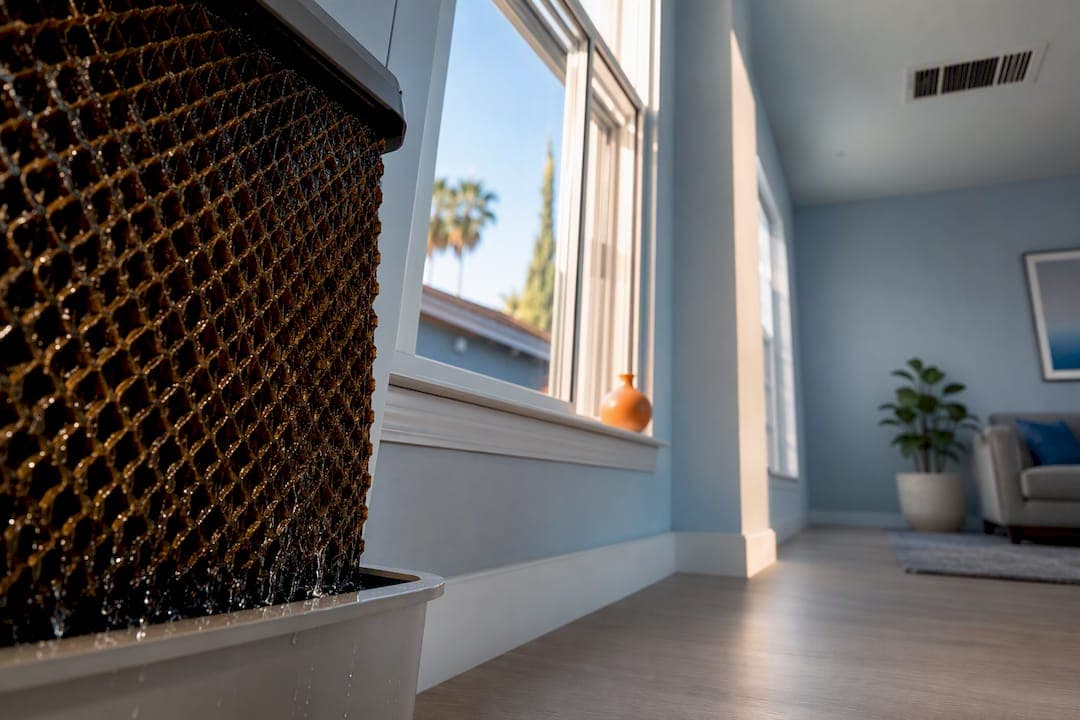
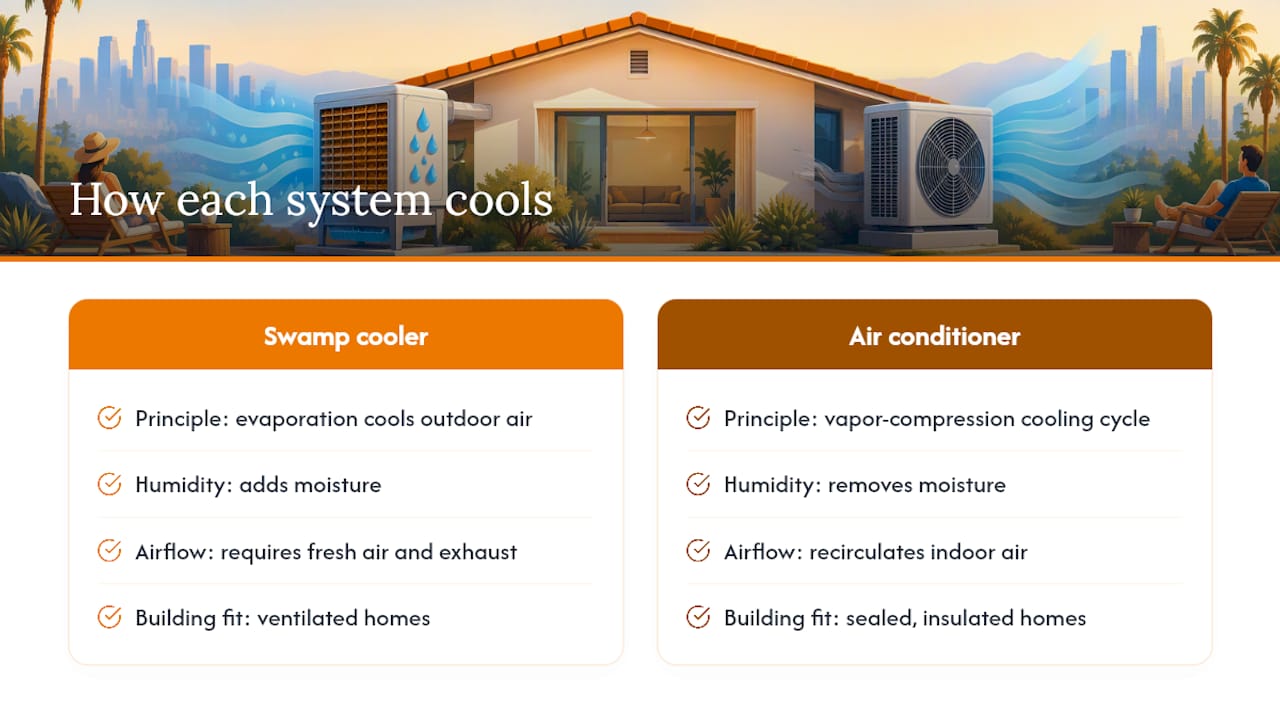
An evaporative cooler, often called a swamp cooler, pulls outdoor air through water-saturated pads. As the air passes through, water evaporates and pulls heat out of the air, dropping the temperature before a fan pushes it into your home. This is the same principle behind sweating: evaporation removes heat. The catch is that this process adds humidity to every cubic foot of air it produces, and it only works when that moist air has somewhere to escape.
An air conditioner works on a completely different principle: vapor compression. Refrigerant absorbs heat from indoor air, carries it outside, and releases it there. The system recirculates and cools the same indoor air over and over, which also strips out humidity as a side effect of the cooling process.
That single difference explains almost every other tradeoff in this comparison. Evaporative cooling needs a constant supply of fresh outdoor air and an exhaust path, usually an open window or vent. Air conditioning needs a sealed, insulated envelope to keep the cooled, dehumidified air from leaking back out. Put a swamp cooler in a tightly sealed house and it will struggle. Put central air in a drafty older home and you’ll pay for it every month on your utility bill.
Evaporative Cooler Pros and Cons Compared to AC
Evaporative coolers shine on operating cost in dry regions. Because they don’t run a compressor, they draw a fraction of the electricity an AC unit needs, which is the core reason Portacool markets them as a low-cost cooling option for arid climates. They also bring in 100% fresh outdoor air rather than recirculating the same indoor air, which can cut down on stuffiness and some odors, though that incoming air isn’t filtered the way a modern HVAC system filters recirculated air.
The tradeoffs are real. Evaporative units consume water, sometimes several gallons an hour during peak heat, and they need open windows or vents to exhaust the humid air they produce. Skip that step and indoor humidity climbs, comfort drops, and mold risk goes up.
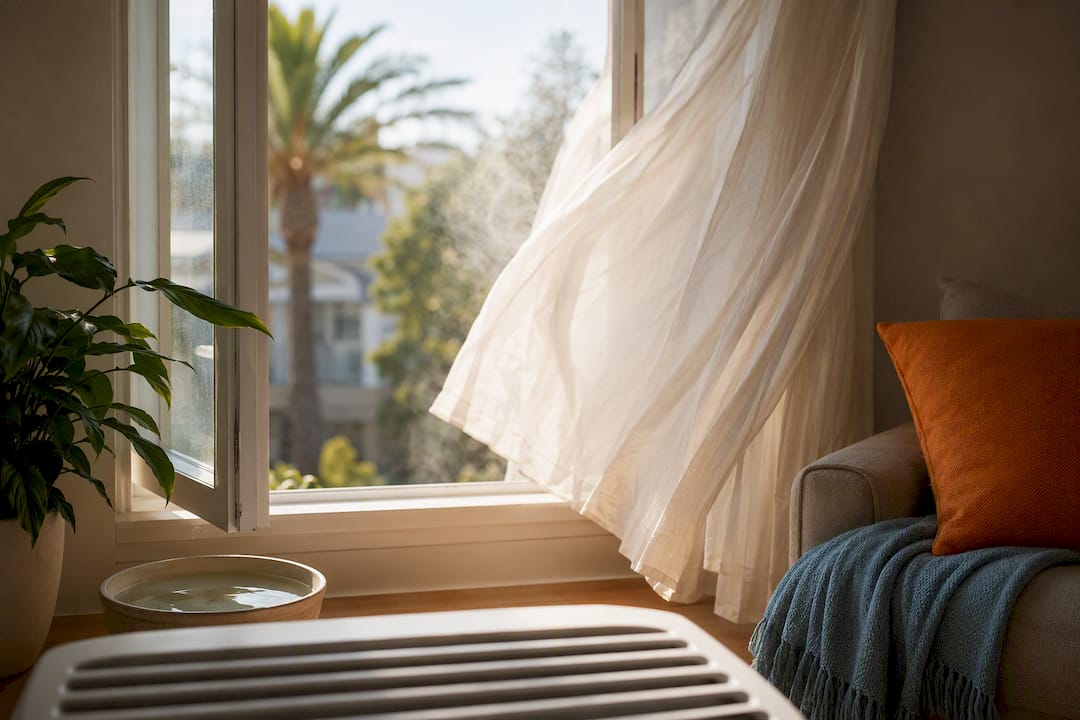
Air conditioners cost more to run but deliver something evaporative cooling can’t: dehumidification and consistent temperature control regardless of outdoor conditions. They’re the only realistic option for sealed, well-insulated homes.
Pro Tip: Don’t judge an evaporative cooler by its sticker price alone. Factor in pad replacement, water use, and the fact that it can’t dehumidify. In a humid summer, that last point costs you more comfort than the electric bill ever saves you.
Quick comparison:
- Energy use: Evaporative coolers use far less electricity than AC compressors.
- Humidity control: AC removes moisture; evaporative coolers add it.
- Air source: Evaporative brings in fresh outdoor air; AC recirculates and filters indoor air.
- Maintenance load: Evaporative pads need frequent attention; AC maintenance centers on refrigerant and coils.
- Water use: Evaporative coolers consume water directly; AC does not.
Which Climates and Homes Favor Each Cooling Method?
Local humidity is the deciding factor, not personal preference. Evaporative cooling loses effectiveness as outdoor relative humidity rises, which is why it’s mainly recommended for arid and semi-arid regions with hot, dry summers.
Here’s how to read your own situation:
- Evaporative cooler works well: Low summer humidity, older or naturally ventilated homes, windows that open easily, and a household willing to manage water use.
- AC or heat pump is necessary: Coastal or tropical humidity, tightly sealed and insulated construction, or a need for stable indoor temperature and air quality year-round.
- Hybrid approach: Many homeowners in mixed climates run an evaporative cooler through the dry, hot stretch of summer and switch to AC or a heat pump once humidity climbs, a strategy that balances energy savings with comfort. Our own coverage of swamp coolers and their local suitability goes deeper into which properties benefit most.
What Installation and Maintenance Actually Look Like
Evaporative coolers mount on a roof, in an attic, or in a window, and they need ducting or direct airflow into living space plus a water line. Expect to replace or clean pads multiple times a season and to keep an eye on the water reservoir.
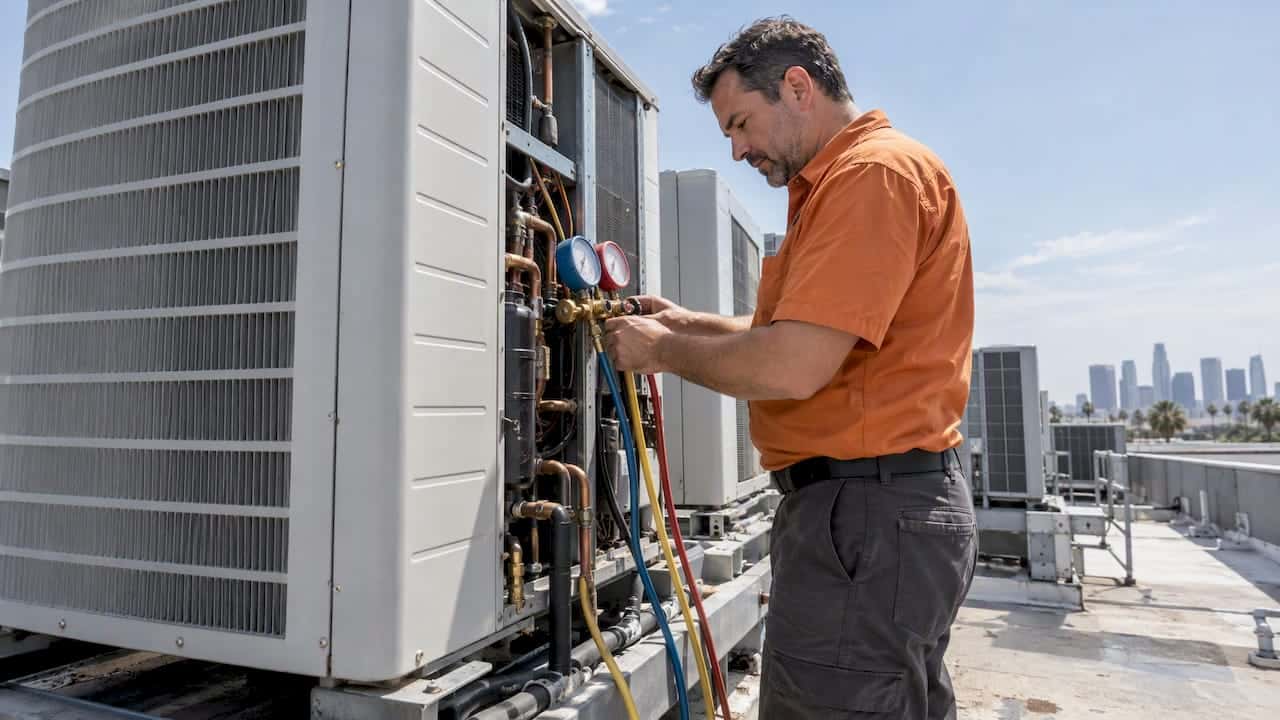
Air conditioners, whether ducted or ductless mini splits, require licensed refrigerant handling, proper sizing, and often permitting depending on your city. This isn’t a DIY afternoon project.
- Evaporative systems need pad checks every few weeks in peak season and a full pad swap once or twice a year.
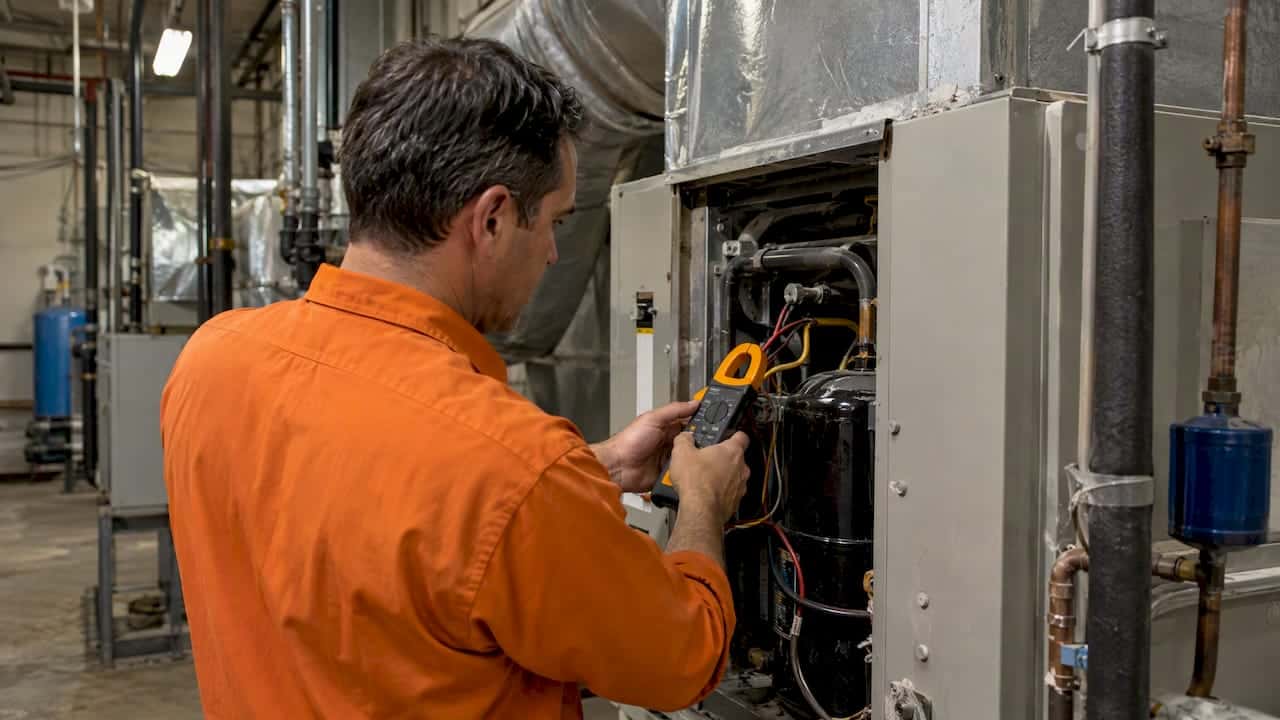
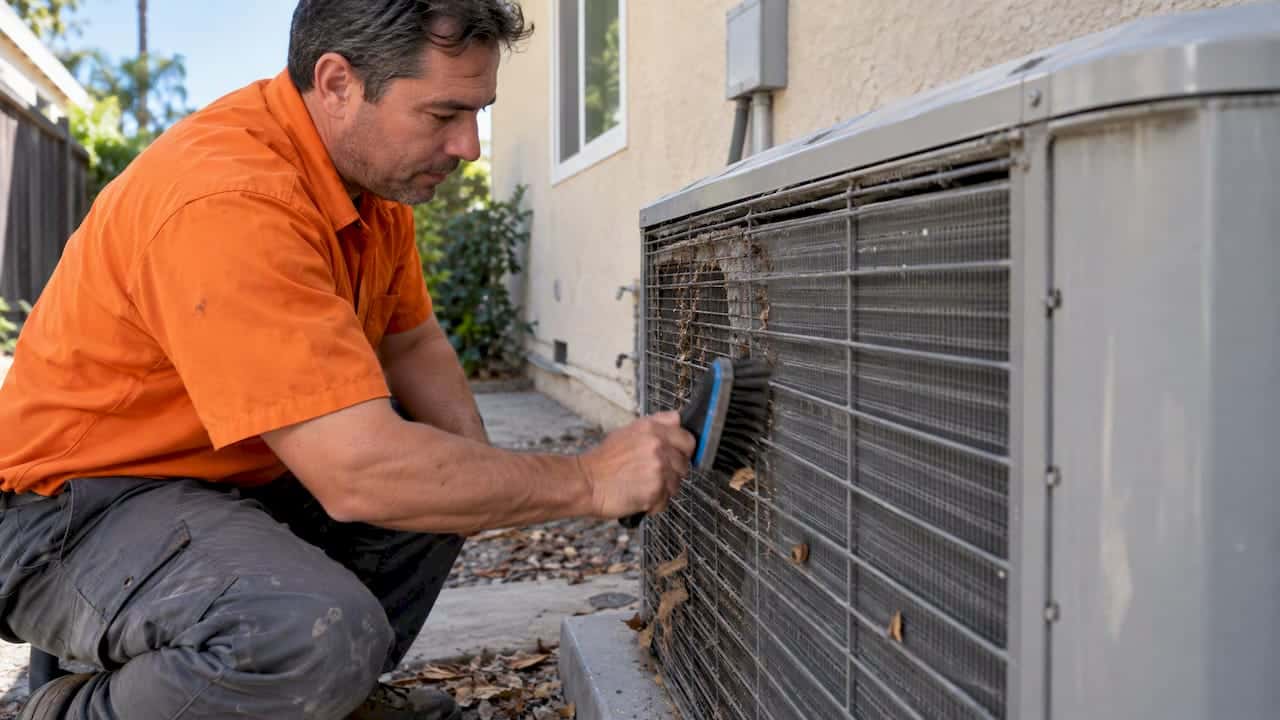
- AC systems need annual coil cleaning, filter changes every one to three months, and refrigerant-level checks by a technician.
- Both systems suffer when neglected: evaporative units grow mold and mineral scale, while AC units lose efficiency and can freeze coils.
Neglect shows up differently depending on the system. Evaporative coolers in hard-water regions face mineral buildup and corrosion that shortens pad life fast if you skip cleaning. Softening or treating feed water measurably extends component life on these units.
Pro Tip: If you’re on hard water and considering an evaporative cooler, ask about scale-control treatment during installation. It’s a small upfront step that saves you from replacing pads twice as often.
Evaporative Cooler vs Air Conditioner: Energy and Running Costs
Vendors advertise evaporative coolers as costing only a few dollars a day to run in ideal dry conditions, largely because they skip the compressor that drives most of an AC unit’s electricity draw. That number swings hard with your local climate and how many hours a day the unit runs, so treat it as a starting point, not a promise.
Air conditioning’s running cost depends on more variables: your electricity rate, how humid the air is (dehumidification burns extra energy), how long the system runs each day, and the unit’s efficiency rating, measured by SEER for AC systems. A higher SEER rating means more cooling per dollar of electricity, which matters more in humid climates where the compressor works overtime.
What actually drives your bill:
- Electricity rate in your area, since this multiplies every hour of runtime.
- Humidity levels, which force AC systems to work harder to pull moisture out of the air.
- Runtime hours, since a system left running all day costs far more than one cycling on a thermostat.
- System efficiency, where a higher SEER rating on an AC or heat pump reduces cost per degree of cooling.
- Maintenance condition, since dirty coils or clogged pads make either system work harder for the same result.
When Should You Choose Evaporative Cooling Over AC?
Run through this before you call anyone:
- Check your average summer relative humidity. Below roughly 30 to 40% most days, evaporative cooling has a real shot. Above that, lean toward AC.
- Confirm you can ventilate. If your windows don’t open easily or your home is heavily sealed, evaporative cooling won’t perform.
- Weigh water hardness and pad upkeep against your willingness to do seasonal maintenance.
- Compare upfront installation cost against long-term running cost for your specific home size and climate.
When you do talk to a contractor or technician, ask these questions directly:
- What’s the expected energy use for my home’s square footage and climate?
- How often will I need pad replacement or water treatment?
- What size system does my home actually need, and why?
- Do you offer a maintenance plan, and what does it cover?
- Given my climate, would a heat pump or hybrid setup make more sense than a single-system approach?
LC Heating and Air Conditioning’s Take on Making This Call
We’ve spent over twenty years working on HVAC systems across Los Angeles, from century-old bungalows to modern multi-zone heat pump installs and commercial VRF systems, and the pattern is consistent: homeowners who guess on cooling type end up paying twice, once for the wrong install and again for the fix. Los Angeles’ dry inland pockets and humid coastal stretches often sit blocks apart, which is exactly why a blanket recommendation fails here.
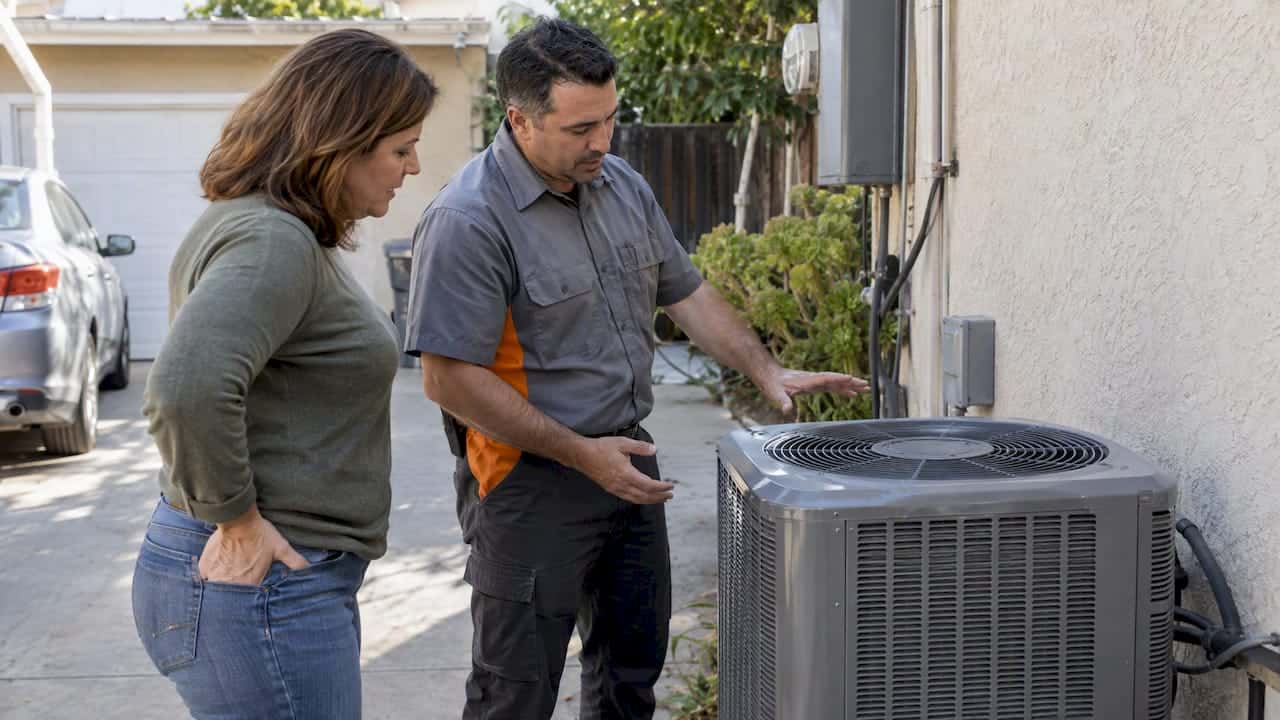
Our approach emphasizes honest diagnostics and transparent pricing, avoiding surprise fees and pressure to replace systems unnecessarily. If you’re weighing an evaporative cooler against a heat pump or central AC, a same-day diagnostic visit gives you real numbers for your specific home instead of a national average. Explore our heat pump and mini split installation options if humidity or sealed construction points you toward refrigerant-based cooling.
The Homeowner Checklist Matters More Than the Theory
Most articles on this topic spend paragraphs on thermodynamics and never get around to what you actually need: a way to decide. Here’s my honest read after digging through how these systems perform in practice.
The conventional advice, “check your humidity, pick accordingly,” is correct but incomplete. It skips the maintenance reality. An evaporative cooler that saves you money on electricity can quietly cost you just as much in pad replacements and water treatment if you’re on hard water and never planned for it. That’s the gap nobody mentions upfront.
What I’d prioritize first isn’t the cooling method at all. It’s ventilation. A home that can’t exhaust moist air rules out evaporative cooling regardless of how dry your summers run. Confirm that before you compare price tags or SEER ratings. Everything else in this decision is secondary to that one structural fact.
— Leo
Get a Straight Answer From LC Heating and Air Conditioning
LC Heating and Air Conditioning gives you what most HVAC quotes skip: a flat-rate price before any work starts, and a diagnosis based on what your home actually needs, not what earns the biggest invoice. If you’re considering an evaporative cooler, a mini split, or a full heat pump system, a diagnostic visit can provide real numbers tailored to your house rather than estimates from brochures.
We’ve installed and repaired everything from swamp coolers in older Los Angeles homes to full commercial VRF systems, so whether you need a heat pump installed or just want an honest opinion on repairing what you’ve got, we can walk you through it. Ready to find out which system actually fits your house? Book a diagnostic or repair visit and get a flat-rate answer instead of another estimate that changes once the technician shows up.
Sources
- Evap Coolers Vs. A/C: What’s The Difference? — Portacool
- Evaporative coolers — Pima County Library
- Evaporative cooling pros and cons — HVAC Informed
- How does humidity affect evaporative cooling — Soam Silver
FAQ
Is Evaporative Cooling Better Than AC?
Neither is universally better. Evaporative cooling costs less to run and works well in dry, ventilated climates, while AC gives you dehumidification and consistent control that evaporative systems can’t match in humid or sealed homes.
How Do Amish Communities Cool Homes Without Air Conditioning?
Many rely on passive strategies like thick masonry walls, cross ventilation, shaded porches, and evaporative methods similar to swamp coolers rather than mechanical refrigeration. These approaches work best in climates with manageable humidity and homes designed for airflow.
What Is a Downside of Evaporative Cooling?
The biggest downside is added humidity: evaporative coolers raise indoor moisture levels and need constant ventilation to exhaust that moist air, or comfort drops and mold risk increases. They also require more frequent pad maintenance than a typical AC filter change.
What Is the $5,000 Rule for AC?
This is a rough guideline some technicians use to decide between repairing and replacing an aging AC unit: multiply the repair cost by the age of the system, and if that number exceeds $5,000, replacement usually makes more financial sense than another repair. It’s a starting point for the conversation, not a strict rule, since energy efficiency gains and your home’s specific needs also factor in.
How Much Does LC Heating and Air Conditioning Charge for a Service Call?
A standard service call starts at $125, with flat-rate repair pricing determined after an honest diagnostic, so there are no surprise fees added later.
Recommended
Leo, Owner & Lead Technician at LC Heating & Air
Leo leads LC Heating & Air as an owner-operator and holds California CSLB C-20 HVAC license #1073586. His guides focus on practical diagnostics, safe repair decisions, and clear advice for Los Angeles homeowners.