If your AC dies in a heat wave, call (323) 970-3113. We answer 24/7, diagnose the fault fast, and most emergency repairs are completed same-visit. No extra after-hours markups—just a straight estimate before any work starts.
Emergency AC Repair & 24-Hour Service in South Pasadena
LC Heating & Air provides emergency AC repair in South Pasadena — including 24-hour AC repair, emergency air conditioning repair, same-day HVAC service, emergency heating repair. Whether you need same-day service, a written estimate, or help deciding between repair and replacement, our licensed technicians handle every make and model.
We repair and service all major HVAC brands in South Pasadena, including Carrier, Lennox, Trane, Goodman, Hisense, and LG, and older or discontinued units. No matter the manufacturer, we diagnose the problem accurately and give you an upfront price before any work begins.
South Pasadena's tree-lined streets and Craftsman bungalows look great, but the HVAC systems in these older homes often aren't built for today's extreme heat. When a capacitor fails mid-August or the condenser fan seizes on a 100°F afternoon, you need someone who understands both the equipment and the quirks of a 1920s house. That's what we do. LC Heating & Air has been working in South Pasadena since 2020, and I've been doing this work for over 20 years. We know which repairs buy you time and when it's smarter to plan a replacement on your own schedule.
Every emergency call starts the same way: you call (323) 970-3113, a technician picks up, gets your address and a quick symptom description, and we roll. No answering service, no callback in the morning. We target 60–90 minute emergency response in our primary LA area, which includes South Pasadena, Pasadena, Alhambra, San Marino, and Highland Park. For homes farther out—say up into the hills—we'll give you an honest ETA when you call.
Local HVAC considerations
Mission Street, Monterey Hills, Marengo Avenue, Garfield Park, Raymond Hill, and all of 91030
Pasadena (91101), Alhambra (91801), San Marino (91108), Highland Park (90042), San Gabriel (91776)
Craftsman bungalows, Spanish Colonial Revival, mid-century ranch, duplexes, small multifamily
Side yards, behind gates, attic units in ranch-style homes
San Gabriel Valley heat; tree canopy reduces cooling loads vs. less-shaded areas
What We See Most in South Pasadena Emergency Calls
The most common emergency call in South Pasadena is a failed run capacitor. These parts sit inside the outdoor condenser unit, and they handle electrical load every time the compressor starts. In older homes with original electrical panels—especially the ones with pushmatic or fuse-type panels—voltage fluctuations can stress capacitors even more. When one fails, the compressor hums but won't start, or the fan trembles without spinning. That's a 30-minute repair if we have the right cap on the truck, and we usually do.
Refrigerant leaks are another frequent no-cooling cause, but that's not a quick fix. If a leak is small, we can sometimes top off the charge temporarily to get you through a heat advisory. But the real repair—locating the leak, fixing it, and recharging—takes more time and often means scheduling a separate visit. We're straight with you about whether a patch gets you through the weekend or if it's time to start thinking about a replacement.
How South Pasadena's Older Homes Affect Emergency Repairs
Many South Pasadena homes were built in the 1920s through 1950s. That means retrofitted ductwork, often undersized or routed through attics that hit 140°F in summer. When we respond to an emergency, we check more than just the unit—we look at airflow, filter condition, and whether the return is starved. A system that worked fine for 15 years can suddenly fail because a filter collapsed or a register got blocked by furniture during a renovation. That's not a mechanical failure, but it's still an emergency when it's 95°F and no air is moving.
Mini splits are becoming more common in South Pasadena as homeowners add cooling to additions or attic conversions without extending ductwork. If your mini split stops cooling, the same principles apply: check for a fault code, clean the filter, and make sure the outdoor unit isn't blocked by overgrown landscaping. But mini splits have their own failure patterns—often a failed fan motor or a miscommunication between the indoor head and the outdoor unit. We handle those same-day too.
How We Diagnose an Emergency AC Failure
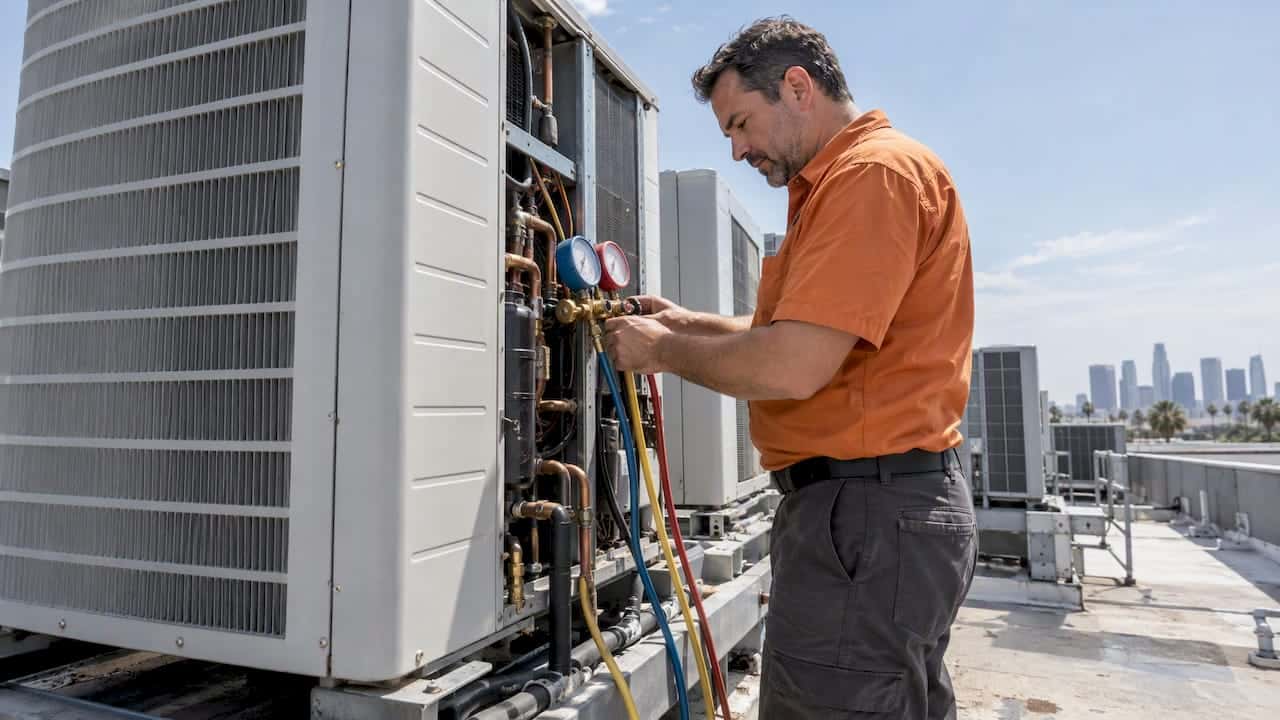
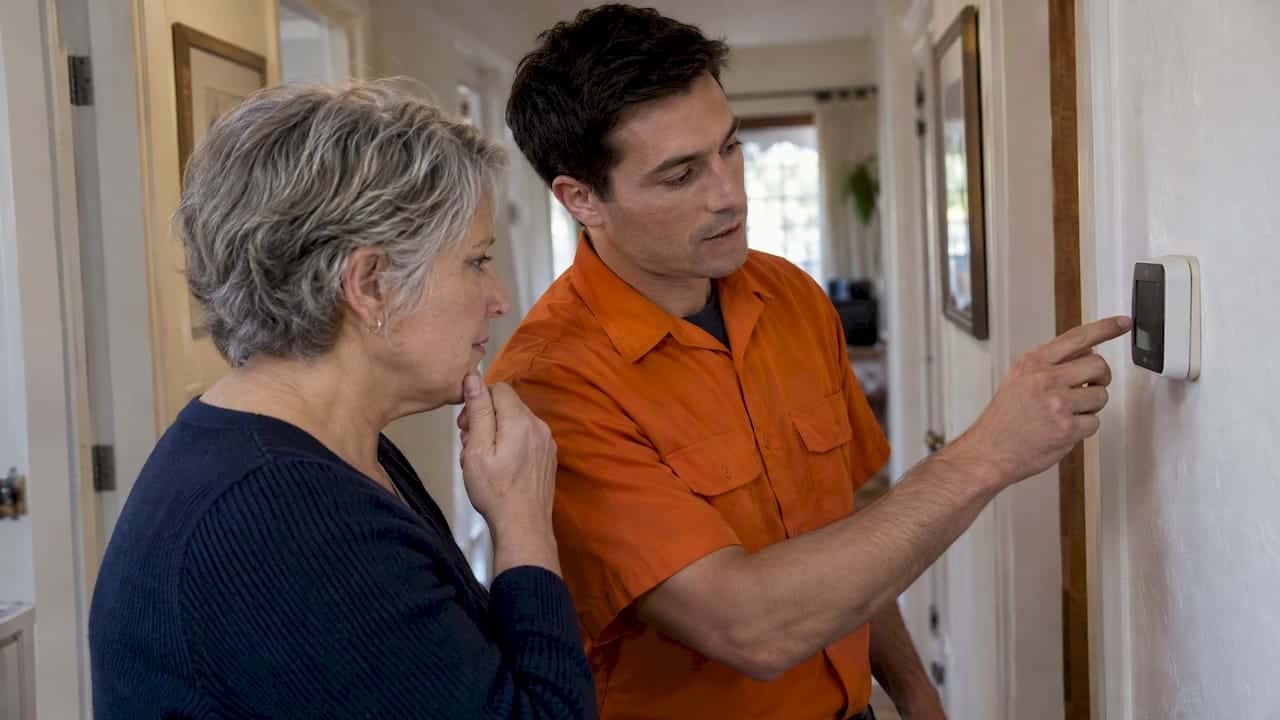
When I arrive, I start with the simplest thing: is the thermostat calling for cooling? I've walked into houses where the thermostat was dead because the batteries were shot or the Wi-Fi went down. Check that first, and sometimes that's the whole fix. Next, I look at the outdoor unit. Is the fan spinning? Is the compressor humming or clicking? A buzzing sound with a still fan almost always points to a bad capacitor or a seized fan motor. I pull the cap, test it with a meter, and if it's dead, I replace it on the spot.
If the system runs but blows warm air, I check refrigerant pressures and look for signs of a leak. A quick top-off can restore cooling temporarily, but I'll tell you if that's a band-aid and what a permanent repair would cost. I also inspect the indoor coil and the condensate drain line. A clogged drain that's caused the safety float switch to trip is a common no-cooling call—clean the line, reset the switch, and you're back in business. I write up what I found, what I fixed, and what you should watch for going forward.
When to Repair and When to Replace After an Emergency
A capacitor failure on a 3-year-old system? Repair it, no question. The same failure on a 20-year-old R-22 unit that's already had two compressor starts and a coil leak? That's a different conversation. I won't push a replacement if a repair gets you five more years of reliable cooling. But I will tell you if the math doesn't work. If a major repair like a compressor or evaporator coil costs half the price of a new, efficient system, it's usually smarter to replace—especially with the rebates available through SoCalGas and the Inflation Reduction Act.
Your repair-versus-replace decision also depends on what else is going on in the system. If we're already in there fixing a leak and the ductwork is falling apart, that factors in. If the electrical panel is ancient and the new system needs a subpanel, that's a cost you should know upfront. We give you a written estimate with options, and we don't pressure you either way.
Cost Factors and Rebates for South Pasadena AC Work
Emergency service calls range from $125–$200, with no hidden overtime fees. Repair costs typically land between $175–$800 depending on the issue. A capacitor swap is on the lower end; a leak search and refrigerant charge is higher. We give you the total price before we start any repair, so there are no surprises.
If a replacement ends up being the better move, South Pasadena homeowners can qualify for SoCalGas rebates and federal tax credits through the Inflation Reduction Act. These can shave hundreds off the cost of a high-efficiency heat pump or air conditioner. We can point you to the right forms, but we don't invent numbers—check current rebate availability when you're ready.
Access and Scheduling in South Pasadena
South Pasadena's older homes often have outdoor condenser units tucked behind gates, in side yards, or on flat roofs. If your unit is locked behind a gate, let us know when you call so we're not stuck waiting for a code. Attic units are common in ranch-style homes, and we carry portable lights and safety gear to access tight crawlspaces. We schedule same-day wherever possible, and we prioritize households with vulnerable members during heat advisories.
Emergency calls are answered within 30 minutes (that's phone pick-up, not arrival). We dispatch from our Pasadena/East LA hub, so we're usually in South Pasadena within 30–40 minutes of the call. For non-urgent service, we can usually book same-week. Call (323) 970-3113 and we'll fit you in.
Common Mistakes Homeowners Make During an AC Emergency
I see the same mistakes over and over. First: ignoring a tripped breaker. If the AC breaker keeps tripping, that's not a random glitch—it's an electrical fault. Resetting it repeatedly risks damaging the compressor or starting a fire. Second: letting the system run when the outdoor fan isn't spinning. That overheats the compressor and turns a $200 capacitor fix into a $2,000 compressor replacement. Third: flooding the indoor unit. If water is coming from the air handler, shut it off immediately—running it longer just worsens the water damage.
Another common mistake is waiting too long to call. If your AC is blowing warm air but you delay because you think it's a minor issue, you risk freezing the coil and damaging the compressor. And if you have an older R-22 system and you know it's leaked before, a warm-air call is often the sign that it's time to make a decision. We can help you evaluate options without pressure.
Health and Safety During South Pasadena Heat Events
When temperatures hit 95°F or higher, a failed AC is a health emergency. Elderly residents, infants, and people with heart or lung conditions are most vulnerable. We prioritize those calls during heat advisories. While you're waiting for us, close blinds, move to the coolest room, use fans, and stay hydrated. We also recommend knowing the location of the nearest cooling center—the South Pasadena Library and the local senior center are common options during heat waves.
Beyond the immediate heat risk, an AC failure can introduce other safety issues: a shorted compressor can trip the breaker repeatedly, a flooded condensate pan can damage drywall and create mold, and a refrigerant leak can be hazardous in enclosed spaces. We address all of these during our diagnostic visit. If we can't fix the cooling immediately, we at least stabilize the system and give you steps to stay safe until we return.
Common AC Issues & Diagnostic Guide in South Pasadena
Understanding these common system symptoms helps identify whether a simple fix or a professional repair is needed.
AC blowing warm air
Typical Cause: Failed run capacitor or dirty outdoor condenser coil restricting airflow
Quick Action: Turn system off to prevent compressor damage and check filter
Water leaking around unit
Typical Cause: Clogged condensate drain line backing up from heavy summer cooling run
Quick Action: Clear drain trap or use a shop vac to clear the drain line
Ice forming on AC lines
Typical Cause: Restricted airflow from dirty air filter or low refrigerant level (leak)
Quick Action: Shut off cooling, run fan only to melt ice, change air filter
System short-cycling
Typical Cause: Thermostat location issue, refrigerant leak, or oversized AC unit
Quick Action: Verify thermostat settings and clean debris around outdoor condenser
Is This an Emergency or Can It Wait?
If your AC is completely dead and indoor temperatures are climbing above 90°F, that's an emergency—especially if anyone in the home is elderly, very young, or has a medical condition. Call (323) 970-3113 and we'll dispatch same-day. If the system is running but not cooling well, or you have a minor issue like a noisy fan, you can usually schedule a same-week visit without the emergency service fee. We'll help you decide on the phone.
The goal is to keep you cool safely and avoid turning a small repair into a big one. If you're unsure, err on the side of calling. We'd rather talk you through it than have you wake up to a 95°F house tomorrow morning.
How the visit works
Call (323) 970-3113. A technician answers, gets your location and symptoms, and dispatches immediately with an honest ETA.
We diagnose the fault immediately on arrival—most common emergency failures are identified within 15 minutes.
We repair with parts stocked on the truck. Most emergency AC repairs are completed same-visit.
We run the system through a full cooling cycle before leaving and confirm the repair is holding.
Cost factors we review before quoting
- • Emergency service call fee: $125–$200 (no hidden overtime charges)
- • Capacitor replacement: typically $175–$300
- • Refrigerant leak search and repair: $350–$800
- • Fan motor replacement: $400–$700
- • Compressor replacement: usually triggers a replacement discussion for older units
- • Rebates and tax credits available for qualifying new installations (SoCalGas, Inflation Reduction Act)
Useful next steps
Emergency AC Repair in South Pasadena at a glance
- • LC Heating & Air provides 24/7 emergency AC repair in South Pasadena.
- • Call (323) 970-3113 for 24/7 dispatch; emergency calls answered within 30 minutes.
- • CSLB #1073586 C-20 HVAC license. Company founded 2020; Leo has 20+ years of hands-on experience.
- • South Pasadena zip code 91030. Nearby: Pasadena, Alhambra, San Marino, Highland Park.
- • Written estimates provided before any repair work begins. No hidden after-hours fees.
- • Most common emergency failure: capacitor failure—typically a same-visit repair.
- • NATE-trained and EPA-certified technicians. Leo is pursuing NATE certification.
Our emergency ac repair process in South Pasadena
Reviewed by Leo, Owner & Lead Technician
This emergency ac repair guide for South Pasadena is reviewed for practical HVAC accuracy by Leo at LC Heating & Air. LC Heating & Air holds California CSLB C-20 HVAC license #1073586 and provides written estimates before approved work.
What South Pasadena customers say about emergency ac repair
Verified reviews from homeowners in South Pasadena and nearby neighborhoods who used our emergency ac repair service.
“LC installed a whole-house dehumidifier in our South Pasadena home. We had issues with condensation and a musty smell every summer. The unit has eliminated the problem and our air feels completely different inside.”
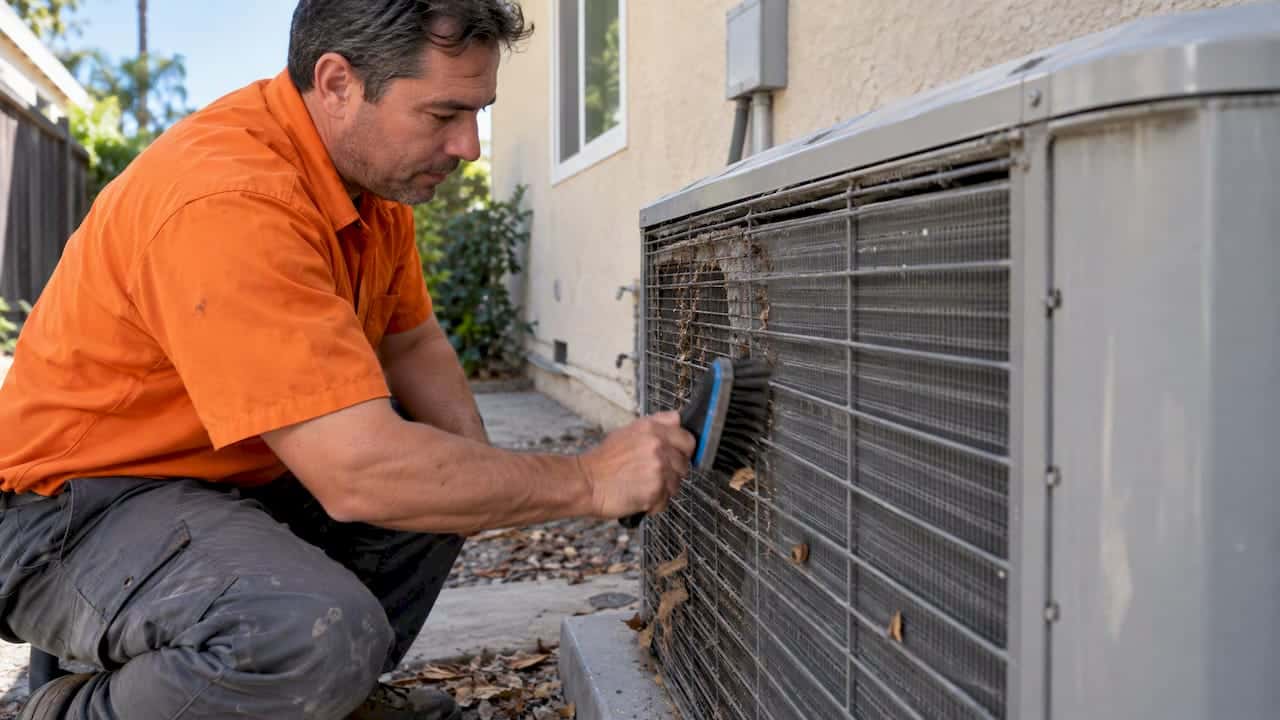
“AC wasn't cooling to setpoint even though it was running all day. LC found the condenser coils were completely clogged with cottonwood. Cleaned them on the spot and the system cooled my house 12 degrees in an hour.”
“LC replaced our entire HVAC system — new Carrier condenser, furnace, and coil. Leo walked us through every option without pressure. The install team was professional and clean. System runs perfectly and our electricity bill dropped about 30%.”