- TL;DR
- Safety first: what to do before you touch anything
- Step 1: Confirm the system and the breaker have power
- Step 2: Check whether the lamp is simply worn out
- Step 3: Tell a lamp problem from a ballast, wiring, or interlock problem
- Step 4: Choosing the right replacement lamp
- Why a UV light may seem to stop working without failing
- A quick checklist you can run in ten minutes
- Our perspective: fix the real cause, not the symptom
- When to stop troubleshooting and call a technician
- What a UV light repair visit with us looks like
- Keep the UV light working: simple upkeep
- Not sure whether to repair or upgrade?
- FAQ
- Sources
- Recommended

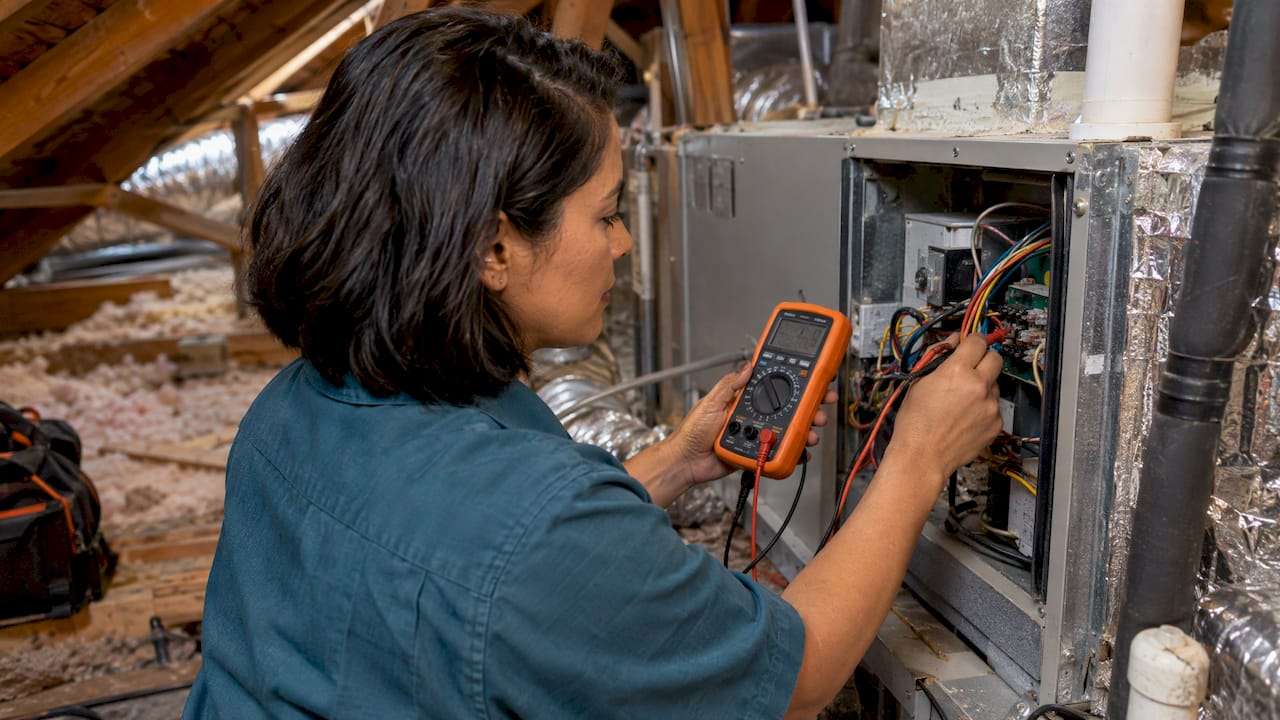
If the UV light in your HVAC system has stopped working, the cause is usually one of four things: a lamp that has reached the end of its life, a power problem such as a tripped breaker or loose connection, a failed ballast (the part that powers the lamp), or a safety interlock that is cutting power because an access panel is not seated. You can safely check the first two from the outside. The rest belongs with a licensed technician, because it means opening the air handler and working around electrical parts and UV-C light.
This guide walks you through the order we use: what to check first, how to tell a burned-out lamp from a power or ballast fault, how replacement lamps work, and the point where it is smarter to stop and call.
TL;DR
- Start with the simplest causes: power to the system, the breaker, and whether the lamp is simply past its replacement date.
- Never look directly at a lit UV-C lamp, and always cut power before opening any panel.
- A lamp that looks fine can still be dead, and a new lamp that will not light points to the ballast, wiring, or an interlock.
- Replacement lamps must match your system’s make, model, and lamp length, and used lamps contain mercury and need proper disposal.
- If the checks do not bring the light back, we can diagnose it with a flat-rate approach and no pressure to replace equipment.
Safety first: what to do before you touch anything
UV-C light is not like a regular bulb. Manufacturer instructions for HVAC UV systems say to disconnect power before servicing to prevent electrical shock, and never to look directly at a lit UV-C lamp, which can cause serious eye injury.
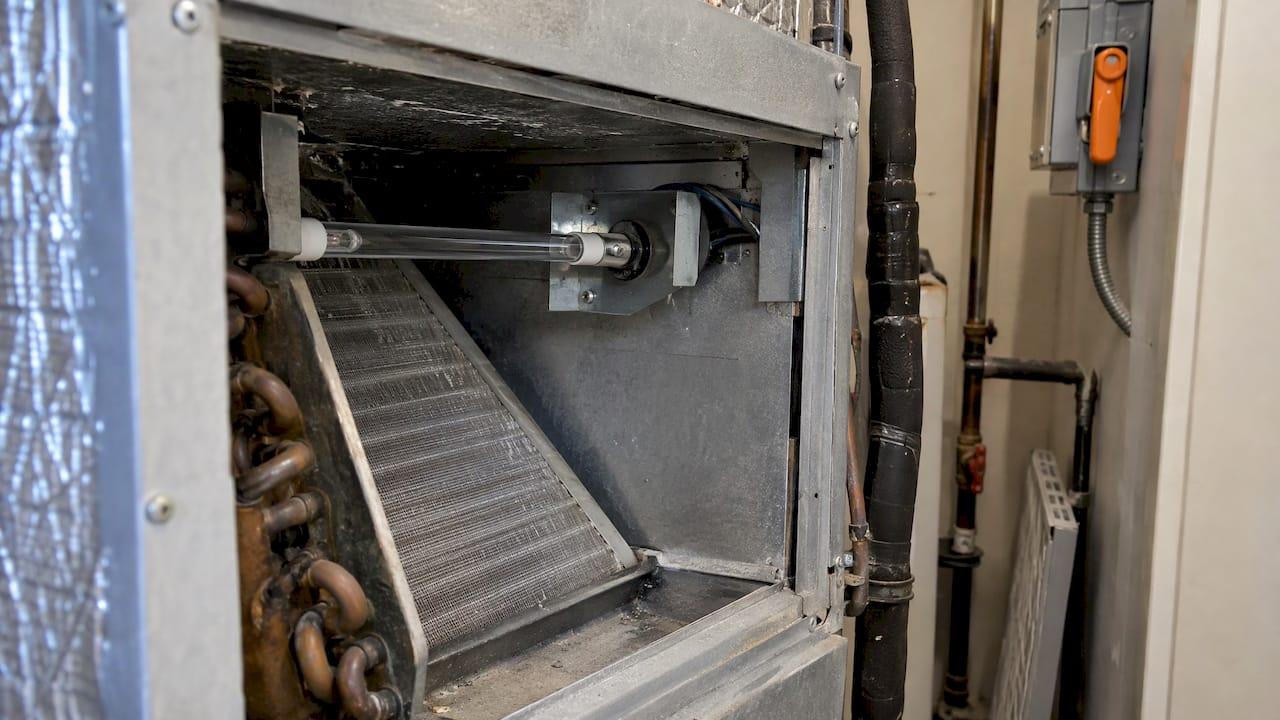
One service manual adds a few practical habits: wear safety glasses and gloves, and let the bulb cool for several minutes before you work on it. Most residential lamps sit inside the air handler or the coil compartment, so you are rarely supposed to see the light at all. Some systems have a small viewing window, and some have an indicator light on the outside of the cabinet. Use those instead of opening a panel to check.
Two rules keep the rest of this article safe to follow:
- Anything that requires removing a panel starts with the system switched off at the thermostat and the breaker or disconnect.
- If you are not comfortable around the wiring, stop at the outside checks below and call a professional.
Step 1: Confirm the system and the breaker have power
A UV light usually draws power from the air handler or from a dedicated low-voltage or line-voltage connection. If the air handler has no power, the lamp will not light either. Before you assume the lamp is dead, run these quick checks:
- Is the system running? Set the thermostat to fan on. If the blower does not start, the problem is bigger than the lamp. Our guide on what to do when your HVAC system will not turn on covers that path.
- Check the breaker and the service switch. A tripped breaker or a switched-off disconnect next to the air handler will take the light with it. If a fan problem is the real issue, check the breaker before blaming capacitors.
- Do a power reset. One manufacturer’s troubleshooting sheet for lamps that do not light recommends verifying power, checking connections, and resetting by turning power off for 10 seconds and back on. Our own walkthrough on resetting your HVAC fan and system shows the safe way to do a reset on the equipment itself.
- Look for an outside indicator. Some systems have a power light or a status light on a control box. Note what it shows (steady, off, or flashing) because that is useful information for a technician.
If the blower runs, the breaker is on, and the UV light is still dark, move to the lamp.
Step 2: Check whether the lamp is simply worn out
UV-C lamps do not burn out the way an old incandescent bulb does. Many keep glowing for a long time after they have lost most of their germicidal output, and others simply stop. That is why people often search for “HVAC UV lamp replacement” when the light is on but nothing seems to be happening, or when the light is out and the install date is long gone.
How often to change a lamp depends on the manufacturer and the lamp type. You should find the interval in your system’s manual or on the unit itself. Some systems make it easy: Aprilaire UV coil cleaner systems include a lamp change-out reminder decal so you can write the install date on the cabinet. If your unit has a similar label, check the date. If it is past the interval, replacing the lamp is the first fix to try.
What if you cannot find the date? Look for clues:
- A service sticker on the air handler from the last installer or maintenance visit.
- Paperwork or an invoice from when the system was installed.
- A model and serial number on the UV unit, which lets a technician look up the lamp and its rated life.
A lamp that “looks fine” may still be dead or spent. You cannot judge UV output by looking at a lit bulb, and you should not try to look at one. If you are unsure, a technician can confirm the lamp status safely.
Step 3: Tell a lamp problem from a ballast, wiring, or interlock problem
This is the part that separates a quick lamp swap from a repair visit. Most UV lamps are driven by a ballast, a small power supply that starts and regulates the lamp. The common failure patterns look like this:
| What you see | Most likely cause | Who should handle it |
|---|---|---|
| System has no power, light is off | Tripped breaker, off switch, or air handler fault | You can check the breaker; call us if it trips again |
| Blower runs, light never comes on, lamp is old | Lamp at end of life | Technician or confident installer with the correct lamp |
| New lamp installed, still dark | Ballast, socket, wiring, or interlock | Technician |
| Light flickers or flashes on and off | Failing lamp, loose connection, or ballast fault | Technician |
| Light works only with the panel pressed shut | Safety interlock or panel not seated | Technician |
| Indicator on the ballast flashes in a pattern | Fault code (voltage or lamp-life warning) | Check the manual, then call |
How a technician separates lamp from ballast
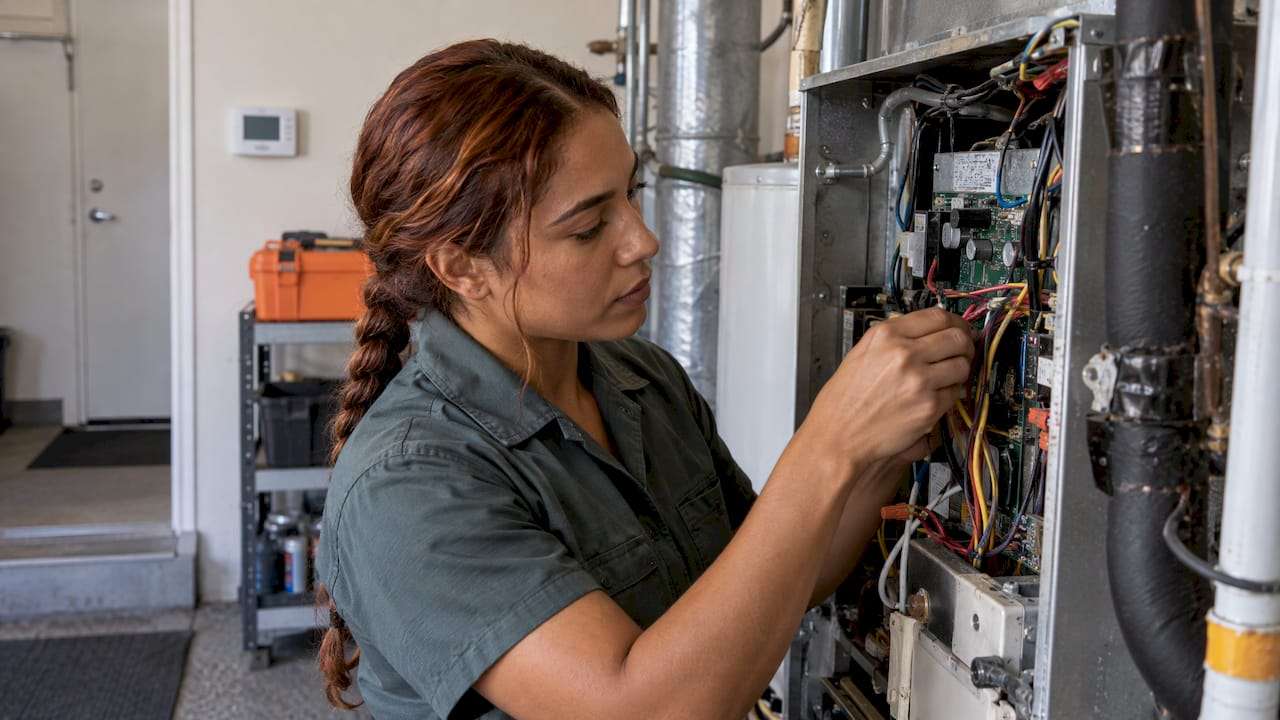
The standard approach is straightforward. One distributor’s installation guide explains that to distinguish between lamp and ballast failure, you check the incoming voltage to the ballast and try a known-working lamp. If the good lamp does not light either, the ballast is the likely culprit. The same guide says to inspect the connections and verify that the access-panel safety interlocks work correctly.

A service manual for one UV product line describes the ballast check in more detail: confirm input power at the outlet, then with power off measure resistance across the specified ballast leads. For that particular model the expected reading is 7 to 12 ohms. Do not treat that number as universal. Ballasts differ by manufacturer, so the correct reading comes from your own system’s documentation. This is a good example of a step that belongs with a technician who has the right meter and the right specs.
The same manual says that if a fuse is part of the system, you can look at it for darkening or visible damage, or check its continuity with a multimeter. Again, that means power off and a panel open.
Status lights and flash codes
Some ballasts have LED indicators that report faults. For example, one manufacturer’s installation sheet describes flash patterns that signal under-voltage, over-voltage, or an expired lamp. If your system has one, write down the pattern before you call. It can shorten the diagnosis.
The safety interlock
Many UV systems cut power to the lamp when an access panel is removed, so no one is exposed to UV-C. If a panel was recently opened, such as after a filter change or a service visit, and it is slightly out of place, the interlock may keep the lamp off. Make sure panels are fully seated and latched, with the power off while you do it. If the light still does not come on, do not bypass the interlock. It is there to protect your eyes and skin.
Step 4: Choosing the right replacement lamp
If the lamp is the problem, the replacement has to match the system. A lamp that fits physically but does not match the ballast will not run properly or may fail early. Gather this information:
- Manufacturer and model number from the UV unit or ballast label.
- Lamp length and base type, which are often printed on the old lamp.
- Voltage of the ballast (for example, a 24V low-voltage system versus line voltage).
- Single or double lamp configuration.
- Lamp type: coil-sterilizing lamps and air-stream lamps are built differently, so do not swap one for the other.
Take a photo of the labels before you remove anything. If you cannot read them, a technician can identify the lamp from the unit. Our team can also review what you have if you add a new UV light with an HVAC UV light installation so the lamp, ballast, and placement are matched from the start.
Placement matters
Where the lamp sits affects more than performance. One installation manual notes that you should position the lamp to avoid exposing plastics, rubber, paper, and other non-metallic materials to UV light, or shield them. Over time, UV-C can degrade those materials. If your lamp seems to be pointed at a plastic drain pan, insulation facing, or wiring jacket, that is worth raising with the installer.
Handling and disposal
When you handle a lamp, the same manual says to wear protective gloves and safety glasses, and to wipe the lamp with alcohol to remove dirt or fingerprints. Skin oil on a new lamp can shorten its life or leave marks.
Used lamps contain mercury. The manual says they must be disposed of properly through local waste management or county waste collection. In Los Angeles County, that means taking them to a household hazardous waste collection point rather than the trash. If we replace the lamp, we take care of the disposal.

Why a UV light may seem to stop working without failing
Sometimes the light is fine and something else makes you think it is not. Here are the situations we see in homes around Hollywood, the Valley, and Pasadena:
- The lamp is inside a sealed compartment. If you cannot see it, you may be reading an indicator light that has failed instead of the lamp itself.
- The system is off for the season. Some UV systems are wired to the blower and only run when the fan runs. In a mild spring, a mostly idle system can look like a failed light.
- A recent filter change or service visit. A panel that is not fully closed can trip the interlock.
- A power surge or outage. After a Los Angeles heat-wave outage or a brownout, a ballast can fail while the rest of the system recovers.
- Dirty coil or heavy buildup. A lamp can be working but covered in dust, which is why keeping the system clean matters. Our guide to cleaning air conditioner vents covers the part you can reach safely.
If you are trying to understand what the light does in the first place, our article on HVAC UV light types, benefits, and safety lays it out in plain language, and UV light air purification for Hollywood homes covers how it fits into a whole-home air quality plan.
A quick checklist you can run in ten minutes
- Note the symptom: light off, flickering, or flashing indicator.
- Confirm the thermostat is calling for fan and the blower runs.
- Check the breaker and the service switch at the air handler.
- Power the system down for at least 10 seconds, then back on.
- Look for the lamp install date or a change-out sticker.
- Photograph the model and serial labels on the UV unit and ballast.
- Write down any flash pattern on the ballast indicator.
- If the light is still out, stop and book a technician.
Notice what is not on that list: opening the cabinet, touching wiring, or testing a ballast. Those steps are for a professional with the proper tools.
Our perspective: fix the real cause, not the symptom
We see the same pattern again and again. A homeowner is told the UV light is dead and that the fix is a new lamp, a new ballast, or a whole new unit. Sometimes that is right. Sometimes the breaker tripped, a panel was not latched, or the lamp was simply past its date.
That is why we start with honest diagnostics. We test the power, the interlock, the ballast, and the lamp in a logical order, and we tell you what we find before any work begins. You should not be surprised by a diagnostic fee, and you should not feel pressure to replace equipment that still has life in it.
UV light is one piece of the larger system. We work on everything from historic homes with older air handlers to modern heat pump and multi-zone mini split systems and commercial VRF systems, so we look at how the lamp sits inside the whole airflow picture. When a UV lamp fails on a system that is itself aging, we will say so plainly and show you the options, including heat pump upgrades and the rebates available in California.
Our approach is flat-rate pricing for repairs and same-day service where we can, backed by more than twenty years of local experience. A UV lamp swap should be a simple, predictable visit.
Leo
When to stop troubleshooting and call a technician
You have done enough on your own when any of these are true:
- The lamp is new and still does not light.
- The breaker trips again after you reset it. That points to an electrical fault, not a UV problem.
- You see scorched, melted, or discolored wiring or a burning smell near the air handler.
- The blower, thermostat, or compressor also act up. The UV light may only be the first symptom. A failing control board can cause several parts to misbehave at once.
- The UV unit is inside a sealed compartment, or the panels need tools to remove.
- You are unsure which lamp or ballast your system uses.
- The system is a commercial or multi-zone unit, where UV components may be tied to several air handlers.
Any of these is a good reason to hand it over. Working around exposed UV-C and live wiring is a risk that is not worth taking for the sake of a few dollars. For other DIY-style guides that stay on the safe side, our HVAC troubleshooting and how-to library is a good place to start.
What a UV light repair visit with us looks like
When you call, we ask for the symptom, the age of the system, and the model on the UV unit. A technician then comes out, usually the same day. The visit follows the same order as the checks above:
- Confirm power and breaker status.
- Inspect panels and safety interlocks.
- Check the ballast and connections.
- Try a known-good lamp if the ballast passes.
- Explain the result and the price before work begins.
A service call starts from $125, and repairs are quoted flat-rate once we know what is wrong. If a lamp swap is all you need, that is what we recommend. If the UV unit is mismatched to your system, we will show you the right one.
Keep the UV light working: simple upkeep
A few habits make lamp failures less of a surprise:
- Write the install date on the cabinet or on your calendar and set a reminder before the lamp reaches its rated life.
- Handle new lamps with gloves and wipe them clean per the manufacturer’s instructions.
- Keep coils and filters clean, since dust and debris reduce how much air and surface the system treats.
- Include the UV system in your annual tune-up. Our HVAC maintenance plan costs $180-250 per year, and it gives a technician a regular reason to look at lamps, ballasts, and panels before they fail.
- Plan ahead for older systems. If your air handler is near the end of its life, it may make more sense to pair a replacement with a new UV setup than to keep patching.
Not sure whether to repair or upgrade?
A failed UV lamp is often the moment people look at the bigger picture. If your system is old, loud, or expensive to run, we can walk you through heat pump and mini split options, ductwork, and financing. Heat pump installation is listed at $5,500-12,000, and mini split installation at $3,500-20,000, depending on the home and the number of zones. You can see the details and financing options for installations.
If you would rather have someone take a look, call us at (323) 970-3113 or book through our HVAC repair services page. We serve Hollywood, West Hollywood, Beverly Hills, Bel Air, Brentwood, and the rest of Greater Los Angeles, with same-day service and no surprise diagnostic fees.
FAQ
Why is my HVAC UV light not turning on?
The most common causes are no power to the air handler, a tripped breaker, a lamp that has reached the end of its life, a failed ballast, or a panel that is not seated and keeps the safety interlock open. Check the breaker and do a 10-second power reset first. If the light stays off, a technician should test the ballast and lamp.
How often should I replace an HVAC UV lamp?
The interval is set by the manufacturer and varies by system, so check your manual or the label on the unit. Some systems come with a change-out reminder decal where you can note the install date. If you cannot find the interval, give us the model number and we can look it up for you.
Can I replace the UV lamp myself?
Only if the system is accessible, the power is fully off, and you have the exact replacement lamp. Wear safety glasses and gloves, never look at a lit lamp, and dispose of the old one as hazardous waste because it contains mercury. If the panel is hard to open or the lamp is in a sealed compartment, we recommend having a technician do it.
My new UV lamp does not light. What now?
That points away from the lamp and toward the ballast, socket, wiring, or interlock. A technician can check incoming voltage and try a known-working lamp to confirm which part failed. Please do not bypass the safety interlock to force the light on.
Is a UV light failure an emergency?
No, the system will usually keep heating and cooling. Treat the other symptoms differently: a burning smell, a tripping breaker, or a system that will not run needs prompt attention, and our emergency HVAC service is available for those.
Sources
- Troubleshooting: UV lamp not lighting (UV Resources, 2025)
- UV-C light for HVAC systems: installation and upkeep
- UV lamp installation and service manual
- Clear Blue Advanced installation instructions
- Installation and maintenance instructions, UV-C system
- UV lamp installation manual
- Aprilaire AUV24V UVC residential coil cleaner
Recommended
Leo, Owner & Lead Technician at LC Heating & Air
Leo leads LC Heating & Air as an owner-operator and holds California CSLB C-20 HVAC license #1073586. His guides focus on practical diagnostics, safe repair decisions, and clear advice for Los Angeles homeowners.