
If your pilot light keeps going out, the cause is almost always one of a short list: a worn thermocouple, a dirty pilot assembly, a draft, or a failing gas valve. The first three are often simple to correct. The last one, and anything involving gas smell, soot or a headache that eases when you leave the house, is a job for a licensed technician. This guide walks you through what is happening inside the appliance, what you can safely check, and where the line sits between a quick fix and a professional repair.
We are LC Heating & Air, and we repair gas furnaces, water heater-adjacent heating equipment and heat pumps across Los Angeles. We wrote this the way we would explain it at your kitchen table.
TL;DR
- A pilot that lights but dies when you release the button usually points to a dirty or worn thermocouple. A pilot that dies at random often points to drafts, a clogged pilot orifice or venting trouble.
- Never try to light a pilot if you smell gas. Leave, then call the gas company from outside.
- You can safely check for drafts, clear dust around the appliance and follow the relight steps in your manual. Do not adjust gas pressure or open the gas valve.
- In Southern California, SoCalGas offers a no-cost pilot relight visit, but it will not repair a failing part. That is where a licensed contractor comes in.
- If the appliance is old and the pilot keeps failing, a heat pump removes the pilot light and the combustion risks that come with it.
Table of contents
- What the pilot light actually does
- Safety first: when not to relight
- Six reasons the pilot keeps going out
- Quick diagnosis: match your symptom to the cause
- How to relight a pilot light safely
- What you can check yourself, and what you should leave alone
- Furnace versus water heater
- Our perspective
- Repair, replace or switch to a heat pump
- Getting it fixed in Los Angeles
- FAQ
What the pilot light actually does
A standing pilot is a small, constant gas flame. When your thermostat calls for heat, that flame ignites the main burner. A safety device sits in the flame and confirms it is there. On most older furnaces and water heaters that device is a thermocouple: a small metal probe that produces a tiny electrical current when heated. That current holds the gas valve open. If the flame disappears, the current drops, the valve closes and gas stops flowing.
So when your pilot goes out, the system is often doing exactly what it was built to do. The question is why it believes the flame is missing, or why the flame really is disappearing. A healthy thermocouple means a happy furnace, and a weak one shuts the whole thing down to protect you.
Newer furnaces skip the standing pilot altogether and use an electronic igniter. If your furnace clicks, glows or sparks before the burners light, you have intermittent ignition, and the troubleshooting is different. Our guide to a furnace that won’t ignite covers that case.
Safety first: when not to relight
Before anything else, read this part.
If you smell gas, do not light anything. Natural gas has an added rotten-egg odor. SoCalGas says that if you smell gas you should not try to light the pilot or touch electrical switches. Evacuate immediately and call the gas company from a safe location. Do not use a light switch, a lighter or a phone inside the home.
A few more rules worth knowing:
- Know where your meter shutoff is. SoCalGas advises that you turn off gas at the meter only if it is safe to do so and only if you smell gas, hear it or see signs of a leak, as described in its Home Energy and Safety Guide. Keep a wrench in your emergency kit rather than on the meter or piping.
- Watch for carbon monoxide symptoms. Headaches, fatigue and nausea are easy to mistake for the flu. The Department of Energy’s combustion appliance safety brief notes that this confusion is common and recommends CO monitors in the home. It also cites 9 ppm as the maximum allowable level in living areas. If your pilot is unstable and anyone in the house feels unwell, get fresh air first and read our piece on carbon monoxide furnace symptoms.
- Keep flammables away. Gasoline, paint thinner and cleaning products do not belong near a pilot flame. SoCalGas’s guide notes that local fire safety codes in areas like Los Angeles often require water heaters in garages to be raised at least 18 inches off the floor, so the flame stays above ground-level vapors.
If any of these apply, stop reading and act. The rest of this article assumes there is no gas odor and no one feels ill.
Six reasons the pilot keeps going out
1. A dirty or worn thermocouple
This is the most common culprit. The thermocouple tip can become coated with soot or carbon, so it no longer heats properly. Or the metal has simply aged and produces too little current to hold the gas valve open. The classic symptom: you hold the pilot button, the flame lights, you let go, and the flame dies within seconds.
A thermocouple is a small but mighty part, and it is inexpensive. The catch is that replacing it correctly means matching the right part and positioning it exactly in the flame. A tip that sits slightly off can behave like a bad one.
2. A clogged pilot orifice or tube
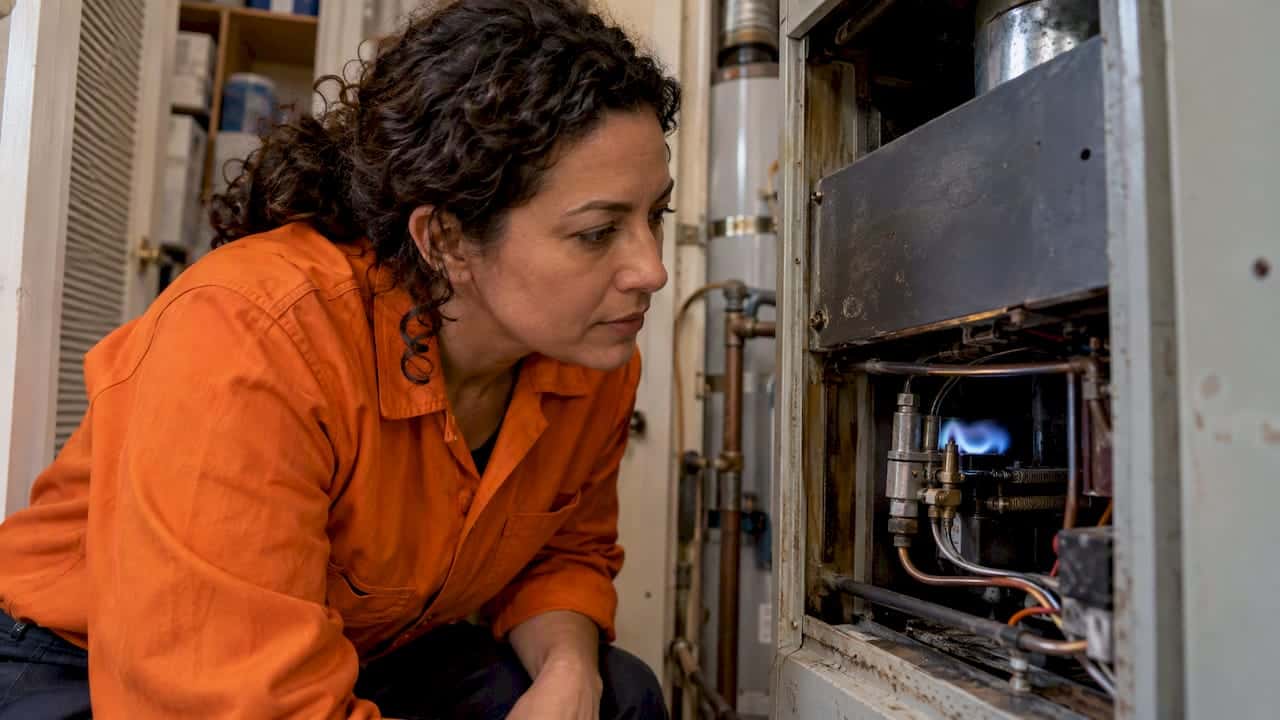
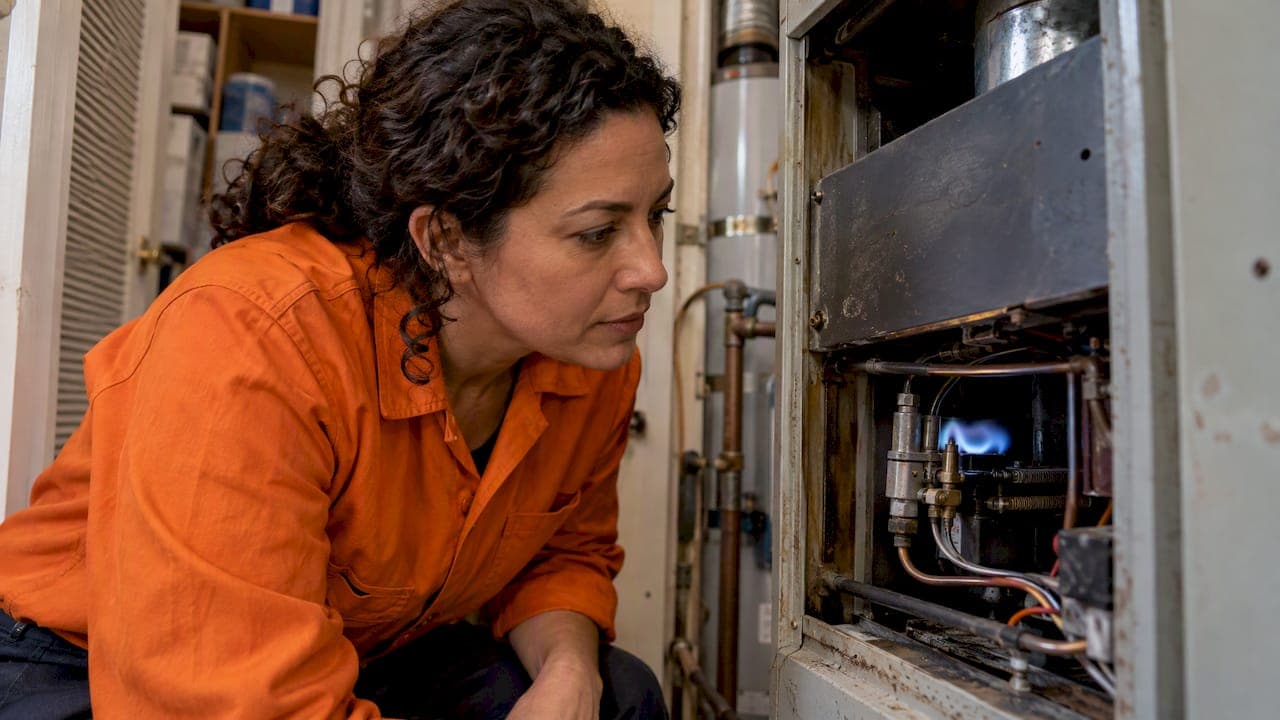
The pilot burns through a tiny opening. Dust, lint and rust flakes can partly block it. The flame turns weak, yellow or flickery, and it no longer reaches the thermocouple properly. A healthy pilot flame is steady and mostly blue. A lazy yellow one is asking for cleaning.
Homes with older ductwork, pets, remodeling dust or a lot of fabric near the furnace closet tend to see this more.
3. Drafts and poor air supply
A gust from a window, an exhaust fan or a door can blow the flame out. So can a furnace closet that is too tight to supply combustion air. In older Los Angeles homes, with their original closets, floor furnaces and wall heaters, we see both: leaky enclosures that let in gusts and sealed ones that starve the flame.
If the pilot goes out when the dryer, a bathroom fan or a range hood runs, that is a clue. Competing exhaust fans can pull air through the furnace’s venting in the wrong direction. That is called backdrafting, and it can pull combustion gases into the living space. The Department of Energy brief linked above recommends a combustion safety test after significant HVAC work or duct sealing, since leaky or altered ducts can cause it.
4. A blocked or damaged vent
If exhaust cannot leave the house, the flame struggles and the safety systems shut things down. Bird nests, corroded flue pipe, a disconnected vent section and a cracked heat exchanger can all play a part. This is one reason we do not suggest repeatedly relighting a pilot that will not stay on. A pilot going out can be the first visible sign of something wrong with venting. Our article on harmful gases from broken gas furnaces explains what to watch for.
5. Gas supply or gas valve problems
The gas control valve is the part that opens and closes in response to the thermocouple. If it has worn internally, it may not stay open even with a perfectly good thermocouple. Low gas pressure can also leave the flame weak. Neither is a DIY repair. Gas valves and pressure adjustments involve the fuel line and require a licensed technician with the right gauges and combustion analysis equipment.
6. An old, tired system
Standing-pilot furnaces are older designs. After 15 to 20 years or more, several of the parts above fail close together. If you are replacing a thermocouple on a furnace that also has a rusty burner box, a noisy blower and a rising energy bill, the repair may be the first of several.
Quick diagnosis: match your symptom to the cause
| What you see | Most likely cause | What to do |
|---|---|---|
| Pilot lights, then dies within seconds of releasing the button | Dirty or failing thermocouple | Call a technician for cleaning or replacement |
| Pilot stays lit for hours or days, then goes out on its own | Drafts, partly clogged pilot orifice, venting issue | Check for drafts, then have the pilot assembly cleaned and vent inspected |
| Pilot goes out when the dryer or exhaust fan runs | Backdrafting or air supply issue | Turn off the fan, call a technician for a combustion safety test |
| Yellow, wavering pilot flame, soot near the burner | Dirty orifice or incomplete combustion | Stop using the appliance and call a technician |
| Pilot will not light at all, no click or gas sound | Gas supply issue, tripped safety, failed valve | Check that other gas appliances work, then call |
| Rotten-egg smell | Possible gas leak | Leave, call the gas company from outside |
| Headache or nausea at home, relief away from home | Possible carbon monoxide | Get outside, call 911 if symptoms are serious, no relighting |
This table narrows things down. It does not replace an inspection, because several of these causes overlap.
How to relight a pilot light safely
The exact procedure varies by model, and your appliance’s label or manual is the authority. These are the general steps for a standing-pilot furnace or water heater, once you have confirmed there is no gas smell:
- Turn the thermostat to its lowest setting or turn the appliance off.
- Turn the gas control knob to “Off” and wait at least five minutes so any gas can clear. If you smell gas at any point, stop and leave.
- Turn the knob to “Pilot.” Press and hold the pilot or reset button.
- Light the pilot with a long lighter or the built-in igniter, while still holding the button down.
- Keep holding the button for about 30 to 60 seconds. This lets the thermocouple heat up and tell the valve that a flame is present.
- Release slowly. If the flame stays, turn the knob to “On” and set the thermostat back to normal.
- If the flame goes out again, you can repeat once after waiting five minutes. After that, stop. A pilot that fails twice in a row is telling you a part has failed.
If the pilot lights but the burners do not come on when the thermostat calls for heat, the issue lies elsewhere. Our overview of furnace heating problems and fixes helps you sort it out.
Another option: the gas utility’s relight visit
If you simply cannot get the pilot lit, or would rather not try, SoCalGas runs a no-cost pilot relight service for customers in its territory. A technician can also perform a safety check on your natural gas appliances, including checking for leaks. SoCalGas notes that certain complex repairs may require a licensed private heating contractor, and that it charges a fee if a valve was closed for a non-emergency, non-earthquake reason. You can schedule through your online account or by phone at 1-877-238-0092.
This works well for a pilot that went out after a gas interruption or an earthquake shutoff. It does not fix a pilot that keeps dying, because the relight is not the repair. The part causing the failure still needs attention.
What you can check yourself, and what you should leave alone
Some checks are harmless and useful:
- Look for drafts. Hold a lit stick of incense near the furnace closet door or water heater on a windy day and see where the smoke moves. Weatherstripping a door or closing a nearby window can solve a draft-related shutdown.
- Vacuum around the appliance (while it is off) and clear lint, dust and cobwebs from the area. Keep the space around it free of boxes and stored items.
- Check the filter. A clogged filter makes a furnace run hot and cycle off. It is not a pilot problem as such, but it adds stress, and it takes two minutes. ENERGY STAR’s guide to energy-efficient heating and cooling lists proper maintenance among the best ways to avoid unwanted costs.
- Look at the flame. Steady and blue is good. Yellow, orange, lifting or wavering means call someone.
And some things to leave alone:
- Do not bend, sand or reposition the thermocouple unless you are trained to. Its placement in the flame matters.
- Do not adjust the gas valve, regulator or gas pressure.
- Do not bypass a safety device by wedging the pilot button, taping it or using any workaround to keep the gas flowing. The thermocouple is the reason a dead pilot does not fill your home with gas.
- Do not keep relighting a pilot every day for weeks. If the system needs relighting daily, something is wrong.
Furnace versus water heater
The same logic applies to both, but the details differ.
Furnace. Common triggers are a dirty pilot orifice, a worn thermocouple, restricted venting and drafts in a utility closet or attic. A furnace has a heat exchanger and a vent path, so a failed safety shutdown may indicate something more serious than a worn part. Furnace pilots that fail are best looked at by a professional heating contractor. See our furnace repair in Los Angeles page, and our gas furnace repair page for how we approach these calls.
Water heater. Water heaters sit in garages, closets and utility rooms, often with a drafty louvered door. Sediment buildup at the bottom of the tank can make the burner run rough and spoil the flame. Garage installations add the flammable vapor concern mentioned above. Water heaters are plumbing-trade territory, so if your problem is with the tank rather than your heating system, a licensed plumber is the right call. We focus on heating and cooling equipment.
Fireplaces and wall heaters. Gas log sets and older wall or floor furnaces use pilots too. They share the same thermocouple logic, and older units sometimes lack modern safety features.

Our perspective
We have worked on Los Angeles heating systems for more than twenty years, from 1920s bungalows in Hollywood to newer builds in Brentwood and Pasadena. Here is what experience has taught us about pilot lights.
First, a pilot that keeps going out is rarely a mystery. A technician can usually trace it in a single visit: test the thermocouple, inspect the pilot assembly, check the venting, and verify the flame and gas supply. The trouble is how many homeowners wait. They relight it daily for weeks, then call when it finally quits in a cold snap. Calling earlier is cheaper and safer.
Second, we do not like surprise charges. Many homeowners tell us they have been burned by a diagnostic fee that was added after a visit, or by pressure to replace a system that needed a $50 part. Our approach is simple: honest diagnostics, a flat price for the repair quoted before we start, and a plain explanation of what we found. If a thermocouple fixes it, we say so. If your heat exchanger is cracked, we show you and explain your options. Our service call starts at $125.
Third, safety comes before comfort. When a pilot keeps dying, we check venting and combustion air as well as the part that failed. A new thermocouple in a furnace with a blocked flue only hides the problem.
Fourth, and this is where our real strength lies: we are heat pump, mini split and commercial VRF specialists. That shapes our advice. When a homeowner has an old standing-pilot furnace, a steady stream of repairs and a plan to stay in the house, we talk about whether a heat pump now makes more sense than another round of patches. It is not always the right answer, and we will say so when it is not. But it is a question worth asking, especially in a climate like ours where a heat pump can both heat and cool.
— Leo
Repair, replace or switch to a heat pump
When the pilot keeps failing, you have three realistic paths.
Repair. If the furnace is under about 15 years old, in good shape otherwise and the problem is a thermocouple, orifice or draft, repair is usually the right call. It is quick and inexpensive compared with replacement.
Replace the furnace. If the system is old, inefficient, venting poorly or showing a cracked heat exchanger, replacement makes sense. Our furnace installation is priced at $2,800 to $7,500, depending on the equipment and the home. Our article on furnace replacement versus repair helps you weigh the numbers.
Switch to a heat pump. A heat pump has no pilot light, no flame, no flue and no gas line to leak. It heats and cools, using electricity to move heat rather than burn fuel. Industry guidance, such as the ENERGY STAR heat pump technical guide, notes that heat pump technology can use around 70% less energy than standard electric resistance heating. That guide covers heat pump water heaters, so treat the figure as a comparison with resistance electric heat, not with your gas furnace. Your actual savings depend on your home, your rates and the equipment.
Our heat pump installation runs $5,500 to $12,000, and mini split installation runs $3,500 to $20,000, with the spread reflecting the number of zones and the home’s layout. Mini splits suit historic homes without ducts, additions and converted garages, and our heat pump page explains how we size and install them. For a look at a real job, see our Daikin 3-ton heat pump case study. Ask us about rebates too: we keep up with California heat pump incentives and can tell you what you may qualify for.

If you want to see how a homeowner elsewhere thinks through the move, this walkthrough on swapping a boiler for a heat pump shows the general sequence, though the equipment and rules there differ from California’s.
A quick comparison:
| Standing-pilot gas furnace | Modern gas furnace | Heat pump | |
|---|---|---|---|
| Pilot light | Yes | No, electronic ignition | No |
| Combustion and venting | Yes | Yes | None |
| Cooling | No | No | Yes |
| Typical install price at LC | $2,800 to $7,500 (furnace) | $2,800 to $7,500 (furnace) | $5,500 to $12,000 |
| CO risk from the appliance | Present if venting fails | Present if venting fails | None from the appliance |
If the numbers matter, ask about financing. Our financing page covers installation options.
Getting it fixed in Los Angeles
Here is how a pilot light call works with us:
- You call or book. Tell us the appliance, its age and what happens when you relight.
- We diagnose. We test the thermocouple and gas valve, inspect the pilot assembly and check the vent and combustion air.
- You get a flat price for the repair before we begin. No surprise diagnostic fees.
- We fix it and test it, confirming a stable flame and safe operation.
- We tell you the truth about the system’s age. If replacement is smart, we explain why. If it is not, we do not push it.
We serve Hollywood, West Hollywood, Beverly Hills, Bel Air, Brentwood, Pasadena and the wider Los Angeles area, with same-day service available. For furnace calls near you, see our Los Angeles furnace repair page, or our emergency furnace repair case study for what a rush job looks like.
Once the pilot is fixed, keep it that way. A yearly tune-up catches a weakening thermocouple, a dirty burner and a loose vent connection before they cost you a cold night. Our HVAC maintenance plan is $180 to $250 per year. You can also browse every service we offer.
Call us at (323) 970-3113 or visit lahvaclc.com to book.
FAQ
How do you fix a pilot light that keeps going out?
Start by confirming there is no gas smell, then relight it following your manual and hold the button for 30 to 60 seconds. If it dies again, the usual cause is a dirty or failing thermocouple, a clogged pilot orifice or a draft. Drafts and dust you can address yourself. Thermocouple replacement, valve work and venting repairs should be done by a licensed technician.
Why does my furnace pilot light randomly go out?
Random shutoffs usually come from drafts, a partly clogged pilot orifice, restricted venting or a weak thermocouple. Competing exhaust fans, such as a dryer or range hood, can also disturb airflow around the furnace. If it happens repeatedly, have the vent and combustion air checked, because those problems affect safety, not just comfort.
Is it safe to keep relighting the pilot light?
Relighting once after a known cause, such as a gas interruption, is normal. Relighting day after day is not safe, because the failure means a safety device or airflow problem has not been fixed. Never defeat the safety shutoff to keep the flame going, and never relight if you smell gas.
Does the gas company relight a pilot for free?
In Southern California, SoCalGas offers a no-cost pilot relight appointment and can check gas appliances for leaks during the visit. It will not repair failing parts, and it may charge a fee if the gas was shut off for a non-emergency reason. For repairs, you need a licensed heating contractor.
Do heat pumps have pilot lights?
No. A heat pump uses electricity to move heat, with no flame, flue or gas line in the appliance. That is why homeowners with old standing-pilot furnaces often consider one when repairs keep piling up.
Sources
- SoCalGas: Pilot Relight
- SoCalGas: Shut off natural gas and emergency information
- SoCalGas: Home Energy and Safety Guide
- U.S. Department of Energy: Combustion Appliance Safety and Efficiency Testing
- ENERGY STAR: A Guide to Energy-Efficient Heating and Cooling
- ENERGY STAR: Heat Pump Water Heater Technical Guide
Recommended
Leo, Owner & Lead Technician at LC Heating & Air
Leo leads LC Heating & Air as an owner-operator and holds California CSLB C-20 HVAC license #1073586. His guides focus on practical diagnostics, safe repair decisions, and clear advice for Los Angeles homeowners.