- Minutes Matter: Homeowners’ Guide to Furnace Carbon Monoxide Symptoms
- What Are the Carbon Monoxide Furnace Symptoms in People?
- Can Pets Show Carbon Monoxide Warning Signs Before You Do?
- Physical Signs Near Your Furnace That Signal a Gas Leak
- How to Detect Carbon Monoxide Before It Becomes an Emergency
- What to Do Immediately if You Suspect Carbon Monoxide
- Preventing Furnace Carbon Monoxide Risks Before They Start
- How Fast Do Carbon Monoxide Symptoms Appear, and What Happens After?
- What a Real Furnace Safety Inspection Should Cover
- Get a Furnace Safety Inspection Before Symptoms Start
- Sources
- FAQ
- Recommended
Minutes Matter: Homeowners’ Guide to Furnace Carbon Monoxide Symptoms
Yes, a malfunctioning fuel-burning furnace can leak carbon monoxide, and if you suspect it, get everyone, including pets, outside to fresh air immediately and call 911. The CDC’s symptom guidance and a working UL-listed CO detector are your two best defenses. Local HVAC companies see this exact scenario play out across Los Angeles every winter, and speed matters more than diagnosis.
TL;DR:
- Carbon monoxide symptoms in humans can mimic the flu, with multiple house members feeling sick simultaneously, especially during furnace operation.
- Pets often show signs of CO poisoning faster than humans, with symptoms like lethargy, vomiting, or loss of coordination indicating urgent evacuation.
- Visible furnace clues such as yellow flames, soot, rust, or moisture suggest incomplete combustion or venting issues, but only a CO detector confirms actual gas levels.
- Installing a UL-listed CO detector on every level and near sleeping areas, testing it weekly, and replacing batteries annually ensures reliable early warning.
- Immediate evacuation and calling 911 are imperative if a CO alarm sounds or symptoms appear, with a professional inspection recommended for physical furnace signs or suspected leaks.
What Are the Carbon Monoxide Furnace Symptoms in People?
Carbon monoxide furnace symptoms in humans tend to mimic a bad flu, which is exactly why so many cases go unrecognized until they turn serious. The gas itself has no smell and no color, so your body is often the first alarm system you have. That’s not a great alarm system to rely on.
Early exposure usually shows up as a dull, persistent headache, mild dizziness, and unusual tiredness. As exposure continues or concentration rises, symptoms of carbon monoxide poisoning escalate to nausea, vomiting, confusion, chest pain, and shortness of breath. At the severe end, people experience loss of muscle control, loss of consciousness, and in the worst cases, death.
The pattern is what separates carbon monoxide exposure signs from a garden-variety stomach bug or cold:
- Multiple people in the house feel sick around the same time, not just one person
- Symptoms show up mostly when the furnace is running, especially overnight
- Everyone feels noticeably better once they step outside or leave the house for a few hours
- There’s no fever, which points away from a viral illness and toward an environmental cause
That last pattern, symptoms improving outdoors, is one of the clearest red flags experts point to when families are trying to figure out whether it’s the flu or something in the house itself.
Certain groups face higher risk of severe effects: infants, older adults, pregnant people, and anyone with existing heart or lung disease. Their bodies tolerate reduced oxygen delivery far worse than a healthy adult does.
CO by the Numbers: The CDC identifies headache, dizziness, weakness, nausea, vomiting, chest pain, and confusion as the most common symptoms of carbon monoxide poisoning, and notes they can strike whether a person is awake or asleep. That second detail matters. CO poisoning has killed people in their sleep who never woke up to feel a single symptom.
Can Pets Show Carbon Monoxide Warning Signs Before You Do?
Often, yes. Dogs and cats tend to show carbon monoxide warning signs faster than the humans in the house, and that’s worth paying attention to.
Watch for:
- Sudden lethargy or a pet that won’t get up
- Vomiting with no obvious cause
- Stumbling, wobbling, or losing coordination
- Symptoms that come on faster than you’d expect from illness
Smaller bodies and faster metabolisms mean pets absorb carbon monoxide more quickly relative to their size than adults do. A dog acting strangely sick on a night the furnace has been running nonstop isn’t something to wait out until morning.
If you evacuate because of suspected CO, bring pets with you. Beyond the obvious reason of not leaving them behind, tell first responders that an animal showed symptoms too. It helps confirm the timeline and severity of exposure for everyone in the house.
Physical Signs Near Your Furnace That Signal a Gas Leak
Furnace gas leak symptoms aren’t only medical. Your furnace itself often shows physical clues that combustion isn’t happening cleanly, and catching them early can prevent a health emergency altogether.
- Soot or dark staining around the furnace cabinet, vents, or nearby walls suggests incomplete combustion.
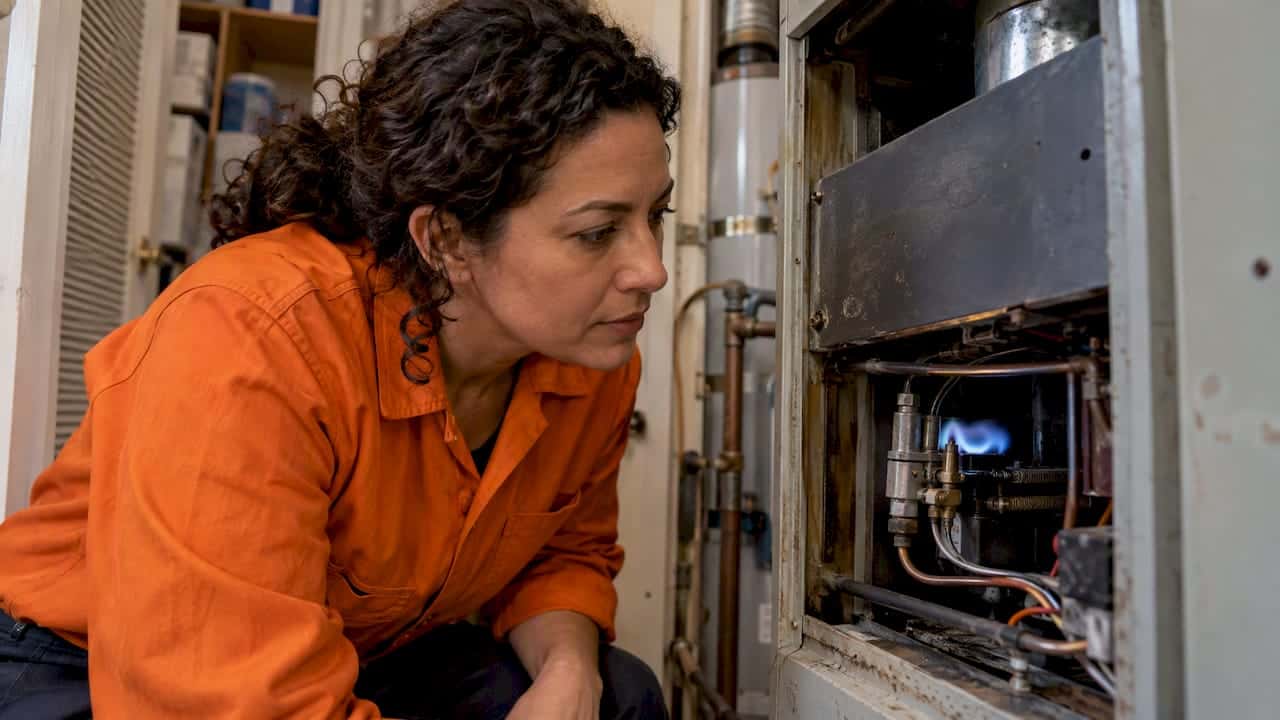
- A yellow or flickering orange flame instead of a steady blue one is one of the most reliable furnace carbon monoxide risks to watch for. Clean-burning gas produces blue flame; yellow means the fuel isn’t burning fully.
- Rust or corrosion on the furnace itself, the flue pipe, or connections often points to moisture where it shouldn’t be, sometimes from exhaust gases condensing inside the system.
- Excess condensation on windows near the furnace or unusual moisture in the mechanical room can mean exhaust isn’t venting properly.
- Pilot light that won’t stay lit, or one that burns an odd color, often signals a draft or combustion problem worth a technician’s attention.
- A cracked heat exchanger is invisible without inspection but is one of the most common sources of CO leaking into your living space rather than up the flue.
Pro Tip: None of these signs tell you how much carbon monoxide is actually in your air. They tell you something is wrong with combustion or venting. Only a CO detector or a technician’s combustion analysis can confirm actual gas levels, so treat visual clues as a reason to test, not a diagnosis on their own.
How to Detect Carbon Monoxide Before It Becomes an Emergency
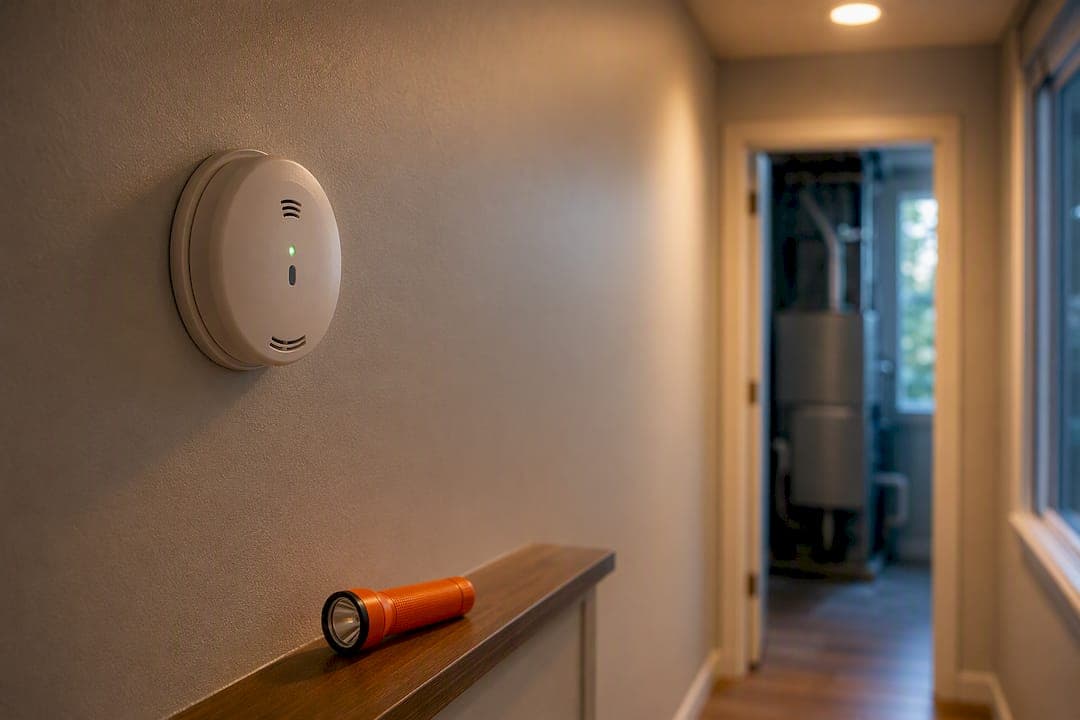
The only dependable way to know how to detect carbon monoxide in your home is with a UL-listed CO detector. Your nose and eyes cannot do this job, no matter how sharp you think they are.
You have a few solid options: battery-powered standalone units, plug-in models with battery backup, hardwired detectors tied into your home’s electrical system, and combination smoke/CO alarms with digital readouts that display parts-per-million levels in real time.
Where you put them matters less than whether they’re actually working. A controlled study on CO diffusion found that carbon monoxide equalizes throughout a room over time, meaning exact height placement isn’t the critical factor people assume it is. Coverage matters more than precision.
Follow this placement and maintenance routine:
- Install at least one detector on every level of your home, including the basement
- Place one near each sleeping area, since EPA guidance specifically recommends coverage near bedrooms
- Test alarms weekly using the test button
- Replace batteries at least once a year, or immediately when you hear a low-battery chirp
- Replace the entire unit per the manufacturer’s listed life expectancy, typically five to ten years
If an alarm sounds or shows an elevated reading, don’t wait around for a second device to confirm it. One working detector giving you a warning is enough reason to act.
What to Do Immediately if You Suspect Carbon Monoxide
When an alarm goes off or people in your house start showing symptoms, the order of operations matters. Follow these steps without pausing to investigate the cause yourself.
- Get everyone outside, including pets, to fresh air right away. Don’t stop to open every window first.
- Call 911 from outside the house, not from inside while you gather belongings.
- Do not re-enter until fire department or emergency personnel say it’s safe.
- Shut off the furnace or gas supply only if you can do it on your way out without any delay. Evacuation always comes before this step.
- Seek medical evaluation for anyone with symptoms, even mild ones. Confusion, chest pain, or loss of consciousness warrants an emergency room, not urgent care.
Pro Tip: If symptoms fade once everyone is outside but return when someone goes back in, that’s confirmation enough. Don’t test it a second time to be sure.
Delayed effects are real, and some symptoms, especially neurologic ones, can appear hours after exposure ends. Anyone who was exposed while pregnant or who is very young deserves a follow-up evaluation even if they seem fine at first.
Preventing Furnace Carbon Monoxide Risks Before They Start
Most carbon monoxide furnace symptoms trace back to problems that an annual inspection would have caught. Prevention here isn’t complicated, it’s just easy to skip.
- Schedule a professional inspection and combustion analysis every year, ideally before heating season starts
- Keep vents, flues, and chimneys physically clear of debris, nests, and blockages
- Address rust, corrosion, or condensation around the furnace as soon as you notice it, rather than waiting
- Never run a portable generator, charcoal grill, or any unvented fuel-burning device indoors or in an attached garage
- Replace furnaces that are approaching the end of their expected service life instead of pushing them another season
- Test your CO detectors as part of the same seasonal routine you use for your furnace tune-up
A step-by-step inspection checklist gives you a sense of what a thorough technician visit actually covers, and it’s worth knowing before you book one.
How Fast Do Carbon Monoxide Symptoms Appear, and What Happens After?
Timing depends heavily on concentration. High exposure levels can produce symptoms and even loss of consciousness within minutes. Lower, more gradual leaks might take hours to produce a noticeable headache or fatigue, which is part of why overnight exposure during sleep is so dangerous. Nobody’s awake to notice the slow build.
- Delayed neurologic effects can surface days after exposure, including memory problems, difficulty concentrating, and mood changes
- Cardiac complications, including arrhythmias, have been documented in clinical guidance on severe CO poisoning
- Pregnant people and infants need dedicated medical follow-up regardless of how mild initial symptoms seemed
What Doctors Need to Know: When you go in for evaluation, tell the clinician exactly when your detector alarmed, how long you were in the house afterward, and who else in the household or which pets showed symptoms and when. That timeline shapes how they assess your risk.
What a Real Furnace Safety Inspection Should Cover
Two decades of service calls across Los Angeles homes, from century-old properties in Hollywood to newly retrofitted heat pump systems in Brentwood, have shown that CO risk almost always traces back to the same handful of mechanical failures. A real inspection isn’t a five-minute glance at the pilot light.
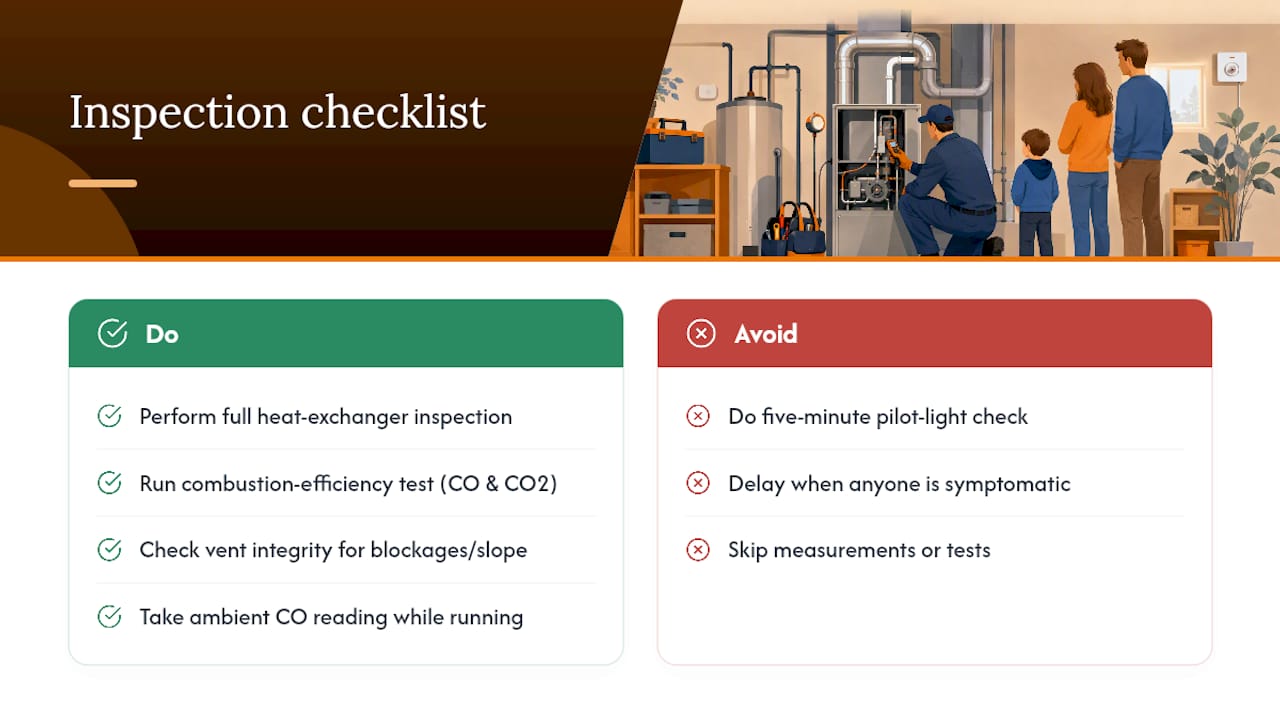
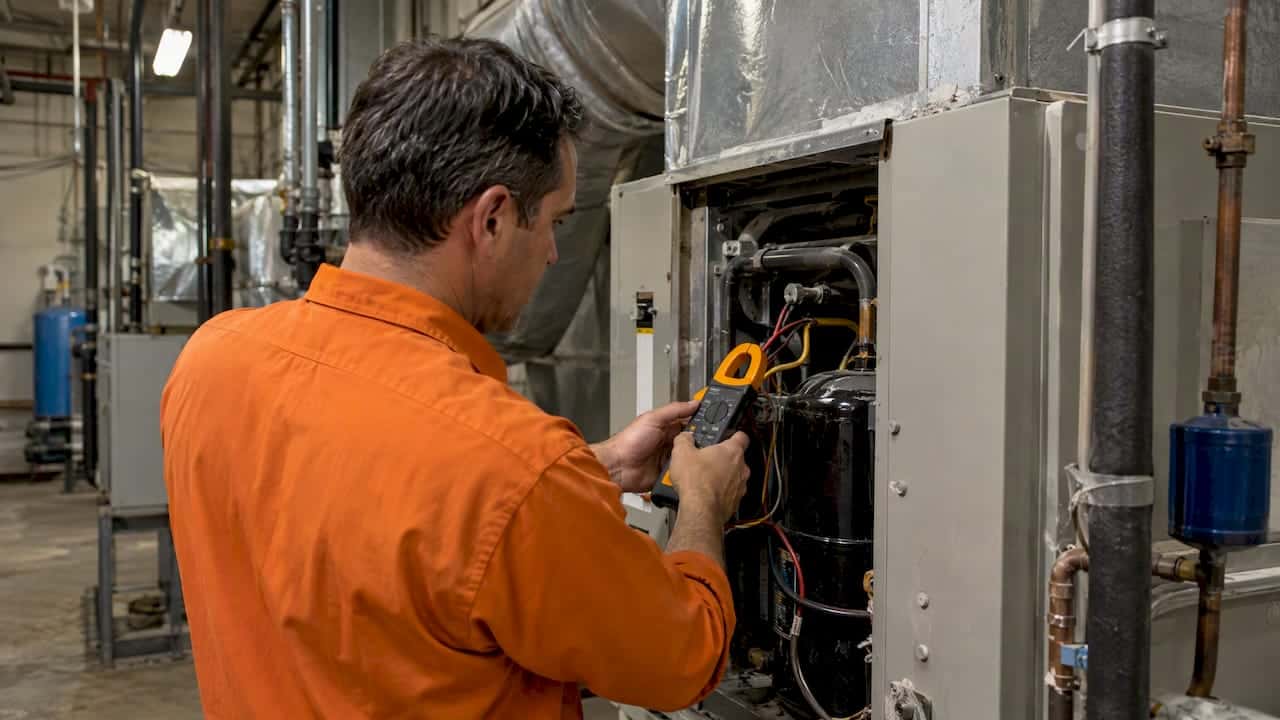
It should include a full heat-exchanger inspection, a combustion-efficiency test measuring CO and CO2 levels in the flue gas, a vent integrity check for blockages or improper slope, and a digital ambient CO reading taken while the furnace is actually running.
If you’re dealing with symptoms right now, that’s an emergency call, not a scheduled visit. If your furnace shows the physical warning signs discussed earlier but nobody feels sick, that’s the moment to book an inspection and have your service history and furnace age ready to share with the technician.
— Leo
Get a Furnace Safety Inspection Before Symptoms Start
Some HVAC companies offer a flat rate on the diagnostic before any work begins, so you’re never staring at a surprise bill for finding out whether your furnace is safe. That matters most with carbon monoxide, where the cost of skipping an inspection isn’t measured in dollars.

Booking a furnace safety inspection gets you a heat-exchanger check, combustion analysis, and vent integrity review, the same steps described above, performed by a technician who’s worked on everything from Bel Air’s older gas systems to Beverly Hills homes running modern multi-zone heat pumps. Same-day appointments are available for households in Greater Los Angeles who need answers now, not next week. If your furnace is showing rust, a yellow flame, or you’re just not sure how many heating seasons it has left, get a flat-rate inspection scheduled before the next cold snap puts it to the test.
This article is general information, not a substitute for advice from a qualified doctor. Consult a qualified healthcare professional about your own circumstances before acting on anything here.
Sources
- Carbon Monoxide Poisoning Basics | Carbon Monoxide | CDC
- Study on CO behavior and alarm placement | PubMed
- Where should I place a carbon monoxide detector? | EPA
FAQ
How do I know if my furnace is leaking carbon monoxide?
Watch for a combination of physical signs, like a yellow flame, soot, or rust, alongside flu-like symptoms in multiple household members that improve when everyone leaves the house. A working CO detector is the only way to confirm it.
How long after carbon monoxide exposure do you get symptoms?
High-level exposure can cause symptoms within minutes, while lower-level leaks may take hours to produce a noticeable headache or fatigue, according to CDC clinical guidance.
What are two warning signs of a carbon monoxide leak?
A yellow or flickering furnace flame instead of steady blue, paired with multiple people or pets in the house developing headaches, dizziness, or nausea at the same time, are two of the clearest warning signs.
Can a furnace leak carbon monoxide while it is off?
A furnace that’s off isn’t actively combusting fuel, so it isn’t producing new CO at that moment, but a cracked heat exchanger or blocked vent from a prior cycle can still allow residual gas to linger. Any suspected leak warrants a professional inspection regardless of whether the unit is currently running.
When should I call an emergency service instead of scheduling an inspection?
If anyone in your home has symptoms or your detector is alarming, evacuate and call 911 immediately rather than waiting for a scheduled appointment. Book a routine inspection only when you’re symptom-free and simply want a preventive check.
Recommended
Leo, Owner & Lead Technician at LC Heating & Air
Leo leads LC Heating & Air as an owner-operator and holds California CSLB C-20 HVAC license #1073586. His guides focus on practical diagnostics, safe repair decisions, and clear advice for Los Angeles homeowners.