- Heat Pump Noise: What’s Normal, What’s Not, and How to Fix It
- TL;DR
- What a Normal Heat Pump Sounds Like
- Heat Pump Noises at a Glance
- Why Your Heat Pump Is Buzzing
- What a Humming Sound Means
- Rattling, Vibration and Loose Parts
- Gurgling, Swishing and Clicking
- Grinding, Screeching and Banging
- When to Turn It Off and Call a Technician
- How to Reduce Heat Pump Noise
- Is It the Equipment or the Installation?
- Heat Pump Noise vs. Other Heating Systems
- A Quick Noise Log That Helps Your Technician
- What We Think About Heat Pump Noise
- Get a Noisy Heat Pump Checked in Los Angeles
- FAQ
- Sources
- Recommended
Heat Pump Noise: What’s Normal, What’s Not, and How to Fix It

A heat pump should make a soft, steady sound: a low hum from the compressor and some airflow from the fan. Buzzing with a stopped fan, banging, grinding, screeching, or a sound that is new and getting louder is different. Those noises point to a part that needs attention, and the quickest safe move is to switch the system off and call a technician. This guide helps you sort the harmless sounds from the warning signs, explains what is usually behind each one, and shows what you can do to make a quiet unit quieter.
TL;DR
- Normal: a steady low hum, fan airflow, small clicks when the system switches modes, soft fluid sounds, and a louder spell during defrost that settles within a few minutes.
- Not normal: buzzing or humming while the outdoor fan is not spinning, rattling with heavy vibration, grinding, screeching, banging, or any loud sound that lasts.
- Many noise problems trace back to installation details such as an unlevel pad, loose mounting or blocked airflow, so these are worth checking first.
- Do not open the electrical panel yourself. Capacitors and contactors hold or switch dangerous voltage, so leave them to a licensed technician.
- If you are in Greater Los Angeles, we can diagnose the noise with a flat-rate service call from $125.
What a Normal Heat Pump Sounds Like
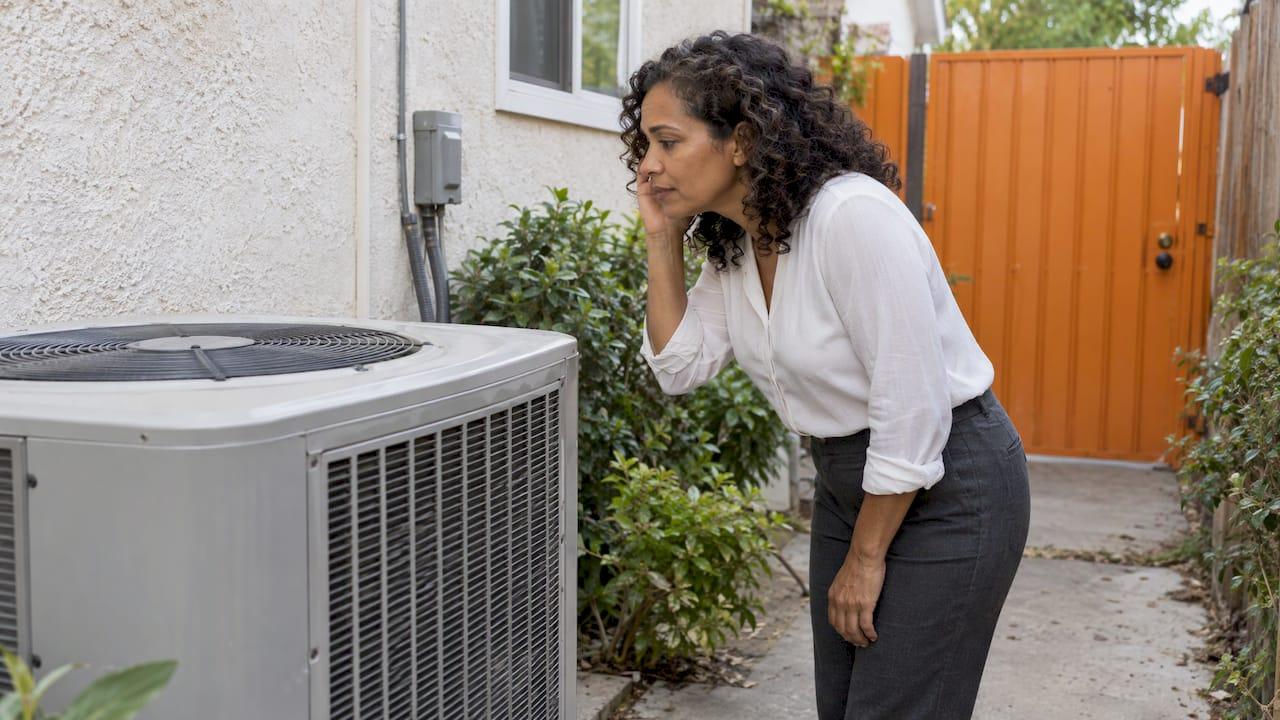
A heat pump has moving parts outside and inside your home, so it is never silent. Normal sounds include low-level fan noise from the indoor and outdoor units, small clicks from electronic switches, and fluid noises as refrigerant moves through the system, according to a heat pump tips sheet from an HVAC contractor. A steady, low hum from the compressor is also expected, and the outdoor fan adds airflow noise, as Daikin explains.
The useful question is not “is it quiet?” but “is it the same as it always was?” A sound you have lived with for years, at the same pitch and volume, is rarely a problem. A sound that is new, louder, higher in pitch, or paired with weaker heating or cooling deserves a closer look.
The defrost cycle
In cold weather, frost can build on the outdoor coil, and the system runs a defrost cycle to melt it. Trane says a heat pump normally gets louder during defrost, especially in cold weather, and the sound should settle within a few minutes. A hum while the outdoor fan is stopped during defrost is also normal.
Los Angeles winters are mild compared with much of the country, so you may hear defrost less often than a homeowner in the mountains. When you do, it is usually brief. If you want the full picture of what the cycle sounds like and how long it should last, our guide to the heat pump defrost cycle walks through it.
Heat Pump Noises at a Glance
Use this table as a first pass. It is based on the manufacturer and government guidance cited throughout this article, and it is a starting point, not a diagnosis.
| Sound | Often normal? | Common cause | What to do |
|---|---|---|---|
| Steady low hum | Yes | Compressor running | Nothing, unless it changes |
| Whoosh of airflow | Yes | Outdoor or indoor fan | Keep airflow clear |
| Click at start or stop | Yes | Electronic switch or relay | Nothing |
| Gurgling or swishing | Usually | Fluid movement | Watch for other symptoms |
| Louder for a few minutes in cold weather | Yes | Defrost cycle | Nothing if it settles |
| Buzzing or humming, fan not spinning | No | Failing capacitor or similar part | Turn off, call a technician |
| Rattling with vibration | No | Loose hardware, fan, blower, unlevel unit | Check pad and panels, then call |
| Grinding, screeching, banging | No | Motor, bearing or compressor trouble | Turn off, call a technician |
Why Your Heat Pump Is Buzzing
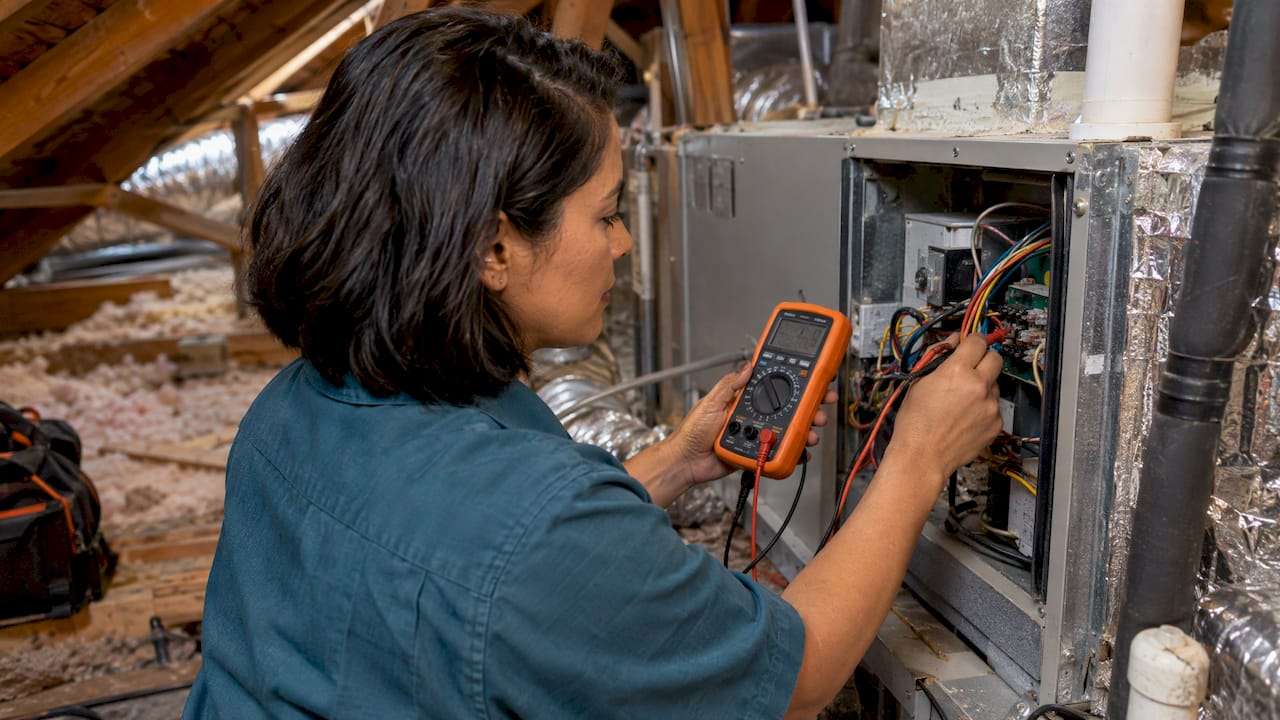
Buzzing is one of the most common reasons people search for this topic, and it is one of the sounds most worth acting on. Carrier says a failing capacitor commonly causes humming or buzzing from the outdoor unit when the fan is not spinning. The same guidance lists a failure or delay in starting and short cycling as other signs.
Think of the capacitor as a small but mighty component. It gives the fan motor and compressor the electrical push they need to start. When it weakens, the motor tries to start, hums, and struggles. A healthy capacitor means a happy heat pump.
What you can check yourself
- Look at the outdoor unit from a safe distance. Is the fan blade turning?
- If the fan is still and you hear buzzing, turn the system off at the thermostat and then at the breaker.
- Do not remove the access panel or touch wiring. Capacitors can hold a charge even when the power is off.
- Write down what you noticed: when it started, whether cooling or heating was weaker, and whether the unit stopped and restarted.
A buzzing sound can also come from a contactor, a fan motor, or debris touching the fan. Our companion article on AC buzzing noise and a homeowner safety check covers the same parts, since a heat pump in cooling mode shares them with an air conditioner.
What a Humming Sound Means
A humming heat pump is not automatically a broken one. A modest, steady motor hum can be normal, and the compressor’s low hum is part of how the system sounds. The concern is a hum that comes with a unit that is slow to start or does not start.
Trane’s guidance says a newly loud outdoor unit may point to a failing capacitor or compressor. It also says loud indoor humming may involve the blower or inducer motor, while outdoor humming may involve the capacitor, contactor, or fan motor.
InspectApedia’s HVAC noise guide adds a practical warning: a motor that hums but is slow to start or does not start can mean a failed start capacitor, failed motor, low voltage, or a seized compressor. It recommends leaving the system off and getting professional service when the compressor hums without starting. That advice makes sense: running a motor that cannot start can overheat it and turn a small repair into a large one.
Hum, buzz or drone: how to tell the difference
- Even hum that is always there: usually the compressor doing its job.
- Hum that rises in pitch, then cuts out and repeats: the unit may be trying and failing to start. Turn it off.
- Hum from indoors: often the blower or air handler, which is a different part from the outdoor compressor.
- Hum that appears only when the fan is stopped: can be normal in defrost, but if it lasts well beyond a few minutes, have it checked.
Rattling, Vibration and Loose Parts
Rattling is the noise you can often trace by ear and by hand. Trane says rattling with excessive vibration is not normal and may come from a blower wheel, fan, fan motor, compressor, loose hardware, or an unlevel outdoor unit.
With the system off, you can safely look for the simple causes:
- Loose panels or screws on the outer cabinet. Tightening a visible cabinet screw is fine.
- Debris near the fan, such as sticks, leaves or a stray toy. Clear anything you can reach without touching the fan or wiring.
- A pad that has settled or shifted. If the unit is visibly tilted, vibration will travel through the frame.
- Refrigerant line contact. Lines that touch the wall or the unit can hum or knock against it.
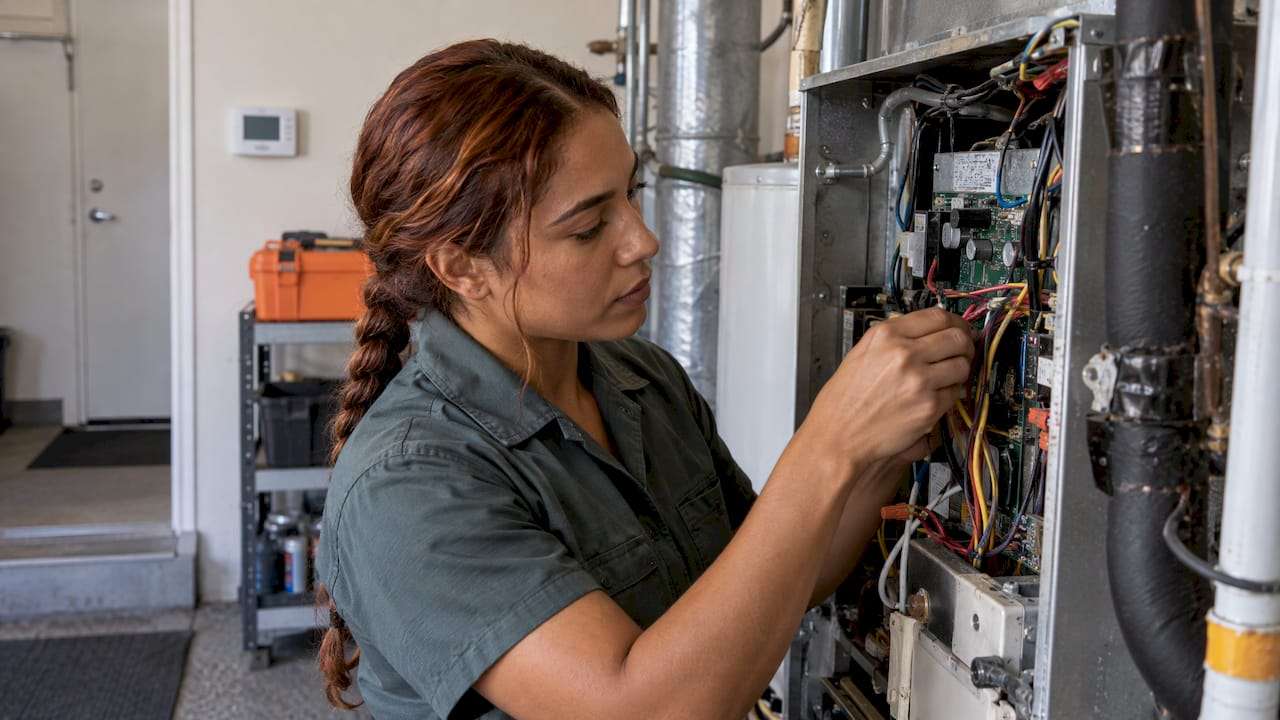
If you clear the obvious items and the rattle remains, the cause is likely inside, and it is time for a technician. A worn motor bearing or a loose blower wheel will not fix itself, and it can damage nearby parts the longer it runs. Our article on noisy AC units and what every sound means is a good companion read for sorting out rattles, clanks and squeals.
Gurgling, Swishing and Clicking
These sounds worry people more than they should. Fluid noises are considered normal heat pump sounds, and clicks from electronic switches are expected too. Refrigerant changes state and direction as the system switches between heating and cooling, and you can hear it.
A gurgle right after the unit shuts off or switches modes is the kind that usually passes. Pay attention if the gurgle comes with any of these:
- Weak heating or cooling
- Ice that does not clear after defrost
- Water pooling near the indoor unit
- A hissing sound that does not stop
Those combinations are worth a service visit. If your heat pump is running but not warming the house, see our guide on what to do when a heat pump is not heating.
Grinding, Screeching and Banging
These are the sounds to treat as urgent. Trane’s troubleshooting guide identifies banging, screeching, rattling, buzzing, grinding, gurgling, extremely loud sounds, and prolonged unusual sounds as potentially abnormal, tied to electrical problems or system failure.
In practical terms:
- Grinding or screeching often means a bearing or motor is wearing out. Metal on metal means damage is in progress.
- Banging or clanking can mean a loose or broken internal part.
- A loud sound that suddenly appears in a unit that was quiet is more telling than a sound that crept up over years.
In all three cases, switch the system off and avoid running it “just to get through the evening.” A few hours on a failing motor can be the difference between a repair and a replacement.
When to Turn It Off and Call a Technician
Turn the heat pump off and call a professional when you notice any of the following:
- Buzzing or humming while the outdoor fan is not spinning
- Grinding, screeching or banging
- Rattling with strong vibration that does not stop after you tighten loose cabinet screws
- A loud noise that lasts well beyond a defrost cycle
- A tripped breaker, burning smell or visible damage
- Noise paired with weak airflow, short cycling or poor comfort
This lines up with government guidance. A September 2024 homeowner guide from the U.S. Department of Energy’s Building Science Education program lists excessive noise from the heat pump or ductwork as a sign the system may not be working properly and advises contacting a qualified HVAC professional. The same guide notes that a sudden jump in electricity use can also signal a malfunction, even without noise, so check your utility bill if the unit seems to be running more than usual.
Trane also recommends calling an HVAC professional about unusual heat pump noises, because finding the cause usually means examining system parts and doing electrical work, which is a safety matter.
How to Reduce Heat Pump Noise
If your heat pump is working properly but is louder than you would like, there are sensible steps. Daikin’s guidance says you can reduce noise by keeping the unit level and securely mounted on a solid foundation with anti-vibration mounts, placing it away from reflective surfaces, and keeping airflow clear. Here is how that translates to a Los Angeles home.
1. Make sure the unit is level and solid
A pad that has settled, cracked or shifted makes the cabinet vibrate. A technician can re-level the unit or replace the pad. Rubber anti-vibration mounts under the feet stop vibration from traveling into the frame and the ground.
2. Check where the unit sits
Hard, flat surfaces such as walls, fences and paved corners bounce sound back. A unit tucked into a tight corner can sound louder to you and to your neighbor. Moving the unit is a bigger job, but when you are replacing equipment, location is the cheapest time to get it right. In dense neighborhoods with side yards, thinking about where the sound lands, such as a bedroom window or a neighbor’s patio, is worth the planning.
3. Keep airflow clear
Leaves, plants and stored items too close to the unit make the fan work harder and can raise the sound. Trim back shrubs and keep the area around the coil clear. Dirty coils also strain the system, so our piece on AC coil maintenance and repair explains why cleaning matters.
4. Keep up with maintenance
The Department of Energy guide says to follow manufacturer guidance for service intervals, which for most systems is every one to two years. A visit can include checking electrical terminals and cleaning coils, and regular maintenance can extend the life of the heat pump. Loose terminals and tired parts are a common source of buzzing, so a routine check often catches the cause before you hear it. Our heat pump maintenance guide for Los Angeles homeowners lays out what a visit should cover.

5. Consider an acoustic barrier or enclosure with care
Some homeowners add a sound barrier or enclosure around the outdoor unit. If you do, leave generous clearance, because a boxed-in heat pump cannot breathe, and restricted airflow makes noise and wear worse. Ask your installer about clearances for your specific model before building anything.
Is It the Equipment or the Installation?
It is easy to blame the technology. NIBE notes that performance and sound depend heavily on a heat pump’s age and installation quality. Daikin goes further and says most noise issues come from installation oversights rather than the technology itself, which is why proper siting and secure mounting matter.

That matches what we see. A well-set unit on a level pad, with correct clearances and tight line sets, tends to run quietly. A rushed install does not. If you are shopping for a new system, ask how the installer plans to mount the outdoor unit, where it will sit relative to bedrooms and property lines, and how the line set will be secured.
For systems with several indoor heads, such as multi-zone ductless setups, the noise story has two sides: the outdoor unit and each indoor head. Ask about both. Our crew also services commercial VRF systems, and for building managers the VRF maintenance checklist is a helpful reference for keeping those systems quiet and efficient.
Heat Pump Noise vs. Other Heating Systems
People often compare heat pumps with furnaces or boilers. One manufacturer’s article points out that gas systems make bursts of noise, especially on ignition, while heat pumps tend to produce a steady, low-level sound. The exact comparison depends on your equipment and home, so judge by your own unit: a heat pump that sounds the same day after day is behaving. A heat pump that changes character is telling you something.
If your noise is coming from a furnace, the causes are different, and the same rule applies. Do not ignore a new loud sound. Our crew handles furnace repair as well as heat pump work.
A Quick Noise Log That Helps Your Technician
The more specific you are, the faster a technician can find the cause. Before the visit, note:
- Where the sound comes from: outdoor unit, indoor unit, ducts or line set
- When it happens: at startup, while running, at shutoff, in heating, in cooling
- What it sounds like: buzz, hum, rattle, click, whistle, scrape
- How long it has been happening and whether it is getting worse
- What else changed: higher bills, weaker airflow, ice, tripped breaker
A short phone video of the outdoor unit running is even better. It lets a technician hear it before arriving and bring the right parts.
What We Think About Heat Pump Noise
Most of the heat pump noise calls we get come down to a handful of causes: a tired capacitor, a loose mount, an unlevel pad, or a unit installed too close to a hard surface. Almost none of them require replacing the system. That is why we start with an honest diagnosis and a flat-rate price for the repair, so you are not surprised by a diagnostic fee or pushed toward a new unit you do not need.
Heat pumps, mini splits and commercial VRF systems are where we do our best work. With more than twenty years serving Los Angeles, we have worked on everything from historic homes to modern multi-zone heat pump systems. We would rather fix a buzzing capacitor today than have you run a struggling motor into a bigger bill next month.
If your system is old, noisy and failing repeatedly, we will tell you plainly, and we will walk you through efficient replacement options, including California requirements and heat pump rebates we keep up with. A properly sized, properly installed heat pump is designed to run quietly for years.
Leo
Get a Noisy Heat Pump Checked in Los Angeles
If your heat pump is buzzing, humming without starting, rattling or grinding, we offer same-day service across Greater Los Angeles, including Hollywood, Beverly Hills, Bel Air and Brentwood. Our service call starts at $125, and repairs are quoted at a flat rate before work begins. You can see the full list of heat pump, mini split and AC repair services on our site, or call us at (323) 970-3113.

If the noise is a sign it is time for a quieter, more efficient system, our heat pump installation ranges from $5,500 to $12,000, depending on the home and system, and financing options are available. To keep a healthy unit that way, our maintenance plan runs $180 to $250 per year.
FAQ
Why is my heat pump making a buzzing noise?
The most common cause is a failing capacitor, which can make the outdoor unit buzz or hum when the fan is not spinning. You may also notice a delay in starting or short cycling. Turn the system off and have a technician look at it, since the electrical parts involved are not safe to open yourself.
Is it normal for a heat pump to hum?
A steady, low hum from the compressor is normal. A hum that is new, louder, or paired with a unit that is slow to start or will not start is not. In that case, leave the system off and call a professional.
Why does my heat pump get louder in winter?
The defrost cycle is the usual reason. A heat pump normally gets louder during defrost, and the sound should settle within a few minutes. If it stays loud, or the unit is icing up repeatedly, schedule a service visit.
How can I make my outdoor heat pump quieter?
Start with the basics: a level unit, a solid pad, anti-vibration mounts, clear airflow and some distance from reflective surfaces like walls. Routine maintenance also helps, since loose terminals and dirty coils add noise. For anything electrical or internal, have a technician do the work.
Does a noisy heat pump mean it needs to be replaced?
Not usually. Many noises come from a worn capacitor, loose hardware or an unlevel pad, all of which are repairable. Replacement becomes a conversation when the unit is old, failing repeatedly, or has a major component such as the compressor in trouble.
Sources
- Heat pump tips sheet (HCE, October 2022)
- Heat Pump Troubleshooting: Diagnosing Common Issues, Trane
- Is This Normal? HVAC Smells and Sounds, Explained, Trane
- Are heat pumps noisy? Sound levels explained, Daikin
- Are heat pumps noisy? NIBE
- Heat Pump Capacitor Replacement: Cost & DIY Guide, Carrier
- HVAC Noise Diagnosis & Repair, InspectApedia
- You Installed an Air Source Heat Pump, U.S. Department of Energy Building Science Education (September 2024)
Recommended
Leo, Owner & Lead Technician at LC Heating & Air
Leo leads LC Heating & Air as an owner-operator and holds California CSLB C-20 HVAC license #1073586. His guides focus on practical diagnostics, safe repair decisions, and clear advice for Los Angeles homeowners.