- What’s Causing That Ductwork Banging Noise?
- Quick Checks to Try Before Calling Anyone
- Why Is My Duct Noisy at Different Times of the Cycle?
- Common Causes of Duct Popping and How to Fix Each One
- When to Stop and Call a Professional
- How to Prevent Ductwork Banging Noise Long Term
- What LC Heating & Air Has Learned From 20 Years of Duct Calls
- When to Call LC Heating and Air Conditioning for Duct Repair
- Sources
- FAQ
- Recommended
A single pop when your furnace starts or shuts off is almost always thermal expansion, and it’s cosmetic. Repeated, rhythmic banging while the system runs usually points to high static pressure, an undersized return, or a loose duct component. If you smell gas or burning, or notice soot, turn off the system immediately and call a technician. Everything else can wait for a filter check first.
TL;DR:
- Most duct banging is caused by thermal expansion, high static pressure, or loose connections, each producing a distinct sound pattern that helps diagnose the issue.
- Homeowners can often identify the cause by timing the noise, with pops at startup indicating expansion and rhythmic banging pointing to airflow restrictions or static pressure problems.
- Routine checks such as replacing filters, opening all vents, and inspecting for loose or rubbing ducts can resolve or narrow down common causes without professional help.
- Persistent or unusual noises, especially with smells of gas, soot, or loud booms at startup, require immediate professional inspection and repair.
- Regular insulation, support, and static-pressure testing after system upgrades can prevent most duct banging issues long term.
What’s Causing That Ductwork Banging Noise?
Most banging noise falls into one of three buckets: heat causing metal to flex, pressure fighting against restricted airflow, or something physically loose. Thermal expansion, high static pressure, and mechanical looseness account for the vast majority of cases homeowners report, and each one has a distinct sound signature and timing pattern.
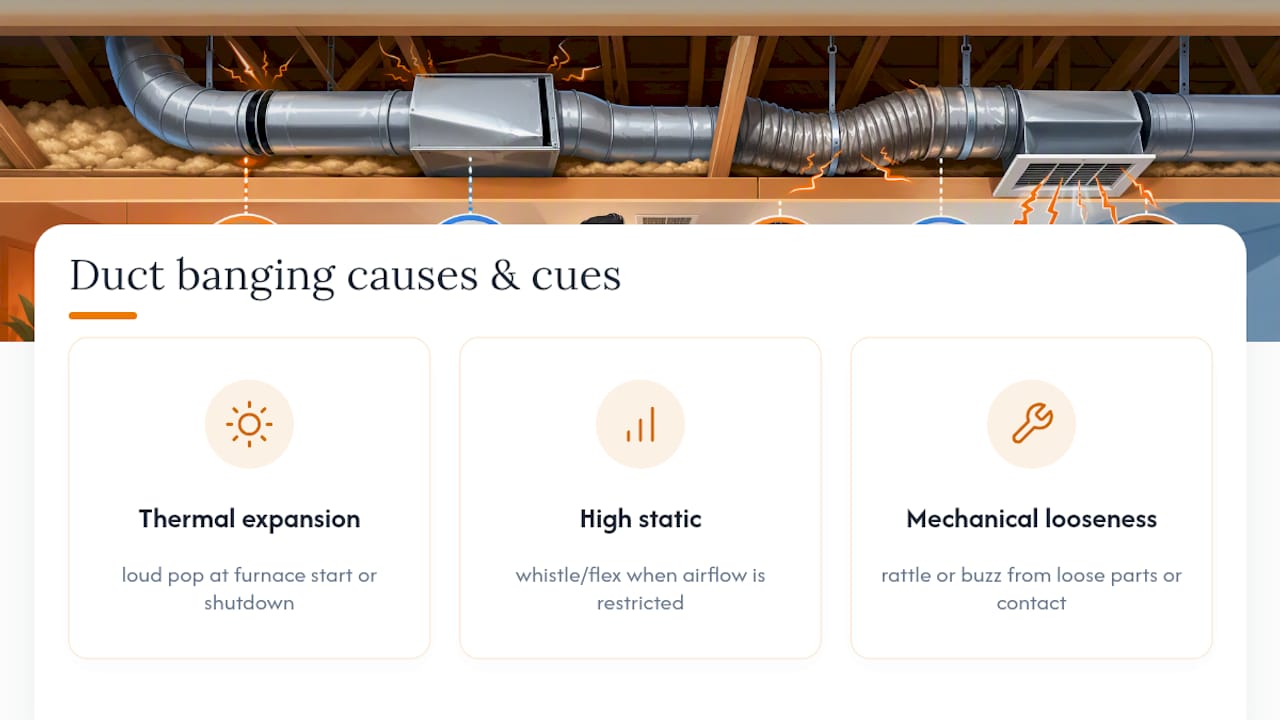
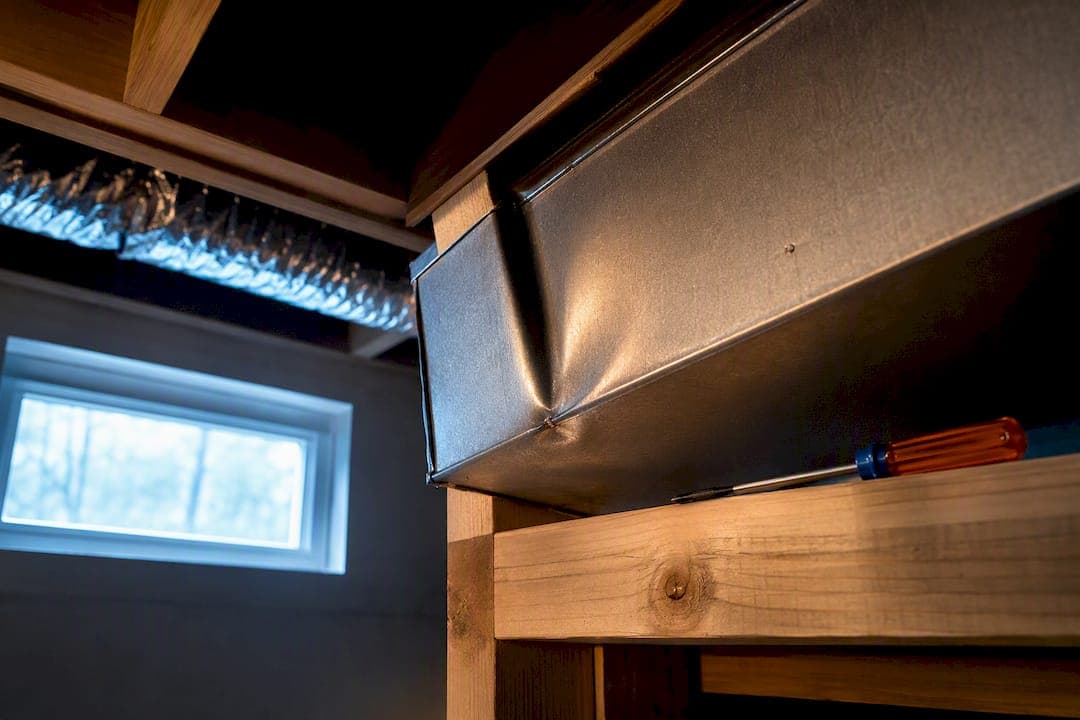
Thermal expansion, sometimes called oil-canning, happens when sheet metal ducts heat up or cool down and the metal panels snap back into shape. It’s the loud “pop” you hear right as the furnace kicks on or right after it shuts off. Static pressure builds when something restricts airflow, a clogged filter, a closed register, an undersized return, and the ducts start flexing or whistling under the strain. Mechanical looseness covers everything from a screw that backed out of a duct strap to a section of trunk line resting against a floor joist and buzzing every time air moves past it.
Knowing which bucket you’re dealing with determines whether you grab a screwdriver or grab your phone.
Quick Checks to Try Before Calling Anyone
Before you assume the worst, run through this five-step sequence. Most homeowners solve or narrow down the problem in under fifteen minutes.
- Safety check first. If you smell gas, burning, or see soot near the furnace, shut off the system at the thermostat and breaker, then call for emergency service. Do not inspect ductwork until it’s confirmed safe.
- Replace the air filter. A clogged filter is the single most common airflow restriction. Match the correct MERV rating for your system, not just the highest number on the shelf.
- Open every supply and return register. Move furniture, rugs, or curtains blocking vents. Never close registers to “balance” a room.
- Switch to fan-only mode. If the banging continues without heating or cooling running, the noise is airflow or blower related, not combustion related.
- Walk the house during a cycle. Listen room by room to find which duct run or vent is actually making the sound.
Pro Tip: Write down exactly when the noise happens, startup, mid-cycle, or shutdown, and roughly where it’s loudest. That fifteen-second note saves a technician real diagnostic time and often shaves labor off the bill.
Why Is My Duct Noisy at Different Times of the Cycle?
Timing tells you almost everything. Documenting the noise pattern before a technician ever shows up is one of the fastest ways to narrow down the cause.
- Single pop at startup or shutdown: Classic thermal expansion. Look at large, flat sections of trunk duct in the attic or crawlspace, those flex the most.
- Bang right as the blower kicks on, or rhythmic banging throughout the run: Points to high static pressure, an undersized return, or a blower issue.
- Rattle or steady buzz during operation: Usually a loose screw, a slipped strap, or ductwork resting against framing.
To isolate the sound, try the fan-only test again after your filter change and see if anything improved. Some homeowners find it helpful to hold a cardboard tube against a duct section like a stethoscope to pinpoint exactly which run is vibrating. Repeat the walk-through once cool, once during steady-state heating or cooling, and once right at shutdown. Three data points beat one guess every time.
Common Causes of Duct Popping and How to Fix Each One
Thermal expansion (oil-canning). This is the noise you hear as metal ductwork heats and cools. Insulating exposed duct runs in attics and crawlspaces is a low-cost fix that also reduces the temperature swing driving the expansion in the first place. Add foam spacers anywhere a duct touches framing. For large, flat trunk sections that keep oil-canning no matter what, a professional can install internal cross-braces or external L-braces, often far cheaper than replacing the run and just as effective at killing the flex.
High static pressure. This is where a filter that’s too restrictive, closed registers, or an undersized return system all collide. High-MERV filters can actually choke airflow on systems that weren’t designed for them, so match the filter to your equipment rather than defaulting to the highest rating available. Keep every return path open. If the banging continues after you’ve fixed filtration and airflow, that’s your signal to request a professional static-pressure test rather than keep guessing.
Loose connections and unsupported ducts. Screws back out, straps sag, and joints separate slightly over years of expansion and contraction. Reseal any loose joint with foil HVAC tape, never cloth duct tape, which dries out and fails within a season in duct environments. Tighten hanging straps and add support where a run has started to sag.
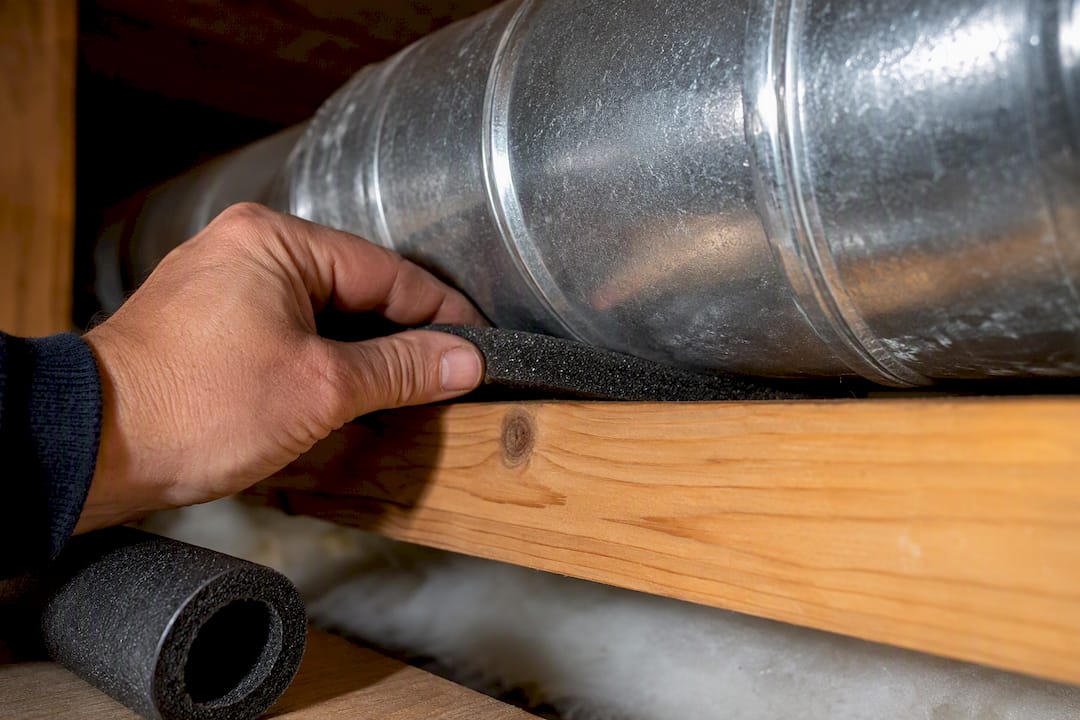
Ducts rubbing against framing. A duct that contacts a floor joist or stud will buzz or thump every time air pressure changes inside it. Adhesive foam strips or pipe insulation wrapped at the contact point usually silences it in minutes.
Blower or debris issues. A loose or broken fan blade, or debris caught in the blower housing, produces a rhythmic banging that won’t respond to filter or register fixes. This one isn’t a DIY repair.
High static pressure does more than make noise. It also increases energy consumption and shortens blower motor life, so fixing the airflow problem behind a bang often lowers your utility bill as a side effect.
When to Stop and Call a Professional
Some symptoms mean stop troubleshooting and pick up the phone.
- You smell gas or burning, or notice soot. Shut off the system, leave the building if the smell is strong, and call for emergency service right away.
- You hear a persistent loud boom at furnace startup, distinct from duct popping. This can indicate delayed ignition, a genuinely dangerous condition that needs a technician immediately.
- Banging continues despite filter and register fixes, or you notice reduced airflow and climbing energy bills alongside the noise.
A qualified technician will run an ignition inspection, measure static pressure at the air handler, inspect the blower and condenser, and assess the structural condition of your ductwork, checks that go well beyond what a homeowner can do safely with a flashlight.
How to Prevent Ductwork Banging Noise Long Term
A little routine maintenance keeps most banging from coming back.
- Replace filters regularly depending on household use, and pick a MERV rating your system can actually handle.
- Keep every supply and return register open. Closing vents to save energy is one of the most common habits that drives static pressure up and makes banging worse.
- Insulate exposed duct runs in attics and crawlspaces, and add stiffening bracing to large flat trunk sections if oil-canning keeps recurring.
- After a new furnace, AC, or heat pump installation, schedule a professional static-pressure test. New equipment on old, undersized ductwork is one of the most overlooked causes of chronic noise.
Pro Tip: If you’ve upgraded your system in the past year and the banging started around the same time, mention that timeline to your technician. Undersized ductwork paired with newer, higher-capacity equipment is a very specific fix, not a filter problem.
What LC Heating & Air Has Learned From 20 Years of Duct Calls
I’m Leo, and after two decades working on HVAC systems across Los Angeles, from century-old bungalows to modern multi-zone heat pump setups, duct banging almost never surprises our technicians anymore. Most calls resolve with a filter swap, a resealing pass with foil tape, or foam padding at a contact point. When it doesn’t, the next step is usually a static-pressure test or, occasionally, upsizing an undersized return.
Every same-day diagnostic follows the same pattern: inspection, measurement, then a flat-rate written estimate before any work starts. No surprise charges, no pressure to replace a system that just needs a brace.
— Leo
When to Call LC Heating and Air Conditioning for Duct Repair
If you’ve swapped the filter, opened every register, and the banging keeps coming back, or if anything about the noise made you think “ignition problem” rather than “annoying pop,” that’s the point to bring in a professional. LC Heating and Air Conditioning is the practical alternative to guessing your way through another season of duct noise: our technicians run an actual static-pressure test instead of recommending a system replacement by default, and every repair quote comes at a flat rate before work begins, so you know the cost upfront.

Our same-day diagnostic covers a full inspection, quick fixes on the spot when possible, foil-tape resealing, foam padding at contact points, and bracing for stubborn oil-canning, plus a written estimate for any larger duct or return upsizing work. We work across historic Los Angeles homes and modern multi-zone heat pump and VRF systems alike. Book a same-day HVAC diagnostic and get the banging traced and quoted before the day is over.
Sources
- Why Your Ductwork Is Banging — Martha Stewart
- How to diagnose banging sounds in HVAC ductwork — Homestery
- HVAC making banging noise: causes, diagnostics, fixes — PickComfort
FAQ
Is It Normal for Ductwork to Make Noise?
A single pop at startup or shutdown is normal and usually just thermal expansion in the metal. Rhythmic banging throughout the cycle is not normal and points to a mechanical or airflow issue worth checking.
How Do I Tell if My Ductwork Is Bad?
Look for reduced airflow at registers, rising energy bills, visible gaps at joints, or ducts that sag away from their supports. Persistent banging that survives a filter change and open registers is a strong sign the ductwork itself, not just airflow, needs a professional look.
How Do I Stop My Air Ducts From Popping?
Start with a correctly rated filter and fully open registers, since closing vents actually increases the pressure causing the popping. If popping continues, insulating exposed duct runs or adding stiffening braces to flat trunk sections usually solves it.
Why Does My HVAC System Make a Loud Banging Sound?
The three most likely causes are thermal expansion of the metal ducts, high static pressure from restricted airflow, or a loose connection somewhere in the system. A loud boom specifically at furnace startup, distinct from ordinary duct popping, can signal delayed ignition and needs immediate professional attention.
Recommended
Leo, Owner & Lead Technician at LC Heating & Air
Leo leads LC Heating & Air as an owner-operator and holds California CSLB C-20 HVAC license #1073586. His guides focus on practical diagnostics, safe repair decisions, and clear advice for Los Angeles homeowners.