LC Heating & Air provides honest, diagnostic-based duct repair for Pico-Robertson homes. We identify airflow issues, quantify leakage, and provide clear, written estimates for repairs.
Duct Cleaning & Air Duct Service in Pico-Robertson
LC Heating & Air provides duct cleaning in Pico-Robertson — including air duct cleaning, duct repair service, duct sealing, HVAC ductwork. Whether you need same-day service, a written estimate, or help deciding between repair and replacement, our licensed technicians handle every make and model.
We repair and service all major HVAC brands in Pico-Robertson, including Carrier, Trane, and Goodman, and older or discontinued units. No matter the manufacturer, we diagnose the problem accurately and give you an upfront price before any work begins.
If your home has rooms that never seem to get comfortable, or if your energy bills are higher than they should be, the problem might not be your AC unit itself—it might be the ductwork hidden in your attic or crawl space. As a local contractor here in Los Angeles, I see it all the time: a perfectly good system struggling to perform because the air is leaking out before it ever reaches your living room.
At LC Heating & Air, we don't just guess at the problem. We use a diagnostic process to find exactly where your system is losing air. Whether it’s a disconnected flex duct, a crushed run, or general leakage at the joints, we provide a straightforward assessment of what needs to be fixed and whether a repair is the right move for your specific home.
Call LC Heating & Air at (323) 970-3113 for scheduling and estimates.
Local HVAC considerations
Pico-Robertson and surrounding LA neighborhoods
CSLB #1073586
(323) 970-3113
Common Duct Issues in Pico-Robertson Homes
Pico-Robertson has a mix of housing styles, from older single-family homes to duplexes and multifamily buildings. In many of these properties, we find ductwork that has been compromised by years of attic maintenance, poor original installation, or simple material degradation. Common patterns include crushed flex duct from foot traffic in tight attics, failed mastic at supply plenums, and disconnected take-offs that are dumping conditioned air into unconditioned spaces.
Another issue we frequently encounter is return air leakage. When return ducts leak in a hot attic, they pull in dust, insulation fibers, and hot air, which forces your system to work much harder to cool your home. This not only increases your energy bills but also degrades your indoor air quality. We focus on identifying these specific leaks so we can seal them properly.
Why Your Home's Age and Layout Matter
Every home in Pico-Robertson is different, and that matters when we look at your HVAC system. Older homes often have undersized ducts that were never designed for modern high-efficiency equipment, while newer remodels might have ductwork that was poorly routed during construction. We look at the entire system—equipment placement, electrical layout, and duct routing—before we recommend any repair.
If we see that your ductwork is fundamentally undersized or in a state of total decay, we will tell you. We believe in being honest about repair versus replacement. Sometimes a repair is a great, cost-effective fix, but if the system is too far gone, we’ll explain why a replacement might be the more practical choice for your long-term comfort.
Our Diagnostic Process
We don't start by selling you a service; we start by finding the facts. Our process begins with a thorough inspection of your accessible ductwork and airflow measurements at your registers. We compare what your equipment is producing to what is actually arriving in each room.
To get the full picture, we perform duct pressurization testing, also known as a duct blaster test. This allows us to quantify exactly how much air is leaking out of your system. Once we have these numbers, we provide a written estimate that outlines exactly what we found and what it will take to fix it. You’ll know the plan before we touch a single piece of equipment.
Repair vs. Replacement: Making the Right Call
One of the most common questions I get is, 'Leo, should I fix this or just replace it?' The answer depends on the condition of the ducts and the age of your HVAC system. If the leakage is localized—like a few disconnected joints or a torn section of flex duct—a repair is usually the best path forward. It’s a cost-effective way to restore comfort and efficiency.
However, if the ductwork is severely damaged throughout the entire system, or if it’s so undersized that it’s choking your equipment, a repair might just be a temporary fix for a larger problem. We will always give you our honest opinion on whether a repair will actually solve your comfort issues or if you’re just putting a bandage on a failing system.
Understanding the Costs
We believe in transparent pricing. Duct repair costs vary based on what we find. A simple inspection starts between $125 and $200. Targeted repairs for specific leaks generally range from $500 to $5,000 depending on the complexity of the access and the amount of work required. For systems with widespread, inaccessible leaks, we offer Aeroseal duct sealing, which typically ranges from $1,500 to $3,000.
We provide a detailed, written estimate after our diagnostic so you know exactly what you are paying for. We don't believe in hidden fees or surprise costs. Our goal is to provide a service that makes financial sense for your home.
Scheduling Your Service
We know your time is valuable. When you call LC Heating & Air at (323) 970-3113, we work with you to find a time that fits your schedule. Because we are a local, owner-operated business, we handle the logistics carefully—checking access points, electrical requirements, and equipment placement before we start any work.
We serve the Pico-Robertson area and surrounding neighborhoods, including Beverlywood, Miracle Mile, and Beverly Grove. Whether you need a quick inspection or a more comprehensive repair, we are here to help you get your system running the way it should.
Air Quality and Safety
Duct leaks aren't just an efficiency problem; they are an air quality problem. When your return ducts leak in an attic, they act like a vacuum, pulling in dust, insulation fibers, and other debris that you then breathe in your home. By sealing these leaks, we aren't just helping your AC run better—we’re helping you breathe cleaner air.
We also keep safety at the forefront. We ensure that all repairs are done correctly to prevent future issues and, where necessary, we advise on permit requirements if the scope of work involves significant system redesign. Your safety and the integrity of your home's systems are our top priorities.
Frequently Asked Questions
How do I know if my ducts are leaking? The clearest symptom is rooms that are consistently harder to heat or cool than others, combined with high energy bills. Dusty supply registers can also indicate return duct leaks drawing unconditioned attic air.
Can I repair ducts myself? Accessible flex duct reconnections are DIY-possible, but most significant leakage occurs in attics that are difficult to access. Improper repairs can make things worse, so professional diagnosis is recommended.
What is Aeroseal? It’s a process that seals ductwork from the inside using a mist of adhesive polymer particles. It’s excellent for leaks in sections of your home that are impossible to reach manually.
Will duct repair help my HVAC last longer? Yes. Leaky ducts force your equipment to run longer cycles to meet the thermostat setpoint. Sealing the ducts reduces this runtime, which lowers the wear and tear on your compressor and blower motor.
Mistakes to avoid — Duct Repair in Pico-Robertson
Oversized equipment, skipped maintenance, and DIY refrigerant or gas work are frequent duct repair mistakes we correct in Pico-Robertson.
Closing too many registers or using the wrong filter MERV rating can starve airflow and shorten component life.
Ready to get started?
If you're tired of uneven temperatures and high energy bills, give LC Heating & Air a call at (323) 970-3113. We’ll come out, perform a professional diagnostic, and give you an honest assessment of your ductwork.
We are licensed (CSLB #1073586) and focused on providing practical, long-term solutions for Pico-Robertson homeowners. Let’s get your system working efficiently again.
How the visit works
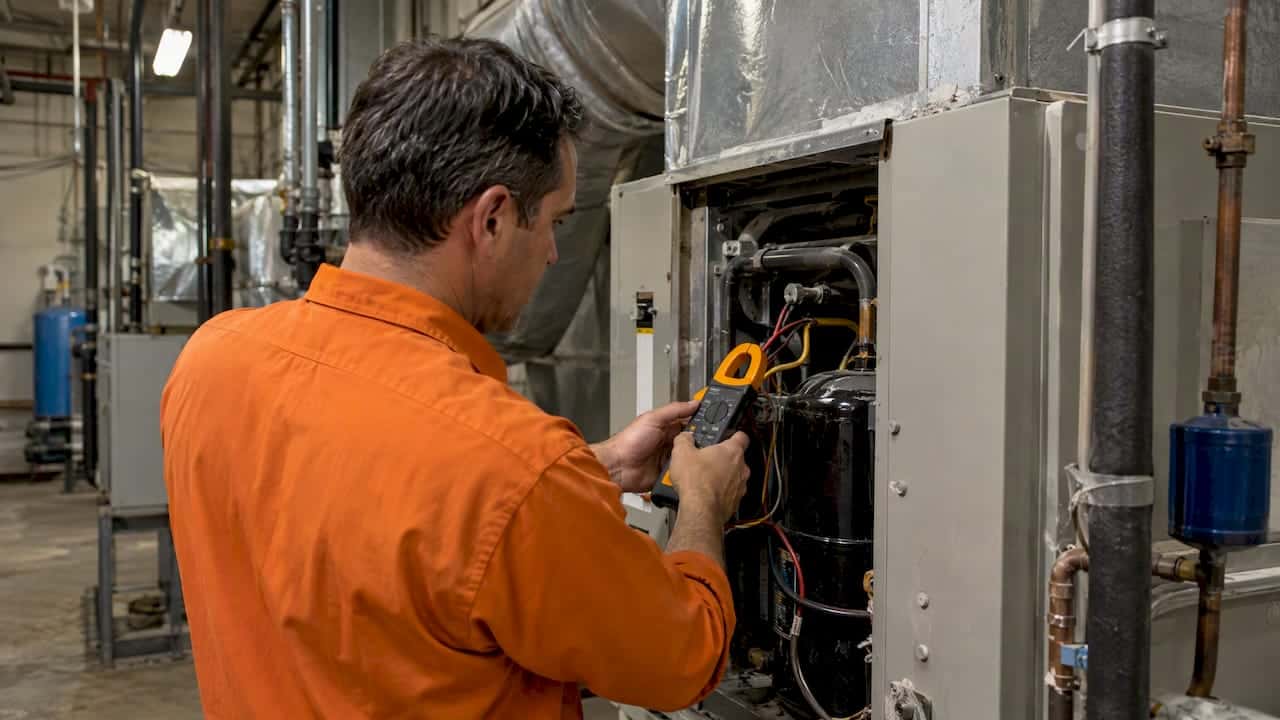
We measure airflow at registers, inspect accessible ductwork, and perform duct pressurization testing to quantify leakage.
We identify the specific leaks and damage and present a repair scope with written pricing before any work begins.
We access damaged sections and seal with mastic, reconnect disconnected flex duct, and repair torn inner liners.
We re-test duct leakage after repair and measure airflow at registers to confirm improvement.
Cost factors we review before quoting
- • Accessibility of the ductwork in your attic or crawl space
- • Total amount of leakage identified during the duct blaster test
- • Type of duct material (flex duct vs. sheet metal)
- • Whether manual sealing or Aeroseal technology is required
Useful next steps
Duct Repair in Pico-Robertson at a glance
- • Duct Repair provider: LC Heating & Air
- • Location served: Pico-Robertson, CA 90035
- • License: CSLB C-20 #1073586
- • Phone: (323) 970-3113
- • Estimate: written estimate before approved work
- • Emergency calls answered within 30 minutes (24/7)
Our duct repair process in Pico-Robertson
Reviewed by Leo, Owner & Lead Technician
This duct repair guide for Pico-Robertson is reviewed for practical HVAC accuracy by Leo at LC Heating & Air. LC Heating & Air holds California CSLB C-20 HVAC license #1073586 and provides written estimates before approved work.
What Pico-Robertson customers say about duct repair
Verified reviews from homeowners in Pico-Robertson and nearby neighborhoods who used our duct repair service.
“Had LC install a Daikin mini split in our 1940s bungalow that never had AC. The work was clean, the unit is incredibly quiet, and our bedroom finally stays cool in summer. Highly recommend.”
“We converted our garage into an ADU and needed HVAC. LC installed a Mitsubishi single-zone mini split — permits, electrical, everything. The unit is so quiet you can barely hear it running. Our tenant loves it.”
“Got a 3-zone Daikin system for our craftsman home — bedrooms upstairs, living room downstairs. Each room has its own temperature control and the monthly electric bill is actually lower than our old window units combined.”