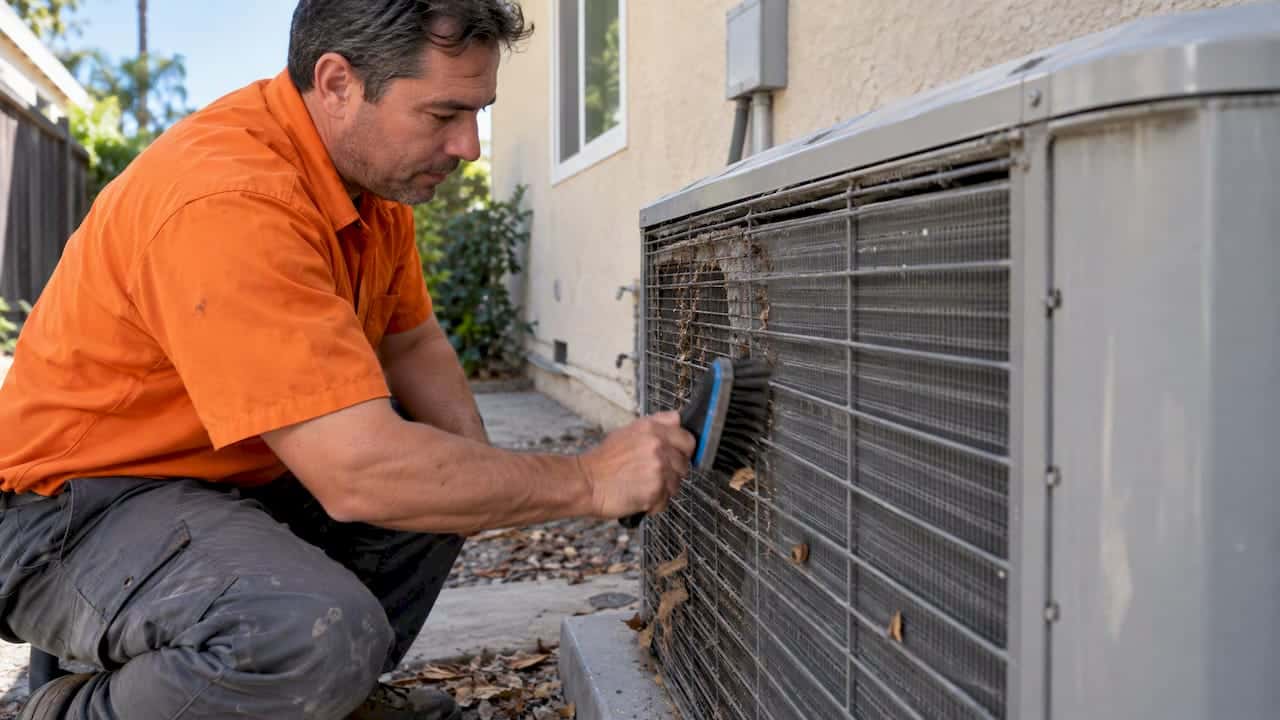
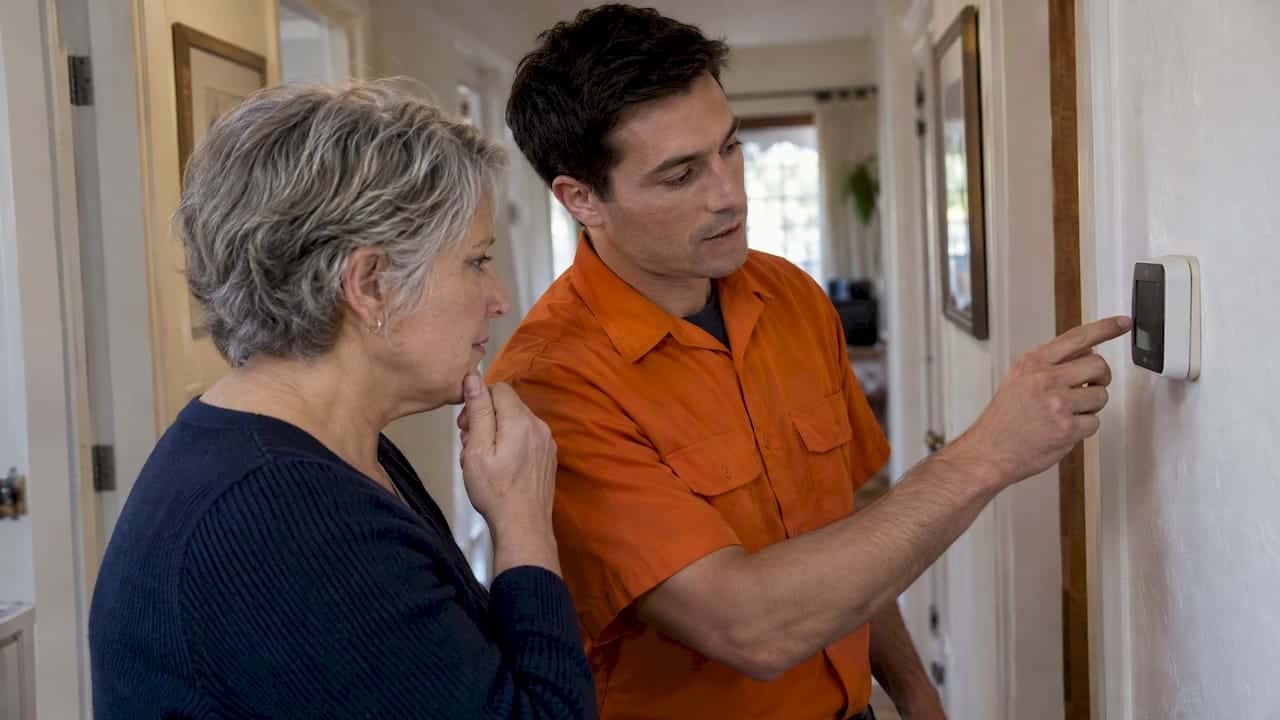
LC Heating & Air provides professional duct diagnostics and repair to solve uneven temperatures, high energy bills, and poor indoor air quality in East Hollywood homes.
Duct Cleaning & Air Duct Service in East Hollywood
LC Heating & Air provides duct cleaning in East Hollywood — including air duct cleaning, duct repair service, duct sealing, HVAC ductwork. Whether you need same-day service, a written estimate, or help deciding between repair and replacement, our licensed technicians handle every make and model.
We repair and service all major HVAC brands in East Hollywood, including Carrier, Trane, and Goodman, and older or discontinued units. No matter the manufacturer, we diagnose the problem accurately and give you an upfront price before any work begins.
If your home in East Hollywood has rooms that never seem to get cool enough in the summer or warm enough in the winter, the problem often isn't your AC unit itself—it's the ductwork. As a local contractor, I see many systems where 20% to 30% of the air is leaking out into attics or wall cavities before it ever reaches your living space. You end up paying to condition your attic instead of your home.
At LC Heating & Air, we don't just guess at the problem. We use duct pressurization testing to find exactly where your system is losing air. Whether you have disconnected flex duct, crushed runs from attic traffic, or leaky joints in your sheet metal, we provide a clear, written estimate for the repair. We are licensed (CSLB #1073586) and focused on giving you an honest assessment of whether a repair will fix your comfort issues or if the system is beyond the point of a simple patch.
Call LC Heating & Air at (323) 970-3113 for scheduling and estimates.
Local HVAC considerations
East Hollywood (90027)
CSLB #1073586
(323) 970-3113
Common Duct Issues in East Hollywood
East Hollywood has a mix of housing styles, from older single-family homes to small multifamily buildings and remodels. In these older structures, we frequently encounter ductwork that has deteriorated over time. The heat in Los Angeles, combined with dust and the occasional wildfire smoke event, puts extra strain on these systems. We often find that original ductwork was never sized correctly for modern equipment, or that previous remodels left ducts crushed or disconnected in tight attic spaces.
When we inspect your system, we look for specific patterns: return air leaks that pull dusty attic air into your living space, supply leaks that cause whistling sounds at registers, and poorly routed flex duct that restricts airflow. If your system is struggling to keep up, it is usually because these leaks force the blower motor to work harder and run longer, which shortens the lifespan of your equipment.
Why Your Home's Age Matters
The age of your home in East Hollywood significantly dictates how we approach duct repair. Older homes often feature sheet metal ducts that have developed leaks at the joints due to decades of expansion and contraction. Newer remodels, on the other hand, often rely on flex duct that can easily be crushed or kinked if it wasn't installed with enough clearance.
Before we recommend any repair, we check the access, electrical layout, and equipment placement. If your ducts are buried under layers of insulation or located in inaccessible wall cavities, we will discuss the most practical way to reach them. We believe in being upfront about what is possible; if a repair is going to be ineffective due to the layout of your home, we will tell you.
Our Diagnostic Process
We don't start by selling you a new system. We start by measuring what is actually happening in your home. Our process begins with a thorough inspection of your accessible ductwork and airflow measurements at your registers. We compare the output of your equipment to the actual airflow reaching your rooms.
We also use duct pressurization testing (duct blaster testing) to quantify exactly how much leakage exists. This gives us a baseline. After we perform the repairs—whether that involves sealing joints with mastic, reconnecting flex duct, or using Aeroseal for internal leaks—we re-test the system. You get measurable proof that the work we did actually improved the performance of your HVAC system.
Repair vs. Replacement: Making the Right Call
A common question I get at the kitchen table is, 'Leo, should I just replace the whole thing?' The answer depends on the condition of your equipment and the extent of the duct damage. If your ducts have minor leaks but your equipment is in good shape, a repair is usually the most cost-effective path. It saves you money and extends the life of your current unit by reducing its runtime.
However, if the ductwork is severely undersized, falling apart, or if the HVAC unit itself is nearing the end of its service life, patching the ducts might be throwing good money after bad. We provide a written estimate that outlines the scope of the repair so you can make an informed decision based on the facts, not sales pressure.
Cost Factors and Considerations
Duct repair costs vary based on the complexity of the job. A simple reconnection of a loose flex duct is much different than a comprehensive sealing of a full system. We charge based on the labor and materials required to access and fix the specific leaks we find.
When you receive an estimate from LC Heating & Air, it includes everything needed to do the job right. We don't believe in hidden fees. Whether it's manual sealing with mastic or an Aeroseal application for hard-to-reach areas, we ensure you understand the cost before we start.
Access and Scheduling
We know that having a contractor in your home is an inconvenience. We prioritize clear communication regarding our arrival time and the scope of work. Because we are a local Los Angeles contractor, we understand the logistical challenges of East Hollywood, from parking to tight attic access.
We check your equipment placement and duct routing during our initial visit to ensure we have the right tools and enough time to complete the job properly. Our goal is to get in, do the work right, and leave your home as clean as we found it.
Common Mistakes to Avoid
The biggest mistake I see is homeowners trying to seal ducts with standard duct tape. It doesn't last. The heat in an attic will cause the adhesive to fail within a few months, leaving you with the same problem you started with. We use professional-grade mastic and mechanical fasteners that are designed to hold up over time.
Another mistake is ignoring the return side of the system. Many people focus only on the supply ducts, but if your return ducts are leaking, you are pulling unfiltered, dirty air from your attic directly into your system. This ruins your air quality and clogs your filters prematurely. We always inspect both sides of the system to ensure a complete fix.
Health and Safety
Your indoor air quality is directly tied to the integrity of your ductwork. When ducts leak in an attic, they act like a vacuum, pulling in insulation fibers, dust, and potential mold spores. If those leaks are in your supply lines, that attic air is being pushed directly into your living room.
By sealing your ducts, you aren't just saving money on energy bills; you are keeping your home's air cleaner. We take safety seriously, ensuring that all repairs meet local standards and that your system is operating safely and efficiently when we finish.
Is Duct Repair Right for You?
If you are experiencing uneven temperatures or high energy bills, the first step is a professional diagnostic. We will come to your home, inspect the system, and show you exactly where the leaks are. We will explain whether a repair will solve your comfort issues or if the system requires a more significant intervention.
At LC Heating & Air, we value your time and your trust. We provide written estimates and honest advice. If you're ready to get your system running the way it was designed to, give us a call at (323) 970-3113.
How the visit works
We measure airflow at registers, inspect accessible ductwork, and perform duct pressurization testing to quantify leakage.
We identify the specific leaks and damage and present a repair scope with written pricing before any work begins.
We access damaged sections and seal with mastic, reconnect disconnected flex duct, and repair torn inner liners.
We re-test duct leakage after repair and measure airflow at registers to confirm improvement.
Cost factors we review before quoting
- • Accessibility of ductwork in attics or crawl spaces
- • Total linear footage of ducting requiring repair
- • Type of duct material (flex vs. sheet metal)
- • Severity of leaks and need for specialized sealing like Aeroseal
- • Requirement for permit-level work if redesign is needed
Useful next steps
Duct Repair in East Hollywood at a glance
- • Duct Repair provider: LC Heating & Air
- • Location served: East Hollywood, CA 90027
- • License: CSLB C-20 #1073586
- • Phone: (323) 970-3113
- • Estimate: written estimate before approved work
- • Emergency calls answered within 30 minutes (24/7)
Our duct repair process in East Hollywood
Reviewed by Leo, Owner & Lead Technician
This duct repair guide for East Hollywood is reviewed for practical HVAC accuracy by Leo at LC Heating & Air. LC Heating & Air holds California CSLB C-20 HVAC license #1073586 and provides written estimates before approved work.
What East Hollywood customers say about duct repair
Verified reviews from homeowners in East Hollywood and nearby neighborhoods who used our duct repair service.
“Had LC install a Daikin mini split in our 1940s bungalow that never had AC. The work was clean, the unit is incredibly quiet, and our bedroom finally stays cool in summer. Highly recommend.”
“We converted our garage into an ADU and needed HVAC. LC installed a Mitsubishi single-zone mini split — permits, electrical, everything. The unit is so quiet you can barely hear it running. Our tenant loves it.”
“Got a 3-zone Daikin system for our craftsman home — bedrooms upstairs, living room downstairs. Each room has its own temperature control and the monthly electric bill is actually lower than our old window units combined.”