- Common causes of weak airflow from vents
- Step-by-step homeowner checks you can do safely
- When weak airflow requires a professional visit
- How a pro diagnoses and fixes airflow problems
- Maintenance checklist to prevent weak airflow
- Diagnosing refrigerant issues tied to airflow problems
- How humidity affects airflow problems in your AC
- Why I always start with airflow, not a new system
- Get your airflow fixed the right way
- Sources
- FAQ
- Recommended

Most weak AC airflow comes down to something blocking air movement, a dirty filter, closed vents, leaky ducts, or a struggling blower motor. Start by checking your filter and making sure every vent in the house is open. If airflow is still weak after that, or you notice ice, odd smells, or electrical humming, stop troubleshooting and call a professional.
TL;DR:
- A clogged or improperly sized filter is the most common cause of weak airflow, which can be confirmed by inspecting the filter for dirt or debris.
- Blocked or closed vents and return grilles significantly reduce airflow, so clearing obstructions and opening all registers can improve performance.
- Kinks, leaks, or disconnections in ductwork often restrict conditioned air, requiring a professional to inspect and repair hidden duct issues.
- Persistent ice on the coil or humming without spinning indicates blower motor or capacitor problems that need professional diagnosis and replacement.
- Regular maintenance such as monthly filter checks, coil cleaning, and duct inspections help prevent airflow restrictions and costly repairs over time.
Common causes of weak airflow from vents
Weak airflow usually traces back to one of a handful of culprits, and most of them start small before becoming a real comfort problem.
A clogged or wrong-size air filter is the most frequent cause. As dust builds up, it chokes airflow the same way a dirty straw makes it harder to drink a milkshake, and your system has to work harder to pull air through it. ENERGY STAR guidance recommends checking filters monthly during peak cooling season, since a clogged filter can reduce airflow and stress the system.
Closed or blocked vents and return grilles are another common issue. Furniture, rugs, or curtains covering a return grille can starve the whole system of the air it needs to circulate.
Duct problems are less visible but just as disruptive. Leaks, disconnections, kinks in flexible ductwork, and undersized return ducts all restrict how much conditioned air actually reaches your rooms. ENERGY STAR’s duct sealing guidance notes that many homes lose a meaningful share of conditioned air through leaky ducts before it ever reaches a vent.
Blower motor and capacitor issues often show up as a system that hums but never quite gets going, or one that only seems to work on the highest fan setting. Carrier’s technical guidance points to failing capacitors and struggling blower motors as common causes of this pattern.
Finally, a dirty or frozen evaporator coil, or a blocked outdoor condenser coil, chokes airflow from the inside out.
- Filter: grayish, dusty, or visibly packed with debris
- Vents: closed dampers, blocked returns, or furniture in front of grilles
- Ducts: kinked flex runs, torn sections, or disconnected joints
- Blower: humming without spinning, or only running on high
- Coils: visible ice, frost, or a layer of dirt on the outdoor unit
Step-by-step homeowner checks you can do safely
Before touching anything mechanical, turn the system off at the thermostat and, if you’re working near the outdoor unit, at the breaker too.
- Pull the filter and hold it up to a light. If you can’t see light through it, replace it. A 1-inch filter typically needs monthly checks, while a 4 or 5-inch media filter can often go three to six months, though a higher MERV rating in a slot built for a thinner filter can raise pressure drop and choke airflow rather than help it, according to Building America’s filter-sizing research.
- Walk the house and open every supply register. Move any furniture, rugs, or boxes blocking return grilles, since a blocked return can starve the whole system the same way a blocked filter does.
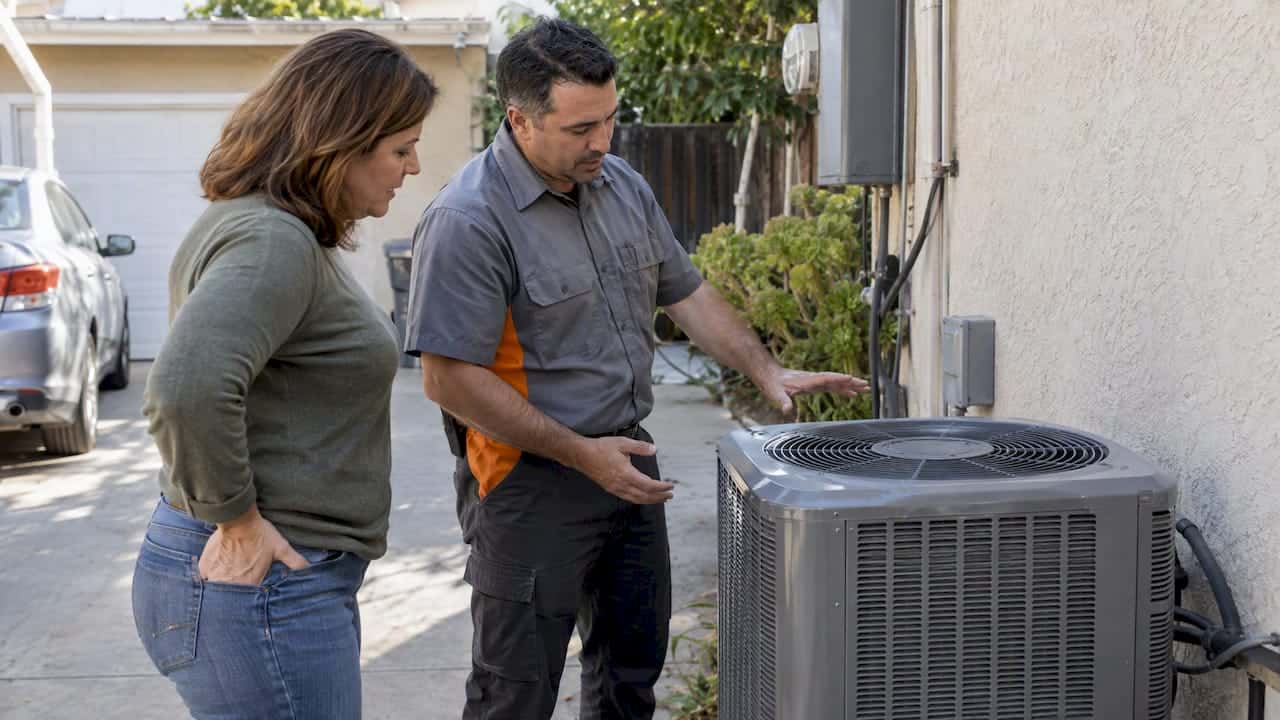
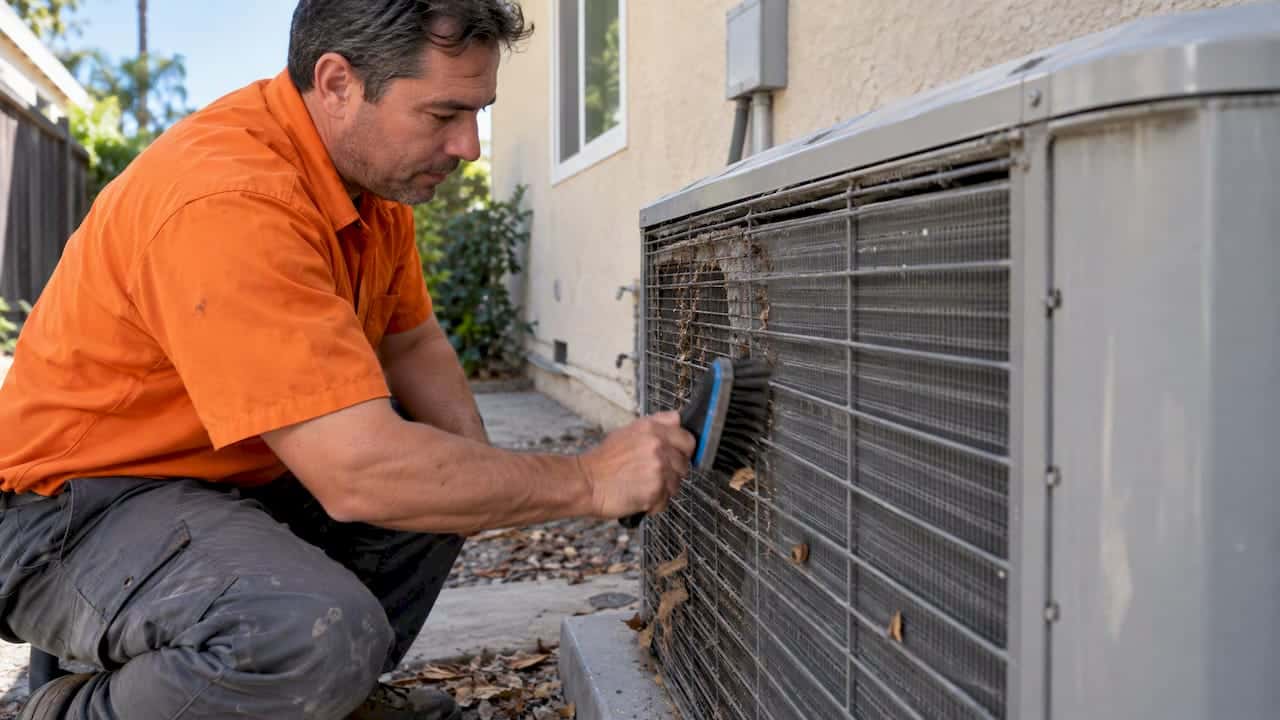
- Check the outdoor condenser for leaves, grass clippings, or overgrown plants within about two feet, and clear anything you find.
- Look at accessible ductwork in the attic or basement for kinks, sagging, or disconnected joints. Straighten a kinked flex duct by hand if it’s easy to reach, but leave sealing and reconnection work to a professional.
- Check the indoor coil for visible ice. A frozen coil almost always means restricted airflow or a refrigerant problem, and running the system longer will only make it worse.
- If you find ice, turn the system off completely and let it thaw, which can take several hours, then switch the fan to “on” to speed up airflow across the coil.
- Once running again, feel the air at a supply vent and compare it to the return air temperature. A noticeably small difference between the two suggests low airflow rather than a refrigerant issue, a distinction confirmed by Building America’s diagnostic guidance, which uses this temperature split as a standard field test.
Pro Tip: Never touch the capacitor or open the electrical panel yourself. It can hold a dangerous electrical charge even when the unit is off.
If ice keeps coming back, the motor won’t spin, or the temperature split still feels off after these checks, it’s time to bring in a professional rather than keep guessing.
When weak airflow requires a professional visit
Some symptoms mean it’s time to stop troubleshooting and call for help.
- Ice keeps forming on the coil even after you’ve thawed it and cleared the filter.
- The blower motor hums but doesn’t spin, or you smell anything electrical or burning.
- Airflow is weak in some rooms but fine in others, pointing to a duct problem you can’t reach.
- Airflow stays weak after you’ve checked the filter, vents, and outdoor unit.
Waiting on these signs tends to cost more than it saves. A coil that keeps icing over can strain the compressor, and a system fighting restricted airflow burns more energy for less cooling. Common professional fixes include duct sealing, blower motor or capacitor replacement, coil cleaning or replacement, and correcting refrigerant charge issues tied to poor airflow. Cost and repair time depend mostly on whether the problem is electrical, mechanical, or hidden inside the ductwork.
How a pro diagnoses and fixes airflow problems
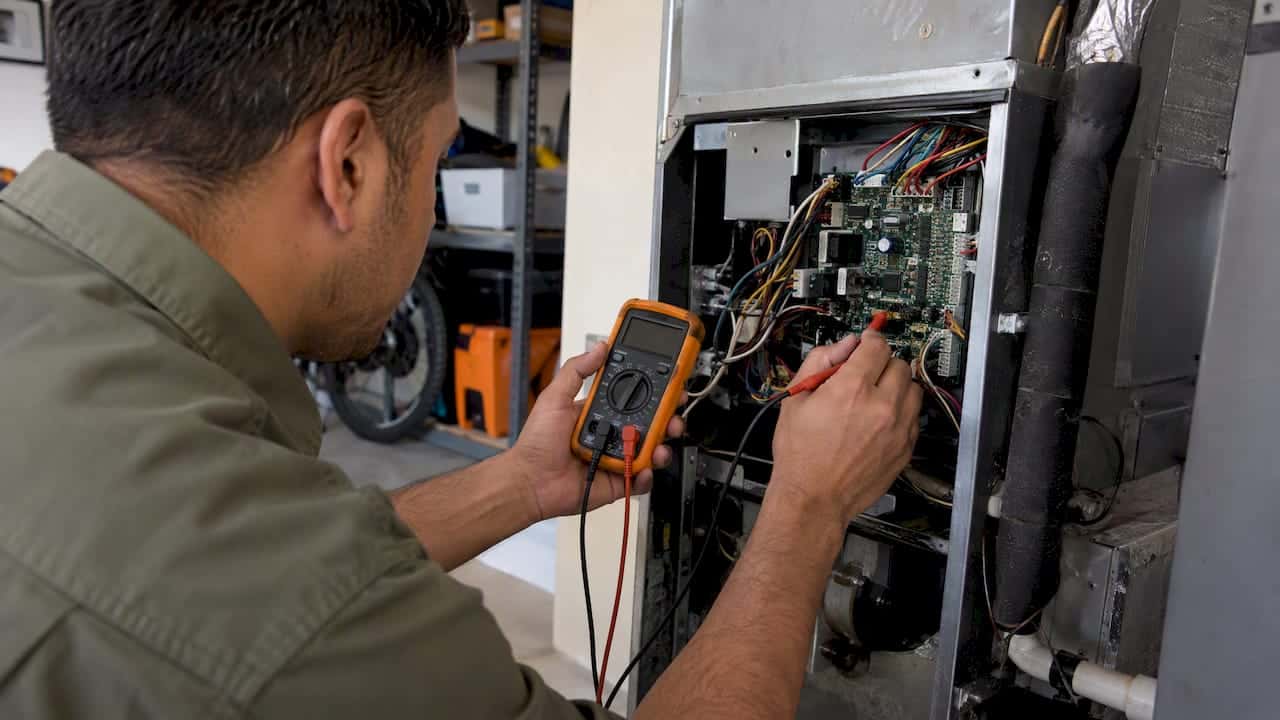
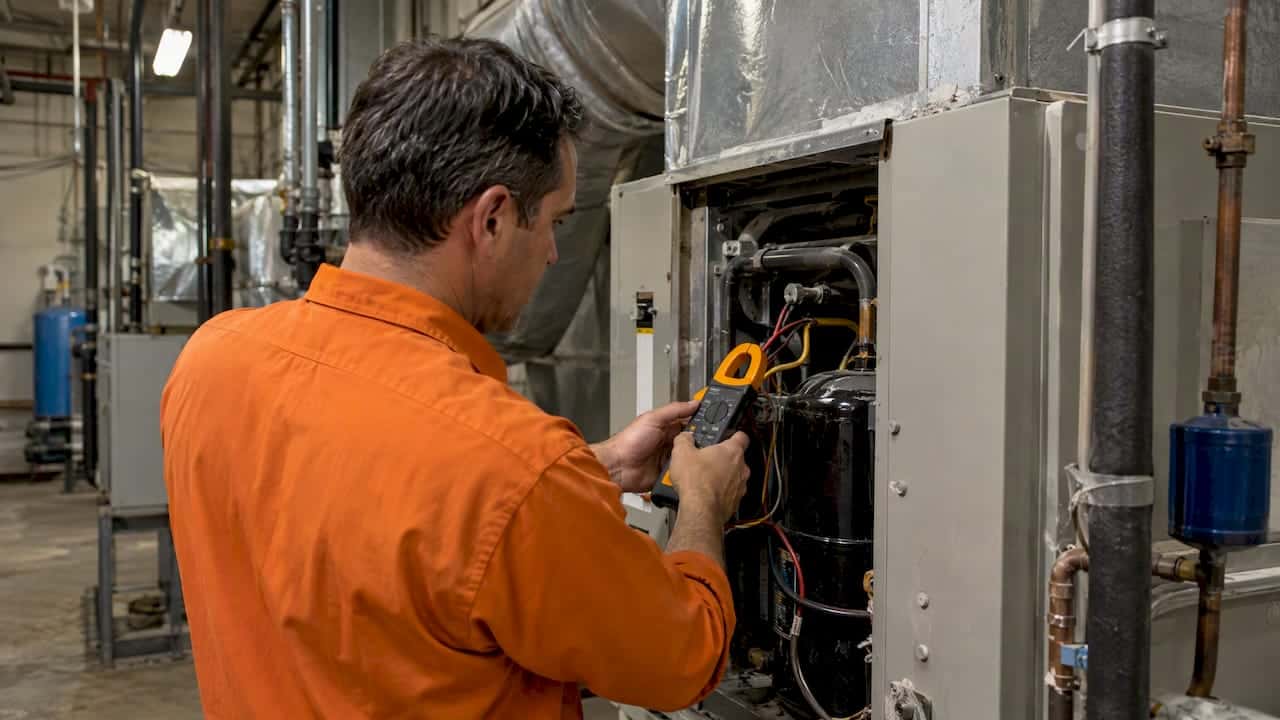
A professional visit follows a set sequence rather than guesswork. The technician starts with a visual inspection of the filter, coil, and blower compartment, then measures airflow using a temperature split and sometimes an anemometer. From there, static pressure readings show whether the ductwork itself is restricting flow, followed by a duct inspection and electrical tests on the motor and capacitor.
ASHRAE’s fault-detection research points out that low airflow can look like a refrigerant shortage even when the compressor is perfectly healthy, which is why measuring airflow first matters so much.
- Sealing and insulating leaky ducts to recover lost airflow
- Servicing or replacing a failing blower motor
- Cleaning a dirty coil or widening a filter slot to fit a deeper, lower-resistance filter
- Balancing airflow across rooms once the restriction is fixed
Many homes operate below the recommended airflow range for their system size, according to Building America’s field diagnostics, which means the fix is often distribution, not the equipment itself.
Some HVAC companies use flat-rate pricing set before any work begins, aiming to avoid surprise bills for diagnostics. Same-day appointments may be available, and experience can span ducted homes to modern heat pumps, mini splits, and commercial VRF systems.
Maintenance checklist to prevent weak airflow
A little routine care keeps airflow steady and avoids the kind of neglect that leads to bigger repairs.
- Replace a 1-inch filter monthly during peak season, or every three to six months for a deeper media filter, per ENERGY STAR’s maintenance guidance.
- Clean the outdoor condenser coil each spring before cooling season starts, and clear the condensate drain line at the same time.
- Walk accessible ducts once a year, checking for loose connections, and insulate or seal any runs in an attic or crawl space.
- Schedule a professional tune-up once a year, which typically covers coil cleaning, airflow measurement, and electrical checks on the motor and capacitor.
Pro Tip: Mark your filter’s replacement date on the frame with a marker. It’s a small habit that saves you from ever wondering how long it’s been in there.
Diagnosing refrigerant issues tied to airflow problems
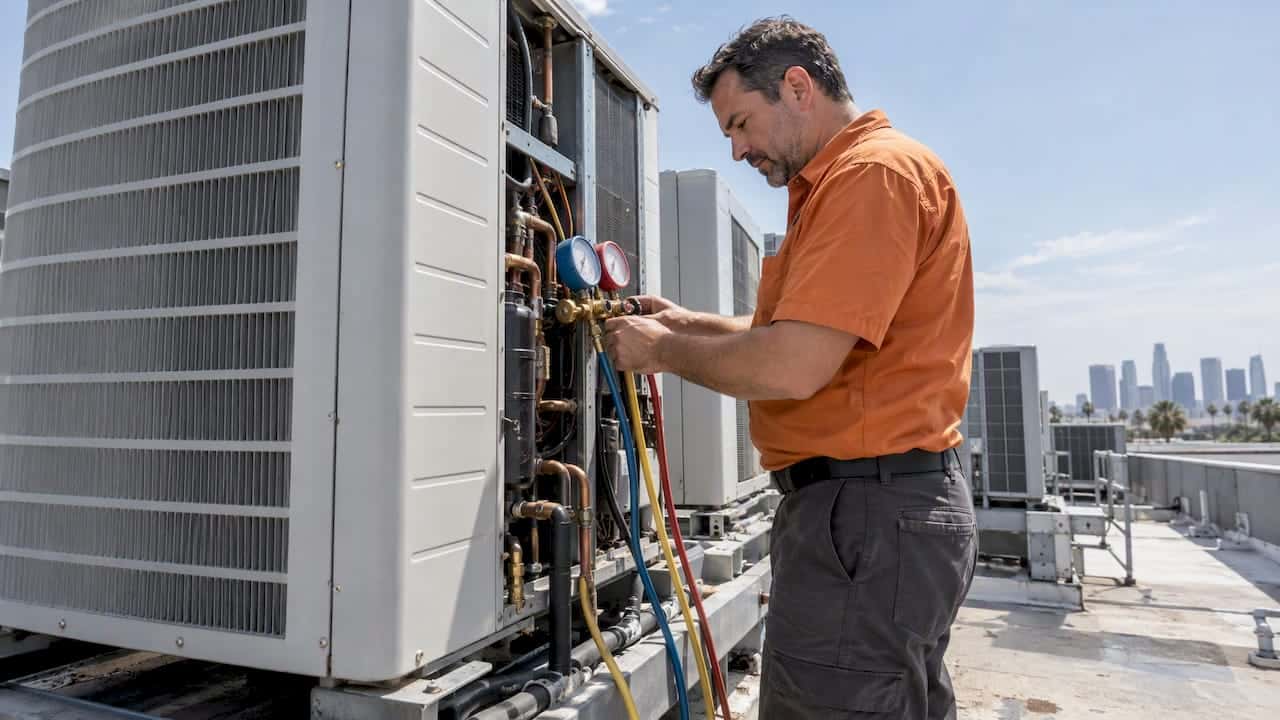
Low refrigerant and low airflow can look almost identical from the thermostat, both leave rooms warmer than they should be, but they call for very different fixes. According to Building America’s diagnostic guidance, low airflow across the coil can actually invalidate a refrigerant charge test, since the coil never gets a fair chance to absorb heat properly.
This is why a technician measures airflow before ever touching the refrigerant charge. If airflow is restricted, whether from a dirty filter, closed vents, or a leaky duct system, the coil runs colder than it should, which can trigger icing that looks a lot like a refrigerant leak. Clearing the airflow restriction first often resolves what seemed like a charge problem entirely.
If airflow checks out and the system still underperforms, the next step is checking the refrigerant charge itself against manufacturer specifications, along with looking for a leak in the line set or coil. ASHRAE’s fault-detection research notes that airflow is the foundation for accurate diagnosis: get it wrong, and every reading downstream, including refrigerant pressure, becomes unreliable.
That sequencing matters for your wallet too. Adding refrigerant to a system that’s actually suffering from an airflow restriction won’t fix the real problem, and it can mask a coil icing issue that gets worse over time. A professional visit that starts with airflow measurement, not a refrigerant gauge, tends to catch the actual cause faster and avoids paying for refrigerant the system didn’t need.

How humidity affects airflow problems in your AC
Humidity and airflow are tied together more closely than most homeowners realize. When airflow across the evaporator coil is too low, the air moves past it slowly enough that moisture can freeze onto the coil surface instead of draining away as condensation, which is one of the more common paths to a frozen coil described in Building America’s diagnostic research.

On the flip side, when airflow is restricted, the air that does make it through the system often comes out feeling damp and heavy rather than crisp, because the coil isn’t moving enough air to properly balance cooling with moisture removal. That’s often why a home feels sticky even when the thermostat reads the right temperature.
A blocked return grille or a closed vent doesn’t just weaken cooling, it changes the humidity balance in that room, since stagnant air holds onto moisture instead of cycling through the system. Rooms with the weakest airflow are usually the same rooms that feel clammiest on a humid day.
Fixing the airflow restriction, whether that’s a filter change, a cleared return, or duct repair, usually improves humidity control right along with temperature. The two problems share a root cause more often than not, which is why a technician checking for weak airflow will usually ask how the air feels, not just how cool it is.
Why I always start with airflow, not a new system
I’ve seen too many homeowners quoted for a new AC when the real issue was a clogged filter or a leaky duct. Some providers check airflow first and price diagnostics with a flat rate so customers know the cost before work starts. If you’re seeing the red flags above, schedule a visit before the problem gets worse.
— Leo
Get your airflow fixed the right way
Weak airflow rarely needs a new system, it needs an honest diagnosis. LC Heating & Air Conditioning offers flat-rate service calls with same-day availability across the Los Angeles area, along with real experience in ductwork, heat pumps, and mini splits.

If your vents have been weak for a while, or you spotted ice, humming, or uneven cooling during your own checks, book a diagnostic visit and get a clear answer instead of a guess.
Sources
FAQ
How do you fix weak AC airflow?
Start by checking and replacing the air filter, then open every supply vent and clear blocked return grilles. If airflow stays weak after that, the cause is likely a duct leak, blower motor issue, or coil problem that needs a professional diagnostic.
Why does my AC feel like it’s barely blowing air?
A clogged filter, closed vents, or a leaky duct system are the most common reasons airflow feels weak, according to ENERGY STAR. A failing blower motor or frozen evaporator coil can cause the same symptom and usually needs a technician to confirm.
Why is my AC blowing harder as I accelerate?
This question usually applies to a car’s air conditioning, not a home system, since a car’s compressor speed is tied to engine RPM. In a home AC, airflow should stay steady regardless of anything you do, so a change in airflow strength points to a mechanical or electrical issue worth having checked.
Why can I barely feel air coming out of my vents?
A dirty filter or closed damper is the most common cause of weak vent airflow, followed by leaky or disconnected ductwork. If you’ve checked the filter and vents and airflow is still weak, a duct leak or blower issue is likely, and a professional visit can confirm which one.
Recommended
Leo, Owner & Lead Technician at LC Heating & Air
Leo leads LC Heating & Air as an owner-operator and holds California CSLB C-20 HVAC license #1073586. His guides focus on practical diagnostics, safe repair decisions, and clear advice for Los Angeles homeowners.