- What is a package unit AC and what’s inside the cabinet?
- What types of packaged units are available?
- Where do packaged units work best, and what are the trade-offs?
- How does a package unit compare to a split system?
- What does a packaged unit cost, and how long will it last?
- How do you keep a packaged unit running well?
- How do you choose the right packaged unit for your home?
- Why homeowners trust LC Heating and Air Conditioning for packaged unit work
- Key Takeaways
- When a packaged unit is the honest recommendation
- Get an honest inspection and written quote from LC Heating and Air Conditioning
- FAQ
- Useful sources and further reading
- Recommended
Package Unit AC Explained for Homeowners
TL;DR:
- A packaged unit air conditioner combines all HVAC components into a single outdoor cabinet, ideal for homes without indoor space for traditional systems. They come in four types: air conditioners, heat pumps, gas-electric units, and dual-fuel systems, and are best suited for slab homes, flat roofs, and retrofits. Proper sizing with a Manual J calculation and regular maintenance significantly extend their 15-20 year lifespan.
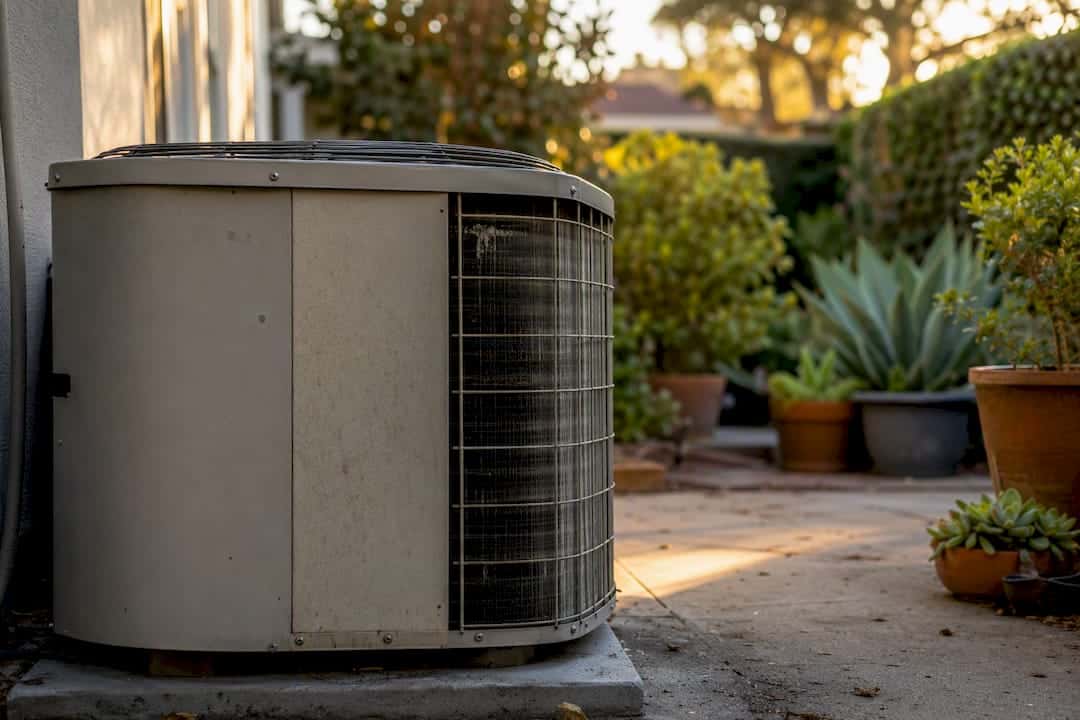
A package unit AC is an all-in-one outdoor HVAC cabinet that houses the compressor, condenser, evaporator coil, and air handler in a single weatherproof enclosure. If any of the following sound like your home, a packaged system is worth a serious look:
- Your home has no basement, attic, or interior closet large enough for an indoor air handler.
- You’re retrofitting HVAC onto a slab foundation or flat roof.
- You want a single outdoor unit to handle all heating and cooling without interior equipment.
The sections below walk you through what’s inside the cabinet, the four main types, where packaged units work best, how they compare to split systems, what they cost, and the questions to ask your contractor before you buy.
What is a package unit AC and what’s inside the cabinet?
Every packaged unit works on the same principle as a conventional central air system. The difference is that all the mechanical parts live together in one outdoor box instead of being split between an indoor and outdoor unit.
Here’s what you’ll find inside a typical cabinet:
- Compressor: The heart of the refrigeration cycle. It pressurizes refrigerant and drives the heat-exchange process.
- Condenser coil: Releases heat from the refrigerant to the outdoor air.
- Evaporator coil: Absorbs heat from your home’s air, cooling it before it returns through the ducts.
- Blower/air handler: Pulls return air from the home, pushes conditioned air back through the supply ducts.
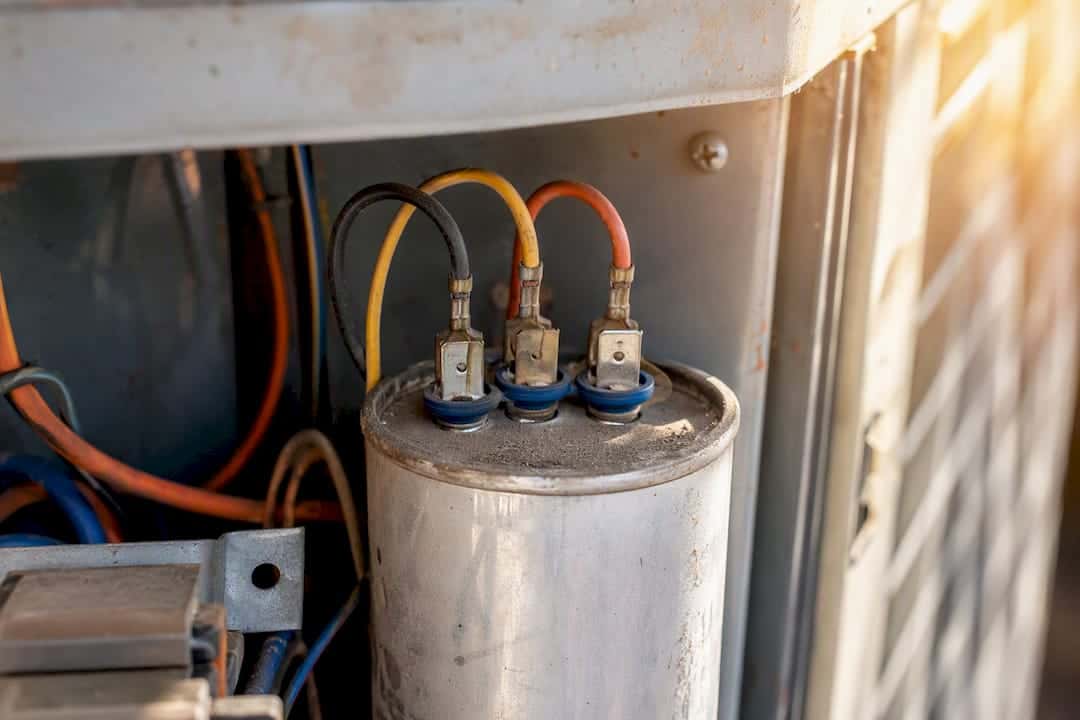
- Controls and electrical components: Contactors, capacitors, and the control board that manage operation and safety shutoffs.
- Optional heat source: Electric heat strips, a gas furnace section, or a heat pump reversing valve, depending on the unit type.
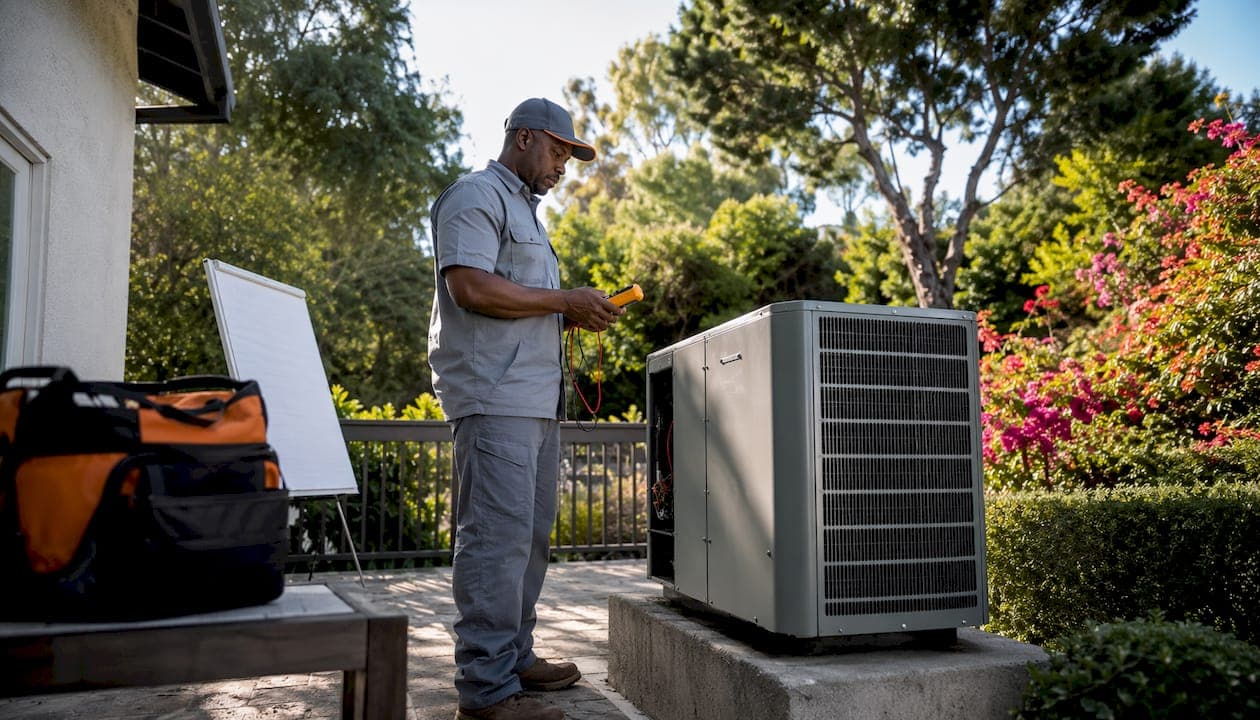
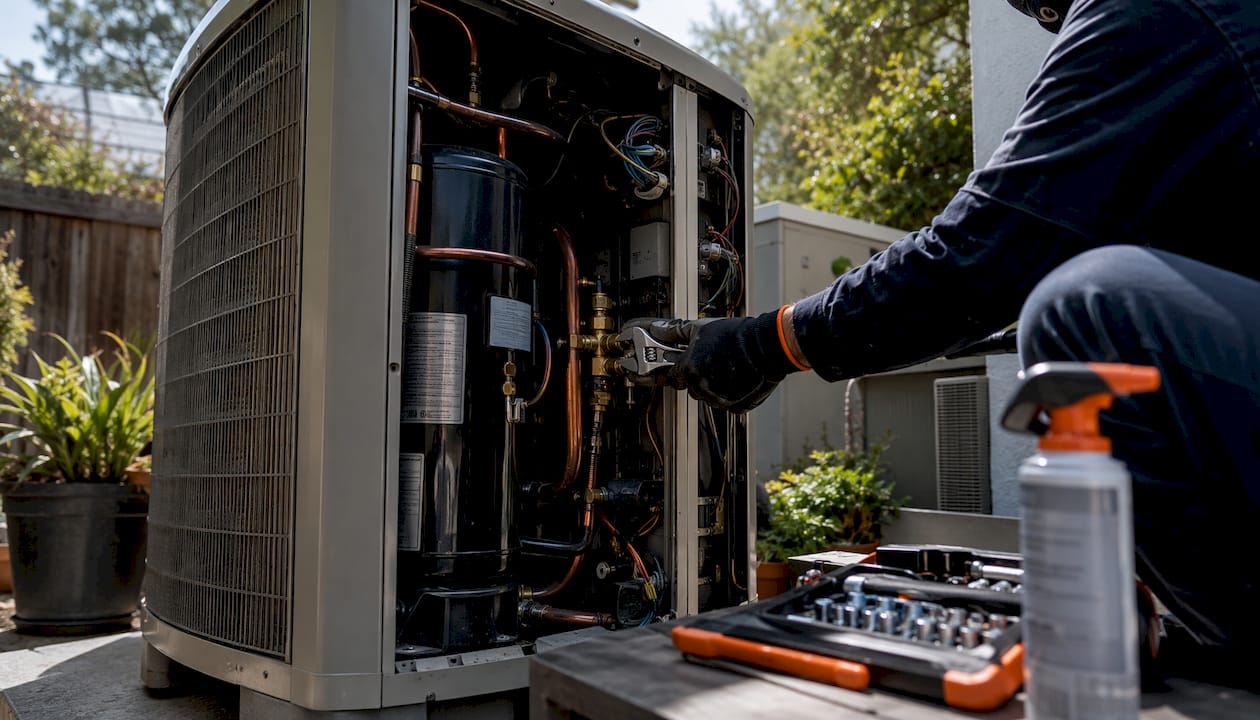
Because everything is outdoors, service panels on the cabinet give a technician direct access to every component without entering your home. That single-point access is one reason packaged units are often easier to service than split systems, where parts are scattered between a cramped attic and an outdoor condenser.
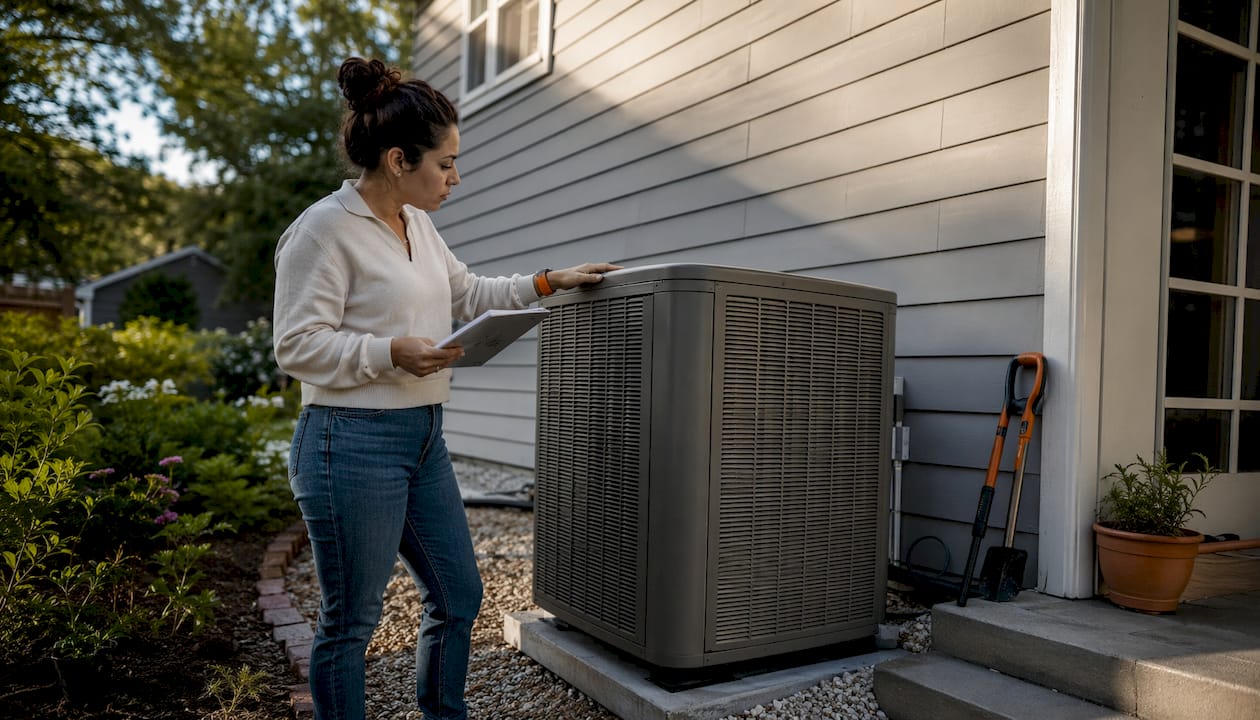
Pro Tip: Before a technician arrives, take a quick look at the cabinet yourself. Check for at least 18–24 inches of clearance on all sides, visible rust or corrosion on the cabinet panels, and any oil stains near the refrigerant lines. These are easy things to photograph and share with your contractor before the visit.
What types of packaged units are available?
Packaged systems come in four main configurations, each suited to a different climate and fuel situation.
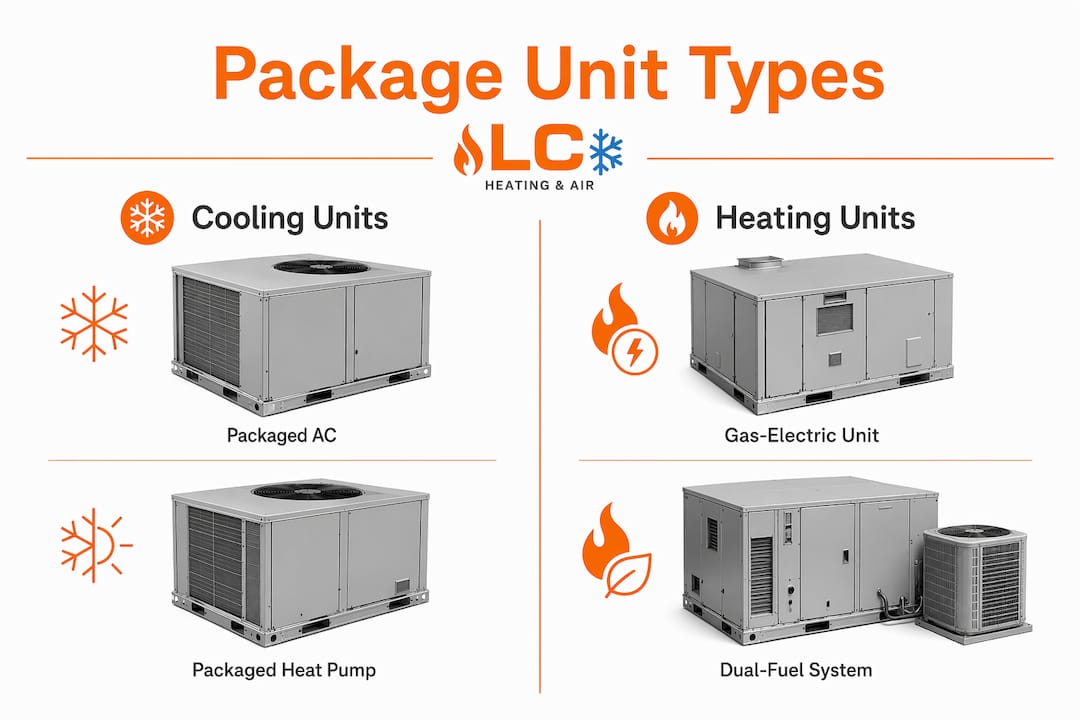
Packaged air conditioner
This is the most common type in mild-winter climates. It provides full cooling and can include electric heat strips for occasional warmth. If you’re in Greater Los Angeles and rarely need serious heating, this is often all you need.
Packaged heat pump
A heat pump unit both cools in summer and reverses the refrigeration cycle to heat in winter. No gas line required. Efficiency is strong in moderate climates, though performance drops when temperatures fall below freezing for extended periods.
Packaged gas-electric unit
Often called a “gas pack,” this combines an AC system with a gas furnace section in the same cabinet. You get the efficiency of gas heat alongside reliable cooling. Best for areas with cold winters and existing natural gas service.
Packaged dual-fuel system
A hybrid that pairs a heat pump with a gas furnace. The heat pump handles mild-weather heating; the gas furnace takes over when outdoor temperatures drop far enough that the heat pump loses efficiency. It’s the most flexible option for climates with wide seasonal swings.
Mounting options matter too. Packaged units can sit on a ground-level concrete slab, in a crawlspace, or on a rooftop. Rooftop installations are common on flat-roof homes and require structural review, proper flashing to prevent water intrusion, and vibration isolation to keep noise from transferring into the living space. If you’re planning a rooftop install, coordinating with a roofing contractor on residential roof maintenance before the unit goes up can prevent costly flashing repairs later.
Where do packaged units work best, and what are the trade-offs?
Packaged systems shine in specific situations. They’re the practical choice for:
- Homes built on a concrete slab with no basement or crawlspace.
- Older homes undergoing retrofits that lack interior space for an air handler. HVAC pros note these retrofits are where packaged units are particularly advantageous, since ductwork modifications in older homes are expensive.
- Properties with flat roofs where rooftop placement keeps the unit off the ground entirely.
- Mobile homes and manufactured housing designed around exterior HVAC.
- Homes where the homeowner wants all service access outside, away from living areas.
Pros and cons at a glance
Advantages:
- Frees up all interior square footage (no air handler closet, no furnace room).
- Single outdoor cabinet means one service call covers everything.
- Typically lower upfront installation cost in retrofit scenarios.
- All noise stays outside, so interior sound levels are low.
- Factory-assembled, which reduces field-assembly variables.
Drawbacks:
- Generally lower peak SEER2 efficiency ceilings than premium split systems.
- Exposed to outdoor elements year-round, which can accelerate wear in harsh climates.
- Rooftop installations add structural and flashing complexity.
- Replacing one component sometimes means working around the full cabinet layout.
A rooftop-mounted packaged unit deserves extra planning. Beyond structural load and flashing, vibration isolation pads between the unit and the roof deck are worth the investment. Without them, low-frequency hum can travel through the structure and become noticeable inside.
How does a package unit compare to a split system?
The choice usually comes down to available indoor space versus long-term efficiency goals. Split systems often offer higher peak efficiency while packaged units are the practical answer when interior space or structural constraints rule out an indoor air handler.
| Dimension | Packaged unit | Split system |
|---|---|---|
| Best for | Slab homes, flat roofs, no indoor space | Homes with attic, basement, or closet space |
| Component layout | All-in-one outdoor cabinet | Separate indoor and outdoor units |
| Installation location | Ground slab, rooftop, crawlspace | Outdoor condenser + indoor air handler |
| Efficiency (SEER/AFUE) | Good; lower peak ceiling than premium splits | Higher peak efficiency available |
| Typical upfront cost | Often less expensive in retrofit scenarios | Higher install cost when indoor work is needed |
| Expected lifespan | 15–20 years with proper maintenance | 15–20 years with proper maintenance |
| Serviceability | Single outdoor access point | Two locations; indoor unit may be in tight space |
The biggest practical differences:
- A packaged unit takes up zero interior space; a split system requires a dedicated indoor cabinet location.
- Split systems can reach higher SEER2 ratings, which matters in hot climates where the AC runs for months.
- Packaged units typically cost less to install when the home wasn’t originally designed for a split system.
- Service access is faster with a packaged unit since everything is in one place outdoors.
When a packaged unit is usually the better choice: your home is on a slab, you’re replacing an existing packaged system, or you have no viable indoor location for an air handler.
When a split system is usually better: you have the indoor space, you’re prioritizing long-term energy efficiency, or you’re in a climate where maximum SEER2 ratings translate to meaningful monthly savings.
What does a packaged unit cost, and how long will it last?
Upfront cost varies based on unit type, tonnage, and installation specifics. Rooftop mounting, a new gas hookup, electrical panel upgrades, and permit fees all add to the base equipment price. Ground-level slab installations on an existing pad are the most straightforward.
Residential air conditioners typically last 15–20 years with proper maintenance. Climate, usage intensity, and installation quality all influence where in that range your unit lands. Los Angeles’s mild winters are an advantage here since the system isn’t pushed as hard year-round as it would be in a hotter or colder region.
| Variable | Impact on cost or lifespan |
|---|---|
| Rooftop vs. ground mount | Rooftop adds structural, flashing, and crane/lift costs |
| Gas hookup (new line) | Adds cost if no existing gas service at the unit location |
| Electrical upgrade | Required if panel capacity is insufficient for the new unit |
| Permits | Required in most jurisdictions; cost varies by city |
| Maintenance frequency | Annual service extends lifespan toward the 20-year end |
| Climate exposure | Harsh sun, salt air, or extreme heat accelerates wear |
Signs replacement is due:
- The unit is over 15 years old and requiring frequent repairs.
- Refrigerant leaks are recurring (older R-22 systems are particularly costly to maintain).
- Energy bills are climbing without a change in usage habits.
- The system short-cycles or struggles to maintain set temperatures.
Always verify the manufacturer warranty before purchase. Goodman and Trane both offer packaged units across the 2.0–5.0 ton range with varying warranty terms; confirm parts and labor coverage with your installer in writing.
How do you keep a packaged unit running well?
All components being in one outdoor cabinet is a genuine serviceability advantage. A technician can complete a full inspection without ever entering your home, and most repairs don’t require moving between two locations. That said, the outdoor exposure means the cabinet itself needs attention every season.
Seasonal maintenance checklist:
- Filter service: Check and replace the air filter every 1–3 months depending on usage and air quality.
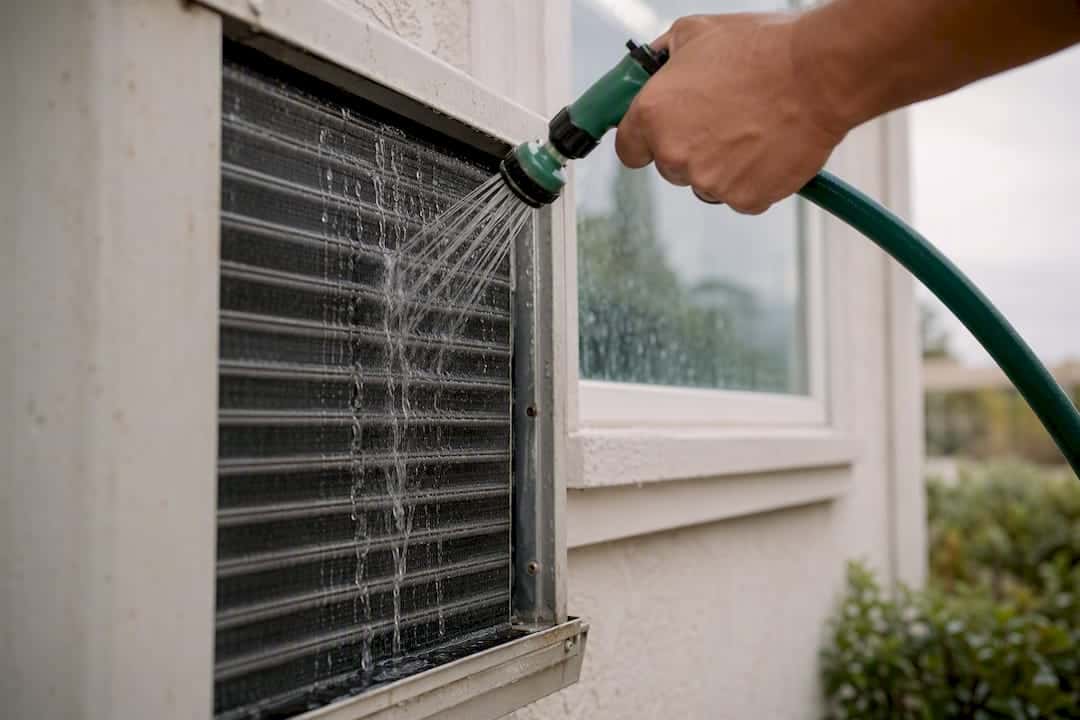
- Coil cleaning: Dirty condenser and evaporator coils reduce efficiency and strain the compressor.
- Condensate drain: Clear the drain line to prevent water backup and potential mold growth.
- Electrical inspection: Check contactors, capacitors, and wiring connections for wear or corrosion.
- Refrigerant check: Low refrigerant is a sign of a leak, not normal consumption. EPA regulations require a licensed technician to handle refrigerant.
- Combustion inspection (gas units): Annual inspection of the heat exchanger and burners is a safety requirement, not just a maintenance preference.
- Cabinet and clearances: Remove debris, trim vegetation, and confirm 18–24 inches of clearance around the unit.
Common repairs to watch for include compressor failure (often preceded by hard starting or tripping the breaker), refrigerant leaks (indicated by reduced cooling and ice on the coil), and blower motor faults (uneven airflow or unusual noise from the cabinet). An HVAC maintenance plan catches most of these issues before they become expensive failures.
A licensed technician must handle refrigerant under EPA Section 608 regulations. Never attempt to add or recover refrigerant yourself.
How do you choose the right packaged unit for your home?
Start with a Manual J load calculation. This is the industry-standard method for determining the correct tonnage for your home based on square footage, insulation, window area, local climate, and other factors. An undersized unit runs constantly and never reaches comfort; an oversized unit short-cycles, leaves humidity behind, and wears out faster. Incorrect sizing is the single biggest mistake homeowners make when replacing HVAC equipment, regardless of system type.
Questions to ask every contractor before you commit:
- Are you performing a Manual J load calculation, or sizing based on the old unit?
- What tonnage are you recommending and why?
- What are the manufacturer warranty terms, and what does your labor warranty cover?
- Who pulls the permit, and is it included in the quote?
- For rooftop installs: how will you handle flashing and waterproofing?
- Where will the condensate drain to, and how will it be routed?
- What clearances will the unit have, and how will service access be maintained?
Decision checklist: replace with another packaged unit or retrofit to split?
- If your home is already set up for a packaged unit (existing ductwork, slab, no indoor air handler space), replacing like-for-like is almost always the most practical and cost-effective path.
- If you have new indoor space available (a renovation added a utility room, for example) and long-term efficiency is the priority, a split system retrofit is worth pricing out.
- Local constraints such as roof condition, budget, and permit timelines should factor into the final decision.
Get at least two written estimates. Confirm that each contractor is licensed by the California Contractors State License Board and carries liability insurance. For guidance on choosing a new AC unit in the Los Angeles area, the variables specific to Southern California’s climate are worth reviewing before your contractor visits.
Pro Tip: Ask each contractor to show you the Manual J calculation printout, not just the result. A contractor who can’t produce it is sizing by guesswork, and that’s a risk you don’t want to take with a $5,000+ purchase.
Why homeowners trust LC Heating and Air Conditioning for packaged unit work
LC Heating and Air Conditioning has served Greater Los Angeles homeowners for over 20 years, with Leo as the owner leading a team that handles everything from historic bungalows to modern multi-zone properties. The company’s approach is built around transparency: flat-rate pricing for repairs, honest diagnostics, and no pressure to replace a system that can be repaired.
When you call for a packaged unit inspection or quote, here’s what to expect:
- A thorough diagnostic of the existing system or installation site.
- A written estimate with itemized costs before any work begins.
- Sizing guidance based on your home’s actual load, not the old unit’s tonnage.
- Warranty review so you understand what the manufacturer covers and what the installer guarantees.
- Same-day service availability for urgent repairs.
LC Heating and Air Conditioning services and installs Goodman packaged units, including the full range of Goodman packaged heat pumps. You can view an example unit, the Goodman GPHM53631A packaged heat pump, directly on the LC Heating and Air Conditioning shop page. Seeing real product specs and pricing before your contractor visit helps you ask better questions and avoid surprises.
Key Takeaways
A package unit AC is the right call when indoor space is limited, and proper sizing plus annual maintenance are what determine whether it reaches the 20-year end of its lifespan.
| Point | Details |
|---|---|
| What a packaged unit is | An all-in-one outdoor cabinet housing the compressor, condenser, evaporator coil, and air handler. |
| Best-fit scenarios | Slab homes, flat roofs, retrofits with no indoor air handler space, and like-for-like replacements. |
| Sizing and estimates | Always require a Manual J load calculation and get at least two written estimates before committing. |
| Lifespan and maintenance | Expect 15–20 years with annual service; skipping maintenance shortens that range significantly. |
| Local expert | LC Heating and Air Conditioning offers flat-rate pricing, same-day service, and written estimates across Greater Los Angeles. |
When a packaged unit is the honest recommendation
Most homeowners asking about packaged units are already living in a home that was built for one. The slab is there, the ductwork runs to the exterior, and there’s simply no practical indoor location for an air handler. In those situations, recommending a split system retrofit isn’t doing the homeowner a favor. It adds cost, complexity, and construction disruption for an efficiency gain that may take a decade or more to recover in energy savings.
Where a split system genuinely makes sense is when a homeowner has a long-term efficiency goal and the home can accommodate the indoor equipment without major structural work. In Los Angeles, where cooling loads are real but not extreme by national standards, the efficiency gap between a well-maintained packaged unit and a mid-tier split system is often smaller than the retrofit cost difference.
The packaged unit gets a bad reputation in some circles for being the “lesser” option. That framing misses the point. It’s the right tool for a specific set of conditions, and in those conditions, it performs reliably for 15–20 years with proper care.
Get an honest inspection and written quote from LC Heating and Air Conditioning
Flat-rate pricing and no surprise fees are the standard at LC Heating and Air Conditioning, not the exception. If you’re trying to figure out whether your home needs a packaged unit replacement, a repair, or a full system change, the right starting point is a professional inspection, not a guess.

An LC Heating and Air Conditioning inspection covers a full diagnostic of your existing system or site, a Manual J sizing reference for replacement quotes, a written estimate with itemized costs, and a review of manufacturer warranty terms. You’ll know exactly what you’re getting before any work begins. Greater Los Angeles homeowners can request same-day HVAC service or browse the full range of AC repair and installation services online. Have your current unit’s model number and any recent repair history ready for the visit. It helps the technician give you an accurate assessment faster.
FAQ
What is the difference between central AC and a packaged AC?
Central AC typically refers to a split system with separate indoor and outdoor components connected by refrigerant lines. A packaged AC houses all components in a single outdoor cabinet and connects to the home’s ductwork directly, with no indoor unit required.
Are packaged AC units a good choice for most homes?
They’re the right choice when indoor space is limited or the home was originally built for a packaged system. Split systems generally offer higher peak efficiency, so homes with available indoor space and long-term efficiency goals may benefit from that option instead.
How long should a packaged AC unit last?
With proper annual maintenance, residential AC systems typically last 15–20 years. Climate, installation quality, and service frequency all influence where in that range your unit falls.
What brands does LC Heating and Air Conditioning install and service?
LC Heating and Air Conditioning installs and services Goodman packaged units, among other major brands. You can view available models and specs on the LC Heating and Air Conditioning shop page.
Useful sources and further reading
- Trane: What Is an HVAC Packaged System? — Manufacturer glossary with component descriptions and system overview.
- Goodman: All-in-One Comfort — How an HVAC Packaged System Works — Covers all four packaged unit types with practical use-case guidance.
- HVAC.com: What Is a Packaged HVAC System? — Independent explainer on installation locations, serviceability, and space-saving benefits.
- American Standard: Packaged System Overview — Useful for comparing tonnage options and warranty terms across brands.
- Lennox: How Long Do Air Conditioners Last? — Lifespan benchmarks and maintenance factors from a major manufacturer.
- LC Heating and Air Conditioning: HVAC Services in Los Angeles — Local service options including packaged unit installation, repair, and maintenance across Greater Los Angeles.
- Rebates and efficiency incentives: Check your local utility’s website and the DSIRE database for current federal, state, and utility rebates on qualifying high-efficiency packaged units. Programs change frequently, so confirm eligibility directly with the program administrator before purchasing.
Recommended
Leo, Owner & Lead Technician at LC Heating & Air
Leo leads LC Heating & Air as an owner-operator and holds California CSLB C-20 HVAC license #1073586. His guides focus on practical diagnostics, safe repair decisions, and clear advice for Los Angeles homeowners.